A minimum order quantity (MOQ) on an RFID quote reads like a locked door, and for a first-time buyer it can end a conversation before it starts. It is rarely a fixed floor. A posted MOQ is the order size a supplier would prefer, built from real costs that each behave differently. Understanding which of those costs applies to your product tells you which part of the minimum is genuinely fixed and which is open to discussion.
This guide explains how RFID minimums form and how to talk about them honestly. It is written for buyers evaluating any supplier, not as a script to squeeze one.
Table of Contents
Where an RFID minimum comes from
Four or five distinct costs sit behind most posted minimums. They rarely all apply to the same product at once.
- Chip supply lots. Chip makers supply RFID converters in large lots — wafers and reels measured in far greater quantities than a small first order. A modest order draws against a much larger lot, and someone carries the remainder as inventory. This is the constraint behind minimums on newer or less common chips.
- Inlay and antenna runs. Inlays are produced on continuous roll processes. Starting and stopping a line wastes material at each changeover, so very short runs are inefficient as a share of the total. Custom antennas add tooling — a one-time cost that only makes sense spread across enough units.
- Print sheets and plates. Cards are produced in sheets and labels are printed from plates. A print plate or a colour setup is a one-time charge; below a certain quantity, that fixed cost dominates the unit price. Card minimums are often lower than label minimums because card production is batch-based rather than continuous.
- Encoding setup. Configuring an encoding line for a specific data layout or serialisation takes a fixed amount of time regardless of run length. A minimum ensures that setup is spread across enough parts to be worthwhile.
- Packaging and logistics thresholds. Reel quantities, carton fill and shipping paperwork all have practical minimums below which per-unit handling cost rises.
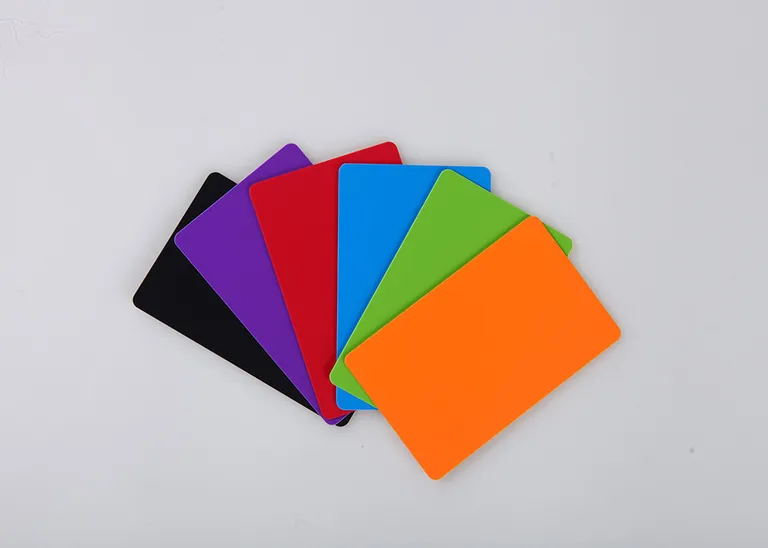
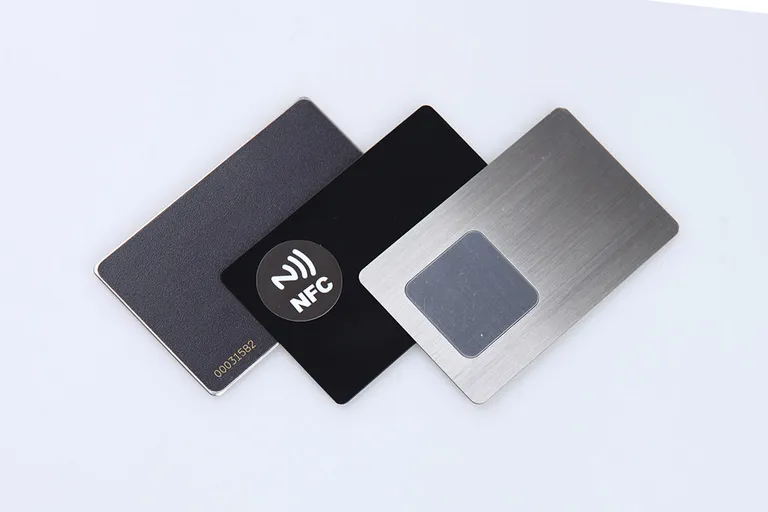
Match your product to the drivers that actually apply. A stocked, blank standard card carries almost none of them; a custom-printed, custom-antenna, pre-encoded label carries most. That mapping is the honest basis for any conversation about a lower first order.
Ways to discuss a lower first order
None of the approaches below is a trick. Each addresses one of the cost drivers directly, which is why a reasonable supplier can usually price it.
- Ask for a pilot lot. A small evaluation or pilot run lets you test the product and the supplier before committing to volume. Expect it to carry a higher unit price or a setup charge, because the fixed costs are spread across fewer parts. Ask whether a customised-sample setup fee can be credited against a following production order.
- Bundle artwork or SKUs. Combining several related items — same chip and construction, different print — into one production run lets the shared setup be spread across the group, which can lower the effective minimum for each.
- Commit to a forecast. A blanket order or a stated annual forecast, drawn down in smaller shipments, gives the supplier the volume assurance behind the minimum while letting you take delivery in manageable quantities. Put the forecast in writing; it is what makes the smaller draws defensible.
- Start from a stocked standard. If a stocked, standard part meets the specification, a first order can be small because no tooling, plate or chip-lot constraint applies. Adding your own applied label to a stocked part is sometimes better than a full custom run for a first deployment.
- Pay one-time costs separately. Where tooling or a print plate is the real driver, paying it as an explicit one-time line — rather than asking it to be amortised into the unit price — can let the supplier accept a lower quantity, especially when you plan repeat orders against that investment.
Keep the discussion about the specific driver, not about the number in the abstract. “This is a stocked blank, so which of the setup costs still applies?” is a more productive question than “can you halve the MOQ?”
What a minimum should not be used to hide
A lower minimum is not worth a worse product. If a supplier meets a small quantity by substituting a different chip, thinning the material, or dropping a test step, the saving is illusory. Hold the specification from your RFP constant while you discuss quantity, and confirm the offered part against its datasheet. Reading the quote line by line, as covered in how to read an RFID tag quotation, shows whether a low headline price has quietly changed the product.
Repeat orders usually carry a lower minimum than the first, because tooling and setup are already paid. Ask for the repeat-order minimum at the same time as the first, so you can see the real ongoing terms rather than only the entry cost.
How Proud Tek handles minimums
Proud Tek plans minimums on our own production schedule in Shenzhen, and our chip supply channels and material purchasing give room to structure a first order sensibly around the drivers above. Our minimum order quantity is confirmed in the quotation for your specification, because it depends on the chip, the format, the printing and the encoding you need — a stocked blank card and a fully custom encoded label do not share a floor. Standard samples are free and a setup fee applies to customised samples; standard products generally run to a two-to-three-week lead time, with large orders scheduled individually. We reply to a workable enquiry, and provide a quotation, within one business day.
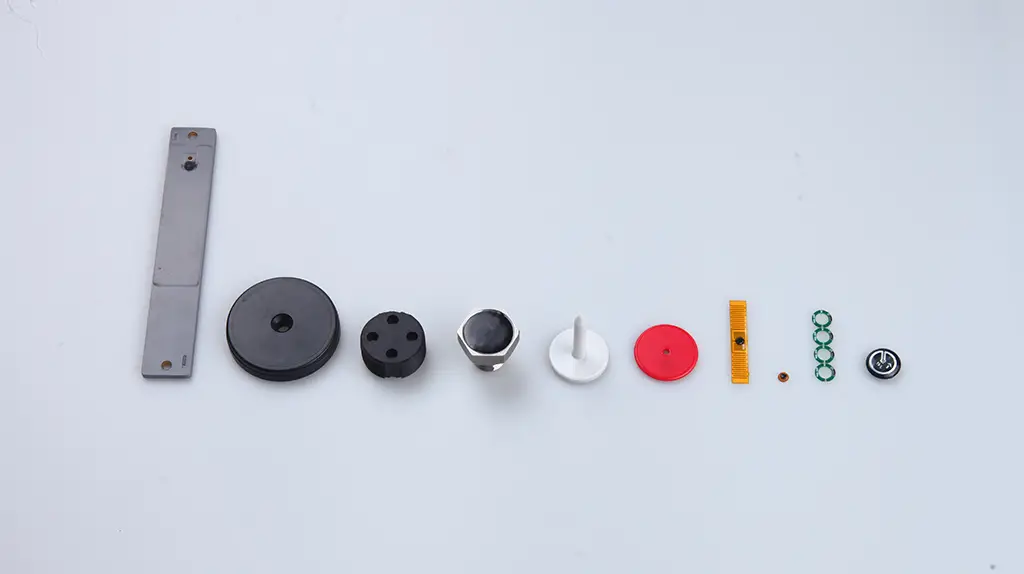
To evaluate before committing, request a sample pack. To discuss a pilot or first order, browse the RFID cards, labels and tags ranges, or read how we work on the manufacturer page. General terms are on our FAQ.
Common questions
Is a posted MOQ ever genuinely fixed?
Sometimes, for the part of it driven by a chip-supply lot on an uncommon chip, or by tooling that has not yet been made. More often the posted figure is a preference assembled from several costs, and the fixed portion is smaller than it looks once you separate the drivers.
Can I order a small pilot quantity?
Usually yes, as a paid pilot or sample run rather than at volume pricing. The unit price will be higher because fixed costs spread across fewer parts. Ask whether any setup fee is creditable against a following production order.
Will a lower minimum cost me on quality?
It should not, if the specification is held constant. The risk is that a minimum is met by substituting a cheaper chip or material. Keep the exact part and construction fixed while you discuss quantity, and verify the offered part against its datasheet before you approve it.