Event Solution
RFID Event Wristbands (2026)
Material + Chip + Cashless Decision Matrix — Tomorrowland 400k Attendees, Coachella 25% Spend Lift, Bonnaroo Intellitix, Tappit 22% Takings Lift, NTAG 424 DNA Anti-Clone
Quick answer
Procurement-grade RFID event wristband guide for festival organisers, conference operators, sports event managers, music venues, theme parks and multi-day event production teams. Maps the material decision (Tyvek single-use $0.10–0.50, FSC paper NFC $0.50–2, silicone reusable $1–3, woven fabric NFC $2–5, leather VIP $5–15, biodegradable / seed-paper for eco events), the chip-family decision (NXP NTAG213 / 215 / 216 for cashless + ID; MIFARE Ultralight C with 3DES for higher-security disposable; MIFARE Classic 1K legacy; Impinj Monza R6 / NXP UCODE 9 for UHF queue management; NTAG 424 DNA SUN for anti-clone luxury VIP), and the cashless-payment ecosystem (Intellitix at Bonnaroo, Tappit at Bestival, Connect&GO at theme parks, Glownet, Weezevent, PlayPass, Tuents at Tomorrowland with Hello bank!). Includes named real-world deployments (Tomorrowland 400,000+ attendees + 28 entries/sec + 81% shorter peak waits; Coachella 25% per-capita spend lift; Bonnaroo 80,000 ID&C wristbands with Intellitix; Tappit at Bestival 22% takings lift; UEFA Champions Festival), the anti-counterfeit dynamic-encryption pattern that flagged 1,200+ Tomorrowland duplication attempts, and ROI numbers (15-30% spend lift, 80% faster transactions, 72% faster gate clearance, 40% throughput increase).
- Material decides single-use vs multi-day reusable. Tyvek single-use ($0.10–0.50) for one-day events; FSC paper + NFC ($0.50–2) for eco-conscious single-day; silicone reusable ($1–3) for 2–4-day festivals; woven fabric NFC ($2–5) for premium multi-day; leather VIP ($5–15) for backstage / VIP / artist programmes.
- Chip-family decision follows the use case: NTAG213 / 215 / 216 for cashless payment + identification (NFC tap on attendee phones via Apple Pay-compatible payment terminals); NXP UCODE 9 for UHF queue management at access portals (reads at 1–5m at walking speed); NTAG 424 DNA SUN for anti-counterfeit luxury VIP credentials with per-tap AES-128 cryptographic signing.
- Cashless payment is the dominant ROI driver. Coachella documented 25% per-capita spend lift after cashless rollout; Tappit deployments report 22% takings lift and 80% faster transactions; Tomorrowland's Tuents currency (with Hello bank! partnership) processed €100M+. Closed-loop tokenization works without Wi-Fi, critical for outdoor festivals where connectivity is unreliable.
- Anti-counterfeit + access throughput matter as much as cashless. Tomorrowland 2023 documented 28 entries/sec / 81% shorter peak waits / dynamic encryption flagged 1,200+ duplication attempts. NTAG 424 DNA SUN's per-tap AES-CMAC signing makes cloned wristbands detectable in real time at the access portal.
- Sustainability is a 2026 procurement gate. Recycled silicone (rPET woven X-bands), FSC-certified paper Tyvek-alternatives, biodegradable wood RFID, seed-paper compostables, PVC-free Eco Tyvek. Chain festivals (Live Nation, AEG) increasingly require sustainability cert documentation in RFP responses.
Featured Event Wristbands Products
SKUs we typically deploy for event wristbands. Tap a card for specs and samples.
At a glance
Use these short answers to decide whether this page matches the project before moving into the detail.
Audience
Festival organisers (music, food, cultural, multi-day camping) building cashless + access + identification on one credential. Conference operators running multi-day badg...
Decision sequence
Event duration + reuse expectation: single-day disposable vs multi-day reusable vs annual VIP / season-pass. Material: Tyvek (single-day, low cost), FSC paper, silicone,...
Next step
Ready to move forward? Start your inquiry to get specific answers for this project.
Request event wristband samplesMaterial decision matrix — Tyvek, FSC paper, silicone, woven fabric, leather, biodegradable
Every wristband decision eventually meets the same moment of truth: a hot, restless crowd surging at the gate on opening day, each arm carrying the cheapest component of the entire production — and the one component that simply has to work on the very first tap. Material is the most leveraged decision in an event wristband procurement. It decides single-use vs reusable, cost-per-attendee, environmental footprint, and the perceived premium of the event itself.
- **Tyvek dominance for single-day** — Tyvek's tamper-evident slit-and-stick closure plus low cost make it the default for one-day events worldwide. The biggest weakness: PVC content limits eco positioning. Eco Tyvek (PVC-free) closes this gap at a small cost premium.
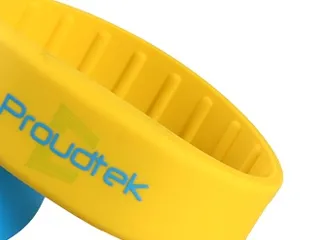
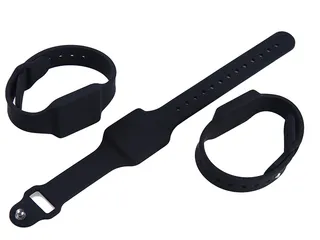
- **Silicone for multi-day** — silicone wristbands survive 72+ hour outdoor exposure (water, sweat, sunscreen, abrasion). Adjustable sizing accommodates varied wrist sizes. Non-transferable design (one-way clasp that breaks on removal) prevents resale.
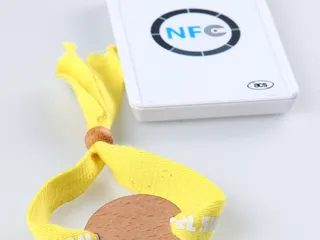
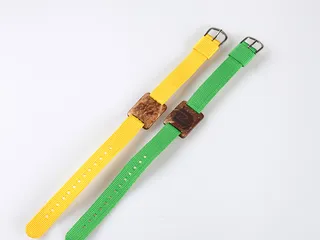
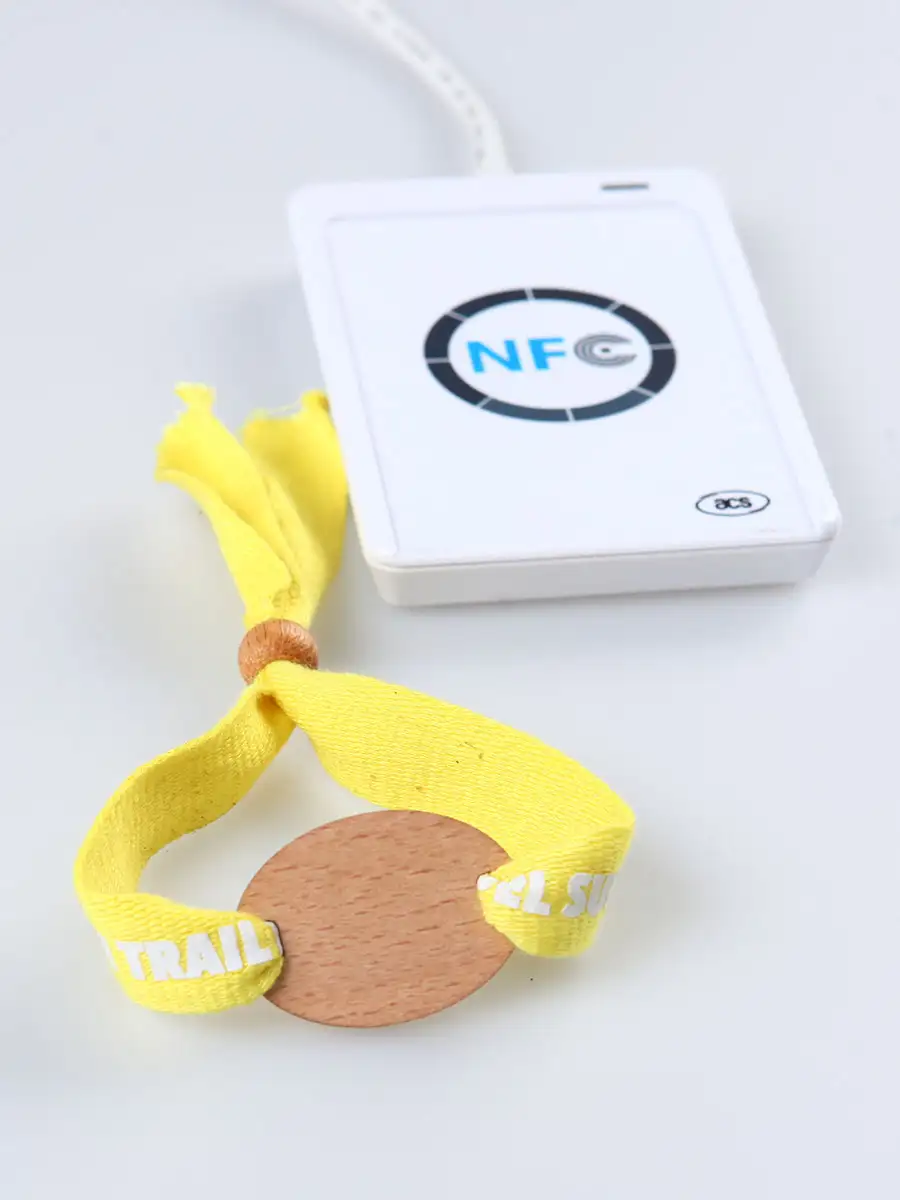
- **Woven fabric for premium** — cloth/SmartCard fabric wristbands carry sublimation-printed multi-colour artwork that PVC and silicone cannot match. Premium tactile feel; appropriate for VIP, sponsor activation, multi-day high-ticket events.
- **Biodegradable for chain-festival sustainability** — Live Nation, AEG, and major European festival operators (Roskilde, We Love Green, Pohoda) increasingly mandate FSC-certified or biodegradable wristband options. Seed-paper compostables ('plant me after the festival') are an aligned sponsor activation.
- **MOQ floors** — silicone and woven fabric typically MOQ 500; Tyvek MOQ 1,000; leather VIP MOQ 100. Custom artwork setup fee ~$50–150 one-time per design.
| Material | Reuse | Indicative cost / unit | MOQ | Best for |
|---|---|---|---|---|
| Tyvek (DuPont synthetic paper) | Single-use | $0.10–0.50 | 1,000 | One-day events, conferences, free-entry gates, color-coded entry tiers. |
| FSC paper + NFC inlay | Single-use | $0.50–2.00 | 1,000 | Eco-conscious single-day events; sustainability-cert-required festivals. |
| Coated paper + NFC inlay | Single-use | $0.30–1.20 | 1,000 | Mid-market festivals; cashless-enabled day passes. |
| Silicone reusable (adjustable + non-transferable) | Multi-day / multi-event | $1.00–3.00 | 500 | 2–4 day festivals (Coachella, Bonnaroo, Lollapalooza); reusable VIP. |
| Woven fabric / cloth (sublimation print) | Multi-day / season-pass | $2.00–5.00 | 500 | Premium multi-day festivals; resort all-inclusive; corporate annual events. |
| Leather VIP | Reusable / collectible | $5.00–15.00 | 100 | Backstage / artist / VIP credentials; sponsor gifts. |
| Biodegradable wood / bamboo + NFC | Single-use, compostable | $1.50–4.00 | 500 | Sustainability-led festivals (Roskilde, We Love Green). |
| Seed-paper compostable | Single-use, plantable | $1.50–3.50 | 1,000 | Eco-positioned events; sponsor-aligned sustainability moments. |
| PVC theme-park | Reusable / multi-visit (Disney MagicBand pattern) | $2–8 | 1,000 | Theme parks, water parks, resort multi-day pass. |
| Eco Tyvek (PVC-free) | Single-use, recyclable | $0.20–0.80 | 1,000 | Eco-positioned single-day events looking for Tyvek economics without PVC. |
Chip-family + frequency decision — NFC / NTAG / UCODE / Monza / 424 DNA
Frequency is a reader-infrastructure decision before it is a chip decision. HF NFC (13.56 MHz, ISO/IEC 14443) wins on close-read cashless + identification; UHF (860–960 MHz, ISO/IEC 18000-6C) wins on queue management and access portals at distance.
- **NXP NTAG213 / 215 / 216** — the dominant NFC family for cashless + identification on event wristbands. NTAG213 (144 B) for URL-only or low-payload programmes; NTAG215 (504 B) for embedded vCard / event metadata; NTAG216 (888 B) for full programme. Reads on every iPhone XS+ (Sept 2018+) and every Android phone with NFC. Cost: $0.05–0.15 chip; embedded inlay $0.20–0.50.
- **MIFARE Ultralight C** — uses 3DES authentication (weaker than AES but stronger than chip UID alone). Useful when the event needs a low-cost disposable chip with some authentication. Common on festival day-pass wristbands.
- **MIFARE Classic 1K** — legacy event chip. Crypto-1 cipher is publicly broken; new event procurement should avoid Classic except where existing reader infrastructure mandates it.
- **Impinj Monza R6 / NXP UCODE 9** — the dominant UHF chips for event access portals + queue management. EPC Gen 2 / ISO 18000-6C. Reads at 1–5m at walking speed (depending on antenna design and reader power). Cost: $0.20–0.60 chip embedded.
- **NXP UCODE 8 / 8m** — predecessor UHF chip; widely deployed and supported.
- **Alien Higgs-9** — alternative UHF chip family; Datamars and SML use it across event wristband SKUs.
- **NTAG 424 DNA SUN** — anti-counterfeit security tier. AES-128 CMAC per-tap unique URL signing makes cloned wristbands detectable at the access portal. Use case: VIP / artist / press credentials, anti-resale luxury events, anti-counterfeit ticket replacement programmes. Cost: $0.40–0.80 chip; ~10× standard NTAG213.
- **Dual-frequency tags** — UHF + HF on the same wristband. Cost premium ~2× but supports both cashless (HF tap) and queue management (UHF gate scan) on one credential. Used in premium / large-festival programmes.
Cashless payment ecosystem — Intellitix, Tappit, Connect&GO, Glownet, Weezevent, PlayPass, Tuents
RFID wristband cashless payment is the dominant ROI lever for festivals over $5M annual gross. Top-up at registration kiosks → tap at vendor POS → transaction settles to attendee's RFID account → unspent balance refunds 14–30 days post-event. Several specialist platforms compete for this market.
- **Intellitix** — the most-deployed cashless + access platform globally. "Leading global provider of RFID access control"; "4 million+ RFID tags activated since 2011". Anchor clients: Bonnaroo (80,000 ID&C wristbands integrated with Intellitix back-end), Live Nation properties, UEFA Champions Festival. Deep reader-portal + back-end-server architecture.
- **Tappit** — "Closed-loop RFID payments — doesn't rely on Wi-Fi". Reports 22% takings lift and 80% faster transactions in deployed cases. Bestival case study documents the takings uplift. UNITE with Tomorrowland Barcelona uses Tappit infrastructure. The Wi-Fi-independent operation is a major operational differentiator for outdoor festivals where connectivity is unreliable.
- **Connect&GO** — SaaS for leisure, sports, entertainment ops with theme-park bias. Strong on multi-day pass + cashless integration; deployed at water parks and adventure parks.
- **Glownet** — "World's first experiential product stack"; hybrid cashless / RFID + branded landing pages for sponsor activation.
- **Weezevent** — French-headquartered. "Non-transferable event pass" framing; digital wallet linkage to top-up balance. Strong in European festivals.
- **PlayPass** — focuses on B2B closed-loop event cashless; common at corporate events and conferences.
- **Tappit, Famoco hardware partner** — many event-cashless deployments use Famoco Android-based payment terminals as the vendor-side POS hardware. Famoco terminals run the cashless app and bridge to the back-end server.
- **Tuents (Tomorrowland's own e-currency)** — Tomorrowland operates its own closed-loop e-currency 'Tuents' with Hello bank! partnership for top-up and refund. Demonstrates that large festivals can vertically integrate cashless rather than depend on a third-party SaaS.
- **Operational architecture** — closed-loop tokenization caches transaction data locally on each Famoco terminal. Sync to back-end happens opportunistically (Wi-Fi or cellular when available). This is why cashless works at outdoor festivals where coverage is intermittent.
Access control architecture — gate portals, handheld readers, tiered credentials
Festival access architecture combines portal readers at main gates (large throughput at peak entry) with handheld readers at side gates (lower throughput, more flexible). Tiered credentials (GA / VIP / artist / crew / press / vendor / 21+ age verification) layered onto the same wristband chip via back-end profile lookup.
- **Main-gate portal reader** — typically UHF tunnel-style with multi-antenna coverage. Reads wristbands at walking speed; processes 25–40 attendees per minute per lane. Tomorrowland 2023 documented 28 entries/sec across multi-lane main gates.
- **Side-gate / re-entry handheld readers** — UHF or HF handheld; lower throughput (1 tag/sec) but flexible deployment.
- **Tiered credentials** — same chip UID; back-end server returns different access profiles based on credential class (GA / VIP / artist / crew / press / vendor / staff / 21+ age-verified). Real-time access decision at the reader.
- **Age verification (21+)** — separate visual indicator on the wristband (different colour band or printed marker) plus back-end profile flag. Visual is for vendor-side bartender check; back-end flag is for cashless purchase authorisation.
- **Anti-counterfeit at gate** — NTAG 424 DNA SUN per-tap signing detects cloned wristbands. Tomorrowland 2023 dynamic encryption flagged 1,200+ duplication attempts at access portals.
- **Performance baseline** — Coachella documented 2,500/hr per gate post-RFID rollout (vs 1,000/hr baseline = +150% throughput). Tomorrowland reported 81% shorter peak waits despite 12% attendance growth.
- **Latency** — sub-300ms credential validation at the portal. Slower than that and queues back up; faster and the back-end can't keep up with cluster-side caching.
Named real-world deployments — Coachella, Tomorrowland, Bonnaroo, Disney, Universal
Real-world deployments at scale are the strongest reference signal in event-wristband procurement — nothing concentrates a vendor's attention quite like a crowd that will not wait and cannot be asked to come back tomorrow. The five most-cited case studies all demonstrate different aspects of the technology mix.
- **Coachella (Goldenvoice / AEG)** — first major US festival RFID rollout (2011). Documented 25% per-capita spend lift after cashless integration. Gate throughput 2,500/hr post-RFID vs 1,000/hr baseline (+150%). ID&C is the wristband supplier; Intellitix has been the back-end at points in history.
- **Tomorrowland (Belgium)** — 400,000+ attendees per weekend across two weekends. 2023 documented: 28 entries per second across main-gate portals; 81% shorter peak waits despite 12% attendance growth; dynamic encryption flagged 1,200+ duplication attempts. Operates its own Tuents e-currency in partnership with Hello bank! for cashless. Often cited as the most sophisticated festival RFID deployment globally.
- **Bonnaroo (Live Nation)** — 80,000 custom ID&C wristbands integrated with Intellitix back-end. Multi-day camping festival; wristbands are silicone or fabric for 4-day reuse. "Live Click" social-share stations auto-posted to attendees' Facebook profiles when tapped — early sponsor-activation integration.
- **Lollapalooza** — Chicago + global multi-city. Cashless RFID across all editions; Intellitix integration; tiered credentials (GA / VIP / Platinum) on the same chip with back-end profile lookup.
- **Disney MagicBand** — theme-park reference deployment. Combines park access, FastPass+, hotel-room key, dining reservation, charge-to-room. Disney has shipped 60M+ MagicBands since 2013. Demonstrates the multi-use single-credential design pattern at scale.
- **Universal TapuTapu Volcano Bay** — water-park RFID wristband for ride virtual queueing + cashless. Water-resistant silicone design; aligns with Disney MagicBand pattern.
- **UEFA Champions Festival** — ID&C + Intellitix deployment; sport event use case for RFID access + cashless at large public-fan-zone events.
- **Osheaga (Montreal)** — ID&C silicone wristbands; multi-day deployment.
- **UNITE with Tomorrowland Barcelona** — Tappit cashless infrastructure; satellite-event extension of Tomorrowland brand.
Anti-counterfeit + security — NTAG 424 DNA SUN, tamper-evident clasps, dynamic encryption
Anti-counterfeit matters most for high-value events (premium VIP, multi-day festivals with $300+ ticket prices, sport finals). The 2024 Quarkslab disclosure of the Fudan FM11RF08 backdoor in MIFARE Classic clones means even Classic-1K-based event wristbands have a now-public attack surface.
- **NTAG 424 DNA SUN (NXP NT4H2421Gx)** — each tap generates a unique URL signed with AES-128 CMAC. A cloned wristband cannot reproduce the cryptographic signature; server-side validation makes counterfeits detectable in real time at the access portal. Use case: VIP / artist / press credentials, anti-resale luxury events.
- **Tamper-evident clasp design** — Tyvek slit-and-stick adhesive closure breaks on removal. Silicone non-transferable one-way clasp clicks shut once. Woven fabric barrel-lock with embedded RFID inlay tied to clasp integrity.
- **Dynamic encryption** — Tomorrowland's 2023 dynamic-encryption-flagged 1,200+ duplication attempts at access portals demonstrates the operational signal value of per-tap cryptographic verification.
- **MIFARE Ultralight C 3DES authentication** — uses 3DES (Triple-DES) authentication rather than AES. Still meaningful authentication; stronger than chip UID alone but weaker than NTAG 424 DNA SUN. Common on day-pass wristbands where some authentication is needed but the cost premium of 424 DNA isn't justified.
- **Fudan FM11RF08 backdoor (August 2024)** — Quarkslab disclosed a hardware backdoor in Fudan clones of MIFARE Classic 1K. Sector keys can be brute-forced in ~2 minutes on consumer hardware. Event procurement teams should specify NXP-fab silicon (request wafer-source attestation in writing) or skip Classic entirely.
- **Crypto-1 broken** — MIFARE Classic Crypto-1 cipher is publicly broken across all vendors, not just Fudan clones. New event procurement should standardise on NTAG family (213/215/216/424 DNA) or MIFARE Ultralight C for any wristband requiring authentication.
ROI worksheet — cashless + access throughput + anti-counterfeit
RFID event wristbands deliver ROI on three dimensions: cashless per-attendee spend lift, gate throughput increase, and anti-counterfeit / chargeback reduction. The numbers below are from named deployments.
- **Cashless economics** — at typical 25% per-capita spend lift on a 50,000-attendee festival with $80/head baseline spend, RFID generates $1M+ additional gross revenue. Wristband + reader + back-end CapEx for that scale is ~$200–400k. Payback within the first event.
- **Float carry** — between top-up and spend, the cashless system holds attendee balances. Typical $40–80/head × 50,000 attendees = $2–4M float during event. Operators typically hold this in segregated accounts per consumer-finance regulations (which vary by jurisdiction).
- **Refund flow** — unspent balance refunds within 14–30 days post-event. Manual claim portal; unclaimed funds often donated to charity or retained per terms.
- **Anti-counterfeit yield** — Tomorrowland's 1,200+ flagged duplication attempts at €100+ ticket value = €120,000+ in fraud prevented in one weekend. Multiplies across multi-weekend / multi-event programmes.
- **Soft ROI** — vendor-side labour reduction (cash handling time, change-making, drawer reconciliation), data capture (attendee behaviour analytics for sponsor reporting), and reduced theft / loss (no cash on-premises to steal).
| Metric | Pre-RFID baseline | Post-RFID outcome | Source |
|---|---|---|---|
| Per-capita attendee spend | 1.0× baseline | 1.15–1.30× (15–30% lift) | Coachella 25% lift; Tappit 22% takings lift; Eventbrite study 20% |
| Transaction time at vendor POS | 60–90 sec (cash + change) | 10–20 sec (tap + confirm) | Tappit 80% faster transactions |
| Gate throughput (entries / hour / lane) | 1,000–1,500 | 2,500–4,000 (+150–200%) | Coachella +150%; Tomorrowland 28 entries/sec across multi-lane |
| Peak entry wait time | Baseline | -72% to -81% | Tomorrowland 2023 vs 2022 (81% shorter despite +12% attendance) |
| Wristband cost per attendee | Variable | $0.30–5.00 depending on material + chip | Tyvek $0.10–0.50; silicone $1–3; woven $2–5 |
| Cashless top-up float (per-attendee average) | n/a | $40–80 typical | Industry benchmark across multiple festivals |
| Counterfeit ticket attempts (large festival) | Variable | 1,200+ flagged at Tomorrowland 2023 | Dynamic encryption real-time detection |
| Unspent balance refund window | n/a | 14–30 days post-event | Industry standard |
| Unspent balance unclaimed rate | n/a | ~5–15% of float | Industry benchmark; often donated or retained per T&Cs |
Sustainability + chain procurement — rPET, FSC, biodegradable, seed-paper
Chain festival operators (Live Nation, AEG, Goldenvoice, C3 Presents, Festival Republic) increasingly require sustainability certifications in supplier RFP responses. The certification stack below covers most chain requirements.
- **rPET (recycled PET) woven X-bands** — woven fabric wristbands made from post-consumer recycled PET bottles. Certification: GRS (Global Recycled Standard) ≥50% recycled content for product claim. Common on chain festival programmes.
- **FSC-certified paper Tyvek-alternatives** — paper wristband stock from FSC chain-of-custody certified sources (FSC-STD-40-004). Replaces synthetic Tyvek for eco-positioned single-day events.
- **Biodegradable wood RFID** — wood wristbands with embedded chip; compost-friendly at end of life. ASTM D6868 / D6400 compostability certifications. BPI (Biodegradable Products Institute) verification.
- **Seed-paper compostable** — paper wristbands embedded with native wildflower seeds. Attendees plant wristband after the event; sustainability brand activation. Niche but increasingly used at eco-positioned festivals (Roskilde Garden Festival, We Love Green).
- **PVC-free Eco Tyvek** — synthetic single-use wristband material without PVC content. Maintains Tyvek's slit-and-stick tamper-evident pattern at slightly higher cost.
- **Chain RFP cert requirements** — typical chain RFP asks: (a) FSC chain-of-custody number for any wood / bamboo / paper; (b) GRS recycled-content certificate for rPET woven; (c) ASTM D6868 / D6400 for biodegradable; (d) annual sustainability report from the supplier. Document certs explicitly; do not rely on generic 'eco-friendly' language.
- **End-of-event recycling** — leading festivals (Roskilde, Pohoda, Eden Project) collect wristbands at exit gates for recycling / composting. Drives material choice toward recyclable + compostable formats.
Operational playbook — top-up kiosks, vendor terminals, support flow
Beyond the wristband itself, the operational stack determines whether the cashless + access programme actually works on event day. The components below are the standard architecture — and the uncomfortable truth of event RFID is that the chip almost never fails the show; the network tent, the kiosk queue and the staff briefing do.
- Step 1**Registration / top-up kiosks** — at entry gates and key locations. Self-service touchscreen for top-up via credit card / Apple Pay / Google Pay; staffed kiosks for refund / dispute / lost-wristband replacement. Typical hardware: Famoco Android terminal + receipt printer + card reader (e.g., Verifone P400 or Adyen iX3). Capacity: 60–120 transactions / hour / kiosk.
- Step 2**Vendor-side POS terminals** — Famoco F100 / F300 / Sunmi V2s / iZettle Reader hardware running the cashless app. Tap wristband → enter amount → confirm → transaction settles to attendee's RFID account. Closed-loop tokenization caches transaction locally if Wi-Fi unavailable.
- Step 3**Sync architecture** — vendor terminals sync to back-end opportunistically when connectivity is available. Reconciliation runs at end-of-shift and end-of-event. Discrepancy resolution typically 1–2 days post-event.
- Step 4**Support staff** — dedicated cashless help-desk at the event for top-up disputes, lost wristbands, refund inquiries. Typical ratio: 1 cashless staff per 2,000 attendees.
- Step 5**Lost wristband flow** — attendee reports lost wristband at help desk; original wristband UID is voided in back-end; new wristband issued with prior account balance transferred. Photo-ID verification at issuance.
- Step 6**Post-event refund window** — unspent balance refund 14–30 days post-event via attendee portal. Email reminder at 7 days, 24 hours; unclaimed funds revert per T&Cs (charity donation, festival retention, or refund-in-perpetuity policy varies by operator).
Pricing, MOQ and lead time — what to expect on a 2026 RFQ
Event wristband pricing has three drivers: material, chip choice, and order volume. Custom artwork (sublimation print, foil stamp, embossing) typically adds $0.10–0.40 per unit depending on technique.
- **Setup fee** — ~$50–150 one-time per design for custom artwork; waived at high volume.
- **Volume discount** — typical 30–50% per-unit reduction at MOQ 25,000+ vs 1,000-unit pricing.
- **Pre-encoding** — supplier writes chip UID into back-end database for fast deployment. Adds ~$0.05/unit but eliminates a setup step on event day. Standard for >5,000-unit programmes.
- **Sample lead time** — most suppliers ship 5–10 samples in 5–10 working days; premium materials (leather, hardwood) take 10–15 days.
- **Re-order cadence** — annual festivals typically re-order each year; year-over-year cost savings of ~5–10% as designs are re-used and tooling amortises.
| Configuration | MOQ floor | Indicative cost / unit | Lead time |
|---|---|---|---|
| Tyvek + NTAG213 | 1,000 | $0.30–1.00 | 2 weeks |
| FSC paper + NTAG213, full-colour | 1,000 | $0.80–2.00 | 3 weeks |
| Coated paper + NTAG213 + custom artwork | 1,000 | $0.50–1.80 | 2–3 weeks |
| Silicone reusable + NTAG216, full-colour | 500 | $1.50–3.50 | 3 weeks |
| Woven fabric + NTAG216, sublimation print | 500 | $2.50–5.00 | 3–4 weeks |
| Leather VIP + NTAG216 or 424 DNA | 100 | $5.00–15.00 | 4–5 weeks |
| UHF (UCODE 9 / Monza R6) + silicone for access portals | 500 | $1.50–3.00 | 3 weeks |
| NTAG 424 DNA + woven fabric (anti-clone VIP) | 200 | $3.50–8.00 | 4–5 weeks |
| Biodegradable wood + NTAG213 | 500 | $2.00–4.00 | 3–4 weeks |
| Seed-paper compostable + NTAG213 | 1,000 | $1.50–3.50 | 3 weeks |
| Eco Tyvek (PVC-free) | 1,000 | $0.40–1.20 | 2 weeks |
Useful next pages
Use these linked product, guide and comparison pages to keep the next click specific and practical.
Event wristband products
Starting points for the material + chip combination identified in the decision matrix above.
Side-by-side comparisons
Decision pages for material, frequency and form-factor choices.
Related editorial
Background reading on event wristband programmes.
FAQ
Which material should I pick for my event?
Match material to event duration + reuse expectation + sustainability requirement. Tyvek ($0.10–0.50) for single-day events; FSC paper / Eco Tyvek for eco-positioned single-day; silicone reusable ($1–3) for 2–4 day festivals; woven fabric NFC ($2–5) for premium multi-day or season-pass; leather VIP ($5–15) for backstage / artist / sponsor gifts. Biodegradable wood and seed-paper compostable variants for sustainability-led events. Document FSC chain-of-custody / GRS recycled-content certifications in supplier RFP responses if the festival operates under a chain (Live Nation, AEG, Goldenvoice) sustainability programme.
UHF or NFC — which frequency should I pick?
Reader infrastructure decides. UHF (860–960 MHz, NXP UCODE 9 / Impinj Monza R6 / Alien Higgs-9) for queue management at access portals — reads at 1–5m at walking speed, processes 25–40 attendees/min per gate lane. NFC (13.56 MHz, NTAG213 / 215 / 216 / MIFARE Ultralight C) for cashless payment + identification — close-read at vendor POS terminals + attendee phone tap. Most large festivals run both: UHF in the wristband antenna for gate access + NFC for cashless. Cost premium ~2× single-frequency; usually justified at festival scale.
Can RFID wristbands work offline if Wi-Fi fails?
Yes — closed-loop cashless tokenization caches transaction data locally on the vendor POS terminal. The terminal records transactions even without Wi-Fi connectivity; sync to back-end happens opportunistically when connectivity becomes available. Tappit specifically calls out "doesn't rely on Wi-Fi" as a deployment differentiator. Operational pattern at outdoor festivals: assume connectivity is intermittent; design vendor terminals to cache 1,000+ transactions locally; reconcile at end-of-shift or end-of-day.
What happens to unspent cashless balance after a festival?
Unspent balance refunds via attendee portal within a 14–30-day window after the event. Process: attendee logs into festival app / website with the credentials they used at top-up; balance shows; attendee enters bank / credit card for refund. Email reminders at 7-day and 24-hour marks. Unclaimed funds revert per the event's T&Cs — common patterns are charity donation, retention by the festival operator (subject to applicable consumer-finance regulations), or refund-in-perpetuity (operator holds balance indefinitely). Industry benchmark: ~5–15% of total float remains unclaimed.
How does NTAG 424 DNA SUN protect against counterfeit wristbands?
NTAG 424 DNA generates a unique URL on every tap, signed with AES-128 CMAC. The chip's AES key is factory-injected and never exposed at the RF interface. A genuine wristband produces a sequence of cryptographically-signed URLs the server can validate; a cloned wristband cannot reproduce the signature. At an access portal, the back-end server validates the signature in <300ms per tap; failure routes to a manual-check lane. Tomorrowland's 2023 deployment flagged 1,200+ duplication attempts at access portals using this pattern. Use case: VIP / artist / press credentials, anti-resale luxury events, anti-counterfeit ticket replacement programmes.
What ROI should I expect from an RFID wristband programme?
Three ROI dimensions. (1) Cashless per-capita spend lift — Coachella documented 25%, Tappit 22% takings lift, industry benchmark 15–30%. On a 50,000-attendee festival with $80 baseline per-capita spend, RFID generates $1M+ additional gross revenue. (2) Gate throughput increase — 150–200% (Coachella 1,000→2,500/hr per lane; Tomorrowland 81% shorter peak waits despite +12% attendance). (3) Anti-counterfeit / chargeback reduction — Tomorrowland flagged 1,200+ duplication attempts at €100+ ticket value = €120,000+ fraud prevented per weekend. Total programme payback typically within the first event for festivals over $5M annual gross.
Which cashless ecosystem partner should I pick?
Depends on scale + region + integration requirements. Intellitix for the largest-scale globally — "4 million+ tags activated since 2011"; anchor clients include Bonnaroo, Live Nation properties, UEFA Champions Festival. Tappit for closed-loop offline-tolerant deployments — 22% takings lift documented; works without Wi-Fi. Connect&GO for theme-park-adjacent deployments. Glownet for experiential / branded activation. Weezevent for European festivals. PlayPass for corporate events / closed-loop B2B. Or vertically integrate (Tomorrowland's Tuents with Hello bank!) at very large scale. The decision is usually made on (a) existing relationships with festival operator's PMS / ticketing partner; (b) regional support footprint; (c) sponsor activation integration features.
What about Disney MagicBand and Universal TapuTapu — are those the same category?
Adjacent but different. Theme-park RFID wristbands (Disney MagicBand, Universal TapuTapu, Carnival Cruise Ocean Medallion) combine park access + cashless + photo-pass + dining + room key into one credential at very large operating scale (Disney has shipped 60M+ MagicBands since 2013). Festival event wristbands have similar capabilities but shorter duration (3–4 days vs ongoing season pass). The technology stack is similar — NFC for close-read cashless + UHF for queue / access portals + back-end account ID. The procurement path is different — theme parks build long-term vertically-integrated stacks; festivals partner with specialist platforms (Intellitix, Tappit, etc.) for shorter-duration deployments.
Does MIFARE Classic 1K still make sense for event wristbands in 2026?
No, for two reasons. (1) The Crypto-1 cipher used by MIFARE Classic is publicly broken industry-wide. (2) The August 2024 Quarkslab disclosure of a hardware backdoor in Fudan FM11RF08 / FM11RF08S MIFARE Classic clones means even ostensibly-MIFARE-Classic cloned stock can be compromised in ~2 minutes. New event procurement should standardise on NXP NTAG family (213 / 215 / 216 for cashless + ID; 424 DNA for anti-clone VIP) or MIFARE Ultralight C (3DES) for paper / Tyvek single-use day passes. If existing reader infrastructure mandates MIFARE Classic, document the migration plan and specify NXP-fab silicon (request wafer-source attestation in writing), not Fudan clones.
Sources & references
Primary standards, OEM datasheets and regulatory documents cited by this article. All URLs were verified on the access date shown below.
- NXP NTAG213 / 215 / 216 datasheet
Authoritative NFC chip-family reference for cashless + identification wristband programmes.
- NXP NTAG 424 DNA datasheet (NT4H2421Gx)
Anti-counterfeit chip with SUN AES-CMAC per-tap unique URL signing.
- NXP MIFARE Ultralight C datasheet
3DES authentication on a low-cost paper / Tyvek inlay chip.
- NXP UCODE 9 (SL3S1206) datasheet
Current-generation UHF chip for access portals and queue management.
- Impinj Monza R6 datasheet
UHF alternative chip family commonly used in event wristbands.
- ISO/IEC 14443 standard explainer
13.56 MHz HF air interface used by NFC cashless wristbands.
- ISO/IEC 18000-6C / EPC Gen 2
UHF air interface used at festival access portals.
- Quarkslab — Fudan FM11RF08 backdoor disclosure
Why MIFARE Classic 1K Fudan clones should be avoided in new event procurement.
- Intellitix — Access Control product page
"4 million+ RFID tags activated since 2011" cashless + access platform.
- Intellitix — World's First Fully Cashless Festival case
Industry-first claim for full-festival cashless rollout.
- Tappit — UNITE with Tomorrowland Barcelona case study
Cashless deployment at Tomorrowland satellite event.
- Tappit — Bestival case study
Documented 22% takings lift and 80% faster transactions.
- Tappit — RFID payments overview
Closed-loop RFID payments offline-tolerant architecture.
- ID&C — Coachella case study
First major US festival RFID rollout; reference deployment.
- ID&C — Bonnaroo case study
80,000 ID&C wristbands integrated with Intellitix back-end.
- RFID Journal — RFID at Bonnaroo Festival
Industry-press coverage of Bonnaroo's reader-portal architecture.
- Disney MagicBand — Wikipedia reference
Theme-park RFID wristband reference deployment — 60M+ units since 2013.
- Tomorrowland — operational scale & cashless coverage
400,000+ attendees per weekend; Tuents e-currency with Hello bank!.
- Ticket Fairy — RFID Ticketing 2026 Guide
Industry buyer's guide with deployment benchmarks.
- AtlasRFIDStore — RFID wristbands category
Component / spec-sheet reference for chip + antenna selection.
- Connect&GO — event + theme park cashless
SaaS platform for leisure / sports / theme-park cashless and access.
- Glownet — experiential product stack
Hybrid cashless / RFID with branded sponsor activation.
- Weezevent — cashless wristband
European-focused cashless ecosystem.
- FSC chain-of-custody (FSC-STD-40-004)
Required certification for wood, bamboo, and FSC-paper wristband claims.
- Global Recycled Standard (GRS)
≥50% recycled content for rPET woven wristband claims.
- BPI ASTM D6868 compostable plastics
Compostability certification for biodegradable wristband material claims.
Proud Tek is a Shenzhen-based RFID & NFC manufacturer supplying hotel chains, transit operators, event venues and retail brands worldwide. Every order includes free samples, RF testing and dedicated project support.
Get a Quick Quote
Tell us about your project and we'll respond within one business day. Fields marked (asterisk) are required.