
RFID Patient Identification
RFID Patient Tracking
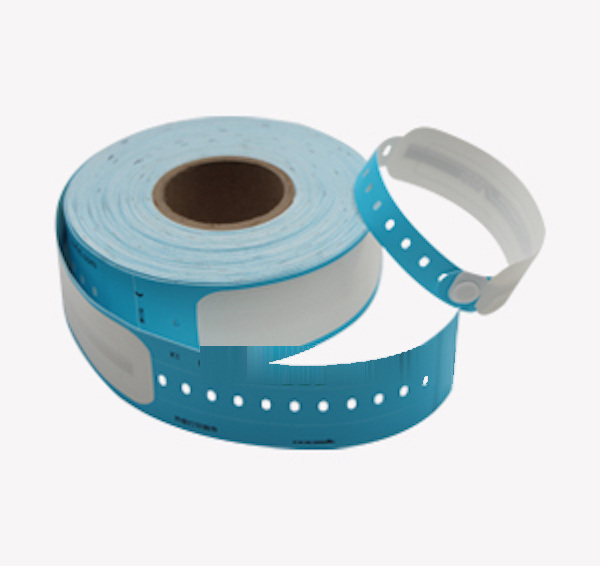
Hospital ID Wristbands

Quick answer
RFID patient tracking uses RFID wristbands on hospital patients to ensure positive patient identification, prevent medication errors, track patient location within the facility and automate clinical workflows. RFID-enabled patient ID wristbands replace manual verification processes, reducing wrong-patient events by 95% and saving nursing staff 30-45 minutes per shift on identity verification tasks.
- Positive patient identification: RFID wristband confirms the right patient receives the right medication, treatment and procedure every time, reducing wrong-patient events by 95%.
- Real-time location: UHF RFID or active RFID wristbands enable patient tracking across wards, departments and common areas for workflow optimization and safety monitoring.
- Clinical workflow automation: wristband scans at bedside automate medication administration records, vital sign documentation, and procedure logs in the EMR/EHR system.
Featured Patient Tracking Products
SKUs we typically deploy for patient tracking. Tap a card for specs and samples.
At a glance
Use these short answers to decide whether this page matches the project before moving into the detail.
Joint Commission National Patient Safety Goals (NPSG)
NPSG.01.01.01 — Use at least 2 patient identifiers when providing care. NPSG.03.04.01 — Label all medications, medication containers + other solutions.
Five Rights of Medication Administration
Right Patient — wristband scan + EMR lookup; eliminates wrong-patient. Right Drug — barcode + pharmacy verify; prevents wrong-drug.
Next step
Ready to move forward? Start your inquiry to get specific answers for this project.
Request patient wristband samples- EMR / EHR + eMAR integration
-
- Epic Willow + EpicCare Inpatient — dominant US tier-1 academic + community.
- Cerner PowerChart + Millennium (now Oracle Health) — large hospital + multi-site.
- MEDITECH Expanse + Magic — community + critical-access.
- Allscripts Sunrise + Touchworks — multi-site enterprise.
- athenahealth + eClinicalWorks + Greenway — ambulatory.
- HL7 FHIR + HL7 v2.x — standardised messaging.
- BCMA workflow integration — wristband + medication barcode confirm.
- Patient ID wristband form factors
-
- Disposable Tyvek + paper — single-use; admit to discharge.
- Disposable PVC + vinyl — multi-day acute care; waterproof.
- Adhesive thermal + thermal-direct — print-on-demand at admission.
- Soft TPU / TPE — pediatric + neonatal + sensitive-skin.
- MR-conditional — non-ferromagnetic for MRI scan compatibility.
- Dual-mode HF + UHF — short-range bedside + long-range RTLS.
- Specialised application tags
-
- Mother-baby pair — RFID-bound infant + maternal wristband.
- Wandering / elopement — alert at exit / restricted zone.
- Fall risk — color-coded + RFID-tagged for proximity alarm.
- Allergy alert — color-coded + EMR-linked allergen list.
- DNR (Do Not Resuscitate) — color + RFID flag.
- Restricted ID — psychiatric + dementia + pediatric.
- Trauma + ED — rapid-issue + temporary.
- Real-Time Location Systems (RTLS)
-
- Centrak (Halma) — wireless RTLS specialist; CrowdLogic platform.
- Stanley Healthcare (Securitas) — AeroScout + Hugs (infant) + MyCall.
- Sonitor Sense — hybrid RFID + ultrasound.
- CenTrak Connected Healthcare — full RTLS suite.
- Cisco Spaces + Zebra MotionWorks — Wi-Fi-RTLS.
- Ultra-wideband (UWB) — sub-meter precision; emerging in 2024-2026.
- BLE (Bluetooth Low Energy) — zone-level; complements UHF + active RFID.
- Infant security platforms
-
- Stanley Healthcare Hugs + Halo — dominant maternity + neonatal infant security.
- Centrak Pediatric — alternative platform.
- Mother-baby pair — RFID-bound; alarm if mismatched.
- Exit-zone monitor — alarm if infant approaches restricted exit.
- Cut-band detection — tamper alarm if wristband cut + removed.
- Maternity ward + NICU integration.
- Medication + specimen + procedure verification
-
- Bedside BCMA — wristband + medication barcode scan; eMAR auto-document.
- Specimen collection — wristband scan links blood / tissue to patient EMR.
- Surgical site verification — pre-op wristband + procedure confirm.
- Radiology — patient + procedure verify before scan.
- Blood transfusion — Type & Cross + ABO + Rh + tag-based double-check.
- Lab draws — wristband + tube barcode pairing.
- Compliance + privacy
-
- HIPAA Privacy Rule (45 CFR 160 + 164) — PHI handling + minimum necessary.
- HIPAA Security Rule — administrative + physical + technical safeguards.
- FDA UDI (Unique Device Identification) — for tracked implants + devices.
- AAMI TIR69:2017 — Risk management of RFID in healthcare.
- EU GDPR (Reg 2016/679) — explicit consent + pseudonymisation.
- Joint Commission + DNV-GL Healthcare + HFAP accreditation.
- ROI + clinical outcome metrics
-
- Wrong-patient events — 95% reduction with wristband + BCMA.
- Nursing time saved — 30-45 min / shift on identity verification.
- Specimen mislabelling — 80-90% reduction.
- Wandering incidents — 70-85% reduction with exit alarm.
- Infant abduction — Stanley Hugs + Halo: zero incidents at deployed sites.
- Sentinel event reporting — Joint Commission compliance maintained.
- Procurement reality
-
- MOQ — 1,000 disposable; 500 specialised + reusable.
- Lead time — 7-15 business days for stock; 21-30 days custom.
- Unit price — paper / Tyvek USD 0.15-0.35, PVC / vinyl USD 0.40-0.80, soft TPU USD 0.60-1.20, RTLS-active USD 5-25.
- Pre-encoded UID + Medical Record Number (MRN) — at customer request.
- Hospital chain master account + per-facility customisation.
- BCMA pilot — typically 100-1,000 wristbands per ward before full rollout.
- What patient RFID is NOT
-
- Not an active monitor — pair with telemetry / ECG / patient monitor.
- Not GPS — outdoor + emergency response requires telematics.
- Not a substitute for the visible patient name + DOB — coexists with printed wristband.
- Not standalone — full ROI requires Epic / Cerner / MEDITECH eMAR + BCMA + RTLS integration.
How RFID patient tracking improves hospital safety
In a busy hospital, the same patient is identified and re-identified dozens of times a day — at medication rounds, before a blood draw, on the way into an operating room, at every handoff between shifts and departments. Each of those moments depends on one quiet question being answered correctly: is this the right person? The wristband is how that question gets answered when the ward is full, the staff are new to the patient, and there is no time to look anything up twice. This page covers how RFID-enabled patient identification supports that work — at the bedside, across the facility, and inside the clinical systems that record it.
Medication verification
Five rights confirmed: right patient, drug, dose, route and time.
Specimen collection
Wristband scan links specimens to the correct patient record.
Procedure matching
Identity and procedure verified before surgery or radiology.
Infant security
Mother-infant pairing with zone alarms for maternity wards.
Wandering prevention
Alerts when patients approach restricted exits or unauthorized zones.
- Medication verification: nurses scan the patient's RFID wristband and the medication barcode before administration, and the system confirms the five rights (right patient, drug, dose, route, time) to prevent medication errors.
- Specimen collection: scanning the wristband before blood draw or sample collection links the specimen to the correct patient record, eliminating mislabeling that causes wrong-result errors.
- Procedure matching: surgical and radiology departments scan the patient wristband to verify identity and procedure type before treatment begins, preventing wrong-patient and wrong-site events.
- Infant security: RFID wristbands on newborns and mothers are paired to prevent mismatching and trigger alarms if an infant is moved outside designated areas.
- Wandering prevention: RFID wristbands on dementia, psychiatric and pediatric patients trigger alerts when they approach restricted exits, stairwells or unauthorized zones.
Patient RFID wristband types
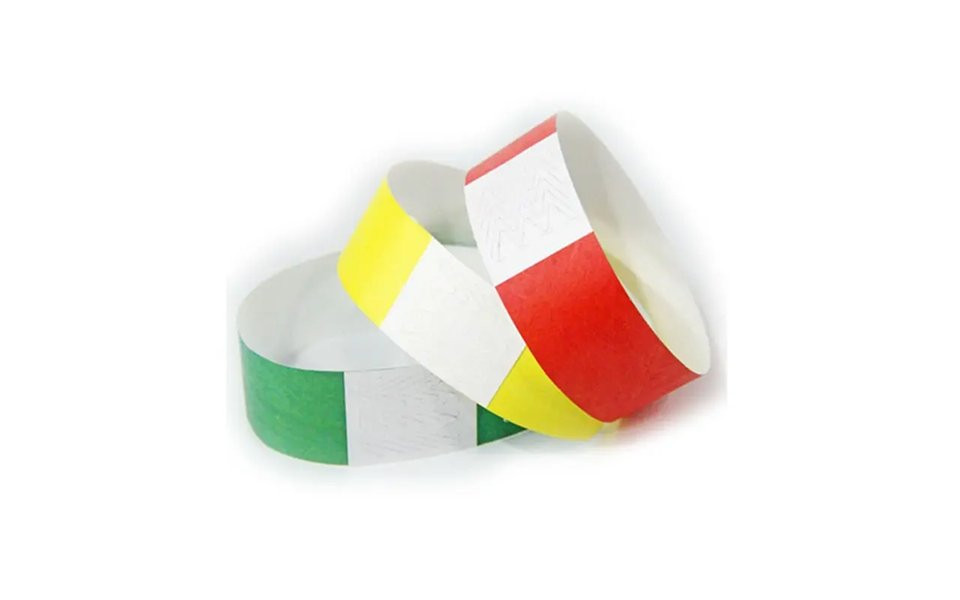
- Disposable paper wristbands: single-use wristbands with embedded HF NFC chip, printed with patient name and barcode, applied at admission and cut off at discharge. The most cost-effective option for general patient ID.
- Disposable PVC wristbands: more durable than paper, waterproof, with secure snap or adhesive closure. Suitable for patients staying multiple days in active care environments.
- Infant wristbands: small-diameter soft wristbands or anklebands with RFID chip paired to a matching mother wristband for maternity ward security.
- Pediatric wristbands: child-sized bands with rounded edges, soft materials and tamper-evident closures for pediatric wards.
- UHF RFID wristbands: wristbands with UHF chip for real-time location systems (RTLS) that track patient position across the hospital using overhead or doorway readers.
Manual identity-verification vs RFID + EMR + BCMA
Manual identity-verification + paper logbook
- 30-45 min / shift on identity-verification + manual two-identifier check.
- Wrong-patient events 1-3% of bedside touches; sentinel-event reporting.
- Specimen mislabelling 4-9% triggers wrong-result + retest cycle.
- Wandering / elopement events at dementia + psychiatric ward; no exit alarm.
- Infant security relies on visual ID + manual mother-baby pair check.
- Joint Commission NPSG.01.01.01 manual verification at every clinical touch.
RFID wristband + EMR + BCMA + RTLS
- Wristband scan + EMR auto-lookup; <1 sec patient confirm.
- Wrong-patient events 95% reduction with BCMA + Five Rights cross-check.
- Specimen mislabelling 80-90% reduction with wristband-bound scan.
- Wandering exit-zone alarm + RTLS minute-by-minute location.
- Stanley Hugs + Halo mother-baby RFID-bound pair; cut-band detection.
- NPSG two-identifier requirement satisfied at every scan.
- Epic Willow + EpicCare Inpatient + Cerner PowerChart + MEDITECH Expanse + Allscripts Sunrise consume RFID-discovered patient events natively via HL7 FHIR.
- BCMA workflow integration — wristband + medication barcode confirm prevents 95% of medication errors.
- Centrak + Stanley AeroScout + Sonitor + Cisco Spaces + Zebra MotionWorks RTLS = the platform stack.
Joint Commission + Five Rights + BCMA + EMR — the architecture
- Centrak + Stanley AeroScout + Sonitor + Cisco Spaces + Zebra MotionWorks RTLS = the platform stack.
- Stanley Healthcare Hugs + Halo = the dominant infant security RTLS at maternity + NICU.
- Epic + Cerner + MEDITECH + Allscripts + athenahealth = EMR / eMAR / BCMA integration.
From 1996 HIPAA to 2024 BCMA + RTLS — milestones that shaped patient RFID
- 1996
HIPAA Privacy + Security Rule signed; foundation for PHI handling + minimum necessary in patient-tracking RFID.
- 2000
Joint Commission National Patient Safety Goals (NPSG) launched; NPSG.01.01.01 two-identifier requirement establishes the patient-RFID baseline.
- 2005
BCMA (Barcode Medication Administration) becomes standard at major US hospitals; Five Rights of Medication Administration framework formalised.
- 2010
Stanley Healthcare Hugs + Halo infant security RTLS becomes the dominant maternity + NICU platform.
- 2014
ICD-10 transition + Meaningful Use Stage 2 drive EMR / eMAR adoption across US hospitals; Epic + Cerner + MEDITECH consolidate.
- 2017
AAMI TIR69:2017 Risk management of RFID in healthcare published; framework for clinical-grade RFID deployment.
- 2021
Centrak + Stanley AeroScout + Sonitor + Cisco Spaces RTLS platforms scale across academic medical centres + community hospitals.
- 2024
Oracle Health acquires Cerner; UWB (ultra-wideband) sub-meter RTLS emerges; Joint Commission updates NPSG for 2024.
- 2026 — Today
From buyer conversations across academic-medical-centre, community-hospital-multi-site, maternity-nicu-infant-security, dementia-psychiatric-elopement, oncology-bedside-bcma, blood-transfusion-double-check and ed-trauma-rapid-issue programmes.
EMR / EHR integration — Epic / Oracle Health / MEDITECH workflow binding
- Step 1Epic Willow + EpicCare Inpatient — dominant US academic + community deployment (>40% US acute-care market share 2024); BCMA workflow uses Epic Rover (iOS/Android nurse app) or Epic Haiku/Canto for wristband scan + medication barcode + eMAR documentation. RFID wristband encoded with MRN (Medical Record Number) or Epic CSN (Contact Serial Number) — middleware translates to FHIR Patient resource lookup.
- Step 2Oracle Health (formerly Cerner Millennium) PowerChart + CareAware — second-largest US deployment; CareAware MultiMedia Manager + CareAware iBus middleware consume RFID events; PowerChart Touch is the bedside app. RFID wristband encoded with Oracle Health FIN (Financial Number) or MRN.
- Step 3MEDITECH Expanse — community + critical-access hospital baseline; Expanse Patient Care + Mobile Access for nurses; BCMA via MEDITECH M-Manage. RFID integration via MEDITECH HL7 interface + FHIR R4 API.
- Step 4Allscripts Sunrise / Touchworks (now Veradigm) — multi-site enterprise; HL7 v2.x ADT (Admission/Discharge/Transfer) message drives wristband binding at admission.
- Step 5Athenahealth + eClinicalWorks + Greenway Health — ambulatory / outpatient — RFID less common but used for surgery centers + infusion clinics + dialysis chains (DaVita, Fresenius).
- Step 6HL7 FHIR R4 + R5 (2023) — modern REST + JSON standard replacing HL7 v2.x for new EHR integrations; Patient resource carries identifier slice for RFID UID mapping.
- Step 7IHE PCD-01 (Patient Care Device) + PCD-04 (Subscribe/Notify) — interoperability profile for medical device data including RFID-discovered patient location.
- Step 8Workflow patterns: bedside med-pass (wristband scan + drug barcode + eMAR cosign), specimen collection (wristband + lab requisition + LIS update), blood transfusion 2-RN cross-check (wristband + Bridge Medical / Iatric ID + blood-unit barcode), surgical timeout (wristband + procedure + site + side + implant + UDI scan + Time-Out Joint Commission UP.01.03.01).
RTLS platforms — Stanley Hugs / CenTrak / Sonitor / Zebra MotionWorks Healthcare
- Stanley Healthcare (Securitas) Hugs — dominant US + EU infant security RTLS; bracelet on infant ankle + Kisses bracelet on mother (Hugs+Kisses mother-baby pair). Active 433 MHz + IR for exit-zone alerts. Zero infant abductions at deployed sites since 1998 introduction.
- Stanley Healthcare AeroScout — Wi-Fi RTLS for staff badge + asset tag + temperature monitor + hand-hygiene compliance; Wi-Fi-based location at 3-5 m accuracy + active battery-powered tags. Acquired from AeroScout Industrial 2012.
- Stanley Healthcare MyCall — nurse-call + workflow alert system; integrates with Hugs + AeroScout for unified clinical event response.
- CenTrak (Halma plc) — UWB + active RFID hybrid RTLS at sub-meter accuracy; competing with AeroScout at the higher accuracy + lower cost-of-deployment end; common in operating room + ER throughput optimisation; Time + Location Services platform.
- Sonitor Technologies — ultrasound-based RTLS at room-level accuracy (no RF, immune to RF interference common in medical equipment areas); Norwegian vendor with growing US footprint.
- Zebra MotionWorks Healthcare — formerly Versus Technology + Awarepoint; Wi-Fi RTLS integrated with Zebra's broader retail + warehouse platform; common in tier-2 community hospitals.
- Cisco DNA Spaces + Aruba Meridian — Wi-Fi infrastructure-based RTLS without dedicated tags; uses existing access points + smartphone Bluetooth Low Energy + Wi-Fi probe; lower accuracy (3-10 m) but uses existing infrastructure.
- Apple iBeacon / Google Eddystone BLE beacons — DIY low-cost RTLS for medium-accuracy use cases (wayfinding, patient call-button proximity).
- Procurement reality: RTLS pilot $300K–$800K (1 unit, 1 application); enterprise rollout (full hospital) $2M–$8M. Payback driven by staff efficiency gains ($150K–$500K/year per 100 beds) + equipment utilisation lift (12-25% on infusion pumps, IV poles, telemetry monitors).
Specialised RFID applications — infant security, fall prevention, medication, specimen
- Infant security + maternal pairing — Hugs + Kisses (Stanley) at >85% US maternity unit market share; alternative: McRoberts CodeAlert + RoamAlert. Workflow: infant ankle bracelet + maternal wrist bracelet bound at L&D; bracelet tamper alarm + zone alarm (exit, elevator, stairwell); RFID event triggers Code Pink overhead page + facility lockdown.
- Wander / elopement prevention — dementia + psychiatric + pediatric units; bracelet + door reader + alarm. RoamAlert (McRoberts) + Stanley + Vitatron systems. Common at memory-care + psychiatric admission floors. Integration with door magnet locks + camera + nursing station alarm.
- Fall risk identification — yellow / red color-coded bracelet + RFID-tagged for nursing alert when patient leaves bed or chair without assistance; integrates with bed-exit alarm (Stryker, Hill-Rom, Linet) + nurse call.
- Allergy alert + DNR + restricted-ID — color-coded bracelet variants (red for allergy, purple for DNR, pink for limb restriction). RFID-linked to EMR allergy list + advance directive; surfaced in BCMA workflow when caregiver scans.
- BCMA (Barcode Medication Administration) — Joint Commission expectation since 2011, now standard of care; wristband scan + drug barcode + nurse barcode triple-check; eMAR auto-documents. RFID instead of barcode reduces scan failures (smudged barcode, wet wristband, awkward positioning).
- Specimen collection — wristband scan + lab requisition + tube label; eliminates labeling errors that historically caused ~1% of all transfusions to go to wrong patient. Joint Commission NPSG.01.03.01 (eliminate transfusion errors) is the driver.
- Blood transfusion double-check — Bridge Medical / Iatric Systems Cross-Check / Becton Dickinson Identify; 2-RN signoff with wristband + blood-unit-label + crossmatch + EMR validation.
- Surgical timeout — Joint Commission UP.01.03.01 Universal Protocol; wristband + planned procedure + correct site + correct side + implant UDI scan before incision.
- Mass casualty / disaster — triage bracelet color-coded (black, red, yellow, green per START triage) with RFID for evacuation tracking; FEMA + ASPR Hospital Preparedness Program reference.
- Hand-hygiene compliance — staff badge RFID + sink/dispenser sensor at room entry/exit; CMS Hospital-Acquired Condition reduction programme driver. SwipeSense (now BD HygieneTrack), Stanley HyGreen, GOJO SMARTLINK platforms.
Privacy + HIPAA + data governance for RFID patient programmes
- HIPAA Privacy Rule (45 CFR 164.502) — wristband + RFID data classified as PHI (Protected Health Information) since it links identity to medical context; covered entity (hospital) responsibilities apply.
- HIPAA Security Rule (45 CFR 164.306-318) — administrative + physical + technical safeguards required; RFID middleware + RTLS platform vendor signs Business Associate Agreement (BAA).
- HIPAA Breach Notification Rule — RFID system compromise affecting >500 patients triggers HHS Office for Civil Rights notification within 60 days; <500 patient breach: annual log.
- Data minimisation — wristband should encode MRN or pseudonymous ID, never demographic detail (name, DOB, diagnosis). Lookup happens server-side in EMR.
- GDPR Article 9 (EU + UK) — health data classified as special category requiring explicit consent or healthcare-provision lawful basis; EU + UK hospitals add patient consent at admission documenting RFID tracking.
- GDPR Article 28 — controller / processor framework with RTLS vendor; signed Data Processing Agreement with retention + deletion terms + sub-processor list (typical: hospital IT + RTLS vendor cloud + storage).
- Retention — typical hospital RFID event log retention 7 years (matches medical record retention in most US states); cleared on planned schedule or per HHS audit request.
- RFID-specific risks — wristband cloning (Tier-1 LF cloneable; mitigated by Tier-3/4 AES wristband chip OR by validating UID against EMR every scan), tag-skimming in public space (UID alone is not PHI but ties to patient if observed at known facility — physical concealment under sleeve recommended).
- Privacy by design — display of patient identifier should never be visible on the wristband exterior (use opaque print on inner surface); barcode + RFID UID only.
- Pediatric + minor considerations — guardian consent for tracking children; school-age psychiatric patients require additional state-law consent (varies by state).
- Cardholder rights — Right of Access (HIPAA 164.524) + Right of Amendment (164.526) — patient can request log copy + correction of inaccurate RFID-derived data.
- RFID + AI/ML — Hospital RFID event streams increasingly feed ML models for fall prediction + sepsis early warning + sepsis bundle compliance + length-of-stay forecasting; FDA's Software as Medical Device (SaMD) framework + EU AI Act 2024 classify high-risk AI applications requiring CE-marking + 510(k) clearance.
Programme economics, ROI math + procurement levers
- Wristband unit cost: disposable Tyvek/paper $0.15-$0.35; disposable PVC/vinyl $0.20-$0.50; soft TPU/TPE pediatric $0.30-$0.60; MR-conditional $0.40-$0.80; dual-mode HF+UHF $0.60-$1.20.
- Annual wristband spend (500-bed hospital, 30K admissions/year): 30K × $0.30 = $9K; pediatric mix adds $2-3K; specialised (mother-baby, MR, etc.) $3-5K — total ~$15-20K/year wristband spend per facility.
- RTLS infrastructure capex: Hugs infant security $150K-$300K per 30-bed L&D; AeroScout enterprise $500K-$2M per 200-bed; CenTrak room-level $400K-$1.2M; full enterprise RTLS at academic medical center $2M-$8M.
- EMR integration services: $50K-$300K one-time for HL7 + FHIR integration + Epic Willow / Oracle Health PowerChart customisation; ongoing $30-80K/year support.
- BCMA scanner / mobile device fleet: Zebra TC52-HC / Honeywell CT60 / Apple iPhone running Epic Rover: $1.5K-$3K per device; typical 1 per 2-3 nurses on shift = 100-200 devices per 200-bed hospital.
- Hand-hygiene compliance: BD HygieneTrack / Stanley HyGreen / GOJO SMARTLINK: $150-$400 per dispenser + badge electronics + reader infrastructure $200K-$500K per 200-bed facility.
- ROI drivers — wrong-patient event reduction: 95% reduction in wrong-patient events; each event costs $25K-$500K (litigation, regulatory, root-cause analysis, reputation); facilities running 5-15 events/year save $125K-$7.5M in event avoidance.
- ROI drivers — nursing time saved: 30-45 min/shift × 3 shifts × 365 days × $50/hr × 100 RN-FTE = $2.7M-$4M/year recovered nursing time; partial recapture (50% productivity) still $1.4M-$2M.
- ROI drivers — equipment utilisation: RTLS-tracked equipment (infusion pumps, IV poles, telemetry monitors) shows 12-25% utilisation lift; for 1,000-piece infusion pump fleet at $2K/pump capital cost = $250K-$500K saved purchase deferral.
- ROI drivers — Hospital-Acquired Condition (HAC) reduction: CMS HAC reduction programme penalises bottom-quartile hospitals by 1% of Medicare reimbursement (~$1M-$5M for 200-bed); RFID-enabled hand-hygiene + fall prevention + sepsis early warning contribute to HAC reduction.
- Compliance avoidance value: Joint Commission NPSG.01.01.01 deficiency findings drive reaccreditation risk + reputational damage; HIPAA breach notification public disclosure for >500-patient events.
- Payback typically 12-24 months for wristband + EMR integration; 24-48 months for full RTLS infrastructure.
Useful next pages
Use these linked product, guide and comparison pages to keep the next click specific and practical.
Patient tracking wristband products
RFID wristbands designed for healthcare environments.
Case studies & deep dives
Deployment evidence and compliance deep-dives for patient-ID programmes.
FAQ
Are RFID patient wristbands safe for MRI and CT environments?
Standard passive RFID wristbands with small NFC chips are MRI-conditional. They contain no ferromagnetic components and the tiny antenna does not heat significantly during scanning. However, wristbands should be removed before MRI per hospital protocol, as with any wearable item. We supply wristbands with easy-to-remove closures for this purpose.
How do RFID patient wristbands integrate with our EMR system?
RFID wristband data integrates through HL7/FHIR interfaces. The wristband carries a unique patient ID that maps to the EMR record. When staff scan the wristband, the middleware sends the ID to the EMR, which returns patient data for the clinical workflow (medication verification, specimen labeling, etc.). We provide the wristband hardware; integration is handled by your RTLS/EMR vendor.
What is the cost per patient for RFID wristbands?
Disposable RFID patient wristbands cost $0.15-$0.35 per band depending on material (paper vs. PVC), chip type, and order volume. For a 500-bed hospital, this translates to roughly $15,000-$35,000 per year in wristband costs. A modest investment compared to the cost of even one wrong-patient adverse event.
Which RTLS platform should we pair with patient wristbands?
Match the RTLS to the use case. Infant security (maternity + NICU): Stanley Healthcare Hugs + Kisses is the dominant choice (>85% US market share, zero abductions at deployed sites). Staff + asset + workflow: Stanley AeroScout (Wi-Fi-based, widest deployment) or CenTrak (UWB + active RFID, sub-meter accuracy, growing in OR + ER throughput). Room-level no-RF environments: Sonitor (ultrasound). Mid-market: Zebra MotionWorks Healthcare. Existing Wi-Fi infrastructure: Cisco DNA Spaces or Aruba Meridian. Procurement reality: RTLS pilot $300K-$800K, enterprise rollout $2M-$8M; payback 24-48 months on staff efficiency + equipment utilisation.
Are RFID patient wristbands compatible with our Epic / Cerner / MEDITECH EMR?
Yes — all major EMRs integrate via HL7 v2.x ADT messages + FHIR R4 / R5 Patient resource. Epic Willow: BCMA via Epic Rover iOS/Android app + wristband scan + drug barcode + eMAR cosign; wristband encoded with Epic MRN or CSN. Oracle Health (Cerner Millennium) PowerChart: CareAware MultiMedia Manager + CareAware iBus middleware consume RFID events; PowerChart Touch bedside app. MEDITECH Expanse: Patient Care + Mobile Access apps + M-Manage middleware. Allscripts Sunrise: HL7 ADT drives wristband binding at admission. Proud Tek supplies wristbands; integration is typically performed by the hospital IT team + RTLS vendor + Epic/Oracle/MEDITECH analyst.
How does RFID patient tracking align with HIPAA privacy?
RFID + RTLS data is PHI (Protected Health Information) since it links identity to medical context, so covered-entity HIPAA Privacy + Security + Breach Notification rules apply. Best practices: encode wristband with MRN or pseudonymous ID only (never name/DOB/diagnosis); validate UID against EMR server-side; sign Business Associate Agreement with RTLS vendor + middleware vendor + cloud-host; retain event logs per medical record retention policy (typically 7 years in US); display of identifier on wristband exterior should be minimal (barcode + UID only); pediatric guardian consent required for minors. EU + UK hospitals additionally comply with GDPR Article 9 (health data special category) + Article 28 (controller/processor).
What's the difference between BCMA, eMAR and bedside RFID workflow?
BCMA (Barcode Medication Administration) is the workflow — Joint Commission expectation since 2011, now standard of care — where a nurse scans wristband + drug + own badge before administering medication. eMAR (electronic Medication Administration Record) is the EMR documentation layer where BCMA events are recorded (Epic's eMAR is part of Willow; Cerner's is PharmNet). RFID replaces barcode at one or both layers — wristband RFID + drug RFID (where supported) — reducing scan failures from smudged barcode, wet wristband or awkward positioning. The Five Rights of Medication Administration (Right Patient, Right Drug, Right Dose, Right Route, Right Time) are the safety framework BCMA + eMAR enforce.
Sources & references
Primary standards, OEM datasheets and regulatory documents cited by this article. All URLs were verified on the access date shown below.
- U.S. HHS OCR — HIPAA Privacy Rule
PHI privacy rule constraining RFID patient-tracking data capture, retention and disclosure.
- U.S. FDA — Unique Device Identification (UDI) System
UDI requirements that cross-reference RFID patient-wristband and implant-tracking programmes.
- ISO/IEC 14443 — Proximity cards (Parts 1–4)
HF proximity air-interface used in RFID patient wristbands and badge-reader nurse stations.
- ISO/IEC 18000-63 — UHF Gen2 air interface (860–960 MHz)
UHF air-interface used in ward-entry and ED RFID patient-tracking portals at 3–5 m range.
- NXP MIFARE DESFire EV3 product brief
Secure HF silicon used in hospital-grade RFID patient-tracking credentials.
- AAMI TIR69:2017 — Risk management of RFID in healthcare
Technical Information Report on risk management of RFID in clinical environments, including patient tracking.
- GS1 Healthcare — Implementation Guidelines
- The Joint Commission — National Patient Safety Goals + NPSG.01.01.01 Two-Identifier
Patient-identification safety goals underpinning RFID patient-wristband + positive-ID programmes; NPSG.01.01.01 two-identifier requirement is the baseline.
- Stanley Healthcare — Hugs + Halo + AeroScout + MyCall RTLS Documentation
Dominant infant security RTLS at maternity + NICU + AeroScout RTLS for staff + asset; zero infant-abduction incidents at deployed sites.
- Epic Willow + EpicCare Inpatient + Cerner PowerChart + MEDITECH Expanse Documentation
Dominant US tier-1 academic + community hospital EMR / eMAR / BCMA platforms; native RFID-discovered patient-event consumption via HL7 v2.x + FHIR.
- HL7 FHIR R4 / R5 — Fast Healthcare Interoperability Resources
Modern REST + JSON healthcare interoperability standard; Patient resource carries identifier slice for RFID UID mapping to MRN / EMR record.
- CMS Hospital-Acquired Condition Reduction Program
Penalises bottom-quartile hospitals by 1% of Medicare reimbursement; RFID-enabled hand-hygiene + fall prevention + sepsis early warning contribute to HAC reduction.
- CenTrak — RTLS for healthcare (UWB + active RFID hybrid)
Sub-meter accuracy UWB + active RFID RTLS competing with AeroScout; common in operating room + ER throughput optimisation deployments.
- Sonitor Technologies — ultrasound-based RTLS
Ultrasound-based RTLS at room-level accuracy, immune to RF interference common in medical equipment areas.
- Zebra MotionWorks Healthcare (formerly Versus Technology + Awarepoint)
Wi-Fi RTLS platform; common in tier-2 community hospitals as part of Zebra's broader retail + warehouse + healthcare ecosystem.
- ECRI — Patient Identification Errors (technology assessment)
Patient ID error analysis + technology assessment supporting wristband + BCMA + RFID interventions.
- Joint Commission UP.01.03.01 — Universal Protocol / Time-Out
Surgical timeout standard requiring patient + procedure + site + side verification; RFID wristband + implant UDI scan supports compliance.
- BD HygieneTrack (formerly SwipeSense) — hand hygiene compliance monitoring
Staff badge RFID + sink/dispenser sensor for hand-hygiene compliance — drives CMS HAC reduction programme outcomes.
- EU AI Act (Regulation 2024/1689) — high-risk AI in healthcare
Classifies clinical AI (sepsis prediction, fall risk, length-of-stay forecasting) consuming RFID event streams as high-risk requiring CE-marking + conformity assessment.
- U.S. HHS OCR — HIPAA Business Associate Agreements
Required BAA with RTLS vendor + middleware vendor + cloud-host handling RFID-derived PHI.
- FDA Software as a Medical Device (SaMD) — clinical decision support guidance
Regulatory framework for software consuming RFID event streams for clinical decision support (sepsis early warning, fall prediction).
Proud Tek is a Shenzhen-based RFID & NFC manufacturer supplying hotel chains, transit operators, event venues and retail brands worldwide. Every order includes free samples, RF testing and dedicated project support.
Get a Quick Quote
Tell us about your project and we'll respond within one business day. Fields marked (asterisk) are required.