RFID Tool Management

RFID Tool Tracking

Calibration & FOD Control

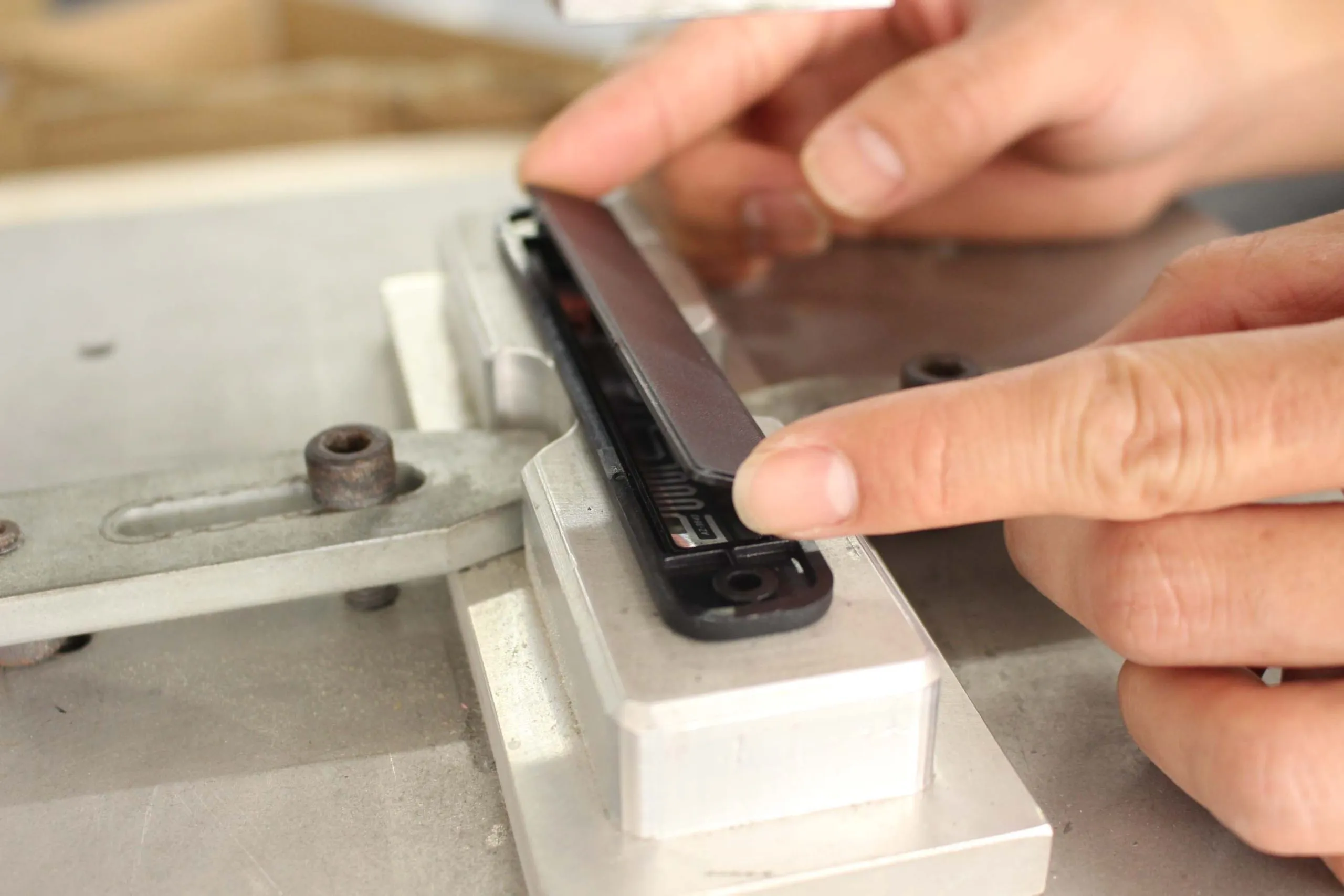
RFID tool tracking tags on industrial hand tools and equipment

Quick answer

For procurement teams evaluating this stack, RFID tool tracking uses durable on-metal RFID tags (Xerafy, Omni-ID, HID, Confidex) on hand tools, power tools, calibrated metrology equipment and aerospace tooling to automate tool-crib check-out / check-in, locate missing tools, prevent tool loss on job sites, satisfy ISO/IEC 17025 calibration laboratory accreditation, AMS 2750 / NADCAP AC7102 heat-treatment instrumentation requirements, ATA Spec 2000 Ch. 9-5 RFID-on-parts (aviation MRO), and FOD (Foreign Object Debris) prevention in safety-critical environments. Manufacturing plants, construction companies, airlines (Boeing / Airbus / Lockheed Martin / GE Aviation MRO), military depots (US DoD / DLA per MIL-STD-129R IUID) and maintenance organisations achieve 70–90 % tool-loss reduction post-rollout.

  • Automated check-out/check-in. Workers scan their badge and tools are automatically checked out to them via RFID, creating an audit trail without manual paperwork.
  • Missing tool alerts: RFID-enabled tool crib systems flag overdue tools, and mobile handheld readers help locate missing tools on the shop floor or job site.
  • Calibration and inspection compliance. Each tool's RFID tag links to its calibration schedule, inspection history and maintenance records in the asset management system.
10+ Years ISO 9001 500+ Clients 50+ Countries

Featured Tool Tracking Products

SKUs we typically deploy for tool tracking. Tap a card for specs and samples.

At a glance

Use these short answers to decide whether this page matches the project before moving into the detail.

Tool population segments served

Hand tools — wrenches, screwdrivers, pliers, hammers, sockets, ratchets in tool cribs. Power tools — drills, saws, grinders, sanders, impact wrenches in trade-shop / job...

On-metal tag form factor library

Micro on-metal (10×5 mm) — Xerafy XS, Confidex Halo, HID Trusted Tag — for individual hand tools. Standard on-metal (25×25 mm) — Xerafy Cargo Trak, Omni-ID Adept, Avery...

ISO/IEC 17025 calibration compliance integration
  • ISO/IEC 17025:2017 — General requirements for the competence of testing and calibration laboratories.
  • Each tool's RFID tag links to traceable calibration record + due-date + last-calibration certificate.
  • Out-of-cal alarm: tool checked out past due-date triggers operator + supervisor notification.
  • Calibration-cycle automation: tool returned at due-date routes to calibration lab queue automatically.
  • Certificate of calibration linked via GS1 GIAI-96 / asset ID — auditable from tag scan.
  • ANAB (ANSI National Accreditation Board) audit-ready evidence pulled from RFID event log.
  • A2LA (American Association for Laboratory Accreditation) — alternative accreditation body.
AMS 2750 / NADCAP AC7102 heat-treatment compliance
  • AMS 2750 (Aerospace Material Specification) — pyrometry requirements for heat-treatment processes.
  • NADCAP AC7102 — heat-treatment audit checklist; calibrated instrumentation tied to RFID asset ID.
  • CQI-9 (AIAG) — automotive heat-treatment system assessment; same RFID-tracked instrumentation pattern.
  • Thermocouple + pyrometer + survey-instrument calibration cycle tied to RFID tag.
  • Furnace-survey schedule tracking: SAT (System Accuracy Test) + TUS (Temperature Uniformity Survey).
  • Out-of-cal instrument lockout: RFID-controlled tool-crib refuses checkout if calibration past due.
ATA Spec 2000 Ch. 9-5 aviation MRO + FOD prevention
  • ATA Spec 2000 Ch. 9-5 — Airlines for America RFID-on-parts specification extending to MRO tooling.
  • FAA Advisory Circular 20-162A — RFID-tagged aviation components and tooling.
  • FOD prevention: tool inventory before / after task verifies all tools accounted for (NASA-style configuration management).
  • Boeing / Airbus / Lockheed Martin tool-control programmes — every tool RFID-tagged + tracked in EDC (Engineer Data Card).
  • GE Aviation MRO + Pratt & Whitney + Rolls-Royce overhaul shops — RFID-tracked specialty tooling.
  • MRO-side EAM integration: IFS Cloud, IBM Maximo Aviation, Rusada ENVISION, Trax Maintenance.
  • Tool-control SIB (Service Information Bulletin) compliance — auditable per-task RFID record.
Tool-crib hardware + workflow
  • Smart tool cabinet — RFID-enabled drawer / cabinet that auto-checkouts on patron-card swipe (CribMaster / Snap-On Level5 / Plastic Innovations).
  • Vending-machine tool-crib — RFID + barcode + biometric vending of consumables + tools (Apex Industrial Automation).
  • Portal-style check-out — patron walks through RFID portal carrying tools; auto-attribution.
  • Handheld search reader — Zebra MC3300xR / Honeywell CT60 / TSL 1128 for finding lost tools by signal strength.
  • Fixed reader at exit gate — alerts on tool leaving facility without authorised checkout.
  • Cloud-managed crib platform: CribMaster, Snap-On Level5, ToolHound, AccessLogix, Lista InventoryMate.
EAM / CMMS integration matrix
  • IBM Maximo + Maximo Application Suite — enterprise EAM dominant in aviation + utilities + oil & gas.
  • SAP PM + SAP Plant Maintenance — manufacturing + heavy industrial.
  • Infor EAM + Infor M3 — process manufacturing.
  • GE Digital APM (Asset Performance Management) — predictive-maintenance pairing.
  • Oracle EAM + Oracle Fusion Asset Tracking — enterprise full-suite.
  • ServiceNow ITAM — IT-tool overlap.
  • CMMS specialty: Fiix (Rockwell), UpKeep, Limble, MaintainX, Hippo CMMS, eMaint.
  • Tool-specific: CribMaster ToolKeeper, Snap-On ATC (Automated Tool Control), ToolHound.
Programme economics + TCO
  • Per-tag BOM: $0.50–$2.00 micro on-metal (Xerafy XS / Confidex Halo / HID Trusted Tag); $1.00–$5.00 standard on-metal; $5.00–$25.00 ruggedised mil-spec.
  • Application labour: $1–$5 per tool epoxy / rivet / screw-mount in-house; outsourced $5–$15.
  • Reader hardware: $1,500–$5,000 fixed reader; $500–$2,000 handheld; $5K–$50K smart cabinet per crib.
  • Software / EAM SaaS: bundled with existing IBM Maximo / SAP PM / GE Digital APM / Oracle EAM contract.
  • Tool-loss reduction: 70–90% post-RFID rollout.
  • Search-time reduction: 50–70% reduction in time spent locating missing tools.
  • Calibration-compliance audit time: 60–80% reduction on ISO 17025 / NADCAP / FAA audit-prep.
  • Payback: 6–18 months depending on tool inventory size + loss-rate baseline.
Implementation programme stages
  • Stage 1 — Tool population audit + EAM platform identification.
  • Stage 2 — Tag form-factor + chip selection per tool category.
  • Stage 3 — Application method + pilot 100–500 tool tagging.
  • Stage 4 — Tool-crib hardware + reader infrastructure deployment.
  • Stage 5 — EAM integration + calibration cycle linkage.
  • Stage 6 — Operator training + SOP rollout.
  • Stage 7 — First quarter operational tuning + ISO/NADCAP audit prep.
  • Stage 8 — Continuous lifecycle + replacement scheduling + multi-site scale.
What this solution is NOT — adjacent scope
  • NOT a generic RFID asset-tracking programme — see /solutions/rfid-asset-tracking-labels/ for IT + fixed-asset programmes.
  • NOT a single SKU page — see /products/rfid-tags/rfid-tool-tag/ + /products/rfid-tags/rfid-tool-tracking-tag/.
  • NOT a generic on-metal tag — see /products/rfid-tags/rfid-anti-metal-tag/ + /products/rfid-tags/anti-metal-uhf-it-asset-tag/.
  • NOT a defence weapons-tracking programme — see /products/rfid-tags/rfid-weapon-tracking-tag/ + /products/rfid-tags/rfid-ammo-can-tag/.
  • NOT a returnable container programme — see /products/rfid-tags/rfid-returnable-container-tag/.
  • NOT a supply-chain visibility programme — see /solutions/rfid-supply-chain-management/.

How RFID tool tracking works

Ask any shop foreman where a specific torque wrench is and you get one of two answers: an exact location, or a long pause. Tools have always run on an honor system — a sign-out clipboard, a shadow board, and quiet faith that everyone returns what they borrowed — and the honor system has always leaked. RFID tool tracking swaps the faith for a record: every tool reports where it is and who has it, without anyone stopping to write it down.

  • 90%Reduction in tool loss
  • 10 mmSmallest tag size
  • 1-5 mMetal-mount read range
  • EAM/CMMSSystem integration
  • Durable RFID tags: small UHF or NFC tags are attached to each tool using epoxy, bolt mounting, or cable ties. Tags withstand drops, vibration, oil, chemicals and temperature extremes found in industrial environments.
  • Tool crib automation: when a worker checks out tools, an RFID-enabled cabinet or portal reads all tags simultaneously and records which tools left with which employee, replacing manual sign-out sheets.
  • Mobile search: maintenance staff use handheld RFID readers to walk through a shop floor, truck, or job site and locate tagged tools by signal strength, finding missing items in minutes instead of hours.
  • Automated inventory: periodic or real-time RFID scans count all tools in the crib, on the floor, and checked out, providing a complete inventory snapshot without manual counting.
  • Integration: RFID tool data feeds into EAM (Enterprise Asset Management), CMMS (Computerized Maintenance Management System), or ERP systems for calibration scheduling, procurement triggers and cost tracking.

RFID tags for tool tracking

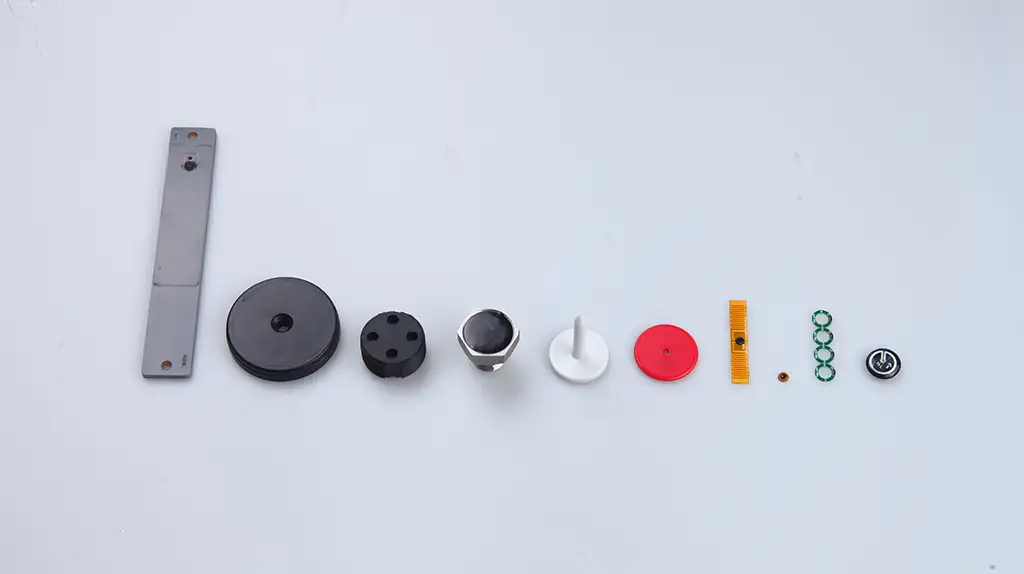
Metal-mount tags

Small UHF on-metal tags (10-25 mm) for steel tools and hand tools.

Cable-tie tags

UHF tags with integral cable-tie for power tools and irregular equipment.

Bolt-mount tags

Screw-on UHF tags for permanent attachment to heavy equipment and jigs.

Epoxy NFC tags

Tap-to-read tool identification using smartphones for small tools.

Embedded tags

RFID chips inside tool handles for tamper-proof OEM identification.

Manual sign-out + barcode tool-crib (legacy)

  • Manual paper sign-out at tool crib — no audit trail, frequent abandonment.
  • Barcode scan one tool at a time — slow, line-of-sight required.
  • Tool-loss rate 5–15 % annually; replacement cost compounds.
  • Calibration-compliance audit prep painful — paper certificates + spreadsheet.
  • FOD risk on aerospace MRO floors — manual tool-count before / after task.
  • Out-of-cal tools accidentally checked out — production scrap + audit findings.

RFID smart-cabinet + EAM-integrated tool tracking

  • Smart cabinet auto-checkout on badge swipe — every event logged with timestamp.
  • Portal reads all tools simultaneously at exit — sub-second batch read.
  • Tool-loss rate drops 70–90 % post-rollout.
  • Calibration audit: ISO 17025 / NADCAP / FAA evidence pulled from RFID + EAM event log.
  • FOD prevention: tool-count before / after task automated; missing-tool alarm immediate.
  • Out-of-cal lockout: cabinet refuses checkout if calibration past due-date.
  1. Stage 1 — Tool population audit

    Inventory tool categories: hand tools (wrenches / screwdrivers / pliers), power tools (drills / saws / impact), calibrated metrology (torque wrenches / micrometers / gauges), aerospace MRO tooling, manufacturing fixtures + jigs. Map tool count per category + value + loss-rate baseline.

  2. Stage 2 — Tag + EAM + reader infrastructure

    Choose tag form factor per tool: micro on-metal (Xerafy XS / Confidex Halo) for hand tools; standard on-metal (Avery Dennison AD-301r6) for power tools; bolt-mount for fixtures; cable-tie for cords. Identify EAM consumer: IBM Maximo / SAP PM / Infor EAM / Oracle EAM / GE Digital APM / CribMaster.

  3. Stage 3 — Application method + pilot 100–500 tools

    Application: epoxy + rivet + screw-mount + cable-tie per tool category. Pilot 100–500 tools at one crib. Validate read at portal + smart-cabinet + handheld. Confirm calibration-cycle integration with traceable record.

  4. Stage 4 — Smart cabinet + portal install

    Tool-crib hardware deploy: smart cabinet (CribMaster / Snap-On Level5 / Plastic Innovations) + vending-machine (Apex Industrial Automation) + portal at crib exit + handheld search reader. Network + firewall + power + integration test.

  5. Stage 5 — EAM integration + calibration cycle linkage

    RFID asset ID linked to EAM record per tool. Calibration cycle + due-date + last-cert linked. Out-of-cal alarm + lockout configured. Per-task tool-count automation for FOD-critical environments.

  6. Stage 6 — Operator training + SOP rollout

    Train operators on new check-out / check-in workflow. Update SOP for tool-handling. Train supervisors on tool-loss alarm response. Train cal-lab on automated calibration-cycle queue handling.

  7. Stage 7 — First quarter operational tuning + audit prep

    Monitor tool-loss + tool-search-time + calibration-compliance metrics. Tune cabinet rules + alarm thresholds. Prepare ISO/IEC 17025 + NADCAP / AMS 2750 + FAA AC 20-162A audit evidence pull.

  8. Stage 8 — Continuous lifecycle + multi-site scale

    Operating playbook — industrial, aerospace-aviation-mro, government-defense-supply-chain, data-center-it-asset-tracking and laundry-services programmes — quarterly tool-inventory cycle + tag-replacement reserve at 1–3 % annual; annual calibration-cycle review; multi-site scale-up across plant + crib estate; chip-family refresh on 5–7 year cycle (Monza R6 → M730 → M750 → M800).

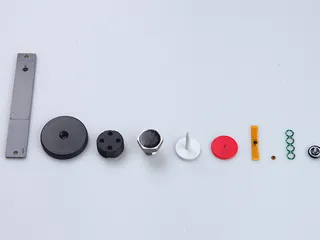
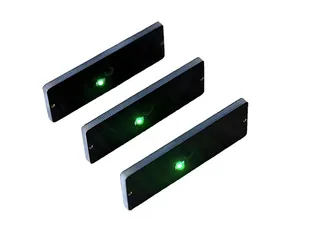
  • Metal-mount tool tags. Small UHF on-metal tags (10-25 mm) that mount directly on steel tools, wrenches, drill bits and hand tools without losing read performance.
  • Cable-tie tags: UHF tags with integral cable-tie mounting for power tools, air hoses, extension cords and irregularly shaped equipment.
  • Bolt-mount tags: screw-on UHF tags for permanent attachment to heavy equipment, jigs, fixtures and machining tools.
  • Epoxy-coated NFC tags. Small NFC tags adhered to tool handles with industrial epoxy for tap-to-read tool identification using smartphones.
  • Embedded tags: RFID chips embedded inside tool handles or housings during manufacturing for tamper-proof, invisible identification (OEM partnerships).

On-metal tag library — Xerafy / Omni-ID / Confidex / HID / Smartrac

Mount an ordinary RFID label on a steel wrench and it goes effectively deaf — metal detunes the antenna and swallows the signal. That one physics problem is why on-metal tags are their own engineering discipline rather than a sticker you peel and forget. The catalogue below is organised around the two questions a tool crib actually cares about: where does the tag go, and what does it have to survive?

  • Xerafy — Singapore-based, specialised in metal-mount + harsh-environment UHF tags. Flagship: Dot XS (16 × 6 × 3 mm, world's smallest UHF on-metal tag, ~1m read range), Mercury Metal Skin (peel-and-stick, 5m), Slim Trak (10 × 30 × 1.5 mm), Cargo Trak (cargo-hold rugged), DataTrak II (high-temp 250°C autoclave + steam sterilisation).
  • HID Omni-ID — UK-based, broad ruggedised tag portfolio. Flagship: Fit 220 (small on-metal), Fit 200 (16 × 6 × 3 mm), Power 415 (15m on-metal long range), IQ 600 (high-temp 230°C), Survivor 800 (UWB + RFID hybrid for asset + worker location).
  • Confidex (Beontag) — Finnish + multi-region, common in retail + industrial + supply chain. On-metal: Carrier Tough Slim (10 × 60mm, 7m), Heavy Metal (large industrial 25 × 100mm, 10m), Steelwave Micro II (small on-metal).
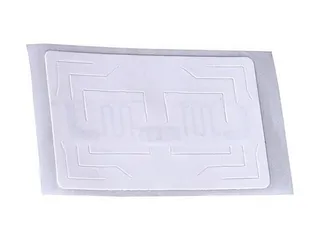
  • Smartrac (Avery Dennison) — flagship paper-face inlays + on-metal Foam-back inlays. SteelWeb / Smart Wraps for tube + cylindrical metal. Primary supplier to retail apparel programmes; growing on-metal portfolio.
  • Identiv (Identive) — US-based, mid-volume custom on-metal + harsh-environment. Tags from cable management to laundry to medical instrument tracking.
  • Tageos — France-based paper-face inlays primarily; on-metal via partnership with substrate vendors.
  • Beontag (formerly Beontag and Beontag Latin America) — Brazilian-headquartered, growing on-metal + small-form-factor.
  • Murata — Japanese silicon + antenna integrated solutions for IoT + automotive metal-mount applications. LXMS line for small embedded form factors.
  • GAO RFID / Mojix Tilix — niche on-metal for asset + IT-asset tracking.
  • Form factors for tools — small wrench / drill-bit (10-16mm dot), medium socket / hand-tool (20-30mm peel-and-stick or slim), large power-tool / equipment case (40-100mm housing), torque wrench / metrology calibration (durable PCB-mount or epoxy housing surviving repeated wash + autoclave).
  • Critical specs to match — IP rating (IP67/IP68 for wash-down areas), operating temperature (-40°C to +85°C standard; +200°C+ for heat-treatment + autoclave), chemical resistance (oil + coolant + solvent), impact rating (drop-on-concrete repeatability), read range on target metal at target reader power.

ISO/IEC 17025 calibration workflow — closing the audit loop

  1. Step 1
    ISO/IEC 17025:2017 — General requirements for the competence of testing and calibration laboratories; A2LA + ANAB + UKAS + DAkkS + ACLASS accredited cal labs operate under this standard. Every calibrated metrology tool has a calibration certificate + cycle-due-date + traceability to a national metrology institute (NIST in US, NPL in UK, PTB in Germany).
  2. Step 2
    RFID-tracked calibration workflow — tool checked into cal lab: handheld scan + cal-lab MES system creates 'in-calibration' record + suspends production-use status. Calibration performed + certificate uploaded + signed digitally. Tool checked out: scan + system updates next-cal-due date + restores production-use status.
  3. Step 3
    Out-of-cal alarm — production-floor reader detects tool with expired cal date in active use → triggers EAM + supervisor alarm + work-order hold (quality hold) until tool returned to cal lab.
  4. Step 4
    Calibration-certificate chain — Each cert linked to ISO/IEC 17025-accredited cal lab + accreditation cert + measurement uncertainty + traceability chain to NIST (or peer NMI). For aerospace + medical + pharma, the certificate-chain is auditable in EAM.
  5. Step 5
    AS9100 (aerospace QMS) + IATF 16949 (automotive QMS) + ISO 13485 (medical device QMS) + 21 CFR Part 820 (FDA QSR) all reference ISO/IEC 17025 calibration traceability for production-floor tooling.
  6. Step 6
    Cal-lab software integration — Cyber Metrology + Beamex CMX + ProCalV5 + GageTrak + Pulse — these MES platforms integrate with RFID workflow for automated cal-cycle queue + cert archival + audit pull.
  7. Step 7
    Field calibration — for large + immobile production tooling (e.g., overhead cranes, pressure vessels), the cal lab brings calibration to the tool; RFID tag captures the field-cal event timestamp + technician ID + cert reference.
  8. Step 8
    Cal cycle reserve — typical metrology tool cal cycle 6 months to 12 months; complex CMM (Coordinate Measuring Machine) annual; torque wrench 6 months or 5,000 cycles whichever first; humidity / temperature chamber 12 months. RFID-tracked cycle-due alerts trigger 30 + 14 + 7 + 1-day reminders.
  9. Step 9
    Cost — Cal-lab service typically $80-$300 per simple instrument (caliper, micrometer), $200-$800 per torque wrench / pressure gauge, $1,500-$5,000 per CMM / spectrometer / mass-spec. Recall-cycle compliance scoring directly affects ISO/IEC 17025 + AS9100 + IATF 16949 + 21 CFR 820 audits.

AMS 2750G + NADCAP AC7102 + AS9100 — aerospace heat-treatment + QMS

  • AMS 2750G (SAE International, April 2022) — Pyrometry standard for heat-treatment furnaces + instrumentation used in aerospace + defence. Covers SAT (System Accuracy Test), TUS (Temperature Uniformity Survey), instrumentation calibration cycles, sensor TC (thermocouple) life management.
  • AMS 2750G classifications — Class 1 (±3°F or ±2°C) tightest tolerance for engine castings + critical aerospace alloys; Class 2 (±5°F or ±3°C); Class 3 (±10°F or ±5°C); Class 4 (±15°F or ±8°C); Class 5 (±25°F or ±14°C). Each requires specific instrumentation traceability + cal cycle.
  • NADCAP AC7102 (Performance Review Institute) — Heat treatment audit checklist used by Boeing + Lockheed + Raytheon + Northrop Grumman + Airbus + Rolls-Royce + Pratt & Whitney + GE Aviation suppliers. Annual audit cycle. Failure = loss of NADCAP accreditation = loss of prime contract.
  • RFID role in AMS 2750G + AC7102 — every thermocouple + furnace control instrument + temperature recorder + transit thermocouple has RFID tag with: cal-due date + last-SAT date + last-TUS date + sensor-life remaining (TC degradation). Heat-treat operator scans tag before charging furnace; system blocks charge if any instrumentation is out of cal.
  • AS9100 (Rev D, 2016) — aerospace Quality Management System building on ISO 9001 + adding aerospace-specific clauses: configuration management (8.1.2), risk management (8.1.1), counterfeit-part prevention (8.1.4), FOD prevention (8.5.4), production process verification (8.5.1.2). RFID tooling traceability supports all four.
  • AS5553 (Rev D, 2022) — counterfeit electronic parts prevention; RFID-tracked tooling on production line provides chain-of-custody evidence preventing counterfeit-tool entry.
  • Aerospace cal-cycle reality — typical jet-engine assembly facility has 50,000-200,000 calibrated tools + instruments; RFID-enabled cal-cycle compliance reduces audit-finding non-conformances from ~50/audit to <5/audit at Boeing + Airbus tier-1 suppliers.
  • Compliance cost avoidance — Boeing 787 + 737 MAX programmes saw $millions in production-line stoppages from tool-traceability gaps; NADCAP audit findings drive supplier-disqualification risk worth $50M-$500M in contract value.
  • Adjacent specs — DO-160 (avionics environmental), DO-178 (avionics software), DO-254 (avionics hardware), AS9120 (aerospace distribution), AS9145 (APQP for aerospace), all reference back to AS9100 + RFID-supported tool + production-process traceability.

Aerospace MRO + FOD prevention — FAA AC 20-162A + ATA Spec 2000 Ch. 9-5

  • FOD (Foreign Object Debris / Damage) — tools + parts + debris left in aircraft engines, fuel tanks, control surfaces, landing gear bays during maintenance; root cause of multiple commercial + military aviation accidents (Concorde 2000 + recurring engine FOD events).
  • FAA AC 20-162A (2017) — RFID Identification of Aircraft Components; advisory circular permitting RFID for aircraft part traceability under 14 CFR 21 + 14 CFR 43 + 14 CFR 145; extended in practice to MRO tooling for FOD prevention.
  • ATA Spec 2000 Ch. 9-5 (Airlines for America) — RFID on parts specification; harmonised globally for commercial aviation; Boeing + Airbus + Embraer all reference; covers passive UHF + memory layout + read-write protocol + lifecycle data carrier.
  • MRO + FOD workflow — every tool in an MRO bay has RFID tag; tools issued at tool crib + scanned on aircraft (entry to aircraft cabin / engine bay / fuel tank) + scanned at exit. Mismatch (tool entered but not exited) triggers Code Red FOD alarm + aircraft hold until tool found.
  • Boeing FOD programme — 'tool accountability' workflow at 787 + 737 + 777X final assembly + Renton + Everett + Charleston facilities; RFID tool-crib + on-aircraft portals + handheld scan.
  • Airbus FOD programme — equivalent workflow at Toulouse + Hamburg + Tianjin + Mobile final assembly lines; Airbus 'Tool Trace' programme.
  • Tier-1 MRO providers — Lufthansa Technik, ST Engineering, AAR Corp, HAECO, Delta TechOps, AFI KLM E&M, GE Aerospace, Pratt & Whitney, Rolls-Royce Aerospace, Honeywell Aerospace — all run RFID tool-tracking programmes.
  • Reader hardware in MRO — Impinj R700 fixed portals at hangar entry/exit + on-aircraft handhelds (Zebra MC3300xR, Honeywell CT60-XP); on-engine + on-aircraft portable reader for confined-space tool inventory.
  • FAA Part 43 + 145 documentation — every aircraft maintenance action recorded; RFID tool ID becomes part of work-order documentation, providing forensic evidence for FOD events.
  • Cost avoidance — Single FOD event in commercial engine: $100K-$5M repair + downtime; in military aircraft: $1M-$50M + safety risk. Programme TCO recovers in months on a single avoided event.

EAM / CMMS integration — IBM Maximo / SAP PM / Infor EAM / Oracle eAM

  • IBM Maximo — Tier-1 enterprise EAM, dominant in oil + gas + utilities + nuclear + aerospace MRO + government. Native RFID integration via Maximo Anywhere + Maximo Mobile; tool + asset tracking workflows; calibration cycle management module.
  • SAP PM (Plant Maintenance) + EAM — Tier-1 enterprise EAM in SAP-stack manufacturing + utilities + chemical + automotive. Asset master integration with RFID via SAP S/4HANA + SAP EWM Asset Tracking.
  • Infor EAM (formerly Infor MP2 + Datastream 7i) — Tier-1 + mid-market, common in food + bev + manufacturing + transit + healthcare. Native RFID middleware adapter.
  • Oracle eAM (Enterprise Asset Management) — module of Oracle E-Business Suite + Oracle Fusion Cloud; common in Oracle-stack manufacturing + utilities.
  • Microsoft Dynamics 365 Field Service + Asset Management — Microsoft ecosystem; emerging in mid-market.
  • Mid-market CMMS — UpKeep (cloud-native SMB), Fiix Software (Rockwell Automation, mid-market), eMaint (Fluke), Hippo CMMS, MaintainX, Asset Panda, ServiceChannel.
  • Calibration-specific MES — Beamex CMX (best-in-class for calibration management, particularly pharma + nuclear), Pulse (Gage Repeatability and Reproducibility + cal-cycle), Cyber Metrology, GageTrak, ProCalV5.
  • Tool-crib specific software — CribMaster (Stanley Black & Decker, dominant US industrial), AutoCrib, ToolHound, Snap-on Industrial Brand Group ATC (Automated Tool Control), Apex Industrial Technologies (Endries + Fastenal partners).
  • Aviation MRO MIS — Swiss Aviation Software AMOS (dominant European), Trax (Latin America + global), Aerros (US regional), Ramco Series 5 + 6 (Asia + Middle East), Mxi Maintenix (Airbus subsidiary).
  • Integration pattern — RFID reader → middleware (Impinj ItemSense + Zebra Savanna + Pyramid Mosaic + RFID4U Streams) → EAM/CMMS via REST + SOAP + HL7 (medical) + IDoc (SAP) + EPCIS 2.0.
  • Implementation reality — most enterprise EAM rollouts already have asset master + work-order + cycle-count modules in place; adding RFID is an integration layer on top, not a replacement; 4-8 month implementation typical for medium complexity.

Programme economics + 70-90% tool-loss reduction worked example

The worked example is below, but the line item that surprises finance most never shows up on the savings sheet: the cheapest tool in any inventory is the one you already own and simply can't find. A large share of "lost" tools were never lost — they were misplaced, written off, and quietly re-purchased. Counting what you already have, continuously, turns out to be the rare efficiency programme that pays for itself by stopping you from buying the same socket set over and over.

  • Tool tag unit cost: small dot on-metal (10-16mm) $0.80-$2.50 at 5K+ qty; medium hand-tool tag (20-30mm) $1.20-$3.50; large power-tool / equipment housing $2.50-$6.00; metrology / autoclave-rated $5-$15; high-temp heat-treatment-rated $15-$50.
  • Reader capex per tool crib: smart-cabinet (CribMaster Aurora + AutoCrib + AccuLine) $25K-$80K per cabinet; tool-crib portal $15K-$40K per door; handheld $1,500-$3,000; antenna + cabling + power $5K-$15K per zone. Typical mid-size plant: $100K-$400K for full tool-crib RFID coverage.
  • EAM / CMMS integration: $30K-$200K one-time integration + $20K-$80K annual support depending on EAM platform + complexity.
  • Year-1 total cost — typical 50K-tool manufacturing plant: 50K tags × $2 average = $100K; 4 tool cribs × $50K = $200K; 8 handhelds × $2K = $16K; integration + services $80K. Total ~$400K, ~$8 per tool one-time cost.
  • Year-1 savings — 50,000-tool inventory at $40/tool average = $2M tool inventory replacement value; 10% annual loss baseline = $200K/year wastage. 75% loss reduction (within published 70-90% range) saves $150K/year. Tool-search-time reduction: 50K-tool plant has ~100 hours/week of search waste at $40/hour blended = $4K/week = $200K/year; 60% reduction saves $120K/year. Compliance avoidance (aerospace AS9100 / NADCAP audit findings) saves $200K-$1M/year. Total benefit Year-1: $470K-$1.27M.
  • Payback typically 12-18 months for industrial + manufacturing; 6-12 months for aerospace MRO (FOD prevention drives faster payback); 18-30 months for low-value tool populations.
  • Procurement levers — SKU consolidation (3-5 strategic tag form factors covering 90% of tool count) yields 15-25% unit-price improvement; pre-encoding to GIAI-96 + facility prefix saves $0.50-$1.50 per tag vs on-site encoding; reader fleet standardisation (one Impinj model or one Zebra model across plant) reduces maintenance overhead.
  • Compliance avoidance value — aerospace AS9100 / NADCAP audit failure: $50M-$500M in lost contract value; medical 21 CFR 820 + ISO 13485 audit failure: FDA Form 483 + warning letter + product holds; pharma USP <1058> non-compliance: FDA Form 483 + production hold.
  • Hidden Year-2+ savings — purchase-deferral on duplicate tool buying (tools 'lost' that were actually misplaced) typically 5-15% of tool budget; reduced consumable replacement (drill bits, taps, dies, end-mills) on tools that were sharpened + maintained on schedule due to RFID-driven utilisation monitoring.

Useful next pages

Use these linked product, guide and comparison pages to keep the next click specific and practical.

Tool tracking RFID products

Durable RFID tags designed for tools and equipment.

FAQ

How small are RFID tags for hand tools?

Our smallest metal-mount UHF tool tags are 10 × 5 mm — small enough to attach to wrenches, screwdrivers and drill bits without interfering with tool use. Larger tags (20-30 mm) provide longer read range and are suitable for power tools, equipment cases and larger items. NFC tool tags can be as small as 8 mm diameter coin tags.

Do RFID tool tags work on metal tools?

Yes. Our on-metal UHF tags are specifically designed to maintain read performance when mounted on steel and aluminum surfaces. They include a ferrite isolation layer that prevents metal detuning. Read range on metal is typically 1-3 m for small tags and 3-5 m for larger tags. Sufficient for tool crib portals and handheld scanning.

What ROI can we expect from RFID tool tracking?

Organizations typically see 70-90% reduction in tool loss, 50-70% reduction in time spent searching for tools, and elimination of duplicate purchases for tools that are missing but not actually lost. For a manufacturing plant with a $500,000 tool inventory, 10% annual loss reduction alone saves $50,000 per year. Far exceeding the cost of RFID tags and infrastructure.

Which EAM / CMMS systems integrate cleanly with RFID tool tracking?

All major enterprise EAM platforms integrate via standard middleware. IBM Maximo: native via Maximo Anywhere + Maximo Mobile, dominant in oil + gas + utilities + nuclear + aerospace MRO + government. SAP PM + S/4HANA EAM: tightly integrated in SAP-stack manufacturing + utilities + chemical + automotive. Infor EAM: native RFID middleware adapter, common in food + bev + transit + healthcare. Oracle eAM: module of Oracle E-Business Suite + Fusion Cloud. Mid-market: UpKeep, Fiix Software (Rockwell), eMaint (Fluke), Hippo CMMS, MaintainX, Asset Panda. Tool-crib specific: CribMaster (Stanley Black & Decker, dominant US industrial), AutoCrib, ToolHound, Snap-on ATC. Calibration-specific: Beamex CMX (best for pharma + nuclear), Cyber Metrology, GageTrak, ProCalV5.

How does RFID tool tracking support ISO/IEC 17025 calibration compliance?

Every metrology / calibrated tool carries an RFID tag bound to its calibration record in the EAM/MES. Workflow: tool checked into cal lab triggers an 'in-calibration' record + suspends production-use status; calibration performed + digital certificate uploaded + linked to ISO/IEC 17025-accredited cal lab + traceability chain to NIST/NPL/PTB/peer NMI; tool checked out auto-updates next-cal-due date + restores production-use status. Production-floor reader detects out-of-cal tool in active use → triggers EAM + supervisor alarm + work-order quality hold until tool returns to cal lab. AS9100 + IATF 16949 + ISO 13485 + 21 CFR 820 audit pull happens directly from EAM without manual paper-chase. RFID-enabled cal-cycle compliance reduces audit non-conformances from ~50/audit to <5/audit at major aerospace + medical + pharma tier-1 suppliers.

What's FOD prevention and how does RFID prevent it in aerospace MRO?

FOD (Foreign Object Debris/Damage) — tools or parts inadvertently left in aircraft engines, fuel tanks, control surfaces or landing gear bays during maintenance, causing engine failures or accidents. Single FOD event in a commercial engine costs $100K-$5M repair + downtime; in a military aircraft $1M-$50M + safety risk. RFID workflow: every tool RFID-tagged at tool crib; tools issued + scanned 'on aircraft' (entering cabin / engine bay / fuel tank); tools scanned at exit. Any mismatch (tool entered but not exited) triggers Code Red FOD alarm + aircraft hold until tool found. Boeing 'Tool Accountability' and Airbus 'Tool Trace' programmes formalise this at 787 + 737 + 777X + A350 + A320 final assembly. FAA AC 20-162A and ATA Spec 2000 Ch. 9-5 are the supporting RFID-on-parts standards. Tier-1 MRO providers (Lufthansa Technik, ST Engineering, AAR, HAECO, Delta TechOps, AFI KLM E&M) all run RFID tool-tracking programmes.

Can RFID tool tags survive industrial wash, autoclave or heat-treatment?

Yes — purpose-built tags exist for each environment. Wash-down (food + bev + healthcare): Xerafy DataTrak II + Confidex Heavy Metal + HID Omni-ID Survivor at IP68 + chemical resistance for caustic + acidic wash cycles. Autoclave (medical instrument + pharma): Xerafy DataTrak II + HID Omni-ID IQ 600 rated for 134°C / 30-minute steam-sterilisation cycles repeated 200+ times. Heat-treatment + aerospace pyrometry (AMS 2750G): Omni-ID Power 415 + Xerafy Mercury Metal Skin + Confidex Steelwave Titanium rated to +200°C continuous; specialist tags to +260°C for short cycles. Cryogenic (LNG + space): tags rated to -196°C exist for liquid nitrogen / liquid hydrogen environments. Always pilot in actual environment before production — claimed temperature ratings can degrade over repeated cycles.

Sources & references

Primary standards, OEM datasheets and regulatory documents cited by this article. All URLs were verified on the access date shown below.

  1. ISO/IEC 18000-63:2015 — UHF Gen2 air interface (860–960 MHz)ISO · Mar 1, 2015 · accessed May 11, 2026

    UHF Gen2 air-interface underlying RFID tool-crib, tool-box and construction-site tool-tracking reads.

  2. GS1 EPC Tag Data Standard (TDS) 2.1GS1 · Jan 1, 2024 · accessed May 11, 2026

    GIAI-96 encoding scheme used for individual tool and asset serialisation in RFID tool-tracking.

  3. ISO/IEC 17025:2017 — General requirements for testing and calibration laboratoriesISO · Nov 1, 2017 · accessed May 11, 2026

    Calibration-laboratory accreditation standard requiring traceable calibration record per RFID-tracked metrology tool.

  4. AMS 2750G — Pyrometry (heat-treatment instrumentation requirements)SAE International · Apr 1, 2022 · accessed May 11, 2026

    Aerospace heat-treatment pyrometry standard requiring calibrated instrumentation tracked via RFID asset tag.

  5. NADCAP AC7102 — Heat Treatment audit checklistPerformance Review Institute (PRI) · Jan 1, 2024 · accessed May 11, 2026

    NADCAP heat-treatment audit checklist using RFID-tracked instrumentation for calibration cycle management.

  6. Xerafy — on-metal and rugged UHF RFID tagsXerafy · Jan 1, 2024 · accessed May 11, 2026

    Reference vendor for on-metal RFID tool tags used in aviation, oilfield and manufacturing tool-tracking.

  7. HID Omni-ID — ruggedised UHF RFID tagsHID Global / Omni-ID · Jan 1, 2024 · accessed May 11, 2026

    Reference vendor for industrial-grade on-metal and high-temperature RFID tool-tracking tags.

  8. IEC 60529:2013 — Degrees of protection (IP code)IEC · Aug 1, 2013 · accessed May 11, 2026

    Ingress-protection grading used when specifying dust / water-resistant RFID tool tags.

  9. FAA AC 20-162A — RFID Identification of Aircraft ComponentsFederal Aviation Administration · Jan 1, 2017 · accessed May 11, 2026

    FAA RFID-on-parts advisory circular extending to MRO tooling traceability + FOD prevention.

  10. ATA Spec 2000 Ch. 9-5 — RFID on partsAirlines for America (A4A) · Jan 1, 2024 · accessed May 11, 2026

    Aviation-industry RFID specification extending to tool-tracking in MRO environments — ATA spec aligned with FAA AC 20-162A.

  11. AS9100 Rev D — Aerospace Quality Management SystemSAE International · Sep 1, 2016 · accessed May 11, 2026

    Aerospace QMS building on ISO 9001 with configuration management + risk management + counterfeit-part prevention + FOD prevention clauses — RFID tool traceability supports compliance.

  12. IATF 16949:2016 — Automotive Quality Management SystemInternational Automotive Task Force · Oct 1, 2016 · accessed May 11, 2026

    Automotive industry QMS standard referencing ISO/IEC 17025 calibration traceability for production-floor tooling.

  13. ISO 13485:2016 — Medical devices QMSISO · Mar 1, 2016 · accessed May 11, 2026

    Medical device manufacturing QMS requiring tooling traceability + calibration cycle compliance — RFID tool tracking supports.

  14. 21 CFR Part 820 — FDA Quality System Regulation (Medical Device)U.S. Food and Drug Administration · Jan 1, 2024 · accessed May 11, 2026

    FDA Quality System Regulation requiring documented tooling + production-process traceability for medical-device manufacturing.

  15. Boeing — Tool Accountability + FOD prevention programmeThe Boeing Company · Jan 1, 2024 · accessed May 11, 2026

    Boeing's RFID-enabled tool accountability workflow at 787 + 737 + 777X final assembly preventing FOD events.

  16. IBM Maximo — Enterprise Asset ManagementIBM · Jan 1, 2024 · accessed May 11, 2026

    Tier-1 enterprise EAM dominant in oil + gas + utilities + nuclear + aerospace MRO; native RFID integration for tool + asset tracking.

  17. Beamex CMX — Calibration management softwareBeamex Oy Ab · Jan 1, 2024 · accessed May 11, 2026

    Best-in-class calibration management MES particularly for pharma + nuclear; integrates with RFID workflow for cal-cycle queue + cert archival.

  18. Confidex (Beontag) — industrial RFID tagsConfidex (Beontag) · Jan 1, 2024 · accessed May 11, 2026

    Finnish-headquartered industrial RFID tag manufacturer; Carrier Tough Slim + Heavy Metal + Steelwave on-metal tag families used in tool-tracking.

  19. Performance Review Institute (PRI) — NADCAP accreditationPerformance Review Institute · Jan 1, 2024 · accessed May 11, 2026

    Aerospace special-process accreditation programme; AC7102 heat-treatment + AC7101 chemical-processing + AC7108 brazing audits reference RFID-tracked tooling.

  20. USP <1058> — Analytical Instrument QualificationUnited States Pharmacopeia · Jan 1, 2024 · accessed May 11, 2026

    Pharma analytical instrument qualification + calibration standard; RFID tool tracking supports IQ/OQ/PQ lifecycle documentation.

10+ Years RFID Manufacturing
ISO 9001 Certified Factory
500+ Enterprise Clients
50+ Countries Served

Proud Tek is a Shenzhen-based RFID & NFC manufacturer supplying hotel chains, transit operators, event venues and retail brands worldwide. Every order includes free samples, RF testing and dedicated project support.

Get a Quick Quote

Tell us about your project and we'll respond within one business day. Fields marked (asterisk) are required.

We'll only use this to reply to your inquiry.
Optional, but helps us route your inquiry faster.
e.g. 5,000 pcs
e.g. hotel, event, asset tracking
Chip preference, timeline, special requirements...

Next step

Ready to discuss your project?

Use the contact route when you are ready for pricing, samples, or compatibility help, or continue into the linked product and comparison pages below.