DPP Solution

Digital Product Passport (2026)

EU ESPR 2024/1781 Implementation — Textiles 2027, Batteries Feb 2027, GS1 Digital Link, CIRPASS-2 Reference Architecture, NTAG 424 DNA Procurement Guide

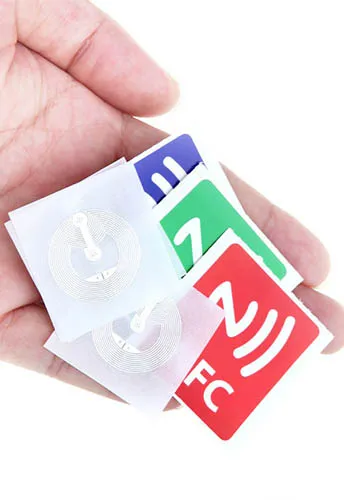
Roll of round NFC digital-seal labels with holographic tamper tails and ISO/IEC compliance badges

Quick answer

Procurement-grade Digital Product Passport (DPP) guide aligned with EU Regulation 2024/1781 (ESPR — Ecodesign for Sustainable Products Regulation, adopted June 2024) plus the earlier EU Regulation 2023/1542 (Batteries Regulation, Battery Passport mandatory February 2027 for batteries above 2 kWh). Walks the phased rollout (minimal compliance 2027 textile delegated act; advanced 2030; full circular-economy 2033), the JRC 18-category priority list (textiles, footwear, furniture, electronics, batteries, tires, mattresses, steel + aluminum), the GS1 Digital Link URL syntax (https://brand.com/01/{GTIN}/21/{serial}) preferred by the EU as the carrier, the CIRPASS-2 EU-funded reference architecture for DPP interoperability, NTAG 424 DNA SUN AES-CMAC authentication for anti-tamper carriers vs static QR + NFC for general-information carriers, and the 18 EU DPP data-element categories (manufacturer, product origin, material composition, recycled content, carbon footprint, repair / take-back, end-of-life recyclability, chain-of-custody, sustainability cert).

  • EU ESPR Regulation 2024/1781 (adopted June 2024) mandates Digital Product Passports across 18 priority product categories. Textile delegated act expected adoption Q4 2026 / Q2 2027; 18-month transition window; enforcement 2028. Battery Regulation 2023/1542 mandates a Battery Passport from February 2027 for batteries above 2 kWh.
  • GS1 Digital Link URL syntax (https://brand.com/01/{GTIN}/21/{serial}) is the EU-preferred DPP carrier. The same URL works as a 2D QR code (Sunrise 2027 transition), NFC tap, and DPP data resolver. Single carrier covers multi-region compliance (EU DPP + planned UK textile labelling + US state-level requirements).
  • Pick the chip by carrier-trust requirement. NTAG 213 (~$0.05–0.15) for general-information DPP carriers; NTAG 213 TagTamper for tamper-evident packaging; NTAG 424 DNA SUN (~$0.20–0.50) for anti-counterfeit-grade DPP carriers where authentication matters as much as data access.
  • CIRPASS-2 (EU-funded reference architecture project) is the DPP interoperability foundation for 2026–2028 deployments. Plan implementation against the CIRPASS-2 data model + resolver specification rather than vendor-proprietary stacks; minimises retrofit risk as ESPR delegated acts harden.
  • DPP data scope: 18 categories per JRC priority list. Each product carries unique digital identifier resolvable to: manufacturer + manufacture location, material composition + recycled content %, carbon footprint, repairability score, take-back / repair flow, end-of-life recyclability, chain-of-custody (CSDDD compliance), sustainability certifications. Implementation pattern: 2026 vendor selection + pilot; 2027 textile category live; 2028 minimal enforcement; 2030 advanced; 2033 full circular.
10+ Years ISO 9001 500+ Clients 50+ Countries

Featured Digital Product Passport Products

SKUs we typically deploy for digital product passport. Tap a card for specs and samples.

At a glance

Use these short answers to decide whether this page matches the project before moving into the detail.

Audience

Brand + procurement teams in textile / footwear / furniture / electronics / battery / tire categories preparing for EU DPP 2027–2033 enforcement. Sustainability + ESG te...

Decision sequence

Regulatory scope: which ESPR delegated acts apply (textiles 2027, batteries 2027, others phased through 2033)? Cross-check with JRC 18-priority list. Carrier syntax: GS1...

EU ESPR Regulation 2024/1781 — the regulatory backbone

For most of industrial history, a physical product told you almost nothing about itself — a care label, a barcode, and a country of origin stamped somewhere unhelpful. The EU has decided that era is over: soon every item placed on its market will carry a digital dossier that travels with it from raw material to recycling bin, and everything below is the work of giving ordinary products that second, digital identity. The Ecodesign for Sustainable Products Regulation (ESPR), formally Regulation (EU) 2024/1781, was adopted in June 2024 as the legal backbone for the Digital Product Passport. ESPR replaces and significantly expands the 2009 Ecodesign Directive, covering almost any physical product placed on the EU market.

**Phased rollout timeline.** ESPR enforcement is phased through delegated acts per product category. The textile delegated act is expected adoption late 2026 / Q2 2027; an 18-month transition window means enforcement starts 2028. Battery Regulation 2023/1542 (adopted earlier but related) mandates Battery Passport from February 2027 for batteries above 2 kWh. Subsequent delegated acts cover footwear, furniture, tires, mattresses, electronics, steel + aluminum and other categories on a multi-year cadence through 2033.

**Three-phase compliance.** Phase 1 — minimal compliance (2027 textile / 2028 enforcement) requires basic product identification, material composition, care instructions and recyclability. Phase 2 — advanced compliance (2030) adds chain-of-custody, recycled-content attestation, sustainability certifications. Phase 3 — full circular-economy compliance (2033) adds take-back, repair, resale provenance, second-hand transfer flow.

**18-category JRC priority list.** The Joint Research Centre published the priority categories for DPP rollout in November 2024: textiles, footwear, furniture, tires, mattresses, electronics, ICT equipment, white goods, batteries, steel + aluminum, chemicals, construction products, packaging, motor vehicles, agriculture / food / beverage products, others. Categories not on the priority list will be added through subsequent delegated acts.

**Carrier requirement** — ESPR requires each product to have a unique digital identifier accessible via NFC tap or QR scan that resolves to category-specific data. GS1 Digital Link URL syntax is the EU-preferred carrier; vendor-proprietary URL schemes risk retrofit cost when ESPR delegated acts harden.

EU Battery Regulation 2023/1542 — Battery Passport first to enforce

Battery Regulation 2023/1542 entered force August 2023 and mandates a Battery Passport from 18 February 2027 for batteries above 2 kWh — electric vehicles, e-bikes, industrial batteries, large consumer electronics. The Battery Passport is the first ESPR-aligned DPP to reach mandatory enforcement; design patterns established here propagate to subsequent textile / footwear / other category DPPs.

  • **Scope** — batteries above 2 kWh placed on EU market from February 2027. Covers electric-vehicle batteries (LFP, NMC, etc.), e-bike + scooter batteries, industrial batteries, large stationary storage (residential solar), and certain large consumer-electronics batteries.
  • **Data scope** — battery chemistry, manufacturer + manufacture location, raw-material origin (lithium, cobalt, nickel, manganese — links to OECD Due Diligence Guidance), recycled-content percentage, carbon footprint per kWh, performance + durability, state-of-health monitoring data, end-of-life recycling instructions.
  • **Carrier** — QR code + GS1 Digital Link URL is mandatory; NFC carrier is optional supplement. Manufacturers can deploy NFC tags alongside the mandatory QR for consumer-facing additional engagement.
  • **Battery Pass Consortium guidance** — the EU-funded Battery Pass project (thebatterypass.eu) published reference data model + content guidance ahead of regulation enforcement. Reference architecture aligns with CIRPASS-2.
  • **Implementation reality** — major battery manufacturers (CATL, BYD, LG Energy Solution, Samsung SDI, Tesla) are in deployment-build phase in 2026. Their Battery Passport implementations set de facto industry patterns that subsequent ESPR delegated acts likely codify.
  • **Connection to ESPR** — Battery Regulation 2023/1542 predates ESPR but aligns with the ESPR data-element approach. Brands implementing Battery Passport gain head-start operational learning for textile / electronics DPP rollouts.

CIRPASS-2 reference architecture — interoperability foundation

CIRPASS-2 (Collaborative Initiative for a Reference Open-source DPP Architecture, Stage 2) is the EU-funded reference architecture project for DPP interoperability. Procurement teams should plan implementation against the CIRPASS-2 data model and resolver pattern rather than vendor-proprietary stacks — minimises retrofit cost when ESPR delegated acts harden.

  • **CIRPASS-2 scope** — EU Horizon Europe funded project; consortium of 30+ industry + research partners; covers reference data model, resolver specification, governance framework, federated DPP architecture.
  • **Data model** — defines DPP data-element categories: manufacturer, product origin, material composition + recycled content, carbon footprint, repair / take-back, end-of-life recyclability, chain-of-custody, sustainability certifications, performance + durability. Each category has standardised fields aligned with ISO / IEC standards.
  • **Resolver pattern** — federated architecture where the carrier URL resolves to the manufacturer's resolver service, which then provides category-specific data. No single centralised DPP database; brands retain data sovereignty.
  • **Governance** — CIRPASS-2 provides reference governance framework for cross-brand data access, regulator inspection workflow, consumer-rights mechanism (right-to-data-portability under GDPR).
  • **Vendor-proprietary risk** — DPP vendors offering proprietary URL schemes or proprietary data models create retrofit risk when ESPR delegated acts publish. The pragmatic procurement choice is CIRPASS-2-aligned vendors (Authena, atma.io, Scantrust, Qliktag have all aligned roadmaps).
  • **JRC priority alignment** — CIRPASS-2 work covers the 18 JRC priority categories; reference architecture is designed to extend to additional categories as delegated acts publish.

Chip selection — NTAG 213 vs 213 TagTamper vs 424 DNA SUN

Chip selection for DPP carriers depends on the trust + tamper-evidence requirement of the data layer. For general-information DPP carriers (textile composition, care instructions, recyclability) NTAG 213 is sufficient. For anti-counterfeit-grade DPP carriers (luxury, pharma, electronics where authentication matters as much as data access) NTAG 424 DNA SUN provides cryptographic authentication.

  • **NTAG 213 (NXP MF0ICU2, 144 B)** — general-information DPP carrier. Chip UID + URL only; no cryptographic authentication. Use case: textile / apparel / footwear DPP where consumer-tap-to-information is the primary value. Cost: $0.05–0.15 per chip; $0.20–0.50 per printed inlay.
  • **NTAG 213 TagTamper** — adds tamper-evident wire-loop detection. Use case: packaging-tampering detection for pharma, cosmetics, supplements. Cost: $0.10–0.18 per chip.
  • **NTAG 424 DNA SUN (NXP NT4H2421Gx)** — AES-128 CMAC per-tap unique URL signing. Server-side validation detects clones in real time. Use case: luxury, electronics, pharma, alcohol, automotive parts where authentication matters as much as DPP data. Cost: $0.20–0.50 per chip.
  • **NTAG 424 DNA TT** — NTAG 424 DNA with tamper-detection wire-loop. Combines AES-CMAC authentication with tamper-evident detection. Cost: $0.30–0.55 per chip.
  • **STMicroelectronics ST25TV02KC** — alternative supplier with AES-128 SUN-equivalent authentication; useful for brands wanting supply-chain diversification.
  • **Hybrid programme** — many brands deploy NTAG 213 across the bulk of SKUs (textile DPP general-information carrier) + NTAG 424 DNA SUN on higher-trust SKUs (luxury / premium / regulated). The chip layer follows the trust requirement, not the brand-tier hierarchy.

Data scope — 18 DPP data element categories

The CIRPASS-2 reference data model defines 18 DPP data-element categories. Each category has standardised fields; specific ESPR delegated acts will dictate which categories are mandatory per product type.

  • **Mandatory vs optional** — ESPR delegated acts dictate which of the 18 categories are mandatory per product type. Textile delegated act expected to mandate: manufacturer, origin, material composition, recycled content, care, sustainability certifications, end-of-life.
  • **Data source integration** — DPP resolver typically reads from: PLM (Centric, Bamboo Rose, PTC FlexPLM) for material + product spec; ERP (SAP S/4HANA, Oracle Cloud) for manufacturer + origin; SCM (Coupa, JAGGAER, Blue Yonder) for chain-of-custody; sustainability platform (Higg Index, EcoVadis, Sphera) for cert + carbon-footprint data.
  • **Versioning** — DPP data changes over product lifetime (recall flag, ownership transfer, repair history). Resolver returns current state; immutable audit log retained server-side for regulator inspection.
  • **Data residency + GDPR** — DPP includes consumer-side personal data (ownership transfer, repair history) which falls under GDPR. Resolver architecture must support GDPR data-subject rights (access, portability, erasure).
Category Data elements Source
Manufacturer identification Company name, address, GLN, EUDAMED registration (for medical devices)Brand-controlled
Product origin Manufacture country / region, factory ID, production dateERP / SCM
Material composition Material breakdown (% per material); GHS hazardous substancesPLM + supply-chain
Recycled content % post-consumer recycled per material; GRS / RCS / SCS cert IDsSupplier attestation
Carbon footprint Cradle-to-gate CO₂e kg per unit; ISO 14067 PCF; PEF where applicableLCA tooling
Repairability score Reparability index (per Article 18 ESPR); spare-part availabilityPLM
Take-back / repair flow Take-back location, repair service URL, recycling instructionsBrand-controlled
End-of-life recyclability Disassembly instructions, material-stream routingPLM + sustainability
Chain-of-custody Tier 1+2+3 supplier list, audit dates, CSDDD complianceSCM + audit
Sustainability certifications FSC, GRS, OK biobased, Cradle to Cradle, Bluesign cert numbersCert body lookup
Performance + durability Expected lifespan, durability test resultsQA / test data
Care + use instructions Wash care symbols, operating temperature, etc.Brand-controlled
Safety information Safety warnings, age restrictions, hazardous componentsQA + regulatory
Modification + customisation Custom configuration data, customer-specific adaptationsOrder management
Resale + ownership transfer First-sale date, ownership transfer history, resale-market provenanceDPP + marketplace integration
Recall information Recall flag, recall date, remediation instructionsBrand-controlled
Spare-part availability Spare-part SKU, ordering URL, repair-station networkPLM
Environmental compliance RoHS, REACH, WEEE, F-gas declarationsCompliance team

Implementation roadmap — pilot to multi-category rollout

DPP implementation typically follows a five-phase roadmap, and the schedule punishes haste and delay with equal enthusiasm. Skip phases and you repay it later in retrofit cost; linger too long in the early ones and the ESPR enforcement calendar arrives without you. The phases below are sequenced so each one earns the right to begin the next.

  • **Phase 1 (Q1–Q3 2026) — pilot SKU + vendor selection.** Pick 1–5 hero SKUs from the highest-priority ESPR category for the brand. Validate carrier (NFC + QR), chip selection, URL syntax (GS1 Digital Link), resolver architecture (CIRPASS-2-aligned), backend integration (PLM + ERP + sustainability data feeds). 1,000–10,000 unit pilot batch.
  • **Phase 2 (Q4 2026 / Q1 2027) — vendor + architecture finalisation.** Lock in chip vendor (NXP NTAG 213 / 424 DNA baseline), tag converter (Smartrac/Avery Dennison, Identiv, Checkpoint), DPP platform (CIRPASS-2-aligned: Authena, Scantrust, atma.io, Qliktag), backend integration. Sign multi-year contracts.
  • **Phase 3 (2027) — category rollout.** Extend to a full product category (all textile / footwear / electronics SKUs). 100,000+ unit volume. Validate carrier + URL + backend at scale. EU DPP textile delegated act adoption; 18-month transition window begins.
  • **Phase 4 (2028) — multi-category rollout + minimal-compliance enforcement.** Extend to additional ESPR categories. EU DPP textile minimal-compliance enforcement live. Each new SKU shipping into EU market has DPP-compliant carrier.
  • **Phase 5 (2030+) — advanced compliance + circular-economy.** Add chain-of-custody data, recycled-content attestation, take-back / repair flow, second-hand transfer flow. 2033: full circular-economy compliance with end-of-life take-back integration.

Carrier cost economics — chip + label + backend at category scale

DPP at category scale (millions of SKUs) has three cost drivers: chip + tag, backend resolver + analytics, and sustainability + compliance data acquisition. There is a dependable irony in the budget — the chip, the line item that always attracts the hardest bargaining, is the smallest of the three at high volume. What moves the total is the resolver you run and the sustainability data you have to go and collect, not the margin you squeezed out of each tag.

  • **Per-unit chip economics** — at 10M unit annual volume + $0.10 per chip = $1M / year chip cost. Backend resolver SaaS at $0.10 per item per year = $1M / year. Total annual cost ~$2–5M for the chip + resolver layer; this is the order-of-magnitude figure for category-scale rollouts.
  • **Scale economies** — chip cost drops 30–50% from 100k MOQ to 1M MOQ; another 20–30% from 1M to 10M. Backend resolver fixed costs amortise more favourably at higher item-count.
  • **First-party vs SaaS** — at >5M annual item volume, first-party server build often pays back within 18–24 months vs SaaS subscription. Below 5M, SaaS time-to-market advantage usually wins.
Cost driver Cost / unit (100k+ volume) Notes
NTAG 213 + paper inlay or printed sticker $0.05–0.30General-information DPP carrier
NTAG 424 DNA SUN + printed sticker $0.20–0.45Anti-counterfeit-grade DPP carrier
Custom tag converter finishing (woven label, hangtag) +$0.10–0.50Adds to base chip cost
Backend resolver (SaaS — Authena, atma.io, Scantrust) $0.05–0.30 / item / yearAnnual subscription per active SKU
Backend resolver (first-party server) Build cost $200K–1M one-timeOperational at ~$5K–50K / month at high scale
Sustainability + cert data acquisition $5K–50K / categoryFSC / GRS / cert lookups + audit fees
PLM / ERP integration engineering $50K–500K / categoryOne-time integration build
Annual operational cost (resolver + analytics) $50K–500K / yearOngoing platform operation

Useful next pages

Use these linked product, guide and comparison pages to keep the next click specific and practical.

DPP carrier products

NFC + QR-pairing tag SKUs for DPP carrier deployment.

Related solutions

Sister anti-counterfeit + brand-protection programmes.

Related editorial

Background reading on DPP regulation + implementation.

FAQ

When does EU DPP enforcement start?

Phased by category. Battery Passport mandatory February 18, 2027 for batteries above 2 kWh (EU Regulation 2023/1542). ESPR (EU 2024/1781) textile delegated act expected adoption Q4 2026 / Q2 2027; 18-month transition window leads to enforcement 2028. Subsequent delegated acts cover footwear, furniture, tires, mattresses, electronics on a phased cadence through 2033. Properties starting 2027 vendor selection will be late for the textile category; plan 2026 pilot + 2027 category-live.

What is GS1 Digital Link and why does the EU prefer it as DPP carrier?

GS1 Digital Link is the URL syntax `https://brand.com/01/{GTIN}/21/{serial}` that combines global GS1 identifiers (GTIN, GLN) with a resolvable web URL. The same URL works as 2D QR code, NFC NDEF record, or manual browser entry — degrades gracefully across carrier types. EU ESPR aligns with GS1 Digital Link because it's a global GS1 standard, supports multiple resolver types, and integrates with the existing GS1 ecosystem. Procurement teams should adopt GS1 Digital Link from day one to avoid retrofitting when ESPR delegated acts publish.

What is CIRPASS-2 and should we align our implementation with it?

CIRPASS-2 is the EU Horizon Europe funded reference architecture project for DPP interoperability. Consortium of 30+ industry + research partners; covers reference data model, resolver specification, governance framework, federated DPP architecture. Procurement teams should plan implementation against CIRPASS-2 patterns rather than vendor-proprietary stacks — minimises retrofit cost when ESPR delegated acts harden. Major DPP platforms (Authena, atma.io, Scantrust, Qliktag) have all aligned roadmaps with CIRPASS-2; ask vendor RFP responses to confirm CIRPASS-2 alignment explicitly.

NTAG 213 or NTAG 424 DNA SUN for DPP carrier?

Depends on trust + tamper-evidence requirement. NTAG 213 (cost $0.05–0.15 per chip) is sufficient for general-information DPP carriers — textile composition, care instructions, recyclability data. No cryptographic authentication; chip UID + URL only. NTAG 424 DNA SUN (cost $0.20–0.50 per chip) adds AES-128 CMAC per-tap signing for anti-counterfeit-grade DPP carriers where authentication matters as much as data access. The hybrid pattern: NTAG 213 for bulk SKUs (textile, furniture, low-counterfeit-risk) + NTAG 424 DNA SUN on higher-trust SKUs (luxury, electronics, pharma, alcohol).

How does Battery Regulation 2023/1542 connect to ESPR 2024/1781?

Battery Regulation 2023/1542 entered force August 2023; Battery Passport mandatory February 2027 for batteries above 2 kWh. It predates ESPR but aligns with the ESPR data-element approach. The Battery Pass Consortium (thebatterypass.eu) published reference data model + content guidance ahead of regulation enforcement; CIRPASS-2 reference architecture aligns with Battery Pass patterns. Brands implementing Battery Passport gain head-start operational learning for textile / electronics DPP rollouts. The Battery Passport is the first ESPR-aligned DPP to reach mandatory enforcement; design patterns established here propagate to subsequent delegated acts.

Which 18 data-element categories does DPP cover?

Per CIRPASS-2 reference data model: manufacturer identification, product origin, material composition, recycled content, carbon footprint, repairability score, take-back / repair flow, end-of-life recyclability, chain-of-custody, sustainability certifications, performance + durability, care + use instructions, safety information, modification + customisation, resale + ownership transfer, recall information, spare-part availability, environmental compliance (RoHS, REACH, WEEE). ESPR delegated acts dictate which categories are mandatory per product type; textile delegated act expected to mandate manufacturer + origin + material composition + recycled content + care + sustainability cert + end-of-life.

Can we use our existing SaaS DPP platform or do we need to build first-party?

Both work; choice depends on scale + sovereignty requirements. SaaS DPP platforms (Authena, atma.io, Scantrust, Qliktag, EVRYTHNG) offer turnkey resolver + analytics at $0.05–0.30 per item per year. Time-to-market advantage; data residency under the SaaS vendor. First-party server build costs $200K–1M one-time + $5K–50K / month ongoing operational; pays back at >5M annual item volume vs SaaS. Many large brands run hybrid — first-party resolver for compliance-critical data + SaaS engagement platform for marketing-side data. Confirm CIRPASS-2 alignment in vendor RFP responses regardless of model.

Does NFC tap replace the QR code or work alongside it?

Alongside, not replace. GS1 Sunrise 2027 is the industry-coordinated transition to 2D barcodes (QR codes with GS1 Digital Link URL) by December 2027. Most consumer-product packages will carry both a printed QR code (visual-layer carrier, universal smartphone camera access) and an NFC tag (physical-layer carrier, faster tap interaction on iPhone XS+ and modern Android). The same URL works for both; consumers self-select based on phone capability + preference. Hybrid NFC + QR carrier programmes yield 30–50% higher consumer-engagement completion than NFC-only or QR-only.

Sources & references

Primary standards, OEM datasheets and regulatory documents cited by this article. All URLs were verified on the access date shown below.

  1. EUR-Lex — Regulation (EU) 2024/1781 (ESPR)EU / EUR-Lex · Jun 1, 2024 · accessed May 11, 2026

    Primary legal citation for EU Digital Product Passport mandate.

  2. EUR-Lex — Regulation (EU) 2023/1542 (Battery Regulation)EU / EUR-Lex · Jul 1, 2023 · accessed May 11, 2026

    Battery Passport mandatory February 2027 for >2 kWh batteries.

  3. EU Commission — ESPR implementation hubEuropean Commission · accessed May 11, 2026

    Work-plan status; textile delegated act priority for 2027.

  4. European Parliament Study — DPP for the Textile SectorEuropean Parliament Research Service · Jan 1, 2024 · accessed May 11, 2026

    Phased rollout 2027 / 2030 / 2033.

  5. CIRPASS-2 EU-funded reference architectureCIRPASS-2 Consortium / EU Horizon Europe · accessed May 11, 2026

    Authoritative reference architecture for DPP interoperability.

  6. JRC — DPP 18 priority categoriesEU Joint Research Centre · Nov 1, 2024 · accessed May 11, 2026

    Priority category list for ESPR rollout planning.

  7. Battery Pass Consortium — Battery Passport Content GuidanceBattery Pass Consortium / EU · accessed May 11, 2026

    Reference data model for Battery Passport implementation.

  8. GS1 Digital Link standardGS1 · accessed May 11, 2026

    Authoritative URL syntax for DPP carriers.

  9. GS1 — Digital Product Passport provisional standardGS1 · accessed May 11, 2026

    Carrier-resolver architecture for EU DPP compliance.

  10. GS1 Sunrise 2027GS1 · accessed May 11, 2026

    Industry transition to 2D barcodes by December 2027.

  11. NFC Forum — Shaping the Future of the Digital Product PassportNFC Forum · accessed May 11, 2026

    Industry-body position on NFC as DPP data carrier.

  12. NXP NTAG 424 DNA datasheet (NT4H2421Gx)NXP Semiconductors · accessed May 11, 2026

    AES-128 SUN message authentication for anti-counterfeit-grade DPP carriers.

  13. NXP NTAG 213 product pageNXP Semiconductors · accessed May 11, 2026

    Entry-tier chip for general-information DPP carriers.

  14. STMicroelectronics — NFC for Digital Product PassportSTMicroelectronics · accessed May 11, 2026

    Alternative chip-vendor alignment with EU DPP carrier requirements.

  15. EU Falsified Medicines Directive — EMA overviewEuropean Medicines Agency · accessed May 11, 2026

    Adjacent serialization mandate; 2D code + tamper seal since Feb 2019.

  16. EU Corporate Sustainability Due Diligence Directive (CSDDD)European Commission · accessed May 11, 2026

    Supply-chain due diligence obligations feeding DPP chain-of-custody data.

  17. Hogan Lovells — Digital Product Passports legal analysisHogan Lovells · accessed May 11, 2026

    Legal commentary on ESPR scope and remedies.

  18. Authena anti-counterfeit + DPP platformAuthena · accessed May 11, 2026

    DPP platform with CIRPASS-2 alignment.

  19. atma.io (Avery Dennison) connected product cloudAvery Dennison · accessed May 11, 2026

    Mass-market DPP platform; apparel + footwear strength.

  20. Scantrust DPP platformScantrust · accessed May 11, 2026

    Authentication + DPP platform with SAP partnership.

10+ Years RFID Manufacturing
ISO 9001 Certified Factory
500+ Enterprise Clients
50+ Countries Served

Proud Tek is a Shenzhen-based RFID & NFC manufacturer supplying hotel chains, transit operators, event venues and retail brands worldwide. Every order includes free samples, RF testing and dedicated project support.

Get a Quick Quote

Tell us about your project and we'll respond within one business day. Fields marked (asterisk) are required.

We'll only use this to reply to your inquiry.
Optional, but helps us route your inquiry faster.
e.g. 5,000 pcs
e.g. hotel, event, asset tracking
Chip preference, timeline, special requirements...

Next step

Ready to discuss your project?

Use the contact route when you are ready for pricing, samples, or compatibility help, or continue into the linked product and comparison pages below.