
Handheld UHF RFID Reader
Handheld UHF RFID Reader
Sled & Pistol-Grip

Quick answer
Handheld UHF RFID readers are the roaming half of every deployment. The battery-powered, pistol-grip devices that perform warehouse cycle counts, retail floor audits, asset search-and-find, field inventory and fixed-asset annual counts. Proud Tek integrates the major handheld platforms — Zebra RFD40 and RFD90 sleds on TC22/TC27/TC52 Android terminals, Chainway C72 / C76 / P80 / CP60 integrated devices, TSL 1128 and 2128 Bluetooth sleds, Alien ALH-9011, CipherLab RS3500 and Bluebird RF500. With FCC / ETSI / SRRC / ARIB regional variants and the appropriate Bluetooth, USB or Wi-Fi host integration.
- Handheld UHF readers from every major vendor — Zebra RFD40 / RFD90 sleds (snap onto TC22, TC27, TC52 Android terminals), Chainway C72 / C76 / P80 integrated devices, TSL 1128 / 2128 Bluetooth sleds, Alien ALH-9011, CipherLab RS3500, Bluebird RF500 — with standardised accessory kits (holsters, spare batteries, vehicle chargers).
- +27 to +30 dBm integrated-antenna EIRP. Delivers 1-8 m read range on modern Impinj M700 / M800 and UCODE 9 tags depending on polarisation, orientation and environment. Built-in TriggerToRead, find-the-tag Geiger-mode and RSSI proximity for search-and-find workflows.
- Deployment-ready software stack. Zebra RFID SDK for Android / C / Java / .NET (cross-platform with FX9600 fixed family), Chainway UHF SDK (Android NDK), vendor iOS CoreNFC companions and ready-to-use apps for cycle count, transfer-in / transfer-out, shipment-pack and asset-audit workflows.
Used in these industries
Deployments where this product is referenced on our industry landing pages.

At a glance
Use these short answers to decide whether this page matches the project before moving into the detail.
Form factor — sled / integrated / BT ring
Sled format (Zebra RFD40 + RFD90, TSL 1128 + 2128) — UHF radio snaps onto Android terminal (TC22, TC27, TC52, TC73) or pairs via Bluetooth to any host (iPhone, Android,...
EPC Gen2 + ISO/IEC 18000-63 air-interface
EPC Gen2 v2.1 / ISO/IEC 18000-63 UHF air-interface at 860-960 MHz regional band with Q-algorithm anticollision and FM0 / Miller-subcarrier signalling per EPCglobal C1G2....
Next step
Ready to move forward? Start your inquiry to get specific answers for this project.
Request handheld reader samples and evaluation kit- Regional firmware certification
-
- FCC 47 CFR Part 15.247 (US / Canada ISED 902-928 MHz), ETSI EN 302 208 v3.3.1 (EU / UK 865.6-867.6 MHz), SRRC MIIT 920-925 MHz (China), ARIB STD-T106 (Japan 916.7-923.5 MHz), KCC KS X 6905 (Korea), ANATEL (Brazil).
- Firmware image is part-number coded per destination country; verify before factory acceptance — an FCC handheld used in the EU is a regulatory violation.
- Battery + operator ergonomics
-
- 6-8 hours continuous UHF scanning / 10-12 hours intermittent trigger-pull on single hot-swappable battery; 4-bay charger cradle per 10 handhelds as standard fleet capex.
- Operator ergonomics: 280-550 g in-hand weight, trigger force 400-800 g, one-handed thumb-reach envelope, 4.0-6.0 inch screen with outdoor-sunlight mode on industrial SKUs.
- Spare battery + holster + vehicle charger kit is standard in every Proud Tek handheld evaluation shipment.
- SDK stack + operator-app posture
-
- Zebra RFID SDK for Android / C / Java / .NET — cross-family with FX9600 / FX7500 fixed, same API surface on handheld + fixed.
- Chainway UHF SDK (Android NDK + Java wrapper) for C72 / C76 / P80 / CP60 family; TSL SDK (Bluetooth SPP + BLE + ASCII) for iOS / Android / Windows.
- Ready-to-use apps: Zebra EnterpriseRFID, Chainway PDA scanning suite, TagMatiks, RFID Tool — 'install-and-go' for cycle count, transfer, shipment-pack and asset-audit workflows.
- Search-and-find (Geiger mode)
-
- TagFocus / Geiger-mode proximity: single-tag addressed read with RSSI-driven audible tone, walking towards increasing signal strength to locate 1 specific tag within a 500 m² zone.
- Typical workflow: 1-2 minutes to locate a specific high-value asset vs 30+ minutes of manual search.
- Supported on every handheld in catalogue (RFD40, RFD90, Chainway C72 / C76, TSL 1128, Alien ALH-9011, CipherLab RS3500).
- Warehouse + DC cycle counting
-
- Single operator with Zebra RFD40 or Chainway C72 counts 3,000-5,000 tags/hour on a DC floor at ≥95 % read accuracy (Auburn U RFID Lab published benchmark).
- Typical cycle-count architecture: handheld → on-device Android app → REST call to WMS (Manhattan, Blue Yonder, SAP EWM, Oracle Fusion Cloud WMS, Infor M3).
- Dense-rack re-validation: per-rack read rate drops from 95 % on sparse tags to 80 % on dense 100+ tags/m shelving — the critical acceptance metric for any handheld evaluation.
- Retail floor audit + replenishment
-
- Daily or weekly floor audit moves item-level accuracy from 65-70 % manual to 95 %+ (Auburn U RFID Lab retail-benchmark 2022-2024).
- Backstock-to-floor replenishment trigger: handheld floor audit → difference report → store-associate task-list for replenishment pull from backstock.
- Loss-prevention investigations: Geiger-mode search for specific high-shrink SKU across sales floor + backstock.
- Livestock + agricultural handheld scan
-
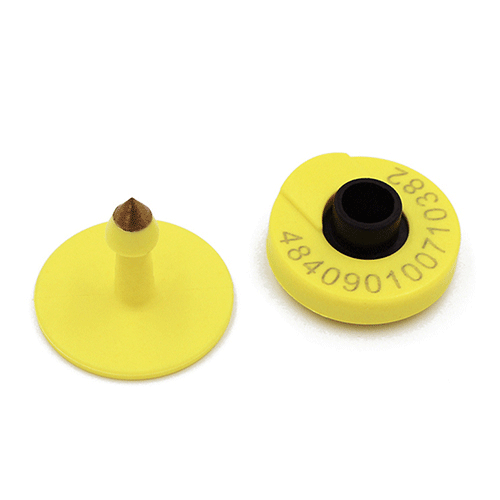
- USDA 9 CFR Part 86 cattle traceability framework (UHF + LF 134.2 kHz dual-frequency) drives pistol-grip handheld adoption for daily roll-call, vaccination records, weighing-station pairing and movement-log inventory across pasture, feedlot and dairy parlour.
- IP65+ industrial-rugged handhelds (Chainway C72 / C76, Alien ALH-9011) with glove-compatible trigger and sunlight-readable screen are the only practical form factor for outdoor, weather-exposed work.
- ISO 11784/11785 LF + EPC Gen2 UHF dual-read handhelds (Chainway CP60) span legacy LF ear-tag estates + UHF-migration programmes in a single operator device.
- Industrial laundry bundle + sling
-
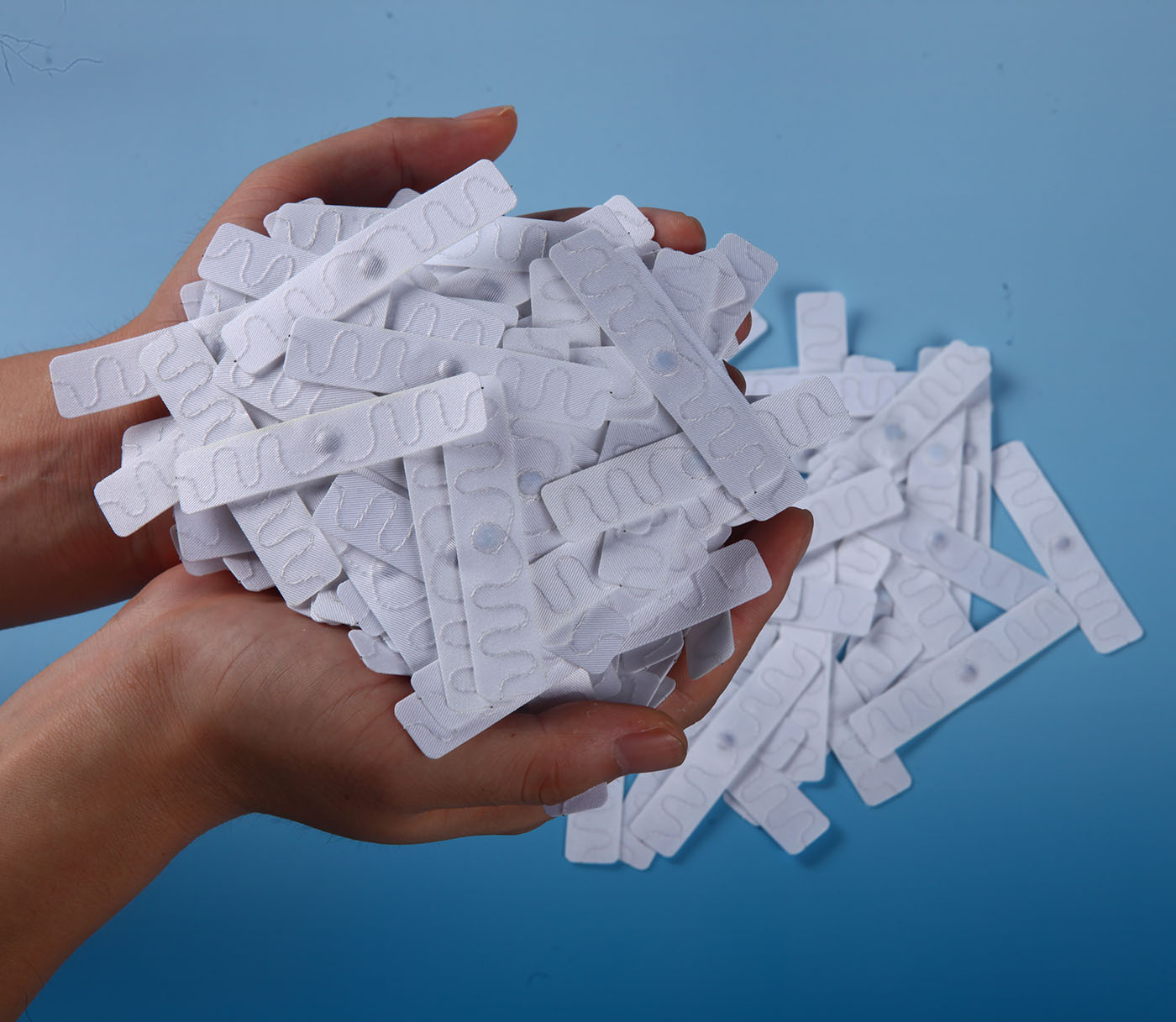
- Textile UHF tag scan at dirty-side / clean-side checkpoint with handheld RFD40 + bundle-count app — 200-400 garments/bundle in <10 seconds.
- Sling reconciliation against linen-room inventory; spot-audit of tunnel-washer throughput — handheld is the mobile audit device, complementary to conveyor-mounted fixed reader.
- Handheld survives industrial-laundry environment (steam, lint, <55 °C ambient, daily sanitising wipe) at IP65 + MIL-STD-810H drop.
- Regulatory + rugged specification
-
- IP54 (retail-focused sleds: RFD40) to IP65-IP67 (industrial integrated handhelds: Chainway C72, Alien ALH-9011); MIL-STD-810H 1.5-2.4 m concrete-drop specification on ruggedised SKUs.
- Operating temperature -20 to +50 °C on industrial SKUs; 0 to +50 °C on standard retail sleds.
- RoHS 3 + REACH + Battery Directive 2006/66/EC compliance across catalogue.
- Typical pricing
-
From USD 400 (handheld UHF) (typical FOB Shenzhen range) — firm quote in one business day.
Commercial terms
- MOQ
- Varies by SKU — stock items from 100 pcs; custom production typically 200-1,000 pcs
- Lead time
- Production 2-3 weeks after artwork and encoding sign-off; reorders on a 3-4 week cycle
- Samples
- Free samples and RF test report with every order; courier at customer cost
- Payment
- 50% T/T deposit, 50% before shipment; Net 30/60 for established accounts; LC for large orders
- Shipping
- FOB Shenzhen / Yantian; DHL, FedEx or EMS air freight; sea LCL / FCL for volume
- Response
- Itemized quote within one business day, Mon-Fri (UTC+8)
At-a-glance — EIRP, range, battery and throughput
Sled-on-Android-terminal vs integrated-all-in-one pistol-grip
Sled format (RFD40 + TC27, TSL 1128 + iPad)
- Leverages existing Android/iOS mobile-computing fleet — no new device-management infrastructure required.
- Bluetooth-SPP / BLE pairing adds a potential reconnect failure mode in the middle of a cycle count.
- Terminal remains general-purpose; operator can swap between barcode + RFID + enterprise apps on single device.
- Sled + terminal is a two-part SKU — ergonomics are the sled vendor's compromise with the target terminal frame.
- Retail-focused hardware envelope (RFD40 IP54) limits deployment to clean warehouse + retail floor.
Integrated pistol-grip (Chainway C72, Alien ALH-9011, CipherLab RS3500)
- Single-device UX — no Bluetooth pairing handshake in the operator's work-flow.
- UHF radio + barcode + camera + Android + battery in one ruggedised enclosure (IP65-IP67, MIL-STD-810H drop).
- Purpose-built RFID ergonomics: grip angle, trigger force and antenna orientation tuned for long-shift operator work.
- Single SKU procurement; spare parts, chargers and holsters are one line-item instead of two.
- Industrial-ruggedness envelope (Chainway C72 IP65, ALH-9011 IP67) covers agriculture, laundry, yard-gate and outdoor-field work.
Retail-audit accuracy lift — Auburn U RFID Lab published benchmark
When a handheld UHF reader is the right choice
- Livestock and herd management. Scanning UHF ear tags, leg bands and glass-capsule transponders for daily roll-call, vaccination records, weighing-station pairing and movement logs across pasture, feedlot and dairy parlour. Pistol-grip handhelds with IP65+ housings and 6-8 hour batteries are the only practical form factor for outdoor, gloved, weather-exposed work.
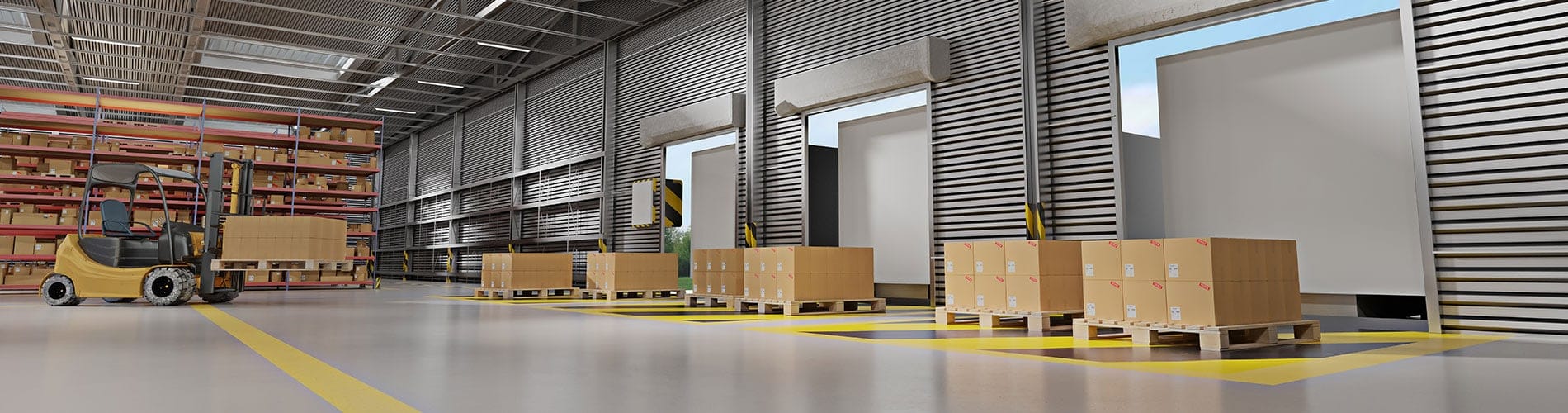
- Warehouse and DC cycle counting. Rolling daily or weekly inventory across bins and pallet locations where a fixed reader can't reach every zone. A single operator with a Zebra RFD40 counts 3,000-5,000 tags per hour on a DC floor at 95%+ read accuracy.
- Industrial laundry bundle and sling counting. Scanning textile UHF tags as bundles cross dirty-side and clean-side checkpoints; reconciling slings against linen-room inventory; spot-auditing tunnel-washer throughput.
- Retail store audit: daily or weekly floor counts, backstock-to-floor replenishment triggers, and loss-prevention investigations. Industry benchmark: retailer item-level accuracy moves from 65-70% manual to 95%+ with weekly handheld audits.
- Search-and-find (Geiger mode). Locating a specific high-value tagged asset by walking toward increasing RSSI. Every handheld in this catalogue supports this; the workflow is 1-2 minutes to find an item anywhere in a 500 m² zone versus 30+ minutes of manual searching.
- Field and outdoor audits. Fixed-asset annual counts, IT-rack audits, utility-pole inspections, container-yard checks, tool-crib inventories. Handhelds are the only practical form factor for multi-location mobile work.
- Receiving and shipping reconciliation. Scan incoming pallets against an ASN at the receiving dock, or outgoing cartons against a ship list, using the handheld's on-device app (Zebra EnterpriseRFID, Chainway scanning apps, or a custom WMS-integrated app).
Technical specification and form-factor options
- Sled format (Zebra RFD40 + RFD90, TSL 1128 + 2128). UHF reader snaps onto an Android terminal (TC22, TC27, TC52, TC73) or pairs via Bluetooth to any host (iPhone, Android, Windows tablet). Advantage: leverages existing mobile-computing fleet and barcode scanning already in place. Typical EIRP +30 dBm.
- Integrated pistol-grip (Chainway C72 / C76 / P80, CipherLab RS3500, Bluebird RF500, Alien ALH-9011). UHF reader, Android 12/13 compute, barcode scanner, camera and battery in one ruggedised enclosure. Advantage: single-device UX, no Bluetooth pairing, simpler procurement. Typical EIRP +27-30 dBm.
- Bluetooth ring / glove scanners. Emerging form factor for hands-free warehouse work. Limited UHF power (+20 dBm) and 1-3 m range; not appropriate for dense-rack cycle counts but useful for pick-pack-ship with Zebra WT6000 / WT6300 wrist-mounted terminals.
- Battery life — 6-8 hours of continuous UHF scanning on a single hot-swappable battery; 10-12 hours of intermittent trigger-pull work. Spare batteries and 4-bay chargers are standard accessories.
- Host interfaces: Bluetooth 5.x SPP (sleds), USB-C (tethered encoding), Wi-Fi 5/6 (for integrated devices that run their own Android), NFC tap for pairing. Integrated devices additionally expose 4G/5G cellular on specific SKUs (Chainway C76 5G).
- Regional firmware: every handheld ships in FCC (US/Canada), ETSI (EU/UK), SRRC (China), ARIB (Japan) and global-region SKUs. The firmware image is part-number coded; verify before shipping to deployment country.
- Rugged specification: IP54 to IP67 ingress, 1.5-2.4 m concrete-drop specification, -20 to +50 °C operating range on industrial SKUs. Retail-focused sleds (RFD40) are typically IP54; industrial (Chainway C72, Alien ALH-9011) reach IP65-IP67.
Software, SDK and operator-app options
- Zebra RFID SDK for Android / C / Java / .NET. Cross-family SDK covering RFD40, RFD90 sleds and FX9600, FX7500 fixed readers. Same API works on handheld and fixed, which simplifies multi-form-factor integrations.
- Chainway UHF SDK: Android NDK plus Java wrapper. Supports C72, C76, P80, CP60 and the broader Chainway catalogue. Clean Android-native API; used by most custom-app builds targeting the Chainway family.
- TSL SDK (Technology Solutions). Bluetooth-SPP and BLE connection layer plus ASCII command set on top. Supported on iOS, Android and Windows, which makes TSL sleds the typical choice for iOS-constrained deployments (iPad-based field apps, mixed Apple fleets).
- Alien ALR-H450 / ALH-9011 SDK — Java and C# SDK for Alien handhelds, with LLRP compatibility on some SKUs so the same integration code works against an Alien F800 fixed reader.
- Ready-to-use apps. Zebra EnterpriseRFID (cycle count, search, inventory), Chainway PDA scanning apps (transfer, shipment, inventory) and third-party apps (RFID Tool, TagMatiks, Tego) ship as 'install and go' solutions. Most Proud Tek handheld deployments start with one of these apps and migrate to a custom WMS-integrated app in phase two.
- WMS / ERP integration: Manhattan, Blue Yonder (JDA), SAP EWM, Oracle Fusion Cloud WMS, Infor M3 all publish integration hooks for handheld readers. The typical architecture is: reader → on-device app → REST call to WMS middleware.
- Edge processing: filter-at-source logic to suppress duplicates, tag-dwell logic to only report stationary tags, and RSSI-proximity thresholds all run on the handheld's Android compute layer rather than being round-tripped to a server.
Sampling and deployment steps
- Step 1Ship one handheld + 100 representative tags for one week of operator-hand testing before specifying the fleet. Operators' physical ergonomics (trigger force, screen readability, weight, one-handed viability) drive retention; benchmark scores alone don't.
- Step 2Run a read-rate test with the actual handheld against an actual dense rack (100+ tags per meter of shelving). A handheld that reads 95% on sparse tags often drops to 80% on dense racks. That's the critical acceptance metric.
- Step 3Validate the Bluetooth pairing and reconnect UX for sleds. Dropped pairings in the middle of a count cause operator frustration and rework. Prefer sleds with NFC-tap auto-pair (Zebra RFD40 + TC27 combo).
- Step 4Confirm regional firmware and the regulatory sticker before first use. A FCC handheld used in the EU is a compliance violation.
- Step 5Budget 30-50% spare battery capacity across the fleet plus a 4-bay charging cradle per 10 handhelds; operational realities (lost chargers, failed batteries) make spare capacity non-optional.
Sample → pilot → fleet rollout timeline
- Week 1-2 — sample + operator-ergonomics evaluation
Ship one unit each of Zebra RFD40 + TC27, Chainway C72 integrated, TSL 1128 iPad sled + 100 representative tags for one-week operator-hand testing across weight, trigger force, screen readability, one-handed viability and battery endurance.
- Week 3-6 — single-store / single-zone pilot
10-20 handhelds deployed in one pilot store / DC zone. Daily read-rate + operator-feedback capture; dense-rack acceptance benchmark (≥80 % read rate at 100+ tags/m) validated. App stack: Zebra EnterpriseRFID or Chainway scanning suite out-of-the-box.
- Week 7-12 — fleet buildout + WMS/ERP integration
50-500 handhelds across multi-site fleet. Custom on-device app wired to Manhattan / Blue Yonder / SAP EWM / Oracle Fusion Cloud WMS middleware. MDM (Zebra StageNow, SOTI MobiControl, MS Intune) provisioning + OTA firmware-update cadence documented.
- Month 4-12 — full rollout + fleet governance
From buyer conversations across livestock-herd-management, warehouse-cycle-count, retail-floor-audit, industrial-laundry-bundle and field-asset-audit handheld-UHF-reader programmes.
Useful next pages
Use these linked product, guide and comparison pages to keep the next click specific and practical.
Related reader SKUs and cluster pillar
Other reader product pages in the same cluster.
Integration and application references
Technical guides and blog references for handheld deployment.
Industry deployments
The verticals that specify handheld UHF readers at scale.
FAQ
How many tags can a handheld UHF reader inventory per second?
A modern Zebra RFD40 or Chainway C72 inventories 300-700 tags per second in free space with a Q-algorithm tuned for the tag population. Real-world rates in a dense warehouse rack are 200-400 tags per second because multi-path and tag-antenna orientation reduce the raw inventory rate. A typical cycle-count workflow moves at walking pace past a rack and completes a 5,000-item aisle in 15-20 minutes.
Does a Zebra RFD40 work with an iPhone?
Yes over Bluetooth-SPP or BLE, but the Zebra RFID SDK on iOS supports a narrower feature set than on Android. iOS sleds are typically tethered to a vendor-supplied iOS app (Zebra EnterpriseRFID iOS) or a third-party sled-aware app. For a mixed iOS + Android fleet, TSL 1128 / 2128 sleds often fit better because TSL's SDK is equally mature on iOS and Android.
What's the difference between a sled and an integrated handheld?
A sled (RFD40, TSL 1128) adds UHF capability to an existing Android terminal (TC22, TC27, TC52) or phone. The terminal remains a general-purpose device. An integrated handheld (Chainway C72, Alien ALH-9011) bundles UHF, barcode, camera, Android and battery into one device dedicated to RFID work. Sleds are the choice for fleets that already run a Zebra TC-family mobile-computing estate; integrated devices are simpler procurement and a lighter all-day operator device.
Can a handheld UHF reader encode tags, not just read them?
Yes. All handhelds in this catalogue expose the full EPC Gen2 command set (Write, BlockWrite, Lock, Kill, Access) via the vendor SDK. A common workflow is re-encoding a printed label at receiving, commissioning tags to a GS1 SGTIN-96, or updating user-memory on in-service tags. Handheld write is typically slower than a dedicated encoder (1-2 seconds per tag including tag-addressing and verification).
Sources & references
Primary standards, OEM datasheets and regulatory documents cited by this article. All URLs were verified on the access date shown below.
- ISO/IEC 18000-63:2015 — Information technology — Radio frequency identification for item management — Part 63: Parameters for air interface communications at 860 MHz to 960 MHz Type C
ISO adoption of EPCglobal Class 1 Gen2 v2.1 — the UHF air-interface every handheld in this catalogue implements.
- EPCglobal UHF Class 1 Gen2 Air Interface Protocol v2.1
Base EPC Gen2 v2.1 specification covering the Select / Query / Read / Write / BlockWrite / Lock / Kill / Access command set exposed by handheld vendor SDKs.
- 47 CFR Part 15.247 — Operation within the bands 902-928 MHz, 2400-2483.5 MHz, and 5725-5850 MHz
US UHF regulatory envelope governing all FCC-firmware handheld SKUs in this catalogue.
- ETSI EN 302 208 v3.3.1 — Radio Frequency Identification Equipment operating in the band 865 MHz to 868 MHz
EU UHF regulatory envelope including 865.6-867.6 MHz primary band + 915-921 MHz extended upper band, LBT — governs ETSI-firmware handheld SKUs.
- Zebra RFD40 / RFD90 UHF RFID Sled Product Specification
Zebra RFD40 + RFD90 sled datasheet — snap-on envelope for TC22/TC27/TC52/TC73 Android terminals, +30 dBm EIRP, Bluetooth 5.x SPP/BLE, 6-8 h battery.
- Chainway C72 / C76 / P80 UHF Handheld Datasheet
Chainway integrated pistol-grip handheld datasheet family — Android 12/13 compute, IP65, MIL-STD-810H drop, +30 dBm EIRP integrated antenna.
- Technology Solutions (UK) TSL 1128 / 2128 Bluetooth UHF Sled Datasheet
TSL 1128 + 2128 Bluetooth SPP/BLE UHF sled — iOS / Android / Windows cross-platform SDK used across mixed-fleet deployments.
- Auburn University RFID Lab — Retail Inventory Accuracy Benchmark (2022-2024)
Published retail-accuracy benchmark data — 65-70 % manual → 95 %+ weekly handheld-audit accuracy; referenced in dataHighlight.
- USDA 9 CFR Part 86 — Animal Disease Traceability (electronic identification)
US livestock electronic-identification framework driving UHF / LF dual-frequency handheld adoption across cattle, dairy, feedlot operators.
- ISO 11784:1996 + ISO 11785:1996 — Radio frequency identification of animals
LF 134.2 kHz livestock eartag + injectable transponder standard — supported alongside UHF on dual-frequency handhelds (Chainway CP60).
- IEC 60529:2013 — Degrees of protection provided by enclosures (IP Code)
IP54 (retail sleds) through IP65-IP67 (industrial integrated pistol-grip) ingress-protection envelope across the handheld catalogue.
- MIL-STD-810H — Environmental Engineering Considerations and Laboratory Tests
Industrial-rugged drop-test specification (1.5-2.4 m concrete drop) applicable to Chainway C72 / Alien ALH-9011 / Bluebird RF500 integrated handheld SKUs.
Proud Tek is a Shenzhen-based RFID & NFC manufacturer supplying hotel chains, transit operators, event venues and retail brands worldwide. Every order includes free samples, RF testing and dedicated project support.
Get a Quick Quote
Tell us about your project and we'll respond within one business day. Fields marked (asterisk) are required.