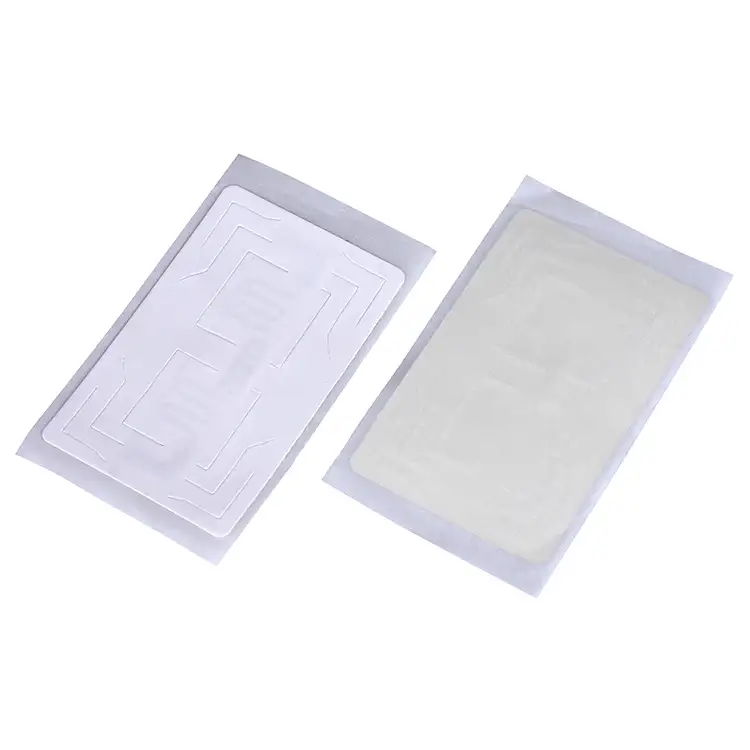
How a vehicle read works
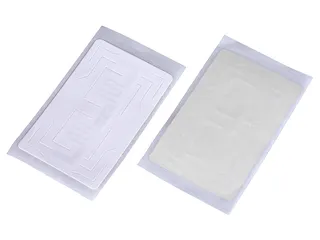
A passive UHF tag is stuck to the inside of the windscreen. A reader antenna mounted on a pole or the gantry emits a field; the tag reflects its identifier; the reader passes it to the parking or access controller, which opens the barrier if the vehicle is authorised. Reads happen at driving-into-the-lane speed, so the lane keeps moving.
Because UHF tags are read in bulk, lane design has to make sure the reader sees the vehicle in the lane and not the one alongside. Antenna angle, power and placement do that, and a well-set-up lane reads the approaching vehicle only. The tag holds an identifier; vehicle, owner and permit details live in the system, which is also where a lost or stolen tag is cancelled.
The technology is the same as retail and logistics RFID, which keeps readers and tags affordable and interoperable across vendors.
Tag types by mounting
The vehicle decides the mounting, and the mounting decides the tag.
| Tag | Mounting | Use | Notes |
|---|---|---|---|
| Windshield tag | Inside the windscreen, usually behind the mirror | Parking, gated access, fleet | Standard choice; tamper-evident option |
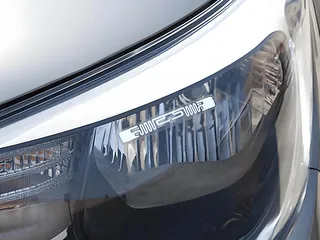
| Headlight tag | Inside or on the headlight lens | Vehicles with metallised or heavily tinted windscreens, motorcycles | PET body with adhesive rated for heat and UV |
| Hang tag | Hung from the mirror | Rental cars, visitor permits, pool vehicles | Transferable by design |
| On-metal tag | Chassis, trailer, container | Yards and depots where the windscreen is not the asset | Antenna designed for a metal surface |
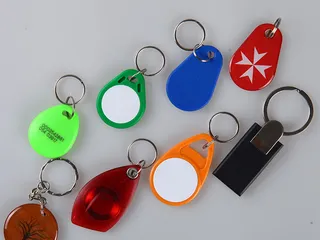
| Driver fob or card | Carried by the driver | Small car parks, residents' gates | Short-range read; driver stops and presents it |
Applications
The same tag and lane design serve several settings.
- Staff and tenant car parks. Permit holders drive through; visitors take a ticket. Permits are cancelled in software when a tenancy ends.
- Gated communities. Resident vehicles pass without a remote; the tamper-evident tag stops a permit being passed to a visitor's car.
- Fleet depots and yards. Each read timestamps a tractor, trailer or van in and out; the record feeds the yard or fleet system.
- Weighbridges and site gates. The vehicle is identified before it stops, so the weight and the truck are matched automatically.
- Hospitals, campuses and airports. Priority lanes for staff and emergency vehicles, and dwell-time data for planning.
RFID or licence-plate recognition
Automatic number-plate recognition (ANPR) reads any vehicle without a tag, which makes it the right tool for pay-on-exit car parks and enforcement. It depends on the camera seeing a clean plate: rain, glare, dirt, non-standard plates and angle all reduce accuracy, and the system stores images, which raises privacy obligations.
RFID reads only vehicles that have a tag, but reads them regardless of weather and lighting and stores only an identifier. It is the better fit for known vehicles: residents, staff, fleet, contractors.
Mature installations use both. RFID handles the permit holders and keeps the lane flowing; ANPR handles everyone else and provides an exception record when a tag is read on a vehicle it was not issued to.
Glass, placement and read range
Read range depends on the tag antenna, the reader's permitted power (which differs by region), the reader antenna and, most of all, the glass. Clear laminated glass is transparent to UHF. Heat-reflective or metallised windscreens, common on premium and electric cars, attenuate it heavily; most such windscreens have an unmetallised zone near the mirror mount marked for toll tags, and the tag must go there. Where there is no such zone, a headlight tag is the answer.
Placement also has to be consistent across the fleet so the reader antenna can be aimed once. Issue an installation card with the tag showing where it goes and how to clean the glass first.
Keeping tags on the right vehicle
Anywhere the tag is a permit worth money or access, someone will try to move it. Three tiers of protection exist. A frangible tag has a brittle antenna or a split adhesive so that peeling it off destroys it. Server-side rules flag a tag read at two sites too close in time, or a tag whose vehicle is contradicted by ANPR. And the identifier can be bound to the vehicle at issue, with the plate stored in the system so an exception can be checked by a person.
For most residential and staff schemes the frangible tag plus a cancellation process is enough. Add ANPR cross-checking where the permit has real value.
What Proud Tek manufactures and supplies
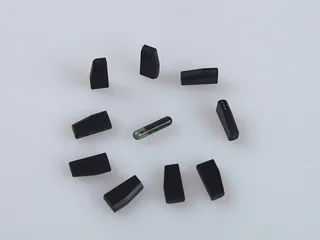
We manufacture UHF windshield tags with standard or tamper-evident construction, headlight tags for metallised glass, and printed permits with serial numbers and your logo, pre-encoded to your numbering scheme. We also supply driver fobs for short-range gates and car transponder chips for key and immobiliser applications. Readers, barriers and parking software come from your access or parking system integrator; we provide test tags so the lane can be tuned before the run.
Published 2026-09-09 · Updated 2026-09-28