How RFID race timing works
In most chip-timed running races, each participant carries a passive UHF tag, and the system records the moment it passes an antenna at a timing point. The tag has no battery: it is powered by the reader's signal and answers with its code under the GS1 EPC Gen2 air interface, also published as ISO/IEC 18000-63 for 860–960 MHz. Antennas in a ground mat or on stands feed a decoder. A tag is read several times as it crosses, and one timing maker uses the strongest read, right above its ground antenna, as the passing time (RACE RESULT antenna guide).
World Athletics Technical Rule 19.24 (2026 edition) allows transponder timing in road races if the equipment does not obstruct athletes, the transponder's weight is not significant, the system is synchronised with the start signal and athletes take no action to be timed. The official time, often called gun time, runs from the gun or synchronised start signal to the finish; the start-line-to-finish time, called net or chip time, may be given to athletes but is not official.
Bib tags, shoe tags and ankle straps compared
Mass-participation road races mostly use a disposable bib tag. Shoe, ankle and bike formats cover events where a bib is not worn, gets wet or is hidden from the antenna, if your timing system supports them.
| Format | Where it sits | Life | Typical use | Watch for |
|---|---|---|---|---|
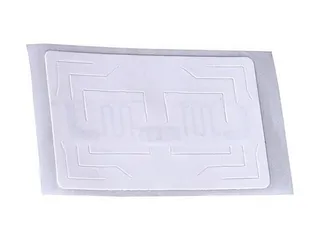
| UHF bib tag on foam | Stuck to a paper or Tyvek bib | Disposable | Road races and mass runs | Bib flat on the chest; never folded, pinned through or covered |
| Inlay laminated into the bib | Between bib layers, added by the bib printer | Disposable | Bib and tag as one item | Must stay readable against the body; confirm on samples |
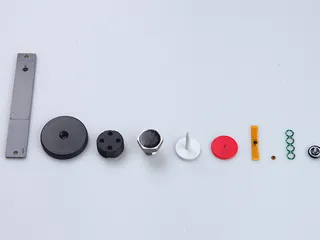
| Shoe tag | Looped or clipped onto the laces | Disposable or reusable | Races whose timing system reads at shoe level | Fixed to the laces exactly as the system specifies; confirm with your timing provider |
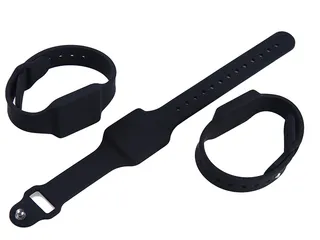
| Ankle strap tag | Sealed tag on a neoprene or silicone strap | Usually reusable and collected; disposable versions exist | Triathlon, multisport, obstacle races | Sensitive to water; follow the system's wetsuit rule |
| Bike or helmet tag | Frame, seat post, handlebar plate or helmet | Disposable or reusable | Cycling and triathlon bike legs | Mounted off the body; bike-plate tags need no spacer |
Why placement decides whether a bib tag reads
A UHF tag pressed against the body reads poorly: tissue close to the antenna detunes it and absorbs part of the energy, which cuts efficiency and read range (Sensors, 2026). Most bib tags therefore sit on a foam spacer, and timing companies give runners strict wearing rules.
One timing-system maker's instructions are typical: wear the bib visibly on the chest, do not fold or crumple it, pin each corner without piercing the tag, and keep the foam spacer because it raises the detection rate (MYLAPS runner instructions). Checks for an organiser:
- Orientation. Some systems use linearly polarised antennas and want the tag stuck vertically on the bib (RACE RESULT antenna guide). Confirm this before bibs are printed.
- Arms and watches. RACE RESULT names runners blocking the tag with an arm while stopping a GPS watch as the most common cause of missed detections (antenna guide).
- Outer layer. A jacket over the bib puts cloth and sweat between tag and antenna. Tell participants to wear the bib outside.
- Water. Passive UHF tags are sensitive to water, and wetsuit rules differ: one maker says its passive triathlon tag does not work under a wetsuit (RACE RESULT transponder guide), another tells athletes to wear its ankle tag under the suit.
Timing points for a marathon or road race: mats, side antennas and backup lines
Ground mats are the usual choice for mass running: they keep an antenna close to every tag and reduce the chance of another body blocking it. Side antennas on stands suit low-density splits and bike or helmet tags.
A typical marathon or road race has a start line for net times, splits at the published distances, and a finish with a main and a backup line. RACE RESULT recommends one level of redundancy: two chips per bib with one line, or one chip with two lines (transponder guide). It also advises keeping consecutive lines at least 3 m apart, 5 m preferred, because a tag cannot answer two readers at once (antenna guide). World Athletics strongly recommends Finish Judges for close finishes that chip timing may not separate, and judges or video to help determine the finishing order and identify athletes.
Readers must use their country's band: ETSI EN 302 208 covers 865–868 MHz across Europe, and 915–921 MHz only in countries that have implemented that band; US readers use 902–928 MHz under 47 CFR 15.247. Layout, reader settings and start synchronisation are the timing company's work; tell us the event country so the inlay suits the band.
| Antenna | How it reads | Suited to | Limits |
|---|---|---|---|
| Ground mat | Tags pass over it; the system times the passing from the reads, for example the strongest read right above the mat | Starts, splits and finishes in mass running | Wide courses need extensions or several mats |
| Side antenna on stands | Reads across the course from the side | Low-density splits, bike and helmet tags | The signal does not pass through bodies, so runners in a pack shield each other |
Encoding bib numbers into timing tags
Each Gen2 tag holds a code in its EPC memory and a chip identifier written by the chip maker in its TID memory. The timing software matches one of them to a bib number in one of two ways.
- Code equals bib number. The bib number is written into the EPC and the timing software reads it directly, so no chip file is needed. Confirm that your software supports this with third-party tags.
- Code mapped to bib. The tag keeps its own code and a chip file, a table of codes and bib numbers, links them. Reusable tags work this way because they change athletes between events (RACE RESULT chip file guide).
Checking tags against your timing system
A passive UHF bib tag works only with a passive UHF timing system that accepts its chip, orientation and encoding, so test samples on the actual decoder and antennas before the bib order.
Some systems read only their own coded transponders: RACE RESULT says its passive bib transponders are encrypted and specially coded for its systems (bib transponder guide), so generic tags will not replace them there. Ask your timing provider first whether it accepts generic EPC Gen2 tags. Active systems read no passive tag at all. RACE RESULT's, for example, uses battery-powered transponders woken by a 125 kHz loop that report their passing over 2.4 GHz (active transponder guide), and RACE RESULT recommends it for triathlon and cycling, citing precision at speed and resistance to moisture (systems page).
Bib inlays use standard EPC Gen2 chips such as NXP UCODE 9, with a 96-bit EPC and factory-locked 96-bit TID, or the Impinj M700 series, whose AutoTune adjusts the chip to its surroundings. If your timing provider specifies a chip, that decides the inlay. A useful sample test:
- Confirm that your timing system accepts third-party EPC Gen2 tags, then send us the system, decoder, antenna type, tag orientation and encoding scheme.
- Free standard labels or inlays show whether your system reads the chip and encoding at all. A standard label pinned to a chest is not a bib tag, so do not judge on-body reads with it.
- The on-body test needs the bib construction you will order: inlay, foam spacer, face and adhesive, built to your size and encoding. That is a customised sample with a setup fee.
- Wear those samples as runners will: on printed bibs, crossing the real mat in a moving group, and check each produced a time against the right bib number.
- Approve construction and encoding in writing; production follows the approved sample.
Who supplies what in a timed race
Race timing is a service run by a timing company; the tag is one consumable within it. Proud Tek manufactures the tags. We do not supply UHF readers, mats, antennas, RFID printers or encoders, timing software, registration, GPS tracking, BLE beacons or active transponders. The only readers we sell are on the RFID readers page, and none of them reads UHF.
| Task | Timing company or organiser | Proud Tek |
|---|---|---|
| Decoders, mats and antennas | Supplies, sets up and tests them | Not supplied |
| Timing and results software | Supplies and runs it | Not supplied |
| Bib design and printing | Organiser or bib printer | Labels or wet inlays to apply; dry inlays to laminate |
| Timing tag | Specifies chip, format, orientation and code scheme | Manufactures bib tags, inlays, UHF wristbands and custom tags to your drawing |
| Encoding | Provides the number scheme or chip file | Encodes, reads back, supplies EPC and TID data |
| RFID printer-encoder for on-site encoding | Timing company or organiser | Not supplied; we encode before dispatch |
| Compatibility test | Runs samples through the real system | Supplies samples; adjusts construction |
What Proud Tek makes for race timing
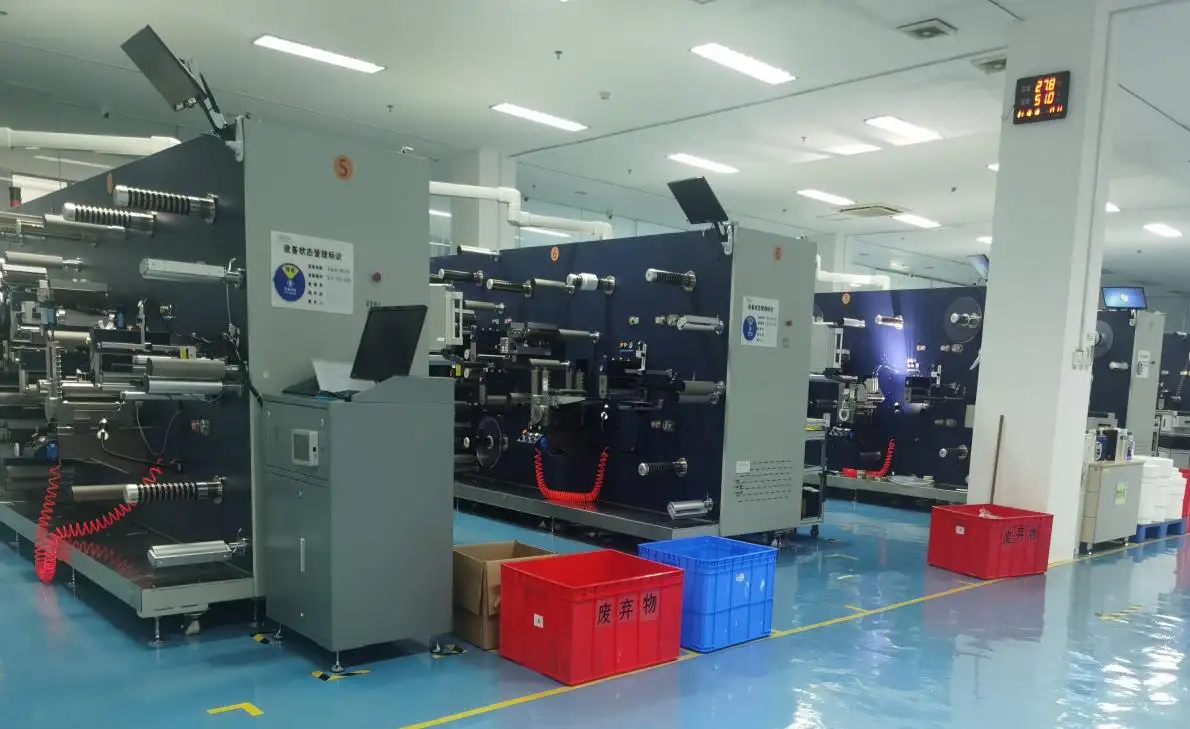
Proud Tek is an RFID and NFC factory in Shenzhen, producing cards, tags, labels and wristbands since 2008. For race timing we produce UHF RFID labels for bibs, dry and wet UHF inlays for bib printers, custom UHF tags made to your drawing, for example in a shoe, ankle or bike format, confirmed by a feasibility check and samples, and UHF wristbands. A dry inlay has no adhesive and is laminated in; a wet inlay adds adhesive and a liner for direct application. Chip, inlay size, face material, adhesive and foam are confirmed per order and tested on samples.
Standard products generally take 2–3 weeks; custom constructions and large orders are scheduled in the quotation, so plan back from packet pickup with time for the sample test. We quote a workable enquiry within one business day. NFC access and cashless bands are covered under event wristbands. For a quote, send:
- Timing system and decoder model, and whether it accepts third-party tags
- Mat or side antennas, and the country where the event runs
- Tag format: bib tag on foam, wet or dry inlay, or a shoe, ankle or bike tag
- Bib material and size
- Encoding scheme, number range and whether the EPC is locked
- Quantity including spares, event date and delivery country
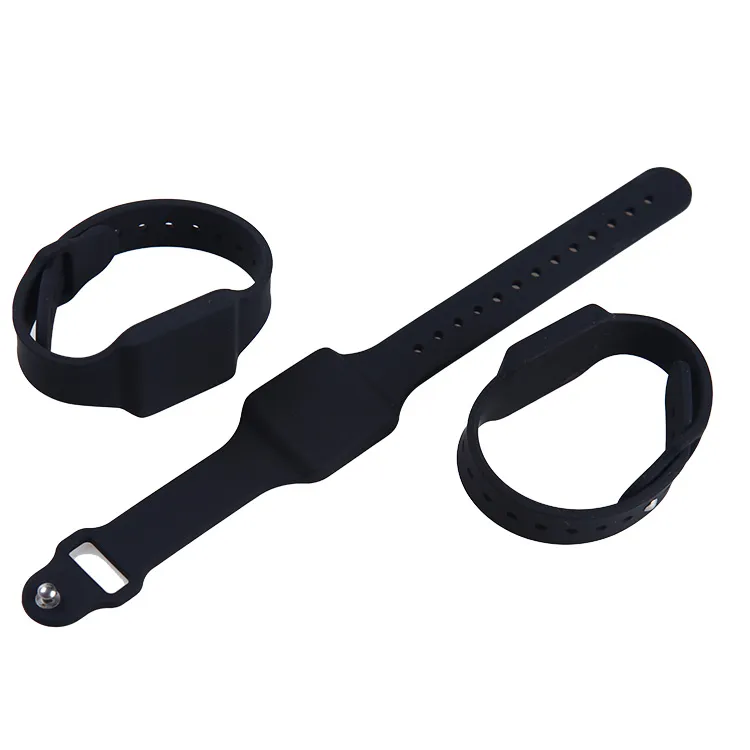
UHF silicone wristbands, a reusable on-body format
Published 2026-09-26 · Updated 2026-09-28