What a standard sample set is
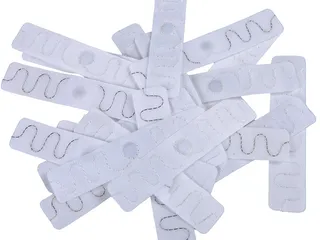
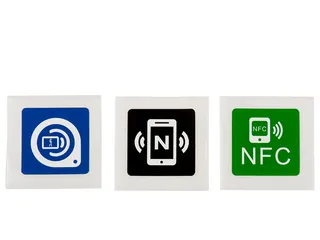
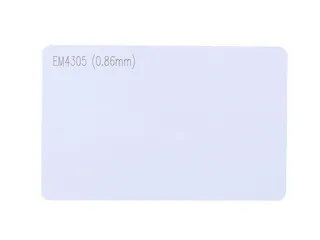
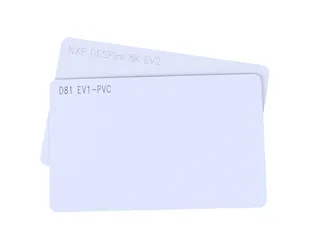
A standard sample set is a small quantity of stock RFID or NFC products, in the chip and format you specify, sent so your team can evaluate them before a production order. Standard products are supplied as free samples. There is no catalogue-fixed pack: you tell us the product — an EM4305 card, a T5577 card, an NTAG213 sticker, an NTAG424 DNA label, a MIFARE Plus or DESFire card, or a UHF laundry tag — and we confirm which variant and how many pieces suit the evaluation when we reply.
Customised samples are different. If a sample needs special printing, pre-encoding, numbering or a non-standard construction, a setup fee applies, because the tooling and programming are prepared for your specification alone. We confirm that fee before anything is made, so there is never a surprise on a sample you asked to be customised.
The exact chip variant and piece count are agreed on reply rather than fixed here, because the right set depends on what you are testing. A reader-compatibility check needs one or two cards; a print and material review needs a few of each body; a pilot for a lock estate is sized to the doors you have to cover.
| Sample type | What it is | Cost |
|---|---|---|
| Standard product | A stock chip and format from the catalogue | Free sample |
| Customised sample | Special print, pre-encoding, numbering or a non-standard build | Setup fee, confirmed first |
Who samples are for
Samples go to buyers with a live project: system integrators, distributors and resellers, and the system owners who will run the deployment. The evaluation only means something when there is real hardware to read the chip on and a real application to place it in, so we ask for a little context rather than shipping blind.
A work or company email helps us reply quickly, and a short description of the project makes the request quick to act on — the application, the reader or lock system involved, the chip or frequency you are working to, and the rough quantity you expect at production. With that, we can confirm the right sample the first time instead of exchanging messages to work out what you need to test.
- System integrators validating chip and reader compatibility before they specify a build.
- Distributors and resellers qualifying a product and a supplier for their own customers.
- System owners — hotels, laundries, brand-protection and access projects — checking fit before a rollout.
How to request samples
Use the form on this page. It is short, and the fields that matter shape the sample we prepare — two are required and the rest are optional:
- Work email (required) — so we can reply with the sample arrangement.
- Request type — pre-set to samples, so the enquiry reaches the right desk.
- Product — the item you want to evaluate, by name or catalogue link.
- Estimated quantity (optional) — the volume you expect at production, which tells us how to size the sample and later the quotation.
- Application and requirements (required) — the chip or frequency, the reader, lock or encoder system, and any printing or pre-encoding you need. Describe the configuration without secret keys, passwords or live credentials; note if a sample should be customised.
- Delivery country (optional) — so we can confirm the shipping arrangement for your destination.
What happens after you request
We reply within one business day. The reply confirms the sample arrangement — the chip variant, the format and the quantity that fits your evaluation — and, for a customised sample, the setup fee before any work starts.
It also confirms the shipping arrangement for your destination. Freight terms, method and transit time depend on where the samples are going, so these are confirmed for your country rather than quoted as a blanket figure. Once the arrangement is agreed, the samples are dispatched and you receive tracking details. The contact page and the FAQ cover the commercial policy in more depth.
How to test the samples properly
A sample earns its place by being tested on the equipment it will actually meet, not a lab bench. Work through the checks that matter for your application:
- Read the chip on your own hardware. Present each sample to the reader, encoder or writer you will deploy and confirm it is recognised, that the memory layout is what you expect, and that a rewritable chip such as EM4305 or T5577 accepts your data format.
- Run it in the live system. Test a card in the lock, a label through the reader portal, a tag in the wash or on the metal it will be fixed to. A wash-cycle count on a laundry tag's product page comes from real laundry use, and Proud Tek guarantees it under the conditions stated with it; temperature and pressure figures are field experience and are not guaranteed. Samples in your own wash process are still the surest check. For hotel locks in particular, the lock firmware decides which chip it accepts — the hotel key card guide explains how to verify that before you order.
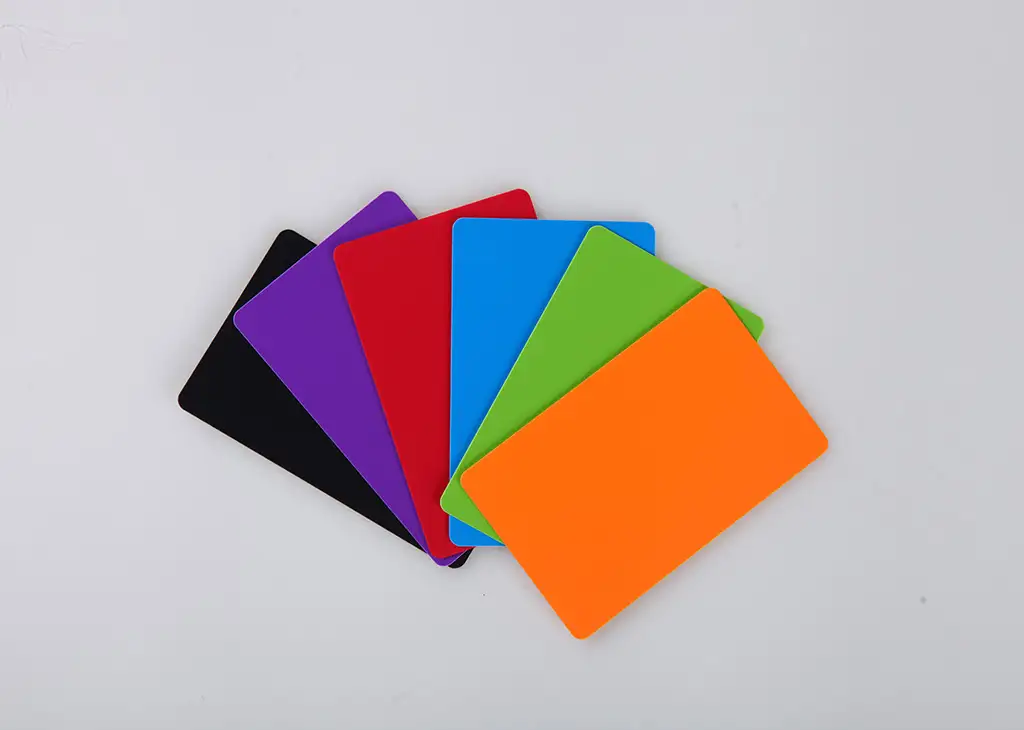
- Check print and material. Look at the print quality, the finish and the feel of the body, and confirm the format survives handling. Antenna tuning under a veneer, a laminate or an adhesive can shift read range, so judge it on your surface.
- Record the firmware and settings. Note the reader and encoder firmware versions and the settings that gave a clean read, so a reorder can be matched to the same configuration and the result is repeatable.
From samples to a production order
When a sample passes, the specification it proved — chip, format, print and encoding — becomes the basis of the quotation. We quote within one business day of a clear enquiry. Because the chip and format are already settled by the sample, the quotation is against exactly what you tested, not an approximation. For secure NFC such as an NTAG424 DNA label, confirm the tap-to-verify flow against your own backend first, since the value is in the authentication your system performs, not in the blank chip.
Standard products have a lead time of generally two to three weeks. Larger orders are scheduled individually, so include your target quantity and date and we confirm the schedule for that run. Before production, a pre-production approval — artwork, encoding and construction signed off against the approved sample — keeps the batch matched to what you evaluated.
The commercial detail that varies by order — minimum quantity, freight terms and any setup fee — is confirmed in the quotation rather than fixed on this page. Proud Tek has manufactured RFID and NFC products in Shenzhen since 2008; our ISO 9001, ISO 14001 and ISO 45001 certificates are shown below.

ISO 9001 
ISO 14001 
ISO 45001
Published 2026-09-16 · Updated 2026-10-03