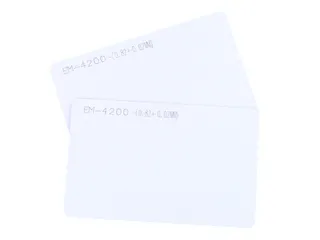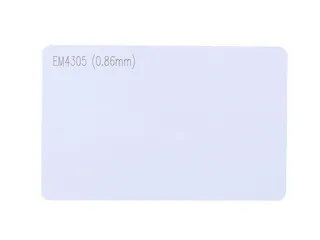
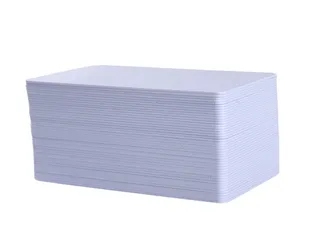
125 kHz RFID Cards
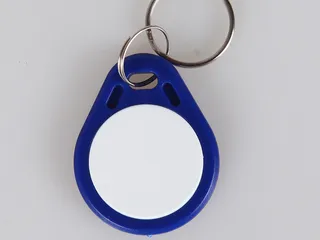
125 kHz low-frequency cards are the workhorse of legacy access control — longer read range through materials and lower cost than 13.56 MHz — on chips from read-only EM4200 to rewritable T5577 and HITAG 2.
RFID and NFC products for system integrators and distributors: cards, key fobs, wristbands, labels, industrial tags and selected desktop readers. Chip families range from 125 kHz LF to MIFARE, DESFire, NTAG and UHF. Compare the formats below, then share your reader, application, quantity and order requirements so we can review the right product and quotation.
125 kHz low-frequency cards are the workhorse of legacy access control — longer read range through materials and lower cost than 13.56 MHz — on chips from read-only EM4200 to rewritable T5577 and HITAG 2.
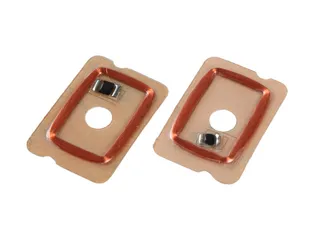
A 125 kHz RFID sticker is a low-frequency credential on adhesive — a chip like EM4200, T5577 or HITAG 2 with a printed antenna — for sticking onto badges, assets or equipment where a card won't fit.
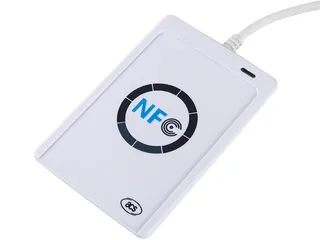
The ACR122U is the industry's reference USB NFC reader — the PC/SC device a generation of access-control and NFC software was written against — now discontinued by ACS but still supplied for maintaining existing deployments.
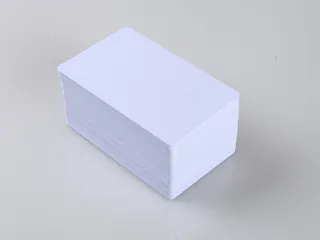
Blank RFID cards are the print-them-yourself credential — white PVC or PVC/PET in ISO ID-1, chip of your choice embedded — for bureaus and integrators who personalise in-house on dye-sublimation or retransfer printers.
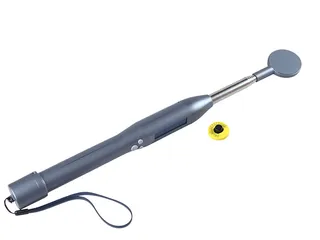
The R901 pairs a 134 kHz animal-tag reader with Bluetooth — read FDX-B ear tags in the field and the data lands on the phone or PC app — for livestock management without carrying a laptop to the pen.
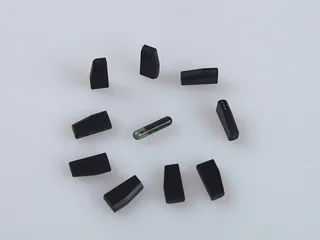
A car transponder chip is the RFID heart of a vehicle key — a tiny glass-tube or EMC-packaged chip that answers the immobiliser's challenge — so only a correctly programmed key starts the engine.
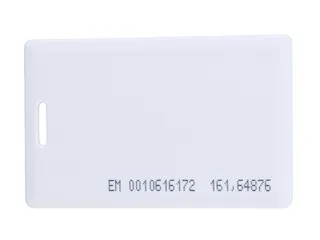
Clamshell cards are the heavy-duty 125 kHz credential — thick rigid ABS (around 1.8 mm) with a larger antenna for longer read range — the card of choice for parking lots and construction sites where thin cards crack.
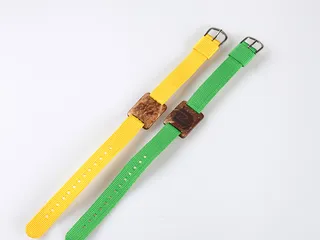
A coconut-shell wristband hides its RFID chip inside a polished piece of real coconut shell — the premium eco credential for festivals and resorts that want technology to look natural, not plastic.
A combi card carries two or more independent chips — e.g.
Custom RFID tags start from your drawing, not a catalogue — on-metal, epoxy-sealed, cable-tie or embeddable, in LF, HF or UHF — engineered in Proud Tek's Shenzhen factory for the object they live on.
A DESFire tag puts the same NXP DESFire chip (AES-128, multi-application file system) from DESFire cards into key-fob and tag housings — for deployments where a card is the wrong form factor but the security level can’t drop.
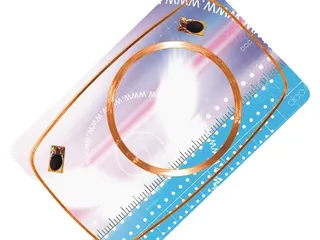
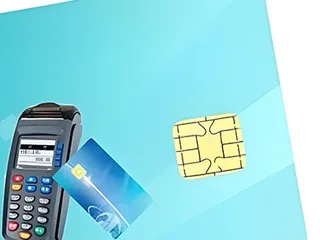
A dual-interface card merges two readers into one credential — the gold contact pad for ATMs and ID terminals, the antenna for tap-and-go — so one issued card works everywhere the holder goes.
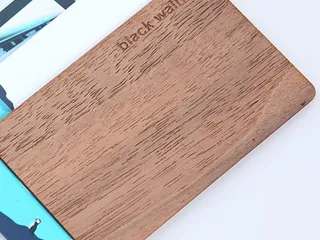
Eco RFID cards swap standard PVC for PLA, recycled PVC, paper, wood or bamboo — same chips your readers accept — trading a little heat resistance for a card you can defend in a sustainability tender.
The EM4200 is EM Microelectronic’s drop-in successor to the EM4100 — same 64-bit ID format, same readers — for reordering the credential that defined 125 kHz access control.
The EM4305 is EM Microelectronic’s 512-bit read/write 125 kHz chip — the fixed-function alternative to the multi-format T5577 — chosen when a lock or encoder system names it explicitly.
FeliCa is Sony's 13.56 MHz contactless standard — the technology behind Japan's Suica and Hong Kong's Octopus — and FeliCa Lite-S cards bring its fast transaction speed to closed-loop systems that don't need a transit network.
Selection & ordering guide
Start with the reader, the item or person being identified, and the task at the read point. Then narrow the catalogue by form factor. Proud Tek manufactures RFID and NFC products for integrators and distributors; a useful enquiry lets us review the component requirements alongside your project.
For a replacement order, provide the reader or lock model and the current credential specification. For a new project, describe the workflow and any chip, protocol or software requirements already set by your integrator.
Cards and key fobs are options for carried credentials; wristbands suit wearable formats. Labels attach to a surface, while laundry tags need an agreed attachment and wash test. Use the category menu to compare the relevant construction.
Decide who will test the samples, which readers and software they will use, and what counts as a pass. Confirm the approved chip, artwork and encoding specification before ordering the production batch.
Include what you know. If the chip or product is undecided, describe the application and current equipment so we can review the options with you.