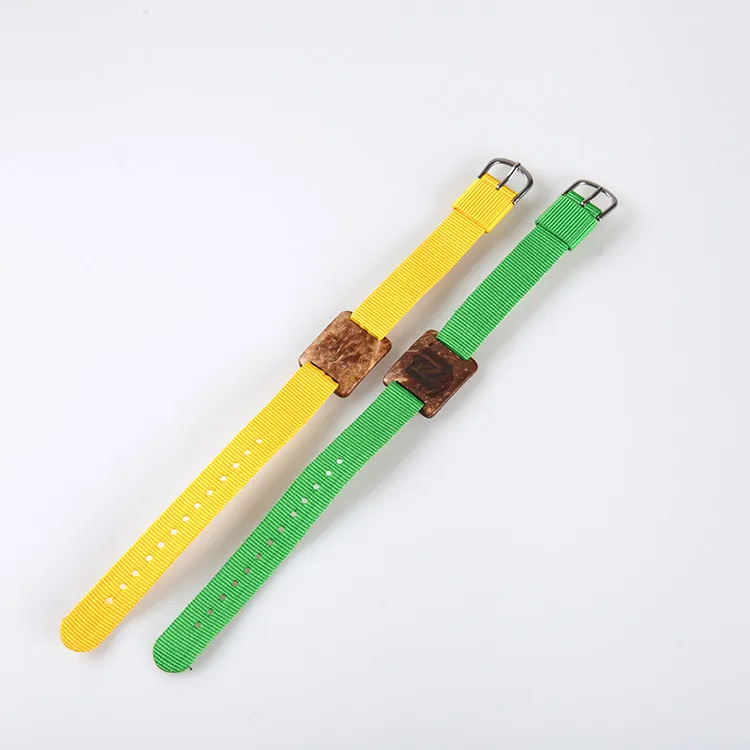
RFID Wristbands
Coconut Shell RFID Wristband
A coconut-shell wristband hides its RFID chip inside a polished piece of real coconut shell — the premium eco credential for festivals and resorts that want technology to look natural, not plastic.
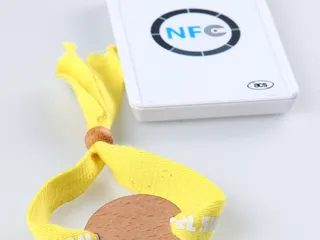
A coconut-shell RFID wristband carries a 13.56 MHz chip and its antenna coil inside a small head made from natural coconut shell, worn on a woven strap with a pin buckle or a satin ribbon with a slider bead. It takes MIFARE Classic, MIFARE Ultralight, MIFARE DESFire or NTAG213 chips for event entry and cashless payment on your readers; NTAG213 is the chip for guests' phone taps. Choose the chip your system reads, then check the finish, strap and water exposure on a sample.
Free standard samples · Quotation within one business day
Product details
What is a coconut-shell RFID wristband?
It is a wearable RFID credential whose chip head is a housing made from natural coconut shell rather than silicone, plastic or fabric. The chip and a wound antenna coil sit in a round recess in the head, closed by a coconut-shell cover, and the strap passes through two slots in the head, so the same head can be worn on different straps. The shell is finished with varnish and a clear sealant.
The shell decides how the band looks and feels; the chip decides which readers, platforms and phones accept it. Choose the chip from the system first and treat the natural finish as something to approve on a sample.
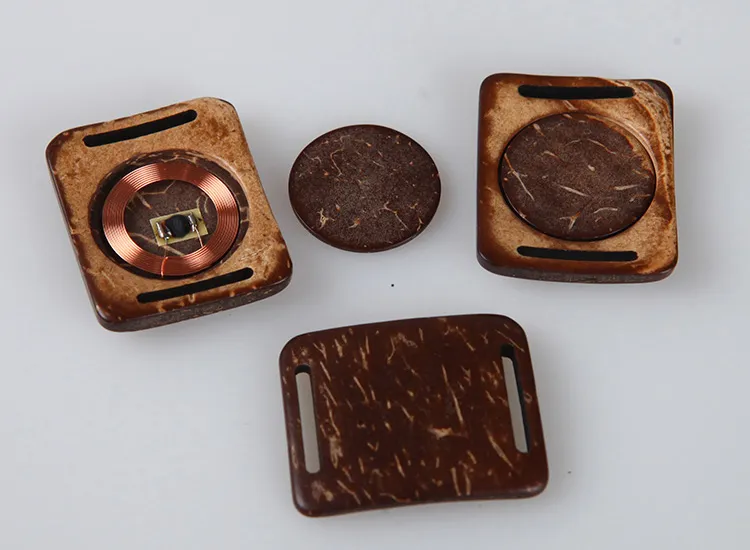
Coconut-shell wristband specification
| Item | Detail |
| Head | Natural coconut shell, finished with varnish and a clear sealant; the chip and antenna coil are enclosed under a shell cover |
| Head size | 31 × 26 mm and 4.5 mm thick as standard; other sizes on request |
| Strap and closure | Woven webbing strap with a metal pin buckle, or satin ribbon with a slider bead, as pictured; strap length and closure are confirmed on the sample |
| Frequency and standards | 13.56 MHz; ISO/IEC 14443 Type A for MIFARE and NTAG chips, ISO/IEC 15693 for ICODE |
| Chips | Genuine NXP MIFARE Classic EV1 1K (MF1S50), MIFARE Ultralight, MIFARE DESFire, NTAG213; ICODE and other chips on request |
| Reading distance | 2–5 cm, depending on the reader; confirm on your own reader |
| Marking | Laser-engraved logo and serial numbers on the head |
| Encoding | Blank, or encoded with the data you supply |
| Packing | 100 bands per bag and 3,000 per master carton in a corrugated outer box, or as you specify |
Which chip should a coconut-shell wristband carry?
The four chips listed for this band differ in memory, in how well they resist copying and in whether a guest's phone can read them. The table compares them from the NXP data sheets (Classic EV1 1K, Ultralight EV1, Ultralight C, DESFire EV3, NTAG213) and the phone platforms' documentation (Apple Core NFC, Android MifareClassic).
| Chip | Memory | Security | Phone tap | Choose it when |
| MIFARE Classic 1K (NXP EV1) | 1 KB in 16 sectors of 4 blocks, with two keys per sector | Legacy Crypto-1 cipher, which EV1 does not fix; NXP points security-relevant uses to MIFARE DESFire or MIFARE Plus | Not dependable: optional on Android, and not among the MIFARE families of Apple's Core NFC | Your access or cashless readers already run Classic; both the 7-byte UID and the 4-byte NUID version are available, so name the one your readers enrol |
| MIFARE Ultralight (EV1 or C) | EV1: 48 or 128 bytes of user memory; C: 144 bytes | EV1: 32-bit password; C: 3DES authentication; 7-byte UID | Not offered as a phone tag: it is made for the event's readers, and phone reading depends on the phone and app, so confirm on a sample; choose NTAG213 where guests' phones must open a link | Day passes and limited-use tickets on a platform that specifies Ultralight; the variant is confirmed in the quotation |
| MIFARE DESFire (EV3 figures shown) | EV3: 2, 4 or 8 KB, shared by as many applications as fit, up to 32 files each | AES-128 mutual authentication; the EV3 chip is Common Criteria EAL5+ certified | Phones open an NDEF link if the platform writes one (NFC Forum Type 4 certified); protected files need the platform's app and keys | Cashless or access where a copied band must be refused; the platform defines the application and keys, and the generation and memory are confirmed in the quotation |
| NTAG213 | 144 bytes; an NDEF message of up to 137 bytes, such as a URL of up to 132 characters after https://www. | Optional 32-bit password and an originality signature; no challenge-response authentication | Yes: an NFC Forum Type 2 tag, so phones open an NDEF link with a tap | Guests tap the band with their own phones to open a programme, playlist or check-in page |
The MIFARE Classic page explains why Classic bands carry genuine NXP EV1 chips rather than a “MIFARE-compatible” part, and why Classic suits matching installed readers rather than protecting value; MIFARE DESFire covers generations and key setup. For an NTAG213 link, check that your URL fits with the NDEF generator before artwork and encoding are fixed.
What does a natural shell head mean for your order?
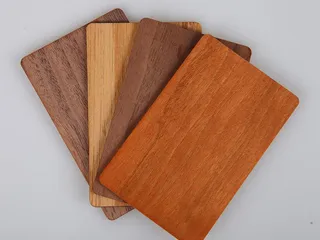
Coconut shell is a natural material. Grain, flecks and tone differ from head to head and from batch to batch, and an engraved logo reads differently on light and dark areas of the same head. That variation is what makes the band look natural; if your programme needs a closely matched look across thousands of bands, approve a sample batch before production.
Check these points on a sample before ordering:
- Finish: the range of tone and grain across several heads, and how the engraved logo and serial numbers read on each.
- Strap and closure: the pictured webbing strap has a metal pin buckle that opens and closes, and the ribbon strap is fastened with a slider bead. Check the strap length against your smallest and largest wrists, and whether the closure should stay adjustable or lock.
- Water: no waterproof rating is published for this band. Wet the head and the fabric strap the way guests will (rain, hand washing, showers), then read the band again. For swimming and water parks, a silicone RFID wristband is the sealed option.
- Reading: tap the sample on your own readers, and on guests' phones if you choose NTAG213, holding the wrist the way guests will present it.
Access and cashless payment at events
At an event the band works like any RFID wristband: order the chip and encoding format your ticketing or cashless platform specifies (the chip table above compares the options), and see the RFID event wristbands guide for activation, top-ups, re-entry, lost bands and anti-cloning. What is specific to this band is the closure: neither the webbing strap's pin buckle nor the ribbon's slider bead is offered as a one-way lock, and the buckle opens, so a band that comes off can be handed to someone else. Where a ticket must stay with one guest, ask whether a locking closure can be fitted to this head, or choose a one-way locking band from the other formats in our RFID wristbands for events range.
Encoding and marking
Bands are supplied blank for your own encoder, or encoded before dispatch with the data you supply: for example an NDEF URL on NTAG213, written and locked if you ask for it, or the sector or application data your platform specifies. Send the data format with a sample record. Encoded bands are each read back once written, and each encoded order includes a data report. Never put MIFARE Classic or DESFire keys in an inquiry form or an ordinary email; whether we load keys is confirmed in the quotation, and a key handover is agreed separately before encoding, as set out on the RFID encoding service page.
The head takes a laser-engraved logo and serial numbers. When serials are engraved, we send an Excel, CSV or XML file that matches each band’s engraved number to its chip UID, ready for a platform that imports bands by UID. For printed artwork, ask for a proof sample: the textured, varying surface affects how fine detail shows.
What to send for a quotation
- The platform or reader that will read the band, and the chip it specifies
- Strap and closure, and the range of wrist sizes to fit
- Logo artwork as a vector file and the serial number range for the head
- The data to encode, or blank bands
- Where the bands will be worn: indoors, outdoors in rain, or near water
- Quantity, destination and the date the bands are needed
Coconut-shell bands are produced to the confirmed specification in Proud Tek's Shenzhen factory. We reply within one business day and send a quotation within one business day of a workable inquiry; send your inquiry to request a sample or a price.
Plan the application
Frequently asked questions
Is a coconut-shell RFID wristband waterproof?
No waterproof rating is published for it. The shell is finished with varnish and a clear sealant and the chip sits under a shell cover, but the head is a natural material and the straps are fabric. Test a sample wet, the way guests will wear it, and read it again afterwards; for swimming and water parks choose a silicone RFID wristband.
Which chip should a coconut-shell wristband use for festival cashless payments?
The chip your cashless platform specifies. Where a copied band must not be able to spend, a MIFARE DESFire chip with AES-128 mutual authentication is the stronger choice. NTAG213 and MIFARE Ultralight suit passes on platforms that hold all value on their server and accept those chips; of the two, only NTAG213 is offered for a link that guests open on their phones. Ask the platform for its band specification before ordering.
Can guests read a coconut-shell wristband with their phones?
Yes, if it carries an NTAG213 chip: it is an NFC Forum Type 2 tag, so phones open an NDEF link such as a web address with a tap. A MIFARE Ultralight band is made for the event's readers and is not offered as a phone tag: whether a phone reads it depends on the phone and app, so confirm on a sample, and choose NTAG213 where guests must open a link. A DESFire band opens a link only if the platform writes an NDEF file to it, and its protected files need the platform's app and keys. MIFARE Classic is not dependable on phones: Android support is optional and Apple's Core NFC does not list it.
Will every coconut-shell head look the same?
No. Coconut shell is a natural material, so grain, flecks and tone vary between heads and between batches, and an engraved logo reads slightly differently on light and dark areas. Approve a sample batch first if your programme needs a consistent look.
Can a coconut-shell wristband be taken off and reused?
The woven strap with a metal pin buckle opens and closes, so the band can be removed, reissued or kept as a souvenir. It can also be handed to someone else; where a ticket must stay with one guest, ask whether a locking closure is available for this head, or choose a one-way locking event wristband.
Is a coconut-shell RFID wristband biodegradable?
The head is made from coconut shell, a plant material, but the finished band also contains a chip, a wound antenna coil, a fabric strap and a metal or plastic closure. It is therefore not described as biodegradable or compostable. If your event needs to make a material claim, name it in your inquiry before ordering.
Can I get a sample of the coconut-shell wristband, and how long does an order take?
Standard samples are free; samples with your logo, encoding or other customisation carry a setup fee. Standard products generally take 2–3 weeks, and schedules for customised or large orders are confirmed in the quotation.
Buyer guides
- How to Read an RFID Tag Quotation, Line by Line What decides RFID card and tag prices, and how to compare quotations line by line: unit-price basis, tooling, encoding, samples, freight and Incoterms.
- RFID RFP Template: Questions to Ask Every Supplier An RFID RFP template for distributors: the supplier questions that produce comparable quotes, and how to read the replies against one specification.
- RFID MOQ, Explained: How Minimums Form and How to Discuss Them How RFID MOQ forms from chip lots, inlay rolls, print sheets and setup — and how buyers can discuss a smaller pilot or first order honestly.
Ready to specify your order?
Send the product, quantity and application so we can confirm the options and pricing for your project.