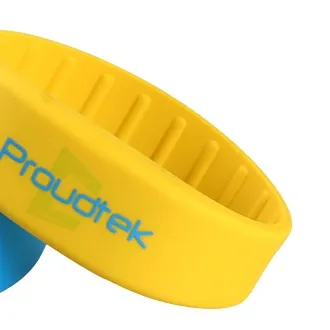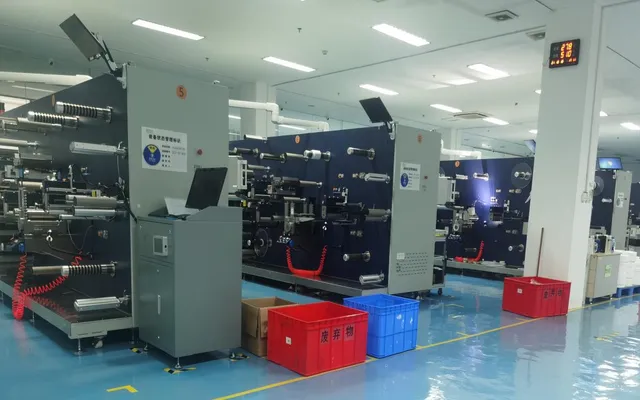
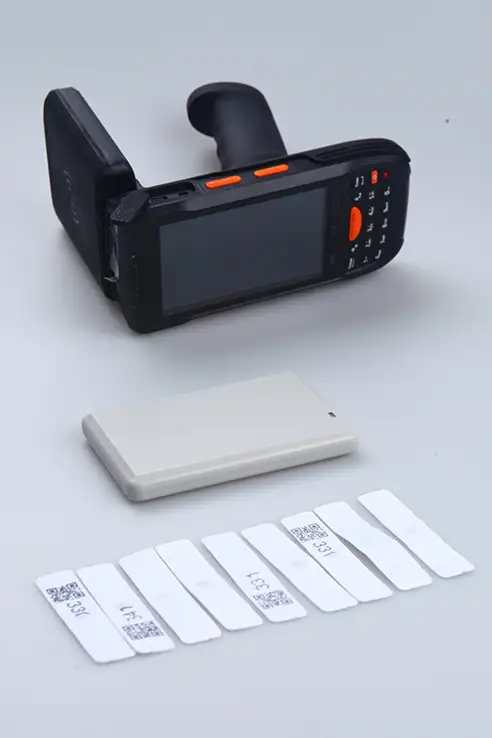
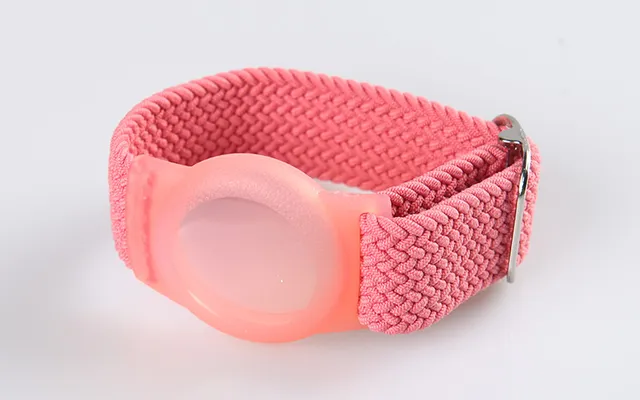
Industries
Complete guide to RFID & NFC by industry
a buyer's hub for 20 verticals
Quick answer
RFID and NFC tags are the data-carrying layer for any business that needs to track, count, authenticate or grant access to physical items at wireless-read speed. Proud Tek manufactures the inlays, labels, cards, wristbands and key fobs that 20 industries use to meet retailer mandates (Walmart RFID, IATA Resolution 753), regulatory deadlines (US DSCSA, EU Digital Product Passport, FSMA 204, EUDR, EU Battery Regulation 2023/1542), productivity targets (95–99% inventory accuracy, 60–80% library-labor reduction, 200–300 industrial-laundry wash cycles) and experience differentiators (cashless festival wristbands, NTAG424 DNA tap-to-verify, MIFARE DESFire EV3 hotel keys). This hub groups every served vertical into six business-outcome families, maps each family to the product pillars and compliance regimes that govern it, and links directly to 20 dedicated industry landing pages where chip family, frequency band, form factor, MOQ envelope, pricing band and SKU recommendation set live.
- 20 industry landing pages (retail & apparel, hospitality, healthcare, events & venues, logistics, industrial, libraries, laundry services, pharmaceuticals, luxury brands, brand protection, education, fitness, agriculture, EU compliance, automotive & tire OEM, aerospace & aviation MRO, data center & IT asset tracking, government & defense supply chain, and cold chain & food traceability) each with its own pain-point analysis, SKU recommendation set and vendor-specific compatibility notes.
- Three deployment archetypes (mandate-driven (Walmart RFID, EU DPP, EU Battery Regulation 2023/1542, US DSCSA, IATA Resolution 753), productivity-driven (inventory accuracy, self-service, warehouse WMS, industrial laundry) and experience-driven (hotel keying, event cashless, luxury authentication, Google-review NFC)) map directly to chip family, read range requirement and memory layout.
- One supplier across every industry. The same wet-inlay lines produce the NFC stickers a cosmetics brand uses for counterfeit protection and the UHF paper labels a pharmaceutical packager uses for DSCSA serialization, which means single-vendor procurement, consolidated quality documentation and aligned MOQ economics across multiple deployments inside the same group.
Browse all 20 industries
Pick the vertical closest to your project — each page lists the relevant SKUs, real-world deployments and any compliance notes.

Hospitality
Hospitality RFID replaces magnetic-stripe and metal keys across hotel rooms, resort amenities and cruise cabins using ISO/IEC 14443 Type A...
Explore Hospitality
Retail & Apparel
On the bench, item-level UHF RAIN RFID is mandatory for tier-1 retail and apparel suppliers — Walmart T2/T3, Target SUPPLIERS, Macy's, Nord...
Explore Retail & Apparel
Brand Protection
Brand-protection NFC binds an AES-128 cryptographic identity to each consumer unit so a tap on any iOS 14+ or Android phone returns a serve...
Explore Brand Protection
Events & Venues
RFID + NFC wristbands transform event + venue management — replace paper tickets with tap-and-go entry (15-20 attendees / minute vs 4-6 man...
Explore Events & Venues
Healthcare
Healthcare RFID uses HF (ISO/IEC 14443, ISO/IEC 15693) and UHF (ISO/IEC 18000-63 / EPC Gen2v2) tags to bind patient wristbands, surgical in...
Explore Healthcare
Logistics & Supply Chain
UHF RAIN RFID is the visibility layer for receiving, shipping, container security, returnable transit items, yard / drayage and airline bag...
Explore Logistics & Supply Chain
Industrial & Manufacturing
Ruggedised UHF + HF RFID tags for industrial + manufacturing — tool cribs, gas cylinders, IBC drums, returnable stillages, WIP parts, kegs,...
Explore Industrial & Manufacturing
EU Compliance
EU Compliance RFID covers the regulatory wave of EU Regulation 2024/1781 (Ecodesign for Sustainable Products Regulation, ESPR) Digital Prod...
Explore EU Compliance
Luxury Brands
Luxury NFC embeds NXP NTAG 424 DNA or NTAG 424 DNA TagTamper inlays (ISO/IEC 14443 Type A, 13.56 MHz, AES-128 SUN/CMAC per NXP AN12196 and...
Explore Luxury Brands
Pharmaceutical
Pharmaceutical RFID supports DSCSA (21 USC §360eee, full implementation 27 Nov 2024), EU Falsified Medicines Directive (Reg 2016/161 + Dire...
Explore Pharmaceutical
Libraries
Libraries worldwide use RFID + ISO 28560 (Parts 1-3 data model) + ISO/IEC 15693 HF (13.56 MHz) + NXP ICODE SLIX2 chip silicon to automate c...
Explore Libraries
Laundry Services
Industrial laundry services — Cintas, Aramark, Alsco, UniFirst, Mission Linen, ImageFIRST, Crown Linen, Ecolab Textile, Hexa-Cover, Servisc...
Explore Laundry Services
Education
Education RFID uses one ISO/IEC 7810 ID-1 contactless card to unify student identification, building access, library circulation, cashless...
Explore Education
Fitness
Fitness centres + gyms + health clubs use RFID cards + key fobs + silicone wristbands for member check-in, turnstile + door access control,...
Explore Fitness
Agriculture
Agriculture uses RFID for livestock identification + traceability under ISO 11784/11785 LF (134.2 kHz FDX-B / HDX), USDA APHIS Animal Disea...
Explore Agriculture
Automotive & Tire OEM
Tire and automotive component manufacturers serialise at the cure press with UHF RFID labels engineered to survive 170-180 °C × 25 min vulc...
Explore Automotive & Tire OEM
Aerospace & Aviation MRO
Airframe + engine + rotable + expendable aerospace parts are serialised with UHF + NFC RFID tags that survive 30-year service life, comply...
Explore Aerospace & Aviation MRO
Data Center & IT Assets
Hyperscale, colocation and enterprise data centres tag every server, switch, storage array, PDU, cable, removable disk and IT asset with on...
Explore Data Center & IT AssetsGovernment & Defense
DoD, federal-agency and prime-contractor supply chains serialise every controlled item + shipping container with RFID to satisfy MIL-STD-12...
Explore Government & Defense
Cold Chain & Food Traceability
Food producers, processors, distributors and retailers use UHF + HF RFID (sensor-enabled UCODE 9xe + EM4325 + AS3955 chips) to satisfy FDA...
Explore Cold Chain & Food TraceabilityAt a glance
Use these short answers to decide whether this page matches the project before moving into the detail.
Key takeaway
20 industry landing pages (retail & apparel, hospitality, healthcare, events & venues, logistics, industrial, libraries, laundry services, pharmaceuticals, luxury brands, brand protection, education, fitness, agriculture, EU compliance, automotive & tire OEM, aerospace & aviation MRO, data center & IT asset tracking, government & defense supply chain, and cold chain & food traceability) each with its own pain-point analysis, SKU recommendation set and vendor-specific compatibility notes.
Why Proud Tek organizes the catalog around industry verticals
A retailer selecting an RFID tag for apparel source tagging and a hospital selecting an RFID wristband for patient identification are reading the same product catalog, b...
Next step
Ready to move forward? Start your inquiry to get specific answers for this project.
Talk to an industry specialistWhy Proud Tek organizes the catalog around industry verticals
A retailer selecting an RFID tag for apparel source tagging and a hospital selecting an RFID wristband for patient identification are reading the same product catalog, but they have almost nothing in common: different frequency band (UHF vs HF), different chip family (Impinj Monza vs NXP NTAG), different compliance regime (Walmart mandate vs HIPAA + FDA 21 CFR Part 11), different MOQ sensitivity, different reader infrastructure and different read-range requirements. An industry-first navigation lets a buyer skip the technical primer and jump straight to the subset of the catalog that already passes their constraints.
In practice the RFID industry has converged on a handful of recurring deployment patterns that cut across vertical boundaries. A library self-service kiosk uses the same NXP ICODE SLIX2 chip family as a retail jewelry barbell tag. A casino chip uses the same 125 kHz EM4100 protocol as an agricultural animal ID ear tag. A Mühlbauer inline-tested wet-inlay roll can become a retail apparel hang tag, an aircraft part tag, a concrete-embedded infrastructure tag or a cosmetics authentication label depending only on the face stock lamination and the programmed EPC memory layout. Understanding which vertical your project belongs to answers the frequency / chip / form-factor / compliance questions all at once.
The 15 industry pages below are organized into six cross-cutting groupings. Retail & Brand Protection, Hospitality & Experience, Healthcare & Life Sciences, Industrial & Logistics, Public & Cultural, and Primary Production. Within each grouping the individual industry pages share a recurring structure: measurable pain points without RFID, the Proud Tek product stack that solves them, the measured results (chargeback avoidance, shrink reduction, inventory accuracy lift, labor elimination) and the SKU index with direct links into the product catalog.
- Every industry page lists the specific chip part number we supply (NTAG213 / NTAG215 / NTAG216 / NTAG424 DNA for NFC; Impinj Monza R6-P / Monza 4QT / M700 / M750 / M800, NXP UCODE 8 / 8m / 9, Alien Higgs-9 for UHF RAIN) so your engineering team can validate compatibility before a sample request.
- Compliance references are cited by standard number (ISO/IEC 18000-63, ISO/IEC 14443, ISO/IEC 15693, ISO 11784/11785, GS1 EPC Tag Data Standard 2.0, IATA Resolution 753, FDA DSCSA, EU Regulation 2023/1542, EU ESPR Digital Product Passport) rather than generic phrases like "compliant" or "certified", so procurement can audit claims against the underlying regulation.
- Pricing envelopes are published per vertical — retail source tags $0.08-0.18 per unit at 50k MOQ, hospital patient wristbands $0.22-0.45 each, industrial laundry PPS chips $0.35-0.65 each, library book tags $0.08-0.15 each, pharma DSCSA labels $0.04-0.09 each — so a buyer can size a project envelope on the first page view.
- Each vertical page closes with a resource-card block linking to the relevant compare pages (HF vs UHF, MIFARE Classic vs DESFire EV3, PPS vs silicone vs textile laundry tag) and solutions pages (RFID access control, NFC brand authentication, Google review NFC cards) so a buyer can drill deeper without leaving the navigation spine.
The six industry groupings at Proud Tek
Every one of the 20 industry landing pages fits one of six groupings defined by the business outcome RFID delivers, not by the end-user sector. Grouping industries this way lets a buyer see their industry's closest analogues. A luxury-brand buyer shares more constraints with a pharmaceutical brand than with a retail apparel buyer, even though pharmaceuticals and apparel are both large-volume SKU-level deployments.
Retail & Brand Protection
Retail & apparel, luxury, brand protection. UHF supply-chain + NFC consumer authentication; Walmart / Inditex / LVMH mandates; shrink reduction.
Hospitality & Experience
Hospitality, events & venues, fitness. MIFARE Classic / Plus / DESFire EV3 credential stack + HF cashless wristbands; guest-satisfaction KPIs.
Healthcare & Life Sciences
Healthcare, pharmaceutical. HF and UHF specimen / blood / surgical / dose tagging; FDA 21 CFR Part 11; DSCSA serialization.
Industrial & Logistics
Industrial, logistics, laundry services, data center, automotive tire. UHF long-range pallet / asset tracking; on-metal anti-metal tags; IP68 ruggedized housings.
Public & Cultural
Libraries, education, EU compliance. HF ISO 15693 + patron MIFARE DESFire; EU DPP / Battery Regulation / ESPR compliance.
Primary Production & Regulated
Agriculture, cold chain & food, aerospace MRO, defense. LF livestock + FSMA / EUDR / GDST + ATA Spec 2000 + MIL-STD-129R / 130N.
- Retail & Brand Protection: retail & apparel, luxury brands and brand protection. Common signature: UHF for supply chain + NFC for consumer authentication, shrink reduction measured in basis points of revenue, retailer-mandate timelines (Walmart, Target, Macy's, Nordstrom, Inditex, LVMH supplier programmes).
- Hospitality & Experience: hospitality, events & venues and fitness. Common signature: MIFARE Classic / Plus / DESFire credential stack + cashless payment UHF/HF wristbands + self-service door access, measured by guest satisfaction and cashless uplift.
- Healthcare & Life Sciences: healthcare and pharmaceutical. Common signature: HF and UHF blood bag / specimen / surgical-instrument tagging, FDA 21 CFR Part 11 audit trails, DSCSA unit-of-sale serialization, patient-safety KPIs.
- Industrial & Logistics: industrial, logistics, laundry services, data center & IT asset tracking and automotive & tire OEM. Common signature: UHF for long-range pallet and asset tracking, on-metal anti-metal tags, ruggedized IP68 housings, industrial-wash-cycle survivability measured in hundreds to thousands of cycles.
- Public & Cultural: libraries, education and EU compliance. Common signature: HF ISO 15693 (libraries), patron-card MIFARE DESFire, EU DPP / EU Battery Regulation / ESPR compliance for goods sold into the EU single market.
- Primary Production & Food Chain. agriculture and cold chain & food traceability. Signature: LF 125/134.2 kHz ISO 11784/11785 animal-ID tags, harsh environment, long read life, plus FSMA 204 / EUDR / GDST food-traceability labels from farm through processor to retailer.
- Regulated & Defense: aerospace & aviation MRO and government & defense supply chain. Signature: ATA Spec 2000 / FAA AC 20-162A part serialization, MIL-STD-129R / 130N, 30-year service life on-metal tags, Berry Amendment / TAA-compliant sourcing where required.
By business outcome — what problem does RFID solve for you?
A second way to navigate: by the business outcome you need delivered. The table below maps the five recurring outcomes we see quoted in RFP specifications to the typical industry vertical, the product family that owns it and the industry page that unpacks the detail.
| Business outcome | Typical industry | Product family | Industry page |
|---|---|---|---|
| Retailer mandate compliance (Walmart, Target, Macy's) | Apparel, footwear, home goods, electronics | UHF source tags, hang tags, woven labels | → /industries/retail-apparel/ |
| Digital Product Passport / EU Battery Regulation | Electronics, apparel, EV batteries, appliances | NFC DPP tags, UHF EU battery passport labels | → /industries/eu-compliance/ |
| Shrink, counterfeit and grey-market reduction | Luxury, pharma, cosmetics, spirits, sneakers | NTAG424 DNA tamper-evident NFC labels | → /industries/brand-protection/ |
| Inventory accuracy and BOPIS enablement | Retail, library, warehouse, hospital | UHF hang tags, book tags, on-metal asset tags | → /industries/retail-apparel/ |
| Self-service and labor automation | Libraries, fitness clubs, hotels, laundry plants | HF book tags, MIFARE cards, PPS laundry chips | → /industries/libraries/ |
| Cashless payment and guest engagement | Events, venues, theme parks, hotels, festivals | HF RFID wristbands, NFC event tickets | → /industries/events-venues/ |
| Patient safety and clinical workflow | Hospitals, clinics, blood banks, specimen labs | HF patient wristbands, UHF surgical tags | → /industries/healthcare/ |
Mandate-driven deployments — when compliance clocks the project
Some industries are deploying RFID because a regulator, retailer or trade body has set a hard deadline. In these projects the compliance clock outranks the ROI clock. The buyer's job is not to justify the investment but to meet the mandate before the penalty cut-over, then find the productivity ROI within the compliant deployment.
- Retail source-tagging mandates. Walmart (all apparel / home / electronics), Target (apparel / accessories), Macy's (all departments), Nordstrom, Inditex/Zara, H&M Group, Kohl's. Non-compliance fee is $25-$50 per case in 2025-2026. Start at retail & apparel.
- EU Digital Product Passport. ESPR (EU Regulation 2024/1781) rolls out category by category from 2026 (EV batteries) through textiles (2027-2028), electronics, toys, furniture and more by 2030. Start at EU compliance.
- EU Battery Regulation 2023/1542 — every EV, industrial and LMT battery placed on the EU market from February 2027 must carry a unique digital identifier linked to a battery passport. UHF / NFC is the default carrier. Start at EU compliance.
- US DSCSA unit-of-sale serialization. The Drug Supply Chain Security Act required electronic, interoperable unit-level traceability of prescription drugs from 27 November 2023. Start at pharmaceutical.
- IATA Resolution 753 baggage tracking. All IATA member airlines are required to maintain point-to-point baggage tracking, accelerating UHF baggage-tag adoption at hub airports. Start at logistics.
- Animal ID ISO 11784/11785 — EU, US, Canada, Australia and Japan all require 134.2 kHz ISO-compliant electronic ID for cattle, sheep, goats and horses traded across national borders. Start at agriculture.
- FSMA 204 Food Traceability Final Rule. Compliance date January 20, 2026 for all Food Traceability List items. Start at cold chain & food traceability.
- EU Deforestation Regulation (EUDR). Cocoa, coffee, cattle, palm, soy, rubber, timber provenance traceability from December 30, 2025. Start at cold chain & food traceability.
- DoD MIL-STD-129R / MIL-STD-130N — passive UHF RFID on unit-load shipments to DoD consignees plus IUID marking on controlled items ≥ $5,000. Start at government & defense supply chain.
- ATA Spec 2000 Ch. 9-5 / FAA AC 20-162A — aircraft part-level passive UHF automated identification of parts. Start at aerospace & aviation MRO.
Productivity-driven deployments — when ROI clocks the project
Most RFID projects are not mandate-driven. They are productivity plays where the buyer is choosing between an RFID system and a manual / barcode / BLE baseline, and the ROI justification has to stand up on its own.
- Industrial laundry: a single PPS or textile tag survives 200-300 wash cycles at 90 °C and replaces 50-80% of manual sorting labor in commercial laundries running 10,000-50,000 pieces per day. 6-18 month payback is typical. Start at laundry services.
- Library self-service: RFID book tags plus self-checkout kiosks eliminate 60-80% of circulation-desk labor and cut annual inventory from weeks (barcode) to days (RFID). Start at libraries.
- Warehouse asset tracking: UHF on-metal tags plus fixed-reader portals deliver real-time location data for returnable transport items (RTIs), MHE attachments, tooling and WIP. 12-24 month payback. Start at industrial or logistics.
- Retail inventory accuracy: item-level UHF lifts inventory accuracy from 65-75% (barcode) to 95-99% (RFID), which in turn lifts BOPIS and ship-from-store fulfilment rates from 83% to 96%+. Start at retail & apparel.
- Cold-chain and blood-bank tracking. HF and UHF tags with cryogenic-rated adhesives eliminate mis-shipment, expired-unit dispensing and audit findings in blood banks, tissue banks and clinical-trial specimen repositories. Start at healthcare.
Experience-driven deployments — when differentiation clocks the project
The third archetype is experience differentiation: the buyer is not meeting a mandate or chasing a labor-productivity ROI but buying RFID because a physical tap or scan creates a guest, shopper or consumer moment that the competition cannot replicate.
- Hotel keying upgrade: moving from magnetic-stripe to MIFARE DESFire EV3 RFID cards eliminates stripe-demagnetization complaints (the #1 friction point in hotel guest surveys) and enables cashless in-property spend. Start at hospitality.
- Festival and theme-park cashless wristbands. Tap-to-pay HF wristbands lift per-capita food, beverage and merchandise spend by 15-30% versus cash, with no line-queueing friction. Start at events & venues.
- NFC luxury authentication: NTAG424 DNA SUN authentication lets a consumer verify a handbag, sneaker, watch or cosmetic is genuine by tapping their phone, which has become a brand-value signal in the $35B+ counterfeit-resilient luxury market. Start at luxury brands.
- Google review tap cards. A tap-to-review NFC card or stand at the checkout counter drives 3-10× more Google reviews than printed QR signage by removing the "switch context to the camera app" friction. Start at solutions/google-review-nfc-card/.
- Fitness club member ID. MIFARE DESFire gym cards or wristbands handle entry gate, locker assignment, class reservation and personal-training check-in from a single credential. Start at fitness.
The 20 verticals Proud Tek serves
Direct links to every industry landing page in the catalog. Each page runs 800-2,000 words and ends with a SKU index and resource-card block pointing to the relevant compare and solutions pages.
- Retail & apparel. Walmart / Target mandate compliance, UHF hang tags, woven care labels, jewelry barbell tags, anti-theft hard tags.
- Hospitality: MIFARE Classic / Plus / DESFire EV3 hotel key cards, RFID wristbands, POS cashless, laundry-linen tracking.
- Healthcare: HF patient wristbands, UHF surgical-instrument tags, cryogenic blood-bag labels, medication-vial labels.
- Events & venues. Cashless festival wristbands, race-timing tags, VIP access credentials, NFC event tickets.
- Logistics: UHF pallet and case labels, IATA Resolution 753 baggage tags, returnable transport item (RTI) tracking, port-of-entry integration.
- Industrial: on-metal anti-metal tags, concrete-embedded infrastructure tags, oil-and-gas IP68 tags, aircraft-part tags.
- Libraries: HF ISO 15693 book and media tags, patron MIFARE DESFire cards, EAS-plus-RFID security gates, self-checkout integration.
- Laundry services. PPS and silicone laundry chips, textile heat-seal tags, industrial wash-cycle survivability, rental-linen tracking.
- Pharmaceutical: DSCSA unit-level serialization, UHF pallet aggregation, cold-chain vial labels, tamper-evident NFC closure tags.
- Luxury brands. NTAG424 DNA SUN authentication, handbag tags, watch tags, sneaker tags, wine and spirit bottle tags.
- Brand protection. NFC anti-counterfeit labels, tamper-evident seals, grey-market detection, consumer-engagement tap programmes.
- Education: student ID MIFARE DESFire cards, campus access control, library integration, cashless dining and vending.
- Fitness: gym member cards and wristbands, class reservation, locker access, personal-training check-in.
- Agriculture: ISO 11784/11785 LF animal ID ear tags, leg bands, tree tags, irrigation asset tags.
- EU compliance. EU Digital Product Passport (ESPR), EU Battery Regulation 2023/1542, category-by-category rollout 2026-2030.
- Automotive & tire OEM. Cure-survivable UHF tire labels, Tier-1 supplier programs (Michelin, Bridgestone, Continental, Pirelli, Goodyear, Hankook), TPMS-pair workflow, USTMA & UN R30 / EU GSR2 traceability.
- Aerospace & aviation MRO. ATA Spec 2000 Ch. 9-5, FAA AC 20-162A, aircraft part tags, MRO tool control, 30-year airframe-life on-metal tags.
- Data center & IT asset tracking. SOX / PCI / NIST 800-53 asset audit, on-metal UHF server chassis tags, NIST 800-88 sanitization chain of custody, e-waste R2v3 provenance.
- Government & defense supply chain. MIL-STD-129R unit-load passive UHF RFID, MIL-STD-130N IUID, weapon-system accountability, DFARS 252.211-7006 WAWF iRFID submission.
- Cold chain & food traceability. FSMA 204 (Jan 2026), GS1 EPCIS, EUDR (Dec 2025), vaccine cold chain, reefer-container temperature logging, GDST seafood traceability.
Useful next pages
Use these linked product, guide and comparison pages to keep the next click specific and practical.
Product cluster pillars
Once you've identified your industry, the product pillars explain chip, frequency and form factor in depth.
Selection guides & decision pages
Side-by-side comparisons for the recurring buying decisions inside each industry.
Workflow-centric solution pages
Solution pages cut across multiple industries when the workflow is shared.
FAQ
How do I decide which industry page to start on?
Start with the industry label your procurement function uses internally. A retailer buyer starts on retail & apparel, a hospital materials-management buyer starts on healthcare. If your use case spans two industries (for example a hotel laundry operation), start on whichever vertical the compliance regime lives in. Hospitality, because hotel brand standards will dictate the credential stack, and the laundry component plugs in downstream. If you are not sure, the six-grouping section above is organized by business outcome rather than sector and usually resolves the ambiguity.
Can one RFID product serve multiple industries?
Yes: and that is often the economic argument for using Proud Tek instead of vertical-specific suppliers. The same NTAG424 DNA inlay is the anti-counterfeit core of a luxury handbag tag, a pharmaceutical vial closure seal and a cosmetics authentication label, differing only in face stock and programmed URL. The same UHF wet-inlay line produces retail apparel hang tags, aircraft maintenance tags and airline baggage tags. Single-vendor procurement consolidates MOQ, documentation and QC across projects in different verticals.
What is the typical project timeline from first contact to production rollout?
Short-cycle industries (retail source tags, event wristbands, NFC marketing stickers): 2-6 weeks from sample request to first production shipment. Mid-cycle industries (hospitality re-keying, laundry linen deployment, warehouse asset tagging): 6-16 weeks, dominated by integration with the existing lock / laundry / WMS system. Long-cycle industries (pharmaceutical DSCSA serialization, EU Battery Regulation compliance, airline baggage-tag rollout): 6-18 months, because certification, audit trail and regulatory filing dominate the timeline. Every industry page publishes a more specific timeline for that vertical.
Do you serve industries outside these 20?
Yes. The 20 listed here are the verticals with dedicated editorial coverage because we have repeat project experience and published technical depth there. We also routinely supply construction (concrete-embedded infrastructure tags, helmet tags), oil & gas (IP68 downhole and pipeline tags) and public transit (payment cards). Contact us with your sector and use case. The nearest editorial page is usually a good starting point for the technical specification conversation.
Do you supply end-to-end systems or only the tag / card / wristband hardware?
Proud Tek is a tag, label, card and wristband manufacturer. The RFID component. We supply the hardware plus pre-encoding, quality documentation and compatibility validation against the reader and software vendor ecosystem your project has already chosen (Zebra, Impinj, Honeywell, HID for readers; SATO, Printronix for printing; Bibliotheca, EnvisionWare, 3M for library systems; Saflok, VingCard, Salto for locks; Tagit, Smartrac, Mojix for middleware). We do not sell readers, software or full systems but work closely with the integrator partners in each vertical and can recommend them on request.
What industries use RFID the most?
By volume and adoption maturity, the top five industries deploying RFID in 2026 are retail and apparel (item-level UHF tagging, driven by Walmart, Target, Macy's, Nordstrom and Inditex mandates), logistics and supply chain (UHF pallet/case labels, IATA Resolution 753 baggage), healthcare (HF patient wristbands, UHF surgical-instrument tracking, blood-bag labels), industrial laundry (PPS and silicone tags with 200–300 wash-cycle survivability) and libraries (HF ISO 15693 book tags with self-service kiosks). Pharmaceutical (US DSCSA serialization), automotive tire (NHTSA TIN, EU 2020/740), aerospace MRO (ATA Spec 2000), data center IT asset tracking (NIST 800-53), defense (MIL-STD-129R) and EU compliance (Digital Product Passport) follow.
Which RFID frequency band should each industry use — LF, HF, NFC or UHF?
Use LF (125 / 134.2 kHz, ISO 11784/11785) for livestock and animal ID where wet, dirty conditions and a 5–30 cm read range are required. Use HF (13.56 MHz, ISO 14443) for hotel keys, patient wristbands, library books and access-control cards where a 1–10 cm read range, mature chip families (MIFARE Classic, MIFARE Plus, MIFARE DESFire EV3) and ISO/IEC 7816 compatibility matter. Use NFC (a subset of HF, NFC Forum tag types) for smartphone-tap consumer authentication, Google review cards, brand protection (NTAG213 / NTAG215 / NTAG424 DNA) and Digital Product Passport. Use UHF (860–960 MHz, ISO/IEC 18000-63, EPC Gen2) for retail item-level, warehouse pallet, baggage, tire and aerospace applications where a 1–12 m read range and high read-rate are required.
What is the difference between RFID and NFC for industry applications?
NFC (Near-Field Communication) is a subset of HF RFID at 13.56 MHz, specifically the read ranges and protocols supported by consumer smartphones (NFC Forum Type 2, Type 4, and ISO/IEC 14443A/B). RFID is the broader family that also includes LF (125 kHz), HF beyond NFC (ISO 15693), and UHF (860–960 MHz). For industry applications, the practical rule is: if a consumer or staff member is going to tap a phone against the tag, you need NFC (NTAG213, NTAG216, NTAG424 DNA). If you need a 1–10 m read at a dock door, gate or read-portal, you need UHF RFID (Impinj M730/M750/M800, NXP UCODE 8/9, Alien Higgs-9). They commonly coexist on the same item — a luxury handbag, for example, carries a UHF tag for distribution and an NFC tag for consumer authentication.
How much does an RFID rollout cost per industry?
Per-unit tag pricing for typical 50,000-unit MOQs in 2026: retail apparel UHF source tags US$0.08–0.18, library HF book tags US$0.08–0.15, pharmaceutical DSCSA UHF labels US$0.04–0.09, industrial laundry PPS tags US$0.35–0.65, hospital patient HF wristbands US$0.22–0.45, hotel MIFARE DESFire EV3 key cards US$0.45–0.95, festival cashless wristbands US$0.55–1.20, NFC luxury authentication labels US$0.18–0.40, on-metal UHF aerospace tags US$0.60–2.50, livestock LF ear tags US$1.20–2.80. Total project cost on top of tag spend is dominated by reader hardware, middleware, integration with existing systems (WMS, ERP, PMS, LMS, MES, PAS) and printer/encoder lines; each industry landing page publishes a more detailed cost envelope.
Which RFID standards and regulations apply per industry?
Retail and apparel: ISO/IEC 18000-63 (EPC Gen2), GS1 EPC Tag Data Standard 2.1, Auburn ARC certification, Walmart RFID Mandate 2022 (apparel/footwear/home goods/electronics). Pharmaceutical: US DSCSA (effective November 2024 enforcement), EU Falsified Medicines Directive (FMD), GS1 SGTIN-198. Logistics aviation: IATA Resolution 753, ISO 17712 bolt seals. Aerospace MRO: ATA Spec 2000 Ch. 9-5, FAA AC 20-162A. Healthcare: HIPAA, FDA 21 CFR Part 11, AAMI ST98. Libraries: ISO 28560 (3 parts), SIP2, NCIP. Cold chain and food: FSMA 204 Food Traceability Final Rule (compliance January 20, 2026), EU 178/2002, GS1 EPCIS, GDST seafood. Defense: MIL-STD-129R, MIL-STD-130N IUID, DFARS 252.211-7006, NATO STANAG 4329. EU compliance: ESPR Regulation 2024/1781 (Digital Product Passport, category-by-category 2026–2030), EU Battery Regulation 2023/1542 (February 2027 battery passport), EUDR (December 30, 2025).
Is RFID required by law in any industry?
RFID itself is not legally mandated as the only carrier in most regulations, but the regulations effectively require the unique-identifier-plus-data-store functionality that RFID delivers, with 2D barcode as the typical alternative. RFID is the dominant carrier where the regulation imposes a high-throughput physical inventory check (IATA Resolution 753 baggage tracking, Walmart mandate dock-door scanning) or a long-life on-product carrier (EU Battery Regulation 2023/1542, EU Digital Product Passport, ATA Spec 2000 aircraft parts). Where the regulation only requires data capture at a low-throughput choke point (US DSCSA at the pharmacy dispense, FSMA 204 at the receiving step), 2D barcode and RFID often coexist.
Sources & references
Primary standards, OEM datasheets and regulatory documents cited by this article. All URLs were verified on the access date shown below.
- ISO/IEC 18000-63 — UHF Gen2 air interface (860–960 MHz)
UHF Gen2 air interface for retail, logistics, manufacturing and asset-tracking pillars across the 20 verticals covered.
- ISO/IEC 14443 — Proximity cards (HF 13.56 MHz)
HF air interface referenced across hospitality, healthcare, access-control and education industry pages.
- ISO/IEC 15693 — Vicinity cards (HF 13.56 MHz long-range)
HF vicinity air interface underpinning library, specimen-rack and laboratory RFID use cases.
- GS1 EPC Tag Data Standard (TDS) 2.1
Cross-industry EPC encoding reference linking SGTIN, SSCC, GIAI and GRAI to the RFID carriers discussed in every vertical.
- NFC Forum — Specification releases (Type 2 / Type 4 Tag, NDEF)
Baseline NFC specifications for brand-protection, luxury, review-card and tap-to-engage verticals.
- US FDA — Drug Supply Chain Security Act (DSCSA)
Unit-of-sale electronic, interoperable traceability of prescription drugs; effective enforcement from November 2024. Referenced on the pharmaceutical industry page.
- EU Regulation 2024/1781 — Ecodesign for Sustainable Products (ESPR)
Digital Product Passport legal basis; category-by-category rollout 2026 (EV batteries) through 2030. Referenced on the EU compliance industry page.
- EU Regulation 2023/1542 — Batteries and Waste Batteries
EU Battery Regulation; every EV, industrial and LMT battery placed on EU market from February 2027 must carry a unique digital identifier.
- US FDA FSMA Section 204 — Food Traceability Final Rule (21 CFR Part 1, Subpart S)
Compliance date January 20, 2026 for all Food Traceability List items. Referenced on cold chain & food traceability.
- EU Regulation 2023/1115 — Deforestation Regulation (EUDR)
Provenance traceability for cocoa, coffee, cattle, palm, soy, rubber, timber from December 30, 2025.
- IATA Resolution 753 — Baggage Tracking
Point-to-point baggage tracking obligation for IATA member airlines, accelerating UHF baggage-tag adoption.
- ATA Spec 2000 Ch. 9-5 — RFID on Aircraft Parts
Aircraft part-level passive UHF identification; complements FAA AC 20-162A. Referenced on aerospace & aviation MRO.
- MIL-STD-129R — Marking for Shipment and Storage
Passive UHF RFID required on unit-load shipments to DoD consignees, plus MIL-STD-130N IUID on controlled items ≥ $5,000. Referenced on government & defense supply chain.
- ISO 28560 — RFID in Libraries (Parts 1–3)
Data model and encoding for library item RFID, paired with SIP2 / NCIP for self-service kiosk integration. Referenced on the libraries industry page.
- ISO 11784 / ISO 11785 — Livestock Animal Identification
134.2 kHz LF animal-ID code structure and air interface; cross-border livestock movement requirement in EU, US, Canada, Australia, Japan.
Proud Tek is a Shenzhen-based RFID & NFC manufacturer supplying hotel chains, transit operators, event venues and retail brands worldwide. Every order includes free samples, RF testing and dedicated project support.
Get a Quick Quote
Tell us about your project and we'll respond within one business day. Fields marked (asterisk) are required.