
200-230 °C industrial high-temperature RFID
High-Temperature RFID Tag 200 °C
Industrial UHF

Quick answer
High-temperature RFID tags for 200 °C continuous (230 °C peak) industrial processes anchor qualification on MIL-STD-810H Methods 501.7 (high temperature) + 503.7 (thermal shock) + 507.7 (humidity), AEC-Q100 Grade 0/1 automotive active-component qualification (IATF 16949 APQP/PPAP), AMS 2750 pyrometry for heat-treat furnaces (Nadcap AC7102 heat treatment), IEC 60068-2-2 dry heat + 2-14 thermal cycling + 2-78 damp heat, SAE ARP1962 aerospace thermal qualification, and application-specific regulatory anchors — FDA 21 CFR 880 + AAMI ST79 dry-heat + EN 285 + EN 13060 steam sterilisation, ISO 15797 industrial laundry + EN ISO 20471 hi-vis uniform-rental, FDA 21 CFR 113 + 114 retort thermal processing, and IATF 16949 automotive paint-shop e-coat + base-coat + clear-coat bake-oven cycles. ProudTek supplies Impinj Monza R6-P / M750 / M770 / M775 + NXP UCODE 8 / 9 / 9xe UHF chips and NXP ICODE SLIX2 / NTAG21x HF chips with ceramic LTCC / alumina / polyimide Kapton / PEEK / PPS substrate options. Six form factors: ceramic bolt-mount on-metal disc, polyimide Kapton slim label, PEEK cable-wrap loop, alumina square tile with through-hole, high-temperature adhesive on-metal patch, and ceramic-potted M6 / M8 / M10 stud-weld housing. GS1 SGTIN-96 / GIAI-96 / GRAI-96 identifiers + EPCIS 2.0 ObjectEvents through Rockwell FactoryTalk + Siemens Opcenter + SAP ME/MII + Oracle MES + PTC ThingWorx + IBM Maximo Application Suite + Bentley AssetWise APM + GE Digital Proficy + AVEVA PI + Hexagon EAM.
- 200 °C continuous + 230 °C intermittent (MIL-STD-810H Method 501.7 Cycle B + AEC-Q100 Grade 1) — qualified for automotive paint-shop bake ovens, aerospace heat-treat furnaces, retort canning, and steam + dry-heat sterilisation.
- Ceramic LTCC / alumina + polyimide Kapton + PEEK + PPS substrate options with ceramic-potted M6-M10 bolt-mount; 316L stainless hardware; IEC 60068-2-2 + 2-14 + 2-78 thermal-cycling qualification 1,000 cycles.
- Impinj Monza R6-P / M750 / M770 / M775 + NXP UCODE 8 / 9 / 9xe UHF + NXP ICODE SLIX2 / NTAG21x HF chips; GS1 SGTIN / GIAI / GRAI + EPCIS 2.0 integration with Rockwell / Siemens / SAP / Oracle MES.
Used in these industries
Deployments where this product is referenced on our industry landing pages.



At a glance
Use these short answers to decide whether this page matches the project before moving into the detail.
Operating envelope
Continuous operating: -40 / +200 °C Intermittent peak: +230 °C (paint-shop bake), +250 °C (specialty 30-min exposure)
Qualification standards
MIL-STD-810H Method 501.7 High Temperature (Procedure I Storage + II Operation + III Tactical-Standby) MIL-STD-810H Method 503.7 Temperature Shock + Method 507.7 Humidity
Next step
Ready to move forward? Start your inquiry to get specific answers for this project.
Request high-temperature RFID quote + qualification dossier- Application-specific regulatory anchors
-
- FDA 21 CFR 880 hospital general medical device + AAMI ST79 Comprehensive guide to steam sterilisation
- EN 285 Large Steam Sterilizers + EN 13060 Small Steam Sterilizers + ISO 17665 moist-heat sterilisation
- EU MDR 2017/745 (Article 10 + 11 + Annex I) + FDA QSR 21 CFR 820
- FDA 21 CFR 113 thermally processed low-acid canned foods + 21 CFR 114 acidified foods
- ISO 15797 Textiles — industrial washing and finishing + EN ISO 20471 Hi-vis uniform rental
- TRSA Clean Green certification + HLAC healthcare-laundry accreditation
- Nadcap AC7101 Aerospace heat-treat + AS9100D aerospace QMS
- IATF 16949 automotive painting + e-coat + cathodic electrodeposition + powder-coat
- Substrate & housing options
-
- Ceramic LTCC (low-temperature co-fired ceramic) — 220-280 °C continuous
- Alumina Al2O3 96 % / 99.5 % — 350-500 °C continuous
- Polyimide Kapton HN / CR — 200-260 °C thin-film flexible
- PEEK (polyether-ether-ketone) — 250 °C continuous, excellent chemical resistance
- PPS (polyphenylene sulfide) — 220 °C continuous, industrial-laundry specific
- Silicone VMQ / FVMQ — 220 °C continuous, sanitary wash-down adjacent
- Chip options (UHF)
-
- Impinj Monza R6-P (AEC-Q100 Grade 1 variant — automotive qualification)
- Impinj M750 / M770 / M775 — Autotune compensates thermal detuning
- NXP UCODE 8 / 9 / 9xe — extended user memory + robust high-temp operation
- Alien Higgs-9 — global EU + US band tuning + high-temp qualification
- Chip options (HF)
-
- NXP ICODE SLIX2 — ISO 15693 vicinity card, 200 °C survivable
- NXP NTAG213 / 215 / 216 — NFC Forum Type 2 for low-range intermittent sterilisation trays
- NXP NTAG424 DNA — AES-128 SUN CMAC for anti-counterfeit high-value thermal-process assets
- NXP ICODE DNA — AES-128 mutual-auth HF variant
- Form factors (6 SKUs)
-
- Ceramic bolt-mount on-metal disc (M6 / M8 / M10 stainless 316L through-bolt)
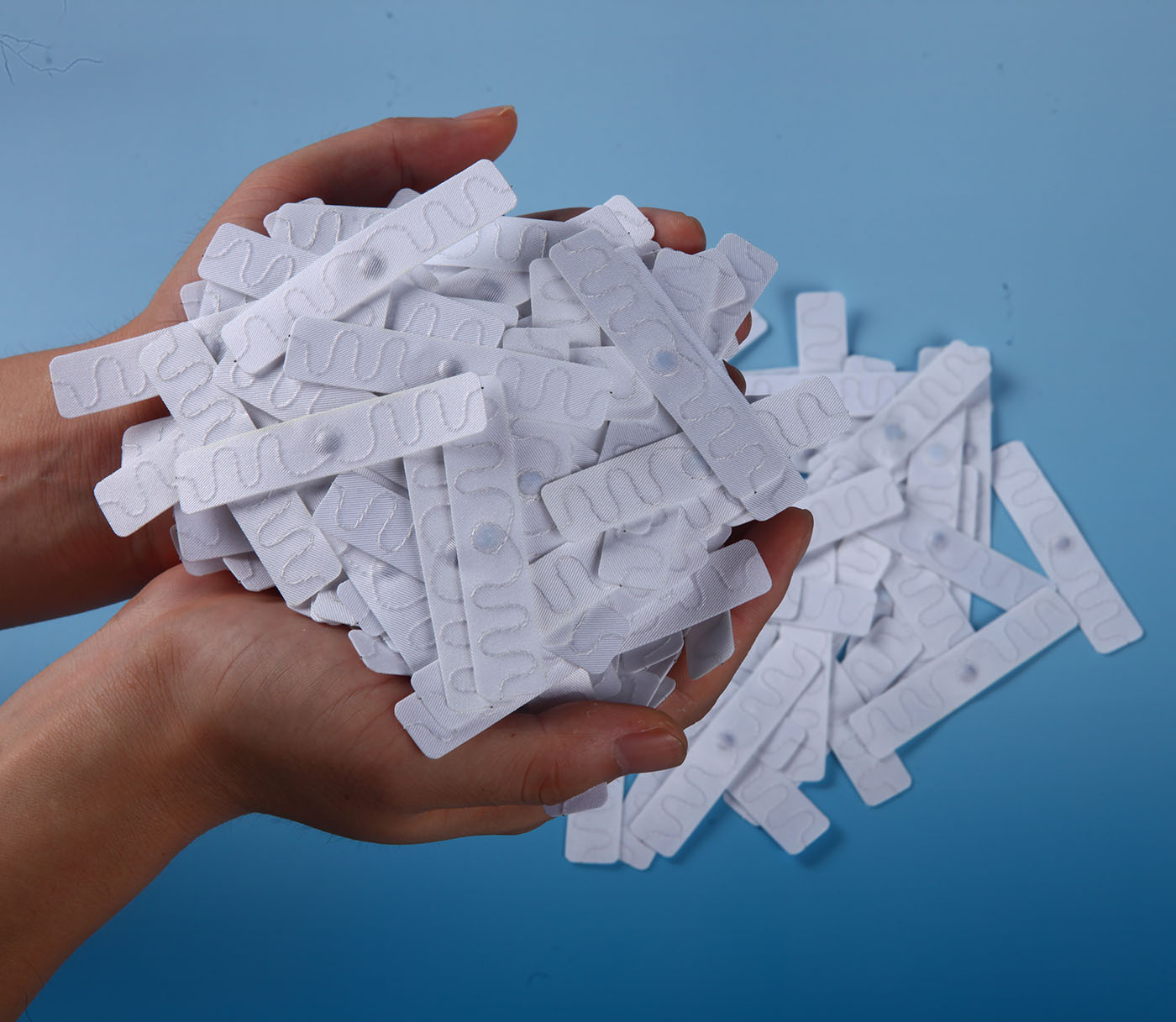
- Polyimide Kapton slim label (1.0-2.5 mm profile, high-temp adhesive rated 230 °C)
- PEEK cable-wrap loop (5-60 mm diameter, chemical-resistant)
- Alumina square tile 25 × 25 / 50 × 50 mm with through-hole + ceramic cement mount
- High-temperature silicone pressure-sensitive adhesive on-metal patch
- Ceramic-potted stud-weld housing (for permanent welded-on installation)
- Air interface
-
UHF Gen2v2 / RAIN RFID per EPCglobal UHF Gen2v2 + ISO/IEC 18000-63. Bands: US 902-928 MHz FCC Part 15.247; EU 865-868 MHz ETSI EN 302 208; JP 916-923 MHz ARIB STD-T106; CN 920-925 MHz SRRC. HF: NFC Forum Type 2 + ISO/IEC 14443-A + ISO/IEC 15693 at 13.56 MHz.
- Identifier architecture
-
- GS1 SGTIN-96 (Serialised GTIN) — product-level
- GS1 GIAI-96 (Global Individual Asset Identifier) — fixed-asset fixture / tool / mold
- GS1 GRAI-96 (Global Returnable Asset Identifier) — returnable sterilisation basket / paint-shop skid
- EPCIS 2.0 ObjectEvents — bizStep (commissioning / observing / processing / disposing), disposition, bizLocation, sensorMetadata
- ISO/IEC 19987 GS1 EPCIS + ISO/IEC 19988 GS1 CBV
- Enterprise platforms
-
- Rockwell FactoryTalk ProductionCentre + Plex + Fiix + FactoryTalk Analytics
- Siemens Opcenter Execution + Opcenter Quality + SIMATIC IT
- SAP S/4HANA MII + Manufacturing Execution (ME) + PP/PI + QM
- Oracle Manufacturing Cloud + Oracle MES + EBS Discrete Manufacturing
- PTC ThingWorx + Kepware + Windchill MPMLink
- IBM Maximo Application Suite + Health + Monitor + Predict
- Bentley AssetWise APM + iTwin + PlantSight; GE Digital Proficy; AVEVA PI + APM + Manufacturing Execution
- Hexagon EAM + ETQ Reliance + Aras PLM
- Use-case deployments
-
- Automotive body-in-white paint-shop (Toyota + VW + Ford + GM + Stellantis + Tesla + Hyundai + Honda paint-line RFID)
- Aerospace heat-treat + AMS 2750 + Nadcap AC7102 furnace tracking (Pratt & Whitney + Rolls-Royce + GE Aerospace + Safran + Boeing + Airbus)
- Medical device autoclave (Stryker + Medtronic + J&J + Zimmer Biomet + Integra + sterilisation reprocessing)
- Pharmaceutical retort + depyrogenation + dry-heat oven (Pfizer + Merck + GSK + Sanofi + Bayer + AstraZeneca)
- Retort canning + thermal processing (Del Monte + Dole + Campbell + ConAgra + Nestlé + Kraft Heinz)
- Industrial laundry PPS chip + ISO 15797 + TRSA (Aramark + Cintas + UniFirst + Alsco + Prudential Overall Supply)
- Steel / aluminum / glass heat-treat + foundry (Nucor + US Steel + Alcoa + Hydro + Rio Tinto + BHP)
- MOQ / Lead time
-
Ceramic bolt-mount disc: 1,000 pcs / 15-20 business days; polyimide Kapton slim label: 5,000 pcs / 10-15 business days; PEEK cable-wrap: 1,000 pcs / 20-25 business days; alumina tile 25 / 50 mm: 1,000 pcs / 20-25 business days; AEC-Q100 Grade 1 qualified automotive variant with PPAP Level 3 documentation: 2,000 pcs / 25-35 business days; FDA / EU MDR sterilisation variant with ISO 11135 EO process validation + biocompatibility dossier: 2,000 pcs / 20-30 business days.
- Warranty & QC
-
12-month high-temperature warranty; per-batch IEC 60068-2 + MIL-STD-810H + AMS 2750 (where applicable) test reports; COC with chip family + substrate + operating envelope + GS1 SGTIN / GIAI / GRAI range + thermal-cycle lot log; ISO 9001:2015 + IATF 16949 + AS9100D QMS on request; ISO 13485 for medical-device sterilisation variants.
Commercial terms
- MOQ
- Varies by SKU — stock items from 100 pcs; custom production typically 500-1,000 pcs
- Lead time
- Production 2-3 weeks after artwork and encoding sign-off; reorders on a 3-4 week cycle
- Samples
- Free samples and RF test report with every order; courier at customer cost
- Payment
- 50% T/T deposit, 50% before shipment; Net 30/60 for established accounts; LC for large orders
- Shipping
- FOB Shenzhen / Yantian; DHL, FedEx or EMS air freight; sea LCL / FCL for volume
- Response
- Itemized quote within one business day, Mon-Fri (UTC+8)
Regulatory context: qualification depends on the high-temperature process
High-temperature RFID tag selection collapses to three decisions: (1) the qualification standard the end-customer requires (MIL-STD-810H + AEC-Q100 for military + automotive; AMS 2750 + Nadcap AC7102 + AS9100D for aerospace; FDA 21 CFR 880 + AAMI ST79 + EN 285 + EN 13060 for medical device autoclave; FDA 21 CFR 113 + 114 for retort food processing; ISO 15797 + EN ISO 20471 + TRSA / HLAC for industrial laundry uniforms; IATF 16949 + VDA 6.3 for automotive paint-shop); (2) the substrate + housing material (ceramic LTCC / alumina / polyimide Kapton / PEEK / PPS / silicone) matched to continuous vs peak exposure; and (3) the identifier architecture (GS1 SGTIN-96 for product-level, GIAI-96 for fixed-asset, GRAI-96 for returnable sterilisation basket or paint-shop skid).
Automotive paint-shop body-in-white RFID commonly specifies AEC-Q100 Grade 1 (-40 / +125 °C) for the chip die plus 200 °C peak substrate for bake-oven exposure, with PPAP Level 3 documentation and IATF 16949 APQP. Aerospace heat-treat applications under AMS 2750 pyrometry + Nadcap AC7102 require temperature-uniformity-survey (TUS) + system-accuracy-tests (SAT) documentation and AS9100D-aligned QMS; RFID tags ride the fixture / basket / retort through multiple furnace passes. Medical-device reprocessing under FDA 21 CFR 880 + AAMI ST79 + EN 285 / EN 13060 needs ISO 11135 EO + ISO 17665 moist-heat sterilisation validation for the tag itself. Industrial laundry uniform-rental (Aramark / Cintas / UniFirst / Alsco / Prudential) specifies ISO 15797 + EN ISO 20471 PPS chip variants that survive 200+ tunnel washes at 85 °C wash + 180 °C tunnel finish.
Key performance metrics
Commodity high-temp tag vs ProudTek qualified build
Commodity sourcing pattern
- 'Rated to 200 °C' claim with no IEC 60068-2 / MIL-STD-810H / AEC-Q100 test report
- Generic epoxy or plastic housing delaminates after 50-100 paint-shop cycles
- Chip not AEC-Q100 qualified; drift and failure in automotive Tier-1 supply audit
- No AMS 2750 / Nadcap AC7102 awareness; aerospace heat-treat furnace programmes reject
- No FDA 21 CFR 880 + AAMI ST79 + EN 285 documentation; medical-device autoclave programmes reject
- No identifier assignment log; SGTIN / GIAI / GRAI collisions at scale; no EPCIS 2.0 integration
ProudTek qualified build
- IEC 60068-2 (Ba / Bb / Nb / Ca / Db / Kb) + MIL-STD-810H (501.7 + 503.7 + 507.7) test reports per batch
- Ceramic LTCC / alumina / polyimide Kapton / PEEK / PPS substrate matched to continuous + peak envelope
- AEC-Q100 Grade 0 / Grade 1 chip option + IATF 16949 APQP + PPAP Level 3 documentation on request
- AMS 2750 pyrometry + Nadcap AC7102 furnace-TUS / SAT + AS9100D-aligned QMS for aerospace
- FDA 21 CFR 880 + AAMI ST79 + EN 285 + EN 13060 + ISO 11135 EO + ISO 17665 moist-heat validation for medical
- GS1 SGTIN-96 / GIAI-96 / GRAI-96 per-batch assignment log + EPCIS 2.0 integration dossier for Rockwell + Siemens + SAP + Oracle + IBM Maximo + Bentley + AVEVA + GE Digital
Substrate selection by temperature envelope
| Substrate | Continuous °C | Peak °C | Best for |
|---|---|---|---|
| Polyimide Kapton HN / CR | 200 | 260 | Slim label, flexible curved surface, automotive paint-shop slim profile |
| PEEK | 250 | 300 | Cable-wrap, chemical-resistant, sterilisation-tray racking |
| PPS | 220 | 260 | Industrial laundry uniform-rental ISO 15797 + TRSA HLAC |
| LTCC ceramic | 220-280 | 350 | Bolt-mount on-metal disc, automotive + aerospace |
| Alumina Al2O3 96 % / 99.5 % | 350-500 | 600 | Aluminum smelting Hall-Héroult cell, steel foundry, jet-engine turbine tracking |
| Silicone VMQ / FVMQ | 220 | 260 | Sanitary wash-down + CIP autoclave + dairy / food-processing |
Automotive paint-shop — AEC-Q100 + IATF 16949 is the gating requirement
Operating reference — high-temperature estates
Automotive paint-shop operators (Toyota, VW, Ford, GM, Stellantis, Tesla, Hyundai, Honda, BMW, Mercedes-Benz) commonly specify ceramic LTCC bolt-mount on-metal discs with AEC-Q100 Grade 1 Impinj Monza R6-P chips, attached to the body-in-white skid (not the body itself) to survive bake-oven cycles while delivering the GS1 GRAI-96 returnable-skid identifier to the paint-line MES (Rockwell FactoryTalk / Siemens Opcenter / SAP ME/MII). IATF 16949 APQP + PPAP Level 3 + VDA 6.3 process audit documentation accompanies every batch.
Aerospace heat-treat + Nadcap AC7102 + AMS 2750 pyrometry programmes (Pratt & Whitney, Rolls-Royce, GE Aerospace, Safran, Boeing, Airbus, Lockheed Martin, Northrop Grumman) commonly specify alumina 25 / 50 mm tiles for 350-500 °C continuous furnace passes. Temperature-uniformity-survey (TUS) and system-accuracy-test (SAT) records are tied to the tag's GS1 GIAI-96 identifier via EPCIS 2.0 ObjectEvents flowing into PTC Windchill + Siemens Teamcenter + AS9100D-compliant QMS platforms.
Medical-device sterile-reprocessing programmes (Stryker, Medtronic, Johnson & Johnson, Zimmer Biomet, Integra, Smith & Nephew, STERIS, Olympus) commonly specify PEEK cable-wrap loops or ceramic discs on sterilisation trays running FDA 21 CFR 880 + AAMI ST79 + EN 285 + EN 13060 steam (134 °C + 3 bar + 18 min) or dry-heat (160-180 °C) autoclave cycles. ISO 11135 EO + ISO 17665 moist-heat + ISO 10993 biocompatibility dossiers accompany the SKU; ISO 13485 QMS integration is standard.
Pharmaceutical retort + depyrogenation programmes (Pfizer, Merck, GSK, Sanofi, Bayer, AstraZeneca, Novartis, Roche, BMS) commonly specify ceramic discs on pharmaceutical autoclave + depyrogenation tunnel fixtures running 250-350 °C for endotoxin reduction per USP <85> + <161>. The tag's GIAI-96 identifier ties to the batch genealogy in Veeva Vault QMS / MasterControl / Sparta TrackWise / ETQ Reliance.
Industrial-laundry uniform-rental operators (Aramark, Cintas, UniFirst, Alsco, Prudential Overall Supply, Mission Linen, Vestis, Angelica Corporation) commonly specify PPS chip in woven labels or heat-sealed to garment-tracking tabs for ISO 15797 industrial tunnel-wash compliance. TRSA Clean Green + HLAC healthcare-laundry accreditation programmes require 200+ wash-cycle retention; the GS1 SGTIN-96 identifier carries the garment lifecycle through wash + dry + finish + distribution on platforms like SPOT / Abs Corp / ABS + Unitex / Positek / SoftNex.
Form-factor selection by installation method
| Form factor | Installation | Typical deployment |
|---|---|---|
| Ceramic LTCC bolt-mount disc | 316L M6 / M8 / M10 through-bolt + ceramic cement | Paint-shop body skid, aerospace fixture, heat-treat basket |
| Polyimide Kapton slim label | High-temperature silicone adhesive (rated 230 °C) | Curved-surface metal, engine block, tooling |
| PEEK cable-wrap loop | Self-locking cable tie or cable-wrap secure | Sterilisation-tray racking, cable bundling, hose / pipe ID |
| Alumina tile 25 / 50 mm | Through-hole + ceramic cement or 316L wire-tie | Aluminum smelter Hall-Héroult cell, steel foundry, glass plant |
| High-temp adhesive patch | 3M High-Temperature VHB + silicone PSA | Low-stress surface, retort basket, sterilisation fixture |
| Ceramic-potted stud-weld housing | Welded stud on metal structure + ceramic pot | Permanent high-temperature structural tag |
Deployment timeline
- Week 0-3 — qualification + substrate + chip selection
Target process characterised: continuous vs peak temperature, cycle count, chemistry exposure. Qualification framework chosen (MIL-STD-810H / AEC-Q100 / AMS 2750 / FDA 21 CFR 880 + AAMI ST79 / ISO 15797 / IATF 16949). Substrate + housing selected (LTCC / alumina / polyimide / PEEK / PPS / silicone). Chip selected (AEC-Q100 Grade 0 / 1 variant where automotive).
- Week 3-8 — pilot batch + qualification testing + documentation
500-2,000 pc pilot batch. IEC 60068-2-2 + 2-14 + 2-78 tests run. MIL-STD-810H 501.7 + 503.7 + 507.7 qualification completed where applicable. AMS 2750 TUS + SAT documentation prepared (aerospace). FDA 21 CFR 880 + AAMI ST79 + EN 285 + EN 13060 + ISO 11135 + ISO 17665 validation completed (medical). PPAP Level 3 + IATF 16949 APQP completed (automotive).
- Week 8-16 — production ramp + MES integration
Production scales to 10k-100k pc. GS1 SGTIN / GIAI / GRAI identifier assignment logged. EPCIS 2.0 ObjectEvents integration with Rockwell FactoryTalk / Siemens Opcenter / SAP ME/MII / Oracle MES / PTC ThingWorx / IBM Maximo verified. First-article inspection + PPAP sign-off (automotive) or CAPA baseline (medical) established.
- Month 3-24 — surveillance + requalification + audit cycle
Quarterly thermal-cycle requalification per lot. Annual Nadcap AC7102 surveillance (aerospace). Annual IATF 16949 surveillance + triennial VDA 6.3 process audit (automotive). Triennial ISO 13485 + ISO 14971 risk-management review (medical). Annual TRSA Clean Green + HLAC surveillance (industrial laundry).
Useful next pages
Use these linked product, guide and comparison pages to keep the next click specific and practical.
Related high-temperature + industrial RFID
Adjacent thermal + rugged RFID SKUs.
Chip-level technical reference
Deep-dive specifications and chip-family comparisons relevant to this SKU.
FAQ
Can RFID tags really survive 200 °C continuously?
Yes. Ceramic LTCC + alumina + polyimide Kapton + PEEK + PPS substrates survive 200 °C continuous (230 °C intermittent) per MIL-STD-810H Method 501.7 + IEC 60068-2-2 Test Bb 72 h. The RFID chip die itself is not the limiting factor — Impinj Monza R6-P + NXP UCODE 9xe semiconductor junctions tolerate +150-175 °C easily. The limiting factor is the substrate + housing + adhesive, which our ceramic + polyimide + PEEK alternatives replace with heat-rated alternatives. Per-batch IEC 60068-2 test reports + AEC-Q100 qualification data (automotive) or AMS 2750 documentation (aerospace) accompany every order.
What's the difference between AEC-Q100 Grade 0 and Grade 1 for automotive paint-shop RFID?
AEC-Q100 Grade 0 qualifies the active IC die for -40 / +150 °C ambient; Grade 1 qualifies for -40 / +125 °C ambient. For automotive body-in-white paint-shop RFID, Grade 1 typically suffices because the tag is mounted on the body skid or a heat-sinking fixture, not directly exposed to the full 200 °C bake-oven ambient — the mount geometry sinks heat away from the die. Grade 0 is specified for powertrain electronics installed directly in the engine bay. The substrate + housing still must survive the 200 °C peak, which is where ceramic LTCC and alumina earn their place.
Does AMS 2750 + Nadcap AC7102 apply to aerospace RFID tag deployment?
Yes, transitively. AMS 2750 Pyrometry governs temperature-uniformity-survey (TUS) and system-accuracy-test (SAT) for aerospace heat-treat furnaces — Nadcap AC7102 is the accreditation audit. RFID tags on fixtures, baskets, and parts that pass through those furnaces become part of the pyrometry record when they carry the GS1 GIAI-96 identifier tying the furnace cycle to the heat-treat batch. ProudTek supplies alumina 25 / 50 mm tile variants with AS9100D-compliant documentation for Pratt & Whitney, Rolls-Royce, GE Aerospace, Safran, Boeing, and Airbus tier-supply programmes.
What identifier should I use — SGTIN, GIAI, or GRAI?
GS1 General Specifications v24 + EPC Tag Data Standard v2.1 define three relevant identifiers. SGTIN-96 (Serialised Global Trade Item Number) carries GTIN + serial — for product-level traceability (pharmaceutical vial in a retort basket, automotive part through paint-shop). GIAI-96 (Global Individual Asset Identifier) carries per-asset serial — for fixed-asset tracking (paint-shop skid, heat-treat furnace basket, sterilisation tray, tooling). GRAI-96 (Global Returnable Asset Identifier) carries returnable-asset serial — for cycling containers (paint-shop skids that return to the staging area, sterilisation baskets that cycle back to prep). Paint-shop programmes typically use GRAI-96 for the skid + SGTIN-96 for the product; aerospace heat-treat programmes typically use GIAI-96 for fixtures + SGTIN-96 for parts; medical autoclave typically uses GIAI-96 for trays + SGTIN-96 for instruments.
Sources & references
Primary standards, OEM datasheets and regulatory documents cited by this article. All URLs were verified on the access date shown below.
- MIL-STD-810H Department of Defense Test Method Standard
Method 501.7 High Temperature + Method 503.7 Temperature Shock + Method 507.7 Humidity anchor thermal qualification.
- AEC-Q100 Rev-J Failure Mechanism Based Stress Test Qualification for Integrated Circuits
Automotive active-IC qualification framework (Grade 0 / 1 / 2 / 3) for paint-shop RFID chip selection.
- IATF 16949:2016 Automotive Quality Management System
Automotive QMS standard; APQP / PPAP / VDA 6.3 anchor paint-shop RFID tier-supply qualification.
- AMS 2750 Pyrometry (Rev G)
Aerospace heat-treat pyrometry; governs TUS + SAT for furnace RFID tag use under Nadcap AC7102.
- IEC 60068-2 Environmental Testing — Part 2 series
Tests Ba / Bb (dry heat) + Nb (temperature cycling) + Ca / Cb (damp heat) + Kb (salt mist) + 78 (cyclic humidity).
- AAMI ST79 Comprehensive Guide to Steam Sterilisation and Sterility Assurance in Health Care Facilities
US healthcare steam-sterilisation reference framework; anchor for autoclave RFID tag deployment.
- EN 285:2015+A1:2021 Sterilisation — Steam Sterilisers — Large Sterilisers
EU standard for large steam sterilisers; anchors EU MDR-regulated sterilisation RFID programmes.
- ISO 15797:2017 Textiles — Industrial Washing and Finishing Procedures for Testing
Industrial tunnel-wash qualification for uniform-rental RFID tags (PPS substrate, TRSA HLAC).
- FDA 21 CFR 113 Thermally Processed Low-Acid Foods Packaged in Hermetically Sealed Containers
Retort-processed canned-food thermal-processing requirement; anchors retort RFID tag deployment.
- GS1 General Specifications v24 + EPC Tag Data Standard v2.1
SGTIN-96 / GIAI-96 / GRAI-96 identifier encoding + EPCIS 2.0 ObjectEvents MES integration.
Proud Tek is a Shenzhen-based RFID & NFC manufacturer supplying hotel chains, transit operators, event venues and retail brands worldwide. Every order includes free samples, RF testing and dedicated project support.
Get a Quick Quote
Tell us about your project and we'll respond within one business day. Fields marked (asterisk) are required.