
Warehouse Solution
RFID Warehouse Management
UHF Receiving & Picking

Quick answer
Procurement-grade RFID warehouse management guide for 3PL operators, distribution-centre managers, retail back-of-house teams and e-commerce fulfilment operations. Maps the UHF infrastructure decision (fixed Impinj R700 + Zebra FX9600 portal readers vs handheld Zebra MC3300xR + Honeywell IH40 readers; antenna geometry per dock-door + rack-aisle layout), the chip family decision (NXP UCODE 9 / 9xe / 9xm; Impinj M730 / M750 / M800 / M850; Alien Higgs-9), the standards anchor (EPC Gen2 V3 / ISO/IEC 18000-63:2021; GS1 SGTIN-96 for item-level), the Walmart RFID tagging mandate (apparel since 2020 → expanded categories 2022 / 2023 / 2024 / 2025; latest expansion covers home + electronics + toys), Amazon Just Walk Out / Amazon RFID experimentation, and the ROI proof points (~99% inventory accuracy vs 65% manual baseline; cycle-counting time cut from 100+ hours/week to 5–10 hours; 4–6% out-of-stock reduction = $0.5–2M+ recovered revenue per $100M warehouse throughput).
- Walmart RFID mandate is the dominant procurement driver. Apparel mandate since 2020; expanded categories 2022 (electronics, home goods, sporting goods); 2023 (toys, beauty); 2024 (auto accessories, batteries); 2025 (additional consumer categories). Suppliers shipping into Walmart need GS1 SGTIN-96 item-level tagging on every saleable unit.
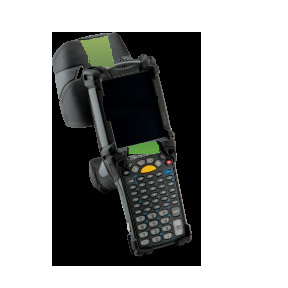
- UHF infrastructure choice: Impinj R700 (4-port, AI-on-reader) or Zebra FX9600 (8-port, Cisco-compatible) for fixed portal readers at dock doors + receiving conveyors; Zebra MC3300xR / Honeywell IH40 for handheld cycle-counting + spot inventory. Each fixed reader covers a dock door + 2–3 m approach zone.
- Chip choice: NXP UCODE 9 (96-bit EPC, current-gen) is the default for retail item-level tagging. Impinj M730 / M750 / M800 / M850 are the read-sensitivity-tier alternatives. Alien Higgs-9 covers the third-supplier slot. Cost: $0.05–0.15 per chip in printed inlay at MOQ 100k+.
- ROI baseline: manual cycle counting at retail back-of-house reaches 65% inventory accuracy; RFID reaches 99%+. Cycle counting time drops from 100+ hours per week to 5–10 hours. The 4–6% out-of-stock reduction recovers $0.5–2M+ annual revenue per $100M warehouse throughput, before factoring labour savings.
- Standards anchor: GS1 EPC Tag Data Standard (TDS) 2.0 SGTIN-96 for item-level (96-bit serialised GTIN); EPC Gen2 V3 / ISO/IEC 18000-63:2021 for air interface; GS1 EPCIS 2.0 for event-data exchange across the supply chain.
Featured Warehouse Management Products
SKUs we typically deploy for warehouse management. Tap a card for specs and samples.
At a glance
Use these short answers to decide whether this page matches the project before moving into the detail.
Audience
3PL warehouse operators running multi-tenant distribution at scale. Retail back-of-house operations (Walmart, Target, Costco, Macy's) preparing or maintaining RFID-manda...
Decision sequence
Mandate scope: which retail customers have item-level RFID tagging requirements? Walmart / Target / Macy's apparel + home + electronics categories. Tagging tier: item-le...
Next step
Ready to move forward? Start your inquiry to get specific answers for this project.
Get an RFID warehouse RFPWalmart RFID mandate — the dominant procurement driver
Most suppliers meet RFID for the first time not in a strategy deck but in a chargeback notice — a line-item deduction for the cartons that showed up untagged. That is the blunt end of the single largest driver of retail RFID adoption globally: Walmart's tagging mandate. It started with apparel in 2020 and has expanded categories every year since. Suppliers shipping into Walmart need GS1 SGTIN-96 item-level tagging on every saleable unit, and Walmart's expansion timeline quietly sets the RFID priorities for the rest of the industry.
- **Apparel (2020)** — original Walmart RFID mandate. All apparel SKUs require GS1 SGTIN-96 item-level RFID tag with EPC encoded per GS1 TDS. Compliance enforced through chargebacks for non-tagged inventory.
- **Home goods + electronics + sporting goods (2022)** — first expansion. Home textiles, small appliances, consumer electronics, sporting equipment added to mandate.
- **Toys + beauty (2023)** — second expansion. Toys, beauty + personal care products added.
- **Auto + batteries (2024)** — third expansion. Automotive accessories + batteries added.
- **2025 expansion** — additional consumer categories rolling into mandate; specifics vary by Walmart's annual guidance.
- **Target RFID** — Target's analogous mandate covers apparel + home + electronics. T2/T3 vendor compliance tiers.
- **Macy's, Costco, Lowe's, Home Depot** — increasingly require item-level RFID for select categories.
- **Compliance pattern** — supplier tags at point of manufacture (factory in source country); retail buyer-side compliance check at receiving DC reads the tag and validates EPC encoding.
UHF infrastructure — fixed readers vs handhelds vs RTLS
It is tempting to haggle the tag price down to the third decimal and wave the readers through on a nod. Resist it. UHF reader infrastructure cost is typically 5–10× the per-tag cost over the programme lifetime, so the reader-class decision frames the rest of the deployment.
- **Impinj R700** — 4-port UHF reader with AI-on-reader processing. Native EPC Gen2 V3 support; native ItemTest integration. The current Impinj flagship.
- **Zebra FX9600** — 8-port UHF reader; Cisco-compatible network architecture. Older-generation but widely deployed; Zebra's WMS partner ecosystem is mature.
- **Antenna geometry** — dock-door portal typically uses 4 antennas (left + right + overhead + underbelt) to ensure 100% read rate. Total install cost per dock door $3,000–8,000 including antennas + cabling.
- **Handheld for cycle counting** — typical 1 handheld per 5,000–15,000 SKUs back-of-house. Read rate at handheld is 100–500 tags/min vs 1,000+ tags/min at fixed reader.
- **RTLS overhead** — Impinj xArray real-time location tracking provides 1–3m item-location accuracy across an aisle / zone. Significantly higher CapEx but enables continuous inventory visibility without scheduled cycle counts.
| Reader category | Use case | Typical model | Indicative cost |
|---|---|---|---|
| Fixed portal reader (dock door) | Receive / ship at high throughput | Impinj R700 (4-port) / Zebra FX9600 (8-port) | $2,500–6,000 per reader + antennas |
| Fixed underbelt portal | Conveyor-belt scanning | Times-7 A6020 / Impinj xPortal | $3,000–8,000 per portal |
| Fixed wall / overhead reader | Receive / loading-zone aggregate scan | Zebra FX7500 / Impinj R420 | $1,500–4,000 per reader |
| Handheld UHF reader | Cycle counting, spot inventory, returns processing | Zebra MC3300xR / Honeywell IH40 / Bluebird RFR901 | $1,500–4,000 per handheld |
| Forklift-mounted reader | Aggregate scanning as goods moved by forklift | Zebra FX9600 + truck-mount antenna | $3,500–7,000 per forklift install |
| RTLS overhead infrastructure | Real-time location tracking | Impinj xArray + ItemTest reference / Zebra MotionWorks | $25,000–100,000+ per zone |
Chip selection — UCODE 9, M730/M750/M800/M850, Higgs-9
Three chip families dominate retail item-level UHF tagging: NXP UCODE 9 series, Impinj M730/M750/M800/M850, Alien Higgs-9. Read sensitivity, anti-collision performance and memory configuration differ; cost at high volume is similar across vendors (~$0.05–0.15 per chip in printed inlay).
- **NXP UCODE 9 (SL3S1206)** — current-generation NXP UHF chip. 96-bit EPC, 128-bit user memory, EPC Gen2 V2 / V3 air interface. Default for retail item-level tagging; Walmart mandate compliance.
- **NXP UCODE 9xe / 9xm** — extended sensitivity / extended memory variants for harder reading environments (metallic packaging) or larger custom payloads.
- **Impinj M730** — entry-tier Impinj UHF chip; cost-optimised for high-volume retail apparel.
- **Impinj M750** — mid-tier; better read sensitivity for mixed-material substrates.
- **Impinj M800** — high-sensitivity chip with extended dynamic range; common in apparel + footwear inlays.
- **Impinj M850** — newest Impinj chip; extended sensitivity + memory; positioned as flagship.
- **Alien Higgs-9** — third-supplier alternative; common in cost-optimised inlays + multi-vendor supply diversification.
- **Cost economics** — chip cost is $0.03–0.08 at MOQ 1M+ volumes; printed inlay (chip + antenna + paper substrate) is $0.05–0.15; finished label with adhesive backing is $0.08–0.25 in retail-mandate compliance volume.
- **EPC encoding** — every chip needs GS1 SGTIN-96 EPC encoded with company prefix + item reference + serial. Encoding happens at converter (most common) or at supplier's facility (lower-volume programmes).
Standards anchor — EPC Gen2 V3, GS1 SGTIN-96, EPCIS 2.0
RFID warehouse management runs on a stack of GS1 + ISO/IEC + EPCglobal standards. Procurement teams should require vendor responses to cite the standard directly rather than vendor-specific marketing language.
- **EPC Gen2 V3 / ISO/IEC 18000-63:2021** — the UHF air-interface standard. 860–960 MHz; backscatter modulation; anti-collision algorithm supporting 1,000+ tag reads per second. Every UHF reader in the warehouse supports V3.
- **GS1 EPC Tag Data Standard 2.0** — defines the SGTIN-96 (Serialised GTIN), SSCC-96 (Serial Shipping Container Code), GRAI-96 (Returnable Asset), GIAI-96 (Individual Asset) encoding patterns for the 96-bit EPC memory bank.
- **SGTIN-96 for item-level** — the GS1 standard for retail item-level. 96-bit EPC = GS1 company prefix + item reference + serial number. Used by Walmart, Target, Macy's mandates.
- **SSCC-96 for case + pallet level** — used by 3PL + freight visibility programmes; ties to GS1 Logistics Label.
- **GS1 EPCIS 2.0** — Event Capture Information Services standard for exchanging RFID-read event data across supply-chain partners. Required for cross-company visibility (manufacturer → 3PL → retailer).
- **GS1 CBV (Core Business Vocabulary)** — defines event-data vocabulary used in EPCIS (e.g., 'shipping', 'receiving', 'commissioning').
- **Regional regulations** — UHF spectrum allocation varies by region. Americas: 902–928 MHz; Europe: 865–868 MHz; Japan: 916–921 MHz; China: 920–925 MHz. Readers + tags need regional firmware tuning.
Workflow patterns — receiving, putaway, picking, cycle counting, shipping
A barcode has one stubborn requirement: it has to be seen. Someone has to find it, square a scanner up to it, and wait for the beep — one item at a time. RFID drops the line-of-sight tax and reads the whole pallet at once, which is what turns each warehouse workflow step from manual barcode scanning into aggregate-read automation. Each step still has its own reader-class + antenna geometry + WMS integration pattern.
- Step 1**Receiving** — fixed portal reader at dock door reads pallet/case as it enters the DC. WMS receives EPC list + timestamp; validates against ASN (Advanced Shipping Notice); flags discrepancies. Typical 30–60 seconds per pallet vs 5–10 minutes manual scanning.
- Step 2**Putaway** — forklift-mounted reader records EPC + dock-to-shelf timestamp; WMS auto-updates location. Eliminates manual barcode scan at location confirmation.
- Step 3**Picking** — handheld reader confirms correct SKU pick + quantity by reading EPC vs pick-list. Wave / cluster picking accuracy improves from 95% manual to 99%+ RFID.
- Step 4**Cycle counting** — handheld reader walks aisles; reads all tags in 1–3m range. 5,000-SKU section takes 30–60 min RFID vs 8+ hours manual. Frequency typically weekly RFID vs annual manual.
- Step 5**Shipping** — fixed portal reader at outbound dock validates EPC list matches shipment manifest; WMS auto-generates EPCIS shipping event for downstream visibility.
- Step 6**Returns processing** — handheld reader reads returned item EPC; WMS looks up purchase history, sale date, return policy; auto-routes to restock / refurbish / destroy queue.
- Step 7**Inventory visibility** — RTLS overhead readers (Impinj xArray) maintain continuous EPC-to-location map without scheduled cycle counts. Enables 24/7 inventory accuracy.
WMS / ERP integration — SAP EWM, Oracle WMS Cloud, Manhattan, Blue Yonder
RFID read data flows from readers to the WMS layer that already manages warehouse operations. WMS connector + middleware are the integration anchor.
- **SAP Extended Warehouse Management (EWM)** — RFID-enabled receive / putaway / pick / pack / ship workflows. Connector pattern: Impinj ItemSense / Zebra Savanna middleware feeds RFID read events to SAP EWM via REST API.
- **Oracle WMS Cloud** — analogous RFID integration via Oracle Integration Cloud Service connector.
- **Manhattan Active Warehouse Management** — Manhattan's RFID integration includes EPCIS 2.0 native support.
- **Blue Yonder (formerly JDA) WMS** — Blue Yonder's RFID integration leverages Zebra Savanna / Impinj ItemSense middleware.
- **Körber WMS** — common in European 3PL deployments.
- **Infor SCM** — vertical-industry WMS integrations.
- **Impinj ItemSense / Speedway Connect** — Impinj middleware between R700 / R420 readers and the WMS. Filters, deduplicates and routes events.
- **Zebra Savanna** — Zebra's analogous middleware platform.
- **Middleware role** — RFID readers generate huge event volume (1,000+ tags / sec at peak). Middleware filters duplicate reads, applies business logic (e.g., 'reading on dock-door antenna for 5+ seconds = pallet received'), and forwards normalised events to WMS.
ROI proof points — 99% accuracy, $0.5–2M+ revenue recovery, 80% cycle-counting time saved
RFID warehouse ROI is well-documented through retail and 3PL deployments. Three numbers anchor the procurement business case.
- **Auburn University RFID Lab** — research consortium with Walmart, Macy's, JC Penney; published baseline data on RFID inventory accuracy gains.
- **Walmart inventory accuracy** — Walmart's apparel RFID rollout documented inventory accuracy improvements from 65–75% manual baseline to 95–99% RFID.
- **Cost per tag economics** — $0.05–0.15 per tag at retail-mandate volume. For a $100M throughput retailer, item-level tagging cost is ~$50K–150K / month vs the $0.5–2M+ revenue recovery from out-of-stock reduction.
- **Soft cost savings** — labour efficiency (cycle counting, picking, putaway), shrinkage reduction, customer-experience improvement (in-stock product availability), supply-chain visibility (real-time inventory data for forecast accuracy).
| Metric | Pre-RFID baseline | Post-RFID outcome | Source |
|---|---|---|---|
| Inventory accuracy | 63–75% (manual cycle counting) | 99%+ | Auburn University RFID Lab benchmarks; Walmart deployment data |
| Cycle counting time / week | 80–120 hours | 5–10 hours | Retail back-of-house deployments |
| Out-of-stock rate | 8–12% | 3–6% | Walmart apparel RFID rollout data |
| Out-of-stock revenue recovery (per $100M throughput) | — | $0.5M–2M / year recovered | 4–6% out-of-stock reduction × revenue baseline |
| Receiving throughput | 5–10 min / pallet manual | 30–60 sec / pallet RFID | Standard 3PL deployment |
| Pick accuracy | 95% manual | 99%+ RFID | Standard retail deployment |
| Loss / shrinkage reduction | Baseline | 30–50% reduction | Retail back-of-house |
| Labour cost reduction (per 100k-SKU DC) | Baseline | $200–500K / year saved | Combined cycle-counting + picking efficiency |
| Payback period | — | 12–18 months | Industry average for >$500k programme |
Amazon RFID + Just Walk Out + Frictionless retail experiments
Amazon's RFID involvement is unique because Amazon operates as both retailer (mandate to suppliers) and technology vendor (Just Walk Out platform). Worth understanding both sides for procurement context.
- **Amazon Go / Just Walk Out (2016–)** — frictionless retail concept; combines computer vision + sensor fusion + RFID for some product categories. Originally launched in Amazon Go stores; now licensed to third-party retailers (Hudson News, Choice Market, etc.).
- **Amazon RFID for inventory** — Amazon DCs use RFID for select inventory workflows; not publicly disclosed as broadly as Walmart's mandate.
- **Amazon Web Services RFID + IoT** — AWS IoT Core supports RFID reader integration patterns; AWS marketplace lists multiple RFID middleware vendors.
- **Whole Foods (Amazon-owned)** — back-of-house RFID for specific categories; aligns with Amazon's broader inventory-visibility strategy.
- **Future direction** — Amazon's Just Walk Out + RFID combination is a long-term retail-experience direction; Walmart's mandate is the near-term retail-supplier mandate.
Tag form factor — paper inlay, anti-metal, on-metal, high-temp
Warehouse RFID tags come in form factors tuned to the product / packaging / environment. Retail mandate compliance is mostly paper-inlay item-level; specialty categories need form-factor variants.
- **Paper inlay dominance** — 90%+ of retail-mandate item-level tags are paper inlay with NXP UCODE 9 or Impinj M-series. Cost: $0.05–0.15.
- **Anti-metal tags** — required for any tag on a metal substrate (canned goods, electronics packaging, IT assets). Ferrite isolator de-tunes the parasitic eddy current.
- **Read-distance variation** — depends on antenna geometry, substrate, reader power. Indoor 1–3 m reliable; outdoor / line-of-sight 5–10 m achievable.
- **Recyclable vs disposable** — most retail-mandate tags are paper-inlay disposable (cost-optimised). Some 3PL programmes use ABS-housed reusable tags for returnable assets (RTIs).
| Form factor | Substrate | Read distance | Best for |
|---|---|---|---|
| Paper inlay item-level tag | Paper + adhesive | 2–4 m at fixed reader | Retail apparel, packaging, books |
| Polypropylene printed label | PP + adhesive | 2–4 m | Cosmetics, consumer goods |
| Anti-metal UHF tag | PCB + ferrite isolator | 3–6 m on metal | Metal containers, IT assets, automotive parts |
| High-temp UHF tag | PPS / silicone encapsulation | 2–4 m at 200 °C continuous | Industrial parts, kitchen equipment, oven-cleared inventory |
| On-rack pallet tag | ABS housing | 5–10 m | Pallet-level tagging in racks |
| Wristband / bracelet UHF | Silicone / fabric | 2–4 m | Asset-attended workers + staff zones |
Pricing tiers and MOQ — what to expect on a 2026 RFQ
Retail-mandate item-level UHF tags have well-understood pricing. The three drivers: chip, form factor, volume.
- **Pre-encoding** — supplier writes SGTIN-96 EPC during inlay manufacture. Critical for retail mandate compliance; ~$0.01–0.02 per tag.
- **Reader CapEx** — typical mid-size DC deployment: 6–12 dock doors × $3,000 per portal + 8–12 handhelds × $2,500 = $50K–80K initial CapEx.
- **Annual operational** — Impinj ItemSense / Zebra Savanna middleware subscription $10K–50K / year per DC depending on event volume.
- **Sample lead time** — 1–5 sample tags in 5–7 days; pre-encoded reader-ready samples in 10–14 days.
| Configuration | MOQ | Cost / unit | Lead time |
|---|---|---|---|
| NXP UCODE 9 + paper inlay, plain | 10,000 | $0.10–0.20 | 3 weeks |
| NXP UCODE 9 + paper inlay, printed + pre-encoded | 100,000 | $0.05–0.12 | 4 weeks |
| Impinj M730 / M750 + paper inlay | 100,000 | $0.05–0.13 | 4 weeks |
| Impinj M800 / M850 + paper inlay | 100,000 | $0.08–0.18 | 4 weeks |
| Anti-metal UHF tag | 5,000 | $0.50–1.50 | 4–5 weeks |
| High-temp UHF tag (200 °C continuous) | 5,000 | $1.00–3.00 | 5–6 weeks |
| Fixed reader Impinj R700 (4-port) | 1 unit | $2,500–4,500 per reader | 3–4 weeks |
| Fixed reader Zebra FX9600 (8-port) | 1 unit | $3,500–6,000 per reader | 3–4 weeks |
| Handheld Zebra MC3300xR | 1 unit | $2,000–3,500 per unit | 2–3 weeks |
Useful next pages
Use these linked product, guide and comparison pages to keep the next click specific and practical.
Warehouse RFID products
Reader hardware + tag inventory for warehouse deployments.
Related solutions
Adjacent UHF asset-tracking + inventory programmes.
Related editorial
Background reading on warehouse RFID.
FAQ
What is the Walmart RFID mandate and what categories does it cover in 2026?
Walmart's item-level RFID tagging mandate started with apparel in 2020 and has expanded annually. 2022 added home goods, small appliances, consumer electronics, sporting equipment. 2023 added toys + beauty + personal care. 2024 added auto accessories + batteries. 2025 added additional consumer categories. Each tagged SKU needs GS1 SGTIN-96 EPC encoded on a UHF chip per GS1 TDS 2.0; compliance enforced via chargebacks for non-tagged inventory at receiving DCs. Suppliers shipping into Walmart in mandated categories need an RFID inlay supplier + pre-encoding workflow.
Which UHF chip should I pick — UCODE 9, Impinj M-series, or Higgs-9?
All three are viable; choice depends on read-sensitivity requirement + supply-chain diversification. NXP UCODE 9 (SL3S1206) is the default for retail apparel + general consumer goods. Impinj M-series (M730 / M750 / M800 / M850) offers progressively higher read sensitivity at modest cost premium; M800 / M850 are common in apparel + footwear. Alien Higgs-9 is the third-supplier alternative for multi-vendor sourcing. Cost differences are small at MOQ 100k+ ($0.03–0.05 chip variance); read-sensitivity differences matter most on metallic-substrate categories (electronics, automotive parts).
How much does an item-level RFID tag cost in retail-mandate compliance volume?
$0.05–0.15 per tag at MOQ 100k+ for printed paper inlay with NXP UCODE 9 or Impinj M-series chip + pre-encoded SGTIN-96 EPC. Higher costs ($0.15–0.30) for printed labels with adhesive backing + custom-printed artwork. Cost can drop to $0.03–0.08 at MOQ 1M+. Pre-encoding adds $0.01–0.02 per tag but is essential for retail-mandate compliance (the EPC must be in the GS1 SGTIN-96 format with the supplier's company prefix + item reference + serial).
What inventory accuracy improvement should I expect from RFID?
65–75% manual cycle-counting baseline → 99%+ RFID. Auburn University RFID Lab benchmarks (research consortium with Walmart, Macy's, JC Penney) document this consistently across retail back-of-house deployments. Cycle-counting time drops 80–90% (from 80–120 hours / week to 5–10 hours). Out-of-stock rate typically improves from 8–12% to 3–6%; on a $100M-throughput warehouse, the 4–6% out-of-stock reduction recovers $0.5–2M+ annual revenue before factoring labour savings. Payback typically 12–18 months for >$500K programmes.
Impinj R700 or Zebra FX9600 for fixed dock-door portal readers?
Both are widely deployed and reliable. Impinj R700 (4-port, AI-on-reader, $2,500–4,500 per reader) is the current Impinj flagship; native EPC Gen2 V3 support; ItemTest integration ecosystem. Zebra FX9600 (8-port, $3,500–6,000) is the established Zebra reader; Cisco-compatible networking; Zebra WMS partner ecosystem. Choice usually comes down to (a) existing reader infrastructure compatibility, (b) WMS partner integration (Zebra Savanna middleware vs Impinj ItemSense), (c) read-sensitivity requirements for the specific dock-door environment. Pilot both on the actual loading dock before bulk procurement.
What standards does retail RFID actually use?
Three primary standards. (1) EPC Gen2 V3 / ISO/IEC 18000-63:2021 — UHF air interface (860–960 MHz, anti-collision algorithm). (2) GS1 EPC Tag Data Standard 2.0 — defines SGTIN-96 (item-level), SSCC-96 (case + pallet), GIAI-96 (individual asset) encoding patterns for the 96-bit EPC. (3) GS1 EPCIS 2.0 — Event Capture Information Services for cross-company supply-chain event exchange. Required for the retail-mandate compliance loop: supplier encodes SGTIN-96 → ships product with EPC tag → retail DC reads on receiving → EPCIS event recorded → cross-checked against ASN.
What WMS integration patterns work for RFID warehouse?
SAP Extended Warehouse Management (EWM), Oracle WMS Cloud, Manhattan Active Warehouse Management, Blue Yonder WMS, Körber and Infor SCM all have established RFID integration patterns. The integration goes through middleware (Impinj ItemSense / Speedway Connect, Zebra Savanna) that filters duplicate reads, applies business logic, and forwards normalised events to WMS via REST API. Manhattan Active Warehouse includes EPCIS 2.0 native support. Manhattan, SAP EWM and Oracle WMS Cloud are the three most-cited RFID-mature WMS platforms in 2026 retail deployments.
Does Amazon also use RFID like Walmart does?
Amazon's RFID involvement is dual-sided. As a retailer, Amazon uses RFID in select inventory workflows but not as broadly publicised as Walmart's mandate. As a technology vendor, Amazon operates the Just Walk Out frictionless retail platform (originally launched in Amazon Go stores 2016; now licensed to third-party retailers) which combines computer vision + sensor fusion + RFID for some product categories. AWS IoT Core supports RFID reader integration patterns and the AWS marketplace lists multiple RFID middleware vendors. The Walmart mandate is the near-term supplier-side compliance driver; Amazon's Just Walk Out is the longer-term retail-experience direction.
Sources & references
Primary standards, OEM datasheets and regulatory documents cited by this article. All URLs were verified on the access date shown below.
- Walmart RFID mandate — Apparel + expansion
Apparel since 2020; 2022 expansion to home + electronics + sporting goods.
- RFID Journal — Walmart 2023 mandate expansion
Industry-press tracking of Walmart mandate category additions.
- NXP UCODE 9 (SL3S1206) datasheet
Current-generation UHF chip for retail item-level tagging.
- Impinj M730/M750/M800/M850 chip family
Authoritative chip-family reference + read-sensitivity tiers.
- Alien Higgs-9 datasheet
Third-supplier alternative for multi-vendor sourcing.
- Impinj R700 reader product page
Current Impinj fixed-reader flagship; AI-on-reader.
- Zebra FX9600 fixed UHF reader product page
Zebra's analogous fixed-reader flagship.
- Zebra MC3300xR handheld product page
Common warehouse handheld UHF reader.
- GS1 EPC Tag Data Standard 2.0
SGTIN-96 / SSCC-96 / GIAI-96 EPC encoding patterns.
- GS1 EPCIS 2.0
Event Capture Information Services for cross-company supply-chain event exchange.
- ISO/IEC 18000-63:2021 — UHF air interface
EPC Gen2 V3 air interface standard.
- Auburn University RFID Lab
Research consortium with Walmart, Macy's; baseline inventory-accuracy data.
- Auburn RFID Lab — Item-Level RFID research
Peer-reviewed papers on RFID inventory-accuracy gains.
- Target — RFID tagging guidelines
Target's analogous mandate (T2/T3 vendor compliance).
- Amazon Just Walk Out technology
Frictionless retail with computer vision + RFID hybrid.
- SAP Extended Warehouse Management (EWM)
RFID-enabled WMS integration partner.
- Manhattan Active Warehouse Management
EPCIS 2.0 native support.
- Impinj ItemSense / Speedway Connect middleware
Impinj middleware for filtering + WMS integration.
- Zebra Savanna data services
Zebra middleware analogue.
- RFID Journal — Best of show + case studies
Industry-press archive of warehouse + retail RFID deployments.
Proud Tek is a Shenzhen-based RFID & NFC manufacturer supplying hotel chains, transit operators, event venues and retail brands worldwide. Every order includes free samples, RF testing and dedicated project support.
Get a Quick Quote
Tell us about your project and we'll respond within one business day. Fields marked (asterisk) are required.