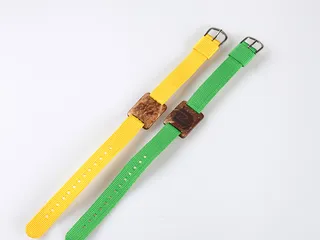
Coconut Shell RFID Wristband
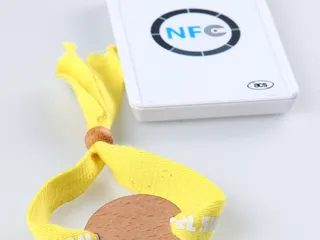
A coconut-shell wristband hides its RFID chip inside a polished piece of real coconut shell — the premium eco credential for festivals and resorts that want technology to look natural, not plastic.
RFID wristbands for events, hospitality and wearable-credential projects in silicone, fabric, Tyvek, wood, coconut-shell and UHF formats. Chips range from MIFARE and NTAG for access and cashless payment to UHF for longer-range reads. Specify the reader or lock system, wearer size, closure and branding, then approve samples before ordering.
A coconut-shell wristband hides its RFID chip inside a polished piece of real coconut shell — the premium eco credential for festivals and resorts that want technology to look natural, not plastic.
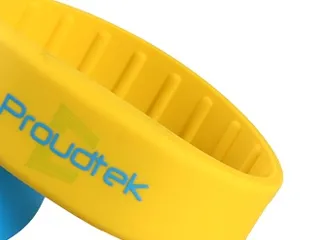
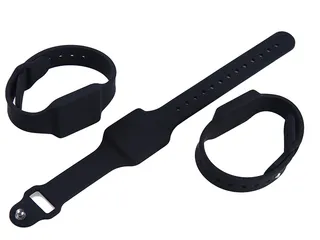
Silicone wristbands are the waterproof wearable credential — chip sealed in soft silicone that survives pools, saunas and gyms — for hotels and leisure venues where paper wristbands disintegrate.
Event wristbands replace paper tickets with a wearable credential — tap-to-enter, cashless payment and zoned access — in Tyvek for single-day events, woven or silicone for multi-day festivals.
Hotel RFID wristbands replace the room key, the pool towel card and the wallet — one wearable for doors, lockers and cashless spend — with the chip dictated by the property's locks and point-of-sale system.
A UHF wristband is read from metres away, not tapped — a passive EPC Gen2 chip for zone tracking, race timing and headcounts — the opposite trade-off from an NFC wristband built for tap payment.
Selection & ordering guide
Wristband projects combine a wearable product with an existing access, ticketing or guest-management system. The catalogue includes silicone, fabric, coconut-shell and UHF formats. Choose the construction around the wearer and the chip around the system specification.
Send the reader, lock or terminal model and the specified chip and encoding format. For events, identify the system provider handling admission or payment and who will enrol and test the wristbands.
Specify adult or child sizing, length of wear, closure preference and whether the band will be reused. Describe water, cleaning and outdoor exposure so that the proposed material and closure can be reviewed.
Define artwork, colours by ticket class, visible numbers and packing groups. Have the operator test sample bands through issuing, entry and any other required transactions before signing off the production order.
A wristband and a card can carry identical silicon; the housing changes how the credential is worn, shared and replaced. Choose the format around the wearer and the environment, then match the chip to the system.
On lifespan, single-use event bands are built for the event, and reusable silicone bands for repeated wear. How long a band lasts depends on the closure, the band material and what it meets, such as sunlight or pool water, so for a daily-wear programme describe that exposure and check the band and its closure on a sample. We publish no lifespan figure for a band: what we know comes from bands in real use, not from test data. Start from silicone or event wristbands, and see RFID event wristbands for admission-system planning.
| Consideration | RFID wristband | RFID card |
|---|---|---|
| Wearability | Worn continuously and hands-free; survives water, sweat and activity | Carried in a wallet or on a lanyard; retrieved for each tap and easily left behind |
| Transfer and anti-pass-back | Tamper-evident closures show removal and deter sharing for the wear period | Freely swapped between users; no physical tamper evidence |
| Closure | Single-use snap or adhesive, or a reusable adjustable clasp | None — a rigid ISO card body |
| Print area | Small: overmoulded colour and a logo, or full print on Tyvek; photo ID is impractical | Full CMYK on both faces, plus photo, barcode and signature panel |
| Cost tier | Tyvek single-use is the lowest; silicone and woven reusable bands sit above cards | Mid-range; the cost is spread over every use when one card is carried daily |
| Read on the wrist | Silicone is RF-transparent, so range matches a card; thinner Tyvek inlays read slightly closer | Consistent proximity read from a flat inlay |
Include what you know. If the chip or product is undecided, describe the application and current equipment so we can review the options with you.