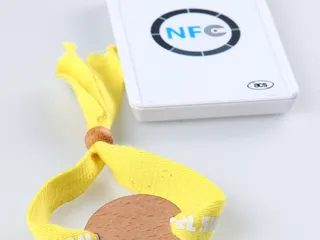
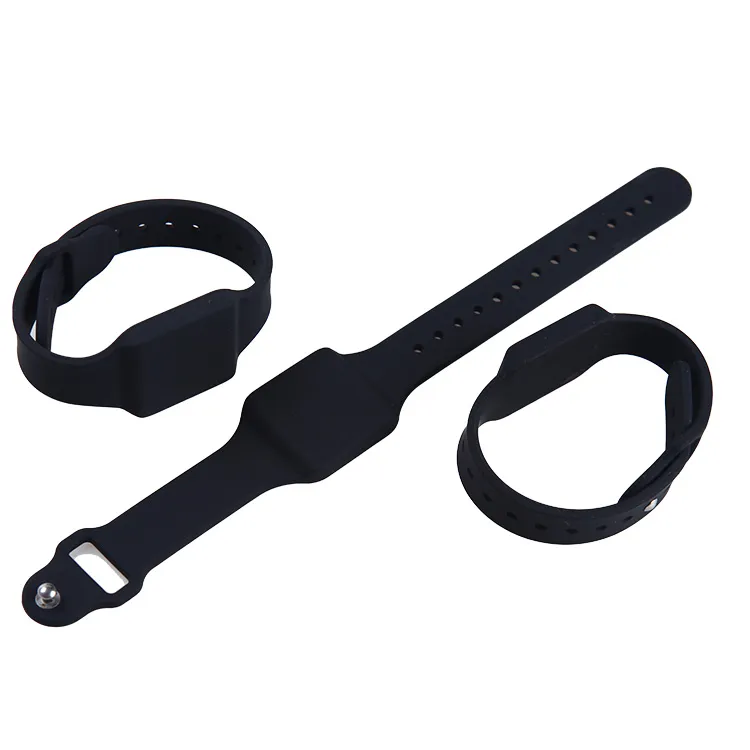
RFID Wristbands
UHF RFID Wristband
Free standard samples · Quotation within one business day
Product details
A UHF wristband for distance reading, not tap payment
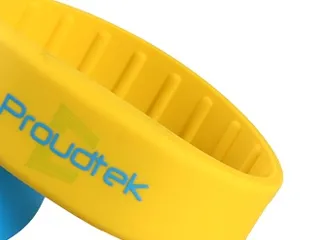
A UHF RFID wristband holds a passive UHF chip and antenna sealed in a silicone band. It uses the EPC Gen2v2 air interface, standardised as ISO/IEC 18000-63, in the 860–960 MHz band, which is the same technology used for pallet and asset tracking. Because a fixed UHF antenna reads a Gen2 tag from several metres, the band is chosen when you need to count people through a wide gate, measure how long a crowd stays in a zone, or read many wrists at once. It is the wrong choice for cashless payment or any action a single guest must consent to at a reader, where a tap-range NFC band belongs instead.
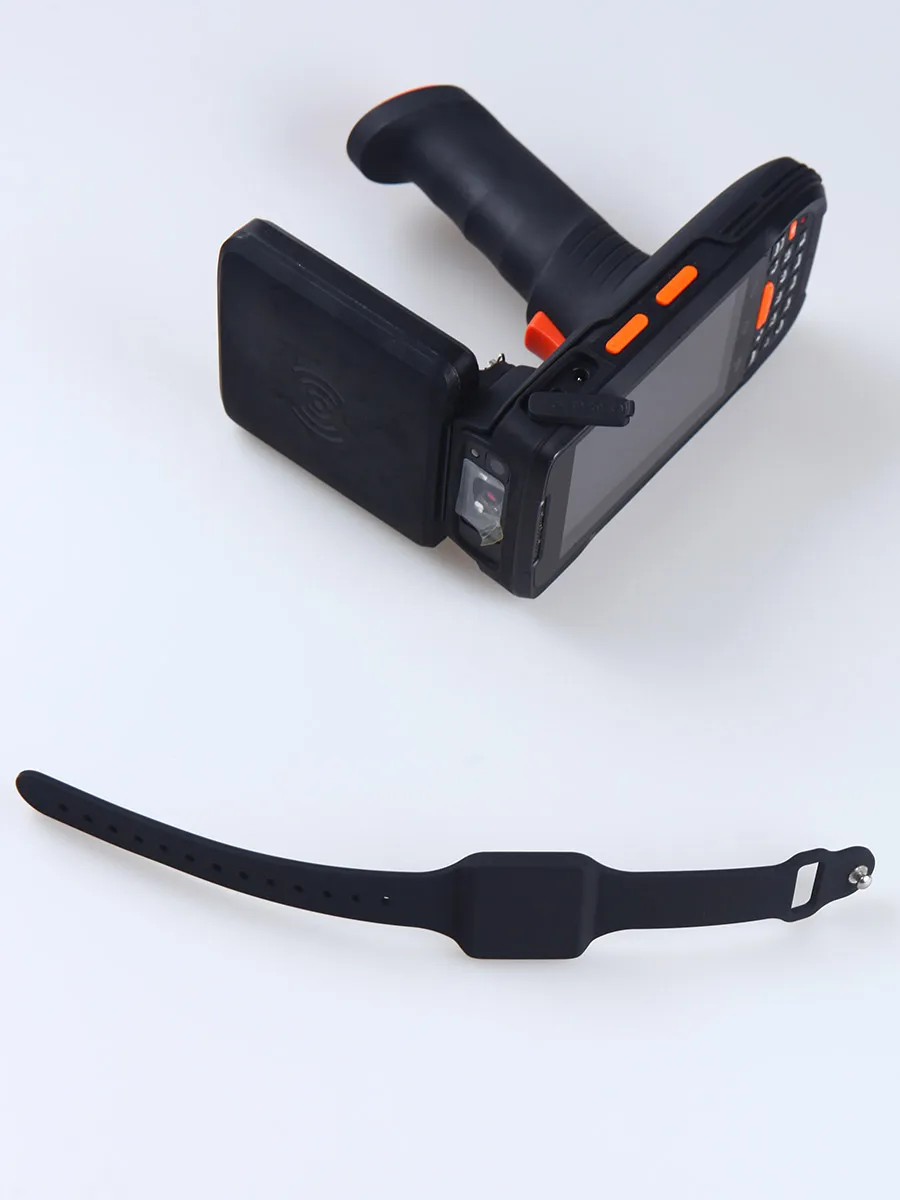
Specification
| Item | UHF RFID Wristband |
| Material | Silicone (closed loop or adjustable) |
| Dimension | 150 mm, 180 mm, 195 mm, 210 mm or customised |
| Air interface | EPC Gen2v2 / ISO/IEC 18000-63 (formerly ISO 18000-6C) |
| Frequency | 860–960 MHz (UHF) |
| Chip options | Impinj M750, NXP UCODE 9xe |
| Colour | Black or customised |
| Printing | Silk-screen printing, laser engraving with pigment filling |
| Working temperature | -25 °C to 70 °C |
| Package | 500 pcs/carton |
Chip options: Impinj M750 or UCODE 9xe
Both chips are passive UHF EPC Gen2v2 ICs, so both work with any compliant UHF reader; the difference is memory. Order the chip your reader software and encoding scheme were built for. If a chip is not specified, the events counting workflow usually needs only a unique ID per band: UCODE 9xe arrives with a pre-serialised 96-bit EPC, and either chip can be encoded to your numbering before dispatch.
| Impinj M750 | NXP UCODE 9xe | |
| Memory | 96-bit EPC plus 32 bits of user memory | 128-bit EPC with a pre-serialised 96-bit EPC; no user memory |
| Standard | ISO/IEC 18000-63, EPCglobal Gen2v2 | EPC Gen2v2 / ISO/IEC 18000-63 |
| Suited to | General counting and access with a unique serial per band, plus a 32-bit field if your system writes one | Dense tag populations and longer read distance in inventory-style reads |
Read range depends on the whole setup
A passive UHF band has no battery, so its range comes from the reader power, the antenna, the tag orientation and what surrounds the tag. A fixed antenna reads the band from several metres, which is what makes counting through a gate possible, but a wrist is a difficult surface: the body absorbs UHF energy and range varies from one person to another and with how the band is worn. Treat any distance figure as a result to be measured in your own location, not a fixed rating. We supply samples so you can confirm range with the reader, antenna and gate geometry you will actually use.
UHF or NFC: choose by how the band is read
- Choose UHF when a fixed antenna reads bands at a distance: attendance counts, wide-gate throughput, zone dwell-time analytics and bulk reads of many wrists.
- Choose NFC (13.56 MHz) when a guest taps a reader a few centimetres away: cashless payment, entry validation and any action tied to one person. See the tap-range RFID wristbands for events and silicone wristbands.
- Use both only when the operator has a buyer for the analytics: an NFC chip for the guest's transactions and a UHF inlay for counting. That doubles the inlay cost. The event wristbands guide sets out the trade-off.
Where UHF wristbands are used
- Attendance and crowd flow: counting people through gates and measuring occupancy in a zone.
- Timing and sports: field reads of many participants where a distance read is acceptable and payment is not involved.
- Asset and staff tracking: reading worn bands at fixed choke points in warehouses, sites and events.
- Access to open areas: vehicle lanes and wide entrances where a tap band would slow the flow.
Ordering and customisation
Proud Tek has manufactured RFID and NFC products in its Shenzhen factory since 2008. Silicone UHF bands are offered with silk-screen printing, laser-engraved numbering and chip encoding for the selected chip and material. Pricing is quote-only against your specification. Standard products generally take 2–3 weeks; printed, engraved or encoded bands and large orders are scheduled in the quotation. Free standard samples are available; customised samples carry a setup fee. Send the reader model, the chip or EPC scheme, the band size and your artwork through the contact page and we will confirm the options and supply samples for a range test.
See the full RFID wristbands range for NFC and material alternatives, and the RFID event wristbands guide for how UHF counting fits alongside NFC entry and cashless. We supply the bands; the reader, antenna and counting or ticketing platform come from your technology partner.
Plan the application
Frequently asked questions
How far can a UHF wristband be read?
A fixed UHF antenna reads the band from several metres, but the wrist is a difficult surface: the body absorbs UHF energy, so range varies with the reader power, antenna, tag orientation and the person wearing it. Treat any figure as something to measure in your own setup. Request samples and test with your reader and gate geometry before committing.
Can I use a UHF wristband for cashless payment?
No. UHF is designed to read many tags at a distance, so a reader cannot reliably tell whose band it saw in a crowd, which is what payment needs. Use a 13.56 MHz NFC band for cashless and entry, and keep UHF for counting and zone tracking.
Which chip should I choose, Impinj M750 or UCODE 9xe?
Both are EPC Gen2v2 chips and work with any compliant UHF reader. Impinj M750 has a 96-bit EPC plus 32 bits of user memory; NXP UCODE 9xe has a 128-bit EPC with a pre-serialised 96-bit EPC and no user memory, and NXP aims it at dense tag reads and long read range. Match whichever your reader software and EPC scheme were built for; if none is specified, either serves a counting workflow. The Monza R6 and UCODE 8 chips offered here before are discontinued (Impinj has issued an end-of-life notice for Monza R6, and NXP lists UCODE 8 as no longer manufactured), so a specification that names either is quoted on a current chip and sampled first.
What frequency and standard does the wristband use?
It uses the passive UHF EPC Gen2v2 air interface, standardised as ISO/IEC 18000-63, in the 860–960 MHz band. Because regional UHF allocations differ, tell us the country of deployment so the tuning suits the readers used there. The UHF RFID frequency lookup shows the band GS1 lists for each country.
Can the UHF bands be pre-encoded and numbered?
Yes. We encode the EPC to your scheme, read every band back after encoding and ship each encoded order with a data report. Each band can also carry a laser-engraved number or a printed serial; for numbered bands, an Excel, CSV or XML file maps each band's EPC, and its TID if you need it, to that number, so bands can be linked to people or tickets in your software before they are handed out. The RFID encoding service page has the details. Confirm the encoding format with your platform, and test sample bands in your software before the production run.
What do you need to prepare a quote?
Send the reader and antenna model, the chip or EPC scheme, the band sizes, colours and artwork, and the quantity and destination. Pricing is quote-only. Standard products generally take 2–3 weeks; printed, engraved or encoded bands and large orders are scheduled in the quotation. Free standard samples are available for range testing.
Buyer guides
- RFID Event Wristbands: Procurement and Pilot Checklist Buying RFID event wristbands? Check system compatibility, materials, encoding, sample approval and the details needed for a batch quotation.
- RFID Frequencies Explained: LF vs HF vs UHF RFID frequencies explained for buyers: LF vs HF vs UHF, their read range, coupling, standards and materials handling, and how to choose the right band.
- How to Read an RFID Tag Quotation, Line by Line What decides RFID card and tag prices, and how to compare quotations line by line: unit-price basis, tooling, encoding, samples, freight and Incoterms.
Ready to specify your order?
Send the product, quantity and application so we can confirm the options and pricing for your project.