DESFire Tag
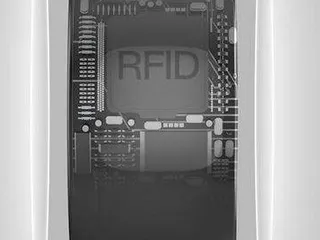
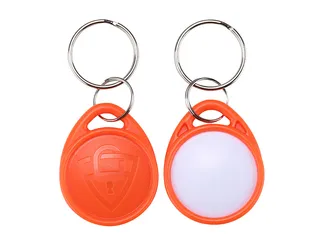
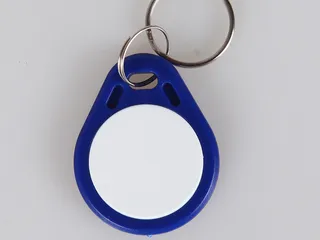
A DESFire tag puts the same NXP DESFire chip (AES-128, multi-application file system) from DESFire cards into key-fob and tag housings — for deployments where a card is the wrong form factor but the security level can’t drop.
RFID key fobs and key tags for access-control integrators and distributors. Compare housings and materials with 125 kHz, MIFARE Classic, DESFire and other chip options, including proximity fobs. Start from the installed reader and credential format when specifying replacements, then test samples before ordering in volume.
A DESFire tag puts the same NXP DESFire chip (AES-128, multi-application file system) from DESFire cards into key-fob and tag housings — for deployments where a card is the wrong form factor but the security level can’t drop.
An NFC ring puts the credential on your finger — a passive chip sealed in zirconia ceramic — for door access or tap-to-share without carrying a card, fob or phone.
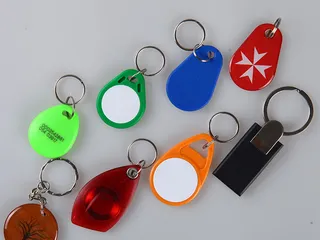
RFID key fobs are the pocket-sized alternative to access cards — same chips (125 kHz, 13.56 MHz, or dual-frequency), sealed in ABS, epoxy, leather or silicone for keyrings, gym bags and vehicle ignitions.
Proximity fobs are the 125 kHz 'wave and go' credential — no contact, no battery, just a chip and coil in a keyring housing — the default key fob for legacy access panels that read EM4100-format IDs.
Selection & ordering guide
For an integrator or distributor, a replacement fob needs to be identified precisely enough to reorder. Record the credential specification alongside the housing, colour and numbering; a similar-looking fob is not a sample approval.
Include the reader brand and model, the chip used in the current fob and any credential-format requirements. If you do not have the chip details, request a compatibility review before deciding on a replacement.
Compare the listed ABS, leather and other formats for the customer’s key ring, branding and daily handling. State any exposure to water, cleaning agents or outdoor use so the proposed construction can be checked.
Agree visible serial numbers, colours by site or user group, encoding responsibility and how the access-system operator will enrol new credentials. Keep an approved sample and specification for later batches.
Include what you know. If the chip or product is undecided, describe the application and current equipment so we can review the options with you.