125 kHz RFID Cards
125 kHz low-frequency cards are the workhorse of legacy access control — longer read range through materials and lower cost than 13.56 MHz — on chips from read-only EM4200 to rewritable T5577 and HITAG 2.
RFID and NFC cards for hotel keys, access credentials, transport and branded NFC programmes. Choose from 125 kHz, MIFARE Classic, DESFire, NTAG and UHF chips in PVC, paper, wood and other materials. Confirm the reader or lock specification, printing, numbering and encoding before requesting samples or a project quotation.
125 kHz low-frequency cards are the workhorse of legacy access control — longer read range through materials and lower cost than 13.56 MHz — on chips from read-only EM4200 to rewritable T5577 and HITAG 2.
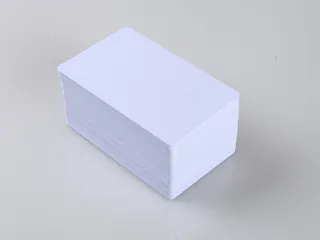
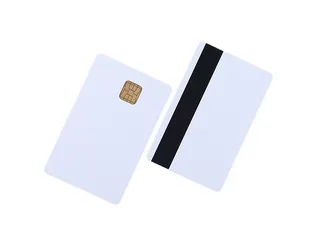
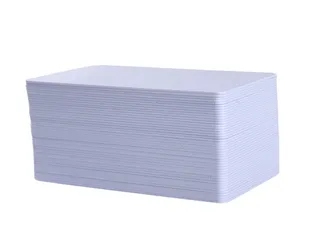
Blank RFID cards are the print-them-yourself credential — white PVC or PVC/PET in ISO ID-1, chip of your choice embedded — for bureaus and integrators who personalise in-house on dye-sublimation or retransfer printers.
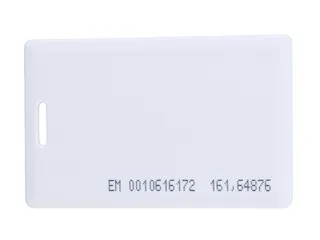
Clamshell cards are the heavy-duty 125 kHz credential — thick rigid ABS (around 1.8 mm) with a larger antenna for longer read range — the card of choice for parking lots and construction sites where thin cards crack.
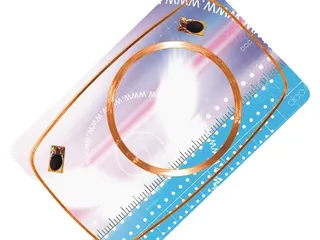
A combi card carries two or more independent chips — e.g.
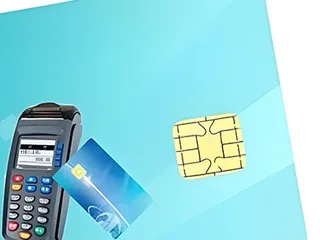
A dual-interface card merges two readers into one credential — the gold contact pad for ATMs and ID terminals, the antenna for tap-and-go — so one issued card works everywhere the holder goes.
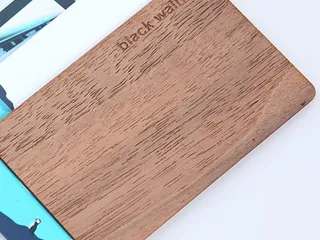
Eco RFID cards swap standard PVC for PLA, recycled PVC, paper, wood or bamboo — same chips your readers accept — trading a little heat resistance for a card you can defend in a sustainability tender.
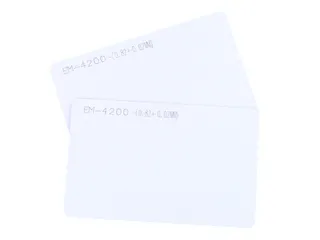
The EM4200 is EM Microelectronic’s drop-in successor to the EM4100 — same 64-bit ID format, same readers — for reordering the credential that defined 125 kHz access control.
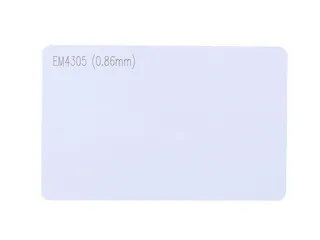
The EM4305 is EM Microelectronic’s 512-bit read/write 125 kHz chip — the fixed-function alternative to the multi-format T5577 — chosen when a lock or encoder system names it explicitly.
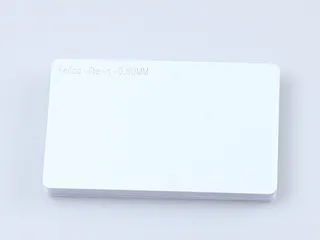
FeliCa is Sony's 13.56 MHz contactless standard — the technology behind Japan's Suica and Hong Kong's Octopus — and FeliCa Lite-S cards bring its fast transaction speed to closed-loop systems that don't need a transit network.
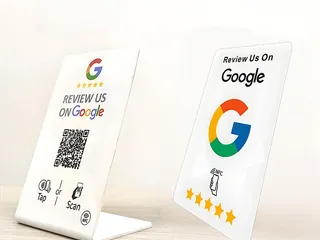
A Google review NFC card turns a tap into a 5-star review — the NTAG chip opens your Google review page directly — the offline-to-online trick for shops and restaurants that live on ratings.
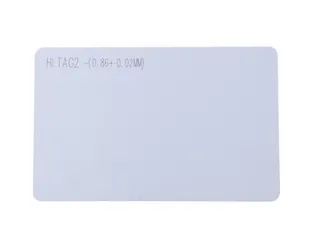
HITAG 2 is NXP's 125 kHz crypto transponder — the chip inside millions of car keys — whose 48-bit cipher was broken in 2012, so today it's ordered to keep existing vehicle and access systems running, not for new secure designs.
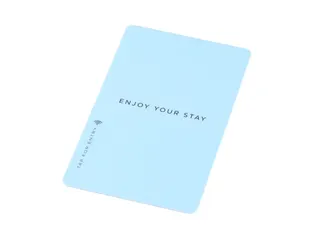
Hotel key cards are 13.56 MHz RFID credentials (MIFARE Classic, DESFire or Ultralight, depending on the lock system) that replace magnetic-stripe keys — the chip and encoding must match the installed door locks, not just the frequency.
Inkjet PVC cards are the ID card for offices without a card printer — an ink-receptive coating that takes full colour from a standard desktop inkjet — at a fraction of the cost of a dye-sublimation setup.
A Java Card is a smart card that runs code — NXP JCOP chips with a Java Card OS that loads your applets after issuance — the platform behind bank cards, eIDs and transit cards that need post-issue updates.
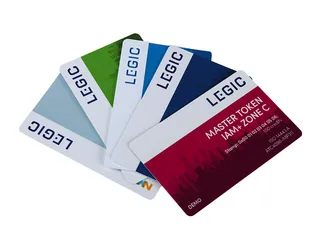
LEGIC is the Swiss access-control ecosystem — advant and CTC chips specified by the integrator, initialised by the system owner — for projects where the card must come from an approved LEGIC supply chain.
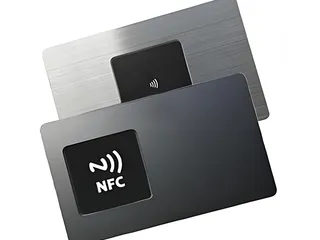
A metal NFC card is the executive business card — stainless steel or anodised aluminium with an NTAG chip — engineered around metal's habit of detuning 13.56 MHz antennas with a ferrite layer or antenna window.
Selection & ordering guide
A card order has two specifications: the credential your system accepts and the physical card your customer receives. Confirm both, whether you are replacing hotel cards, issuing access badges or building an NFC card programme.
Provide the exact chip family and version, reader or lock model, and encoding requirements. Ask your system provider to confirm these details when the existing card is only described as “RFID” or “MIFARE”.
Compare PVC, wood, paper and metal formats against the required finish, printer and daily use. Request the proposed card construction and test the finished sample with the intended reader, rather than approving artwork alone.
Specify both sides of the artwork, visible numbering, variable data and the party responsible for encoding. For a team NFC programme, decide who owns the destination URLs and maintains the profiles after delivery.
A finished card carries two things people confuse: the chip inside and the card the holder receives. Both, plus how the order is printed, encoded, tested and packed, sit inside a single per-card figure, which is why two quotes for a card that looks identical on paper can differ several times over. Fix the specification below before comparing numbers; indicative bands are confirmed in the quotation, against a like-for-like specification.
A bare price-per-card comparison misleads because it hides these levers: a quote well below a like-for-like specification usually signals a different chip die, a thinner body or omitted testing rather than a genuine saving. Send the chip, material, print, encoding and quantity together and the comparison becomes real. Genuine, traceable silicon is worth confirming for any access-control or hospitality programme. Start from RFID cards; indicative bands are confirmed in the quotation.
| Cost driver | What moves it |
|---|---|
| Chip family and memory | A read-only LF chip, a MIFARE Classic inlay and an AES-128 DESFire or NTAG 424 DNA chip span a wide range; larger user memory and secure elements cost more. |
| Card material | Virgin PVC is the floor; recycled PVC, PET, wood, bamboo and polycarbonate each add to it. The choice is usually about brand, durability and disposal rather than the chip. |
| Printing and finishing | Single-colour or blank stock is cheapest; full CMYK on both faces, foil, UV varnish, embossing and anti-counterfeit inks each add a production step. |
| Encoding | Blank cards cost least; sector or key programming, NDEF URLs and diversified-key personalisation add per-card handling. See the RFID encoding service. |
| Quantity tier | Pilot runs carry the setup cost across few cards; first-production and established-programme volumes step down as setup is spread across more cards. Consolidating SKUs and orders reaches the next tier sooner. |
| Certification and test documents | Read-rate testing, serialised reject logs and any product-specific documents your customer requires add cost that a bare quote omits. |
| Packaging | Loose, plain-sleeved or branded-sleeve packing, and individual-piece versus roll delivery, each carry their own increment and lead time. |
The card body and print are the same either way; the frequency decides security, phone compatibility and which readers the card talks to. Match the band to the installed system first, then choose the material.
For a mixed estate, dual-frequency LF+HF cards (specified per project) let one credential work on old LF readers and new HF readers while the readers are replaced in phases. Confirm the exact chip and reader model with your system provider before ordering: LF options start from the EM4305 and T5577 cards, HF from DESFire and MIFARE Plus.
| Attribute | LF 125 kHz | HF 13.56 MHz |
|---|---|---|
| Read range class | Proximity, a few centimetres; tolerant of gloves and pockets | Proximity, a few centimetres; ISO 15693 vicinity readers reach further |
| Security | EM4100 broadcasts a fixed ID in the clear; T5577 is writable but unencrypted | MIFARE Plus and DESFire use AES-128 mutual authentication; NTAG 424 DNA adds signed tap messages |
| Data | A short serial number, plus a few writable bits on T5577 | Multi-application file systems, roughly 1 kB up to several kB |
| Phone compatibility | None — no smartphone reads 125 kHz | Yes — NFC phones read ISO 14443 (Apple and Android) |
| Typical systems | Legacy proximity access, parking, some animal ID | Modern access, hotels, transit, membership, NFC tap |
| Migration | Kept only to match an installed LF reader estate | The default for new builds; dual-frequency cards bridge a phased reader swap |
Chip ratings are not the life of a finished product. NXP rates DESFire EV3 for around 1,000,000 write cycles and 25 years of data retention (EV2: around 500,000 cycles and 25 years), and NTAG 213/215/216 for around 100,000 write cycles and 10 years; how long a card, tag or wristband lasts depends on its body, its construction, how it is handled and where it is used. We publish no lifespan figure for card or wristband bodies and do not rank them by durability: what we know comes from products in real use, not from test data.
Judge service life with a small pilot in the actual environment, and set the target at a working percentile rather than the average. Where a laundry tag’s product page gives a wash-cycle count, that count comes from real laundry use, not from a test, and Proud Tek guarantees it under the conditions stated with it on that page.
Include what you know. If the chip or product is undecided, describe the application and current equipment so we can review the options with you.