RFID Cards
Metal NFC Card
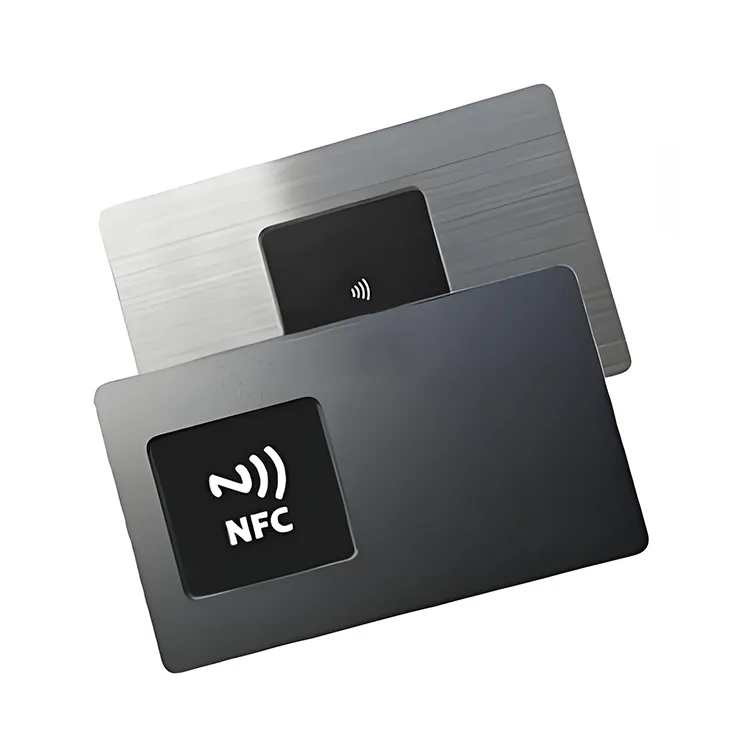
A metal NFC card is the executive business card — stainless steel or anodised aluminium with an NTAG chip — engineered around metal's habit of detuning 13.56 MHz antennas with a ferrite layer or antenna window.
A metal NFC card is a stainless-steel or anodised-aluminium business or ID card with an NTAG chip that shares a link when tapped to a phone. Metal detunes a 13.56 MHz antenna, so the card is built with a ferrite layer or a non-metal window where the antenna sits. Choose that construction, the finish and the engraving, and approve a sample of the exact build before your order.
Free standard samples · Quotation within one business day
Product details
Specification
| Item | Metal NFC card |
| Construction | A ferrite layer between the antenna and the metal, or a non-metal window over the antenna |
| Body | Stainless steel or anodised aluminium; other metals per project |
| Finishes | Matte black, matte white, mirror silver, mirror rose gold, 24K gold, rose gold, brushed, green, yellow, red, blue or custom |
| Chip | NTAG213 / 215 / 216; NTAG 424 DNA on request |
| Frequency and interface | 13.56 MHz, ISO/IEC 14443 Type A |
| Standard size | 85.5 × 54 × 0.8 mm |
| Marking | Laser engraving, silkscreen, UV printing |
| Chip data retention | 10 years (NXP NTAG21x data sheet) |
What a metal NFC card is
A metal NFC card is a business or ID card with a stainless-steel or anodised-aluminium body and an NFC inlay carrying an NXP NTAG chip. Tapped to a phone, it returns a stored link to a website, profile or contact page, exactly as a plastic NFC business card does. What differs is the build: a 13.56 MHz antenna reads weakly or not at all when it lies straight against metal, so the card is made as one construction around the antenna, and the finish and engraving are planned around that area.
Why a metal card needs a ferrite layer or an antenna window
Metal and a 13.56 MHz antenna do not naturally mix. The phone's alternating magnetic field induces eddy currents in nearby metal; those currents set up an opposing field that absorbs power and detunes the antenna, so a plain inlay laminated onto a steel plate reads weakly or not at all (NXP's NFC antenna-design guide AN11755, which covers antennas near metal). There are two accepted ways to build a metal card that still taps. A thin ferrite layer between the antenna and the metal reduces those eddy currents and recovers the read; the same guide says the ferrite must at least cover the whole antenna and that the antenna is tuned with the ferrite in place. Or the body leaves a non-metal window where the inlay sits, so the antenna is not backed by metal. Either way the card reads from the antenna side, not through the metal.
- Ferrite layer: the metal face stays unbroken; the ferrite and the antenna sit behind it under a non-metal back layer, and the card is tapped from that back, so mark it in the artwork.
- Antenna window: a non-metal area in the body over the inlay; the window becomes part of the design, and the card is tapped over it.
Tell us which construction you prefer, and approve a sample of that exact build before the run.
Bodies and finishes
Stainless steel is finished brushed, mirror, or with a matte-black or gold-tone PVD coating; anodised aluminium takes a range of colours and is lighter. A solid steel card is typically around 0.8 mm thick and heavier than a plastic card. The body sets the weight and the feel, not the read: every metal detunes the antenna, so the ferrite layer or the window decides the tap. A metal card can read at a shorter distance than a plastic one, so confirm the read on a sample.
| Body | Typical finishes | Weight and feel |
| Stainless steel | Brushed, mirror, matte-black PVD, gold-tone PVD | Heaviest; the usual choice for a solid metal card |
| Anodised aluminium | Anodised colours, brushed silver | Lighter than steel and takes strong anodised colours |
A finish is chosen for wear as much as for look. A PVD coating sits hard on the surface and resists marking; a mirror finish shows fingerprints and fine scratches sooner than a brushed one; and an anodised layer holds its colour but can scuff at an edge. Ask to see the finish on the sample, because a screen does not show how a surface catches the light or how it wears in a wallet.
Engraving and printing
Metal cards are usually laser-engraved: the mark is cut into the surface, so it is permanent and reads as a contrasting line against the finish. Colour is added by UV printing, silk-screen or an infill, and a QR code to the same link can be engraved or printed alongside the NFC area. Variable data such as a name, title or serial number can be engraved per card from your list. Send your artwork and the fields that change between cards, and we confirm what the chosen finish can hold.
- Laser engraving suits logos, text and line art; it cannot reproduce a photograph, which needs a printed layer.
- Silk-screen adds a small number of spot colours; full-colour CMYK is not available directly on bare metal.
- UV printing on metal is possible, but ink adhesion varies with the alloy and finish, so ask for an adhesion sample on your exact body before a run.
Keep the antenna area clear
A metal card reads through one area: the window over the inlay, or the non-metal side of a ferrite-backed build. Keep that area free of print build-up and deep engraving, because metallic ink, foil or an over-deep laser fill across it can detune the antenna or disturb the ferrite and cost you the read. Mark the tap side so recipients know which face to present, and engrave or print a QR code to the same link for phones that cannot read the tag. Current iPhones and Android phones open the link without an app when the card is held to the top edge of an iPhone or to the antenna area of an Android phone; how a phone reads an NFC card covers older iPhones and phones with NFC switched off.
Chip and encoding
The chip is the same as in a plastic NFC card: usually an NTAG213 or NTAG215 carrying a short link to a profile you host, so the destination can change without re-issuing the card; an NTAG216 when a full contact record must sit on the chip; or NTAG 424 DNA when a back-end must verify each tap, for example on an authenticity or membership card. The NFC cards page compares the chips, and the NFC business card page explains a profile link versus a vCard. For cards across a whole team, see the NFC business card programmes guide. Once encoded, each card is read back, and a data report comes with the order; engraved serial numbers are matched to the chips in a file that lists every card's UID next to its number. The report and the list come in Excel, CSV or XML (encoding service).
Sample the exact build first
A metal card's read behaviour is specific to its body, finish, chip and antenna construction, so a sample of the exact build is worth more than any specification. Order one, tap it on your own iPhone and Android phones, check that it still reads through the phone case you use, and confirm the destination before committing the run. A free sample pack lets you compare bodies and finishes in the hand first.
Ordering
Metal NFC cards are quote-only. Tell us the construction, the body and finish, the chip, the artwork and engraving, and the link or content to encode. We have manufactured RFID and NFC products in our Shenzhen factory since 2008; standard samples are free, customised samples carry a setup fee, and standard products generally have a lead time of 2 to 3 weeks. Printing, numbering and encoding are available for the selected body. Start on the contact form, by email or on WhatsApp, or compare the plastic NFC business card and the other RFID cards.
Plan the application
Frequently asked questions
Does a metal NFC card really work, given it is metal?
Yes, when it is built for it. Bare metal detunes a 13.56 MHz antenna through eddy currents, so a metal NFC card uses either a ferrite layer between the inlay and the metal, or a non-metal window where the antenna sits. Approve a sample of the exact build before a production run.
Should I choose a ferrite layer or an antenna window?
Choose by the look you want. A ferrite layer keeps the metal face unbroken, and the card is tapped from its non-metal side. A window leaves a non-metal area over the antenna, which shows in the design, and the card is tapped over it. Neither reads through the metal itself, so mark the tap side and confirm the read on a sample of that build.
Can you engrave a name and a QR code on each card?
Yes. Laser engraving handles per-card variable data such as names and serial numbers, and a QR code to the same link can be engraved or printed as a fallback. Send the fields that change between cards with your artwork.
What size and thickness are metal NFC cards?
The standard is CR80, 85.5 x 54 mm. A solid metal card, which needs an antenna window, is typically around 0.8 mm and heavier than plastic; a ferrite build pairs a metal face with a non-metal back. Custom sizes are available. Confirm the thickness with us because it affects both the finish and the read.
Where on the phone should I tap a metal card?
Hold the card's tap side to the phone's NFC antenna: the top edge on an iPhone, and on an Android phone the position varies by model. A metal card reads only through its window or its non-metal side, so aligning it with the phone's antenna matters more than with a plastic card; mark the tap side in the artwork so recipients know which face to present.
Which metal finish wears best?
A PVD coating sits hard on the surface and resists marking. A mirror finish shows fingerprints and fine scratches sooner than a brushed one, and an anodised layer holds its colour but can scuff at an edge. Ask to see the finish on a sample before you order.
Will a metal NFC card set off metal detectors or airport scanners?
A solid metal card is a piece of metal, so it can be picked up by a sensitive walk-through gate or a handheld wand like any metal object of similar mass, and it shows up as a dense object on an X-ray rather than being invisible like a plastic card. If security screening matters for your use, tell us the body and thickness so you can test the card in advance.
Buyer guides
- How to Read an RFID Tag Quotation, Line by Line What decides RFID card and tag prices, and how to compare quotations line by line: unit-price basis, tooling, encoding, samples, freight and Incoterms.
- RFID RFP Template: Questions to Ask Every Supplier An RFID RFP template for distributors: the supplier questions that produce comparable quotes, and how to read the replies against one specification.
- RFID MOQ, Explained: How Minimums Form and How to Discuss Them How RFID MOQ forms from chip lots, inlay rolls, print sheets and setup — and how buyers can discuss a smaller pilot or first order honestly.
Ready to specify your order?
Send the product, quantity and application so we can confirm the options and pricing for your project.