A per-unit price at the foot of an RFID quotation is the least useful number on the page. It is an output of everything above it — which chip, in what state, on which trade term, with which one-time charges folded in or left out. Two quotes with the same bottom-line figure can describe very different transactions, and the difference only appears when you read the lines that produce that figure.
This guide walks through those lines so you can compare quotes as a repeat buyer would, rather than picking the lowest total and discovering the rest later. It uses no example prices; the aim is to read your own quotes correctly, whoever issues them.
Table of Contents
What decides the price of an RFID card?
There is no single price for an RFID card. The unit price is built from the chip your system requires, the card body, the printing and personalisation, any encoding, the quantity per design and the trade term, so two cards that look alike can be priced very differently. Fix these drivers in the enquiry and the quotes you receive become comparable:
| Price driver | What moves it | What to state in the enquiry |
|---|---|---|
| Chip | Chip family and version, memory and security features | The exact chip, or the reader, lock or software model, or a working card |
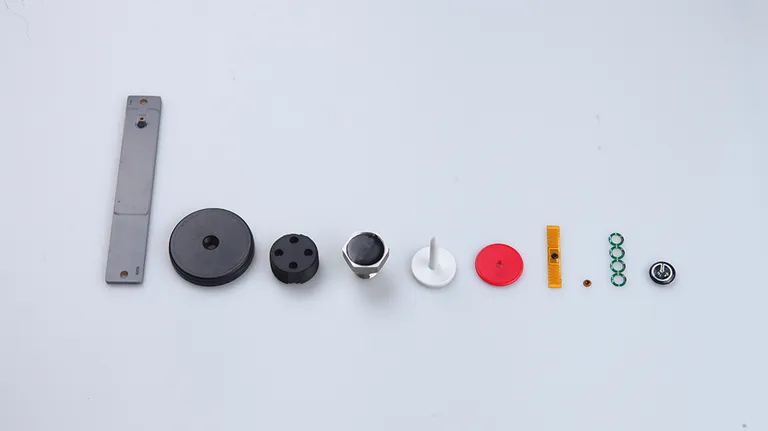
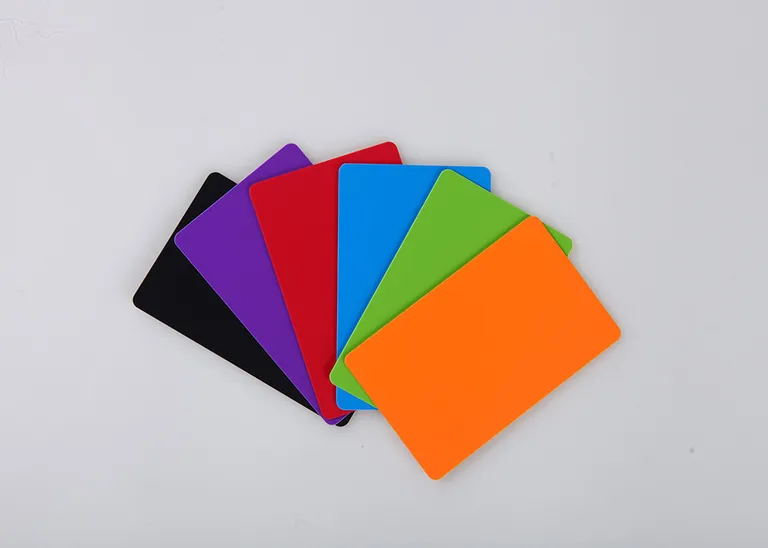
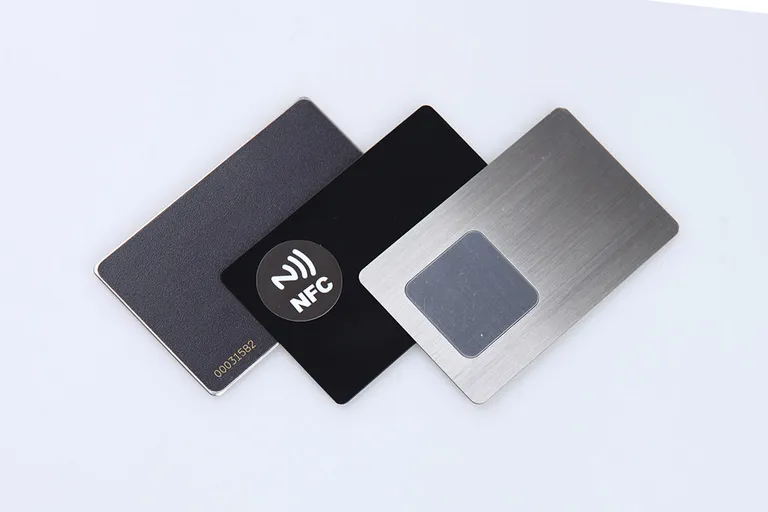
| Card body | Material (PVC, PET, paper, wood, PLA or metal), thickness, standard ID-1 size or a custom shape | Material, size and thickness |
| Printing | Print method, one or two sides, special finishes, number of designs | Artwork, finish and number of designs |
| Personalisation | Per-card numbers, barcodes, QR codes, photos, magnetic stripe | The data file and its fields |
| Encoding | Blank, a UID list, one shared record, unique data per card, keys and locking | Data layout and lock policy |
| Quantity | One-time setup spread over more or fewer cards; volume tiers | Quantity per design and the tiers you want |
| Samples | Standard samples are free; customised samples carry a setup fee | Whether you need a pre-production sample |
| Trade term | Incoterm, freight mode and destination | Incoterm and destination |
The chip is set by your system, not chosen to save money: a cheaper chip your readers do not accept is no saving. The guide to how RFID cards work shows which chip sits in which kind of card. A card price also covers only the card. Access-control readers, locks and software come from your system provider. Proud Tek makes cards, fobs, wristbands, labels and tags, and supplies desktop NFC reader/writers for encoding and testing, but not locks, access-control systems or application software.
First, confirm what the unit price is a price for
Before comparing any numbers, confirm that each quote prices the same product in the same state. Check the exact chip and version, the physical format and material, the printing, and — critically — the encoded state. A price for a blank part, a price for a part with only its UID readable, and a price for a part written and locked to your data layout are three different prices for three different products. If one supplier quotes blank and another quotes encoded, the encoded quote is not more expensive; it includes work the other has left for you to arrange.
Confirm the quantity basis too. A unit price is meaningless without the quantity it applies to and whether volume tiers exist. If you asked for tiers, check that each supplier quoted the same break points, so you are comparing the same rungs.
Separate one-time charges from the unit price
Much of the negotiable cost in an RFID quote sits in one-time and setup lines, not in the per-unit figure. Ask for these itemised rather than merged:
- Tooling for a custom antenna or a custom form factor — a one-time charge, reusable for repeat orders against the same design.
- Print plates or colour setup — charged once per design or colour, reusable on reorders.
- Encoding setup — configuring a line for a specific data layout or serialisation, distinct from any per-unit encoding cost.
- Sample fees — for customised samples in particular; ask whether they are creditable against a following order.
A low unit price with these costs hidden inside “first-order pricing” is harder to compare than a slightly higher unit price with the fixed costs listed openly. When you reorder, the picture changes again: tooling and plates are already paid, so a repeat quote should drop the one-time lines. Ask for the repeat-order price alongside the first so you can see the ongoing cost, not only the entry cost.
Encoding, testing and documentation
If the parts are to arrive programmed, the quote should say what “encoded” means: the data layout, whether memory is locked, and whether an identifier list or export is provided. Reading a UID is not the same as writing and locking an application data structure, and the two are priced differently. If you need a specific standard — for example a GS1 EPC encoding for a retail programme — name it, and check the quote reflects it. At Proud Tek two of these answers never change: a numbered run includes an Excel, CSV or XML cross-reference of chip IDs against printed numbers, and anything we encode is verified piece by piece and documented in a data report. Our encoding service page sets out where encoding responsibility can sit.
Check whether test reports and any market-relevant documentation are included or extra, and that any certificate named carries its holder and scope. A quote that itemises testing and documentation is describing a more complete transaction than one that omits them.
Freight terms decide what the price actually covers
A unit price cannot be compared across suppliers until you know the Incoterm. The Incoterms 2020 rules (International Chamber of Commerce) define who pays freight and insurance and where risk passes:
| Term | Seller’s responsibility reaches | Buyer typically handles |
|---|---|---|
| EXW (ex works) | The supplier’s premises | Export clearance, all freight, insurance, import, delivery |
| FOB (free on board) | Goods on board at a named departure port | Ocean or air freight, insurance, destination import |
| CIF (cost, insurance, freight) | Freight and insurance to the destination port | Import clearance, duties, final delivery |
| DAP (delivered at place) | Delivery to a named place | Import clearance and duties |
| DDP (delivered duty paid) | Delivery with duties paid | Receiving the goods |
An ex-works price and a delivered-duty-paid price for the same product are not comparable as unit figures; the gap is freight, insurance, clearance and duty. Normalise every quote to the same term — or to your own landed-cost estimate — before ranking them, and name the exact port where one applies.
Validity, payment and the small print
Two lines near the end of a quote change its meaning. Validity — the window over which the price holds — matters when material or freight costs move; a short window is worth confirming, and a long one is worth asking about. Payment terms — the schedule and method — carry real cost and risk; agree them explicitly rather than accepting a default. Read these before you treat the quote as a number you can compare, because they decide whether that number will still be true when you place the order.
How Proud Tek quotes
As the factory producing your order in Shenzhen, Proud Tek provides itemised quotations so the chip, conversion, printing, encoding and any one-time charges are visible rather than merged into a single figure, and we confirm the trade term and validity in writing. Minimum order quantity, freight terms and setup-fee amounts are confirmed in the quotation for your specification and destination — we do not publish figures that depend on the order. Standard samples are free and a setup fee applies to customised samples. We reply to a workable enquiry, and provide a quotation, within one business day.
To get a quote to read, browse the full range or a category such as RFID cards, RFID labels or tags, and see how we work on the manufacturer page. To evaluate first, request a sample pack. For general terms, see the FAQ.
Common questions
How much does an RFID card cost?
An RFID card has no fixed price: it depends on the chip, the card body, printing and encoding, the quantity per design and the trade term. Proud Tek does not publish a card price list, because the same card can be quoted blank or printed, unencoded or encoded, ex works or delivered. Send the chip (or reader model), quantity, card body, artwork, encoding and destination, and we return an itemised quotation within one business day of a workable enquiry.
Is a blank RFID card cheaper than a printed one?
A blank, unencoded card skips print setup, printing and encoding, so for the same chip and quantity it normally carries the lower unit price. Weigh that against the cost of printing and encoding the cards yourself on a card printer. See blank RFID cards and printed RFID cards for what each option includes.
Why is the cheapest quote often not the cheapest?
Because the bottom-line figure hides the state of the product and the trade term. A low ex-works unit price for a blank part can cost more, delivered and encoded, than a higher price that already includes that work. Compare landed cost for the same product state, not headline unit price.
What should I always ask to have itemised?
Chip and conversion, printing, encoding, tooling and plates, sample fees, freight and the trade term. An itemised quote shows where the fixed costs sit and where a repeat order will be cheaper. See our RFP question list for the enquiry that produces itemised quotes.
How do minimums and setup interact with the unit price?
The one-time costs behind a minimum are usually what make a small order expensive per unit. Separating them out shows the real ongoing price. How those minimums form, and how to discuss a smaller first order, is covered in RFID MOQ, explained.