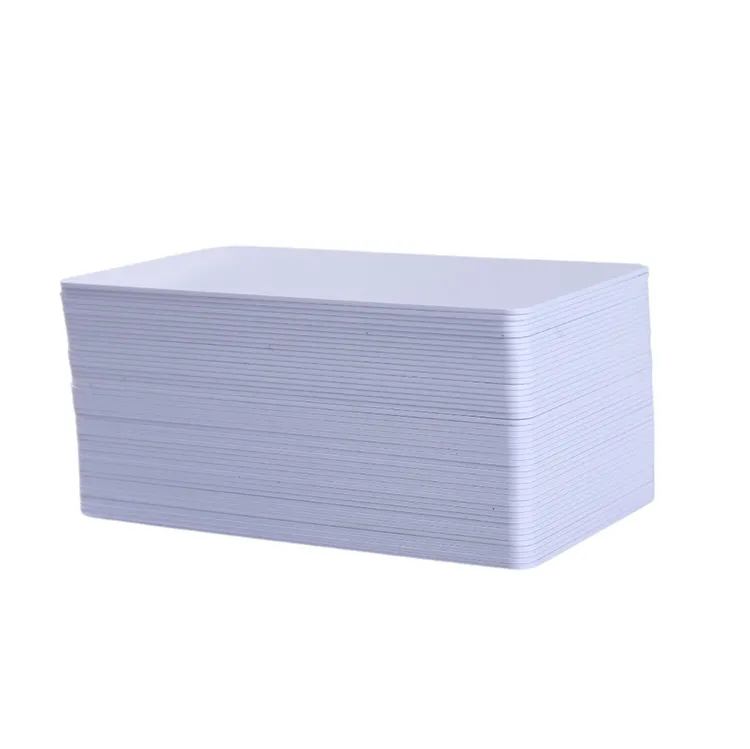
RFID Cards
125 kHz RFID Cards
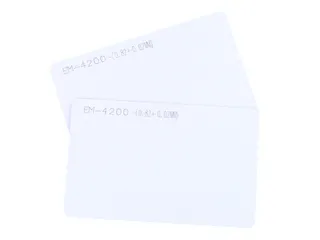
125 kHz low-frequency cards are the workhorse of legacy access control — longer read range through materials and lower cost than 13.56 MHz — on chips from read-only EM4200 to rewritable T5577 and HITAG 2.
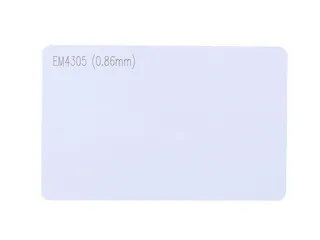
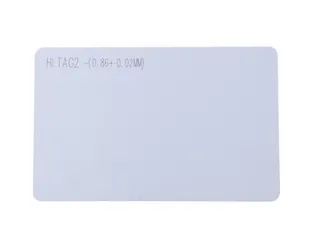
125 kHz low-frequency RFID cards on chips such as EM4200, EM4305, T5577 and HITAG 2, used for access control, time and attendance, parking and asset tracking. Read-only and rewritable options are available. Tell us your reader model, chip requirement, quantity and printing, and test a sample before the batch.
Free standard samples · Quotation within one business day
Product details
What a 125 kHz RFID card is
A 125 kHz RFID card is a low-frequency (LF) contactless card. The reader and the card couple inductively over a short distance, the card draws its power from the reader field, and it returns a short identification code. LF cards carry little memory and read at short range, but they are inexpensive, tolerant of everyday handling and supported by a huge installed base of readers, which is why 125 kHz is still the default for access control, time and attendance, parking and simple asset tracking.
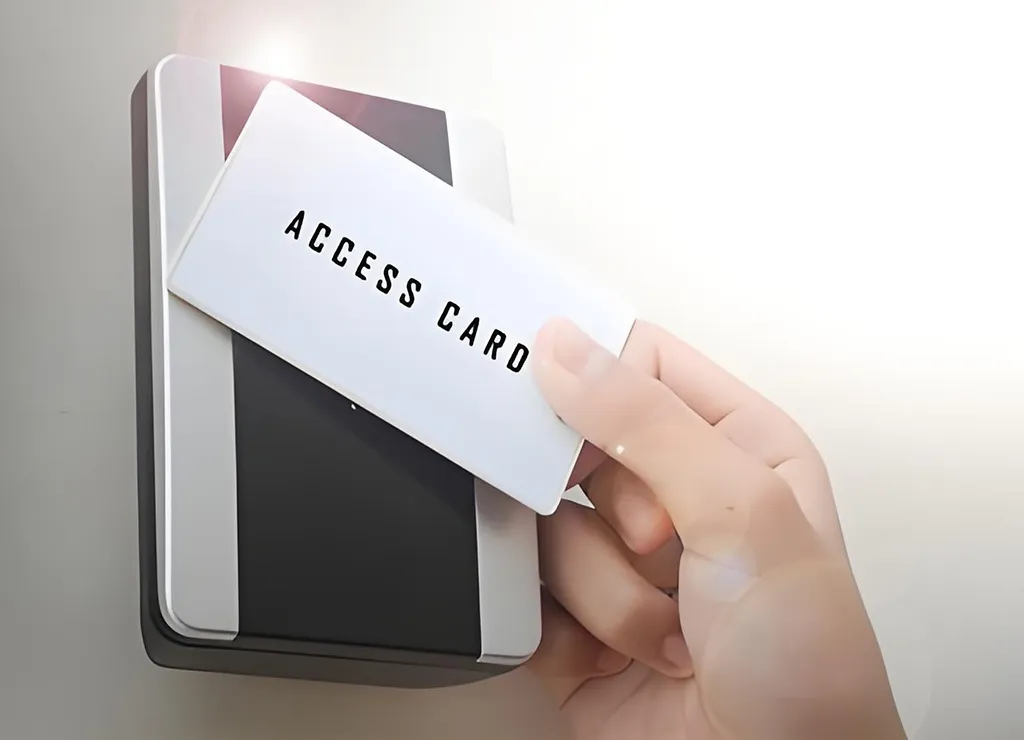
"125 kHz" names a frequency band, not a single chip. Several chip families share the band, and they are not interchangeable: a reader built for one may not decode another. The right choice depends on whether the system only reads a fixed ID or also writes to the card, and on which chip your installed readers expect.
The 125 kHz chip families
| Chip | Read/write | Memory | Typical use |
| TK4100 / EM4100 | Read-only | 64-bit ID | Basic access cards and membership; our "EM4100" cards are made on the EM4200 |
| EM4200 | Read-only | 128-bit code; access version sends a 64-bit ID | EM's replacement for the EM4100, read the same way |
| EM4305 | Read/write | 512-bit EEPROM (16 x 32-bit words) | Encoders built for EM chips; a password that cannot be read out |
| T5577 | Read/write | 363 bits, seven 32-bit user blocks | One blank set up for different LF formats; frequent rewriting |
| HITAG 2 | Read/write | 256-bit EEPROM (8 x 32-bit pages) | Access control and vehicle systems already built on HITAG readers |
TK4100 and EM4100 cards, and EM4200 cards in their access version, all send the same read-only 64-bit EM4100-format number; the EM4200 card page explains that format and which EM4200 version to order. EM4305 and T5577 are writable and are compared below. HITAG 2 adds password and crypto modes, and today is mainly chosen to stay compatible with HITAG readers already installed.
Read-only or read/write?
Read-only chips (TK4100, EM4100, EM4200) carry a permanent factory number and cannot be changed. They are ideal when the reader only needs a stable identifier and the back-end does the rest, which covers most door-entry and attendance systems. Read/write chips (EM4305, T5577, HITAG 2) let a writer store or update data on the card, emulate another LF format, or be programmed to a specific number on site. If your integrator writes to the card, you need a writable chip.
EM4305 or T5577: choosing a writable chip
Start with the chip your encoder or lock system names. The two writable chips come from different makers and are programmed with different commands, so an encoder set up for one does not necessarily program the other, and both can be set up to send the EM4100 format. Where either would do, the EM4305, a genuine EM Microelectronic chip in our cards, suits encoders built around EM parts, and its password cannot be read back from the card. The T5577, built in our cards on Microchip's genuine ATA5577C, adds FSK, PSK and NRZ output, so one blank covers more LF formats, and its datasheet minimum is 100,000 write cycles against the EM4305's 1,000. Neither offers cryptographic authentication; if a cloned card would be costly, move to a 13.56 MHz credential that authenticates, such as MIFARE DESFire.
Which readers and locks use 125 kHz
- Proximity access control: the classic "prox" card and reader; many building-entry systems are still LF.
- Time and attendance: clock-in terminals that read a fixed staff ID.
- Parking and gates: long-range LF or dedicated readers for vehicle and barrier control.
- Hotel locks: some lock ranges use 125 kHz EM4305 or T5577; see hotel key cards and the hotel key card guide.
- Asset tags: simple item identification. ISO 11784/11785 animal ID is a different case: its readers work at 134.2 kHz with livestock and pet transponders, not these cards; for reading those, see the R901 animal-tag reader.
125 kHz (LF) versus 13.56 MHz (HF)
If you are choosing the frequency rather than matching an existing system, the difference is memory and security. LF at 125 kHz gives a short-range, low-memory identifier that is cheap and robust. HF at 13.56 MHz, under ISO/IEC 14443, gives far more memory, cryptographic security and phone (NFC) compatibility, which is why new secure and multi-application systems use HF chips such as MIFARE or NTAG. Compare the MIFARE Classic card and NFC cards; for a 125 kHz chip and a 13.56 MHz chip in one card body, see the multi-chip combi card.
Specification
| Item | 125 kHz RFID Card |
| Chip options | EM4200 (for EM4100 systems), EM4305, T5577, HITAG 2 |
| Frequency | 125 kHz low frequency (chips rated across 100 to 150 kHz) |
| Read/write | Read-only or read/write depending on the chip |
| Material | PVC, RPVC, PET, PETG, ABS, wood, paper |
| Size | CR80 / ISO ID-1, 85.60 x 53.98 mm, or custom |
| Reading distance | 2 to 10 cm depending on the chip, reader and antenna |
| Working temperature | −40 °C to 65 °C (PVC body) |
| Printing | CMYK offset, silk-screen, UV and digital |
| Crafts available | Sequential numbering, laser engraving, barcode, QR code, magnetic stripe, signature panel |
Card formats and materials
- Standard ISO card: 0.76 mm PVC for staff and membership badges.
- Thick clamshell: a rigid body with a punch slot for a clip; see the clamshell card.
- Fobs and wristbands: the same LF chips in ABS fobs and silicone bands; see RFID proximity fobs.
- Wood, PLA and paper bodies: other card materials, with chip availability per body confirmed in the quotation; see the eco RFID card.
Ordering
For a 125 kHz card order, confirm the chip (or send the reader model so we can match it), whether the card is read-only or writable, the format and material, the artwork and any numbering. Send the details through the inquiry form, by email or on WhatsApp. Standard samples are free (customised samples carry a setup fee), standard lead time is 2 to 3 weeks, and pricing is quote-only. Printing, numbering and encoding options are available for the selected chip and material.
Read the individual chip pages for EM4200, EM4305, T5577 and HITAG 2, browse all RFID cards, or plan a deployment with the RFID key fobs for access control guide.
Plan the application
Frequently asked questions
Which 125 kHz chip should I choose?
If your readers only read a fixed ID, choose a read-only EM4200 in its EM4100-compatible access version. If the system writes to the card or you must match an existing site code, choose the writable chip your encoder supports: T5577 or EM4305. If you are unsure, send us the reader model and a sample card.
Is 125 kHz the same as 13.56 MHz or NFC?
No. 125 kHz is low frequency (LF) with small memory and no NFC phone support. 13.56 MHz is high frequency (HF), used by MIFARE, NTAG and NFC, with more memory and security. They use different readers and are not interchangeable.
Can a phone read a 125 kHz card?
Generally no. Standard NFC phones operate at 13.56 MHz and cannot read 125 kHz LF cards. For a phone-readable card, choose an HF/NFC chip such as NTAG on an NFC card.
What is the read range of a 125 kHz card?
Usually a few centimetres, around 2 to 10 cm, set mostly by the reader and its antenna. Long-range LF readers and clamshell or vehicle formats extend this; validate the actual range on your own equipment.
Are 125 kHz cards secure?
Read-only LF chips carry only a fixed number that can be copied, so they suit systems where the back-end controls access rather than the card. For cryptographic security, use an HF chip such as MIFARE DESFire. HITAG 2 has password and crypto modes, but its 48-bit cipher was broken in research published in 2012, so choose it only to stay compatible with HITAG readers you already run.
Can you print and number the cards?
Yes. We print full colour on one or both sides and add sequential numbers, barcodes or QR codes. Numbered orders include a file in Excel, CSV or XML in which each chip ID sits beside its printed number. Writable cards that we encode are checked by reading them back, and the order carries a data report; see the RFID encoding service.
What do you need for a quote?
The chip or reader model, quantity, whether the card is read-only or writable, the format, material, artwork and any numbering. Send it through the inquiry form, by email or on WhatsApp.
Buyer guides
- How to Read an RFID Tag Quotation, Line by Line What decides RFID card and tag prices, and how to compare quotations line by line: unit-price basis, tooling, encoding, samples, freight and Incoterms.
- RFID RFP Template: Questions to Ask Every Supplier An RFID RFP template for distributors: the supplier questions that produce comparable quotes, and how to read the replies against one specification.
- RFID MOQ, Explained: How Minimums Form and How to Discuss Them How RFID MOQ forms from chip lots, inlay rolls, print sheets and setup — and how buyers can discuss a smaller pilot or first order honestly.
Ready to specify your order?
Send the product, quantity and application so we can confirm the options and pricing for your project.