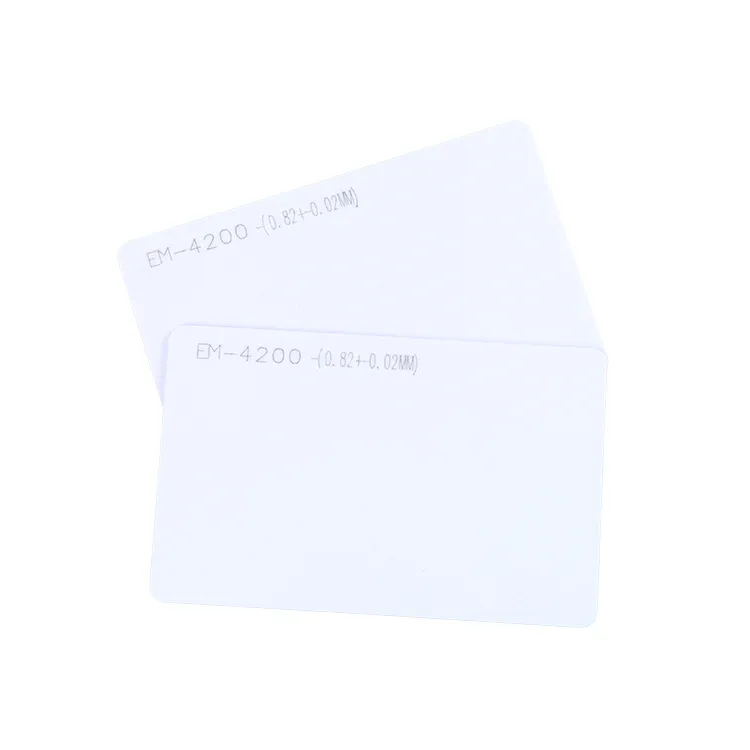
RFID Cards
EM4200 Card
The EM4200 is EM Microelectronic’s drop-in successor to the EM4100 — same 64-bit ID format, same readers — for reordering the credential that defined 125 kHz access control. With no cryptography at all, it is also the format buyers move away from once cloning becomes a problem.
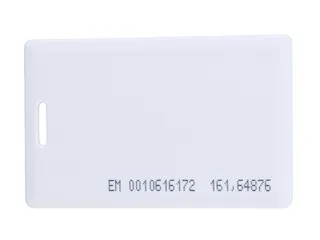
EM4200 125 kHz read-only RFID cards. The EM4200 is EM Microelectronic's laser-programmed replacement for its older EM4100/EM4102 and EM4005/4105 chips, and its access version sends the same 64-bit EM4100-format number, so the cards read on EM-format access, attendance and membership readers. Printable and customisable in PVC and other materials; confirm compatibility with your installed readers using a sample before ordering.
Free standard samples · Quotation within one business day
Product details
What an EM4200 card is
The EM4200 card is a 125 kHz low-frequency proximity card built around the EM Microelectronic EM4200 chip. The EM4200 is a read-only identification device: its code is fixed in laser-programmed ROM at the factory and cannot be changed afterwards. Each card presents the same fixed number every time it is read, which is exactly what a proximity access controller, a time-and-attendance terminal or a membership reader needs.
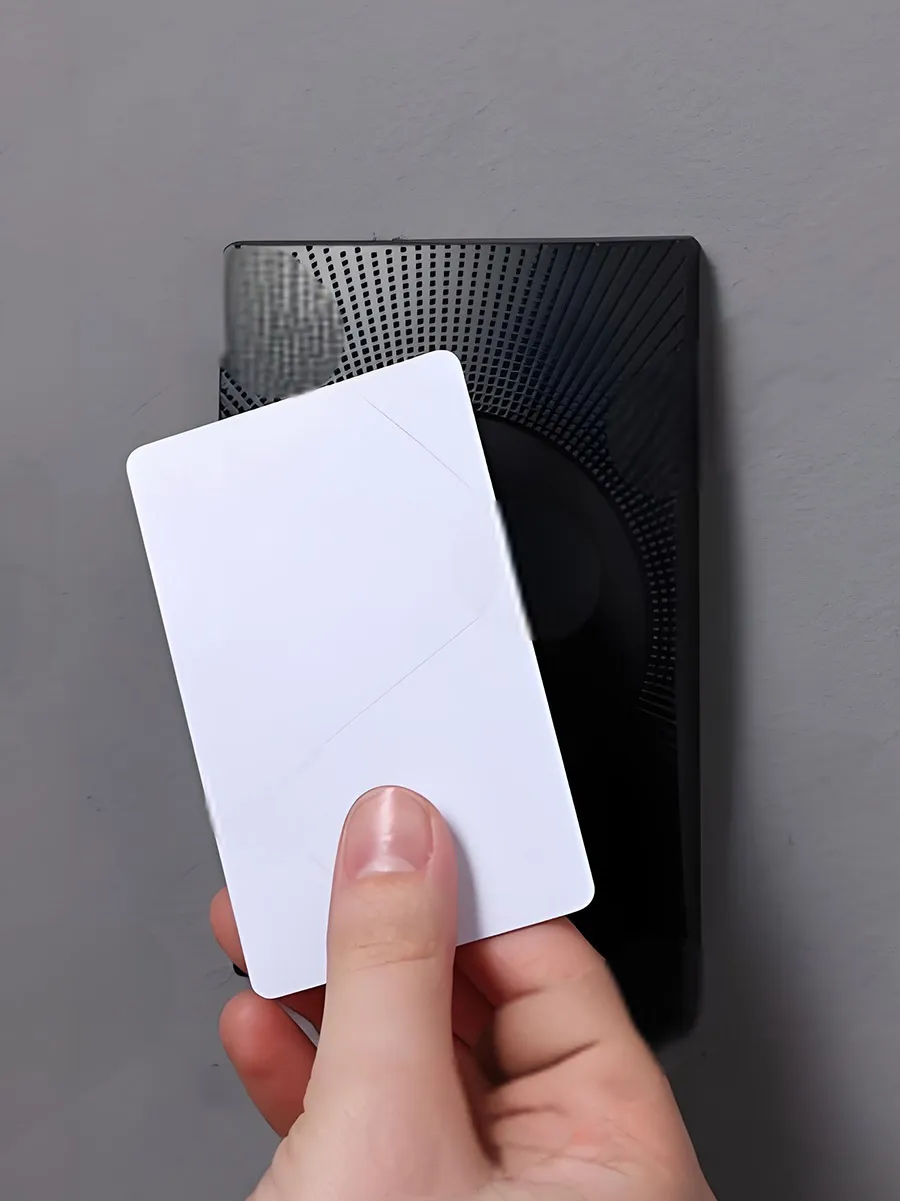
EM Microelectronic designed the EM4200 to replace its older read-only chips, the EM4100/4102 and EM4005/4105, directly, and it is fully compatible with their communication protocols: a system built for EM4100 cards reads EM4200 cards the same way on the same readers. EM also specifies a higher reading-range performance than the chips it replaces. The cards we sell as "EM4100" cards are made on the EM4200.
The EM4100 frame an EM4200 card sends
The version of the EM4200 that EM's datasheet calls Manchester 64 (EM4100 compatible) sends 64 bits in Manchester code at 64 field cycles per bit. The chip has no commands: as soon as the reader's field powers it, it repeats the frame, and it keeps repeating it until the field is gone. The 64 bits are laid out like this:
| Part of the frame | Bits | What it carries |
| Header | 9 | Nine 1s. The data and parity layout cannot repeat this pattern, so it marks the start of the frame. |
| Version or customer ID | 8 | The first two 4-bit rows of data, specific to the version or customer. |
| Identifier | 32 | The other eight 4-bit rows of data. |
| Row parity | 10 | An even parity bit after each of the ten 4-bit rows. |
| Column parity | 4 | An even parity bit for each of the four data columns. |
| Stop bit | 1 | Always 0. |
The parity bits let a reader reject a misread. Because the frame is the EM4100's own, an EM4200 card reads on any 125 kHz reader built for the EM format; what the reader then passes to the controller, and in which length and byte order, is set by the reader and the access software.
Specify the 64-bit access version
The EM4200 keeps a 128-bit code in laser-programmed ROM, and a mask option fixed when the chip is made decides how many of those bits it sends (64, 96 or 128) and in which coding. The version for access, attendance and membership readers is Manchester 64, which sends the frame above. EM also makes a 128-bit version that sends the ISO 11785 animal-ID format instead, and an EM-format access reader is not built for it, so name the Manchester 64 version in the RFQ.
When read-only is the right choice
A permanent factory number is a feature, not a limitation, across a large share of access and identification systems. Read-only suits you when:
- The back-end whitelists a stable identifier and never needs to write to the card — the pattern for most door-entry and time-and-attendance systems.
- You want the card itself to be tamper-evident: an EM4200 cannot be reprogrammed in the field, so the number issued is the number that stays on it.
- You want the simplest, lowest-cost issuance, with no configuration word or password to set incorrectly.
- A fixed UID is tied to a production batch for a straightforward audit trail.
Read-only is about the immutability of this card, not about preventing copies: a fixed 125 kHz number can still be read and written onto a rewritable T5577 blank, so where copying a credential carries real cost the control has to move up to an authenticated 13.56 MHz card such as a MIFARE DESFire card. If the system writes to the card, pre-encodes a site code or rotates identifiers, you need a writable chip instead; the 125 kHz RFID cards page compares the EM4305 and T5577.
Specification
| Item | EM4200 Card |
| Chip | EM4200 (EM Microelectronic), read-only |
| Frequency | 125 kHz (chip rated 100 to 150 kHz) |
| Output | Access version: 64-bit EM4100 format, Manchester, 64 field cycles per bit |
| Memory | 128-bit laser-programmed ROM; mask versions send 64, 96 or 128 bits |
| Read/write | Read-only, fixed at the factory |
| Material | PVC, RPVC, PET, PETG, ABS |
| Size | CR80 / ISO ID-1, 85.60 x 53.98 mm, or custom |
| Thickness | 0.76 mm nominal (ISO/IEC 7810 ID-1) |
| Reading distance | 2 to 10 cm depending on the reader and antenna |
| Printing | CMYK offset, silk-screen, UV and digital |
| Crafts available | Sequential numbering, laser engraving, barcode, QR code, magnetic stripe, signature panel |
Compatibility with your readers
A frequency of 125 kHz on its own does not confirm compatibility. The reader has to read the EM4100 format, and the chip has to be the Manchester 64 version that sends it. Readers marketed as EM4100 or "EM-Marin" compatible read that frame; how they pass the number on to the controller depends on the reader and its settings.
- Confirm the reader accepts the EM4100/EM4200 (EM-Marin) format, not only "125 kHz".
- Confirm the chip version: Manchester 64 for EM-format readers, not the 128-bit animal-ID version.
- Confirm the ID length and byte order your access software enrols.
- Test a sample card on the actual reader and controller before a bulk order; we supply free standard samples for exactly this.
If your integrator names EM4200, TK4100 or "EM4100 compatible", the EM4200 card is the match; if the reader has to write to the card, choose a writable chip instead. When in doubt, send us the reader model and a sample card and we will confirm the chip.
Printing, numbering and encoding
Because the EM4200 is read-only, "encoding" means the fixed ID programmed into the chip when it is made; we do not add or change the chip number after production. What we personalise is the surface: full-colour print on one or both sides, and printed or laser-engraved sequential numbers, barcodes or QR codes. Tell us whether the printed number should be the chip ID itself or a running number. Either way, numbered cards are delivered with a list in Excel, CSV or XML, one row per card with the chip ID next to the printed number, so a batch can be enrolled from the file instead of card by card, provided your access software can import it (see the RFID encoding service).
Ordering
For an EM4200 card order, confirm the chip version (Manchester 64 for EM-format access readers), the card format and material, the artwork and any variable numbering, and whether the printed number must match the chip ID. Key fobs and other card bodies are listed on the 125 kHz RFID cards page. Send the details through the inquiry form, by email or on WhatsApp.
Compare the writable T5577 and EM4305 cards, the wider 125 kHz RFID card family and all RFID cards. For access projects, the RFID key fobs for access control guide covers reader and credential planning.
Chip reference: EM Microelectronic EM4200 datasheet.
Frequently asked questions
Is an EM4200 card the same as an EM4100 card?
On the reader, yes. The EM4200 is EM Microelectronic's direct replacement for the EM4100/4102 and is fully compatible with their protocol, so an EM4200 card in the Manchester 64 version reads on the same 125 kHz readers.
Can an EM4200 card be rewritten or copied?
It cannot be rewritten: the ID is fixed in ROM when the chip is made. It can be copied, because any compatible reader can read the fixed number and a writer can put it on a rewritable blank such as a T5577. If you need to write to the card yourself, order a writable T5577 or EM4305 card; if copying carries real cost, use an authenticated 13.56 MHz card such as MIFARE DESFire.
What is the read range of an EM4200 card?
Typically a few centimetres, in the region of 2 to 10 cm, set mainly by the reader and its antenna. EM specifies a higher reading-range performance for the EM4200 than for the EM4100/4102 it replaces, but the reader still sets the range, so test a sample on your own equipment.
Will EM4200 cards work with my access control system?
They work with readers that decode the EM4100/EM4200 (EM-Marin) format and enrol the ID length your software uses. Confirm both, and test a free sample on your reader and controller before ordering in volume.
Can you print our logo and a running number on the cards?
Yes. We print full colour on one or both sides and add printed or laser-engraved sequential numbers, barcodes or QR codes. The number can be a running sequence or the chip ID itself, in the format your access software displays; say which in the RFQ.
What information do you need for a quote?
The chip (EM4200 or a writable option), quantity, card format and material, artwork, any numbering requirement and your reader model if you need a compatibility check. Send it through the inquiry form, by email or on WhatsApp.
Does an EM4200 card output a 64-bit or a 128-bit number?
It depends on the chip version, which is fixed when the chip is made. The ROM holds 128 bits: the Manchester 64 version used on EM4100-format access readers sends a 64-bit frame with 40 data bits (8 version or customer bits and a 32-bit identifier), while EM's 128-bit version sends the Bi-phase ISO 11785 FDX-B animal-ID telegram. For access control, specify the Manchester 64 version and tell us the ID length your software enrols.
What is the difference between an EM4200 and a TK4100 card?
Both are read-only 125 kHz chips read as the EM4100/EM4102 64-bit format, so on the reader they behave the same way. The TK4100 is a compatible chip; the EM4200 is EM Microelectronic's own replacement for the EM4100, with a higher specified reading-range performance. If your integrator names either, or says "EM4100 compatible", the EM4200 card meets the reader-side specification. Send the reader model if you need it confirmed.
Buyer guides
- RFID Frequencies Explained: LF vs HF vs UHF RFID frequencies explained for buyers: LF vs HF vs UHF, their read range, coupling, standards and materials handling, and how to choose the right band.
- How to Read an RFID Tag Quotation, Line by Line What decides RFID card and tag prices, and how to compare quotations line by line: unit-price basis, tooling, encoding, samples, freight and Incoterms.
- RFID RFP Template: Questions to Ask Every Supplier An RFID RFP template for distributors: the supplier questions that produce comparable quotes, and how to read the replies against one specification.
Ready to specify your order?
Send the product, quantity and application so we can confirm the options and pricing for your project.