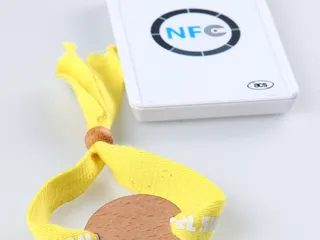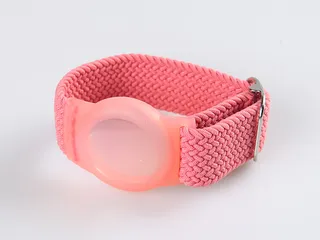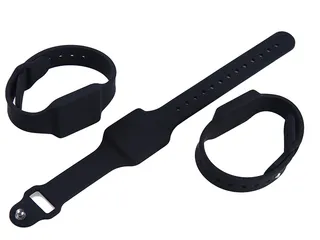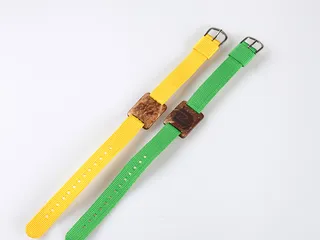
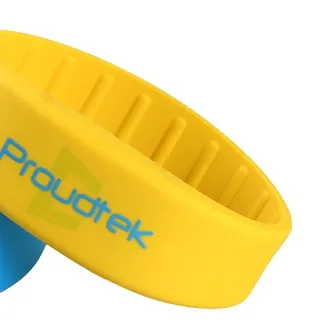
RFID Wristbands
RFID Silicone Wristbands
Silicone wristbands are the waterproof wearable credential — chip sealed in soft silicone that survives pools, saunas and gyms — for hotels and leisure venues where paper wristbands disintegrate.
Waterproof-design silicone RFID and NFC wristbands with NTAG, MIFARE, DESFire, EM4200/T5577 or UHF chips, sealed for pools, gyms, hotels and events in adult, child and adjustable styles. Match the chip to your reader or lock, then confirm fit, water resistance and reads on free standard samples.
Free standard samples · Quotation within one business day
Product details
What is a silicone RFID wristband?
A silicone RFID wristband is a soft, reusable band with an RFID or NFC chip and its antenna moulded inside the silicone, so the credential is worn on the wrist and the band survives water and sweat. It is chosen by leisure centres, waterparks, gyms, hotels and events that need a band to survive water, sweat and repeated wear. The key selection rule: the chip is dictated by the reader, lock or platform the band must work with, and the silicone style is then chosen for fit, closure and branding.
The silicone decides comfort, durability and how the band looks; the chip decides which systems accept it. Getting the chip right first avoids the most expensive mistake on a wristband order, which is a run of well-made bands that the installed readers will not recognise.
Silicone RFID wristband specification at a glance
| Item | Detail |
| Band material | Silicone with the chip and antenna sealed inside; soft, flexible and designed for wet use |
| Frequencies | 125 kHz (LF), 13.56 MHz (HF/NFC) or 860–960 MHz (UHF), depending on the chip |
| Standards | ISO/IEC 14443A (13.56 MHz): NTAG is NFC Forum Type 2, DESFire can be used as NFC Forum Type 4, and MIFARE Ultralight is read by the platform's own readers; 125 kHz proprietary proximity formats (EM4100/EM4200-type IDs, T5577 configurable); EPC Gen2 / ISO/IEC 18000-63 (UHF) |
| Chip options | NTAG213/215/216, NXP MIFARE Classic EV1 1K/4K (4K availability confirmed in the quotation), MIFARE DESFire, EM4200, T5577 (Microchip ATA5577C), UHF (e.g. Impinj M750, NXP UCODE 9xe); MIFARE Ultralight availability in silicone confirmed per model |
| Styles | One-piece stretch (closed loop) or adjustable/snap strap; other closures such as buckle or watch-style heads confirmed per model |
| Sizes | Adult, child and adjustable; nominal band lengths commonly quoted at around 150, 180, 195 and 210 mm. These are not necessarily inner circumference, which is confirmed per model together with width |
| Colour | Standard colours such as black, blue, red, orange, yellow, green, purple and white, or matched to your reference colour (confirmed on the sample) |
| Branding | Debossed, colour-filled deboss, silk-screen printed, laser-engraved; embossing where the mould allows (confirmed on the sample); sequential numbers and QR codes |
| Encoding | Supplied blank or encoded to your format (UID list, NDEF URL, sector or application data) |
| Working temperature | Typically quoted at -25 °C to 70 °C; confirm on the data sheet for the selected model, especially for sauna use |
| Packing | Bulk or sorted by size, colour or number range; carton quantity confirmed in the quotation |
Which chip should a silicone RFID wristband use?
Order the chip your reader, locker lock, door lock or cashless platform already reads. A shared frequency is not enough: a 13.56 MHz reader built for MIFARE Classic sectors will not necessarily accept an NTAG, and a 125 kHz reader expecting one ID format may ignore another. The table shows which systems typically use which chip.
| Chip | Frequency / type | Memory and security | Typically used by | Check before ordering |
| NTAG213 | 13.56 MHz, NFC Forum Type 2 | 144 bytes user memory; 7-byte UID; optional 32-bit password; originality signature | Phone taps, NFC links, membership check-in, simple event entry | That the app or reader reads NDEF or the UID, and whether the tag should be locked after writing |
| NTAG215 / NTAG216 | 13.56 MHz, NFC Forum Type 2 | 504 / 888 bytes user memory; same protection features as NTAG213 | Longer URLs, vCards or app data on the band | Only choose the larger memory if the data needs it |
| MIFARE Classic EV1 1K / 4K (NXP) | 13.56 MHz, ISO/IEC 14443A | 1 KB in 16 sectors or 4 KB in 40 sectors, with keys; legacy Crypto-1 security | Existing locker locks, hotel locks, access and older cashless systems | UID length the system expects and the sector layout; 4K availability confirmed in the quotation; plan a migration where security matters |
| MIFARE Ultralight (EV1 / C) | 13.56 MHz, ISO/IEC 14443A | 48–144 bytes user memory; EV1 has 32-bit password protection, Ultralight C adds 3DES authentication | Low-cost access or ticketing and short-term passes where the platform specifies Ultralight | Which Ultralight variant the platform supports; availability in silicone confirmed per model; not a phone tag: phone reading depends on the phone and app, so confirm on a sample; for phone taps choose NTAG213 |
| MIFARE DESFire (EV2 / EV3) | 13.56 MHz, ISO/IEC 14443A | 2, 4 or 8 KB; AES-128 mutual authentication; multiple applications | Cashless payment, secure access, multi-site membership | The application and key scheme the platform will write; availability confirmed per batch |
| EM4200 | 125 kHz, read-only | Factory-programmed fixed ID | Legacy proximity readers, gym and locker systems that accept EM-format IDs | That the reader decodes the EM format your controller expects |
| T5577 | 125 kHz, rewritable | Configurable to emulate several 125 kHz ID formats; optional 32-bit password only, no cryptographic protection | Replacing or duplicating existing 125 kHz credentials where you are authorised to do so; mixed LF sites | The exact format and whether your encoder can write it; confirm with your system provider |
| UHF (EPC Gen2) | 860–960 MHz | EPC and TID memory; read from a distance by fixed antennas | Headcounts, race timing, zone tracking and wide gates | Region band, reader and antenna; the body and water reduce read range, so test on a wet wrist at the actual gate |
For deeper chip notes see the MIFARE DESFire card, EM4200 card and T5577 card pages; the same chips are used in the wristbands. Where a band must be read at a distance rather than tapped, the dedicated UHF wristband page covers chip memory and read range.
NFC silicone wristbands for phone taps
An NFC silicone wristband usually carries an NTAG213 or NTAG215, which most NFC-enabled phones can read without an app when the tag holds an NDEF record such as a URL. That suits membership pages, social links, digital check-in and loyalty programmes. If the band will be written once and handed out, lock the tag after writing so the content cannot be overwritten. If the band carries value or access rights, keep balances and permissions on the server rather than on the tag. A UID alone can be copied, so where cloning matters choose a chip with cryptographic authentication such as MIFARE DESFire (AES-128), or at least check the NTAG originality signature as a basic authenticity check.
What sizes do silicone wristbands come in, and how do you measure?
Silicone bands are specified by inner circumference and band width. The lengths often quoted for silicone bands (around 150, 180, 195 and 210 mm) are nominal band lengths, not necessarily inner circumference, so ask for the inner circumference of each model. Measure around the wrist where the band will sit with a flexible tape, add a little allowance for comfort and for the chip housing, and compare it with that figure. Exact circumference, width and thickness are confirmed per model before sampling.
| Size group | Typical wearer | How to specify |
| Child | Children at waterparks, pools and family events | Give the age range and the smallest wrist you need to fit; a closed loop must also pass over the hand |
| Adult standard | Most adult members and guests | Usually one or two lengths cover an adult population; send a size split per quantity |
| Adult large | Larger wrists, or bands worn over a sleeve or glove | Order a small share of a larger size or use an adjustable style |
| Adjustable | Mixed crowds, day passes, hotel guests | One length fits a range of wrists; confirm the minimum and maximum circumference per model |
A closed-loop band that is too tight is uncomfortable and one that is too loose can slide off in water, so for a mixed public audience an adjustable style or two to three fixed sizes is the safer choice. Pack sizes separately and label the cartons so reception teams issue the right band.
One-piece stretch band or adjustable strap?
| Closure | How it works | Best for | Trade-off |
| One-piece stretch (closed loop) | A continuous silicone ring that stretches over the hand | Gym members, leisure-centre lockers, reusable passes | Fixed size; needs adult and child sizes; no clasp or other separate part to break or lose |
| Buckle or watch-style strap (confirmed per model) | A strap with holes and a buckle or clasp, where the model offers it | Hotel guests, waterpark day passes, mixed wrist sizes | Fits a wide range; the buckle is a part that can wear or be lost |
| Adjustable snap or press-stud strap | Strap ends fasten with a stud through a chosen hole | Short-stay guests and events where bands are collected | Quick to fit; a determined user can unfasten and pass it on |
| One-way lock (where available) | A locking fastener that cannot be reopened without cutting | Paid events where the band must stay with one person | Single use; plan how bands are removed, returned or recycled |
If transferring a band between people is a real risk, compare the closures on the RFID wristbands for events page, where one-way locking fabric bands are usually the better fit.
How can silicone RFID wristbands be branded?
| Method | Result | Wear | Best for |
| Debossed | Logo or text pressed into the surface | Pressed into the silicone; nothing sits on the surface to rub off | Reusable member bands handled every day |
| Embossed (where the mould allows) | Raised logo or text; confirmed on the sample | Raised above the surface; the edges can pick up dirt over time | Bold logos and short text |
| Debossed with colour fill | Recessed artwork filled with a contrasting colour | The colour sits below the surface | Readable logos, zone names and numbers |
| Silk-screen printed | Ink printed on the surface, one or more colours | Ink sits on the surface; test it against the abrasion and chemicals it will meet | Event and seasonal bands, detailed artwork |
| Laser engraved | Fine marking burnt into the surface, often with pigment fill | Marked into the surface rather than printed on it | Sequential numbers, short codes and small text |
| Band colour | Solid standard colour or matched to a reference | Moulded into the band, not applied to the surface | Zoning by age group, ticket type or membership tier |
Variable data can be added per band: a printed or engraved sequence number, a QR code or a short ID tied to the chip's UID. Approve a physical sample so colour, marking depth and chip position are agreed before the run; colour matching on silicone is confirmed against the sample rather than a screen.
Are silicone RFID wristbands waterproof?
Yes, for everyday water exposure. The chip and antenna are sealed inside the silicone, so the bands work through swimming, showering and sweat, which is why they are used at pools, waterparks, gyms and spas where paper or Tyvek bands would fail. There is no universal immersion-depth or chemical rating that applies to every model, so pool chemistry, heat and cleaning resistance are confirmed on a sample.
Test the sample band in the conditions it will meet on site, including:
- Pool and waterpark water: repeated immersion in chlorinated or salt water across a full day.
- Heat: steam rooms and hot tubs, checked against the model's working temperature. Traditional saunas usually exceed the typically quoted 70 °C upper limit; if bands will be worn in a sauna, confirm the rating on the model's data sheet and on the sample before ordering.
- Sunscreen, body oils and sweat: these can affect printed surfaces more than debossed ones.
- Cleaning and disinfection: if bands are reissued between guests, the detergents or disinfectants used, repeated over many cycles.
- Read performance when wet: tap the band on the actual reader or locker lock while it is wet and while it is being worn.
Where are silicone RFID wristbands used?
- Leisure centres and swimming pools: entry, locker locking and timed sessions; the locker lock supplier specifies the chip.
- Waterparks: entry, lockers and cashless spending without carrying a wallet or phone.
- Gyms and fitness clubs: a member credential for turnstiles, lockers and equipment check-in that survives sweat and showers.
- Hotels and resorts: a wearable key for rooms, pools and spas where the lock accepts the chip; see RFID wristbands for hotels.
- Events and festivals: multi-day access and cashless with a reusable band; see the RFID event wristbands guide.
- Membership and NFC marketing: NTAG bands that open a web page or loyalty account on a phone tap.
Can the wristbands be encoded before delivery?
Yes. Bands can be supplied blank for your own encoder, or encoded before shipping through the RFID encoding service: an NDEF URL written and locked on NTAG, sector data on MIFARE Classic, or applications prepared on DESFire where you provide the specification. Each band is checked by reading it back after encoding, and the encoded order arrives with a data report; for numbered bands, a file in Excel, CSV or XML links each band's UID (EPC or TID on UHF bands) to its printed or engraved number. Cryptographic keys stay with the organisation that runs the system and are exchanged only under an agreed process.
To specify encoding, send:
- The chip and the exact data or URL to write, with a sample record.
- Whether the tag must be locked or password-protected after writing.
- The columns of the ID list (for example UID and printed number) and how bands are sorted per carton.
- For hotel locks and locker systems, the lock vendor's encoding requirements, or plan to encode on site with the property's own encoder.
How to check compatibility before ordering
- Name the system: reader, lock or platform make and model, and the credential it currently accepts.
- Match the chip exactly: chip family, UID length and any format or application requirements; a frequency match alone is not proof.
- Test a sample on the real reader: on the wrist, dry and wet, at the reading angle guests will actually use.
- Check the marking: colour, logo and numbers after the same exposure the band will see in use.
- Confirm with your system provider for trademarked or proprietary formats; bands are supplied for systems that accept the specified chip and format.
Ordering silicone RFID wristbands and samples
Standard samples are free and customised samples carry a setup fee; the RFID sample pack is the quickest way to test chips and band styles on your readers. Standard products generally have a lead time of 2–3 weeks. Lead time for customised bands (moulded or printed logo, colour matching, numbering, encoding) and schedules for large orders are confirmed in the quotation, together with MOQ, unit price and freight for your destination.
Proud Tek has produced RFID wristbands, cards and tags in its Shenzhen factory since 2008, backed by strong chip supply channels and quality control before dispatch. Send the reader or lock model, the chip, sizes and quantity per size, colours, artwork, numbering and encoding requirements through the contact page. We reply within one business day and provide a quotation within one business day of a workable inquiry. Quality management and certification details are on the RFID card and NFC tag manufacturer page.
If silicone is not the right material, compare fabric, coconut-shell and UHF options across the full RFID wristbands range.
Plan the application
Frequently asked questions
Are silicone RFID wristbands waterproof?
Yes, for everyday water exposure. The chip and antenna are sealed inside the silicone, so the bands work through swimming, showering and sweat. There is no universal immersion-depth or chemical rating, so confirm pool chemistry, heat (saunas often exceed the typical 70 °C limit) and cleaning resistance on a sample.
What is the difference between an RFID and an NFC silicone wristband?
An 'NFC wristband' usually means an NTAG band, which opens an NDEF link on a phone without an app. The other 13.56 MHz ISO/IEC 14443A chips are made for the platform's own readers: a DESFire band opens a link only if an NDEF file is written to it, iPhones do not read MIFARE Classic and Android support for it is optional, and MIFARE Ultralight is not offered as a phone tag, because phone reading depends on the phone and app. 125 kHz (EM4200, T5577) and UHF bands need a dedicated reader and cannot be read by phones.
Which chip do I need for my locker or door lock?
The chip your lock or reader vendor specifies. Many locker and hotel locks use 13.56 MHz MIFARE chips and some older systems use 125 kHz EM-format IDs, but the exact chip, UID length and format must match. Send the lock model and test a sample on it.
Can I copy my existing 125 kHz card onto a silicone wristband?
For systems that accept a 125 kHz ID format, a T5577 band can often be configured to carry the same format as an existing credential, where you are authorised to do so. Confirm the format with your system provider and test on the reader, because T5577 has no cryptographic protection.
How close must the band be to the reader?
13.56 MHz (NFC, MIFARE, DESFire) and 125 kHz bands are tap or near-tap reads, typically a few centimetres, while UHF bands are read at a distance by fixed antennas. The wrist and water shorten range, so test the sample on a worn band at the real reader or lock.
What sizes are available for adults and children?
Silicone bands come in child and adult sizes and in adjustable styles. Nominal band lengths are commonly quoted at around 150, 180, 195 and 210 mm, but these are not necessarily inner circumference; circumference and width are confirmed per model. Measure the wrist, send a size split and sample the sizes first.
Can silicone wristbands be cleaned and reissued between guests?
Yes, that is the main reason to choose silicone over fabric or paper. Reissue works where the band survives your detergent or disinfectant over many cycles and the marking stays legible, so run the cleaning routine on a sample band before ordering. Debossed marking holds up better than surface print.
Are samples free, and how long does an order take?
Standard samples are free and customised samples carry a setup fee. Standard products generally have a lead time of 2–3 weeks. Lead time for customised bands (logo, colour match, numbering or encoding) and large-order schedules are confirmed in the quotation, with MOQ, price and freight.
What information do you need to quote silicone wristbands?
Send the reader or lock model, the chip, sizes and quantity per size, band colour, logo and marking method, numbering, encoding needs and the delivery destination. We reply within one business day and quote within one business day of a workable inquiry.
Buyer guides
- RFID Event Wristbands: Procurement and Pilot Checklist Buying RFID event wristbands? Check system compatibility, materials, encoding, sample approval and the details needed for a batch quotation.
- How to Read an RFID Tag Quotation, Line by Line What decides RFID card and tag prices, and how to compare quotations line by line: unit-price basis, tooling, encoding, samples, freight and Incoterms.
- RFID RFP Template: Questions to Ask Every Supplier An RFID RFP template for distributors: the supplier questions that produce comparable quotes, and how to read the replies against one specification.
Ready to specify your order?
Send the product, quantity and application so we can confirm the options and pricing for your project.