
Animal ID
RFID Animal Ear Tags
ISO-Compliant Livestock ID

Quick answer
RFID animal ear tags provide permanent, unique identification for cattle, sheep, goats, pigs and other livestock. Meeting government traceability mandates (USDA, EU, Australia NLIS) while enabling farm-level herd management, breeding records, health tracking and supply chain provenance.
- ISO 11784/11785 compliant — globally standardized 134.2 kHz FDX-B protocol, compatible with all ISO readers.
- Tamper-evident design: one-piece or two-piece tags that indicate removal attempts.
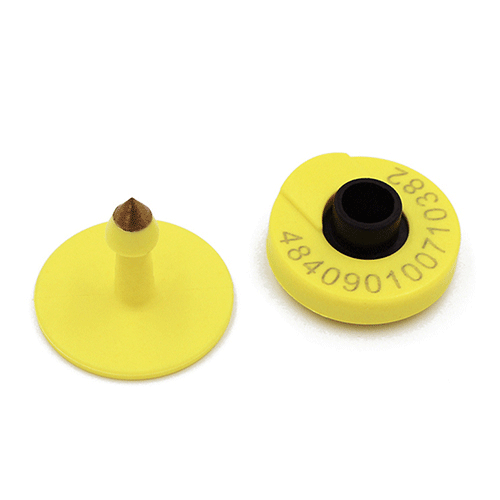
- Laser-engraved visual ID. Human-readable number matches the RFID-encoded digital ID for dual identification.
Used in these industries
Deployments where this product is referenced on our industry landing pages.
At a glance
Use these short answers to decide whether this page matches the project before moving into the detail.
Chip options
EM Microelectronic EM4305 / EM4569 (ISO 11784/11785 FDX-B, 64-bit unique ID); Texas Instruments RI-TRP-RR2B (HDX variant for race-way / long-range read); Sokymat Hitag S...
Frequency / air interface
134.2 kHz LF per ISO 11785:1996 FDX-B (Full-Duplex Type B) — the protocol universal pet / livestock scanners are built to. HDX variant available for longer read range at...
Next step
Ready to move forward? Start your inquiry to get specific answers for this project.
Request animal ear tag quote- ID code structure
-
15-digit decimal per ISO 11784:1996: 3-digit country / manufacturer code + 12-digit national animal ID. USDA 840 prefix for US cattle per USDA APHIS 9 CFR Part 86; EU member-state code per Commission Implementing Regulation 2021/520; Australia NLIS code per MLA NLIS Business Rules.
- Tag types
-
- Button / round (male + female piece, 30 mm head)
- Flag / panel (visible at 10+ m, laser-engraved visual ID)
- Tissue Sampling Tag (TST) — ear tag + tissue sample in one applicator stroke
- One-piece tamper-evident variant
- HDX bolus / rumen option (complementary to ear tag for long-life ID)
- Housing material
-
TPU (thermoplastic polyurethane) — flexible, UV-resistant (ISO 4892-2 Cycle A Qmax 1,000 h), non-toxic, REACH-compliant. Operating range -40 to +85 °C. Resists ovicidal dips, insecticide sprays, mud, weathering typical of pasture / feedlot conditions.
- Colours
-
Yellow, orange, green, blue, white, red, pink — country / species / cohort code per national programme (USDA 840 tags white / pink / yellow; EU sheep / goat orange; Australia NLIS year-of-birth colour calendar). Custom Pantone match available at 5,000-pc MOQ.
- Read range
-
30-50 cm with handheld stick reader (Allflex RS420 / Datamars Pocket Reader EX / Shearwell SDL130) through the animal's ear tissue; 60-100 cm with chute-mounted panel reader; up to 150 cm with race-way antenna (HDX variant).
- Retention & welfare
-
Applied with matched applicator (Allflex Universal Total Tagger, Datamars Z1, Shearwell TST). ICAR-published retention literature consistently reports >95% retention over the productive life of the animal when applicator technique and tag-to-ear sizing are correct. Welfare: sized to species per RSPCA / CCAC / AWIN guidance; OIE / WOAH Terrestrial Code Chapter 4.3 referenced.
- Compliance framework
-
USDA APHIS Animal Disease Traceability (9 CFR Part 86, mandatory-RFID rule effective 2024-11-05) · EU Regulation 2019/2035 & Commission Implementing Regulation 2021/520 · Australia NLIS Business Rules · Canada CLTS (Health of Animals Regulations Part XV) · Brazil SISBOV (IN MAPA 51/2018) · ISO 11784:1996 · ISO 11785:1996 · ISO 14223:2018 · ISO 24631:2018 · ICAR Manufacturer Code Register · WOAH Terrestrial Code Chapter 4.3.
- Platform integration
-
National registries: USDA Animal Disease Traceability Information System (ADTIS) · EU TRACES NT · Australia NLIS database · Canada CLTS · Brazil SISBOV. Farm management: Allflex SenseHub · Afimilk · DeLaval DelPro · GEA CowScout · Cainthus / Ever.Ag · Performance Livestock Analytics · BoviSync · Datamars SmartReader / Tru-Test / Gallagher. Abattoir / processor: Marel Innova · Scott Technology · BEPA · JBS Smart Tracking. Weigh / crush: Gallagher TSi 2 · Tru-Test ID5000 · Te Pari Patriot. Reader firmware standard: ISO 11784/11785 + ISO 24631 universal scanners.
- MOQ / Lead time
-
Button tag 1,000 pcs / 15-20 business days; flag tag 1,000 pcs / 15-20 business days; TST tag 2,000 pcs / 20-25 business days; ICAR-registered serial block registration 6-10 weeks for first-time OEM.
Commercial terms
- MOQ
- Varies by SKU — stock items from 100 pcs; custom production typically 500-1,000 pcs
- Lead time
- Production 2-3 weeks after artwork and encoding sign-off; reorders on a 3-4 week cycle
- Samples
- Free samples and RF test report with every order; courier at customer cost
- Payment
- 50% T/T deposit, 50% before shipment; Net 30/60 for established accounts; LC for large orders
- Shipping
- FOB Shenzhen / Yantian; DHL, FedEx or EMS air freight; sea LCL / FCL for volume
- Response
- Itemized quote within one business day, Mon-Fri (UTC+8)
Challenges livestock producers face when procuring compliant RFID ear tags
- USDA APHIS Animal Disease Traceability rules (9 CFR Part 86, mandatory-RFID rule effective 2024-11-05) now require ISO 11784/11785 FDX-B RFID ear tags for cattle and bison moving interstate. Producers sourcing generic 125 kHz tags that are not FDX-B compliant face rejection at livestock auctions, feedlots, and slaughter plants.
- Producers in multiple markets (US export to EU, Brazilian SISBOV export programs) must source tags that simultaneously meet ISO 11784 numbering, USDA 840 country code prefix, and EU Regulation 2019/2035 requirements — finding a single supplier who can produce to all three program specifications is difficult.
- Flag-style ear tags for cattle must carry a visual number legible at distance from a farmhand on horseback or ATV. Suppliers offering only inkjet or UV-printed surface markings on TPU tend to produce tags whose visual numbers fade prematurely under UV exposure and chemical spray. Laser engraving is the defensible path for a multi-year service life.
- Large cattle operations tagging 1,000–10,000 calves per year need tag serial numbers in contiguous blocks registered with ICAR for official national identification. Most distributors cannot guarantee ICAR-registered serial blocks or provide the registration certificates buyers and slaughter plants require.
- Sheep and goat producers subject to EU electronic identification mandates need compact button tags that fit the applicator for small-ear species and read reliably through tissue at 30–80 cm — larger cattle-format tags are not suitable and can cause animal welfare issues if improperly sized.
How Proud Tek solves livestock RFID ear tag procurement
Generic ear-tag supplier
- Mixed 125 kHz / FDX-B stock → USDA 9 CFR Part 86 rejection risk
- Unregistered serial block → ID conflicts in national registry submission
- Inkjet / UV-printed visual number → fade in <1 yr pasture exposure
- Single SKU across species → welfare / retention issues on small-ear species
- No ISO 24631 performance declaration
Proud Tek ICAR-registered programme
- FDX-B-only stock, ISO 11784/11785 compliance-declaration per lot
- ICAR Manufacturer Code block, country-prefix pre-encoded (840 / EU / NLIS)
- Laser-engraved visual ID, UV-tested per ISO 4892-2 Cycle A 1,000 h
- Species-matched SKU: button sheep/goat / flag cattle / TST cattle / HDX bolus
- ISO 24631:2018 transponder-performance sample data per production run
- ISO 11784/11785 FDX-B compliant at 134.2 kHz — universally accepted at USDA-compliant reading stations, EU member state readers, and Australian NLIS panel readers without protocol compatibility issues.
- ICAR-registered serial number blocks with registration certificates for USDA 840 prefix (US), EU country code series, and Australia NLIS. Tags arrive pre-encoded with official numbering for direct submission to national traceability databases (ADTIS / TRACES NT / NLIS).
- Laser-engraved visual IDs on TPU material — permanent, UV-resistant (ISO 4892-2 Cycle A), legible at 10+ meters on flag-style tags. Matching the encoded RFID number for dual identification throughout the animal's life.
- Species-specific sizing: button tags for sheep and goats (12G applicator), flag tags and Tissue Sampling Tag (TST) variants for cattle, HDX bolus complement for long-life ID. All from one supplier to standardise procurement across your species mix.
- Colour coding per species, cohort or national programme (NLIS year-of-birth calendar, USDA 840 white / pink / yellow, EU orange sheep) with farm logo or association mark laser-engraved or printed on both male and female pieces.
Cross-customer playbook for ISO 11784/11785 livestock-ID programmes
Retention rate, read reliability and registry-acceptance outcomes all vary with species, applicator technique, pasture intensity, chute or race-way reader setup and national-programme specifics (USDA ADT / EU 2019/2035 / NLIS / CLTS / SISBOV), so what follows is the shape of the work distributors and producer-groups run, not client-specific numbers. The sequencing is anchored to USDA APHIS 9 CFR Part 86, EU Regulation 2019/2035 + Commission Implementing Regulation 2021/520, ICAR Manufacturer Code Register, ISO 11784:1996, ISO 11785:1996 and ISO 24631:2018 transponder-performance evaluation.
Directional benchmarks published in ICAR performance tests, the USDA APHIS ADT cost-benefit analysis and MLA NLIS annual compliance reports describe registry-acceptance moving from rejection-prone (unregistered serial / non-FDX-B) to clean (ICAR-registered 840 / EU / NLIS block), visual-number legibility moving from sub-year (inkjet / UV-printed) to multi-year (laser-engraved on TPU) and chute-scan reliability moving from manual re-tagging to automated panel-reader capture — the direction procurement teams should expect, with magnitudes settled per cohort during first-season validation.
- Weeks 1-3 · Programme scope + ICAR block registration
Confirm target species + country programme (USDA 840 / EU 2019/2035 / NLIS / CLTS / SISBOV), lodge ICAR Manufacturer Code application if first deployment, lock visual-ID format (farm prefix / year / sequence) and colour code.
- Weeks 4-6 · Tag spec + applicator qualification
Select SKU per species (button / flag / TST / HDX bolus), match applicator (Allflex Universal Total Tagger / Datamars Z1 / Shearwell TST), sample-run UV test per ISO 4892-2 Cycle A, ISO 24631 transponder-performance sample.
- Weeks 7-10 · Pilot herd + registry wiring
Tag pilot herd (200-1,000 head), submit IDs to national registry (ADTIS / TRACES NT / NLIS / CLTS), validate chute panel-reader read rate, wire IDs into farm-management platform (Allflex SenseHub / Afimilk / DeLaval / BoviSync / Performance Livestock Analytics).
- Month 3+ · Full-herd scale-out + abattoir linkage
Extend to full herd or distributor network, add race-way / weigh-scale readers, publish tagging SOP, link IDs to abattoir / processor systems (Marel Innova / JBS Smart Tracking) and retention-rate monitoring for cohort reviews.
Regulatory compliance
RFID ear tagging is mandated or recommended by livestock traceability programmes worldwide.
- USDA Animal Disease Traceability (ADT) — mandatory RFID tagging for interstate cattle movement per 9 CFR Part 86 (effective 2024-11-05).
- EU Regulation 2019/2035 + Commission Implementing Regulation 2021/520 — electronic identification required for sheep, goats and cattle in EU member states.
- Australia NLIS (National Livestock Identification System) — mandatory RFID for cattle, sheep and goats per MLA NLIS Business Rules.
- Canada CLTS (Canadian Livestock Tracking System) — RFID ear tags for cattle and bison per Health of Animals Regulations Part XV.
- Brazil SISBOV — electronic traceability for cattle destined for export to the EU per IN MAPA 51/2018.
- All Proud Tek ear tags comply with ISO 11784/11785 + ISO 14223:2018 + ISO 24631:2018 and are sourced from ICAR-registered Manufacturer Code blocks.
Tag types
| Type | Construction | Visibility | Species | Features |
|---|---|---|---|---|
| Button tag | Small round male + female | Low (close inspection) | Cattle, sheep, goats | Compact, minimal snagging |
| Flag tag | Large panel male + female | High (visible from 10+ m) | Cattle | Visual number + RFID combined, laser-engraved |
| TST (Tissue Sample Tag) | Tag + tissue sampling tip | Medium | Cattle | DNA / BVD sample collected at tagging |
| Tamper-evident one-piece | One-piece design | Medium | All species | Shows evidence if removed |
| HDX bolus (complement) | Ceramic rumen bolus | N/A (internal) | Cattle, sheep | Long-life ID, race-way long-range read |
Farm management applications
- Individual animal identification: unique 15-digit ID linked to the animal's complete record in farm management software.
- Breeding records: scan sire and dam tags to record mating events and parentage.
- Health management: log vaccinations, treatments and veterinary visits against the animal's RFID number.
- Weight and growth tracking — scan the tag at the weigh scale (Gallagher TSi 2 / Tru-Test ID5000 / Te Pari Patriot) to automatically record weight data.
- Feeding management: RFID-controlled automatic feeders deliver individual rations based on tag identification.
- Movement records: scan tags at gate readers when animals move between paddocks, yards or farms.
- Slaughter and processing — the RFID tag links the live animal to the carcass for full supply chain traceability (Marel Innova / Scott Technology / JBS Smart Tracking).
Customization and numbering
- National ID numbering: pre-encoded with your country's official numbering scheme (USDA 840 prefix, EU country code, NLIS device code).
- Farm management number: secondary visual number (farm ID, birth year, sequential number).
- Laser engraving: permanent, fade-resistant laser marking on both male and female tag pieces.
- Colour coding: tag colour per species, age group, herd or status (NLIS year-of-birth calendar, USDA 840 white / pink / yellow).
- Logo printing: your farm brand or association logo printed or engraved on the tag.
- Barcode / DataMatrix: optional visual scanning backup for abattoir linkage.
Useful next pages
Use these linked product, guide and comparison pages to keep the next click specific and practical.
Related outdoor and agriculture RFID SKUs
Adjacent rugged-environment tags for agricultural, horticultural and field-asset tracking.
Industry landings where livestock RFID deploys
Sector pages that elaborate the agriculture and livestock traceability programme context.
Related solutions and frequency reference
The horizontal inventory-tracking solution this SKU anchors, and the LF-vs-HF frequency decision that feeds it.
FAQ
What is the read range for animal ear tags?
Typical read range is 30-50 cm with a handheld stick reader (the type used in cattle yards and chutes — Allflex RS420 / Datamars Pocket Reader EX / Shearwell SDL130). Panel readers installed in race / chute systems can read at 60-100 cm, and HDX race-way antennas extend to ~1.5 m. The read range is shorter than laboratory LF tags because the small antenna must fit inside the ear-tag button and the animal's ear tissue attenuates the signal slightly.
Do the tags comply with USDA requirements?
Yes. Our RFID ear tags comply with ISO 11784/11785 (FDX-B at 134.2 kHz) and meet USDA APHIS requirements for the Animal Disease Traceability programme per 9 CFR Part 86 (mandatory-RFID rule effective 2024-11-05). Tags are encoded with the official 840 country code prefix from ICAR-registered manufacturer blocks. We can also supply tags pre-approved for specific state programmes.
How long do ear tags last on the animal?
Our TPU ear tags are designed for the productive life of the animal — typically many years for cattle. The TPU material resists UV degradation per ISO 4892-2 Cycle A (tested to Qmax 1,000 h), chemical exposure (insecticides, sprays) and mechanical stress from grazing, fencing and handling. Laser-engraved numbers remain legible throughout the tag's service life. Retention rates in the ICAR-published literature are consistently above 95% when tags are properly applied with the correct applicator; realised rate depends on applicator technique, tag-to-ear sizing and species.
Sources & references
Primary standards, OEM datasheets and regulatory documents cited by this article. All URLs were verified on the access date shown below.
- 9 CFR Part 86 — Animal Disease Traceability (Use of radio frequency identification eartags as official identification in cattle and bison)
Final rule making electronic identification mandatory for interstate movement of cattle and bison, effective 2024-11-05. The regulatory gate for every US livestock RFID deployment.
- Commission Implementing Regulation (EU) 2021/520 on the traceability of certain kept terrestrial animals
Implementing rules under Regulation (EU) 2019/2035 on electronic identification for sheep, goats, bovines and equines in EU member states.
- NLIS Cattle Standards & NLIS Business Rules
Business rules governing NLIS device codes, colour calendar, read-point standards and database integration — the reference for all Australian livestock RFID programmes.
- ISO 11784:1996 Radio frequency identification of animals — Code structure
Defines the 64-bit / 15-digit code structure (country / manufacturer + national ID) every compliant ear tag must emit.
- ISO 11785:1996 Radio frequency identification of animals — Technical concept
Specifies 134.2 kHz FDX-B and HDX air interfaces — the protocols universal livestock scanners are built to.
- ISO 24631-1/-2/-3:2018 Radiofrequency identification of animals — Performance evaluation of RFID transponders and transceivers
Test procedures for activation field strength, modulation, bit-error rate and read range — the ISO reference for transponder performance and the evidence basis for chute-reader qualification.
- ICAR Section 12 — Guidelines for Device Testing and Approval
ICAR's transponder and reader test methods and Manufacturer Code Register — the public reference for retention, read-range and device approval figures.
- Regulation (EU) 2019/2035 on rules for the application of Regulation (EU) 2016/429 as regards rules for establishments keeping terrestrial animals
Electronic-ID requirements for sheep, goats and cattle in EU member states — the Animal Health Law implementing regulation.
- Health of Animals Regulations (C.R.C., c. 296) — Part XV Animal Identification
Canadian CLTS (Canadian Livestock Tracking System) legal basis — ISO 11784/11785 RFID ear-tag requirement for cattle, bison and sheep.
- Instrução Normativa MAPA nº 51/2018 — Programa Nacional de Identificação e Certificação de Origem Bovina e Bubalina (SISBOV)
Brazilian SISBOV electronic-traceability rules for cattle and buffalo destined for EU export — ISO 11784/11785 alignment.
Proud Tek is a Shenzhen-based RFID & NFC manufacturer supplying hotel chains, transit operators, event venues and retail brands worldwide. Every order includes free samples, RF testing and dedicated project support.
Get a Quick Quote
Tell us about your project and we'll respond within one business day. Fields marked (asterisk) are required.