
Library RFID Solutions
RFID for Libraries
ISO 28560 Self-Service

Quick answer
Libraries worldwide use RFID + ISO 28560 (Parts 1-3 data model) + ISO/IEC 15693 HF (13.56 MHz) + NXP ICODE SLIX2 chip silicon to automate circulation, enable patron self-service, speed collection inventory + protect materials. Self-service kiosks (Bibliotheca SelfCheck 1000 + liber8 + SmartServe, FE Technologies SmartReturn + smartCheckout, P.V. Supa Pico Loaner, Tech Logic CircIT, RFID Library Solutions ScanPoint, EnvisionWare) + AMH automated sorters (Lyngsoe Library Mate-X, Bibliotheca smartFlow, FE Technologies, P.V. Supa Pico Sorter, Tech Logic CircIT Sort) + security gates (Bibliotheca Hybrid, Checkpoint ITG, FE Technologies Q-Series, 3M Detection retrofit) + ILS / LMS (SirsiDynix Symphony / BLUEcloud / Horizon, Innovative Sierra / Polaris, Ex Libris Alma + Primo, OCLC WorldShare, EBSCO FOLIO, Koha) over SIP2 + NCIP / Z39.83 transaction protocols.
- ISO 28560 + ICODE SLIX2 + ISO/IEC 15693 — Bibliotheca + FE Tech + P.V. Supa + Tech Logic + Lyngsoe + Checkpoint ITG vendor-neutral compatibility.
- SIP2 + NCIP / Z39.83 — SirsiDynix + Innovative + Alma + OCLC WorldShare + EBSCO FOLIO + Koha integration via TCP/IP gateway.
- Self-service circulation 70-90% staff load reduction; full collection inventory 2-4 weeks → 1-2 days; 5-10 books read together at kiosk in <15 s.
Featured Libraries Products
Explore our complete range of RFID solutions for libraries.
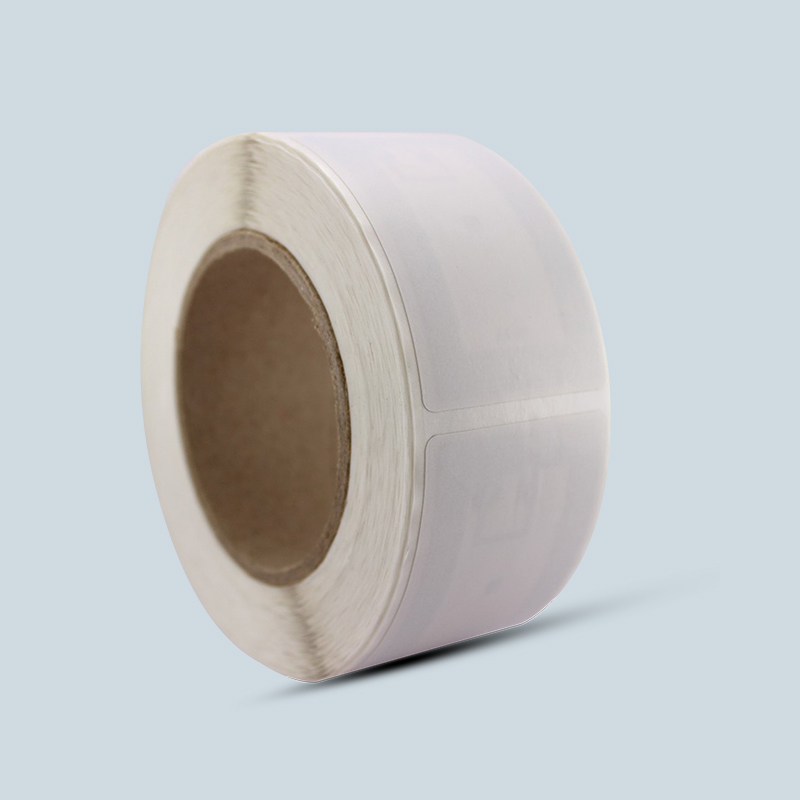
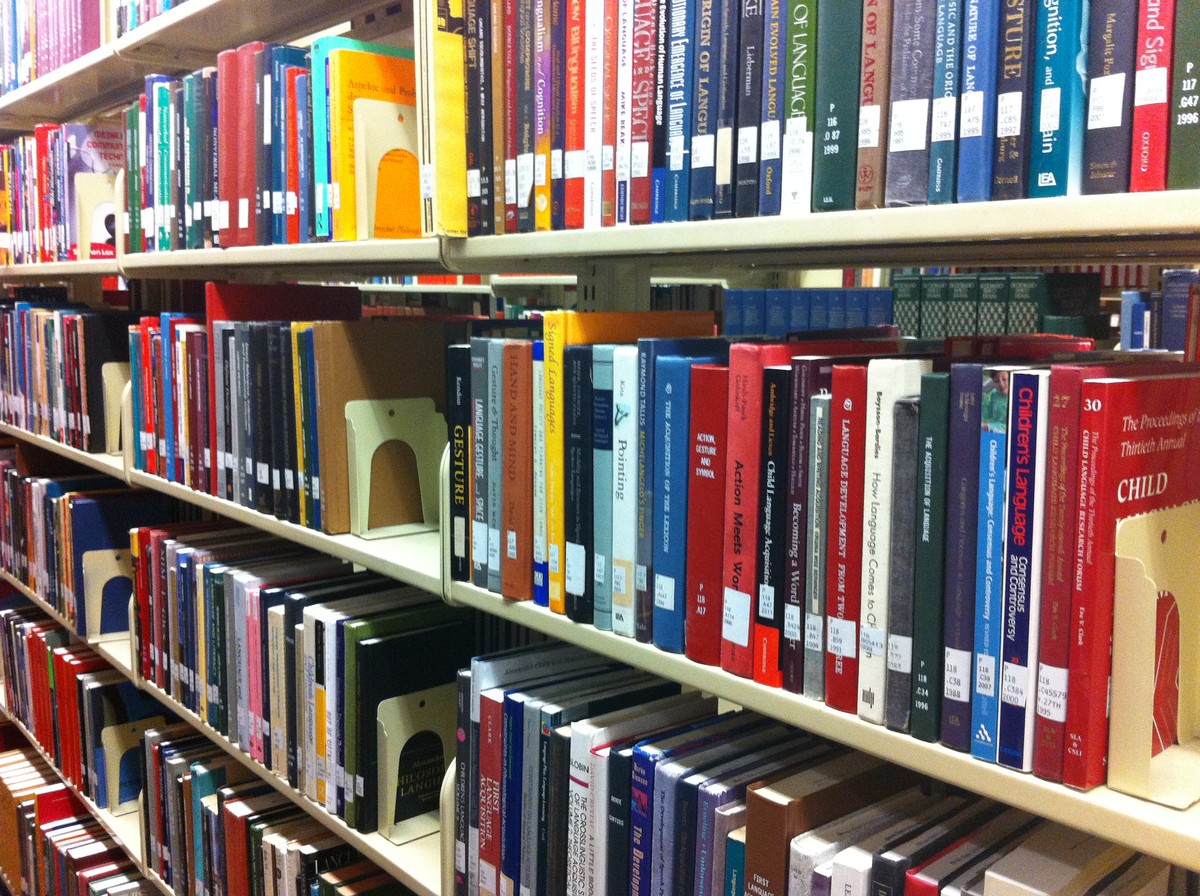
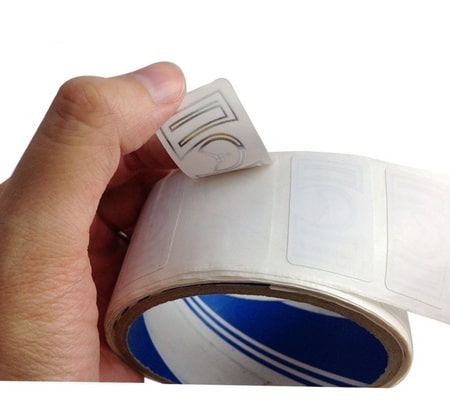
At a glance
Use these short answers to decide whether this page matches the project before moving into the detail.
ISO 28560 data model
ISO 28560-1:2014 — general principles + 26 data elements (Primary Item Identifier, Owner Institution ISIL, Set Information, Type of Usage, Shelf Location, etc.). ISO 285...
Chip silicon — HF 13.56 MHz
NXP ICODE SLIX2 (SL2S2602) — 2,528 bit memory + 64-bit UID; default for new library deployments since 2018. NXP ICODE SLI / SLIX — installed base pre-2014; backwards com...
Next step
Ready to move forward? Start your inquiry to get specific answers for this project.
Request library RFID tag pricing- Why HF over UHF — privacy + physics
-
- HF read range 5-50 cm — short by design, prevents adjacent-shelf cross-reads.
- Stacked-book + metal-shelving environment attenuates UHF >20 dB.
- ALA RFID Privacy Guidelines (2006/2017) discourage long-range identifier reads on patron items.
- NISO RP-6-2012 — RFID in U.S. Libraries Recommended Practice + privacy safeguards.
- ISO/IEC 15693 selected globally for libraries since 2003-2006 deployments.
- Self-service kiosk vendors
-
- Bibliotheca SelfCheck 1000 + liber8 + SmartServe 1000 — dominant North America public.
- FE Technologies SmartReturn + smartCheckout — Australian + NZ academic + public.
- P.V. Supa Pico Loaner / SaaS — Nordic libraries.
- Tech Logic CircIT / TLAS — North American public + academic.
- RFID Library Solutions ScanPoint / EnviroSelf — UK + Ireland.
- EnvisionWare + Mk Solutions / ITG (Checkpoint) + 2CQR — vendor diversity.
- Automated Materials Handling (AMH)
-
- Lyngsoe Systems Library Mate-X — 4-32 bin sorter for large public + academic.
- Bibliotheca smartFlow — bookdrop + sort + EAS-arm in one footprint.
- FE Technologies SmartReturn — modular AMH for medium libraries.
- P.V. Supa Pico Sorter — Nordic-led mid-sized AMH.
- Tech Logic CircIT Sort — North American mid-tier.
- Throughput — 500-2,000 returns / hour during peak.
- ILS / LMS platforms
-
- SirsiDynix Symphony / BLUEcloud / Horizon — most public libraries North America.
- Innovative Sierra / Polaris — academic + large public.
- Ex Libris Alma + Primo — academic, cloud-native, Clarivate-owned.
- OCLC WorldShare Management Services — cloud-native.
- EBSCO FOLIO — open-source.
- Koha — open-source, largest globally by site count.
- VTLS Visualizer + Civica Spydus + Mandarin Library Automation — secondary.
- SIP2 + NCIP transaction protocols
-
- SIP2 (Standard Interchange Protocol, 3M legacy) — de-facto self-service protocol.
- NCIP / Z39.83 (NISO Circulation Interchange Protocol) — modern standards-track.
- SIP2 Checkout (63/64) + Checkin (09/10) + Hold + Renew + Patron Status.
- NCIP CheckOutItem + CheckInItem + RequestItem + LookupItem.
- Alma + Polaris + Koha + WorldShare + FOLIO support NCIP natively.
- All ILS support SIP2 via TCP/IP gateway.
- Security gates
-
- Bibliotheca Hybrid Security Gate — RFID + EM combined.
- Checkpoint ITG (formerly Tagsys) — academic + public.
- FE Technologies Q-Series — modular RFID exit gates.
- 3M Detection Systems V-Series — legacy installed base + RFID retrofit.
- Gate alarm rate target — <0.1% false alarm at 80% true-detect.
- EAS bit reliable disarm at kiosk + arm at AMH bookdrop.
- ISIL Owner Institution
-
- ISO 15511:2019 — globally registered library prefix.
- Examples — US-DLC (US Library of Congress), GB-Uk (British Library), DK-CV (Copenhagen Business School).
- ISO 28560 Data Element 3 — Owner Institution.
- Cross-library interloan resolution by ISIL on RFID label.
- OCLC WorldShare ILL + EBSCO FOLIO Resource Sharing key off ISIL.
- Form factor + adhesive
-
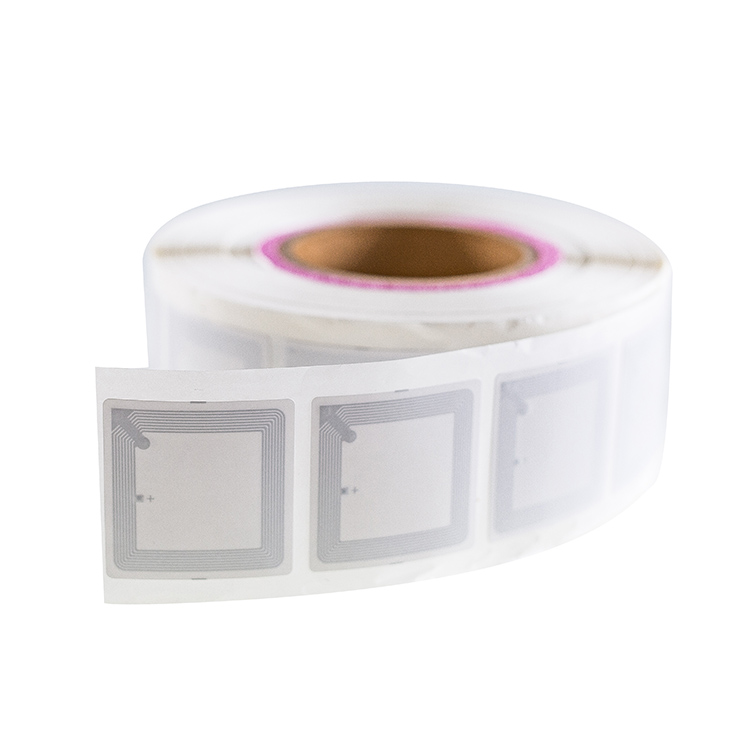
- Square 50×50 mm — hardback + trade paperback inside-back-cover.
- Rectangular 45×76 mm — slim books + journals.
- Spine-strip 12×80 mm — ribbon-bonded retro-fit.
- AV / CD / DVD / Blu-ray — hub-center circular.
- Patron card — ICODE SLIX or MIFARE 1K plastic.
- PET face stock + acid-free permanent acrylic + ANSI/NISO Z39.48 compliant.
- Operational ROI
-
- Self-service circulation — 70-90% staff load reduction.
- Collection inventory — 2-4 weeks → 1-2 days for 100,000 volumes.
- AMH return sorting — 500-2,000 items / hour vs 50-100 manual.
- Misshelved item detection — 5-8% inventory recovered.
- Security gate false alarm — 5-15% (legacy EM) → <0.1% (RFID gate).
- Tagging project cost — USD 0.20-0.35 / item incl. staff labour.
- What library RFID is NOT
-
- Not a UHF inventory tag — wrong frequency for stacked-book + metal-shelving + privacy.
- Not a substitute for the printed barcode — coexist for visual fallback + disaster recovery.
- Not a magnetic Tattle-Tape replacement — the EAS bit on the same chip replaces it.
- Not standalone — full ROI requires kiosk + AMH + ILS + middleware integration.
Why library RFID — ISO 28560 + ICODE SLIX2 + ALA privacy + 70-90% staff savings
- ISO 28560 + ISO/IEC 15693 + ICODE SLIX2 + AFI 0x07 = the global library RFID stack.
- Bibliotheca + FE Tech + P.V. Supa + Tech Logic + RFID Library Solutions = the 5 dominant kiosk vendors.
- SirsiDynix + Innovative + Alma + WorldShare + FOLIO + Koha = the 6 dominant ILS platforms.
EM Tattle-Tape + manual circulation vs ISO 28560 + RFID + SIP2 + NCIP
EM Tattle-Tape + manual circulation desk
- EM strip arms / disarms via magnetic desensitiser; bit-state hard to verify.
- 5-15% false alarms at gates; staff stop responding within months.
- Separate barcode + EM strip; two label workflows.
- Barcode kiosk processes 1 item at a time line-of-sight.
- Shelf reading + inventory by pulling each book; 2-4 weeks per 100,000.
ISO 28560 + RFID + SIP2 / NCIP + AMH
- EAS bit armed/disarmed cryptographically by SIP2 / NCIP transaction; bit-state queryable.
- <0.1% false alarms at properly tuned RFID gates; staff trust restored.
- Single ISO 28560 label = Primary Item Identifier + ISIL + Set Info + EAS.
- ISO 15693 anti-collision: 5-10 books on the pad in <120 ms each.
- Handheld wand reads entire shelf in seconds + flags misshelved.
- Migration deployments use Bibliotheca Hybrid Security Gates (RFID + EM) during 12-24 month conversion.
- Old EM strips can stay in books during conversion; only new accessions need RFID label.
- ROI break-even — 3-5 years for medium public libraries; 5-7 years for large academic.
ISO 28560 + ICODE SLIX2 + AFI 0x07 — the architecture every kiosk reads
- AFI 0x07 — reserved by ISO/IEC 15693 for the library application family; every library RFID reader filters on this AFI.
- DSFID byte indicates ISO 28560 profile (-2 vs -3) for middleware auto-parser.
- Pre-encoded labels ship with customer's ISIL + barcode allocation range + EAS-armed; sample-tested on deployed kiosk.
Where library RFID earns its margin — the application inventory
- Patron self-checkout — 5-10 books on the kiosk pad; SIP2 63/64; receipt prints in <15 s.
- Patron self-return at AMH — Lyngsoe / Bibliotheca / FE Tech / P.V. Supa / Tech Logic; sort to bin (own-branch / hold-shelf / reserves / damage / delivery).
- Shelf inventory — handheld wand sweeps shelf in seconds; misshelved + missing audibly flagged.
- Security gate — Bibliotheca + Checkpoint + FE Tech + 3M-retrofit detect armed EAS at exit.
- Hold-shelf retrieval — patron card + RFID wand finds held book even out-of-call-number.
- Interlibrary Loan (ILL) — receiving library reads ISIL + barcode; resolves ownership via OCLC.
- Disaster recovery — printed barcode visible fallback; no operational regression.
- Patron card + AV media + multimedia kit — single ISO 28560 architecture across all formats.
From 1996 Singapore NLB to 2024 ISO 28560 + AMH — milestones that shaped library RFID
- 1969
3M introduces Tattle-Tape EM strip — first library security technology; remains the installed base for 35 years.
- 1996
First library RFID deployment at Singapore National Library Board; ISO/IEC 15693 13.56 MHz proves the form factor for stacked-book reading.
- 2003
Berkeley Public Library RFID rollout becomes US reference; ALA forms Privacy in RFID working group on patron-data concerns.
- 2007
Danish Standards (DS) publishes DS/INF 163 — fixed-length encoding profile that becomes ISO 28560-3.
- 2011
ISO 28560 published — Parts 1, 2, 3 standardise data model + encoding so Bibliotheca, 3M, Checkpoint, Nedap + FE Technologies read each other's tags.
- 2014
ISO 28560 revised; ISO/IEC 15962 OID syntax (Part 2) becomes default; NXP releases ICODE SLIX2.
- 2017
ALA updates RFID Privacy Guidelines; AMH bookdrop sorting standard at North American mid-large public libraries.
- 2024
Cloud-native ILS (Alma + WorldShare + FOLIO) + NCIP / Z39.83 increasingly displace SIP2 + on-prem Symphony / Polaris / Horizon.
- 2026 — Today
How experienced teams run public-library-multi-branch, university-research-library, k12-school-library, corporate-information-centre, hospital-medical-library and law-firm-knowledge-centre programmes.
Useful next pages
Use these linked product, guide and comparison pages to keep the next click specific and practical.
Library RFID products
Tags + labels + cards for library material management.
Adjacent industries
Cross-vertical reading for library procurement.
Solutions
Library-specific solution packages.
FAQ
How much does it cost to tag an entire library collection with RFID?
RFID library book tags (NXP ICODE SLIX2 + ISO 28560 encoding) cost USD 0.10-0.18 per tag at volume (1,000+ MOQ). For a 100,000-item collection, the tag cost is USD 10,000-18,000. Including staff labour for applying tags + encoding (Bibliotheca recommend ~30 sec/item by trained tagger), total tagging project typically costs USD 0.20-0.35 per item, or USD 20,000-35,000 for a 100,000-item library. Pre-encoded tags (with customer's ISIL + barcode allocation range + EAS-armed) reduce labour cost by 60-70% — staff just apply the label without encoding equipment. ROI break-even is 3-5 years for medium public libraries (kiosk + AMH return + security gate), 5-7 years for large academic libraries with deeper backlog. For migration deployments, Bibliotheca Hybrid Gates (RFID + EM) allow tagging only new accessions during a 12-24 month conversion window.
Are library RFID tags compatible with Bibliotheca and other system vendors?
Yes — by design. The default chip (NXP ICODE SLIX2, ISO/IEC 15693 + NFC Forum Type 5) is the chip read by every modern library RFID middleware: Bibliotheca liber8 / WebService, FE Technologies, P.V. Supa, Tech Logic, Checkpoint ITG, RFID Library Solutions ScanPoint, 3M Detection retrofit kits, EnvisionWare, Mk Solutions / ITG, 2CQR. We also supply ICODE SLI / SLIX for backwards compatibility with pre-2014 installed base, plus EM4233 / EM4423 alternates for libraries that source dual-vendor. The ILS layer (SirsiDynix Symphony / BLUEcloud / Horizon, Innovative Sierra / Polaris, Ex Libris Alma + Primo, OCLC WorldShare Management Services, EBSCO FOLIO, Koha) talks to the kiosk + AMH over SIP2 or NCIP / Z39.83 — independent of the chip. Send us your kiosk vendor + ILS + ISIL + barcode allocation range and we sample-test the label on your stack before mass production. The ISO 28560 + AFI 0x07 + DSFID standardised encoding is the interoperability foundation.
Can RFID tags damage books?
No. Library RFID tags are ≤0.30 mm thick on PET face stock with library-grade acid-free permanent acrylic adhesive (peel ≥18 N/25 mm) that complies with ANSI/NISO Z39.48 archival paper standards for non-damage to paper, book boards and binding materials. The label is typically placed inside the back cover or on the title-page verso (avoid placing over text and avoid the spine for hardbound volumes that flex). Field-tested on archival collections where the label has remained in place for 10+ years without adhesive migration, page yellowing or board damage. Used in national libraries (US Library of Congress, British Library, BNF, Bibliothèque nationale de France) and rare-book collections worldwide. We do not recommend the label for rare-book + special-collections + rare-paperback where any reversible accession marker is required — those collections typically use removable bookplate inlays or shelf-mounted RFID.
What is ISO 28560 and which encoding profile should I use?
ISO 28560 is the international library RFID data model — 3 parts standardising the 26 data elements (Primary Item Identifier, Owner Institution ISIL per ISO 15511, Content Parameter Set, Set Information, Type of Usage, Shelf Location, Title, Author, ISBN, Subsidiary, Alternative Unique Item Identifier, Local Data A/B/C, etc.) that every library RFID stack reads. Part 1 covers general principles + data elements; Part 2 specifies variable-length encoded using ISO/IEC 15962 OID-based data syntax (default for North America, UK, Scandinavia); Part 3 specifies fixed-length 'Danish' encoding (still in use at some Northern European libraries). For new deployments we recommend ISO 28560-2 — it is the default profile in Bibliotheca liber8, FE Technologies, Tech Logic and current Ex Libris Alma + Innovative + SirsiDynix integrations. Send us your ISIL + barcode allocation range + ILS / middleware vendor and we match the exact encoding profile + DSFID byte + AFI 0x07 (libraries application family identifier reserved by ISO/IEC 15693) before mass encoding.
How does RFID handle interlibrary loan (ILL) across multiple libraries?
Each book's ISO 28560 RFID tag carries the Owner Institution ISIL code (ISO 15511:2019 — globally registered library prefix, e.g., US-DLC for Library of Congress, GB-Uk for British Library, DK-CV for Copenhagen Business School Library) in Data Element 3. When a book ships out on ILL, the receiving library's kiosk or AMH reads the ISIL directly from the label and resolves ownership without back-office lookup; OCLC WorldShare Management Services Resource Sharing + EBSCO FOLIO Resource Sharing + Ex Libris Alma Primo Resource Sharing all key off the ISIL on the RFID label. SIP2 + NCIP / Z39.83 transaction protocols handle the cross-library check-in/check-out workflow. For very large multi-library ILL networks (state-wide consortia, multi-country networks like the Nordic Union Catalog), the Primary Item Identifier (DE 1) + ISIL combination provides unique global identification across millions of items. We pre-encode the ISIL per library at order time so labels are ILL-ready on first deployment.
Sources & references
Primary standards, OEM datasheets and regulatory documents cited by this article. All URLs were verified on the access date shown below.
- ISO 28560-1:2014 — RFID in Libraries — Part 1: Data Elements + General Guidelines
Defines the 26 data elements (Primary Item Identifier, Content Parameter Set, Owner Institution ISIL, Set Information, etc.) used by every ISO 28560-compliant library RFID stack.
- ISO 28560-2:2014 — Encoding of RFID Data Elements based on Rules from ISO/IEC 15962
Variable-length OID-based encoding profile — the default in North America, UK, Scandinavia and supported by every modern library RFID middleware.
- ISO/IEC 15693-3:2019 — Vicinity Cards — Anticollision and Transmission Protocol
13.56 MHz HF physics + anti-collision used by ICODE SLIX / SLIX2 + EM4233 / EM4423 — the chips that carry ISO 28560 in libraries.
- ISO 15511:2019 — ISIL International Standard Identifier for Libraries and Related Organizations
Globally registered library prefix encoded in ISO 28560 Data Element 3 — enables OCLC ILL + EBSCO FOLIO Resource Sharing without back-office lookup.
- NISO Z39.83 — NISO Circulation Interchange Protocol (NCIP)
Modern standards-track replacement for SIP2; native in Ex Libris Alma + OCLC WorldShare + EBSCO FOLIO + Koha + Polaris.
- NISO RP-6-2012 — RFID in U.S. Libraries Recommended Practice
Authoritative North American recommended practice covering data models, interoperability + patron privacy safeguards.
- American Library Association — RFID in Libraries Privacy and Confidentiality Guidelines
Recommends HF over UHF for patron-item privacy; mandates de-encoding of personal data + EAS-only design for cross-library use.
- NXP ICODE SLIX2 SL2S2602 ISO/IEC 15693 HF RFID Tag IC Datasheet (rev 3.4)
316 byte user memory, 64-bit UID, EAS, AFI 0x07 — the default chip for new library deployments since 2018.
- Bibliotheca — Library RFID Solutions (Self-Service, AMH, Inventory) + 3M Standard Interchange Protocol (SIP2)
Reference vendor for library self-service + automated materials handling + RFID inventory wand + smartFlow AMH; SIP2 (3M legacy) is the de-facto self-service protocol.
- OCLC + Ex Libris + Innovative + SirsiDynix + EBSCO FOLIO + Koha — Library Management System (LMS) Documentation
Cloud-native ILS / LMS platforms with NCIP-native circulation; ISIL-keyed interlibrary loan resolution that the RFID label's ISO 28560 DE 3 directly supports.
Proud Tek is a Shenzhen-based RFID & NFC manufacturer supplying hotel chains, transit operators, event venues and retail brands worldwide. Every order includes free samples, RF testing and dedicated project support.
Get a Quick Quote
Tell us about your project and we'll respond within one business day. Fields marked (asterisk) are required.