
Corporate Photo-ID Badges
RFID Employee Badge
Photo-ID Access Card

Quick answer
RFID employee badges fuse photo-ID, corporate branding and contactless access-control credentials in a single ISO/IEC 7810 ID-1 card. The chip inside — MIFARE DESFire EV3, HID iCLASS SE / SEOS, LEGIC advant, MIFARE Classic 1K or dual-frequency HF + LF. Is matched to the reader estate. The printed surface meets ISO/IEC 7810:2003 durability, dye-sub or retransfer personalisation and the anti-counterfeiting stack (holographic overlay, UV-reactive ink, microtext, laser engraving) that regulated enterprises require.
- Chip matched to the reader estate — HID iCLASS SE / SEOS, MIFARE DESFire EV3, MIFARE Classic 1K, LEGIC advant, EM4100 / HID Prox — no forced rip-and-replace.
- Photo-ID printed at 300 dpi dye-sub or retransfer on Evolis / Zebra / Magicard / Entrust kits; holographic overlay laminate + UV-reactive + microtext anti-counterfeiting stack available.
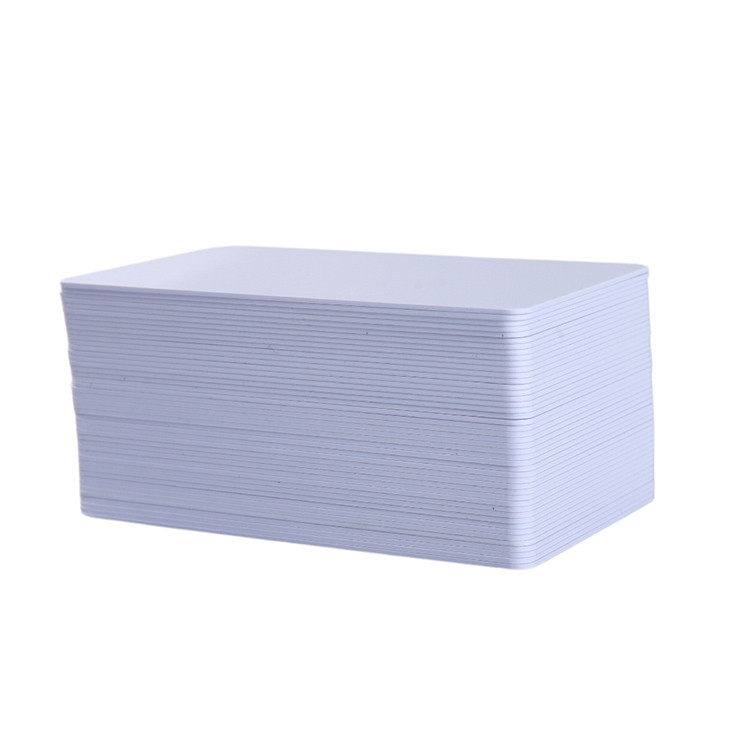
- ISO/IEC 7810 ID-1 85.6 × 54 × 0.76–0.84 mm PVC / PET-G composite body tested against ISO/IEC 10373-1 dimensional, bending, torsion, peel and UV exposure.
Used in these industries
Deployments where this product is referenced on our industry landing pages.
At a glance
Use these short answers to decide whether this page matches the project before moving into the detail.
Chip selection matrix
HID iCLASS SE / SEOS — the canonical US enterprise badge chip, AES-128 mutual authentication, secure identity object, multi-vendor reader support through OSDP. MIFARE DE...
Card body standard
ISO/IEC 7810 ID-1 (85.6 × 54 × 0.76–0.84 mm) PVC, PVC / PET-G composite, or PET-G-only core for harsh environments. ISO/IEC 10373-1 + 10373-6 test methods cover dimensio...
Next step
Ready to move forward? Start your inquiry to get specific answers for this project.
Request quote and samples- Printing and personalisation
-
- Offset + digital CMYK + 1 spot colour + matte or gloss overlaminate for the card body base-print.
- Dye-sublimation personalisation on Evolis Primacy 2 / Zebra ZXP Series 7 / Magicard 600 prints at 300 dpi with photo quality.
- Retransfer personalisation (Entrust Sigma DS4, Magicard Ultima) prints edge-to-edge on uneven / contact-chip card bodies without edge-fade.
- Photo capture-to-card workflow — CSV + photo folder → sorted batch of 2,000 cards/day on our digital line; on-demand re-prints for new hires ship 5–7 business days.
- Anti-counterfeiting stack
-
- Holographic overlay laminate — custom-generated or stock pattern, kinetic movement under light.
- UV-reactive ink panels — invisible under ambient, visible under 365 nm UV torch at the guard desk.
- Microtext — 0.25 mm font that survives dye-sub heat but collapses under consumer-printer reproduction.
- Laser engraving — employee number / card serial burned into the card body, impossible to overprint.
- Optional MLI (multi-laser image) for government-grade and regulated-industry programmes.
- FIPS 201 PIV and PIV-I posture
-
- US Federal employee + contractor credentials fall under NIST FIPS 201-3 Personal Identity Verification — FASC-N, GUID, CHUID, CBEFF biometrics.
- NIST SP 800-73-4 defines the PIV End-Point interface (card-edge APDU); SP 800-116 rev 1 defines PIV use in physical access control (PACS).
- PIV-I (Personal Identity Verification — Interoperable) covers state / local / contractor credentials that chain into the Federal PKI.
- Non-Federal enterprise programmes often take a 'PIV-C' / commercial profile that inherits the same chip + printed-surface security model.
- Reader-OEM compatibility
-
- HID iCLASS SE / SEOS reads on HID Signo, multiCLASS SE, Aero readers + any OSDP-conformant third-party reader registered with HID.
- MIFARE DESFire EV3 reads on ASSA ABLOY Aperio, SALTO XS4, Nedap AEOS, dormakaba, Kantech, Tyco Software House — the EV3 family is the cross-vendor lingua franca.
- LEGIC advant reads on Kaba evolo, Uhlmann & Zacher, SimonsVoss + Swiss banking ecosystem.
- Dual-frequency HF + LF cards cross HF-modern-plus-legacy-LF estates during a multi-year reader migration.
- Visual-security features the auditor asks about
-
- Employee photo (colour, 300 dpi, captured against neutral background per ISO/IEC 19794-5 face-image spec).
- Full legal name, job title, department, employee number, expiry date printed clearly on front.
- Issuer signature, card serial, emergency contact strip printed on back.
- Site-specific zone colour stripe / icon set (e.g. green = general access, red = lab / GMP clean room).
- OpEx math on replacement issuance
-
- High-turnover sectors (retail, logistics, hospitality) reissue 15–25% of badges per year; 5,000-employee estate = 750–1,250 replacement cards annually.
- 5–7 business-day replacement turnaround vs 3–5 business-day in-house issuance impact EHS / HR lost-productivity budgets.
- Artwork + encoding templates held on file — repeat orders ship without setup fees; only the chip + print cost remain.
- Same-day reissue lives on a desktop Evolis / Zebra dye-sub printer the customer already owns, using badges encoded here in bulk.
- Compliance documentation package
-
- Chip batch certificate (NXP / HID / LEGIC) with wafer lot + AFI / key-version traceability.
- ISO/IEC 14443 / ISO/IEC 15693 / ISO/IEC 18000-63 test report from an accredited lab.
- ISO/IEC 10373-1 card-body durability test report (dimensional, bending, torsion, peel, UV).
- RoHS / REACH / Prop-65 material safety declarations.
- Optional: FIPS 201-3 / PIV-I conformance statement for regulated programmes.
- Issuance and lifecycle workflow
-
- Initial order: artwork + CSV + photo folder → bulk digital-printed + encoded cards delivered in department-sorted cartons.
- Onboarding: new-hire CSV rows drop into the file — same-day printing on the customer's desktop printer using pre-encoded blanks.
- Termination: card returned + disabled at the PACS controller; Access password / key version rotation isolates the removed credential from the fleet.
- Decommissioning: physical destruction or punch-through the chip zone + paper-shred disposal per the enterprise records policy.
- Privacy posture
-
- HF chips (ISO/IEC 14443) require 5–10 cm presentation; they are not a meaningful ambient-read privacy risk.
- DESFire EV3 random UID option rotates the UID on each read, preventing unauthorised fleet-linkage at the reader level.
- LEGIC advant master-token model keeps per-site authentication keys off the card.
- Employee visible-PII (photo, name, department) is a bigger privacy concern than chip read — badge design should follow the enterprise data-protection policy, not the chip vendor's default template.
- Lifetime and failure modes
-
- Chip electrical failure is < 0.1% over a 5-year life when handled per ISO/IEC 10373-6 — most failures are card-body mechanical (cracked corners, antenna break).
- Daily-wear badges in a lanyard last 3–5 years on composite PVC; 5–10 years on PET-G monolithic.
- Dye-sub print fade under direct sun ~2–3 years; retransfer + holographic overlay extends fade resistance ~5 years.
- Badge-on-badge RF coupling (two cards in the same holder) is the #1 field failure — educate users or issue two-slot wallets.
- Typical pricing
-
USD 0.30–0.50 /pc @ 5k–50k (typical FOB Shenzhen range) — firm quote in one business day.
Commercial terms
- MOQ
- Varies by SKU — stock items from 100 pcs; custom production typically 200-1,000 pcs
- Lead time
- Production 2-3 weeks after artwork and encoding sign-off; reorders on a 3-4 week cycle
- Samples
- Free samples and RF test report with every order; courier at customer cost
- Payment
- 50% T/T deposit, 50% before shipment; Net 30/60 for established accounts; LC for large orders
- Shipping
- FOB Shenzhen / Yantian; DHL, FedEx or EMS air freight; sea LCL / FCL for volume
- Response
- Itemized quote within one business day, Mon-Fri (UTC+8)
What a defensible corporate employee badge actually is
An RFID employee badge is three things at once: a photo-ID credential staff show at a guard desk, a contactless access-control token readers at every door authenticate, and a branding / visual-compliance artefact the enterprise records programme tracks. Getting any one of them wrong breaks the programme.
The chip side is a matching problem — which reader OEM sits at which door, whether the site is on HID iCLASS SE / SEOS, MIFARE DESFire EV3, LEGIC advant or a mixed legacy LF + modern HF estate. Dual-frequency HF + LF cards bridge a multi-site migration.
The printed side is an industrial-print problem — ISO/IEC 7810 ID-1 body, dye-sub or retransfer personalisation, holographic overlay + UV-reactive + microtext anti-counterfeiting stack, and an issuance workflow that turns a new-hire CSV row into a usable badge on day one.
The records side is a compliance + privacy problem — chip batch certificates, ISO/IEC 14443 conformance, ISO/IEC 10373-1 durability reports, RoHS / REACH / Prop-65 declarations, and a badge template that does not over-expose employee PII.
HF-modern vs LF-legacy vs dual-frequency — pick the chip for the reader estate
Modern HF chip (DESFire EV3 / iCLASS SE / SEOS)
- DESFire EV3 / iCLASS SE / SEOS — AES-128 mutual authentication, ISO/IEC 14443-4 APDU, EAL5+ / FIPS 140-3 posture on the chip package.
- Cross-vendor reader support via OSDP v2.2 — HID Signo, ASSA ABLOY Aperio, SALTO XS4, Nedap AEOS, dormakaba and Tyco Software House all read EV3 natively.
- Multi-application on one card — access + cashless cafeteria + time-attendance + print-release — file-system + application-tree model.
- Random UID option on DESFire EV3 prevents unauthorised fleet-linkage at the reader level.
vs LF-legacy (EM4100 / HID Prox) and dual-frequency
- EM4100 / HID Prox 125 kHz — read-only, no crypto, cloneable in < 5 s on a T5577 + EUR 20 duplicator. Still the cheapest LF credential.
- Legacy LF readers persist at apartment-access, factory time-attendance and older warehouse estates — a single vendor reader refresh is often years out.
- Dual-frequency HF + LF cards put DESFire EV3 or iCLASS SE alongside an EM4100 / HID Prox LF chip in the same ISO/IEC 7810 body — bridges a multi-site reader migration.
- Cost delta: LF-only ~EUR 0.25–0.50 / card vs HF-modern ~EUR 0.80–1.80 / card vs dual-frequency ~EUR 1.60–2.40 / card.
Same-day reissue economics for high-turnover estates
Proud Tek employee badge — specifications and service model
- Chip stock: HID iCLASS SE / SEOS, MIFARE DESFire EV3 (AES-128, EAL5+), MIFARE Classic 1K, LEGIC advant, EM4100 + HID Prox 125 kHz; dual-frequency HF + LF on request.
- Card body: ISO/IEC 7810 ID-1 PVC / PVC+PET-G composite 0.76–0.84 mm; PET-G monolithic for harsh-environment 5–10 year life.
- Photo-ID personalisation: dye-sub or retransfer + holographic overlay + UV-reactive + microtext + laser engraving; 2,000 unique cards/day digital-print throughput.
- Compliance package: chip batch certificate, ISO/IEC 14443 / 18000-63 test report, ISO/IEC 10373-1 durability report, RoHS / REACH / Prop-65 declarations.
- Workflow: CSV + photo folder → department-sorted cartons for initial bulk; pre-encoded blanks + stored artwork template for ongoing same-day re-issue.
- MOQs: 200 custom-printed, 100 blank pre-encoded. Lead time 10–15 business days custom / 5–7 business days blank pre-encoded; rush 7 business days to 2,000 cards.
Anti-counterfeiting stack — what regulated programmes actually specify
- Holographic overlay laminate — custom-generated kinetic pattern or stock OVI / OVD film; defeats consumer-printer reproduction.
- UV-reactive ink panels — invisible ambient, visible at 365 nm UV torch inspection at the guard desk.
- Microtext — 0.25 mm font in guilloché-style background pattern; survives dye-sub heat, collapses under reprint.
- Laser engraving of employee number + card serial into the card body — cannot be overprinted.
- Multi-laser image (MLI) / tactile embossing / transparent window — government-grade / regulated-industry options.
FIPS 201 PIV / PIV-I and commercial-profile posture
- NIST FIPS 201-3 Personal Identity Verification defines the US Federal employee + contractor credential profile — chip, printed surface, biometric and PKI requirements.
- NIST SP 800-73-4 defines the PIV End-Point APDU interface; SP 800-116 rev 1 defines PIV use in physical access-control (PACS).
- PIV-I extends the trust chain to state / local / contractor programmes through the Federal PKI cross-cert bridge.
- Commercial / 'PIV-C' profiles inherit the chip + printed-surface security model without the full Federal PKI chain — the default for large private enterprises adopting PIV practices.
Roadmap — corporate employee badge milestones from magstripe to DESFire EV3
- 1983 — ISO/IEC 7810 ID-1
ISO/IEC 7810 formalises the 85.6 × 54 × 0.76 mm card body that every employee badge has followed since.
- 1990s — HID Prox / EM4100 era
125 kHz HID Prox and EM4100 become the default enterprise access credential; badges are read-only LF tokens with a printed photo.
- 2001 — MIFARE DESFire launch
NXP launches the first DESFire chip — 3DES mutual authentication on an ISO/IEC 14443-4 card becomes feasible at enterprise scale.
- 2004 — FIPS 201 PIV published
NIST FIPS 201 codifies the US Federal employee + contractor credential profile — chip, PKI, photo and biometric — setting the bar for commercial enterprises.
- 2007 — Crypto-1 broken
Nohl + Plötz + Garcia publish the Crypto-1 break (24C3 / ESORICS / CARDIS) — MIFARE Classic loses its security posture for enterprise access but remains residual for cafeteria / gym SKUs.
- 2012 — HID iCLASS SE / SEOS
HID launches iCLASS SE and SEOS — AES-128 mutual authentication + secure identity object become the US enterprise default; OSDP v2 publishes for cross-vendor reader support.
- 2020 — DESFire EV3 + AN12343
NXP ships DESFire EV3 with AN12343 features — AES-128, file-system, multi-application, EAL5+; the 2026 default for large multi-site enterprises.
- 2026 — Today
RFID employee badges combine chip-matched access, photo-ID printing and anti-counterfeiting stack in a single credential. Cross-buyer reference experience on enterprise-multi-site-access-control, time-attendance, cashless-cafeteria-payments, secure-print-release and data-centre-access employee-badge programmes shows.
Useful next pages
Use these linked product, guide and comparison pages to keep the next click specific and practical.
Related corporate card products and chip deep-dives
Credential peers and chip-family reference for shortlist comparison.
FAQ
Can one badge work across multiple access-control systems?
Yes — two options. First, for same-frequency multi-vendor estates, MIFARE DESFire EV3 is the cross-vendor lingua franca: it is natively supported by HID Signo, ASSA ABLOY Aperio, SALTO XS4, Nedap AEOS, dormakaba, Kantech and Tyco Software House. Second, for mixed HF-modern + LF-legacy estates, a dual-frequency card puts an HF chip (DESFire EV3 or iCLASS SE) alongside an EM4100 / HID Prox LF chip in the same ISO/IEC 7810 body. HID iCLASS SE / SEOS is an alternative for US enterprises already standardised on HID readers.
How do you handle employee photo printing for large orders?
You supply a CSV mapping employee IDs to badge fields (name, title, department, expiry, badge number) plus a photo folder (JPEG, min 300 dpi, neutral background per ISO/IEC 19794-5). Our digital-print line processes 2,000 unique cards / day on Evolis Primacy 2 / Zebra ZXP Series 7 / Magicard 600 / Entrust Sigma DS4 printers and delivers department-sorted cartons. On-demand re-prints for new hires and replacements ship in 5–7 business days; or we supply pre-encoded blanks so your HR / facilities team runs same-day issuance on a desktop printer against a stored artwork template.
What anti-counterfeiting features are available on an employee badge?
The default stack is holographic overlay laminate (custom kinetic pattern or stock OVI / OVD film), UV-reactive ink panels (invisible ambient, visible at 365 nm), microtext at 0.25 mm and laser engraving of employee number / card serial into the card body. Regulated-industry and government programmes add multi-laser image (MLI), tactile embossing, transparent window elements or — for FIPS 201 PIV / PIV-I scope — the full PIV printed-surface layout including FASC-N, GUID and expiry date machine-readable zones.
What is the MOQ and lead time for custom employee badges?
Custom-printed employee badges: MOQ 200, lead time 10–15 business days from artwork + photo data approval. Blank pre-encoded cards (white with chip + key programming only): MOQ 100, lead time 5–7 business days. Rush production available for a fee — 7 business-day turnaround on orders up to 2,000 cards. Chip batch certificates, ISO/IEC 14443 / 10373-1 test reports and material safety declarations ship with every order.
Sources & references
Primary standards, OEM datasheets and regulatory documents cited by this article. All URLs were verified on the access date shown below.
- ISO/IEC 7810:2019 — Identification cards, Physical characteristics
Defines the ID-1 85.6 × 54 × 0.76 mm card body every employee badge follows.
- ISO/IEC 10373-1:2020 — Identification cards — Test methods — General
Dimensional, bending, torsion, peel and UV-exposure durability test methods referenced in the compliance package.
- ISO/IEC 14443 series — Proximity cards
HF proximity card air-interface + APDU + anti-collision — the baseline DESFire EV3 / MIFARE Plus / iCLASS SE follow.
- NIST FIPS 201-3 — Personal Identity Verification (PIV)
US Federal employee + contractor credential profile — chip, printed surface, biometric and PKI requirements.
- NIST SP 800-73-4 — Interfaces for Personal Identity Verification
PIV End-Point APDU interface used for PIV and PIV-I card-edge interoperability.
- NIST SP 800-116 Rev 1 — PIV use in Physical Access Control
Defines how PIV credentials authenticate to physical access-control systems (PACS).
- HID Global — iCLASS SE / SEOS platform documentation
iCLASS SE / SEOS AES-128 mutual authentication + secure identity object — the US enterprise default credential chip family.
Proud Tek is a Shenzhen-based RFID & NFC manufacturer supplying hotel chains, transit operators, event venues and retail brands worldwide. Every order includes free samples, RF testing and dedicated project support.
Get a Quick Quote
Tell us about your project and we'll respond within one business day. Fields marked (asterisk) are required.