
Laundry Solution
RFID Laundry Tracking
Item-Level Lifecycle, 20 — 40% Linen-Loss Reduction + TRSA / EU ESPR DPP Compliance
Quick answer
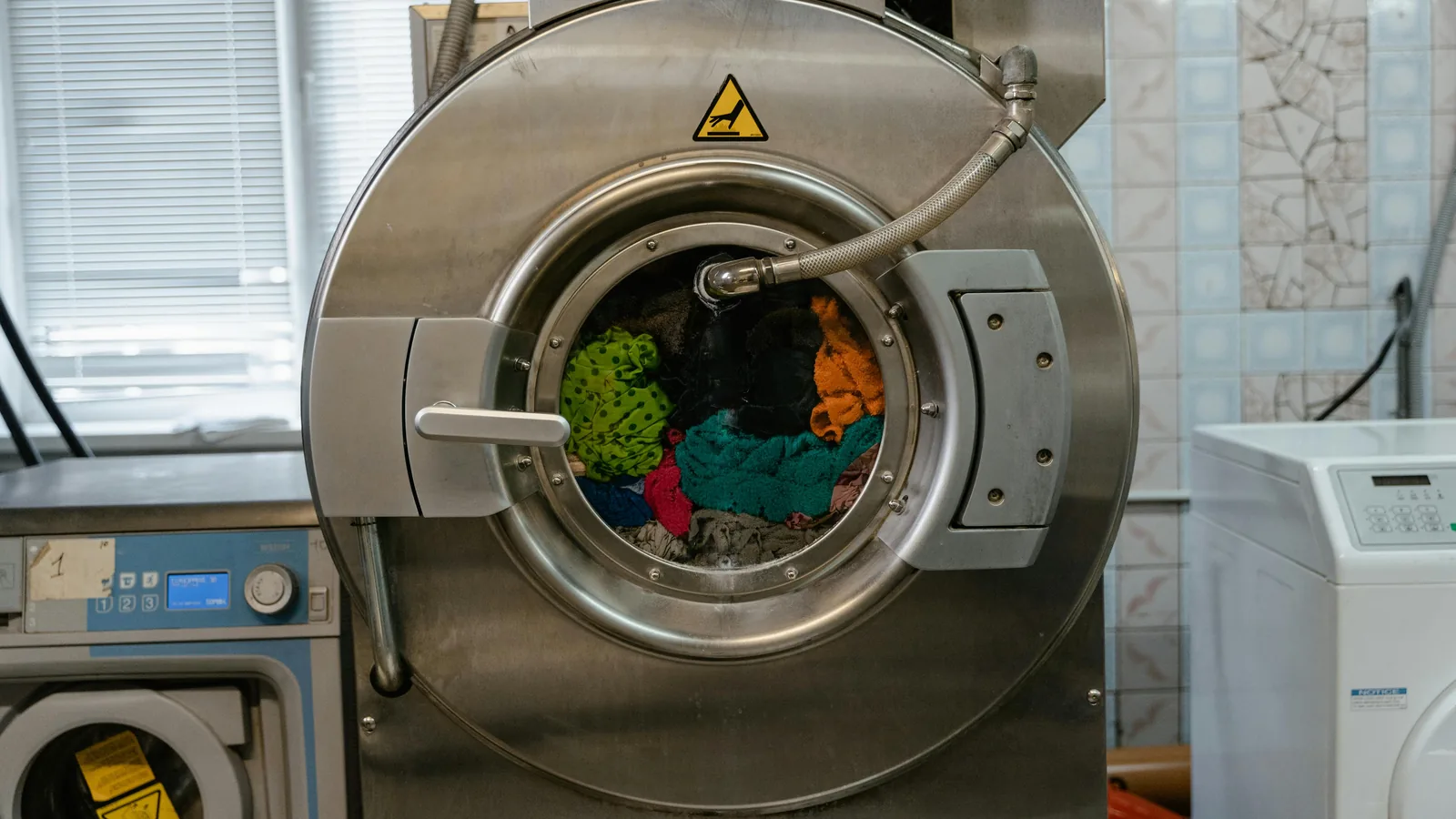
RFID laundry tracking follows every linen, uniform and towel item by item — from its first commissioning read through each wash cycle to retirement — to cut linen loss 20–40%, design out chargeback disputes with an auditable per-item count trail, and carry TRSA Hygienically Clean and EU ESPR Digital Product Passport (mandatory 2027) evidence on each garment. Hotels (Marriott / Hilton / IHG), hospitals and uniform-rental operators (Cintas, Aramark, UniFirst) typically see ROI in 6–12 months. For the plant read-station and ERP operating model that captures these reads, see RFID Laundry Management; for choosing the tag material, see the RFID laundry tags guide.
- Automated counting: RFID tunnel readers or conveyor readers scan entire bags of laundry in seconds, counting and identifying every tagged item without unpacking or manual sorting.
- Washable durability: PPS, silicone and textile RFID tags survive 200+ industrial wash/dry cycles at temperatures up to 85 °C without failure.
- Loss reduction: real-time RFID inventory shows exactly which items are in the laundry, on the floor, in storage or missing, reducing linen loss by 20-40% and preventing over-purchasing.
Featured Laundry Tracking Products
SKUs we typically deploy for laundry tracking. Tap a card for specs and samples.
At a glance
Use these short answers to decide whether this page matches the project before moving into the detail.
Buyer cohort served
Industrial laundry plant operators running tunnel-washer + flatwork-ironer + sortation lines. Hotel + resort linen programmes — branded chains (Marriott / Hilton / IHG /...
Tag material + form factor decision
PPS (Ryton / Solvay-Syensqo) — 300–500 wash cycles at 95°C; button-snap or rivet attachment; flat linen + workwear. Silicone (Wacker ELASTOSIL HTV) — 50–100 cycles at 80...
Next step
Ready to move forward? Start your inquiry to get specific answers for this project.
Request laundry tag samples- Plant read-stations, ERP & WMS — see RFID Laundry Management
-
- The plant-side operating model — tunnel-washer entry / exit portals, sortation conveyor, ironer / folder and dispatch / receiving read points, reader-hardware selection and ERP / WMS integration (Positek, BTM Lavetech, Datatex NOW, Spindle, ABS) — is covered on the RFID Laundry Management page: /solutions/rfid-laundry-management/.
- This page stays item-level: what each read means for lifecycle, loss, chargeback and compliance, not how the plant portals and management layer are built.
- Hospitality programme references
-
- Marriott Brand Standards — linen & terry RFID tracking integrated with property-level housekeeping ops.
- Hilton Linen Standards — RFID-tracked linen pool across owned + managed + franchised properties.
- IHG One Rewards housekeeping — RFID-tagged guest-facing textiles across boutique + full-service brands.
- Hyatt + Wyndham + Choice — RFID-tracked linen at flagship properties.
- Independent + lifestyle hotels — direct RFID linen contract with regional commercial laundry.
- Resort + cruise — RFID across pool / spa / kids-club / cabin linen for usage attribution.
- Healthcare programme references
-
- ImageFIRST Healthcare — TRSA Hygienically Clean healthcare-tier laundry with RFID-tracked surgical drapes + scrubs + lab coats.
- Crothall Laundry (Compass Group) — hospital + healthcare textile programme with RFID adoption.
- Mountain Laundry + UMF Corp + Healthcare Linen Services Group — regional healthcare linen with RFID tracking.
- Hospital in-house laundry — owned-and-operated programmes at large academic medical centres.
- ASC + dialysis + behavioural-health — vertical-specific TRSA Hygienically Clean tracking.
- Joint Commission + CMS audit evidence — RFID inventory + chain-of-custody captured for certification.
- Compliance + certification framework
-
- TRSA Hygienically Clean — independent third-party microbiological audit + bioburden testing per AATCC TM172 + AAMI ST79.
- Healthcare-tier certification — bioburden testing + chlorine-bleach + thermal disinfection compliance.
- Hospitality-tier certification — bioburden + facility audit; flat-linen + terry + pillowcase production.
- F&B-tier certification — food-service textile production audit.
- AATCC test methods — colourfastness (TM61), dimensional change (TM135), wash durability (TM172).
- EN 14065 — biocontamination control system for laundered textiles in healthcare (Europe).
- OSHA Bloodborne Pathogen Standard 29 CFR 1910.1030 — healthcare textile soiled-linen handling.
- ISO 14644 — cleanroom standard for ESD + cleanroom garment programmes.
- Programme economics + TCO
-
- Per-tag BOM: $0.30–$0.80 PPS + UHF inlay; $0.40–$1.00 silicone heat-seal; $0.20–$0.50 textile sewn-in.
- Reader hardware: $1,500–$5,000 fixed reader; $50K–$200K full plant portal estate.
- Software / WMS: $20K–$200K annual subscription depending on plant count + integration complexity.
- Linen-loss reduction: 20–40% post-RFID rollout typical for hospitality + healthcare; uniform-loss 8–12%.
- Counting labour reduction: 50–70% reduction in manual count time at sortation + dispatch.
- Customer-dispute reduction: 90%+ elimination of count-discrepancy disputes via RFID-validated bills.
- Payback: 6–12 months hospitality + healthcare; 12–18 months uniform / workwear.
- Useful-life extension: better lifecycle tracking enables data-driven replacement scheduling, extending item life 10–20%.
- Lifecycle + replacement scheduling
-
- Per-item wash count tracked from commissioning through retirement.
- Lifecycle threshold per textile category: hotel sheets typically 75–150 cycles; hospital surgical drapes 50–75; uniform shirts 60–100.
- Automatic replacement-trigger workflow when item hits threshold or visual-inspection fail.
- Procurement integration: RFID-driven replacement projections feed quarterly textile-purchase orders.
- Damage / loss attribution: RFID tracks last-known location and customer attribution before item disappears.
- Refurb / repair workflow — items flagged for repair logged separately from end-of-life retirements.
- Implementation programme stages
-
- Stage 1 — Plant + customer + textile-category audit.
- Stage 2 — Tag material + attachment + reader infrastructure decision.
- Stage 3 — WMS / plant-ERP integration architecture.
- Stage 4 — Pilot at one plant + one customer + one textile category.
- Stage 5 — Production wave: tag application + portal commissioning per plant.
- Stage 6 — Customer-portal rollout + per-customer accounting reconciliation.
- Stage 7 — Multi-plant scale + cross-customer roll-up.
- Stage 8 — Continuous lifecycle tracking + replacement scheduling + TRSA recertification.
- What this solution is NOT — adjacent scope
-
- NOT the plant operating model — read-station design, tunnel / ironer OEM integration and the ERP / EPCIS management layer live on /solutions/rfid-laundry-management/.
- NOT a tag procurement / SKU-decision page — see /solutions/rfid-laundry-tags/ for tag spec choice.
- NOT a generic warehouse RFID — see /solutions/rfid-warehouse-management/ for non-laundry WMS.
- NOT a hotel guest-key programme — see /solutions/hotel-key-cards/ for room credentials.
- NOT a hospital patient-tracking programme — see /solutions/rfid-patient-tracking/.
- NOT a SKU page — see /products/rfid-tags/rfid-textile-laundry-tag/ + /products/rfid-tags/rfid-pps-laundry-chip/.
- NOT an industry landing — see /industries/laundry-services/ for sector-level view.
How RFID laundry tracking works
Linen never disappears all at once. A towel fails to come back from a guest room, a uniform shirt ends up in someone's gym bag, a stack of sheets gets miscounted on the overnight shift — and across a year of these small, forgivable events, a hospitality or healthcare estate quietly loses a meaningful slice of everything it owns. An industrial laundry is really a machine for moving thousands of near-identical textiles through heat and chemistry and back out again; the hard part was never the washing, it was knowing what went in, what came out, and what simply walked off. RFID is how you finally get to count without counting.
Manual barcode + paper count baseline
- Manual sortation count at receiving + dispatch — slow, error-prone, costly labour.
- Customer disputes over count discrepancies common — billing reconciliation painful.
- Linen-loss attribution unclear — items disappear without trail; loss rates 25–40%.
- Replacement scheduling guesswork — over-ordering common to compensate for unknown loss.
- Per-stay / per-day customer accounting approximate — revenue leak risk.
- TRSA / Joint Commission audit evidence painful to compile from disparate logs.
RFID portal + WMS integration
- Tunnel-portal automated count at every workflow stage — instant, accurate, low-labour.
- Customer billing reconciled against RFID-validated counts — disputes drop 90%+.
- Per-item chain-of-custody from commissioning through retirement — loss-rate attribution clear.
- Data-driven replacement scheduling — purchase orders sized to actual lifecycle data.
- Per-customer accounting accurate to item-level — revenue capture full.
- TRSA + Joint Commission + CMS audit evidence pulled directly from RFID event log + per-item record.
- Stage 1 — Tagging
RFID tag sewn, heat-sealed or inserted into each linen item with unique ID linked to management system. Per-item commissioning event captured at application.
- Stage 2 — Collection
Soiled items in bags pass through RFID tunnel reader. Every item counted without opening. Per-customer source attribution captured at receiving portal.
- Stage 3 — Wash processing
Tags survive the full laundering cycle including chemicals, heat and mechanical agitation. Tunnel-washer entry portal logs every item batch entering wash; exit portal verifies survival.
- Stage 4 — Sortation + finishing
Sortation conveyor reads at high throughput (10–30 items/sec). Per-item routing decision: flatwork ironer / folder / hang-dry / autoclave. Item-grouping logic by customer + textile category.
- Stage 5 — Dispatch
Clean items pass through outgoing read point for count verification before delivery. Per-customer allocation reconciliation. Truck-loading manifest validated against RFID counts.
- Stage 6 — Customer-side reconciliation
Customer portal shows real-time delivered counts + per-batch certification. Customer staff confirm receipt; discrepancies flagged for plant ops investigation.
- Stage 7 — Lifecycle tracking + replacement
System tracks wash count, age and status, enabling automated replacement scheduling. Per-item retirement event triggers replacement order to procurement. Lifecycle data feeds quarterly purchase planning.
- Stage 8 — Operate + audit + continuous improvement
Cross-buyer reference notes — laundry-services, hospitality, healthcare, fitness and education programmes — quarterly TRSA Hygienically Clean recertification + bioburden testing + per-batch QA log; annual chip-family refresh review (Monza R6 → M730 → M750 → M800); customer-portal data feeds recovery + retention motion; multi-plant scale-up across operator estate.
- Tagging: a small RFID tag is sewn into, heat-sealed onto, or inserted into a pocket of each linen item, uniform or garment. The tag is encoded with a unique ID linked to the item type, size, color, owner and purchase date in the management system.
- Collection and counting: soiled items are placed in laundry bags or carts. As bags pass through an RFID tunnel reader at the laundry facility, every tagged item is instantly counted and logged without opening the bag.
- Wash processing: tagged items go through standard industrial washing and drying. The RFID tags survive the entire laundering process including chemicals, heat and mechanical agitation.
- Clean linen dispatch: after processing, clean items pass through another RFID read point for outgoing count verification, ensuring the correct quantities and item types are dispatched to each customer or department.
- Lifecycle tracking: the system tracks each item's wash count, age, location history and current status, enabling automated replacement scheduling when items reach end-of-life cycle counts.
RFID laundry tags from Proud Tek
Spare a thought for the tag itself. It gets sewn into a hem and then spends its working life being boiled, bleached, slammed against a drum, wrung out, and pressed under a hot iron — over and over, for years — and it is expected to answer instantly every single time. The whole catalogue below exists because an ordinary sticker would not survive the wash at all; everything here is built to outlive the linen it rides on.
PPS laundry chips
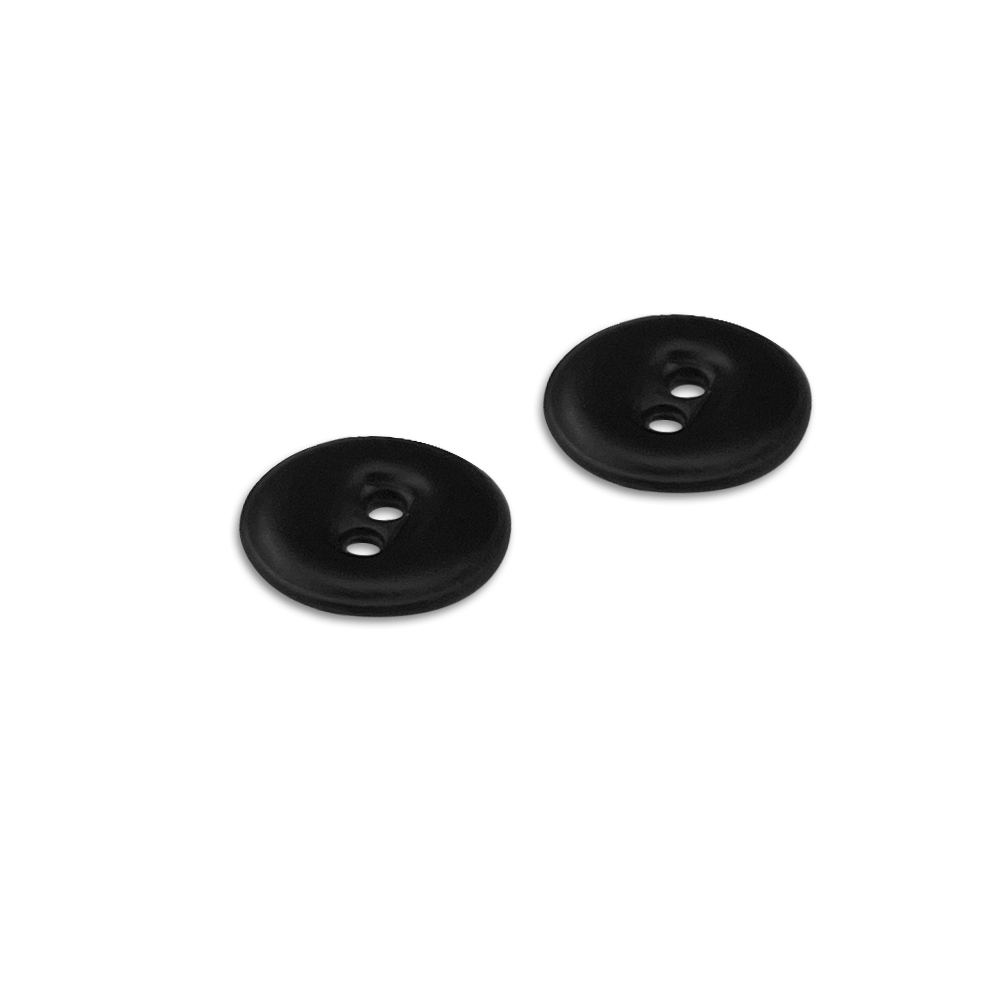
12-16 mm UHF chips rated for 300–500 wash cycles at 85 °C.
Silicone tags
Flexible UHF tags heat-sealed onto fabric with thin, flat profile.
Textile tags
Woven fabric tags sewn in like care labels. Most comfortable option.
Linen patches
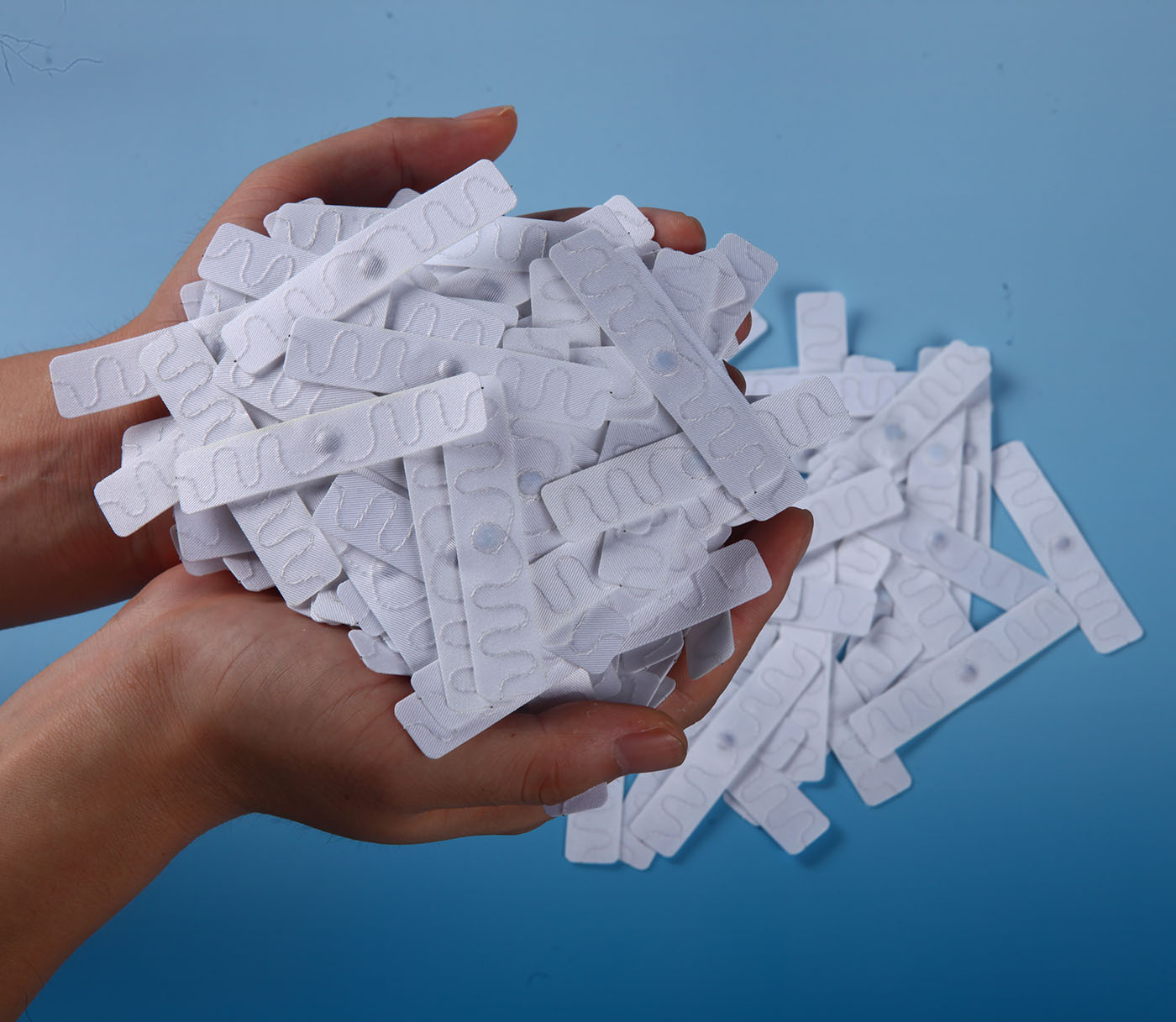
Iron-on UHF RFID patches for towels and sheets where sewing is impractical.
High-temp tags
Rated to 180 °C for autoclave sterilization and tunnel finishers.
- PPS laundry chips: tiny (12-16 mm) UHF RFID chips in heat-resistant PPS housing, inserted into garment seams or linen hems. Rated for 300-500 wash cycles at 85 °C.
- Silicone laundry tags: flexible UHF tags in silicone encapsulation for heat-sealing onto fabric. Thin, flat profile does not affect garment comfort or appearance.
- Textile laundry tags: woven fabric tags with embedded UHF inlay, designed to be sewn into garments like a standard care label. The most comfortable option for uniforms and workwear.
- Linen patch tags: iron-on UHF RFID patches for towels, sheets and tablecloths where sewing is impractical.
- High-temperature tags: specialty tags rated to 180 °C for items requiring autoclave sterilization or tunnel-finisher processing in healthcare and food service.
Item-level lifecycle tracking — commission → cycle → par-stock → discard
- Commission — at tag-sew or heat-seal step, tag is bound to garment / linen / uniform inventory record with GIAI-96 EPC encoding (Global Individual Asset Identifier). Item attributes captured: SKU + size + colour + customer assignment + purchase cost + projected useful life.
- First read — typically at outbound dispatch from laundry plant; portal reader captures EPC + photographs item if needed for QA. Establishes baseline read profile (read distance, signal strength).
- Per-cycle event tracking — every wash + finish + dispatch event captured with timestamp + reader location; item EPC accumulates cycle count over time; flagged for inspection at 50%, 75%, 90% of projected useful life.
- Par-stock at customer location — hotel housekeeping cart + hospital ward + clinic exam-room has its own par-stock target; RFID handheld walk-around verifies par-stock + flags shortfall + auto-orders replenishment.
- Soiled return — soiled linen bag picked up at customer location; bag-level RFID + item-level RFID inside the bag captures pickup event + customer + soiled-state for chargeback dispute resolution.
- Sort + segregation — at laundry plant inbound, items sorted by customer + category + wash profile; RFID reader at every sort point captures + routes to correct wash cycle.
- Wash cycle — tag survives wash + chemistry; tunnel reader at finish point captures cycle complete event.
- Finishing + folding + bundling — RFID reader at folder + bundler captures finishing event + count + customer allocation.
- Dispatch reconciliation — outbound RFID portal counts every item leaving plant; matches against customer order + delivery manifest; chargeback dispute prevented at source.
- Customer delivery + receipt confirmation — delivery driver scans RFID at customer dock to confirm count delivered.
- Use cycle — customer staff use linen; missing-from-bed-after-housekeeping alarm; soiled return triggers next cycle.
- End-of-life — at projected useful-life-end or read-degradation threshold, item flagged for retirement; recovery + recycle / donate / discard per textile-circularity programme.
- Reincarnation — recycled textile (PET fibre from recycled plastic, or upcycled fabric) re-enters supply chain with new EPC; old EPC + cycle history available for EU ESPR Digital Product Passport mandatory 2027 textile compliance.
- Full lifecycle data — typical hotel sheet: 200-400 cycles over 2-3 year life; surgical gown: 60-80 cycles over 12-18 months; uniform shirt: 300-500 cycles over 3-5 years.
Customer-site reader topology — hotel cart / hospital ward / clinic / kitchen / cleanroom
- Hotel housekeeping cart — handheld UHF reader on cart for par-stock verification + missed-linen check + bedding-set audit at room cleanout. Handheld $1,500-$3,000 + monthly subscription $30-$80/cart for housekeeping management software.
- Hospital ward / nurse station — fixed reader at clean-supply room entrance + soiled-linen-collection bin; auto-counts par-stock as items enter / exit; integrates with hospital materials management (e.g., GHX, Premier, McKesson).
- Clinic exam-room — small fixed reader in exam-room cabinet; verifies clean exam-gown + drape + sheet at room turn; integrates with EMR / patient flow.
- Sterile processing department (SPD) — RFID at autoclave loading + decontamination + sterile-pack station; tracks sterile-barrier textile (surgical gown, drape, towel) through cycle + lot binding for HAP / NHSN reporting.
- Surgical theatre — count board + back-table + sterile-field RFID with high-precision UHF or active RFID; surgical instrument + textile FOD prevention; preliminary AORN AAMI guidance.
- Kitchen + restaurant — back-of-house apron + cap + chef coat with RFID for daily wash + uniform-allocation tracking; reader at uniform locker + soiled-bin.
- ATEX / hazardous-environment workwear — flame-resistant uniform (FRC, NFPA 2112, OSHA HRC) with intrinsically-safe RFID rated for ATEX Zone 1/2; reader at PPE locker + entry to hazardous area.
- Cleanroom + pharma + biotech — bunny-suit + cleanroom gown with RFID for cycle count + sterilisation lot binding + USP <797> / <800> compliance documentation.
- Long-term care + assisted living — resident clothing programme with RFID for laundry-loss reduction (chronic complaint in care homes); item-to-resident binding via custom EPC encoding.
- Cruise ship — laundry + uniform programme similar to hotel but in marine environment; sealed enclosure readers + corrosion-resistant tag housing required.
- Marine + offshore — work-vessel + oil-platform workwear with RFID + saltwater-resistant housing; specialty submarine-class rated.
- Reader hardware patterns — fixed reader $1.5K-$5K per zone; handheld $1.5K-$3K; cart-mounted $2K-$5K with embedded power + connectivity; smart-bin $3K-$10K with weight + RFID sensor combination.
- Connectivity — Wi-Fi to building network primary; cellular fallback for remote sites; offline cache 1K-10K events at reader for network outage tolerance.
- Customer-side benefits — par-stock accuracy + chargeback dispute prevention + linen-utilisation analytics + room-turn time reduction (no more searching for missing linen).
Sustainability + EU ESPR DPP + textile circularity
- EU ESPR (Ecodesign for Sustainable Products Regulation, EU 2024/1781) — Digital Product Passport (DPP) for textiles + footwear delegated act expected 2026, mandatory 2027. Requires unique product identifier (UPI) + supply-chain origin + material composition + repair / reuse / recycle instructions.
- GS1 Digital Link 1.3 (ISO/IEC 18975:2023) — web-resolvable URL form for DPP; carried in RFID + QR + DataMatrix. Single-label strategy for ESPR compliance.
- Per-garment DPP — every uniform / linen / textile has a unique cryptographic identifier (NTAG 424 DNA SUN AES-CMAC) carrying ESPR-required data; consumer + regulator can scan at any point in lifecycle.
- Lifecycle data — cycle count + wash chemistry + repair events + material recovery + carbon footprint per item; surfaces in DPP scan.
- Textile recycling — at end-of-life, textile fibre recovered + recycled or upcycled; GRS (Global Recycled Standard) + OK biobased certification + ASTM D6868 compliance.
- Repair-and-reuse vs replace — RFID-driven repair-and-reuse programme extends useful life 20-40% vs replace-on-damage; pioneered by Cintas + Aramark uniform-rental + specialty repair vendors (Stoll, Atelier Tuffery).
- Carbon accounting — per-cycle water + energy + chemistry footprint allocated to RFID-tracked item; aggregated for textile carbon report under EU CSRD (Corporate Sustainability Reporting Directive) + GHG Protocol Scope 3.
- Aura Blockchain Consortium + Arianee + Circulor — luxury + specialty brand DPP platforms supporting RFID + NFC + DPP convergence; cross-vertical lessons applicable to uniform + workwear textile.
- EUDR (Regulation 2023/1115) — deforestation regulation; cotton + wool + leather + rubber supply-chain origin verification; RFID + DPP supports compliance.
- EU Battery Regulation (EU 2023/1542) — adjacent regulation for wearable electronics + smart textile with battery components; informs textile-electronic supply-chain DPP architecture.
- Circular textile + closed-loop reuse — uniform-rental + linen-rental business model is inherently circular; RFID-tracked items have measurable cycle count + carbon footprint vs single-use disposable alternative.
- Textile waste benchmarks — EU textile waste ~12kg per capita per year; US ~36kg per capita per year; uniform-rental + linen-rental reduces single-use disposable consumption + drives textile-pool optimisation. RFID is the measurement enabler.
- Sustainability KPI — operators publish RFID-derived metrics: cycle-utilisation rate, repair-vs-replace ratio, end-of-life recycle %, carbon footprint per cycle. Published in annual ESG report under CSRD + SEC climate disclosure rules.
- Major operator commitments — Cintas + Aramark + UniFirst + Elis all publish public sustainability reports; RFID-derived lifecycle data underpins reported metrics.
Chargeback dispute prevention + AI-driven loss detection
- Chargeback dispute reality — pre-RFID, customer-vs-laundry billing disputes were endemic; 'we sent 100 sheets, you billed for 110' arguments resolved by manual count + paper trail; 5-15% of billing volume disputed in typical hotel-laundry relationship.
- RFID-validated count — at every transfer point (customer pickup, plant inbound, plant outbound, customer delivery), RFID reader counts every item; immutable timestamped audit trail; dispute disappears.
- Per-customer item tagging — every item EPC bound to customer assignment; transfer between customers (intentional or accidental) flagged at next dispatch portal.
- Sortation portal — at plant inbound, RFID reader identifies each item's customer assignment; auto-routes to correct cycle; misrouted items flagged immediately.
- Missing item alarm — daily reconciliation of expected-vs-actual count per customer; missing item alarm at customer location (housekeeping cart, ward storeroom) drives immediate search.
- Theft detection — repeated missing-item pattern from specific customer-staff cohort flagged; investigation + corrective action.
- Anomaly detection — ML models on RFID event streams detect anomalies: item missing from expected dispatch + customer-claim-mismatch + cycle-count outlier; flags for human review.
- Dispute resolution speed — modern operators resolve disputes in hours (not weeks) using RFID audit trail; customer satisfaction lift + reduced billing-AR aging.
- Customer-facing portal — laundry operator provides customer-side dashboard showing real-time + historical inventory + cycle count + delivery confirmation; transparency reduces dispute volume.
- AI / ML applications — predictive replacement (cycle count + wear pattern → flag for retirement before failure); demand forecasting (seasonal + event-driven volume); route optimisation (driver + delivery + customer cluster); quality monitoring (RFID + computer-vision combined inspection).
- Insurance + claims — RFID-validated loss data supports inventory insurance claims (theft, fire, flood, vandalism); easier-to-prove loss vs paper-trail-only.
- Compliance audit — TRSA Hygienically Clean Healthcare + EN 14065 audit evidence pulled directly from RFID record; audit-prep time reduced 60-80%.
- Real-world example — major US healthcare laundry reported pre-RFID 15% annual loss-rate on surgical-gown pool; post-RFID 4% loss-rate, $1M+ annual savings on $7M gown pool; chargeback disputes reduced 95%.
- Insurance premium — some commercial property + casualty insurers offer reduced premium for RFID-validated linen + uniform programmes due to lower loss-rate + faster claims processing.
Implementation programme — pilot to multi-site scale
One last piece of hard-won advice, since it sits at the end for a reason: the cheapest mistake in this whole programme is the one you catch during a small pilot, and the most expensive is the form factor that seemed fine right up until it failed halfway through the rollout. Tag a sample, run it through your actual wash, your actual chemistry, your actual finisher, and watch it survive before you commit a warehouse to it. Everything after that is mostly the same good day, repeated at scale.
- Pre-pilot — define scope (which textile category, which customer segment, which plant), measure baseline (current loss rate, cycle count, labour), set ROI target, select tag-encoding partner.
- Pilot stage (8-16 weeks) — sample 100-1000 tags of 2-3 form factors (PPS + silicone + woven) on actual textile, test on actual tunnel + chemistry + finisher, measure read accuracy at every reader location, validate end-to-end EPC capture + ERP integration.
- Pilot exit criteria — 99%+ read accuracy at every reader; >95% chargeback dispute resolution at pilot customer; ERP integration end-to-end validated; operator + customer-side staff trained.
- Production ramp (3-12 months) — tag the existing inventory pool (50K-2M items typical); install fixed readers at every dispatch / inbound / sort / finishing portal (10-50 portals typical per plant); deploy handhelds to housekeeping + delivery + collection routes.
- Multi-site scale (12-36 months) — replicate pilot at additional plants + customer sites; centralised reader fleet management + cloud ERP; cross-site analytics dashboards; multi-vendor SKU consolidation.
- Implementation services — laundry-specialist integrators (Positek RFID, BTM Lavetech, Spindle, Datatex NOW, Aktion Associates) lead end-to-end; tier-1 SI (Accenture, Deloitte, Cognizant) for very large multi-national rollouts; in-house team for ongoing operations.
- Tag-encoding station — print-and-apply line at supplier or at laundry plant with inline RFID encoding + 100% verify; per-tag encoding cost $0.05-$0.20.
- Sample-then-procure — always sample 100-piece roll of each candidate form factor on actual customer textile before bulk procurement; 4-8 week first-article testing typical.
- Vendor selection — primary tag supplier (1-2 chosen for SKU consolidation); reader OEM (Impinj or Zebra dominant); ERP platform (Positek, BTM Lavetech, Datatex NOW, Spindle); integrator + SI for implementation.
- Procurement leverage — multi-year volume commitment (3-5 year contract) 10-20% discount; tag SKU consolidation (3-5 form factors covering 90% of textile types) 15-25% per-unit discount; bundled tag + reader + software + service 10-15% vs separate procurement.
- Common pitfalls — wrong form factor for textile + wash chemistry (tested too late); reader fleet not tuned for wet-laundry RF environment; ERP integration scope underestimated (HL7 + IDoc + REST API + EPCIS combinations); customer-side staff training overlooked (90%+ of customer-side benefits depend on housekeeping + ward staff actually using the handhelds).
- Pilot-to-production timeline — 8-16 week pilot → 6-12 month ramp at first plant → 12-36 months multi-site rollout; typical total programme cost $500K-$5M for tier-2 operator, $5M-$50M for tier-1 operator.
- Quick-win at low spend — pilot with 1 plant + 1 customer + 10K tags + 2 readers + handheld can demonstrate ROI within 6 weeks; proof-of-concept budget $40K-$120K; subsequent scale-up on confidence.
Useful next pages
Use these linked product, guide and comparison pages to keep the next click specific and practical.
Laundry RFID tag products
Browse RFID tags designed for laundry environments.
FAQ
How many wash cycles do RFID laundry tags survive?
PPS laundry chips survive 200+ wash/dry cycles at up to 85 °C water temperature with standard industrial detergents. Silicone tags last 50-100 cycles. Textile woven tags last 200-300 cycles. For most hotel linens (washed daily, 2-3 year lifecycle), the RFID tag outlasts the linen item itself.
Can RFID tags be read through wet laundry bags?
Yes, but water absorbs UHF radio energy and reduces read range. RFID tunnel readers are engineered to handle wet laundry with higher power and optimized antenna placement. Read rates above 99% are achievable on wet laundry bags when the tunnel reader is properly configured. Some operations read at the dry (outgoing) side for higher accuracy.
What is the ROI of RFID laundry tracking?
Typical ROI is achieved in 6-12 months. Primary savings: 20-40% reduction in linen loss (the largest cost driver), 50-70% reduction in counting labor, elimination of inventory discrepancies and disputes, and better replacement scheduling that extends useful life. A 1,000-bed hotel losing $50,000/year in linens can save $10,000-$20,000 annually with RFID tracking.
What item-level lifecycle data does RFID capture, and how does it support EU ESPR DPP 2027?
Every textile item gets a unique GIAI-96 EPC + cycle count + customer assignment + first-read + per-cycle events + repair events + end-of-life retirement event. For EU ESPR Digital Product Passport (textile delegated act expected 2026, mandatory 2027 under Regulation 2024/1781), this lifecycle data populates the per-garment DPP including: unique product identifier (GS1 Digital Link 1.3 URL), supply-chain origin, material composition, repair / reuse / recycle instructions, carbon footprint per cycle (water + energy + chemistry allocated to each item), end-of-life routing (recycle / donate / discard). Combined with NTAG 424 DNA SUN AES-CMAC for tamper-proof identity verification, RFID + DPP enables ESPR-compliant traceability without standing up parallel infrastructure. Operators (Cintas, Aramark, UniFirst, Elis, ImageFIRST, Crothall) using RFID today are positioned for ESPR compliance with marginal incremental work.
What does the customer-site reader topology look like — hotel cart, hospital ward, clinic?
Multiple deployment patterns depending on use case. Hotel housekeeping cart: handheld UHF reader for par-stock verification + missed-linen check + bedding-set audit at room cleanout ($1.5K-$3K + monthly software). Hospital ward / nurse station: fixed reader at clean-supply room + soiled-collection bin auto-counts par-stock + integrates with hospital materials management (GHX, Premier, McKesson). Clinic exam-room: small fixed reader in cabinet verifies clean exam-gown + drape + sheet at room turn + integrates with EMR / patient flow. Sterile processing (SPD): RFID at autoclave + decontamination + sterile-pack station + sterile-barrier textile lot binding for HAP / NHSN reporting. Kitchen + restaurant: chef coat + apron + cap RFID for daily wash + uniform-allocation. ATEX hazardous-environment: flame-resistant uniform with intrinsically-safe RFID for ATEX Zone 1/2. Cleanroom + pharma + biotech: bunny-suit + cleanroom gown with USP <797> / <800> compliance documentation. Long-term care: resident clothing programme with item-to-resident binding.
How does RFID prevent chargeback disputes between laundry and customers?
Pre-RFID, billing disputes were endemic — 'we sent 100 sheets, you billed for 110' — with 5-15% of typical hotel-laundry billing volume disputed. RFID-validated count at every transfer point (customer pickup, plant inbound, plant outbound, customer delivery) creates an immutable timestamped audit trail; disputes resolved in hours not weeks. Per-customer item tagging via GIAI-96 EPC binds every item to customer assignment; cross-customer item-transfer (intentional or accidental) flagged at next dispatch portal. Missing-item alarm based on daily reconciliation drives immediate search at customer location. Real-world example: major US healthcare laundry reported pre-RFID 15% annual loss on surgical-gown pool ($7M pool); post-RFID 4% loss, $1M+ savings + 95% reduction in chargeback disputes. AI / ML applications add anomaly detection, predictive replacement (cycle count + wear pattern), demand forecasting + route optimisation. Some property + casualty insurers offer reduced premium for RFID-validated linen + uniform programmes.
Sources & references
Primary standards, OEM datasheets and regulatory documents cited by this article. All URLs were verified on the access date shown below.
- ISO/IEC 18000-63:2015 — UHF Gen2 air interface (860–960 MHz)
UHF air-interface underlying flatwork-ironer, tunnel-washer portal and laundry-cart reads in RFID laundry tracking.
- GS1 EPC Tag Data Standard (TDS) 2.1
GIAI and SGTIN encoding schemes used for uniform, linen and healthcare-textile serialisation in laundry tracking.
- ISO 6330:2021 — Textiles — Domestic washing and drying procedures for textile testing
Reference wash-cycle methodology used when qualifying RFID laundry-tracking tag durability.
- TRSA — Hygienically Clean certification (healthcare, hospitality, F&B)
Industrial-laundry hygiene certification relied on when selecting wash-durable RFID tracking tags — bioburden + microbiological audit per AATCC TM172 + AAMI ST79.
- Solvay / Syensqo — Ryton PPS polyphenylene sulfide (data sheet)
Polymer data supporting the 300–500 cycles at 95 °C PPS laundry-tracking tag specification.
- Wacker ELASTOSIL HTV silicone technical portal
Material-data reference for silicone-pouch laundry-tracking tag housings supporting 50–100 cycles at 80 °C.
- Impinj Monza R6-P / M730 / M750 / M800 — UHF tag IC family
Common UHF silicon inside industrial-laundry tracking tags — M800 latest generation 2024.
- NXP UCODE 8 / UCODE 9 UHF tag IC family
Alternative UHF silicon family deployed across hospitality and healthcare laundry-tracking programmes.
- AAMI ST79:2017 — Comprehensive guide to steam sterilisation in healthcare facilities
Healthcare textile sterilisation reference standard for RFID laundry-tracking validation in hospital + ASC laundry programmes.
- EN 14065:2016 — Textiles — Laundry processed textiles — Biocontamination control system (RABC)
European biocontamination-control system standard for laundered textiles — RFID tracking supports RABC audit + bioburden control evidence.
- EU Regulation 2024/1781 — ESPR Digital Product Passport (textile + footwear)
EU ESPR establishing Digital Product Passport framework; textile + footwear delegated act expected 2026, mandatory 2027 — RFID + GS1 Digital Link supports compliance.
- GS1 Digital Link 1.3 (ISO/IEC 18975:2023)
Web-resolvable URL syntax (https://brand.com/01/{GTIN}/21/{serial}) for ESPR DPP textile compliance.
- EU CSRD (Corporate Sustainability Reporting Directive)
EU corporate sustainability reporting directive driving RFID-derived per-cycle water + energy + carbon footprint disclosure in ESG report.
- GS1 EPC TDS 2.1 — GIAI-96 + GS1 Digital Link encoding
EPC Tag Data Standard for GIAI-96 individual asset identifier encoding used in textile + linen + uniform RFID tracking.
- GS1 EPCIS 2.0 (ISO/IEC 19987:2021)
Event-data sharing standard for laundry tracking visibility across trading partners + customer + operator + regulator.
- Stoll + Atelier Tuffery — textile repair-and-reuse specialty vendors
Reference textile repair + reuse vendors enabling RFID-driven repair-vs-replace lifecycle decisions in uniform + workwear programmes.
- Aura Blockchain Consortium + Arianee — luxury + textile DPP platforms
Luxury + specialty brand DPP platforms supporting RFID + NFC + DPP convergence; cross-vertical lessons applicable to uniform + workwear textile.
- GHX + Premier + McKesson — hospital materials management
Major hospital supply-chain + materials management platforms integrating with RFID laundry tracking at hospital ward + nurse-station deployments.
- Joint Commission Environment of Care EC.02.06.05
Hospital environmental + linen management standards; RFID-tagged linen supports compliance with par-stock + temperature + chemistry monitoring.
- Positek RFID — laundry RFID specialist integrator
Dominant US laundry RFID specialist integrator; tunnel reader + ERP integration + customer-site deployment for hospitality + healthcare + uniform-rental operators.
Proud Tek is a Shenzhen-based RFID & NFC manufacturer supplying hotel chains, transit operators, event venues and retail brands worldwide. Every order includes free samples, RF testing and dedicated project support.
Get a Quick Quote
Tell us about your project and we'll respond within one business day. Fields marked (asterisk) are required.