
Why a bench sample may not match the wash line
A single dry-tag read or domestic wash does not qualify a tag for a commercial line. Wash chemistry, extraction pressure, drying, ironing and the attachment can each affect the finished article.
Specify the exact process and fabric before choosing a construction. Test the proposed model with its intended reader and antenna on wet and dry loads, and inspect the attachment after the agreed number of cycles. Record the settings and pass criteria so a repeat order can be compared with the approved sample.
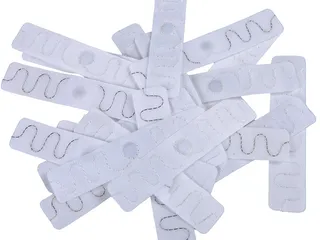
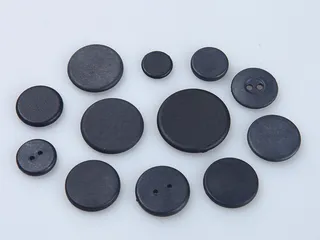
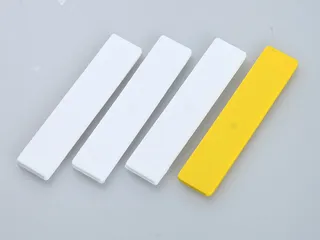
Tag materials compared
This is a construction comparison. Every tag model on the three product pages can be sampled and quoted; compare fit and attachment first, then confirm the proposed model's dimensions, chip and installation instructions, and trial it in your process. There is no universal PPS-to-silicone-to-textile ranking for cycle life, and each product page's field figures belong to that format only.
| Construction | Band, fit and attachment | What to confirm |
|---|---|---|
| PPS hard tag | HF 13.56 MHz (ICODE SLIX or SLIX2); a rigid button sewn on or held in a pocket, for linen or uniforms | Exact size and fixing holes, ISO/IEC 15693 reader match, fixing instructions and a process trial |
| Silicone tag | UHF; a flexible body in a seam or pocket, for garments | Exact size and edges, chip and regional band, attachment and a wash/finishing trial |
| Textile / woven label | UHF; a flat woven strip sewn into a hem or seam, in a pocket or, where specified, heat-sealed, for sheets, towels and uniforms | Model dimensions, antenna position, backing and a trial on your line; avoid stitching through the antenna |
Attachment methods
Tag and attachment must be evaluated together for each textile type. Ask for the proposed model's installation instructions before a pilot.
- Sewn-in pocket or stitch. Confirm the permitted stitch path and whether the item can accept a sewing step.
- Heat-seal patch. Use only for a model and backing specified for heat sealing; validate press settings, fabric adhesion and subsequent finishing.
- Button-snap or eyelet. Consider only where the garment and handling equipment permit a removable fixing.
- Other attachment. Request model-specific instructions and test the installed article; a material name does not approve a fixing method.
Specify the wash process
Write the process down as your line runs it, stage by stage, and send the same specification to every supplier you compare. It is the basis for the sample trial, the test record and repeat orders; a figure from one process does not qualify a tag for another.
- Wash chemistry. Detergent and alkali, bleach type (for example chlorine, peracetic acid or hydrogen peroxide) and any antichlor step, with concentrations if known.
- Temperatures and dwell times. Each wash, rinse and thermal-disinfection stage: the temperature and how long the load stays at it.
- Extraction. The pressure of a press, or the spin speed of a washer-extractor.
- Drying and finishing. Tumble drying, tunnel or cabinet finishing, flatwork ironing or pressing: temperature and time.
- Sterilisation. Steam autoclave or another sterilisation cycle: temperature, hold time, pressure and number of exposures.
- Fabric and attachment. Fabric blend, tag position and fixing method for each item category.
- Cycle count. The number of complete laundering cycles the tag must survive, agreed before testing.
Test method and failure criteria
Two textile test standards are useful references for a wash trial. ISO 6330 specifies domestic washing and drying procedures for textile testing: each washing procedure represents a single domestic wash, and a complete test is a washing and a drying procedure. ISO 15797 specifies industrial washing and finishing procedures for testing workwear, with eight washing procedures and two drying procedures (tumble drying, or tunnel or cabinet finishing) on intermediate-scale equipment; one laundering cycle is a wash followed by drying or finishing.
Neither standard qualifies an RFID tag. Both are textile test methods, and ISO 15797 lists properties such as dimensional stability, colour, creasing, seam puckering and pilling. It also states that it is a laboratory simulation, not an instruction for industrial launderers, and that in some cases testing in the actual laundering equipment is advisable when finally determining compatibility. Cite a standard procedure so results can be compared, then confirm them on your own line.
Agree the tag failure criteria before the first cycle, for example:
- The tag is not read at the agreed reader settings and checkpoint, wet or dry.
- The body is cracked, split or deformed, or the chip or antenna is exposed.
- The seam, pocket or heat seal has opened, lifted or torn, or the tag is lost.
- The identifier read from the tag no longer matches the item record.
What the test record should contain
Proud Tek has no model-level wash test reports. Our three product pages give field experience instead: wash cycles, temperatures and pressures seen in real laundry use, each on the page of the format it came from and not transferable to another. Record your own sample trial in the structure below as well. If another supplier quotes a tested figure, ask for its record in the same form so the results can be compared.
- Tag. Model reference and datasheet version, chip and construction.
- Samples. Number of tags, fabric, position and attachment method.
- Process. The standard procedure used, or the line’s own programme with chemicals, temperatures, dwell times, extraction, drying, finishing and any sterilisation.
- Read checks. Reader, antenna and settings, wet or dry, and after which cycles the tags were read.
- Results. Cycles completed, failures by cycle and failure mode, and any stage not tested, marked as not verified.
- Date and place. When and where the test ran, and who ran it.
UHF or HF
UHF (ISO/IEC 18000-63, 860–960 MHz) is commonly used to inventory bundles and carts through portals, tunnels or cabinets. Moisture, metal trolleys, packing density and antenna placement affect performance. Read stations can be designed for different process stages, including soiled-linen intake; validate wet and dry loads at the actual installation instead of assuming all reads must happen after drying.
HF operates at 13.56 MHz, but ISO/IEC 15693 and ISO/IEC 14443 require different reader support. ISO 15693 chips such as ICODE SLIX/SLIX2 provide anti-collision for multi-tag inventory; the number of readable items and throughput depend on the tags, reader, antenna and load. HF is not automatically immune to wet fabric or metal, and a chip's anti-collision capability is not a guarantee of a particular batch size.
Agree the required read points, load size, moisture conditions and acceptable missed-read rate with the integrator, then test the exact tag and reader combination.
Reader infrastructure in outline
Reader layout shapes the tag choice. Tunnel and conveyor readers can count moving loads; cabinet readers can check a cart or bag; handheld readers can handle spot checks and exceptions. Your integrator should define the required read points and reader hardware for the operation.
The tag's antenna has to be tuned for the reader's frequency band and the material the tag sits on. That is why a sample from one supplier and a reader from another must be tested together, on your linen, before either order is placed.
Healthcare textiles
Hospital textiles may go through thermal disinfection or steam sterilisation. Specify the actual temperature, dwell time, pressure and cycle count, and require validation for the exact tag and attachment. A dry-heat temperature rating or a material name does not establish autoclave suitability. For items entering an MRI environment, obtain the hospital's approval and the applicable tag test documentation; material composition alone is insufficient. Keep patient or staff data in the hospital's system rather than on the tag.
Pilot checklist before scaling
Agree the sample and acceptance plan before ordering a production batch.
- Run tagged samples through the real wash line, including press, tunnel finisher and ironer, not a benchtop wash.
- Test each attachment on each fabric blend it will be used with.
- Read tags with the intended reader at the intended points, on damp and on dry linen.
- Run the agreed number of process cycles, apply the failure criteria above and keep the test record.
- Check the software: does each tag map to an item, a customer and a cycle count, and does a failed read raise an exception?
- Only then fix the specification and order for production; keep the approved sample and its record to compare repeat orders with.
Request a model-specific shortlist
Send a short specification for each textile family. We can then identify candidate references from the three product pages and confirm current chip, dimensions, attachment, documentation and sample terms in the quotation. A construction type on this page carries no wash-cycle count of its own.
| Your requirement | Details to send for a useful sample request |
|---|---|
| Textile and fixing | Item type and fabric blend; sewn hem or pocket, or heat-seal location and available area |
| Wash and finishing | The wash-process specification above, including extraction, drying, ironing and any sterilisation |
| Reader and data | Country, reader/antenna model and band, wet/dry load and read point, EPC length and whether the tags need a visible number |
| Order plan | Pilot quantity, expected batch quantity and destination; state whether standard or customized samples are required |
What Proud Tek manufactures and supplies
We manufacture textile laundry tags, PPS tags and silicone tags in our Shenzhen factory, and every model on those pages can be sampled and quoted. Send the wash profile and reader details so the quotation can identify the model, available encoding and marking and sample requirements. Laundry portals, tunnels and software come from your system integrator. Our separate desktop reader range is for supported card and tag encoding tasks, not a substitute for laundry reader infrastructure.
Published 2026-09-09 · Updated 2026-10-06