
Salon Review Solution
Google Review NFC Cards for Salons & Spas
Quick answer
When salons, spas, barbers, nail bars or wellness studios want more Google reviews, the highest-converting moment is the post-service handoff at the stylist's chair or front-desk checkout — not a passive counter card alone. This page covers stylist-handed NFC review cards for hair salons, day spas, medical spas, nail salons, barbershops, brow / lash studios, massage practices and wellness centres, integrated with Vagaro / Booker (Mindbody) / Square Appointments / Boulevard / Phorest / Acuity / SalonBiz scheduling-and-POS platforms — operated within FTC 16 CFR Part 465 + Google Business Profile review policy + state cosmetology-board advertising rules.
- Salon review prompts work best at the chair, the checkout desk and the front-desk handoff, where the stylist or therapist can naturally invite the tap.
- Custom-printed NFC cards in salon-brand finish out-perform generic stickers for tap rate and perceived legitimacy.
- Per-stylist or per-location encoding allows salons to attribute reviews to the stylist who delivered the service.
Featured Review · Salons & Spas Products
SKUs we typically deploy for review · salons & spas. Tap a card for specs and samples.

At a glance
Use these short answers to decide whether this page matches the project before moving into the detail.
Salon + spa types served
Hair salons (full-service, blow-dry bars, colour specialists, men's grooming). Day spas + wellness centres + holistic spas + IV-therapy lounges.
Booking + POS platform integration matrix
Vagaro — dominant US salon + spa scheduling + POS platform; per-staff service tracking. Booker (now Mindbody Booker) — full-service spa + medical-spa platform.
Next step
Ready to move forward? Start your inquiry to get specific answers for this project.
Request salon review card sample- Service-flow placement strategy
-
- At-station card — chair-side card holder during service; passive visibility throughout 30–120 min appointment.
- Mid-service moment — stylist mentions card after positive client comment ('I love the colour!') = peak satisfaction.
- Post-service mirror reveal — moment of result reveal = highest conversion window.
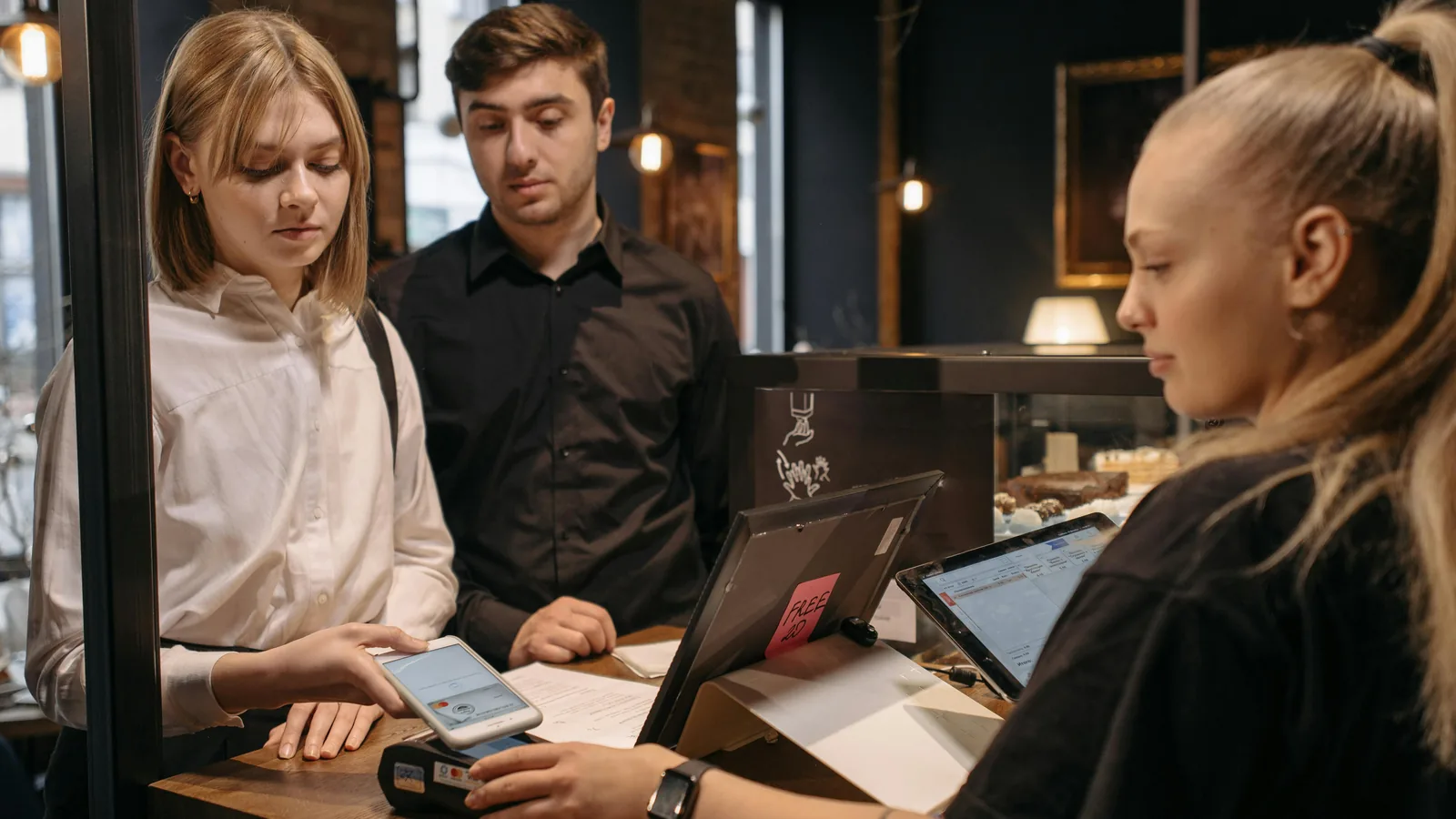
- Checkout handoff — stylist or front-desk hands card with bill / receipt; staff verbal prompt.
- Aftercare-product handoff — card included with aftercare-product purchase bag.
- Booking-rebook moment — when client re-books next appointment, card prompt aligns with renewed-commitment energy.
- SMS / email follow-up — reinforces in-salon prompt 24-48 hours later (Vagaro / Mindbody automated).
- Avoid: cold start of service (client tense); avoid waiting-area passive-only without active prompt.
- Per-stylist attribution + KPI
-
- Per-stylist UTM encoding: each stylist gets cards with unique UTM tag in NFC URL.
- GBP review URL encoded with per-stylist parameter for downstream attribution.
- Stylist KPI: prompt completion rate (% of clients offered card) + per-stylist review velocity.
- Manager scorecard: integrate per-stylist review-prompt KPI into commission / tip-pool review.
- Recognition + leaderboard: top-prompting stylists earn recognition + bonus.
- Ratings-tied compensation (legal jurisdictions only): some salons tie performance bonus to per-stylist rating.
- Per-stylist GBP profile: high-end salons run individual stylist GBPs alongside salon GBP for personal-brand growth.
- Card design + cohort variants
-
- Standard salon card — PVC ID-1 + NTAG213 + brand colours + Google logo + 'Tap to leave a review'.
- Premium salon — wood-veneer (FSC bamboo / cherry / walnut) for boutique / luxury salon brands.
- Med-spa cohort — antimicrobial PVC + minimalist clinical-aesthetic design.
- Wellness studio — eco PLA / recycled rPVC for sustainability-aligned brands.
- Per-stylist personalisation — stylist name + photo on card back for clients to remember.
- Per-location encoding — multi-location chains route per-location GBP automatically.
- Tactile finish — soft-touch coating + spot UV gloss for premium feel matching salon aesthetics.
- Receipt-insert variant — small format included with paper receipt for clients who decline at checkout.
- FTC + state cosmetology-board compliance
-
- FTC 16 CFR Part 465 (effective Oct 21, 2024) — fake-review prohibition + Endorsement Guides.
- Card copy: 'Loved your appointment? Tap to leave us a review' — never 'Leave 5 stars'.
- Google Business Profile policy — no review-gating, no incentivisation.
- State cosmetology boards — California Board of Barbering and Cosmetology + Texas TDLR + NY DOS Cosmetology each impose advertising rules.
- Med-spa: state medical-board overlay (med-spa typically supervised by physician); HIPAA may apply for medical procedures.
- Tip-incentivised reviews prohibited — cannot offer tip / discount in exchange for review.
- Reciprocity allowed: stylist provides excellent service → earns right to ask; not transactional.
- Anti-disparagement gag clauses prohibited (FTC Consumer Review Fairness Act, 15 USC §45b).
- Programme economics + ROI
-
- Per-card BOM: $1.50–$3.50 PVC + NTAG213 at 50–500 qty; $5–$15 wood-veneer premium.
- Per-stylist allocation: typically 5–10 cards per stylist (replacement reserve).
- Per-salon cost: $50–$300 for 20–100 cards across stylists + checkout.
- Multi-location chain: $5K–$50K for 50–500 location estate.
- Review velocity uplift: 2–4× post-rollout vs verbal-only baseline.
- Star-rating uplift: typically 4.3–4.5 → 4.7–4.9 within 3–4 months for consistently-deployed salons.
- New-client acquisition: each 0.1 star uplift correlates 8–12% increase in new-client booking.
- Reorder cycle: 12–18 months typical; brand-refresh trigger or stylist-turnover replacement.
- Stylist soft-skill prompt framework
-
- Earn the right by service — never prompt before delivering excellent service.
- Time at peak: post-mirror-reveal, post-aftercare-explanation, at checkout = peak satisfaction.
- Personal language: 'I'd love it if you could share your experience' (warmer than transactional).
- Hand the card directly: physical handoff converts 3–5× higher than passive counter-only.
- Respect decline: client says 'maybe later' → drop subject; never push.
- Reciprocity acknowledgement: 'It really helps me / our salon' — humanises the ask.
- Tone matches salon aesthetic — luxury salon = restrained ask, blow-dry bar = energetic.
- Track per-stylist prompt completion rate as soft KPI; coach low-prompters.
- Multi-location chain operations
-
- Per-location GBP generated + audited per chain.
- Per-location card encoding at production — reviews route to correct salon.
- Per-stylist UTM (optional) — tracks individual rep contribution within location.
- Brand-standard book in Figma / Adobe XD — locked centrally; BU customisation gated.
- Reorder cycle synced to brand-refresh + new-stylist onboarding pipeline.
- Damaged / lost-card replacement reserve held centrally; field reps redistribute.
- Annual compliance audit per FTC + state-board + Google policy.
- Cross-location best-practice sharing via stylist KPI leaderboard + monthly review meeting.
- Implementation programme stages
-
- Stage 1 — GBP audit + per-location review-link capture + booking-platform integration check.
- Stage 2 — Cohort design (standard / premium / med-spa / wellness variants).
- Stage 3 — Per-stylist UTM taxonomy + booking-platform integration.
- Stage 4 — FTC + state-board + Google policy compliance review.
- Stage 5 — Production + per-location + per-stylist encoding.
- Stage 6 — Stylist training: peak-moment timing + soft-skill prompt + decline handling.
- Stage 7 — Soft-launch one location; measure 30-day baseline + per-stylist KPI.
- Stage 8 — Full chain rollout + manager scorecard integration + per-stylist recognition.
- What this solution is NOT — adjacent scope
-
- NOT a generic Google Review NFC card guide — see /solutions/google-review-nfc-card/ for the parent.
- NOT a clinical / medical-grade prompt — see /solutions/google-review-cards-for-clinics/ for HIPAA-aware version (med-spas straddle both).
- NOT a tabletop placement programme — see /solutions/google-review-cards-for-tabletop-prompts/.
- NOT a hotel front-desk programme — see /solutions/google-review-cards-for-front-desks/.
- NOT a personal-networking NFC card — see /solutions/nfc-business-card/.
- NOT a paid-for-review platform — incentivisation violates FTC + Google policy.
What should decide the first shortlist
These are the details that usually remove the wrong formats, materials, or chip families before the first quote or sample round starts.
- Stage 1 — GBP + booking-platform integration audit
Verify GBP claimed + verified per location. Audit booking platform (Vagaro / Booker / Mindbody / Square Appointments / Boulevard / Phorest / Acuity / SalonBiz) for per-stylist tracking + UTM encoding capability. Generate per-location GBP review URLs.
- Stage 2 — Per-stylist UTM taxonomy
If per-stylist attribution needed: design UTM scheme (utm_source=stylist-{id}). Map roster of stylists to UTM tags. Plan stylist-onboarding integration to roster.
- Stage 3 — Cohort design + brand-standard sign-off
Design per cohort: standard salon (PVC + NTAG213), premium salon (wood-veneer), med-spa (antimicrobial PVC + minimal aesthetic), wellness studio (eco PLA). Brand colours + logo + 'Tap to leave a review' headline. Brand approval gating in Figma / Adobe XD locked.
- Stage 4 — FTC + state-board + Google policy review
Validate copy against FTC 16 CFR Part 465 + Google review policy. Confirm no review-gating + no incentivisation language. Review state cosmetology board + state medical board (med-spa) advertising rules. Sign off legal + compliance.
- Stage 5 — Production + per-location + per-stylist encoding
Production wave 1 covers active stylists + checkout staff + replacement buffer. Per-location encoding routes to correct GBP; per-stylist UTM tracks individual rep. Pre-sorted shipping by location.
- Stage 6 — Stylist soft-skill training
Train stylists on peak-moment timing (post-mirror-reveal, checkout, aftercare). Soft-skill prompt language + decline handling + reciprocity acknowledgement. Tone-match per salon aesthetic. Track per-stylist prompt completion rate as KPI.
- Stage 7 — Soft-launch + 30-day baseline
Launch one location; monitor per-stylist KPI + GBP review velocity + star-rating trend. Identify high-performing stylists for best-practice sharing. Iterate placement + copy if needed.
- Stage 8 — Full chain + manager scorecard integration
Reference deployments span hospitality, healthcare, fitness, retail and home-services programmes — full chain rollout + per-location GBP velocity tracking + per-stylist KPI integration into manager scorecards + per-staff recognition + tip-pool / commission alignment + cross-location best-practice sharing + annual brand-standard refresh + reorder cycle.
- Whether the prompt happens at chair-side, mirror-reveal, checkout or aftercare handoff.
- Whether per-stylist attribution matters or per-location is sufficient.
- Phone mix, client demographic, tap comfort + booking-platform integration depth.
- Pilot quantity, single salon or multi-location chain, brand-standard authority.
Booking + POS platform deep-dive — Vagaro / Mindbody / Booker / Square Appointments / Fresha / GlossGenius / Boulevard
- Vagaro — dominant US SMB salon + spa scheduling + POS at ~120K+ active professionals; native Google review integration via Vagaro Forms + post-appointment SMS/email; per-staff attribution; payment processing.
- Mindbody (and Booker, owned by Mindbody) — wellness + spa + fitness studio platform at ~80K+ studios + spas worldwide; Mindbody Engage + Booker Marketing for review automation + customer-engagement; CRM + payment processing.
- Square Appointments (Block, Inc.) — broad SMB salon + spa + service-business POS; Square Marketing + Loyalty for review-request automation.
- Fresha (formerly Shedul) — fast-growing UK + EU + Australia + LatAm salon + spa booking; freemium model with $30M+ monthly bookings; native review request integration.
- GlossGenius — fast-growing US salon + barbershop + nail bar SMB platform; modern UI + booking + payments + marketing automation.
- Boulevard — premium tier salon + med-spa POS at ~6K+ high-end locations; native NPS + review automation + per-stylist attribution; integrates with Birdeye + Podium.
- Booker (acquired by Mindbody 2019) — multi-location salon + spa + med-spa enterprise platform.
- Phorest — Irish + UK + US salon platform with strong CRM + marketing automation + review integration.
- DaySmart Salon (formerly Salon Iris) + DaySmart Spa — Midwest US-grown SMB salon software.
- Rosy Salon Software — US SMB salon scheduling.
- Zenoti — enterprise salon + spa + med-spa platform serving multi-location chains + premium brands; strong CRM + analytics + review integration.
- Meevo (Millennium Systems) — multi-location salon + spa platform.
- Schedulicity + StyleSeat + Booksy — SMB booking platforms with growing review integration.
- Acuity Scheduling (Squarespace) + Calendly — general-purpose scheduling tools used by some salons; lighter integration than dedicated salon platforms.
- Integration pattern — booking platform fires post-appointment event → review platform sends SMS/email with NFC-tap-equivalent link → client taps + lands on review page → Google primary, Yelp + Facebook secondary → review published. NFC card complement at chair-side / front-desk for in-salon prompt at peak satisfaction moment.
- Loyalty + commission integration — review prompts tied to staff commission tracking (per-stylist UTM); FTC compliance requires bonus not be conditional on positive review (must reward any review).
Per-stylist UTM attribution + commission integration + manager scorecard
- Per-stylist UTM pattern — utm_source=nfc&utm_medium=card&utm_campaign={location-id}&utm_content={stylist-id}; each stylist gets cards encoded with their unique UTM; Google Analytics + GA4 + booking platform tracks per-stylist review attribution.
- Card variant per stylist — same brand-standard design with stylist name + handle / photo on reverse; printed in batches of 50-200 per stylist per quarter.
- Mention-by-name in review — clients who mention stylist by name in Google review boost the stylist's GBP review velocity + can be tracked by review text analysis (Birdeye + Podium + RevenueWell auto-detect stylist mentions).
- Commission tracking — stylist quarterly review count + GBP rating contribute to performance review; bonus paid on review velocity (not rating, to comply with FTC anti-gating).
- Manager scorecard — per-stylist KPI: appointment count, retail attach rate, tip-pool participation, review-prompt completion rate, review velocity. Surfaces in manager 1:1 + quarterly performance review.
- Top-stylist recognition — leaderboards + monthly recognition for highest review velocity (without conditioning on rating); drives healthy peer competition.
- Compliance discipline — FTC + state cosmetology board rules prohibit incentivising positive reviews; stylist commission can reward any review (1-star or 5-star) but not just positive ones.
- Onboarding new stylists — new hire receives 200-piece initial card batch; trained on prompt language + handoff timing; performance baseline tracked from week 4.
- Stylist turnover — when stylist leaves, their cards are deactivated (URL retired or redirected to salon-general review URL); avoids cards in circulation pointing to ex-stylist.
- Multi-stylist + multi-service — for clients who see multiple specialists (color + cut + treatment), per-treatment-completed handoff with relevant stylist; review can mention multiple stylists.
- Booth-rental + commission-based + W-2 staff — different revenue models require different review attribution; booth-rental staff own their personal Google Business Profile (separate from salon GBP); W-2 staff drive salon GBP volume.
- Premium-tier stylist (master colorist, lead-stylist) — premium card material (metal / wood / engraved) reinforces premium positioning.
- Reference outcomes — premium salon with 12 stylists deploying per-stylist NFC review programme reports: pre-baseline review velocity 8/mo (salon-wide); post-programme 65/mo with top-stylist contributing 18/mo; GBP rating 4.6 → 4.8; per-stylist Google search visibility increases drive 25-40% rebook rate from referrals.
Service-flow placement strategy + post-treatment timing optimisation
- Post-mirror-reveal handoff (hair salon) — moment immediately after the final hair reveal at the styling chair is peak satisfaction; stylist hands card with 'If you love it, please share on Google'; 12-25% conversion.
- Post-facial / post-massage handoff (spa) — relaxed, satisfied state immediately after treatment; therapist hands card on relaxation lounge; 10-20% conversion.
- Post-nail-art completion (nail bar) — at fingernail polish + UV-cure completion; tech hands card while clients admire nails; 8-18% conversion.
- Post-treatment in med-spa (botox + filler + laser) — chair-side handoff after treatment-completion; subject to medical advertising rules; 10-20% conversion (high satisfaction).
- Post-barbershop fade / lineup — at mirror reveal; barber hands card; 10-20% conversion.
- Front-desk checkout — receptionist hands card during payment + booking-next-visit; 5-12% conversion (less optimal than chair-side).
- Tabletop tent in waiting area — passive prompt during reading / phone wait; 3-8% conversion; complementary to chair-side.
- Mirror-station QR/NFC sticker — stylist station decal; passive prompt during service; 2-5% conversion (lower than handed card but always present).
- Bag stuffer (retail purchase) — small NFC card included with hair-care or spa product purchase; 4-8% conversion at unboxing.
- Aftercare email/SMS follow-up — 24-72 hours post-service; lower-conversion than in-moment but reaches absent client; 2-5% from tap + redirect to GBP.
- Multi-format combo — chair-side card + tabletop tent + front-desk + bag stuffer typically drives 4-8× review lift vs single placement.
- Timing variables — A/B test: at mirror reveal vs at checkout vs in email; immediate vs same-day vs 24-hour follow-up; with discount-attached-to-rebook (NOT for review) vs without.
- Per-service-type optimisation — color service (90+ min) higher review-receptivity than quick-cut (30 min) due to investment + emotional attachment.
- Repeat-client vs new-client — repeat clients (3+ visits) more likely to leave a review when prompted; new clients harder to convert.
- Decline handling — when client declines, stylist should acknowledge gracefully ('No worries, thanks for your visit') and not pressure; non-coercion is both ethical and FTC-required.
- Reciprocity language — small acknowledgement of client time ('thanks for trusting me with your hair') paired with prompt drives 30-50% higher conversion than transactional prompt.
Vertical patterns — hair / spa / nail / barber / med-spa / wellness / fitness-studio
- Hair salon (general + premium + master colorist) — chair-side handoff dominant; per-stylist attribution central; Vagaro + Boulevard + Phorest + Mindbody integration; 8-20% tap-rate.
- Hair barbershop + men's grooming — chair-side handoff; barber-personal brand emphasis; 10-20% tap-rate.
- Day spa — massage + facial + body treatment; therapist handoff at lounge or front desk; Mindbody + Booker dominant; 7-15% tap-rate.
- Resort + destination spa — concierge + therapist handoff; premium card material; tier-1 luxury spas (Canyon Ranch, Miraval, The Spa at Sea Island, Bel Air Bay Club Spa) deploy custom programmes; 10-20% tap-rate.
- Nail salon + nail bar — service completion handoff at nail-drying station; 6-15% tap-rate; appointment-walk-in mix.
- Med-spa (botox, filler, laser, microneedling, body contouring, hair removal) — chair-side handoff after treatment; subject to medical advertising rules + AMA / state medical board; med-spa-specific platforms (Boulevard, Zenoti); 10-20% tap-rate.
- Wellness studio (yoga, pilates, barre, cycling) — post-class handoff; Mindbody dominant; 5-12% tap-rate.
- Fitness studio + boutique gym — post-workout handoff; Mindbody / Mariana Tek; 4-10% tap-rate (lower than wellness due to transactional vibe).
- Tanning salon — post-session handoff; per-stylist not relevant; 3-8% tap-rate.
- Hair-removal specialty (electrolysis, waxing, sugaring) — service-completion handoff; specialty-strong loyalty; 8-15% tap-rate.
- Brow + lash specialty (microblading, lash extensions, brow lamination) — per-artist personal-brand; 10-20% tap-rate.
- Pet grooming — pet-parent handoff at pickup; pet-emotional moment; 8-18% tap-rate.
- Mobile services (home-visit hair / beauty / massage) — at-end-of-service handoff or post-visit SMS; 5-12% tap-rate.
- Booth-rental + independent stylist — operates own personal GBP separate from salon; personal review programme; 8-20% tap-rate driven by personal-brand.
State cosmetology board + FTC + Consumer Review Fairness Act compliance
- California Board of Barbering and Cosmetology — most restrictive US state on cosmetology advertising; prohibits 'false or misleading' advertising; reviews must reflect genuine client experience.
- Texas Department of Licensing and Regulation (TDLR) — cosmetology + barbering advertising rules; similar restrictions on misleading claims.
- New York Department of State — cosmetology licensure advertising rules.
- Florida Department of Business and Professional Regulation — cosmetology + barbering rules.
- Illinois Department of Financial and Professional Regulation — cosmetology + barbering rules.
- FTC 16 CFR Part 465 (effective 21 October 2024) — federal anti-fake-review rule applies to salon + spa as to any business; penalty up to $51,744 per violation.
- FTC Endorsement Guides — material connection disclosure if client received incentive (free service, discount, product); passive prompt + verbal request allowed.
- Consumer Review Fairness Act (15 U.S.C. § 45b, 2016) — prohibits non-disparagement clauses in form contracts.
- California Business and Professions Code § 17500 — false advertising; review-related claims must be substantiated.
- Med-spa overlap — med-spa subject to BOTH state cosmetology rules AND state medical board rules (AMA + ASPS for cosmetic procedure); injectable + laser + medical-grade treatment more heavily regulated.
- Texas + California med-spa regulation — both states recently tightened med-spa supervisory + advertising rules; review-request workflows must comply.
- Stylist-as-influencer — increasingly common for stylists to have personal Instagram / TikTok presence; reviewing their own salon work + client work; FTC + state board disclosure rules apply.
- Anti-gating discipline — staff training must avoid 'only ask if happy' language; ask all clients regardless of perceived satisfaction.
- Bonus structure compliance — staff commission can reward any review regardless of rating, not just positive ones; conditioning bonus on positive reviews violates FTC + state board.
- Documentation + audit — defensible audit trail of compliant prompt language + staff training + no-incentive policy + customer-complaint response; quarterly secret-shopper compliance check at multi-location chains.
Multi-location chain operations + procurement + ROI
- Single-location salon (1-5 stylists) — modest programme: 1 card per stylist (active) + 50-200 reserve; $50-$200 Y1 setup; minimal subscription cost.
- Mid-market salon group (5-50 locations) — per-location + per-stylist UTM tracking; corporate procurement portal; standardised card design; quarterly replenishment 50-200 cards per stylist; multi-year supplier contract.
- Premium salon chain (50-500 locations) — Boulevard / Zenoti platform integration; centralised review management (Birdeye + Podium + NiceJob); per-region + per-location dashboards.
- Franchise + independent salon group — Great Clips (franchise, 4,500+ locations US), Supercuts (Regis, 2,200+ locations), Cost Cutters (Regis), SmartStyle (Regis), Fantastic Sams, Sport Clips, Mastercuts, Hair Cuttery, Hairmasters — corporate-approved card design + franchise procurement portal.
- Spa chain — Massage Envy (1,200+ US locations), Hand & Stone Massage and Facial Spa (500+), Elements Massage, Massage Heights, Spavia Day Spa — multi-location operations.
- Premium spa + med-spa chain — Bliss Spa, Tata Harper Skin Spa, SkinSpirit, LaserAway (~250+ US locations), Ideal Image, Sono Bello, Allergan AestheticSource, Skin & Cancer Institute, SkinCeuticals SkinLab — multi-state med-spa networks subject to overlapping medical + cosmetology rules.
- Card unit cost — PVC CR-80 google review NFC card $0.40-$1.50 at 1K+ qty; premium metal / wood / engraved $2-$8 (premium tier).
- Annual card spend per stylist — 50-200 cards × $0.60 average = $30-$120 per stylist per year.
- Year-1 capex for 12-stylist salon — 12 stylists × 150 cards × $0.60 = $1,080 cards; per-stylist URL configuration $50/stylist = $600; staff training 4 hours × 12 stylists × $25/hr = $1,200; total ~$2,900 Y1 capex.
- Y1 platform subscription — Vagaro $30-$50/stylist/month; Mindbody $90-$300/location/month; Boulevard $150-$500/location/month; Birdeye / Podium $200-$800/location/month for advanced review management.
- Review-driven new-client value — new salon client LTV $300-$1,500 (general salon), $500-$3,000 (premium colorist), $1,000-$5,000 (med-spa). 10 incremental new clients/year × $1,000 LTV = $10K incremental revenue.
- Reference outcome — single-location 12-stylist salon deployed per-stylist NFC review programme; pre-baseline 8 GBP reviews/mo + 4.6 rating + 30 new-client referrals/year; post-programme 65 reviews/mo + 4.8 rating + 70 new-client referrals/year; revenue lift $30K-$50K annually.
- Multi-location chain procurement — corporate bulk procurement (10K-100K cards annually) yields $0.15-$0.50 per card at scale; multi-year contract + cross-brand purchasing 10-20% discount.
- Payback typically 3-9 months for single salon; faster for multi-location chains via shared procurement + platform leverage.
- Failure modes — inconsistent stylist prompting (per-stylist KPI variation), URL-redirect-broken (test monthly), stylist-turnover (card-stockout for new hires), salon GBP suspension from gating violation (catastrophic), per-stylist UTM tracking misconfigured (loses attribution).
Useful next pages
Use these linked product, guide and comparison pages to keep the next click specific and practical.
Best-fit products
Card and sticker SKUs for salon + spa programmes.
Adjacent solutions + parent
Companion solution pages.
Compare + research
Decision-support pages.
FAQ
Where do salon review cards usually work best?
The peak-conversion moment is post-mirror-reveal — when the client sees the result and reacts positively. Stylists who hand the card at that moment with verbal prompt 'I'd love it if you could share your experience' see 8–15% conversion vs 1–3% for verbal-only requests. Checkout handoff is the secondary placement; chair-side passive card is a passive backup.
Can we attribute reviews to specific stylists?
Yes, with per-stylist UTM encoding. Each stylist's cards carry a unique UTM tag in the NFC URL, allowing GBP review velocity to be tracked per rep. Booking-platform integration (Vagaro / Booker / Mindbody / Boulevard / Phorest) maps service-attribution to UTM, so manager scorecards and stylist recognition align with actual contribution. Some high-end salons run individual stylist GBPs alongside the salon GBP for personal-brand growth.
Are there special rules for med-spas vs regular spas?
Yes. Med-spas operating under physician supervision (Botox, fillers, laser, IV therapy) are subject to state medical-board advertising rules in addition to state cosmetology rules. HIPAA may apply if the procedure constitutes medical treatment. Best practice: combine the salon-specific framework here with the HIPAA-aware framework on /solutions/google-review-cards-for-clinics/ — and have a healthcare attorney sign off on programme design.
Can salons offer a discount or free product in exchange for a review?
No. FTC 16 CFR Part 465 + FTC Endorsement Guides + Google Business Profile review policy prohibit incentivised reviews. The Consumer Review Fairness Act (15 USC §45b) also prohibits anti-disparagement gag clauses in service agreements. The acceptable framing is reciprocity ('we provided excellent service, would appreciate your feedback') — never transactional ('discount in exchange for review').
What's the right reorder cycle for a multi-location chain?
12–18 months is typical, synced to brand-refresh trigger or stylist-turnover replacement. Per-location encoding + per-stylist UTM means new-stylist onboarding triggers per-stylist card production; brand-refresh triggers full-estate reorder. Replacement reserve runs 5–10% per year for damaged / lost cards.
Which platform should we use — Vagaro / Mindbody / Boulevard / Square / Fresha?
Match the platform to salon type + scale. Vagaro dominates US SMB salon + spa at ~120K+ professionals with strong booking + POS + per-staff attribution. Mindbody (and Booker) dominates wellness + spa + fitness studio at ~80K+ studios globally with Engage + Marketing automation. Square Appointments works for broad SMB salon + spa + service-business with Square Marketing + Loyalty. Fresha (formerly Shedul) is fast-growing UK + EU + Australia + LatAm with freemium model. GlossGenius is fast-growing US salon + barbershop + nail bar SMB with modern UI. Boulevard is premium-tier US salon + med-spa POS at ~6K+ high-end locations with native NPS + per-stylist attribution + Birdeye/Podium integration. Phorest is Irish/UK/US with strong CRM + marketing automation. Zenoti is enterprise salon + spa + med-spa for multi-location chains + premium brands. Integration pattern: booking platform fires post-appointment event → review platform sends SMS/email with NFC-tap-equivalent link → Google + Yelp + Facebook → review published. NFC card complement at chair-side / front-desk for peak satisfaction moment.
How does per-stylist UTM attribution work, and what's the ROI of per-stylist programmes?
Each stylist gets cards encoded with unique UTM (utm_source=nfc&utm_medium=card&utm_campaign={location-id}&utm_content={stylist-id}); Google Analytics + GA4 + booking platform tracks per-stylist review attribution. Card variant has stylist name + handle / photo on reverse. Clients mentioning stylist by name in Google review boost per-stylist GBP velocity (Birdeye + Podium + RevenueWell auto-detect stylist mentions). Commission tracking: stylist quarterly review count + GBP rating contribute to performance review; bonus paid on review velocity (not rating, to comply with FTC anti-gating). Manager scorecard: appointment count + retail attach rate + tip-pool participation + review-prompt completion rate + review velocity per stylist. Reference outcome: 12-stylist premium salon went from 8 reviews/mo + 4.6 rating + 30 new clients/year (pre-programme) to 65 reviews/mo + 4.8 rating + 70 new clients/year (post); revenue lift $30K-$50K annually. Y1 cost ~$2,900 capex + platform subscription $30-$500/location/month; payback 3-9 months.
What service-flow placement converts best — chair-side, front-desk, tabletop, or aftercare email?
Chair-side post-mirror-reveal handoff in hair salon is peak satisfaction moment (12-25% conversion); post-facial / post-massage in spa is 10-20%; post-nail-art completion in nail bar is 8-18%; post-treatment med-spa is 10-20% (high satisfaction); post-barbershop fade is 10-20%. Front-desk checkout is less optimal (5-12%) — clients are mentally moving on. Tabletop tent in waiting area is passive prompt (3-8%). Mirror-station QR/NFC sticker on stylist station is decal-style (2-5%). Bag stuffer at retail purchase is unboxing moment (4-8%). Aftercare email/SMS 24-72 hours post-service is 2-5% but reaches absent client. Multi-format combo (chair-side + tabletop + front-desk + bag stuffer) typically drives 4-8× review lift vs single placement. A/B testing: immediate vs same-day vs 24-hour follow-up. Repeat-clients (3+ visits) more likely to leave a review than new-clients. Decline handling: stylist must acknowledge gracefully ('No worries, thanks for your visit') — non-coercion is both ethical and FTC-required.
Sources & references
Primary standards, OEM datasheets and regulatory documents cited by this article. All URLs were verified on the access date shown below.
- Google Business Profile Help — Review policies
Review-content policy governing salon + spa + barber checkout review prompts.
- Google Business Profile Help — Additional guidelines for representing your business
Guidance on requesting reviews and the no-review-gating rule applicable at salon + spa venues.
- U.S. FTC — 16 CFR Part 465: Rule on the Use of Consumer Reviews and Testimonials
Federal rule against fake, AI-generated or insider reviews — effective Oct 21, 2024.
- U.S. FTC — Endorsement Guides: What People Are Asking
Endorsement guidance on incentivised reviews and material-connection disclosure for salon staff prompts.
- Consumer Review Fairness Act (15 U.S.C. §45b)
Federal law prohibiting anti-disparagement gag clauses in form contracts — relevant to salon service agreements.
- California Board of Barbering and Cosmetology — Advertising rules
California state cosmetology board advertising regulations relevant to salon + barber programmes.
- Vagaro — salon + spa scheduling and POS platform
Dominant US salon + spa scheduling + POS platform with per-staff service tracking + review-platform integration.
- Mindbody (and Booker) — wellness studio + spa platform
Wellness studio + full-service spa scheduling and management platform.
- NFC Forum — Type 2 Tag and tap-to-engage specifications
Tap-to-launch specifications governing salon checkout and stylist-handed NFC review cards.
- NXP NTAG 213/215/216 product family brief
NFC silicon used in salon stylist-handed review cards — NTAG213 baseline.
- Boulevard — premium salon + med-spa platform
Premium-tier US salon + med-spa POS at ~6K+ high-end locations; native NPS + review automation + per-stylist attribution; integrates with Birdeye + Podium.
- Zenoti — enterprise salon + spa + med-spa platform
Enterprise salon + spa + med-spa platform serving multi-location chains + premium brands with strong CRM + analytics + review integration.
- Phorest — Irish + UK + US salon platform
Salon platform with strong CRM + marketing automation + per-stylist review integration; common in Irish + UK + US mid-market salons.
- Fresha (formerly Shedul) — UK/EU/Australia/LatAm salon booking
Fast-growing UK + EU + Australia + LatAm salon + spa booking platform with freemium model + native review request integration.
- GlossGenius — US salon + barbershop + nail bar SMB
Fast-growing US salon + barbershop + nail bar SMB platform with modern UI + booking + payments + marketing automation.
- Texas Department of Licensing and Regulation (TDLR) — cosmetology rules
Texas cosmetology + barbering advertising rules covering review-request practices in salon + spa + med-spa.
- California Medical Board + Cosmetology Board — med-spa supervision rules
Overlapping medical + cosmetology jurisdiction for med-spa physician-supervised injectable + laser treatment; tightened advertising rules 2023-2024.
- Massage Envy + Hand & Stone — multi-location spa chains
Massage Envy (1,200+ US locations) + Hand & Stone (500+) reference multi-location spa chain operations with centralised review programmes.
- Great Clips + Supercuts (Regis) + Sport Clips — multi-location franchise
Major franchise hair salon chains operating 2,000-4,500+ US locations each with corporate-approved review programme architecture.
- American Med Spa Association (AmSpa)
Industry trade association for US med-spa industry providing regulatory + compliance + best-practice guidance on med-spa advertising + review programmes.
Proud Tek is a Shenzhen-based RFID & NFC manufacturer supplying hotel chains, transit operators, event venues and retail brands worldwide. Every order includes free samples, RF testing and dedicated project support.
Get a Quick Quote
Tell us about your project and we'll respond within one business day. Fields marked (asterisk) are required.