
Laser-Engraved Wooden NFC Business Cards
Wooden NFC Business Card
Laser-Engraved vCard
Quick answer
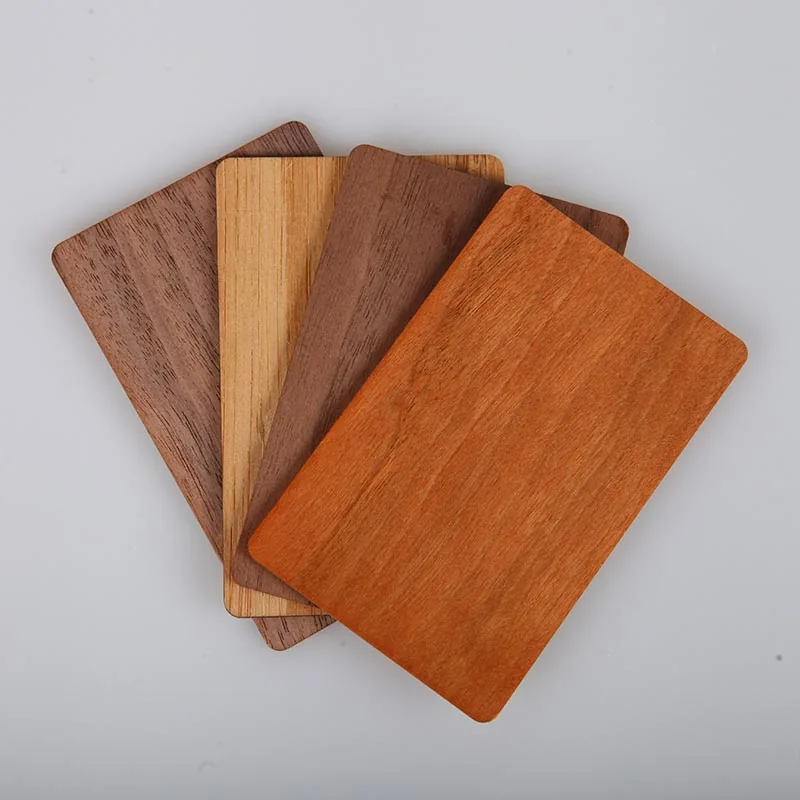
In real-world deployments, laser-engraved wooden NFC business cards use FSC / PEFC veneer (bamboo, walnut, cherry, maple) with an embedded NTAG216 inlay holding an NDEF vCard or URI record. Engraving at 10.6 μm CO2 wavelength produces permanent dark-brown logos, text and QR on the grain; the 888-byte NTAG216 payload covers full vCard 3.0 contact + website + social in a single tap. The bespoke B2B variant of the wooden-card SKU for architect studios, luxury-boutique founders, high-end realtors and executive exec-portfolio cards.
- FSC / PEFC veneer (bamboo, walnut, cherry, maple) + CO2 laser engraving at 10.6 μm — permanent dark-brown marks, no ink, no fade.
- NTAG216 (888 bytes) inlay carrying a vCard 3.0 NDEF record — one tap pushes name, title, phone, email, website and socials to the recipient's phone.
- 0.76–1.00 mm ISO/IEC 7810 ID-1 (or near-ID-1 bespoke) veneer sandwich — wallet-friendly, pocket-friendly, grain-unique every card.
Used in these industries
Deployments where this product is referenced on our industry landing pages.

At a glance
Use these short answers to decide whether this page matches the project before moving into the detail.
Product positioning — B2B vCard tap-card
The engraved wooden business card is the bespoke B2B variant of the wooden-card family: lower volume (typical 100–500 per order), higher unit price, individualised engra...
Wood species catalogue
Bamboo (Moso, compressed fiber) — the fastest-renewable substrate (3–5 year regrowth); uniform light-tan finish, cleanest engraving contrast. Walnut (American black waln...
Next step
Ready to move forward? Start your inquiry to get specific answers for this project.
Order engraved wooden NFC business cards- CO2 laser engraving process
-
- CO2 laser at 10.6 μm wavelength — the canonical wavelength for wood marking because wood's carbon structure absorbs strongly at that band.
- Power 50–80 W; engraving speed 300–600 mm/s; spot size 0.1–0.3 mm depending on focus and focal length.
- Depth 0.05–0.15 mm — enough to produce permanent contrast without compromising the veneer core, which typically sits at 0.25–0.35 mm thickness.
- Why CO2 not fibre laser
-
- CO2 lasers at 10.6 μm match wood's absorption band; fibre lasers at 1.06 μm are optimal for metals and most polymers but not wood.
- Fibre laser on wood tends to burn through rather than mark cleanly; CO2 produces the dark-brown controlled-charring effect that buyers recognise as wood engraving.
- Metal business cards (stainless steel, brass) use fibre laser engraving instead — the wavelength match is reversed.
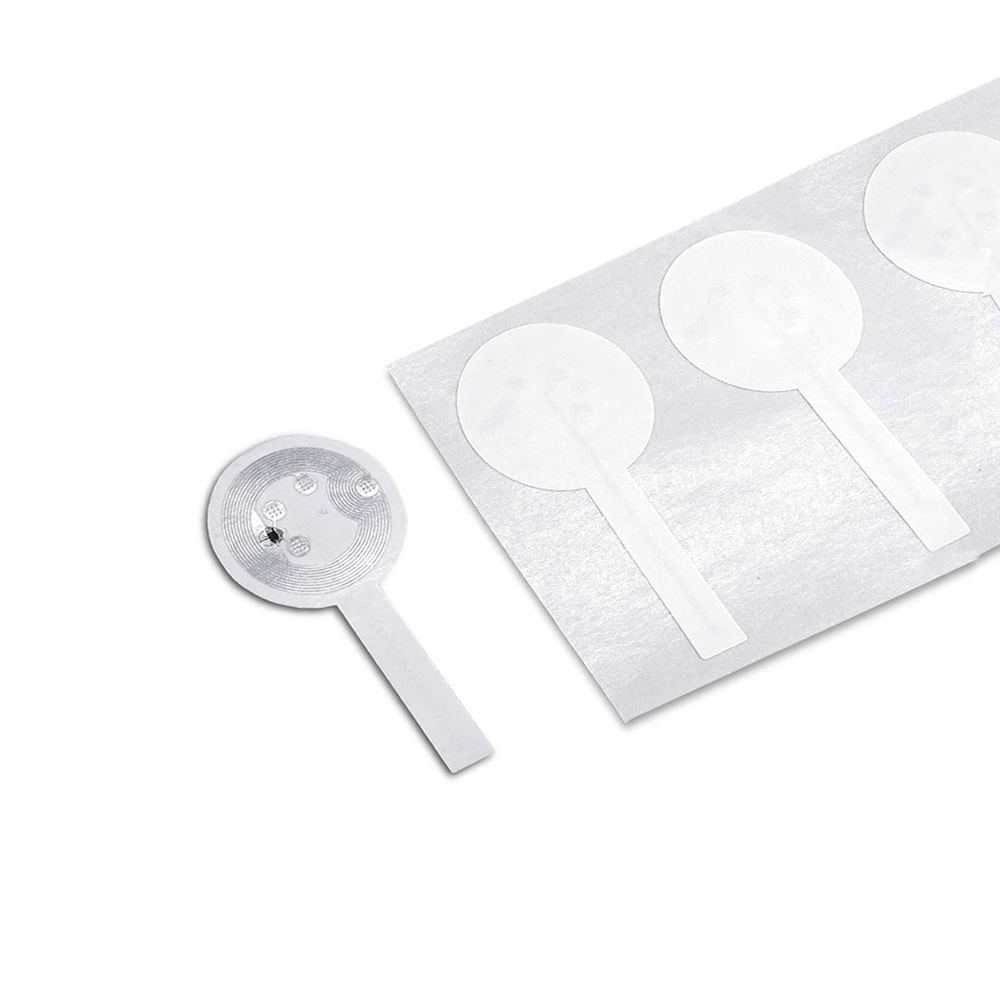
- Embedded inlay — NTAG216
-
- NTAG216 (888 bytes user memory, NFC Forum Type 2) is the default — it's the smallest standard chip that fits a full vCard 3.0 + URI without fragmentation.
- NTAG213 (144 bytes) is adequate for a short vCard (name + phone + URL only) when per-card cost is tight; NTAG215 (504 bytes) sits in between.
- NTAG424 DNA (416 bytes) is the option when the vCard must be authenticated / tamper-evident — premium programmes guarding against cloned cards.
- NDEF payload layout
-
- NDEF VCARD Record Type Definition (per NFC Forum NDEF 1.0) wraps a vCard 3.0 (RFC 2426) body — FN, N, TEL, EMAIL, URL, ORG, TITLE, ADR, NOTE.
- Alternative: NDEF URI Record pointing to a landing page (Apple Business Connect profile, Google Business Profile, Calendly link, Linktree-style vCard-host).
- Alternative: NDEF Smart Poster combining a short-form URI + a title — the minimal payload when wallet storage is the priority.
- Tap behaviour on iPhone and Android
-
- iPhone 7+ with iOS 14+ reads the NDEF payload automatically (Background Tag Reading) when the card is tapped near the top-edge antenna; no app required.
- Android (Jelly Bean 4.1+) reads NDEF via the NFC Services framework; the phone prompts to open the URL, save the vCard or handle the Smart Poster.
- Typical read range 1–3 cm through the veneer; read success is unaffected by the wood substrate because wood is radio-transparent at 13.56 MHz.
- Card dimensions and construction
-
- Standard: ISO/IEC 7810 ID-1 (85.6 × 54 × 0.76 mm) — fits all cardholders, wallets and card printers the recipient already owns.
- Premium bespoke: 0.90–1.00 mm thickness for heavier-hand feel on executive-portfolio versions; custom non-ID-1 shapes for signature designs.
- Construction: veneer top + RFID inlay core + veneer bottom, water-based polyurethane adhesive; matte / silk / gloss protective clear coat.
- Regulatory and chain-of-custody
-
- FSC / PEFC Chain-of-Custody certified veneer; documentation shipped with every order.
- EU Deforestation Regulation 2023/1115 (EUDR) due-diligence supported via FSC / PEFC CoC — relevant when the card is placed on the EU market.
- CITES Appendix II Dalbergia rosewood species excluded from the catalogue.
- Personalisation workflow
-
- Artwork intake: vector logo (SVG / AI / EPS), vCard field list (name, title, phone, email, URL, socials), optional QR code embedding the same URL as the NFC record.
- Proof cycle: a physical sample card engraved with the design is shipped within 5–7 business days before production run.
- Per-card individual engraving for personal-name programmes; per-design run engraving for studio-branded batches.
- Deployment archetypes
-
- Architect and interior-design studios — walnut / cherry veneer cards as the client leave-behind at initial-consultation or pitch meetings.
- Luxury-boutique founders — bamboo / maple cards for event-retail and showroom hand-off moments.
- High-end realtors — walnut veneer cards as premium leave-behinds at open-house and broker-open events.
- Executive exec-portfolio cards — C-suite and board-member cards with NTAG424 DNA for authenticated tap-to-vCard.
- Sustainability-consulting firms — bamboo cards reinforcing the environmental-advisory brand at first client contact.
- Why wood beats plastic for this use-case
-
- Recipient retention — wallet-carried veneer cards endure past the 30-day throw-away window that kills plastic card ROI.
- Grain uniqueness — every card is visually different, compounding the keepsake effect.
- Tactility — the physical feel of wood distinguishes the card from the dozens of plastic cards in a recipient's collection.
- Sustainability narrative — the FSC CoC story is the passive brand signal every time the card is handled.
- Typical pricing
-
USD 0.60–2.50 /pc by material (typical FOB Shenzhen range) — firm quote in one business day.
Commercial terms
- MOQ
- Varies by SKU — stock items from 100 pcs; custom production typically 200-1,000 pcs
- Lead time
- Production 2-3 weeks after artwork and encoding sign-off; reorders on a 3-4 week cycle
- Samples
- Free samples and RF test report with every order; courier at customer cost
- Payment
- 50% T/T deposit, 50% before shipment; Net 30/60 for established accounts; LC for large orders
- Shipping
- FOB Shenzhen / Yantian; DHL, FedEx or EMS air freight; sea LCL / FCL for volume
- Response
- Itemized quote within one business day, Mon-Fri (UTC+8)
Why the engraved wooden business card is a different product to the generic wooden access card
The engraved wooden NFC business card is specifically a B2B vCard tap-card. The functional payload is a single NDEF record that fires the recipient's phone into a contact-add or website-open flow. The packaging — walnut veneer, laser-engraved name and logo, ISO/IEC 7810 ID-1 card body — is what makes it survive past the 30-day throw-away window that kills most plastic cards.
The wooden-card family covers three product shapes. The generic eco-access card (rfid-wooden-card) is about being an access credential or loyalty card in a wooden substrate. The engraved business card (this SKU) is a personal vCard / URI tap-card where each card is engraved for a specific individual. The bamboo-card SKU covers the fastest-renewable substrate story explicitly. The three share FSC CoC, the same inlay ecosystem and the same ISO/IEC 7810 envelope, and differ on volume profile and decoration workflow.
CO2 laser engraving is what separates the engraved-business variant. Fine detail on walnut, cherry, bamboo and maple produces logos, names and QR codes that never fade, peel or smudge. The NDEF payload (typically a vCard 3.0 body or a URI record pointing to Apple Business Connect / Google Business Profile / Calendly) fires on tap, in iOS Background Tag Reading or Android NFC Services — no app install required.
Engraved wooden vs printed PVC vs metal engraved — pick the substrate for the meeting
Engraved FSC wooden NFC business card
- Veneer hardwood or bamboo + CO2 10.6 μm laser engraving — permanent dark-brown mark with grain underneath.
- NTAG216 (888 bytes) default chip for vCard 3.0 + URI + socials in a single NDEF record.
- 2–4 year wallet life with clear-coat finish; recipient retains the card as a keepsake.
- FSC / PEFC chain-of-custody narrative; EU RoHS 3 + REACH compliant; CITES-restricted species excluded.
- Typical MOQ 100 per design; per-person individual engraving option for personal-name runs.
vs printed PVC and metal-engraved variants
- Printed PVC business card: lowest cost per unit, CMYK print + spot finishes; typical recipient life ~30 days.
- Metal-engraved business card (316L stainless / brass / PVD-black): the most durable, heaviest-hand; fibre-laser engraving at 1.06 μm; metal-card page covers on-metal antenna requirements.
- Premium PVC / dye-sub photo card: the photo-ID / badge substrate, not a B2B vCard leave-behind.
- Recycled PVC: eco-messaging is 'reduced virgin plastic' not 'renewable substrate'; less differentiating.
- Wooden engraved sits between printed PVC (cheap, disposable) and metal (heavy, expensive) on the luxury / durability / cost axis.
The NDEF tap — one action, full vCard 3.0 + URL delivered to the phone
Proud Tek engraved wooden NFC business card — specification and order workflow
- Step 1Veneer: FSC / PEFC-CoC certified walnut, cherry, bamboo or maple; 0.25–0.35 mm per face; card body 0.76–1.00 mm thickness.
- Step 2Inlay: NTAG216 default (888 bytes); NTAG213 / NTAG215 downgrades for cost-sensitive runs; NTAG424 DNA premium for authenticated tap-to-vCard.
- Step 3Engraving: CO2 laser at 10.6 μm, 50–80 W, 300–600 mm/s — dark-brown permanent mark, 0.05–0.15 mm depth.
- Step 4NDEF payload options: vCard 3.0 record, URI (Apple Business Connect / Google Business Profile / Calendly / Linktree-style vCard host), or Smart Poster hybrid.
- Step 5MOQ 100 per design / per-person run; lead time 10–14 business days from artwork approval; physical proof sample within 5–7 business days.
- Step 6Per-card individual engraving available — each card's name and direct-dial engraved and each NDEF payload pre-encoded to the individual.
Deployment archetypes — where engraved wooden business cards win
- Architect, interior-design and landscape-architect studios — walnut or cherry veneer cards as client leave-behinds at initial-consultation or pitch meetings.
- Luxury-boutique founders and creative directors — bamboo or maple cards for event-retail, showroom hand-off and trunk-show moments.
- High-end residential and commercial real-estate brokers — walnut veneer cards as premium leave-behinds at open-house and broker-open events.
- Executive exec-portfolio cards — C-suite and board-member cards with NTAG424 DNA for authenticated tap-to-vCard where recipient verification matters.
- Sustainability-consulting and ESG-advisory firms — bamboo cards reinforcing the environmental-advisory narrative at first client contact.
Useful next pages
Use these linked product, guide and comparison pages to keep the next click specific and practical.
Related NFC business-card substrates
Alternatives for the B2B tap-vCard use-case.
FAQ
Which chip should I choose — NTAG213, NTAG215, NTAG216 or NTAG424 DNA?
NTAG216 (888 bytes) is the catalogue default because it fits a full vCard 3.0 body with name, title, phone, email, URL, organisation, address and socials in one NDEF record. NTAG213 (144 bytes) is tight — only a short vCard or a URL fits. NTAG215 (504 bytes) sits in between and is fine for most single-executive cards. NTAG424 DNA (416 bytes) is the premium choice when the card must be authenticated / tamper-evident against cloning.
Can I update the NFC data after the cards are made?
Yes, if the NTAG chip is not write-locked at factory. Use the free NFC Tools app on any modern smartphone to rewrite the NDEF payload. The better pattern for long-term flexibility is to encode a URI record pointing to a landing page (Apple Business Connect, Google Business Profile, Calendly or a Linktree-style vCard host) — you then update the landing page without touching the physical cards.
Why CO2 laser and not fibre laser?
CO2 lasers at 10.6 μm match wood's carbon absorption band and produce the controlled dark-brown charring that gives wood engraving its distinctive look. Fibre lasers at 1.06 μm are optimal for metals and most polymers but burn through wood rather than marking cleanly. For the metal-business-card SKU the wavelength choice reverses and fibre laser is correct.
Are the cards durable enough for daily use?
Yes, with sensible expectations. Veneer cards have a 2–4 year wallet-carry life with clear-coat finish. They are not rated for laundry, marine or industrial-wash environments. The NFC chip is sealed between veneer layers and protected from impact; the laser engraving is permanent and never fades or peels.
What is the minimum order for engraved wooden NFC business cards?
MOQ is 100 per design. For executive / exec-portfolio runs with per-person individual engraving we handle 50–99 piece orders at a small-batch pricing tier. Physical proof samples in the chosen wood species with a design engraving are shipped within 5–7 business days before production starts.
Sources & references
Primary standards, OEM datasheets and regulatory documents cited by this article. All URLs were verified on the access date shown below.
- NFC Forum NDEF Technical Specification 1.0
Defines the NDEF message and record format that wraps vCard, URI and Smart Poster payloads for NFC tap cards.
- NFC Forum Record Type Definition — URI Record Type 1.0
URI Record Type Definition — the NDEF record used to point a tap-card at an Apple Business Connect / Google Business Profile landing page.
- IETF RFC 2426 — vCard MIME Directory Profile (vCard 3.0)
vCard 3.0 field definitions (FN, N, TEL, EMAIL, URL, ORG, TITLE, ADR, NOTE) carried in the NDEF VCARD record on the NTAG216 chip.
- NXP NTAG216 NFC Forum Type 2 Tag product page
NTAG216 chip datasheet — 888 bytes user memory, NFC Forum Type 2, 13.56 MHz ISO/IEC 14443A, the catalogue default for vCard tap-cards.
- FSC Chain of Custody Certification Standard FSC-STD-40-004
Chain-of-custody standard that governs how FSC-certified veneer is traced from managed forest to engraved business-card production.
- EU Deforestation Regulation (EU) 2023/1115
Requires due-diligence statements for wood-derived products placed on the EU market — FSC / PEFC CoC evidence supports compliance.
- ISO/IEC 7810 — Identification cards — Physical characteristics
ID-1 physical-dimension spec (85.6 × 54 × 0.76 mm) the engraved wooden card meets for wallet and cardholder compatibility.
- ISO/IEC 14443-1 — Contactless integrated circuit cards — Physical characteristics
13.56 MHz contactless interface used by NTAG216 in the wooden business card's embedded inlay.
- Apple Business Connect
Apple's business-profile landing system; the canonical URI-record destination when a wooden tap-card encodes a URL rather than a vCard directly.
- CITES Appendix II — Dalbergia spp. listings
Rosewood species restrictions — the reason Dalbergia is excluded from our engraved veneer catalogue.
Proud Tek is a Shenzhen-based RFID & NFC manufacturer supplying hotel chains, transit operators, event venues and retail brands worldwide. Every order includes free samples, RF testing and dedicated project support.
Get a Quick Quote
Tell us about your project and we'll respond within one business day. Fields marked (asterisk) are required.