
Metal NFC Business Cards
RFID Metal Business Card
316L Stainless Steel
Quick answer
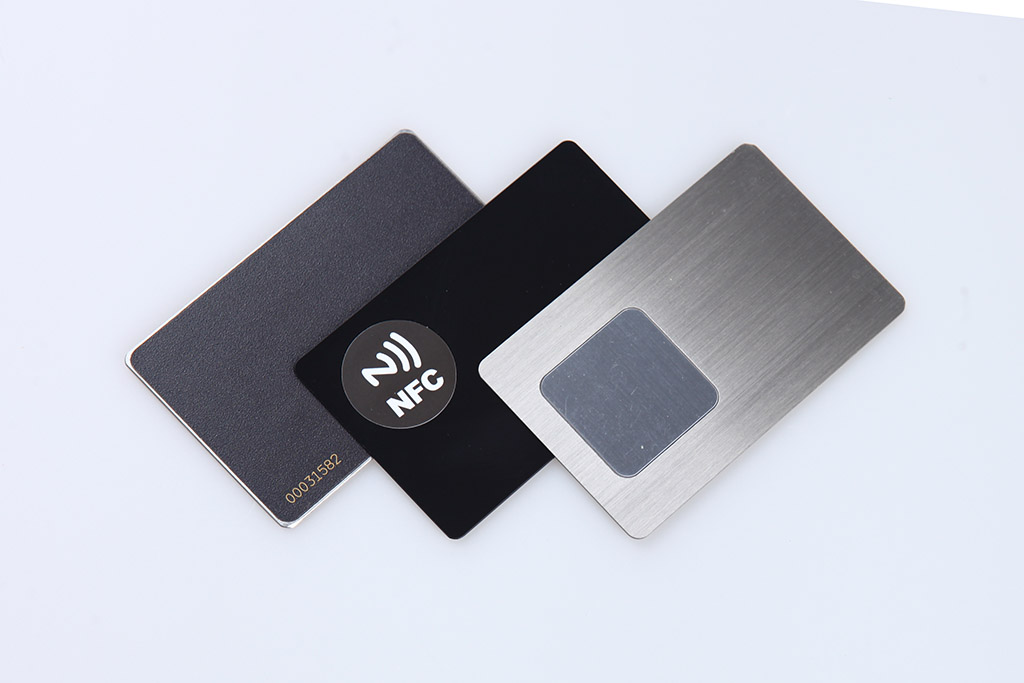
Metal NFC business cards use 316L stainless steel, brass or PVD-black steel as the card body with an embedded NTAG216 on-metal inlay (ferrite-backed antenna) and fibre-laser engraving at 1064 nm for permanent logos, names and QR. The metal-on-metal antenna challenge is solved by a thin ferrite layer between the chip and the metal substrate; the NDEF vCard payload taps on all modern NFC phones. The premium executive-networking, wealth-management and boardroom-introduction variant of the NFC business-card family.
- 316L stainless steel, brass or PVD-black steel at 0.8–1.0 mm thickness — 30–40 g hand-feel that recipients keep as a conversation piece.
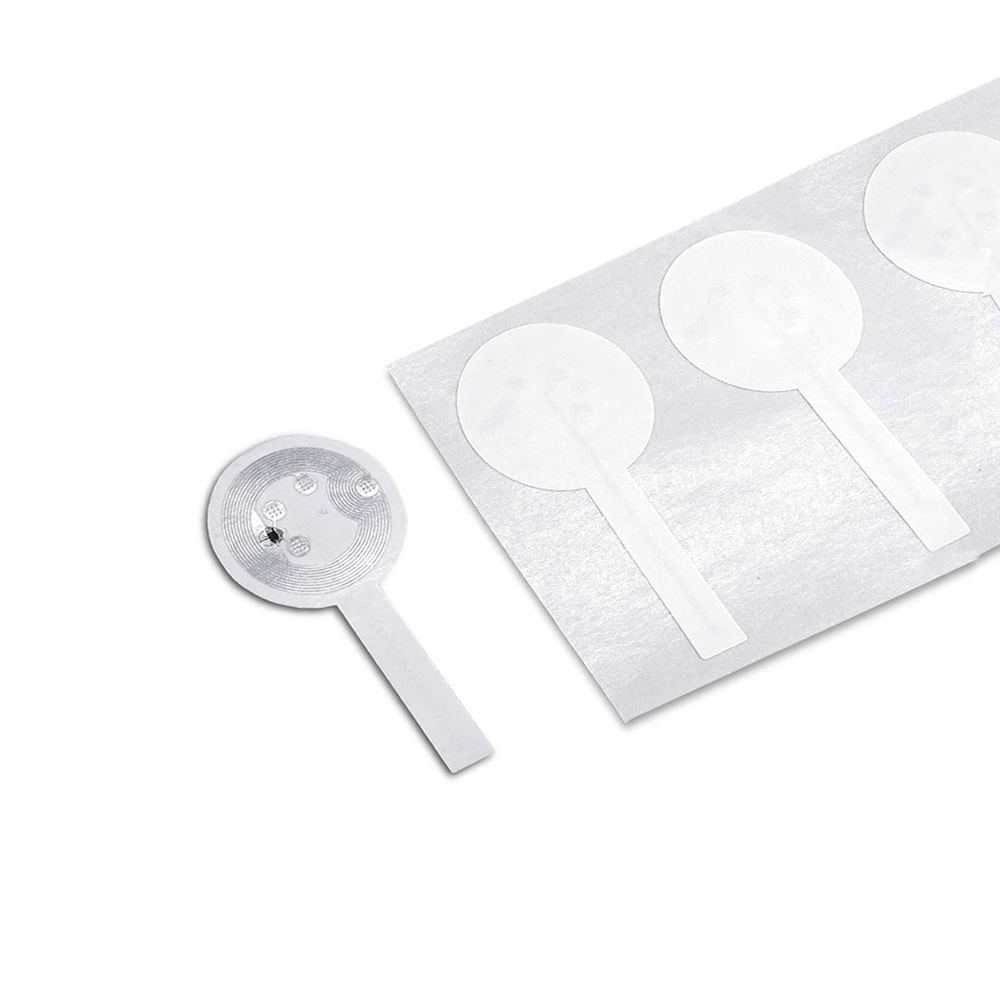
- NTAG213 / NTAG215 / NTAG216 on-metal inlay with ferrite decoupling layer — reliable 1–3 cm tap through a precision-milled antenna window.
- Fibre laser at 1064 nm — permanent dark laser-annealed marks on stainless, deep engraving on brass; resolution down to 0.05 mm line width.
Used in these industries
Deployments where this product is referenced on our industry landing pages.

At a glance
Use these short answers to decide whether this page matches the project before moving into the detail.
Product positioning — premium executive networking
Metal NFC business cards sit at the top of the executive-networking / boardroom-introduction / wealth-management / luxury-brand-ambassador tier. Weight and tactile solid...
Metal substrate options
316L stainless steel — the corrosion-resistant 'marine-grade' alloy used for medical implants and architectural cladding; brushed, matte, mirror or PVD-black finish. Bra...
Next step
Ready to move forward? Start your inquiry to get specific answers for this project.
Request quote and samples- Card body dimensions and weight
-
- Base ISO/IEC 7810 ID-1 (85.6 × 54 mm) outline with thickness 0.8–1.0 mm — thicker than the 0.76 mm PVC standard to provide substantive hand-feel without losing wallet compatibility.
- Typical weight 30–40 g per card (316L stainless, 0.8 mm) vs 4–5 g for PVC — this is the tactile signal recipients feel in the first second of exchange.
- Custom non-ID-1 outlines available — rounded corners, die-cut notch accents, cutaway patterns — with $90–$300 per-design tooling for steel cut dies.
- The on-metal antenna problem
-
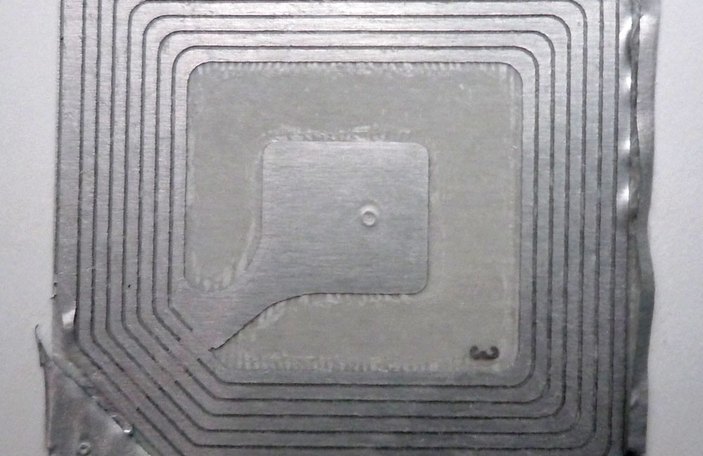
- 13.56 MHz NFC antennas fail when placed flat against metal — the metal acts as a ground plane that shorts the antenna loop and absorbs the RF field.
- Solution: a thin ferrite layer (typically 30–100 μm NiZn or MnZn ferrite film) between the NFC antenna and the metal substrate redirects the magnetic flux around the metal.
- Proud Tek inlays ship with the ferrite pre-laminated; the antenna sits over a precision-milled pocket in the metal with ferrite decoupling — 1–3 cm tap range is achieved reliably.
- Alternative — antenna window cutout
-
- Some designs use a precision-milled antenna window (thinned slot on the rear face) rather than a full ferrite-backed inlay — the NFC reader sees through the window.
- Window cards are cheaper to produce but slightly reduce read range versus ferrite-backed on-metal inlays; both are used in the industry.
- Proud Tek's default is ferrite-backed full-body metal; window-cutout is available for cost-sensitive higher-volume runs.
- Embedded inlay — NTAG chips
-
- NTAG213 (144 bytes) for short URIs or a minimal vCard; NTAG215 (504 bytes) for a standard vCard; NTAG216 (888 bytes) default for full vCard 3.0 + URL + socials.
- NTAG424 DNA (416 bytes) with SUN (Secure Unique NFC) — tap-to-vCard with tamper-evident authenticity for anti-cloning programmes.
- Chip choice is orthogonal to metal substrate; the ferrite + inlay layer handles the RF coupling regardless of chip.
- Fibre laser engraving process
-
- Fibre laser at 1064 nm (Nd:YAG / ytterbium-doped fibre) is the canonical wavelength for marking metals — matches the absorption band of stainless, brass and anodised coatings.
- Laser-annealing on stainless produces dark permanent marks by controlled oxidation at the surface; deep engraving on brass produces recessed marks that hold ink fill cleanly.
- Resolution down to 0.05 mm line width; typical throughput 60–180 cards/hour depending on coverage and depth.
- Colour-fill and secondary finishing
-
- Colour-fill: epoxy or enamel pigment (black, white, red, gold) filled into the laser-engraved recesses and cured; gives deep contrast vs the metal surface.
- Spot PVD-black or rose-gold PVD accents over the base stainless for two-tone luxury finishes.
- Optional magnetic-stripe slot or mini-cutaway for contact EMV chip module on combo designs — rare but available.
- NDEF payload and phone compatibility
-
- NDEF VCARD record (per NFC Forum NDEF 1.0 + RFC 2426 vCard 3.0) — one-tap push of name, title, phone, email, website, socials to the recipient's phone.
- NDEF URI record pointing to Apple Business Connect / Google Business Profile / Calendly / Linktree-style landing page — easier to update than the chip itself.
- iPhone 7+ iOS 14+ fires Background Tag Reading; Android NFC Services reads the same payload — no app install required.
- Durability and care
-
- 316L stainless is corrosion-resistant; wallet life is essentially indefinite — the chip or adhesive fails long before the metal body does.
- Brass develops a subtle patina within 6–12 months of daily handling; desired by many buyers, removable with metal polish for those who prefer mirror finish.
- PVD-black finish is scratch-resistant but not scratch-proof — long-term wallet carry will show light burnishing on edges, matching the luxury-goods wear pattern.
- Regulatory and material safety
-
- 316L stainless steel and brass are CPSIA (US) lead-limit compliant and meet REACH SVHC requirements for EU market placement.
- PVD coatings are inert and biologically compatible — used in medical implants and food-contact cutlery.
- Ferrite layer in the on-metal inlay is RoHS 3 compliant; chip and antenna follow the same regulatory stack as PVC NFC cards.
- Deployment archetypes
-
- Executive / C-suite networking — CEO and CRO cards at board meetings, conferences and private-dinner client events.
- Luxury-brand ambassadors — brand-founder / creative-director cards at exclusive showcase and gala events.
- Premium real-estate brokers — high-end residential and commercial brokers issuing metal cards as the leave-behind at open-house, broker-open and private-tour events.
- Wealth-management and private-banking advisors — the deliberate hand-weight signals discretion and permanence.
- Boardroom introduction and private-office VIP — bespoke metal cards for board members, trustees and portfolio-company executives.
Commercial terms
- MOQ
- Varies by SKU — stock items from 100 pcs; custom production typically 200-1,000 pcs
- Lead time
- Production 2-3 weeks after artwork and encoding sign-off; reorders on a 3-4 week cycle
- Samples
- Free samples and RF test report with every order; courier at customer cost
- Payment
- 50% T/T deposit, 50% before shipment; Net 30/60 for established accounts; LC for large orders
- Shipping
- FOB Shenzhen / Yantian; DHL, FedEx or EMS air freight; sea LCL / FCL for volume
- Response
- Itemized quote within one business day, Mon-Fri (UTC+8)
Why metal NFC business cards are the top-tier networking tool and the engineering problem they solve
Metal business cards are the heaviest, most expensive and most-retained variant of the NFC business-card family. The engineering challenge — making a 13.56 MHz NFC antenna work with a metal card body — has a solved answer: a thin ferrite decoupling layer between the antenna and the metal. Once that is in place, the payload and phone behaviour are identical to any NTAG216 tap-card.
Place a flat NFC antenna directly against a metal substrate and the antenna fails — the metal acts as a ground plane that shorts the loop and absorbs the radio field. Place a 30–100 μm NiZn or MnZn ferrite film between antenna and metal and the ferrite redirects the magnetic flux around the metal. The antenna works. That is the entire on-metal NFC story, and it is mature enough that factory inlays ship ferrite-pre-laminated.
The commercial story is about hand-weight and retention. A 30–40 g brushed 316L stainless card gets kept. Recipients do not throw it away; they show it to others. That is the premium-networking value proposition, quantifiable via simple recipient-retention surveys but more reliably observed through the size of return-client engagement the card drives. Fibre-laser engraving at 1064 nm produces permanent marks that never fade — the card stays crisp past the point where printed PVC would be scratched and dog-eared.
The on-metal engineering — ferrite decoupling as the enabling layer
Proud Tek metal NFC business card — specification and order workflow
- Step 1Substrate: 316L stainless (brushed / matte / mirror / PVD-black), C260 / C360 brass, or PVD-coated variants at 0.8–1.0 mm thickness.
- Step 2Inlay: NTAG213 / NTAG215 / NTAG216 with pre-laminated ferrite decoupling layer; NTAG424 DNA available for authenticated tap-to-vCard.
- Step 3Engraving: fibre laser at 1064 nm, 20–50 W, 60–180 cards/hour; resolution 0.05 mm line width; optional epoxy / enamel colour-fill (black / white / red / gold).
- Step 4NDEF payload: vCard 3.0 record (full name / title / phone / email / URL / socials) or URI record to Apple Business Connect / Google Business Profile / Calendly.
- Step 5MOQ 50 per design; lead time 10–15 business days from artwork approval; rush 7 business days available; samples with your design in 5–7 business days.
- Step 6Certifications on file: 316L mill test reports, PVD coating biocompatibility certificates, RoHS 3 + REACH SVHC compliance declarations, CPSIA lead-limit reports.
Useful next pages
Use these linked product, guide and comparison pages to keep the next click specific and practical.
Related premium NFC business-card substrates
Alternatives for the B2B tap-vCard use-case.
FAQ
How does NFC work through a metal card body?
Two engineering options. (1) Ferrite-backed on-metal inlay: a 30–100 μm NiZn or MnZn ferrite film between the NFC antenna and the metal redirects 13.56 MHz magnetic flux around the metal, so the antenna couples cleanly to the reader at 1–3 cm. (2) Antenna-window cutout: a precision-milled thinned slot on the rear face lets the reader see through the window. Proud Tek defaults to ferrite-backed because it gives better tap range; window-cutout is available for higher-volume cost-sensitive runs.
Why fibre laser and not CO2?
Fibre laser at 1064 nm matches the absorption band of stainless steel, brass and anodised coatings — producing laser-annealing on stainless (dark marks from controlled oxidation) or deep engraving on brass (recessed marks that hold colour-fill). CO2 lasers at 10.6 μm are optimal for wood, plastic and glass but reflect off polished metal and produce inconsistent marks. The wavelength choice reverses for the wooden-card SKU where CO2 is correct.
Can I update the NFC data after the card is produced?
Yes, the NTAG chip is reprogrammable unless write-locked at factory. Use NFC Tools or NXP TagWriter to rewrite the NDEF payload. For flexibility, point the card at a URI (Apple Business Connect, Google Business Profile, Calendly, Linktree, Blinq or Popl) and update the landing page rather than the chip. NTAG424 DNA is the exception — premium anti-cloning chips are typically locked to a tamper-evident configuration at factory.
What substrate should I pick — 316L stainless, brass or PVD-black?
316L brushed stainless is the default executive-networking choice: neutral, clean, corrosion-resistant. Brass warms to a patina over 6–12 months — favoured for wealth-management and private-banking advisors and for executives who want the card to age visibly. PVD-black is the deep-matte luxury choice — brand ambassadors, creative directors and luxury-boutique founders. All three use the same ferrite-backed inlay and the same NDEF payload.
What is the minimum order and lead time?
MOQ 50 per design for a single logo / single chip configuration. Per-person individual engraving for C-suite runs is available at MOQ 25 with a small-batch pricing tier. Lead time is 10–15 business days from artwork approval. Rush production (7 business days) is available for a surcharge. Physical proof samples with your design ship in 5–7 business days before production starts.
Sources & references
Primary standards, OEM datasheets and regulatory documents cited by this article. All URLs were verified on the access date shown below.
- NXP AN11650 — Antenna Design Guide for NFC Transponder Applications
Authoritative on-metal NFC antenna design guide — ferrite decoupling geometry, minimum film thickness, impact on read range.
- NFC Forum NDEF Technical Specification 1.0
Defines the NDEF message / record format that wraps vCard and URI payloads for metal tap-cards.
- IETF RFC 2426 — vCard MIME Directory Profile (vCard 3.0)
vCard 3.0 field definitions carried in the NDEF VCARD record on NTAG216 / NTAG424 DNA metal-card inlays.
- NXP NTAG216 NFC Forum Type 2 Tag product page
NTAG216 datasheet — 888 bytes user memory, the default chip for full-vCard metal business cards.
- NXP NTAG424 DNA product page — SUN authenticated tap
NTAG424 DNA datasheet — AES-128 authenticated tap payload used in anti-cloning C-suite and board-member metal cards.
- ISO/IEC 7810 — Identification cards — Physical characteristics
ID-1 card outline (85.6 × 54 mm) that metal business cards follow — with thickness extended to 0.8–1.0 mm for hand-weight.
- ISO/IEC 14443-1 — Contactless integrated circuit cards — Physical characteristics
13.56 MHz contactless interface used by the NTAG inlay inside the metal card body.
- ASTM A240/A240M — 316L Austenitic Stainless Steel Plate Specification
Materials specification for 316L stainless — defines the composition, finish tolerances and corrosion characteristics of the substrate we use.
- Apple Business Connect
Apple's business-profile landing system — the canonical URI-record destination when a metal tap-card encodes a URL instead of an embedded vCard.
- Würth Elektronik WE-FLEX Ferrite Sheet technical datasheet
Representative ferrite-sheet datasheet — permeability, thickness and 13.56 MHz performance parameters for the ferrite decoupling layer used in on-metal inlays.
Proud Tek is a Shenzhen-based RFID & NFC manufacturer supplying hotel chains, transit operators, event venues and retail brands worldwide. Every order includes free samples, RF testing and dedicated project support.
Get a Quick Quote
Tell us about your project and we'll respond within one business day. Fields marked (asterisk) are required.