
Anti-Counterfeit Cards
NTAG 424 DNA TT Cards
Tamper-Detect NFC

Quick answer
This NXP secure NFC chip family TT cards pair NXP's AES-128 SUN authentication with a hardware tamper loop, so a phone tap proves the product is genuine and the seal is intact. Use them for luxury brand protection, warranty seals, pharmaceutical packaging and Digital Product Passport pilots.
- Every tap returns a fresh, server-verifiable cryptographic URL (SUN/SDM), so cloning or replay is not feasible even if someone intercepts the last tap.
- A conductive tamper loop connects to the chip; once broken, the chip permanently flags the seal as opened in every subsequent authentication response.
- Any iPhone or Android phone taps the card and opens a verification URL — no app download, no account, no reader hardware for the end consumer.
Used in these industries
Deployments where this product is referenced on our industry landing pages.

At a glance
Use these short answers to decide whether this page matches the project before moving into the detail.
Air-interface + NFC envelope
ISO/IEC 14443-2/-3/-4 Type A at 13.56 MHz — identical PHY and framing to DESFire and all NFC-phone-readable HF chips. NFC Forum Type 4 Tag operation — stock iOS 13+ and...
SUN / SDM + CMAC integrity
Secure Unique NFC (SUN) URL signed with AES-128 CMAC per NIST SP 800-38B on every tap — described in NXP application note AN12196. Encrypted picc-data + read-counter + t...
Next step
Ready to move forward? Start your inquiry to get specific answers for this project.
Request quote and samples- Hardware tamper loop (irreversible flag)
-
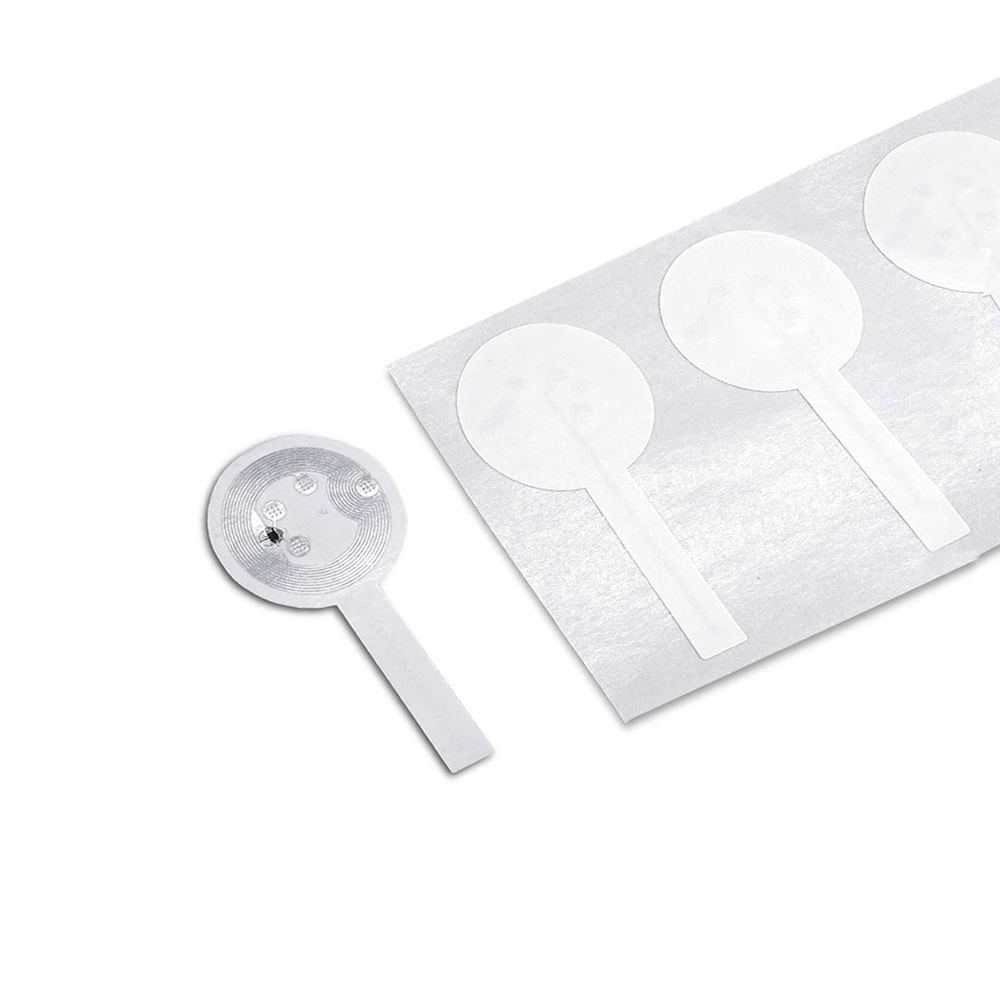
- Two copper pads on the die connect to a conductive trace routed across the seal — breaking the trace flips a permanent bit.
- The flag cannot be reset by the manufacturer, by reformatting the card, or by re-soldering the loop — this is the evidentiary anchor.
- Tamper state is signed into every subsequent SUN message, so backend replay detection sees it automatically.
- AES-128 cryptography (NIST FIPS 197)
-
- AES-128 block cipher per NIST FIPS 197 — the same primitive that carries EMV contactless and DESFire transit applications.
- 2^128 key-space makes brute-force cloning computationally infeasible; diversified keys prevent fleet-wide compromise.
- Card-unique diversified keys are derived from UID per NXP AN10922 and never exposed on any reader interface.
- Key diversification (NXP AN10922)
-
- Master key lives in an HSM or cloud KMS; per-card keys derived from UID never appear in application code.
- Industry-standard AES-128 CMAC diversification — the same reference scheme DESFire and MIFARE Plus issuance programmes use.
- Compromising one card does not compromise the fleet — this is the single most cited reason procurement teams accept the NTAG 424 DNA TT spec.
- Tap counter + replay protection
-
- Monotonically increasing tap counter signed into the SUN payload — backend rejects any URL whose counter is less than or equal to the last value seen for that UID.
- Replay of a previously captured URL is therefore automatically flagged as stale.
- Tap counter rollover policy is a deployment design choice — strict monotonic vs. drift-tolerant with N re-tap window.
- GS1 Digital Link + DPP readiness
-
- SUN URL can be encoded as a GS1 Digital Link (ISO/IEC 18975 / GS1 standard) — the recommended carrier pattern for EU Digital Product Passport.
- EU ESPR (Regulation 2024/1781) frames the DPP programme for textiles, batteries and electronics from 2027 onward.
- Keeping the URL GS1 Digital Link-shaped from day one avoids a forced inlay re-spin when DPP scope expands.
- Luxury goods + fashion deployment
-
- TT inlays under the leather patch of handbags, behind watch-box authentication cards, on perfume outer-carton seals.
- Tamper loop positioned so it breaks the first time the patch is lifted or the seal is cut.
- Consumer verifies 'Genuine, first tap in region EU' before purchase — the measurable trust moment at resale.
- Pharmaceutical + nutraceutical packaging
-
- TT inlays over blister-pack foil or bottle-neck seals — pharmacy staff and patients verify provenance + seal in one tap.
- Aligns with EU FMD (Falsified Medicines Directive 2011/62/EU + Delegated Regulation 2016/161) tamper-evident and serialisation obligations.
- Adjacent to US DSCSA serialisation framework where tamper attestation is being added to cold-chain / controlled-substance programmes.
- Wine, spirits + cosmetics programmes
-
- Tamper trace routed across the capsule, box flap or dropper seal — tap both confirms authenticity and unlocks a branded storytelling or loyalty experience.
- Replaces the 'QR code on every label' strategy at the point it stops scaling (photographed, reprinted QR is undetectable).
- Typical fit for EUR 50+ SKUs where the brand-protection + loyalty combined ROI justifies the inlay cost per unit.
- Consumer UX (no-app, browser tap)
-
- Any NFC-enabled iPhone (iPhone 7+) or Android phone opens the URL directly in the default browser — zero-friction verification.
- Consumer adoption is immediate because there is nothing to install — the tap is the CTA.
- Tap telemetry (region, first-tap latency, out-of-region anomalies) feeds grey-market and shrinkage analytics as a free side effect.
- Regulatory + grey-market posture
-
- ISO/IEC 7810 ID-1 CR80 (85.60 × 53.98 × 0.76 mm) card body; RoHS 3 + REACH Annex XVII compliant PVC substrates.
- NXP NTAG 424 DNA family is Common Criteria evaluated — request current certificate and TOE statement from vendor at RFP.
- Grey-market signal ('Genuine but out-of-region') is a policy decision — define the consumer + legal response in advance.
Commercial terms
- MOQ
- Varies by SKU — stock items from 100 pcs; custom production typically 200-1,000 pcs
- Lead time
- Production 2-3 weeks after artwork and encoding sign-off; reorders on a 3-4 week cycle
- Samples
- Free samples and RF test report with every order; courier at customer cost
- Payment
- 50% T/T deposit, 50% before shipment; Net 30/60 for established accounts; LC for large orders
- Shipping
- FOB Shenzhen / Yantian; DHL, FedEx or EMS air freight; sea LCL / FCL for volume
- Response
- Itemized quote within one business day, Mon-Fri (UTC+8)
What is an NTAG 424 DNA TT card?
NTAG 424 DNA TT is NXP's NFC Type 4 consumer authentication chip with two added features over the base NTAG 424 DNA: a Secure Unique NFC (SUN) message signed with AES-128 CMAC on every tap, and a physical tamper loop whose state is embedded in that signed message.
Because the SUN URL changes on every tap and is signed with a card-unique diversified key, copying the tag contents to another NFC chip produces a URL that your backend rejects. Because the tamper loop is wired directly into the chip and cannot be reset in software, a broken seal becomes a permanent, cryptographically attested fact.
In practice, brands print NTAG 424 DNA TT inlays under luxury packaging, pharmaceutical closures, wine capsules, or warranty labels, route the tamper trace across the seal, and resolve the tap URL to a verification page that shows genuine, tampered, or out-of-region.
NTAG 424 DNA TT vs 424 DNA vs DESFire EV3 vs NTAG215
Use this matrix when the buyer or brand-protection lead is deciding between NTAG 424 DNA TT and a cheaper or more flexible chip.
| Capability | NTAG 424 DNA TT | NTAG 424 DNA | DESFire EV3 | NTAG215 |
|---|---|---|---|---|
| Dynamic per-tap authentication (SUN/SDM) | Yes, AES-128 CMAC | Yes, AES-128 CMAC | Yes, AES-128 full mutual auth | No — static UID only |
| Hardware tamper loop | Yes — permanent flag | No | No | No |
| App-free phone verification | Yes — browser URL | Yes — browser URL | Needs custom app or reader | Yes, but clonable |
| File system / multi-application | Single NDEF + counters | Single NDEF + counters | Multi-app, up to 28 apps | Single NDEF |
| Typical use | Seals, luxury goods, DPP | Open-and-read brand tap | Transit, access, closed-loop payment | Cheap NFC posters, toys |
| Clonable by hobbyist reader? | No | No | No | Yes — UID only gate |
Why brand-protection teams buy TT — the counterfeit economics
The economic case for NTAG 424 DNA TT rests on a published OECD stat: global counterfeit + pirated goods trade was USD 464 billion in 2019 (3.3% of world trade), and luxury + pharmaceuticals are the two categories where seal-integrity proof is the missing verification layer on top of serialisation.
How a SUN + tamper verification actually flows
End to end, from the consumer's tap to the 'Genuine / Tampered' response, NTAG 424 DNA TT authentication is a five-step loop. Anything you build on top — loyalty, registration, Digital Product Passport — hooks into step 5.
- Step 1 — Tap
The consumer taps their phone on the card. The phone reads the NDEF record and opens the pre-configured URL in the default browser. No app, no pairing.
- Step 2 — SUN generation
Before the URL leaves the chip, the IC increments its tap counter, reads the tamper loop pin, concatenates UID + counter + tamper status, and appends an AES-128 CMAC computed with the card's diversified key.
- Step 3 — Server lookup
Your verification endpoint parses the SUN parameters, looks up the diversified key for that UID in your key-management service, and re-computes the CMAC. Mismatch = reject.
- Step 4 — Counter + tamper checks
The server confirms the tap counter is strictly greater than the last seen value (replay protection) and reads the tamper bit. A flipped bit is permanent — the seal is broken.
- Step 5 — Branded response + integrator handoff
The server redirects the consumer to a branded verification page: 'Genuine, first tap in region EU' or 'Seal has been opened since manufacture' or 'This URL was already used — possible clone'. Operating notes from luxury-goods-authentication, pharmaceutical-tamper-seal, wine-spirits-provenance, cosmetics-warranty and digital-product-passport NTAG-424-DNA-TT programmes.
Static QR codes vs dynamic NFC — the argument the buyer hears
Most counterfeit-fighting programs start with QR on the label. NTAG 424 DNA TT is the point where that strategy stops scaling, because QR codes can be photographed, reprinted and pasted onto fake products without detection.
Static QR or basic NTAG21x
- Same code printed on every unit — counterfeiters photograph one genuine label and reuse it.
- No tamper evidence — opened and resealed products look identical to unopened stock.
- UID-only NFC tags can be cloned with a €20 reader and a blank NTAG chip.
- No per-scan counter — the brand cannot distinguish first tap from a thousandth tap.
- Consumer trust degrades once knock-offs with working QR codes appear in the market.
NTAG 424 DNA TT
- Every tap returns a cryptographically unique URL — photographing or replaying a previous tap fails server verification.
- Hardware tamper loop — opening the seal flips a bit that cannot be reset and is signed into every later tap.
- AES-128 CMAC signatures are card-unique; cloning requires extracting the diversified key, which is not exposed on any interface.
- Tap counter gives brand analytics (tap region, first-tap latency, out-of-region anomalies) as a free side effect.
- Consumer sees a branded 'Genuine' confirmation screen before purchase, which is the actual trust moment.
Six reasons brand-protection teams deploy NTAG 424 DNA TT
Cryptographic proof of origin
AES-128 CMAC signatures prove that only the genuine factory could have produced this tap. The diversified key never leaves NXP's secure provisioning chain.
Irreversible tamper evidence
The tamper loop is wired to the chip's hardware input. Once broken, the flag cannot be reset in software, including by the manufacturer.
No app, no friction
Any NFC-enabled iPhone or Android phone opens the verification URL in the browser. Consumer adoption is immediate because there is nothing to install.
Region + channel intelligence
Tap telemetry tells you when products cross from authorised regions into grey-market zones, often before a single counterfeit complaint lands.
DPP-ready data carrier
The same SUN URL that proves authenticity can resolve to a GS1 Digital Link structure and serve as the EU Digital Product Passport entry point.
Print-friendly inlay
At 13.56 MHz with small antenna geometries, NTAG 424 DNA TT inlays fit behind wine labels, blister packs, watch warranty cards and cosmetics boxes without changing packaging design.
Where NTAG 424 DNA TT cards are deployed in the field
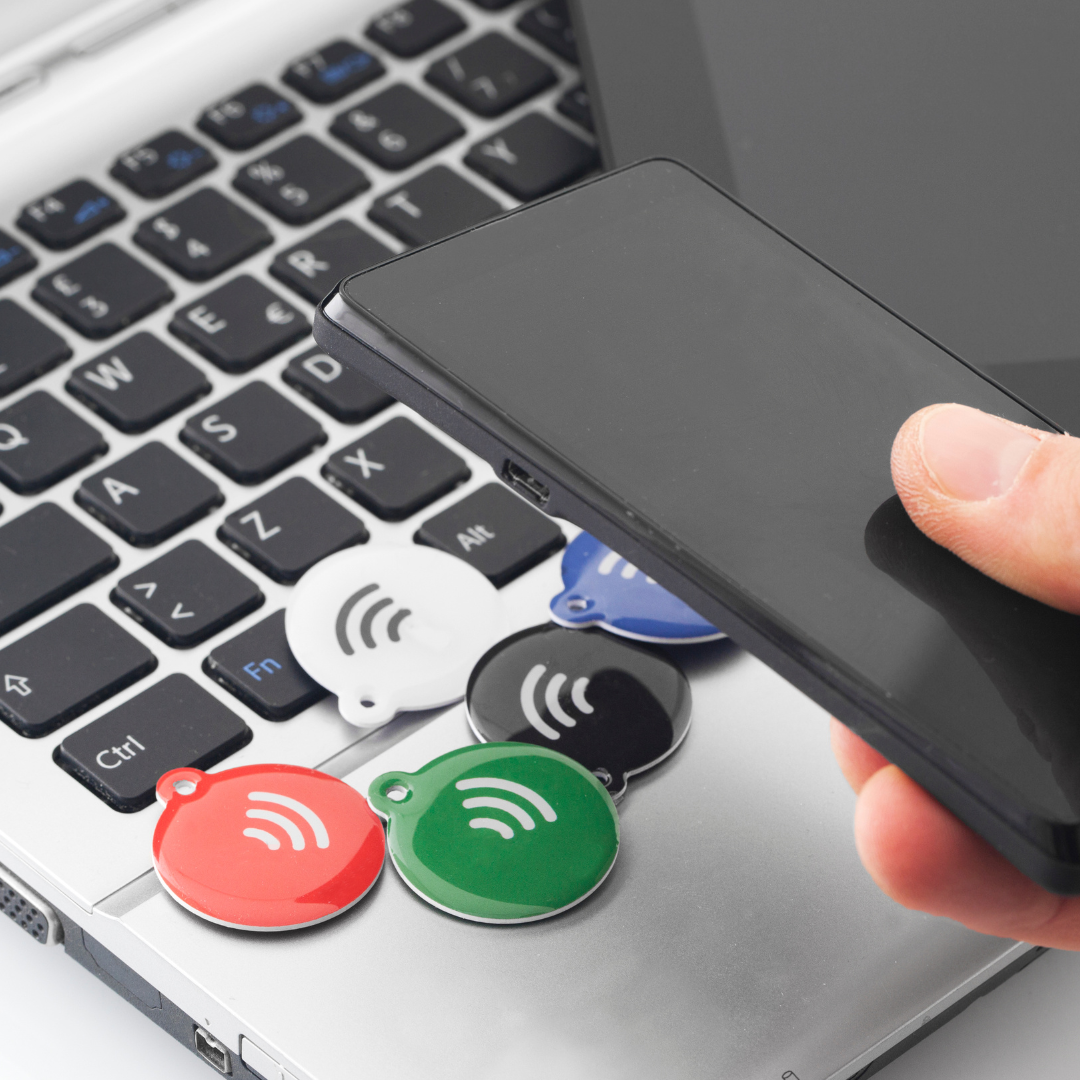
Luxury goods and fashion houses use TT inlays under the leather patch of handbags, behind the authentication card in watch boxes, or on the seal of perfume outer cartons. The tamper loop is positioned so the loop breaks the first time the patch is lifted or the seal is cut.
Pharmaceutical and nutraceutical brands apply TT inlays over blister-pack foil or bottle-neck seals so that pharmacy staff and patients can verify provenance and seal integrity with a single tap — a pattern that maps cleanly onto EU FMD and forthcoming DPP obligations.
Wine, spirits and cosmetics programs route the tamper trace across the capsule or box flap; the tap both confirms authenticity and unlocks a storytelling or loyalty experience that would otherwise require an app.
Standards, compliance and what to ask the chip vendor
- ISO/IEC 14443-2/-3/-4 Type A — identical PHY and framing to DESFire and other 13.56 MHz NFC chips, so any ISO/IEC 14443 reader or NFC phone can address the card.
- NFC Forum Type 4 Tag — guarantees the NDEF URL model that makes 'tap opens browser' work on stock iOS and Android without an app.
- AES-128 CMAC — the SUN message integrity algorithm; use a HSM or cloud KMS to store the master key and derive card-unique diversified keys per UID.
- Common Criteria EAL-certified platform — NTAG 424 DNA TT inherits NXP's secure-element heritage; ask the vendor for the current CC certificate and TOE statement.
- GS1 Digital Link + EU DPP — the SUN URL can be encoded as a GS1 Digital Link, which is the recommended pattern for Digital Product Passport readiness.
- Lock down key diversification: master key in HSM, per-card keys derived from UID, master key never appears in application code.
- Decide the tap counter policy: strict monotonic (reject equal) versus drift-tolerant (allow N re-taps), with a rule for tap counter rollover.
- Model the tamper state as non-reversible in every downstream system — CRM, warranty, returns — so a 'repair and reseal' path does not accidentally clear it.
- Plan for the grey-market signal: decide in advance what 'Genuine but out-of-region' should look like to the consumer and to your legal team.
- Keep the SUN URL GS1 Digital Link-shaped so a future DPP rollout does not force a re-spin of the inlay design.
Useful next pages
Use these linked product, guide and comparison pages to keep the next click specific and practical.
Related authentication SKUs
Other secure NFC products we supply for brand-protection, access and payment use cases.
Brand-protection and DPP solutions
How NTAG 424 DNA TT fits into end-to-end programs for counterfeit prevention and digital product passport.
Chip-level technical reference
Deep-dive on the SUN/CMAC message, key diversification and backend verification patterns.
FAQ
Can the tamper loop be repaired, reset or spoofed in software?
No. The tamper loop is wired to a hardware input on the chip; once the conductive trace is broken, the chip permanently reports the tamper event in every subsequent SUN message. The flag cannot be reset by the manufacturer, by reformatting the card or by re-soldering the loop. That irreversibility is the whole point — it is what turns the bit into legally usable evidence of seal opening.
Do I need a backend server to use NTAG 424 DNA TT cards?
For real anti-counterfeit use, yes. A server decrypts the SUN parameters, verifies the AES-128 CMAC against the card-unique diversified key, checks the tap counter for replay, and returns a 'genuine' or 'tampered' response. You can host this yourself using NXP's reference implementation, or use a hosted service such as Ixkio, Authena or Scantrust. A static NDEF URL with no verification is technically possible but gives up the anti-cloning property, which is usually the whole reason to buy 424 DNA TT.
How do NTAG 424 DNA TT cards differ from plain NTAG 424 DNA?
Both share the AES-128 SUN/SDM authentication, Type 4 NDEF model and NFC Forum compatibility. The 'TT' variant adds the hardware tamper-loop input pins. Two copper pads on the die connect to a conductive trace printed or routed across the seal. Breaking that trace flips a permanent bit that every later SUN message carries. If your packaging needs provable seal integrity, pick TT. If you only need provable tag authenticity, plain 424 DNA is cheaper.
Will an iPhone or Android phone need an app?
No. Both iOS (13 and later) and Android open NDEF URL tags directly in the browser. The consumer taps, the verification URL opens, your server renders the 'Genuine' or 'Tampered' page. You only need an app if you want NFC loyalty binding, push notifications after the tap, or Android-only features like background tag reading.
Can NTAG 424 DNA TT be used for an EU Digital Product Passport?
Yes, and it is a natural fit. The SUN URL can be encoded as a GS1 Digital Link, which is the pattern the EU DPP guidance points towards. You get a single physical data carrier that serves both anti-counterfeit (is this genuine and unopened?) and DPP (what is the product's identity, composition and lifecycle?). Keep the URL GS1 Digital Link-shaped from day one so you do not have to re-spin the inlay when DPP scope expands.
What is the MOQ and lead time for tamper-loop NTAG 424 DNA TT cards?
Typical MOQ is 500 cards and lead time is 15 to 20 business days, including AES-128 key diversification, SUN URL configuration and tamper loop routing. If you need factory-level key injection rather than post-production personalisation, add 10 to 15 business days. Custom print is available; the tamper trace routes beneath the printed artwork and remains invisible on the finished card.
How do I stop a fraudster from replaying a genuine tap URL?
The SUN message embeds a monotonically increasing tap counter that is signed into the AES-128 CMAC. Your server rejects any URL whose counter is less than or equal to the last counter it has seen for that UID. A replayed URL is therefore automatically flagged as stale. For defence in depth, bind the response page to a nonce or short-lived session, and alert when you see the same URL taps from two distinct IP geographies within seconds.
Sources & references
Primary standards, OEM datasheets and regulatory documents cited by this article. All URLs were verified on the access date shown below.
- NXP — NTAG 424 DNA + NTAG 424 DNA TagTamper product page
Official product brief covering AES-128 SUN/SDM, tamper-loop pins and certification claims.
- NXP AN12196 — NTAG 424 DNA features and hints (SUN + CMAC)
Reference application note on the SUN / SDM message format, CMAC computation and tamper-loop handling.
- NXP AN10922 — Symmetric-key diversifications for MIFARE Plus, DESFire and UCODE
Canonical AES-128 key-diversification scheme used for NTAG 424 DNA issuance programmes.
- NFC Forum Type 4 Tag Operation Specification
NDEF messaging platform that NTAG 424 DNA TT implements for browser-based tap-to-verify.
- ISO/IEC 14443-3:2018 — Proximity cards, initialisation and anticollision
Type A air-interface standard under which NTAG 424 DNA TT operates.
- NIST FIPS 197 — Advanced Encryption Standard (AES)
AES-128 specification implemented in the NTAG 424 DNA TT secure element.
- NIST SP 800-38B — The CMAC Mode for Authentication
CMAC integrity mode applied to the SUN message payload.
- GS1 Digital Link standard 1.3
Digital Link URL syntax used to carry SUN parameters and GTIN for DPP readiness.
- EU Regulation 2024/1781 — Ecodesign for Sustainable Products Regulation (ESPR / DPP framework)
Legal framework establishing Digital Product Passport obligations staged from 2027 across textiles, batteries, electronics.
- EU Falsified Medicines Directive (2011/62/EU) + Delegated Regulation 2016/161
EU serialisation + tamper-evident obligation framework for prescription medicines — alignment anchor for pharmaceutical NTAG 424 DNA TT deployments.
- OECD / EUIPO — Global Trade in Fakes (2021 report)
Proud Tek is a Shenzhen-based RFID & NFC manufacturer supplying hotel chains, transit operators, event venues and retail brands worldwide. Every order includes free samples, RF testing and dedicated project support.
Get a Quick Quote
Tell us about your project and we'll respond within one business day. Fields marked (asterisk) are required.