
NFC Anti-Counterfeit
NFC Brand Authentication (2026)
Mass-Market NTAG 424 DNA SUN + NTAG 213 TagTamper for Apparel, Sneakers, Electronics, Cosmetics, Food, Pharma — OECD $467B Counterfeit Market, EU DPP Readiness, GS1 Sunrise 2027

Quick answer
Procurement-grade NFC brand authentication guide for mass-market consumer brands — apparel, sneakers, electronics, cosmetics, food + beverage, supplements + OTC pharma, alcohol + wine, automotive parts, agro / seeds. Sister page to /solutions/nfc-luxury-authentication/ but tuned for reel-to-reel converter scale ($0.05–$0.30 per chip vs $0.50–$3 luxury), 100k–100M+ unit annual volume (vs 1k–100k luxury), EU DPP / ESPR / Battery Reg. 2023/1542 / FMD compliance overlay (vs luxury-resale focus), and 'phygital' customer engagement (recipes, reorder, scan-to-win) as the value capture beyond pure authentication. Anchors on the OECD/EUIPO 2025 $467B / 2.3% world trade counterfeit baseline, NTAG 424 DNA SUN per-tap AES-128 CMAC signing per NXP AN12196, NTAG 213 TagTamper break-on-removal detection wire, GS1 Digital Link Sunrise 2027 transition to 2D barcodes, and named adoption stories (Nike NikeConnect China traceability 130k+ pairs; eBay Authenticity Guarantee 1.5M sneakers authenticated; Mondelez / Coca-Cola / Diageo / Unilever EVRYTHNG-now-atma.io rollouts).
- Mass-market NFC authentication runs at $0.05–$0.30 per chip in reel-to-reel converter volumes (100k+ units), vs the $0.50–$3 per-chip luxury tier. That price gap is what puts per-SKU mass-serialization within reach of consumer brands shipping millions of units annually.
- Pick the chip by counterfeit-risk tier: NTAG 213 (~$0.05–0.10) for lowest-risk identification + engagement; NTAG 213 TagTamper (~$0.10–0.18) for tamper-evident break-on-removal; NTAG 424 DNA SUN (~$0.20–0.35) for AES-128 CMAC cryptographic authentication. The SUN model makes clones detectable in real time at server-side validation.
- EU DPP / ESPR Regulation 2024/1781 is the dominant regulatory tailwind for mass-market brands shipping into the EU. Textile delegated act 2027 enforcement; Battery Regulation 2023/1542 mandates a Battery Passport from February 2027 for batteries above 2 kWh. The Falsified Medicines Directive (EU 2011/62/EU) plus US FDA DSCSA (2024 enforcement) already require pharma serialization; NFC tags are the consumer-facing layer on top of mandatory serialization.
- GS1 Sunrise 2027 — the global transition to 2D barcodes (QR with GS1 Digital Link) — is the most important non-regulatory trend. By December 2027 most consumer-product barcodes will carry a GS1 Digital Link URL that resolves to product info, DPP data and authentication endpoints. NFC tags pairing with GS1 Digital Link give brands both physical-layer (NFC tap) and visual-layer (QR scan) consumer interaction.
- OECD/EUIPO 2025 Global Trade in Fakes report: $467 billion counterfeit goods in 2021 (2.3% of world trade); EU customs seized $117 billion (4.7% of EU imports); 80%+ originated from China and Hong Kong. The buyer-side business case is the cost of one product-liability incident from a single counterfeit batch reaching a consumer.
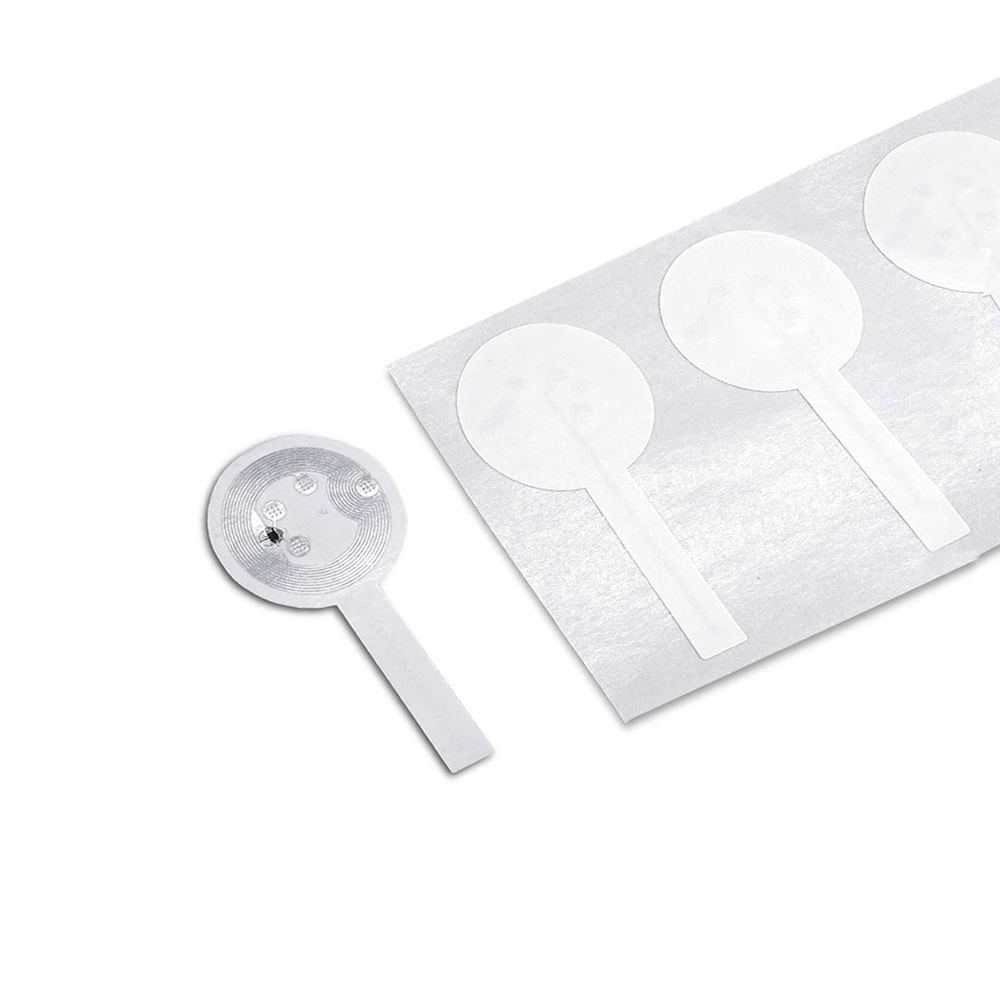
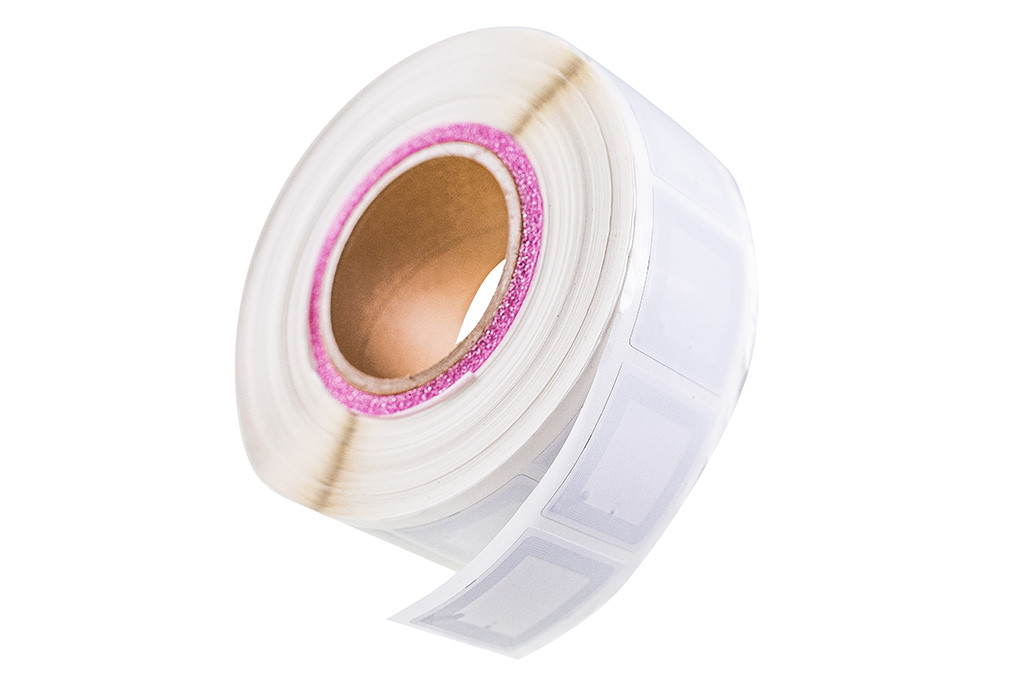
Featured Brand Authentication Products
SKUs we typically deploy for brand authentication. Tap a card for specs and samples.
At a glance
Use these short answers to decide whether this page matches the project before moving into the detail.
Audience
Mass-market consumer brands shipping 100k–100M+ units annually: apparel / sneakers, electronics / accessories, cosmetics / beauty, food + beverage, supplements / OTC pha...
Decision sequence
Counterfeit-risk tier: low (identification + engagement only) → NTAG 213; medium (tamper-evident packaging) → NTAG 213 TagTamper; high (cryptographic authentication) → N...
Next step
Ready to move forward? Start your inquiry to get specific answers for this project.
Get a brand authentication programme planThe mass-market counterfeit problem — $467B / 2.3% of world trade
The procurement business case for NFC brand authentication on mass-market consumer products is grounded in OECD/EUIPO data. The 2025 OECD/EUIPO joint report 'Mapping Global Trade in Fakes' (Jan 2025) sized the global counterfeit market at $467 billion in 2021, or 2.3% of world trade. EU customs alone seized $117 billion in counterfeit imports, representing 4.7% of all EU imports.
**Origin concentration.** 80%+ of seized counterfeits originated from mainland China and Hong Kong. The remaining 20% came from Turkey, India, the UAE, Vietnam and other secondary-source countries. The concentration in two source regions means a brand's anti-counterfeit detection effort can focus its supply-chain surveillance budget.
**Category distribution.** Footwear, clothing, leather goods, electronics, perfumes & cosmetics, pharmaceuticals, watches & jewelry, toys & games are the most-counterfeited categories per EUIPO seizure data. The category distribution argues for NFC authentication at the SKU level, not just the brand level — buyers verify a specific shoe pair / cosmetic bottle / electronics accessory, not generic brand identity.
**Direct + indirect cost.** Direct cost to brands is lost sales (a counterfeit sold is a genuine sale not made). Indirect cost is product-liability exposure (a counterfeit cosmetic causing an allergic reaction or a counterfeit medication causing patient harm exposes the brand to litigation it cannot otherwise defend), brand-equity erosion (consumers' confidence drops when counterfeits proliferate), and regulatory exposure (EU CSDDD due diligence obligations, US state-level consumer-protection enforcement).
**Pharma reality** — counterfeit medications are the highest-stakes category. WHO estimates 10% of medicines in low/middle-income countries are substandard or falsified. EU Falsified Medicines Directive (FMD) and US Drug Supply Chain Security Act (DSCSA, enforcement Nov 2024) already require pharma serialization at the unit-pack level. NFC tags layered on top of FMD/DSCSA serialization give pharmacists and consumers an authentication gate beyond the regulatory-mandatory 2D code.
Chip choice — NTAG 213 vs NTAG 213 TagTamper vs NTAG 424 DNA SUN
Three NXP chips dominate the mass-market authentication decision. Each maps to a distinct counterfeit-risk tier and cost envelope.

- **NTAG 213 (NXP MF0ICU2)** — entry chip. 144 bytes user memory; 13.56 MHz ISO/IEC 14443 Type A. Chip UID + URL only — no cryptographic authentication. Use case: low-counterfeit-risk identification + engagement programmes (recipe tagging, loyalty cards, festival-class disposable). Cost: $0.05–0.10 per chip at OEM volume; $0.20–0.40 in printed inlay; $0.40–1.00 in finished tag.
- **NTAG 213 TagTamper** — NTAG 213 with an integrated tamper-detection wire loop. The chip reports tamper state through the NDEF read after a wire break (e.g., bottle cap removal, blister card opening). Cost premium ~$0.05 over standard NTAG 213. Use case: tamper-evident packaging for cosmetics, supplements, alcohol, pharma blister cards.
- **NTAG 215 / NTAG 216** — 504 B / 888 B variants. Useful when the NDEF payload carries multi-language vCard or extended product data. Cost: $0.10–0.20 per chip. Mass-market use case overlap with NTAG 213 is limited; payload-size cases are rare.
- **NTAG 424 DNA SUN (NXP NT4H2421Gx)** — cryptographic authentication. AES-128 CMAC per-tap unique URL signing per NXP AN12196. Server-side validation detects clones in real time. Use case: medium-to-high-risk SKUs (premium apparel, electronics accessories, alcohol, pharma over-the-counter). Cost: $0.20–0.40 per chip at high volume.
- **NTAG 424 DNA TT (NT4H2421Tx)** — NTAG 424 DNA with tamper-detection wire loop. Combines AES-128 cryptographic authentication with tamper-evident detection. Cost: $0.30–0.50 per chip. Use case: highest-risk SKUs (luxury-adjacent mass-market, premium spirits, anti-counterfeit critical pharma).
- **STMicroelectronics ST25TV02KC** — alternative supplier with AES-128 SUN-equivalent authentication. Useful for brands wanting supply-chain diversification away from sole-source NXP dependency.
- **Read distance** — all NTAG variants read at 4–8 cm on iPhone XS+ (iOS 13+ background tag reading) and 5–10 cm on Android. Metal-backed products (electronics, automotive parts) require a ferrite isolator behind the chip; read distance halves.
Authentication flow — SUN URL, AES-CMAC, server-side validation
The cryptographic flow for SUN authentication is the same on mass-market as on luxury — but at mass-market volume the engineering challenge is throughput at the backend, not per-chip key management.
- **Step 1 — Tap.** Consumer (or supply-chain partner) taps phone to NFC chip embedded in product / packaging / hangtag. Phone reads NDEF URL record from chip.
- **Step 2 — URL generation.** NTAG 424 DNA chip generates fresh URL: `https://brand.com/01/{GTIN}/21/{serial}?picc_data={hex}&cmac={hex}`. The picc_data block encodes chip UID + monotonically-incrementing tap counter. The cmac is AES-128 CMAC signature over the URL using the chip's AES key (factory-injected, never extractable).
- **Step 3 — Server validation.** Brand authentication server: (a) decrypts picc_data with the AES key escrowed server-side in HSM/KMS; (b) verifies counter advance vs last-seen value for this chip UID (counter regression = replay attack); (c) verifies CMAC signature is correct for URL + key; (d) returns verdict: valid / tampered / counter regression / signature invalid / unknown chip.
- **Step 4 — Render verified page.** On valid verdict the server returns a product page with provenance, instructions, reorder link, loyalty enrollment, etc.
- **Step 5 — Engagement analytics.** Each authenticated tap captures geo-location (consented), tap timestamp, device class, and any subsequent engagement (page scroll, link clicks, reorder conversion). This is the data layer that justifies the chip cost beyond pure authentication.
- **Throughput at mass-market scale** — a brand shipping 10M units / year with 30% consumer-tap rate generates 3M annual authentication requests. Peak throughput during marketing campaigns can spike to 10× average. Plan AWS Lambda + DynamoDB / Cloud Run + Firestore / Azure Functions + Cosmos architecture; HSM-backed AES key access at ~10K QPS sustained.
- **Key management at scale** — AES keys can be the same across all chips of an SKU (simpler, weaker) or unique per chip (stronger, more storage). Per-chip key with HSM-protected key derivation is the higher-security pattern; SKU-level key with rotation cadence is the operationally simpler pattern.
Form factor by use case — hangtag, sticker, woven label, on-metal, bottle neck
Mass-market NFC authentication form factors are converter-driven (reel-to-reel inlay production) rather than artisanal. The matrix below maps category to form factor + chip recommendation + cost.
- **Volume economics** — at MOQ 100k+ chip costs drop 30–50% below MOQ 20k. Mass-market brands typically aggregate cross-SKU volume to hit the larger tier.
- **Anti-peel adhesives** — for tamper-evident form factors, the adhesive must be void-fragmenting (a peel attempt visibly destroys the tag rather than transferring it cleanly to another product). Common with NTAG 213 TagTamper integration.
- **On-metal substrates** — electronics, automotive and similar metal-housing categories need a ferrite isolator between chip antenna and metal substrate. Cost premium ~$0.05–0.15 per tag.
- **Reel-to-reel converter chain** — chip suppliers (NXP, ST) → inlay converters (Smartrac/Avery Dennison, Identiv) → label converters (Checkpoint, Paragon ID) → brand. Procurement teams can buy at any tier of this chain depending on internal capabilities.
| Category | Form factor | Chip recommendation | Cost / unit (MOQ 20k) |
|---|---|---|---|
| Apparel (premium) | Sewn-in woven label inlay | NTAG 424 DNA SUN | $0.40–0.80 |
| Apparel (mid-market) | Hangtag with paper/PET substrate | NTAG 213 + TagTamper | $0.15–0.35 |
| Sneakers (premium) | In-shoe label / tongue inlay | NTAG 424 DNA SUN | $0.40–0.70 |
| Sneakers (mass-market) | Hangtag + outer box NFC sticker | NTAG 213 | $0.10–0.25 |
| Electronics / accessories | On-metal NFC tag + ferrite isolator | NTAG 424 DNA SUN | $0.30–0.60 |
| Cosmetics / beauty | Bottle / tube tamper-evident sticker | NTAG 213 TagTamper | $0.15–0.30 |
| Premium cosmetics | Box-seal NTAG 424 DNA TT | NTAG 424 DNA TT | $0.40–0.70 |
| Food + beverage (non-alcohol) | On-package sticker | NTAG 213 | $0.10–0.20 |
| Wine / spirits | Bottle-neck tamper-evident capsule (break-on-removal) | NTAG 213 TagTamper or 424 DNA TT | $0.30–0.80 |
| Supplements / OTC pharma | Blister-card tamper-evident insert | NTAG 213 TagTamper | $0.20–0.40 |
| Automotive parts | On-metal anti-counterfeit sticker | NTAG 424 DNA SUN | $0.40–0.80 |
| Agro / seeds | Bag-seal sticker | NTAG 213 | $0.10–0.25 |
Customer engagement beyond authentication — the 'phygital' layer
Pure authentication justifies the chip cost only for high-risk categories. For lower-risk categories (apparel, food, electronics accessories) the engagement layer — what the consumer experiences after the tap — drives the ROI. HBR's 'Smart Products' research documented 85% lower cost per engagement and 152% lower cost per lead vs traditional marketing channels.
- **Provenance reveal** — after authentication, render the supply-chain story: factory location, manufacture date, cotton/material source, ethical sourcing certifications, carbon footprint. Common on Patagonia, Allbirds, Levi's programmes.
- **Usage instructions / regimens** — cosmetics + supplements categories: render the skincare routine, the dosage schedule, the safety warnings. Reduces customer-service inbound load.
- **Recipes + meal planning** — food + beverage categories: a wine bottle tap renders pairing suggestions; a coffee bag tap renders brew recipes; a spice jar tap renders recipes using the spice.
- **Reorder + loyalty** — the tap is a high-intent moment (customer is holding the product). One-tap reorder + loyalty-enrollment conversion runs 5–15% on cosmetics; 3–8% on food + beverage; 10–25% on supplements (recurring usage drives high reorder rate).
- **Scan-to-win + campaign mechanics** — limited-edition releases, sweepstakes, exclusive content unlocks. Nike's 'phygital' shoe drops use this pattern; Burberry, Valentino and Balenciaga limited-edition phygital releases follow similar patterns.
- **Post-sale tutorials** — electronics + complex products: tap reveals setup guide, video tutorial, troubleshooting flowchart. Reduces returns from 'product doesn't work' confusion.
- **Supply-chain visibility** — B2B use case: retailer staff tap product to confirm authenticity at receiving; inventory traceability through distribution; recall triggering if product enters a recall batch range.
- **Multi-language content** — single NFC URL can serve different languages based on phone locale. Critical for mass-market brands distributing across 50+ markets.
EU regulatory tailwind — DPP, ESPR, Battery Reg., FMD, CSDDD
Mass-market consumer brands face a converging EU regulatory stack on transparency and product information. NFC authentication tags are the consumer-facing layer; the underlying regulation mandates data carriers.
- **EU ESPR Regulation 2024/1781** — Ecodesign for Sustainable Products Regulation. Mandates Digital Product Passports across textiles, footwear, leather, furniture, tires, mattresses, steel + aluminum, electronics, food / beverage. Phased rollout: textile delegated act 2027 minimal compliance; advanced 2030; full circular-economy 2033. Each product needs a unique digital identifier accessible via NFC tap or QR scan.
- **EU Battery Regulation 2023/1542** — Battery Passport mandate from February 2027 for batteries above 2 kWh. Covers electric vehicles, e-bikes, industrial batteries, consumer electronics. NFC tags + GS1 Digital Link URLs are the preferred data carrier.
- **EU Falsified Medicines Directive (FMD) 2011/62/EU** — mandatory 2D barcode + tamper seal on prescription pharmaceuticals since February 2019. NFC layer is voluntary value-add; some pharma brands deploy it for consumer-facing trust signal.
- **US Drug Supply Chain Security Act (DSCSA)** — mandatory unit-pack serialization enforcement November 2024. NFC tags are the consumer-facing layer beyond the mandatory 2D code.
- **Corporate Sustainability Due Diligence Directive (CSDDD)** — entered force 2024. Mandates supply-chain due diligence on large EU companies; NFC tags + supply-chain data carriers are part of the documentation toolkit.
- **GS1 Digital Link Sunrise 2027** — non-regulatory but industry-coordinated transition to 2D barcodes (QR codes with GS1 Digital Link URL syntax). By December 2027 most consumer-product barcodes will carry a GS1 Digital Link URL. NFC tags pairing with QR codes give brands both physical-layer (NFC tap) and visual-layer (QR scan) consumer access.
- **JRC 18-category DPP priority list** — JRC published the priority categories for DPP rollout: textiles, footwear, furniture, tires, electronics, batteries, consumer electronics, white goods, ICT, steel + aluminum, chemicals, construction products, packaging, motor vehicles, agriculture / food / beverage, others.
GS1 Sunrise 2027 + 2D barcode transition — the carrier convergence
Sunrise 2027 is the GS1 industry-coordinated transition to 2D barcodes (QR codes with GS1 Digital Link URL embedded). By December 2027 most consumer-product packages will carry a GS1 Digital Link 2D code as the standard product identifier. NFC tags integrate with this transition rather than compete with it.
- **Sunrise 2027 timeline** — POS systems globally support GS1 Digital Link 2D codes by December 2027. Until then, dual-marking (legacy 1D UPC + new 2D) is the transition pattern.
- **GS1 Digital Link URL syntax** — `https://brand.com/01/{GTIN}/21/{serial}` is the canonical carrier URL. The /01/ holds the GTIN; /21/ holds the unique serial. Same URL works as 2D QR code, NFC tap, and manual browser entry.
- **NFC + QR pairing** — most mass-market NFC tag programmes also print the equivalent QR code on the tag or package. The hybrid pattern (NFC for iPhone XS+ background-tap convenience; QR for older phones and visual verification) yields 30–50% higher consumer-engagement completion vs NFC-only programmes.
- **Resolver architecture** — GS1's reference architecture defines a resolver service that takes the Digital Link URL and returns category-specific responses (product info, DPP, after-sales, recall info). Brands route any URL segment to any back-end service.
- **Multi-region compliance** — the same URL works for EU DPP, planned UK textile labelling regulation, US state-level requirements (California SB 707 textile labelling), Japan / Korea / Singapore market requirements. Single chip + single URL covers multi-region compliance.
Authentication backend — first-party vs Scantrust, atma.io, EVRYTHNG, Authena, Mojix
The chip + tag layer is the easy part of an authentication programme. The backend layer (key escrow, server-side validation, analytics, brand-CRM integration) determines whether the programme operates at scale or stalls in pilot.
- **Scantrust** — "secure cloud and mobile-based product authentication and supply chain visibility"; copy-proof QR codes + NFC; SAP partner; established in pharma, cosmetics, beverages. Strong on serialization + supply-chain visibility.
- **atma.io (Avery Dennison)** — "connected product cloud"; assigns unique digital IDs at scale across apparel, footwear, food. Deep apparel + footwear category strength.
- **EVRYTHNG (now part of Digimarc / Avery Dennison)** — IoT smart products platform. Anchor customers: Mondelez, Coca-Cola, Unilever, LVMH, Diageo. Mass-market FMCG strength.
- **Authena** — anti-peeling NFC tags + blockchain ledger; physical-digital seal; digital-twin on-chain pattern. Premium pharma + cosmetics focus.
- **Mojix** — Stockholm-based; supply-chain visibility platform; deep in pharma serialization.
- **Qliktag** — DPP-focused platform; supports GS1 Digital Link + ESPR compliance.
- **Acviss, Ennoventure, ForgeStop, Ixkio, Legitimate.tech** — smaller specialists in specific verticals or geographies.
- **First-party server build** — full data sovereignty; no per-engagement SaaS fees; higher engineering investment (3–6 months typical build at 50-engineer-week scale). Pays back at >5M annual tap volume.
Adoption case studies — Nike, adidas, eBay, Patagonia, Mondelez, Burberry
Real-world deployments demonstrate that mass-market NFC authentication is past the pilot phase. The named cases below set the procurement-narrative reference points.
- **Nike NikeConnect China traceability (2023)** — NFC chips added to sneakers for product traceability in China; 130k+ pairs reported per NFCW. Nike's Connect chips support both anti-counterfeit and post-purchase engagement.
- **eBay Authenticity Guarantee (since 2021)** — 1.5M+ sneaker pairs authenticated via NFC tags. Covers Nike, adidas, Reebok, Puma, Converse. Marketplace-level authentication; sellers ship to eBay authentication center, eBay attaches NFC tag, ships to buyer.
- **adidas Originals NFC inside shoe** — anti-counterfeit chip integrated into mid-sole of select Originals SKUs. Same technology stack adopted across Yeezy and Bad Bunny collaborations.
- **Patagonia + atma.io** — connected-product programme with focus on supply-chain transparency and repair / take-back. Each garment carries a unique digital identifier resolvable to manufacture data, repair history, resale provenance.
- **Mondelez (Cadbury, Toblerone, Oreo) + EVRYTHNG** — 'phygital' campaign mechanics on packaging; scan-to-win / scan-to-recipe / loyalty enrollment. Industry leader in FMCG smart packaging.
- **Coca-Cola + EVRYTHNG** — interactive packaging across multiple market campaigns; consumer engagement analytics inform marketing-mix optimization.
- **Unilever + EVRYTHNG** — beauty + personal care brands; product authentication + post-purchase regimen content.
- **Diageo + EVRYTHNG** — premium spirits (Johnnie Walker, Tanqueray) with NFC + QR connected-product programmes.
- **Burberry, Valentino, Balenciaga limited-edition phygital releases** — mass-market-adjacent luxury crossover programmes pairing physical product with digital collectible / NFT.
- **KAWS limited-edition certificates** — limited-edition art toys + collectibles use NFC authentication for resale-market trust signal.
NFC vs alternatives — QR codes, holograms, invisible-ink, copy-proof QR
Procurement teams evaluating NFC brand authentication should understand the alternative anti-counterfeit technologies and where each wins.
- **NFC (NTAG family with SUN)** — cryptographic, machine-verifiable, integrates with smartphone tap. Highest security, requires NFC-capable phone (universal on iPhone XS+ and Android since 2011). Cost: $0.05–0.50 per chip embedded.
- **Static QR code** — visual, smartphone camera scan, no cryptographic protection. Anyone can photograph and print the same QR. Suitable for non-counterfeit-sensitive engagement use cases (recipes, marketing campaigns). Cost: ~$0 (print only).
- **Copy-proof QR (Scantrust patented)** — visual QR with cryptographic micro-patterns that detect when the code has been printed-from-a-copy rather than printed-from-original. Requires the brand's smartphone app to detect (not generic camera). Cost: $0.005–0.02 per code printed (license + printing).
- **Holograms** — visual; legacy anti-counterfeit since 1980s. Counterfeiters now produce hologram clones that pass casual inspection. Mostly procurement-narrative legacy rather than effective anti-counterfeit in 2026.
- **Invisible-ink / UV-reactive markers** — visual under specific lighting; requires inspector tool. Used in currency, passports, some pharma. Not consumer-verifiable.
- **RFID UHF tags** — long-range scan; used in supply-chain visibility (warehousing, retail inventory). Read at 1–10m. Not optimised for consumer-tap; consumer phones don't have UHF readers.
- **BLE beacons** — proximity-based; powered (not passive); higher per-unit cost and operational complexity vs passive NFC.
- **Decision rule** — NFC SUN for cryptographic consumer-tap authentication; copy-proof QR for visual-only authentication where chip cost is prohibitive; UHF RFID for B2B supply-chain visibility; static QR for non-anti-counterfeit engagement campaigns. Many programmes combine NFC SUN + printed copy-proof QR on the same tag for dual-layer verification.
Pricing, MOQ and TCO — what to expect at mass-market volume
Mass-market NFC authentication has steep volume curves. The economics shift dramatically from 1k to 100k to 1M+ unit annual volume.
- **Volume break thresholds** — typical 30–50% per-unit cost reduction at 100k+ vs 20k MOQ; another 20–30% reduction at 1M+ vs 100k.
- **Pre-encoding economics** — supplier writes the GTIN + serial NDEF record during inlay production. Adds ~$0.01–0.03 per unit vs blank stock; eliminates a labelling step.
- **Backend TCO** — first-party server (engineering 3–6 months + ongoing AWS/GCP/Azure spend ~$5K–50K / month at scale) vs SaaS authentication ($0.05–0.20 per active item / year). Break-even point typically at 1–3M active items.
- **Per-engagement cost** — at $0.20 chip cost amortised over 5-year product lifecycle with 50% tap rate, cost per consumer engagement is $0.08. Compare to paid social CPC ($1–5+) for order-of-magnitude better engagement leverage.
- **Lead time at scale** — 100k+ orders typically 4–6 weeks production lead time; pre-encoding adds 1–2 weeks; sample lead time 5–10 working days.
| Configuration | MOQ floor | Cost / unit | Lead time |
|---|---|---|---|
| NTAG 213 + paper inlay, plain | 10,000 | $0.05–0.15 | 3 weeks |
| NTAG 213 + printed sticker | 20,000 | $0.10–0.25 | 3 weeks |
| NTAG 213 TagTamper + tamper sticker | 20,000 | $0.15–0.30 | 3 weeks |
| NTAG 213 + hangtag (paper/PET) | 20,000 | $0.20–0.40 | 3–4 weeks |
| NTAG 213 + woven garment label | 10,000 | $0.30–0.60 | 4 weeks |
| NTAG 424 DNA SUN + paper inlay | 20,000 | $0.20–0.40 | 4 weeks |
| NTAG 424 DNA SUN + printed sticker | 20,000 | $0.25–0.50 | 4 weeks |
| NTAG 424 DNA TT + tamper-evident | 20,000 | $0.35–0.65 | 4–5 weeks |
| On-metal NFC tag + ferrite + NTAG 424 DNA | 10,000 | $0.45–0.85 | 5 weeks |
| Bottle-neck tamper-evident capsule + 424 DNA TT | 10,000 | $0.50–1.20 | 5–6 weeks |
Useful next pages
Use these linked product, guide and comparison pages to keep the next click specific and practical.
Brand authentication products
Starting points for the chip + form-factor combination.
Related solutions
Adjacent NFC programmes and DPP regulatory companion.
Related editorial
Background reading on NFC anti-counterfeit and DPP.
FAQ
What does NFC brand authentication cost per unit at mass-market volume?
Three cost tiers: (1) NTAG 213 chip + paper inlay or printed sticker — $0.05–0.30 per unit at MOQ 20k; suitable for low-counterfeit-risk engagement programmes. (2) NTAG 213 TagTamper — $0.15–0.35; adds tamper-evident wire detection for cosmetics, supplements, pharma blister cards. (3) NTAG 424 DNA SUN — $0.20–0.50; AES-128 CMAC cryptographic authentication for medium-to-high-risk SKUs. Volume breaks at 100k+ MOQ reduce per-unit cost 30–50% further. Pre-encoding adds $0.01–0.03 per unit. Form-factor finishing (hangtag, woven label, on-metal, bottle-neck capsule) dominates total cost; chip cost is typically <50% of finished tag cost.
Can NFC tags be cloned?
Static-UID-only NFC tags can be cloned — a counterfeiter reads the UID and writes the same UID to a fresh blank tag. Most cheap dummy NFC chips in counterfeit goods are exactly this type. NTAG 424 DNA SUN cannot be cloned: each tap generates a unique URL signed with AES-128 CMAC; the AES key is factory-injected into the chip and never accessible at the RF interface; a cloned chip cannot reproduce the cryptographic signature. Server-side validation detects clones in real time. The procurement consequence: if anti-counterfeit is the core value proposition, specify NTAG 424 DNA SUN, not NTAG 213. Note: NTAG 424 DNA SUN tags can be replayed (same tap captured and re-played to the server) — replay protection comes from the monotonically-incrementing counter, which the server validates against last-seen value per chip.
NFC vs static QR vs copy-proof QR — which should I use?
NFC SUN (NTAG 424 DNA) for cryptographic consumer-tap authentication where chip cost ($0.20–0.50) is justified by counterfeit risk. Copy-proof QR (Scantrust patented) for visual-only authentication where chip cost is prohibitive — micro-patterns embedded in the QR detect printed-from-a-copy vs printed-from-original ($0.005–0.02 per code). Static QR for non-anti-counterfeit engagement campaigns (recipes, marketing, loyalty) — anyone can photograph and print a copy. Many programmes combine NFC SUN + printed copy-proof QR on the same tag for dual-layer verification: NFC for iPhone XS+ background tap convenience, copy-proof QR for older phones and visual confirmation. The combination yields 30–50% higher consumer-engagement completion than NFC-only or QR-only.
Do I need NTAG 424 DNA SUN, or is NTAG 213 sufficient?
Depends on counterfeit risk. NTAG 213 (no cryptographic authentication) is sufficient when: (a) product category has low counterfeit market (recipe tagging, marketing campaigns, low-value SKUs); (b) consumer-engagement layer is the primary value; (c) chip cost matters most. NTAG 424 DNA SUN is necessary when: (a) product is counterfeit-targeted (apparel, sneakers, cosmetics, electronics, alcohol, pharma); (b) brand protection / product liability is at stake; (c) the marginal $0.15–0.30 per-chip premium pays back on a single prevented counterfeit incident. The pragmatic rule: NTAG 213 for marketing engagement; NTAG 424 DNA SUN for authentication. NTAG 213 TagTamper sits between them — adds tamper-evident detection without cryptographic authentication.
Is this DPP-compliant for EU ESPR Regulation 2024/1781?
Yes when paired with GS1 Digital Link URL syntax. EU ESPR doesn't dictate chip vendor or technology; it requires each product to have a unique digital identifier accessible via NFC tap or QR scan that resolves to product origin, material composition, care instructions, recyclability and category-specific data. NTAG 424 DNA SUN URL signed with AES-128 CMAC, encoded as a GS1 Digital Link URL (`https://brand.com/01/{GTIN}/21/{serial}`), satisfies the carrier + data-layer requirement. Textile delegated act 2027 minimal compliance; advanced 2030; full circular-economy 2033. Battery Regulation 2023/1542 enforcement February 2027 for >2 kWh batteries. Plan the URL syntax + backend resolver architecture before chip procurement finalises.
What about Nike NikeConnect / eBay Authenticity Guarantee — same technology?
Same NFC chip family (NTAG variants from NXP) but different implementations. Nike NikeConnect chips (130k+ pairs in China per NFCW 2023) combine anti-counterfeit and post-purchase engagement; the in-shoe NFC chip resolves to a Nike-controlled URL that handles both authentication and Nike's customer-relationship management. eBay Authenticity Guarantee (1.5M+ sneaker pairs authenticated since 2021) is a marketplace-level programme: sellers ship to eBay authentication center, eBay attaches a fresh NFC tag tied to authentication serial, ships to buyer. The chip-level technology is the same; the operational model (in-product vs marketplace-attached) differs.
Do NFC authentication tags integrate with EU Falsified Medicines Directive (FMD) for pharma?
FMD already mandates 2D barcode + tamper-evident seal on prescription pharmaceuticals since February 2019. NFC tags are voluntary value-add on top of the mandatory FMD compliance. Some pharma brands deploy NTAG 213 TagTamper or NTAG 424 DNA TT inside the secondary packaging to give pharmacists and consumers a consumer-facing trust signal beyond the regulatory FMD baseline. The same applies to US Drug Supply Chain Security Act (DSCSA) — mandatory serialization at unit-pack level since November 2024; NFC layer is voluntary consumer-facing enhancement.
What is the minimum order for an NFC authentication programme?
Realistic MOQ floor depends on form factor and chip: paper inlay or printed sticker at MOQ 10k–20k; hangtag or woven label at MOQ 10k; on-metal tag or bottle-neck capsule at MOQ 5k–10k. NTAG 424 DNA chips are typically MOQ 20k for cost-effective per-chip pricing. Pre-encoding with GTIN + serial typically MOQ 20k. Sample programmes (100–500 units) for validation are typically available at $1–5 per sample with 5–10 working days lead time.
How does mass-market NFC brand authentication differ from luxury NFC authentication?
Different scale + price tier + content layer. Mass-market: $0.05–$0.30 per chip; 100k–100M+ unit annual volume; reel-to-reel converter scale; emphasis on EU DPP / FMD / ESPR / GS1 Sunrise 2027 regulatory compliance + 'phygital' customer engagement (recipes, reorder, loyalty). Luxury: $0.50–$3+ per chip; 1k–100k unit annual volume; serialized hand-finished tags; emphasis on brand protection + resale provenance + Aura / Arianee / VeChain blockchain consortium membership. Same chip family (NTAG 424 DNA SUN), different operational model. See /solutions/nfc-luxury-authentication/ for the luxury-tier procurement guide.
Sources & references
Primary standards, OEM datasheets and regulatory documents cited by this article. All URLs were verified on the access date shown below.
- OECD/EUIPO — Mapping Global Trade in Fakes 2025
Primary citation for $467B / 2.3% world trade / $117B EU customs counterfeit figures (2021 baseline).
- EUIPO — Counterfeit trade report press release
EU-customs origin concentration (China + Hong Kong 80%+).
- NXP NTAG 424 DNA datasheet (NT4H2421Gx)
Authoritative chip-family reference — AES-128 SUN message authentication.
- NXP Application Note AN12196 (NTAG 424 DNA implementation)
Reference implementation for SUN AES-CMAC authentication.
- NXP NTAG 424 DNA TagTamper product page
NTAG 424 DNA TagTamper variant with break-on-removal wire detection.
- NXP NTAG 213 product page
Entry-tier NFC chip product page.
- NFC Forum Type 4 Tag specification v1.2
Protocol reference for the chip family.
- ISO/IEC 14443 standard explainer
13.56 MHz contactless air interface.
- EUR-Lex — Regulation (EU) 2024/1781 (ESPR)
Primary legal citation for EU Digital Product Passport mandate.
- EU Commission — ESPR implementation hub
Work-plan status; textile delegated act priority for 2027.
- EU Battery Regulation 2023/1542 — Battery Passport guidance
February 2027 mandatory Battery Passport for >2 kWh.
- EU Falsified Medicines Directive — EMA overview
Pharma authentication 2D code + tamper seal mandatory since Feb 2019.
- US FDA Drug Supply Chain Security Act (DSCSA)
Mandatory pharma unit-pack serialization enforcement Nov 2024.
- GS1 US — Sunrise 2027
Industry transition to 2D barcodes by December 2027.
- GS1 Digital Link Sunrise 2027 hub
GS1 Digital Link URL syntax for 2D barcodes + NFC carriers.
- GS1 Digital Link standard
URL syntax (https://brand.com/01/{GTIN}/21/{serial}) for product identifiers.
- NFC World — Nike adds NFC chips to sneakers in China (2023)
Case study citation — 130k+ pairs.
- NFC World — eBay authenticates 1.5M sneakers with NFC
Marketplace-level authentication reference.
- Scantrust corporate site
Copy-proof QR + secure cloud authentication platform.
- atma.io (Avery Dennison connected product cloud)
Mass-market connected-product platform; Patagonia, Mondelez customer base.
- Authena anti-counterfeit platform
Anti-peeling NFC + blockchain authentication.
- JRC — DPP 18 priority categories (Nov 2024)
Authoritative DPP category-priority list for ESPR rollout planning.
Proud Tek is a Shenzhen-based RFID & NFC manufacturer supplying hotel chains, transit operators, event venues and retail brands worldwide. Every order includes free samples, RF testing and dedicated project support.
Get a Quick Quote
Tell us about your project and we'll respond within one business day. Fields marked (asterisk) are required.