
NFC Marketing
NFC Tags for Product Authentication
Quick answer
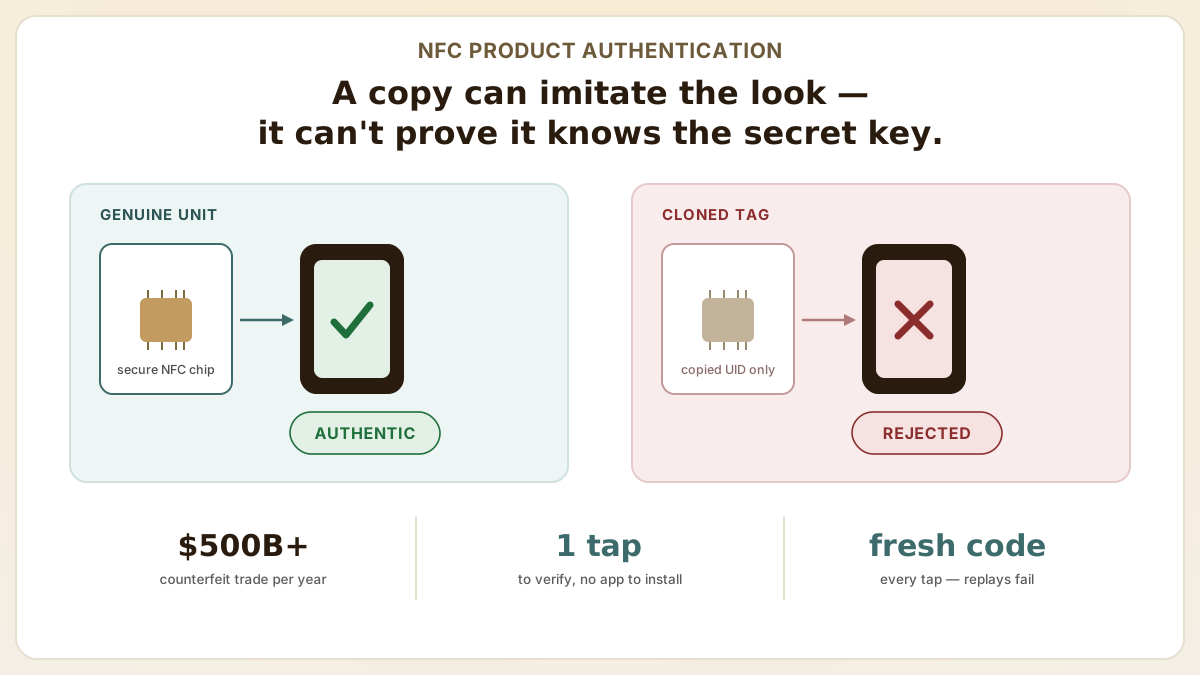
NFC product authentication lets any shopper confirm a product is genuine with one phone tap — no app — using a cryptographic chip whose rolling code the $500 billion-a-year counterfeit trade cannot clone. Counterfeiters copy a hologram; they cannot copy a secret key. How tap-to-verify works, which chips resist cloning, and how to run a vendor RFP.
- NFC-based authentication gives consumers a one-tap verification experience that requires no app download or technical knowledge.
- Cryptographic chips like NTAG424 DNA generate unique, rolling authentication codes that cannot be cloned even with physical access to the tag.
- Authentication tap data doubles as a supply chain visibility tool, tracking product movement from factory to end consumer.
At a glance
Use these short answers to decide whether this page matches the project before moving into the detail.
Key takeaway
NFC-based authentication gives consumers a one-tap verification experience that requires no app download or technical knowledge.
What counterfeiting problem does NFC authentication solve?
Every anti-counterfeiting feature a brand ships starts life as 'uncopyable' and ends as a tutorial. The hologram gets reproduced; the serial number gets photographed and...
Next step
Ready to move forward? Start your inquiry to get specific answers for this project.
Discuss authentication solutionsWhat counterfeiting problem does NFC authentication solve?
Every anti-counterfeiting feature a brand ships starts life as 'uncopyable' and ends as a tutorial. The hologram gets reproduced; the serial number gets photographed and reprinted onto the counterfeits; the clever ink turns up on someone else's packaging. NFC authentication changes the contest entirely: instead of competing on how hard a mark is to copy, it competes on what a copy cannot do — prove it knows a secret. Global trade in counterfeit goods is estimated at over $500 billion annually according to OECD and EUIPO reports. Traditional anti-counterfeiting measures (holograms, serial numbers, special inks) are increasingly defeated by sophisticated counterfeiters who replicate visual security features with high fidelity.
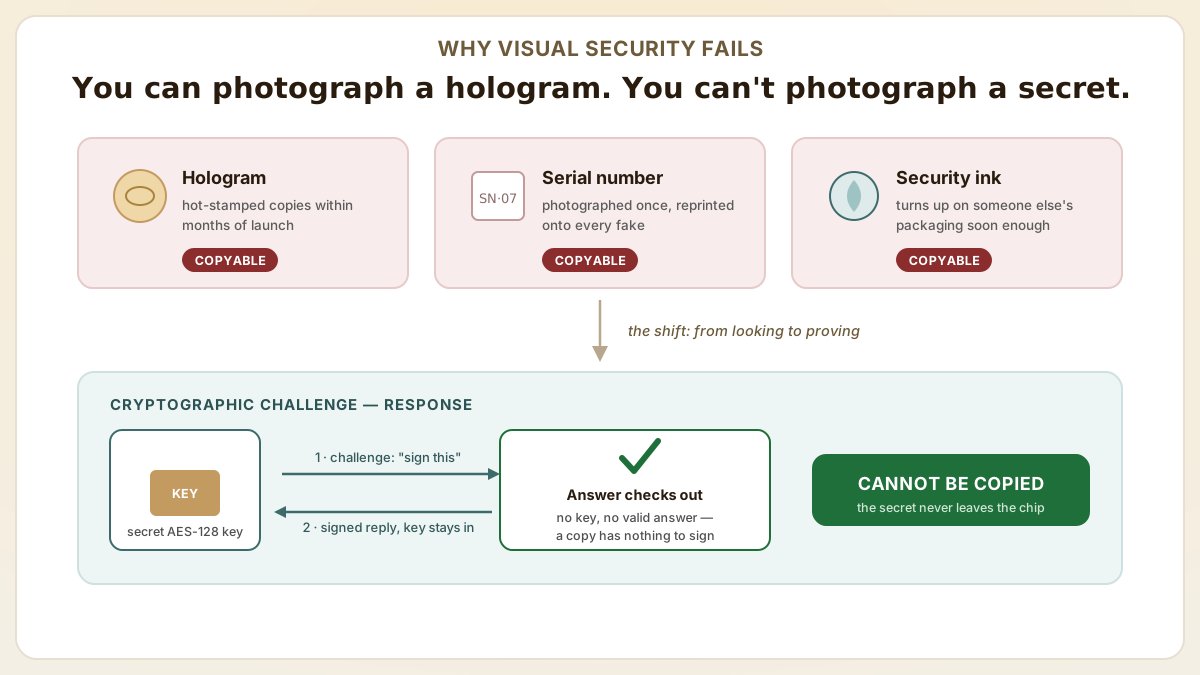
NFC authentication shifts the verification mechanism from visual inspection (which can be faked) to cryptographic challenge-response (which cannot be faked without the secret key stored in the chip's secure memory). When a consumer taps an NFC-authenticated product, the chip generates a unique, one-time authentication code that is verified against the brand's cloud server. A cloned tag cannot produce valid codes because it does not possess the secret key.
- Visual security features (holograms, color-shifting inks) can be replicated by counterfeiters within months of introduction.
- Static serial numbers can be copied from genuine products and applied to counterfeits.
- NFC cryptographic authentication requires access to a secret key that is physically impossible to extract from the chip.
- Consumer-facing verification via smartphone eliminates the need for trained inspectors or specialized equipment.
Which NFC chip options work for authentication?
Not all NFC chips are suitable for product authentication. The chip must support cryptographic operations that prevent cloning. Here is how the main NFC chip families compare for authentication use cases.
| Chip | Authentication method | Clone resistance | Cost (MOQ 10K) | Best for |
|---|---|---|---|---|
| NTAG213 | Password only (32-bit) | Low: password can be brute-forced | $0.04 – $0.08 | Not recommended for authentication |
| NTAG213 TT | Password + tamper detection | Low-medium | $0.10 – $0.15 | Tamper-evident packaging only |
| NTAG424 DNA | AES-128 SUN (Secure Unique NFC) | Very high: rolling codes | $0.15 – $0.30 | Consumer product authentication |
| NTAG424 DNA TagTamper | AES-128 SUN + tamper loop | Very high + physical tamper | $0.20 – $0.40 | Spirits, pharmaceuticals, luxury goods |
| ICODE DNA | AES-128 mutual auth (HF/UHF) | Very high | $0.25 – $0.45 | Supply chain + consumer dual use |
How SUN (Secure Unique NFC) authentication works
NTAG424 DNA uses NXP's SUN protocol, which is the current industry standard for NFC product authentication. Understanding the protocol helps procurement teams evaluate vendor implementations and avoid insecure shortcuts — the flow below traces exactly what happens between a tap and a verdict.
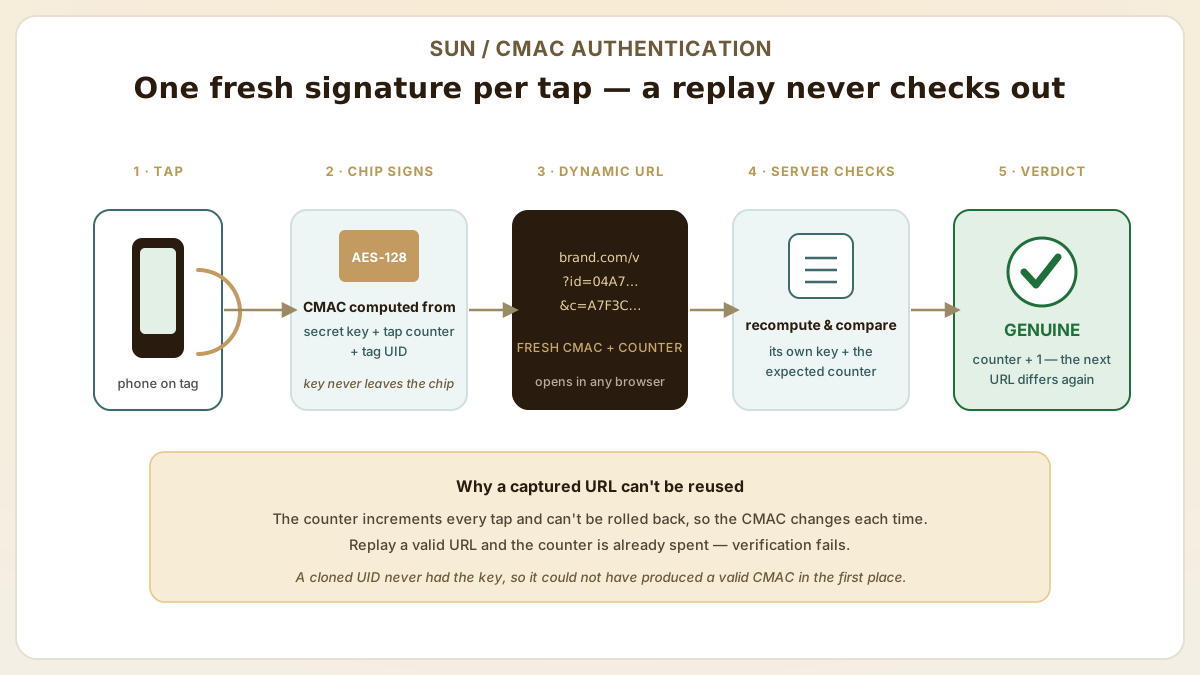
When a phone taps an NTAG424 DNA tag, the chip calculates a CMAC (Cipher-based Message Authentication Code) using its internal AES-128 key, the current tap counter and the tag's UID. This CMAC is appended to the URL as a dynamic query parameter. The brand's cloud server reconstructs the CMAC using its copy of the key and the expected counter value. If the CMACs match, the product is genuine. Each tap increments the counter, so the same URL is never generated twice. Replaying a captured URL will fail verification.
- The AES-128 key is injected during chip manufacturing or personalization and never leaves the chip's secure memory.
- The tap counter increments monotonically and cannot be reset, making replay attacks detectable.
- The CMAC changes with every tap, so even if an attacker captures a valid URL, it cannot be reused.
- Server-side verification can also return supply chain data, warranty status and promotional content alongside the authentication result.
How does it integrate with product packaging and labeling?
Where you hide the chip decides whether a counterfeiter can simply move it to a fake, so placement is a security decision before it is an aesthetic one — a balance of security, readability and manufacturing feasibility. The formats below are roughly ordered by how hard they make tag transfer, a lesson learned the expensive way in early luxury-bag programs.
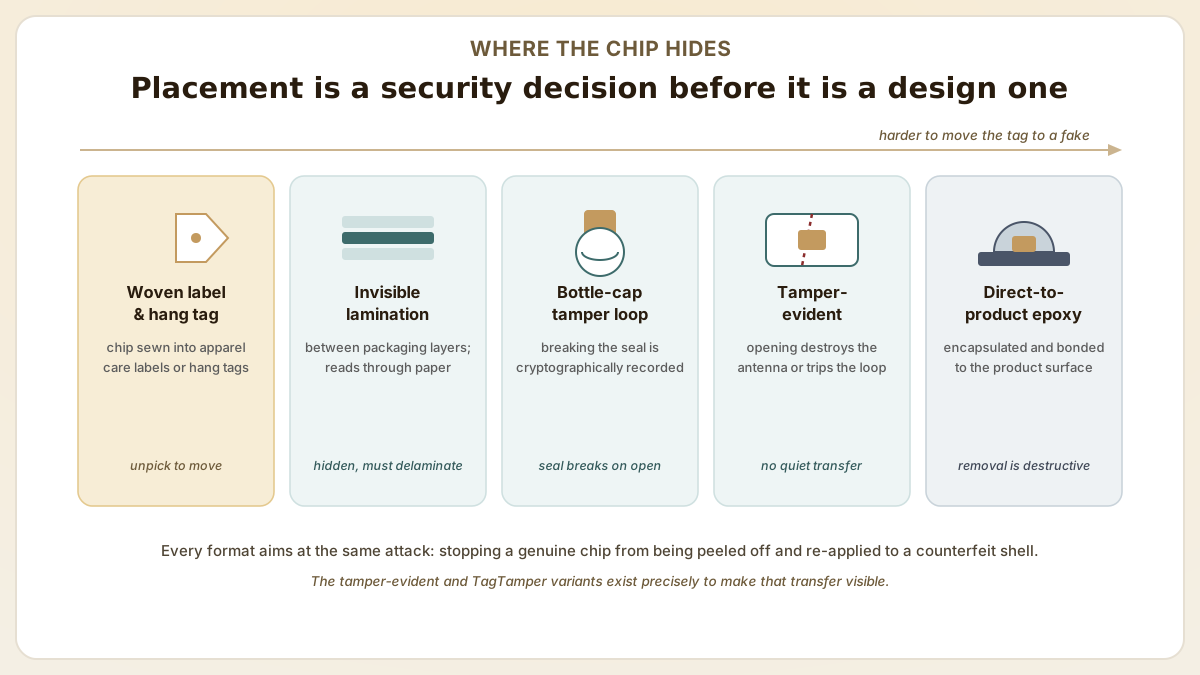
- Tamper-evident placement: Position the NFC tag so that opening the package destroys the tag's antenna or triggers the TagTamper loop. This prevents tag transfer from a genuine package to a counterfeit.
- Invisible embedding: NFC tags can be laminated between packaging layers, making them invisible to consumers while remaining readable through cardboard, paper or thin plastic.
- Woven labels: For apparel and accessories, NFC chips can be embedded in woven care labels or hang tags that are sewn into the garment.
- Bottle caps and closures: For spirits and beverages, NFC tags with tamper loops integrate into the closure so that breaking the seal is cryptographically recorded — the mechanism behind NFC for wine and spirits under EU EPR.
- Direct-to-product: For high-value goods, NFC tags can be encapsulated in epoxy and attached directly to the product surface.
Which NFC authentication vendors and platforms should procurement evaluate?
By 2026 the NFC authentication market has consolidated into a handful of chip suppliers, inlay/converter vendors and SaaS authentication platforms. Knowing the differences is what separates a vendor RFP from a fishing expedition.
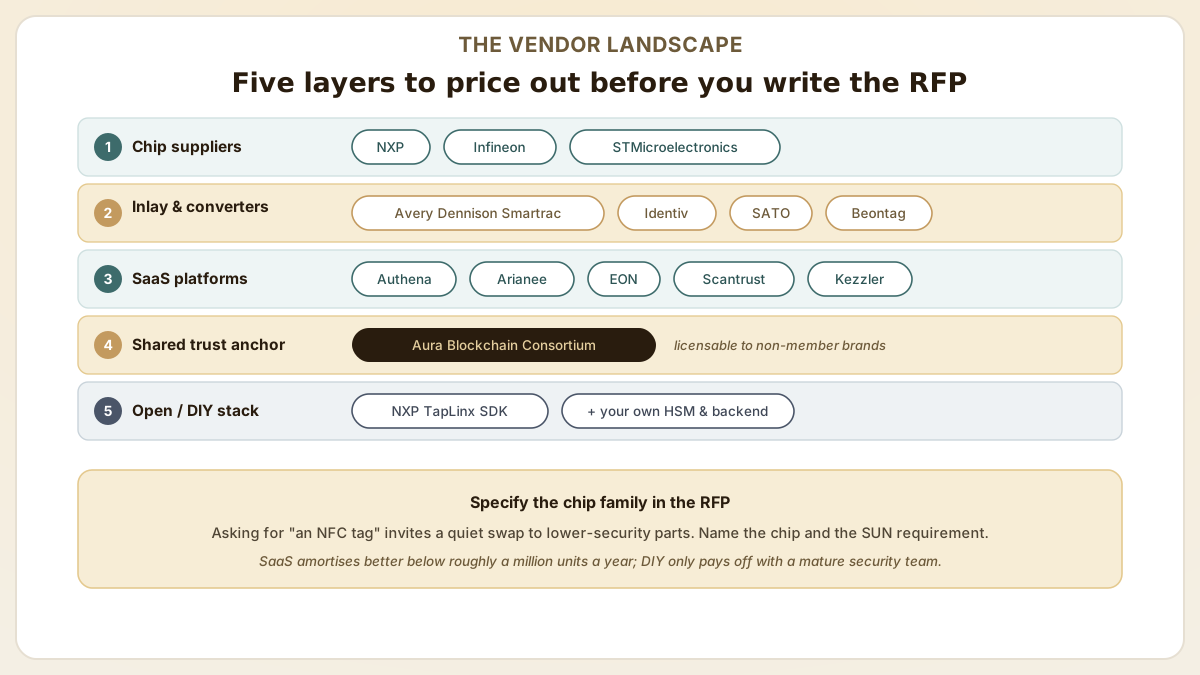
- Chip suppliers: NXP dominates with NTAG 424 DNA / NTAG 424 DNA TT and DESFire EV3; Infineon SECORA / OPTIGA Authenticate competes on automotive-grade and IoT pairing; STMicroelectronics ST25 family fills mid-tier roles. Specifying the chip family in RFPs (rather than 'an NFC tag') prevents bait-and-switch on lower-security parts.
- Inlay and converter vendors: Avery Dennison Smartrac (Circus NFC, Minitrack NFC, dual-frequency UHF + NFC inlays), Identiv (uTrust, Smart Tags), SATO Vicinity, Beontag and Adhesive Technology each offer NTAG 424 DNA inlays in apparel, retail and FMCG form factors. Evaluate ARC certification levels and tape-substrate adhesives for the use case.
- SaaS authentication platforms: Authena, Arianee (founding member of Aura), EON, Scantrust and Kezzler each provide turn-key key-management, verification API and consumer landing pages. Authena and Arianee are most-cited in luxury; Kezzler and Scantrust in FMCG and pharma; EON in textiles + DPP. Most charge per active item per year ($0.05-$0.30) on top of one-time setup.
- Aura Blockchain Consortium: shared-ledger trust anchor co-founded by LVMH, Prada, Richemont, OTB, joined by Mercedes-Benz; 40M+ encrypted products as of 2024. Available under licence to non-member brands. Evaluate when resale-platform interoperability with member brands is core to ROI.
- Open / DIY stack: NXP TapLinx SDK + open-source Android/iOS libraries + your own backend. Lowest per-unit cost, highest engineering and HSM operational burden. Recommended only for brands with mature security teams and >1M unit/year volume; otherwise SaaS amortises better.
How does cryptographic NFC authentication compare to QR, holograms and RFID for clone resistance?
Brand teams often inherit a hologram + serial-number anti-counterfeit program and need to justify the upgrade. The honest comparison below puts NFC SUN against the alternatives on the dimensions that drive procurement decisions.
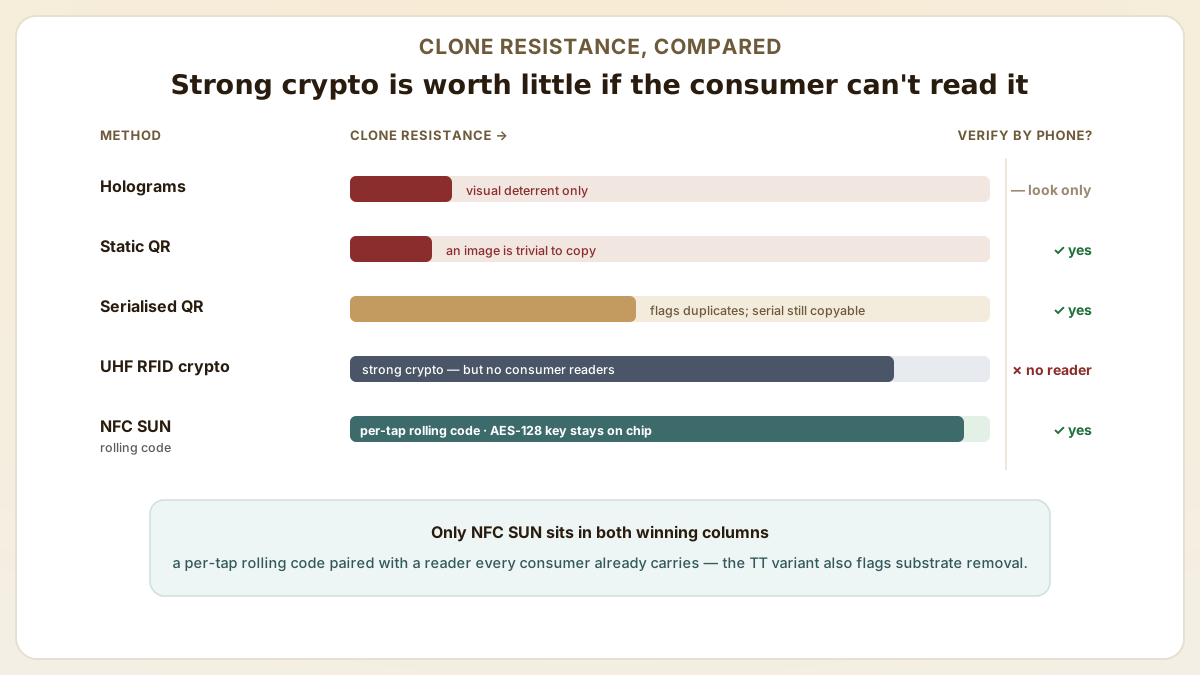
- Holograms: defeated by off-the-shelf hot-stamping equipment within months of introduction. No cryptographic trust anchor, no backend visibility. Useful for low-cost visual deterrent only.
- Static QR codes: trivially copied — the QR is just an image, and reproducing an image is not a skill counterfeiters lack. Provide URL-based product info with no clone resistance. Adequate for marketing, never adequate for anti-counterfeit alone.
- Serialised QR + backend lookup: better than static QR (the backend can flag duplicate-serial scans), but the serial is still copy-and-paste-able. Counterfeiters who control the bottle can scan once, copy the URL onto cloned units, and most consumers never look at the 'second tap' warning. Used in some EU EPR pilots as a cost compromise.
- UHF RFID with EPC Gen2v2 crypto suite: technically capable of mutual authentication, but consumer ecosystems do not have UHF readers. Strong for B2B supply-chain authentication; weak for consumer tap-to-verify.
- NFC SUN (NTAG 424 DNA): cryptographic rolling code on every tap, AES-128 key never leaves the chip, replay protection via monotonic counter. The chip-individual key model + smartphone tap is the only combination that scales consumer-side anti-counterfeit. Adding the TT (TagTamper) variant detects substrate removal — closing the 'transplant the genuine chip onto a counterfeit shell' attack.
Useful next pages
Use these linked product, guide and comparison pages to keep the next click specific and practical.
NFC authentication products
NFC tags and stickers suitable for product authentication and anti-counterfeiting applications.
Related NFC products
Complementary NFC products for brand protection and consumer engagement programs.
FAQ
Can counterfeiters clone an NFC authentication tag?
Not with cryptographic chips like NTAG424 DNA. The AES-128 key stored in the chip's secure memory cannot be extracted through any known attack. A counterfeiter can copy the tag's UID but cannot generate valid rolling authentication codes without the secret key.
Do consumers need an app to verify product authenticity?
No. NTAG424 DNA tags store a URL that opens in the phone's default browser. The verification happens on the brand's cloud server, and the result is displayed as a web page. No app installation is required.
How much does NFC authentication add to product cost?
NTAG424 DNA tags cost $0.15-$0.30 per unit at volumes of 10,000+. Including integration labor and cloud verification platform fees, total per-unit cost is typically $0.25-$0.50. For products with margins of $10 or more, the anti-counterfeiting ROI is strongly positive.
Can the same NFC tag serve both authentication and marketing purposes?
Yes. The verification landing page can include authentication status alongside product information, loyalty program enrollment, warranty registration and promotional content. This dual-purpose approach maximizes the value of each embedded tag.
What happens if the cloud verification server goes down?
If the server is unreachable, the phone will display a connection error. Best practice is to include a static fallback indicator (such as the tag UID) that consumers can reference against a published list, though this provides weaker assurance than real-time cryptographic verification.
How do we manage AES-128 keys for NTAG 424 DNA at scale without exposing them?
Use NXP's Trust Provisioning Service for chip-individual keys derived from Master keys held in FIPS 140-2 Level 3 HSMs at NXP's secure factory. Your verification backend only ever sees per-chip keys after they're written to silicon — the master never leaves the HSM. For brands that prefer to control key generation in-house, partner with a HSM-backed SaaS (Authena, Arianee, Kezzler, Scantrust) that performs key derivation and signing inside their HSM cluster. Avoid storing AES-128 keys in plaintext databases or application config; standard pattern is HSM-protected key vault with role-based access on the verify endpoint.
Should we pick Authena, Arianee, Kezzler or build it ourselves?
Volume and security maturity are the decisive variables. <100K units/year and limited security team: pick a SaaS — Authena and Arianee dominate luxury, Kezzler and Scantrust dominate FMCG/pharma, EON dominates textile + DPP. 100K-1M units/year: SaaS is still usually right but negotiate per-active-item pricing aggressively (target $0.05-0.15/item/year). >1M units/year with a mature security team and existing HSM infrastructure: a build-it-yourself stack on NXP TapLinx SDK + your own HSM-backed verify endpoint amortises better. Most brands underestimate the operational burden of HSM key management — if you don't already operate HSMs for payment or PKI, default to SaaS.
Sources & references
Primary standards, OEM datasheets and regulatory documents cited by this article. All URLs were verified on the access date shown below.
- OECD/EUIPO — Trends in Trade in Counterfeit and Pirated Goods
2016 trade in counterfeit and pirated goods estimated up to USD 509 billion, or 3.3% of world trade.
- NXP NT4H2421Gx — NTAG 424 DNA secure NFC IC data sheet
AES-128 cryptography with a SUN/CMAC message generated on each tap.
- NXP AN12196 — NTAG 424 DNA and NTAG 424 DNA TagTamper features and hints
SUN/CMAC implementation, tamper status file, and key-management guidance.
Proud Tek is a Shenzhen-based RFID & NFC manufacturer supplying hotel chains, transit operators, event venues and retail brands worldwide. Every order includes free samples, RF testing and dedicated project support.
Get a Quick Quote
Tell us about your project and we'll respond within one business day. Fields marked (asterisk) are required.