
NFC Marketing
NFC Stickers for Marketing Campaigns
Quick answer
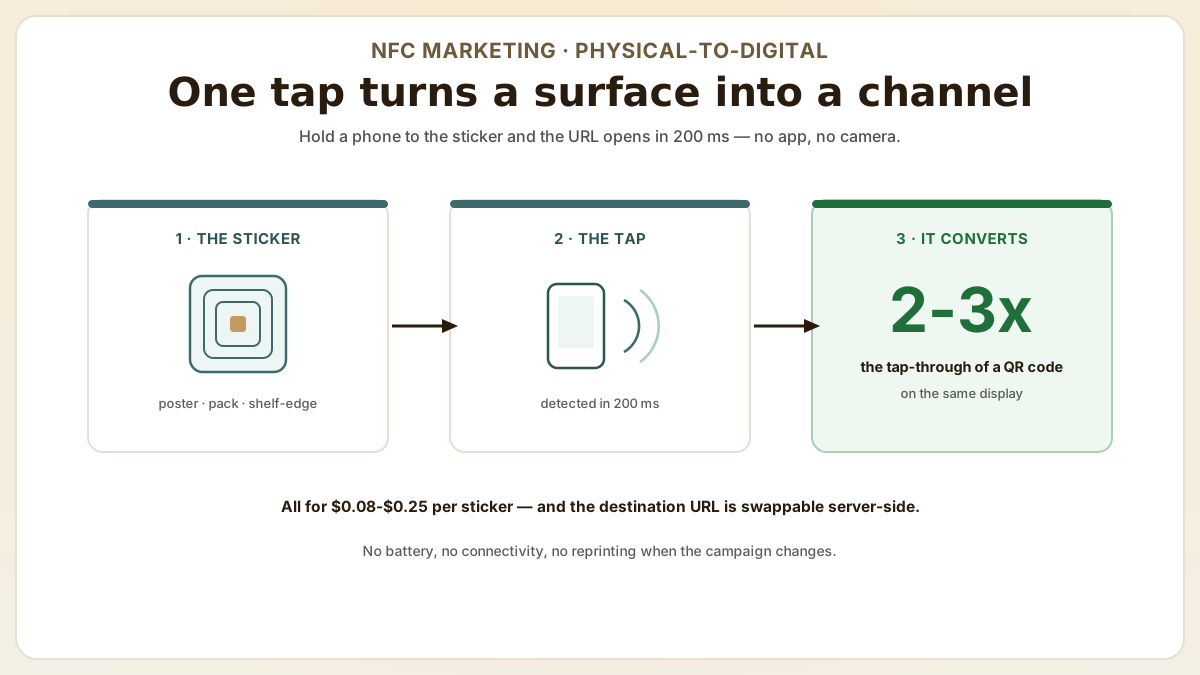
NFC stickers turn any surface into a one-tap digital touchpoint that converts at 2-3x the rate of a QR code on the same retail display. A B2B guide for brand and retail marketers: chip selection, surface and adhesive compatibility, campaign analytics, and ROI measurement — plus why the sharpest campaigns still print a QR code right next to the tag.
- NFC stickers turn any physical surface — a poster, a coaster, a shelf edge — into an interactive digital touchpoint, with zero battery or connectivity requirements.
- Campaign-level URL management lets marketing teams A/B test landing pages and swap the destination server-side — without sending anyone back out to peel and replace the deployed stickers.
- Cost per tap interaction is 60-80 percent lower than equivalent QR code campaigns due to higher conversion rates.
At a glance
Use these short answers to decide whether this page matches the project before moving into the detail.
Key takeaway
NFC stickers turn any physical surface — a poster, a coaster, a shelf edge — into an interactive digital touchpoint, with zero battery or connectivity requirements.
Why NFC stickers outperform traditional print-to-digital bridges
Watch someone try to scan a QR code on a sunlit bus shelter: the camera hunts, the code won't lock, and after a few seconds they give up and walk on. NFC skips the entir...
Next step
Ready to move forward? Start your inquiry to get specific answers for this project.
Request NFC sticker samplesWhy NFC stickers outperform traditional print-to-digital bridges
Watch someone try to scan a QR code on a sunlit bus shelter: the camera hunts, the code won't lock, and after a few seconds they give up and walk on. NFC skips the entire ritual — hold a phone near the sticker and it detects the tag and opens the URL within 200 milliseconds, no camera to aim, nothing to type, no app to install. That gap between 'tap' and 'give up' is the whole reason NFC beats the older print-to-digital bridges — QR codes, short URLs, Bluetooth beacons — that marketing teams have leaned on for years.
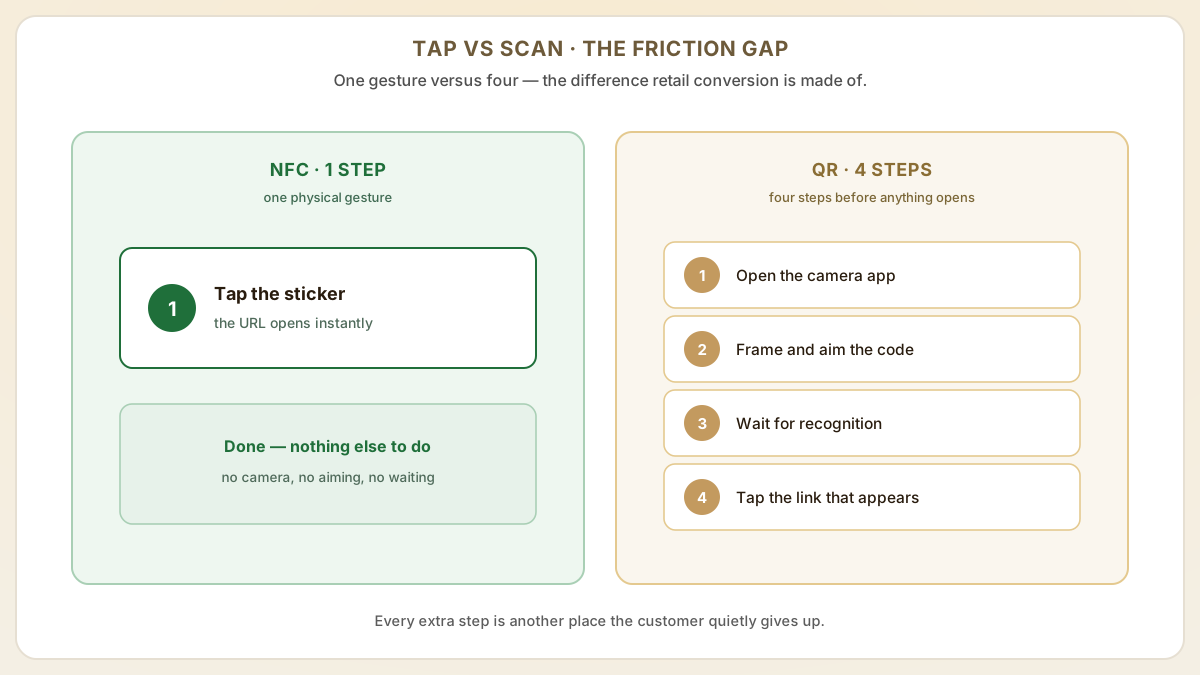
In controlled retail studies, NFC tap interactions convert at 2-3x the rate of QR code scans on the same displays. The difference comes from reduced friction: a tap is a single physical gesture, while a QR scan requires the user to open the camera app, frame the code and wait for recognition. For time-sensitive retail promotions, that friction gap translates directly into lost engagements.
- NFC stickers work in any lighting condition — a tap doesn't care whether the bar is dim or the display glass is throwing glare, the exact moments a QR code quietly gives up and the customer moves on.
- Tags are invisible when placed behind product labels or inside packaging, enabling clean design without visible tech artifacts.
- Each tag has a unique UID that can be used for per-unit tracking, authentication or personalized landing pages.
- NFC stickers cost $0.08-$0.25 per unit at volume, making them economical even for single-use promotional campaigns.
Which NFC chip should you pick for a marketing campaign?
The NFC chip inside the sticker sets its memory, security, and read range — but most marketing campaigns store exactly one thing, a URL, so the smallest chip that holds your link is usually the right buy. Paying for a cryptographic controller just to serve a redirect is like buying a safe to store a business card.
| Chip | Memory | URL capacity | Read range | Best for |
|---|---|---|---|---|
| NTAG210 | 48 bytes | Short URLs only | 1 – 3 cm | Mass-volume disposable tags |
| NTAG213 | 144 bytes | Standard URLs | 2 – 5 cm | Most marketing campaigns |
| NTAG215 | 504 bytes | Long URLs + metadata | 2 – 5 cm | Multi-record or vCard use cases |
| NTAG216 | 888 bytes | Complex payloads | 2 – 4 cm | Product authentication + URL |
| NTAG424 DNA | 256 bytes | Dynamic encrypted URLs | 2 – 4 cm | Anti-counterfeit and secure tap analytics |
How do you select surface compatibility and adhesive?
The surface a sticker lands on matters as much as the chip inside it. Metal is the classic trap — press a standard NFC tag flat onto a can or a bottle cap and it detunes the antenna, dropping read range to zero until a ferrite shielding layer goes in. Curved surfaces bring a different failure: they crack a rigid printed antenna, so bottles and tubes need a flexible design.
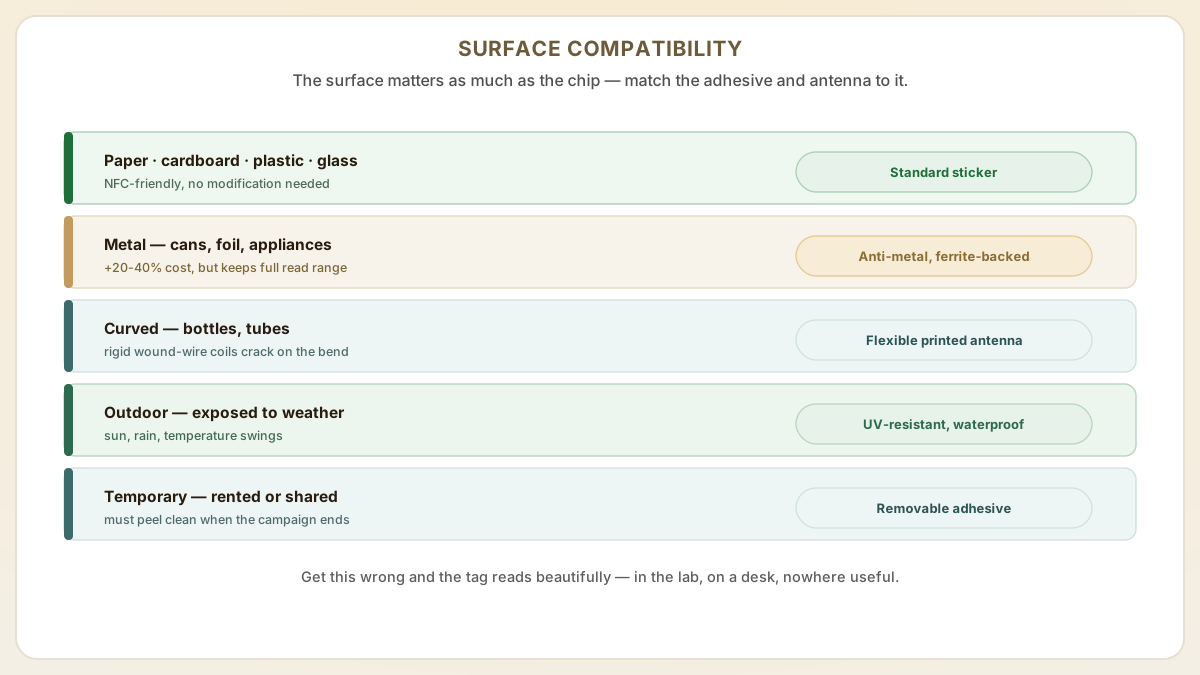
- Paper, cardboard, plastic and glass are NFC-friendly surfaces. Standard stickers work without modification.
- Metal surfaces require anti-metal (ferrite-backed) NFC stickers that cost 20-40 percent more but maintain full read range.
- High-curvature surfaces (bottles, tubes) need stickers with a flexible etched or printed antenna rather than rigid wound-wire coils.
- Outdoor deployments require UV-resistant and waterproof adhesive rated for the expected temperature range.
- Removable adhesive variants are available for temporary campaigns on rented or shared display surfaces.
How do you manage campaign analytics and redirect URLs?
Every marketer who has run a print campaign knows the uncomfortable question from finance: 'So how many people actually saw the poster?' With NFC, the answer stops being a shrug. The real power of NFC in marketing is the data layer — each sticker tap generates a measurable event you can track through standard web analytics or dedicated NFC campaign platforms, so the poster finally reports back.
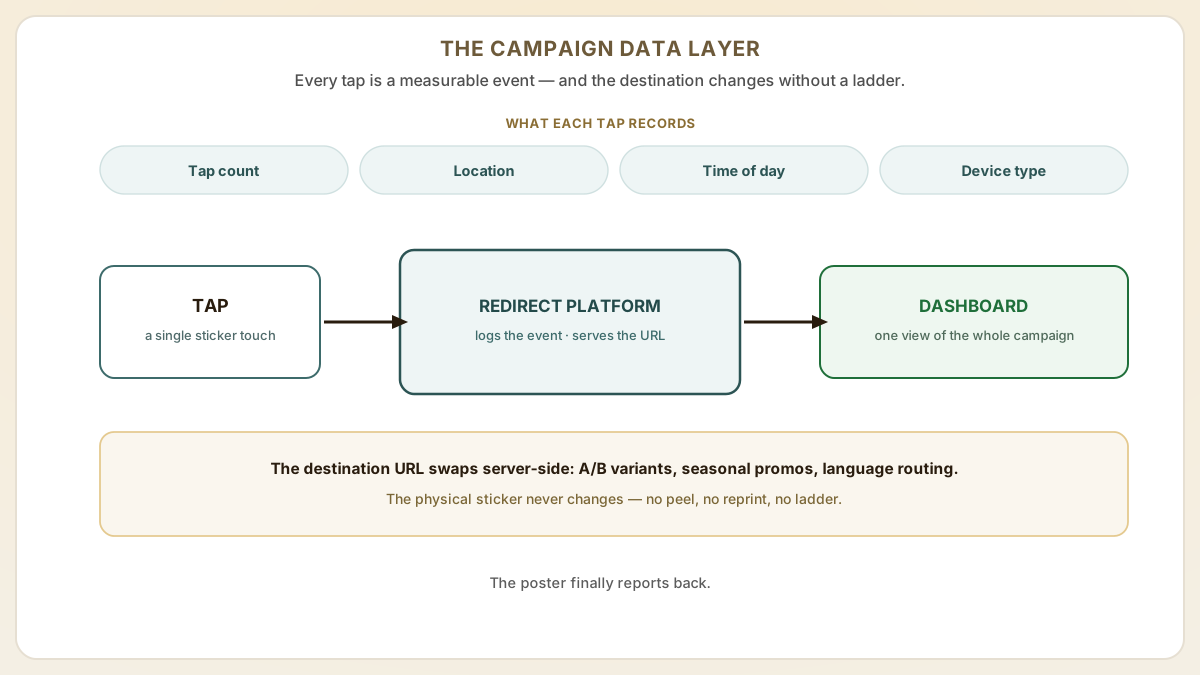
Program the stickers up front with a redirect URL routed through a campaign management platform, and the rest is software. Tap counts break down by location, time of day and device type; the redirect URL updates server-side without anyone touching the physical sticker — so A/B testing of landing pages, seasonal promotions and language-specific content all happen from a dashboard, not a ladder.
- UTM parameters appended to the NFC URL feed directly into Google Analytics, enabling attribution alongside other marketing channels.
- Geofenced redirect rules can serve different landing pages based on the tapping device's locale settings.
- Tap-rate heatmaps across retail locations help merchandising teams optimize display placement.
- Per-tag UID logging detects anomalies like unusually high tap counts that may indicate sticker cloning attempts.
How do you measure ROI for NFC campaigns?
ROI on an NFC campaign comes down to two honest numbers: what each verified tap cost you, and how many of those taps did the thing you actually wanted. Everything else is bookkeeping — track the funnel from tap to conversion, then hold NFC's cost-per-engagement up against the alternatives running in the same locations.
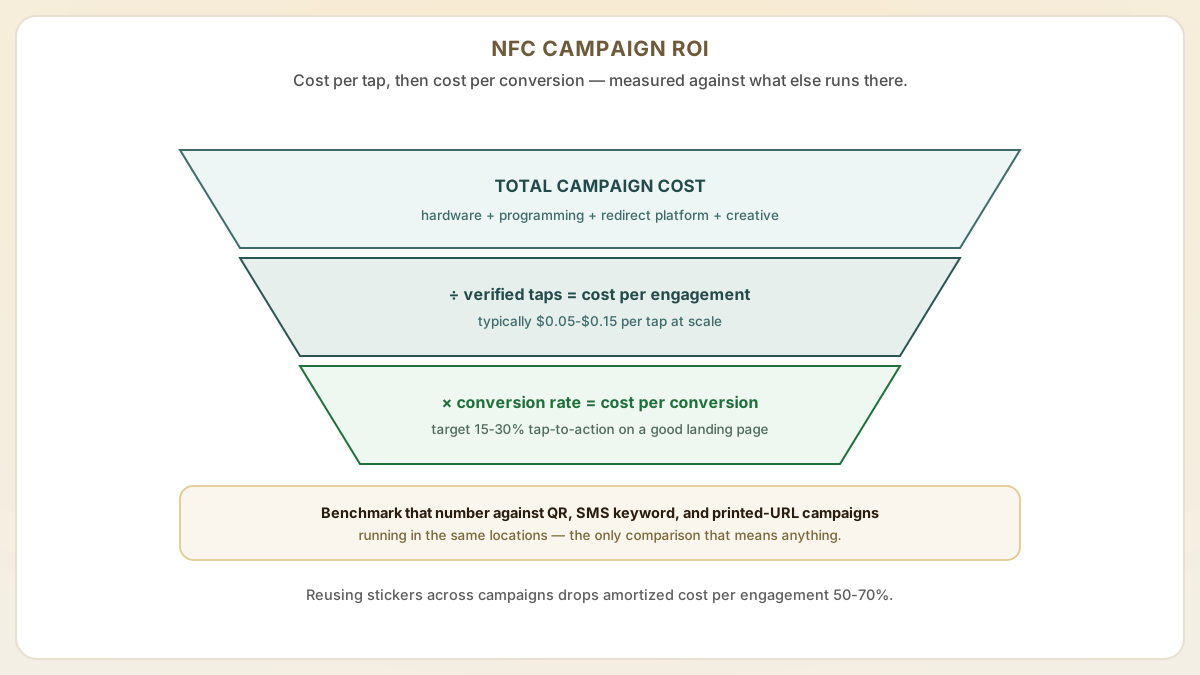
- Total campaign cost equals sticker hardware plus programming labor plus redirect platform subscription plus creative design.
- Cost per engagement divides total campaign cost by total verified taps. Typical NFC campaigns achieve $0.05-$0.15 per engagement at scale.
- Conversion rate from tap to desired action (signup, purchase, download) is the primary quality metric. Target 15-30 percent for well-designed landing pages.
- Compare NFC cost-per-conversion against QR code, SMS keyword and printed-URL campaigns running in the same locations for valid benchmarking.
- Sticker reuse across campaigns reduces amortized hardware cost per engagement by 50-70 percent compared to single-campaign QR code prints.
NFC vs QR engagement benchmarks: what marketing teams actually measure
The 'NFC tap is faster than QR' claim is now backed by substantial campaign data. Independent industry benchmarks (NFC Work, RFID Label, NFC Tagify) consistently show 8-12% NFC tap-through vs 2-3% QR scan rates, with 25-36% engagement uplift for NFC posters in real-world activations. Marketing leaders should anchor on these specific numbers when sizing pilot vs scale-up budgets.
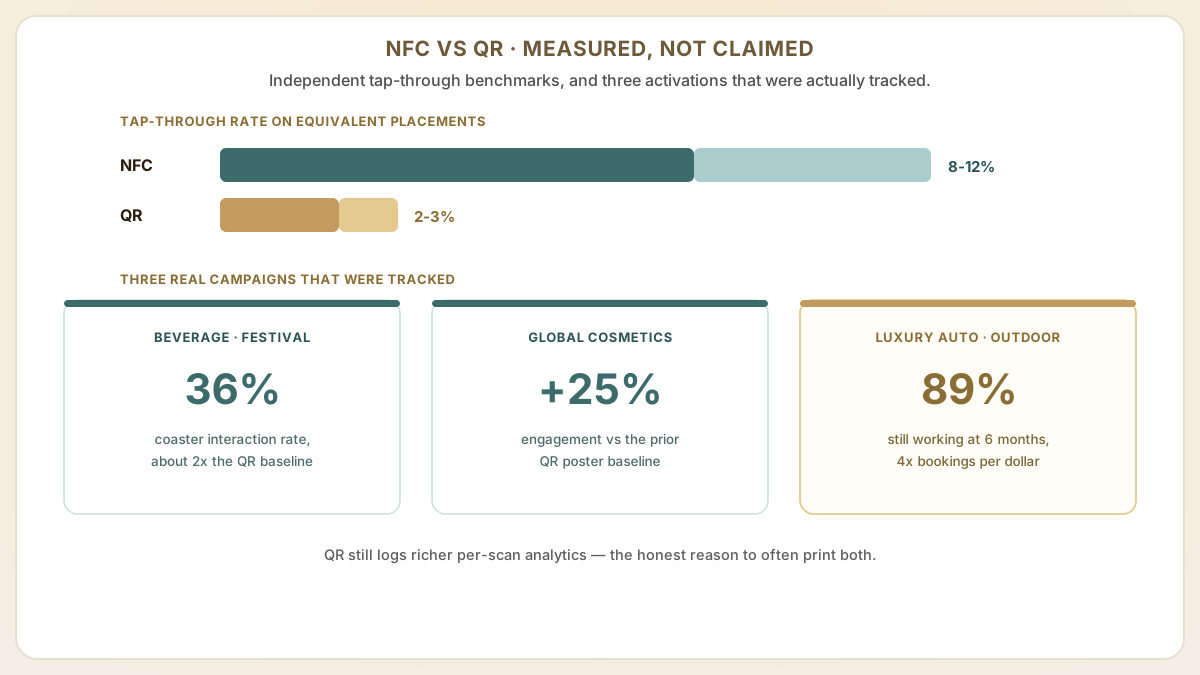
- Industry tap-through benchmark: NFC achieves 8-12% tap-through rates vs 2-3% for QR codes on equivalent placements. Conversion rates run 2.5x higher post-tap, with 64% of users engaging longer with NFC-launched content (NFC Work 2024 cosmetics-brand benchmark).
- Real campaign datapoint — beverage brand at music festival: NFC-enabled coasters drove a 36% interaction rate, doubling QR baseline. Festival operators reported NFC-tap engagement remained stable across 4-day weekend, while QR scans degraded as code lamination wore.
- Real campaign datapoint — luxury car brand outdoor: 6-month bus-shelter campaign with NFC tags maintained 89% functional rate after weather exposure (rain, UV, vandalism). Drove 12K+ test-drive bookings — outperforming the previous QR poster campaign by 4x bookings/dollar.
- Real campaign datapoint — global cosmetics brand: replaced QR posters with NFC, measured +25% engagement vs prior QR baseline. 40% of users tapped multiple times across the campaign window, indicating habituation. Zero counterfeit/spoofing incidents — NTAG 424 DNA tags resist replication.
- Tradeoff to flag honestly: QR codes deliver richer baseline analytics (every scan is timestamped, geolocated, device-typed via dynamic QR platforms like Bitly/Beaconstac). Pure NFC stickers report total taps but lack standard analytics infrastructure unless you wire UTM parameters into the redirect URL. Hybrid (NFC + QR on same surface) is the practical answer.
Pairing NFC with QR for 100% device coverage and richer analytics
The right baseline is rarely 'NFC only' or 'QR only.' The two technologies have complementary strengths: NFC delivers higher engagement and works in low light; QR delivers universal device coverage (including older phones, BYOD scenarios, and shared kiosks where NFC can't be tapped twice quickly). Marketing teams running 2025-2026 SMB campaigns increasingly print both on the same surface and route both to a unified UTM-tagged redirect. Treat them not as rivals but as a fast lane and a wide lane — NFC for the in-hand tap, QR for the across-the-room glance — and build the campaign for both.
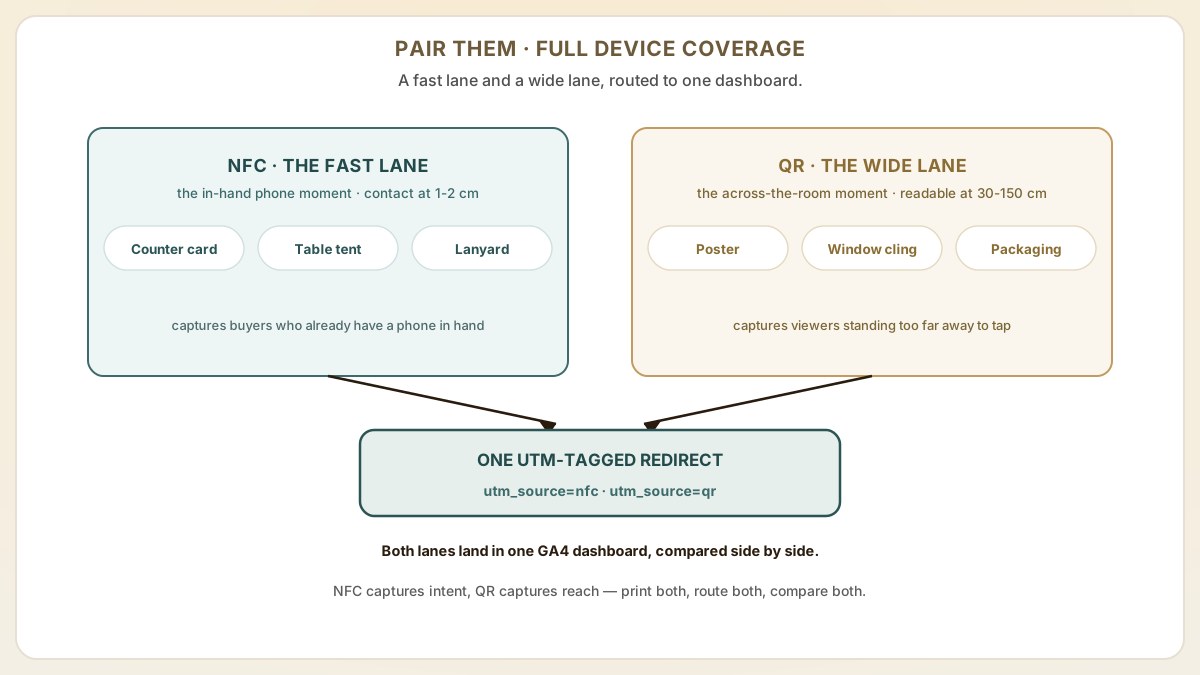
- Unified redirect architecture: route both the NFC URL and the QR URL through a single short-link service (Bitly, Beaconstac, Rebrandly) with distinct UTM source parameters (utm_source=nfc vs utm_source=qr). Lets you compare per-channel conversion in Google Analytics 4 without splitting landing pages.
- Placement layering: in retail, place NFC on the high-touch surface (counter card, table tent, lanyard) and QR on the static surface (poster, window cling, packaging). NFC captures 'in-hand phone' moments; QR captures 'across the room' moments.
- Accessibility coverage: NFC requires contact (1-2 cm). QR works at 30-150 cm with a steady camera. For retail displays viewed from distance, QR is the only option. For checkout-counter intent moments, NFC wins.
- Older device fallback: ~5-10% of phones in active use still lack NFC (entry-level Android, iPhone 6 and earlier). Pairing QR ensures the campaign captures the full audience without a second creative version. NFC stickers with printed QR overlay add ~$0.02-$0.04 per unit and zero design complexity.
- Analytics depth: dynamic QR platforms (Beaconstac, Uniqode, QR Code Chimp) capture scan-level data (timestamp, device, location, repeat scans). Programming the same destination from NFC and QR through the same dynamic short URL gives marketing teams one dashboard for both channels.
Useful next pages
Use these linked product, guide and comparison pages to keep the next click specific and practical.
NFC sticker products
Explore NFC sticker formats, chip options and custom printing for marketing deployments.
Related NFC marketing solutions
Additional NFC products that pair with sticker campaigns for broader physical-digital strategies.
NFC marketing campaign benchmarks
Independent third-party engagement and conversion benchmarks for NFC vs QR marketing campaigns.
FAQ
How long do NFC stickers last in a retail environment?
NFC stickers have no battery and no moving parts. The chip and antenna have a theoretical lifespan of 10+ years. In practice, the adhesive and surface label wear out first. Expect 1-3 years of reliable use on indoor retail displays depending on handling and cleaning frequency.
Can NFC stickers be read through product packaging?
Yes, as long as the packaging is not metallic. NFC signals pass through paper, cardboard, thin plastic and glass without issue. For metallic packaging (foil pouches, aluminum cans), use anti-metal ferrite-backed stickers applied to the exterior.
How do I track which NFC sticker generated a specific tap?
Program each sticker with a unique URL containing a per-sticker identifier (e.g., a serial number in the query string). Your redirect platform or web analytics will log each tap with its sticker ID, enabling per-unit tracking.
Do NFC stickers work with all smartphones?
All iPhones from the XS (2018) onward support background NFC tag reading. Most Android phones with NFC hardware also support it natively. Combined smartphone NFC compatibility exceeds 85 percent of devices currently in use in North American and European markets.
What is the minimum order quantity for custom-printed NFC stickers?
Most manufacturers offer MOQs starting at 100 units for standard sizes with digital printing. Offset printing on custom die-cut shapes typically starts at 1,000-2,000 units. Plain white NFC stickers are available in quantities as low as 10 for prototyping.
Should we use NTAG 213 or NTAG 424 DNA for marketing campaigns?
NTAG 213 is the workhorse — $0.10-$0.20 per sticker at 1K+ MOQ, perfect for redirect URL marketing. NTAG 424 DNA only matters when you need anti-cloning (counterfeit-resistant authenticity tap), encrypted Secure Unique NFC (SUN) URLs that change per tap, or campaigns where you must prove a tap came from a genuine sticker (luxury, pharma, premium spirits). NTAG 424 DNA costs 4-6x more ($0.40-$1.20 per sticker) — defensible only when authentication is a campaign goal, not just engagement.
How do we A/B test landing pages without replacing deployed stickers?
Program every sticker with a stable short URL (your domain + sticker ID), and route that URL through a dynamic redirect service. The destination on the server side can swap weekly — A vs B variant, geo-routed pages, language switching, seasonal campaigns — without touching the physical sticker. This pattern (one URL on the chip, dynamic destination on the server) is how Beaconstac, Bitly Enterprise, and custom NodeJS redirects all work. Build the first sticker batch with this redirect architecture from day one — retrofitting later means re-encoding every sticker manually.
Proud Tek is a Shenzhen-based RFID & NFC manufacturer supplying hotel chains, transit operators, event venues and retail brands worldwide. Every order includes free samples, RF testing and dedicated project support.
Get a Quick Quote
Tell us about your project and we'll respond within one business day. Fields marked (asterisk) are required.