How RFID improves store inventory accuracy
Item-level RFID improves inventory accuracy by making a full count fast enough to repeat often. A UHF handheld reads tagged items through fabric and packaging, many at once, so gaps between the on-hand record and the floor surface within days, not at the next annual count.
In a 2009 University of Arkansas study at two Bloomingdale's stores, a simulation showed inventory accuracy improving by more than 27 percent when RFID counts updated the master record. GS1 US's 2018 Project Zipper executive summary cites Auburn University RFID Lab studies in which inventory accuracy rose from an average of 63 percent to 95 percent with RFID; the study's own results, on order accuracy for shipments between distribution centres, are summarised in RFID vs barcode. Your result depends on read rates, count frequency and whether exceptions are corrected.
Cycle counting with RFID: how often, how long, and the annual count
A handheld RFID count takes a fraction of the scanning time of a barcode count: in the Arkansas study, 10,000 items took two hours with RFID and 53 hours with a barcode reader. Because each count is cheap, frequency becomes a per-department choice; Macy's said in 2016 that more than 60 percent of goods in most stores would soon be tagged and cycle-counted monthly with handhelds (RFID Journal). Count time depends mostly on:
- Read rate: metal trims, foil, liquids and dense stacks lower it; tag choice and placement address this.
- Fixtures: metal shelving and wall bays shadow tags behind them.
- Method: a consistent route and power setting keep counts comparable; discrepancies still need correcting.
Retailer RFID programmes and what they ask of suppliers
Several US retailers require suppliers to deliver goods with a UHF tag in the price ticket, label or packaging. Walmart's playbooks (Fashion, General Merchandise, Canada and Mexico) are posted on the Auburn RFID Lab's retail playbooks page alongside those for Sam's Club, Kroger–Fred Meyer and Academy Sports + Outdoors. Read the current one for your department; the table shows how scope grew.
| Retailer | What was announced | Source |
|---|---|---|
| Walmart | Apparel from 2020; home goods plus some hardlines, entertainment and toys due by 2 September 2022 | RFID Journal, January 2022 |
| Walmart | More than a dozen further categories due February 2024, including books, crafts, paint and stationery | Impinj, May 2024 |
| Target | 2015: price tags with integrated inlays applied at manufacture, in key categories including women's, baby and children's apparel and home décor | RFID Journal, May 2015 |
| Kroger–Fred Meyer | Apparel, footwear and accessories, plus a GS1 DataMatrix or Digital Link QR code carrying the same GTIN and serial | Kroger apparel playbook v2.0, March 2026 |
Inlay approval: ARC specs, TIPP grades and switching suppliers
Retailers rarely name a tag brand; they name a performance specification, in the US often an ARC spec. The Auburn University RFID Lab's ARC programme, founded in 2009, benchmarks inlays against specs set with end users and publishes an approved inlay list per spec; its Walmart specs page shows the spec for each category and allows only inlays from the item's list. GS1's TIPP guideline (release 1.2, May 2024) instead grades the tagged item in single, stacked or densely stacked tests.
Walmart's Fashion playbook lets national brands use any packaging provider, provided the inlays are ARC-approved for their spec. Approval belongs to the inlay model, not to the label maker, and we claim no ARC listing for Proud Tek's own inlays; the manufacturers ARC audits are listed on its quality certification page. What we can do is convert an ARC-approved inlay for your spec into price tickets, labels and hang tags. Name the retailer and spec in your RFQ: the quotation names the approved inlay model and how it is sourced, so you can check it against the current approved inlay list. Tagged samples still go through the retailer's own approval, such as Walmart's ALEC programme, before the first shipment.
When you switch or add a supplier:
- Approval follows the inlay: a label rebuilt on another inlay needs that inlay on the right list.
- Update approvals: Walmart requires an ALEC submission update for a new inlay model, packaging provider or tagging location.
- Keep encoding identical: same EPC scheme, filter and GTIN mapping, with serials (allocated range or chip-based) that cannot collide with the old supplier's.
- Retest, then run both in parallel: a new face stock, adhesive or antenna changes performance on the product.
Source tagging: hang tags, tickets, labels and care labels
Source tagging puts the tag in the ticket, label or packaging the item already carries, at the factory. The GS1 US placement guideline (release 1.3, August 2024) starts from the UPC ticket position: at least a quarter inch from metal, unfolded, clear of hanger clips, never touching another tag, with the EPC seal on the printed side.
Selling in the EU? Textile apparel is among the first product groups planned for the Digital Product Passport.
| Format | Typical use | From Proud Tek |
|---|---|---|
| Hang tag or price ticket with inlay | Apparel, footwear, accessories | UHF labels and hang tags printed to your artwork |
| Adhesive label, paper or PET face | Boxed goods, hardlines | UHF labels, blank or printed |
| Woven or sewn-in label | Garments, where trading partners agree | Woven UHF tag built like our textile laundry tags, confirmed per project as a custom tag |
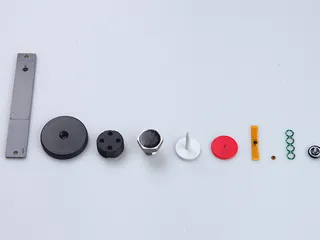
| Flag, barbell or ring tag | Metal or liquid products | Custom tags |
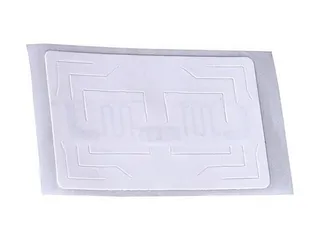
| Dry or wet inlay | Converters building their own tags | UHF inlays |
Encoding SGTIN-96 for retail items
Retail item tags carry an SGTIN-96: the GTIN printed in the barcode plus a serial number, in 96 bits of EPC memory as defined by the GS1 EPC Tag Data Standard (release 2.3, October 2025).
The brand owner is responsible for unique serials but often delegates them to factories or label suppliers, by allocating each source a serial range or by chip-based serialisation derived from the chip's factory-set tag identifier (TID) (GS1 US serialization guideline). With chip-based serials a new chip maker brings a new formula, so the guideline advises reserving serial space for each method. Tell us which method your programme uses; the encoding is confirmed in the quotation. We read back every piece we encode, and the data report shipped with each encoded order carries the fields you agree with us, such as EPC and TID; where a ticket also shows a printed serial, a file in Excel, CSV or XML pairs each piece's EPC with it (encoding service).
| Field | Bits | Content |
|---|---|---|
| Header | 8 | 0x30, which identifies SGTIN-96 |
| Filter | 3 | 1 = point-of-sale trade item; 2 = full case for transport |
| Partition | 3 | How the next 44 bits split between company prefix and item reference |
| GS1 Company Prefix and item reference | 44 | The GTIN without its check digit |
| Serial | 38 | Numeric, 0 to 274,877,906,943, no leading zeros |
EAS and RFID in the same store
Many retail stores already run electronic article surveillance (EAS), and RFID usually arrives alongside it. Before artwork is fixed, confirm the stores' EAS technology, whether a separate EAS label is still expected, and any loss-prevention role for the RFID tag.
- Acousto-magnetic (AM), 58 kHz: Sensormatic's Walmart source-tagging page describes AM labels applied at manufacture and says RFID there is not tied into EAS, so suppliers may need both.
- RF, 8.2 MHz: used by pedestals such as Checkpoint's EVOLVE P30; die-cut labels combining RF EAS and a UHF inlay exist (Avery Dennison, 2020).
- RFID as the EAS signal: the NXP UCODE 8 datasheet lists a Product Status Flag for EAS use, which works only if exit readers and point-of-sale software use it.
What item-level tagging costs and who pays
In supplier-tagging programmes such as Walmart's, the product supplier buys the tag: the Fashion playbook has suppliers source ARC-approved inlays and tagged packaging through their packaging provider, and holds them responsible for the costs of RFID errors at store level. Prices move with spec and volume, so we quote your specification; RFID vs barcode covers what drives the cost.
To weigh count labour, sales and shrink against tag, reader and software costs with your own figures, use the RFID inventory ROI calculator.
| Cost item | Usually paid by | What drives it |
|---|---|---|
| Inlay | Supplier | Approved spec, chip, antenna size, volume |
| Conversion and printing | Supplier | Format, face stock, colours, variable data |
| Encoding and read-back | Supplier | EPC scheme, serial method, data-report fields |
| Application at the factory | Supplier | Whether it rides on an existing ticket |
| Store readers and software | Retailer or its integrator | Store coverage; Proud Tek does not supply these |
What Proud Tek makes for retail and apparel programmes
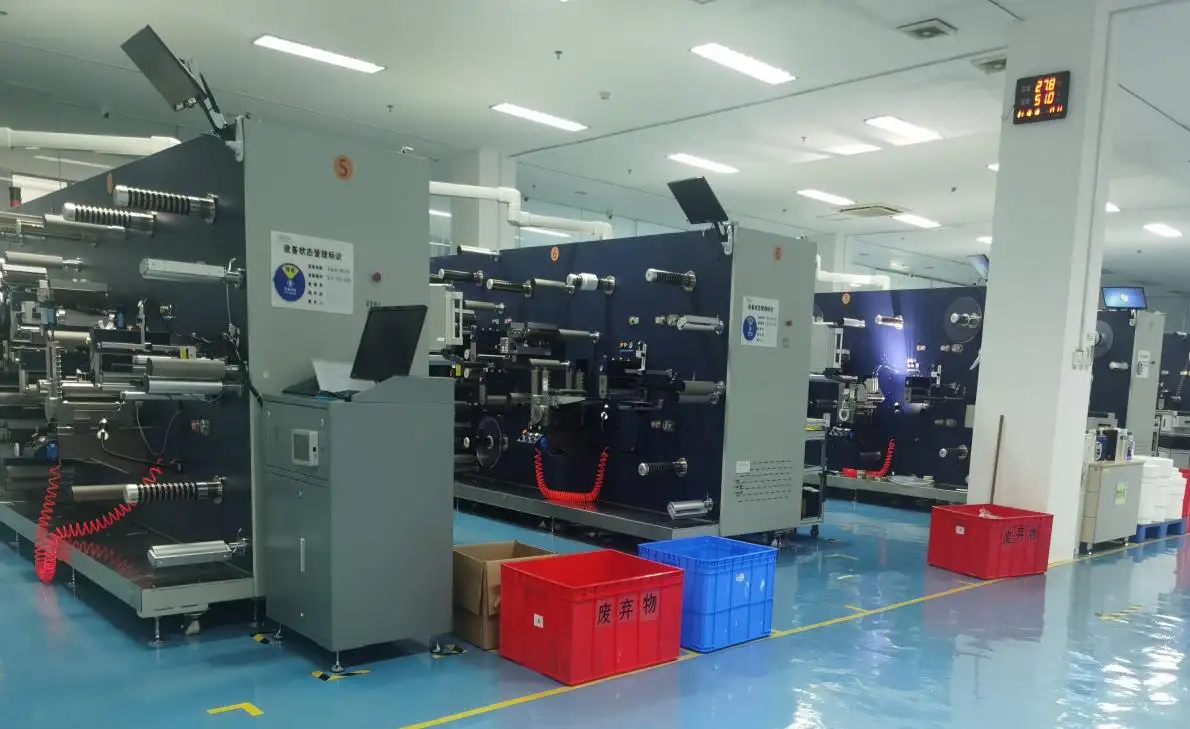
Proud Tek is an RFID factory in Shenzhen, producing since 2008. For these programmes we produce UHF RFID labels and hang tags, dry and wet UHF inlays and non-standard tags, printed and encoded to your specification. Standard samples are free; customised samples carry a setup fee. Standard products generally have a 2–3 week lead time; custom and large-order schedules are confirmed in the quotation, sent within one business day of a workable inquiry.
| Send us | We confirm in the quotation |
|---|---|
| Retailer, department playbook or ARC spec | The inlay, and whether we can meet that spec |
| Merchandise photos or samples | Antenna size and tag position for samples |
| Format, size and artwork | Face stock, adhesive and print |
| EPC scheme and serial method | Encoding and data-report fields |
| EAS technology in the stores | Whether a combined construction is feasible |
| Quantity and factory country | Sample terms and schedule |
Published 2026-09-26 · Updated 2026-09-28