
Retail Compliance
Target RFID T2/T3
What Suppliers Must Tag
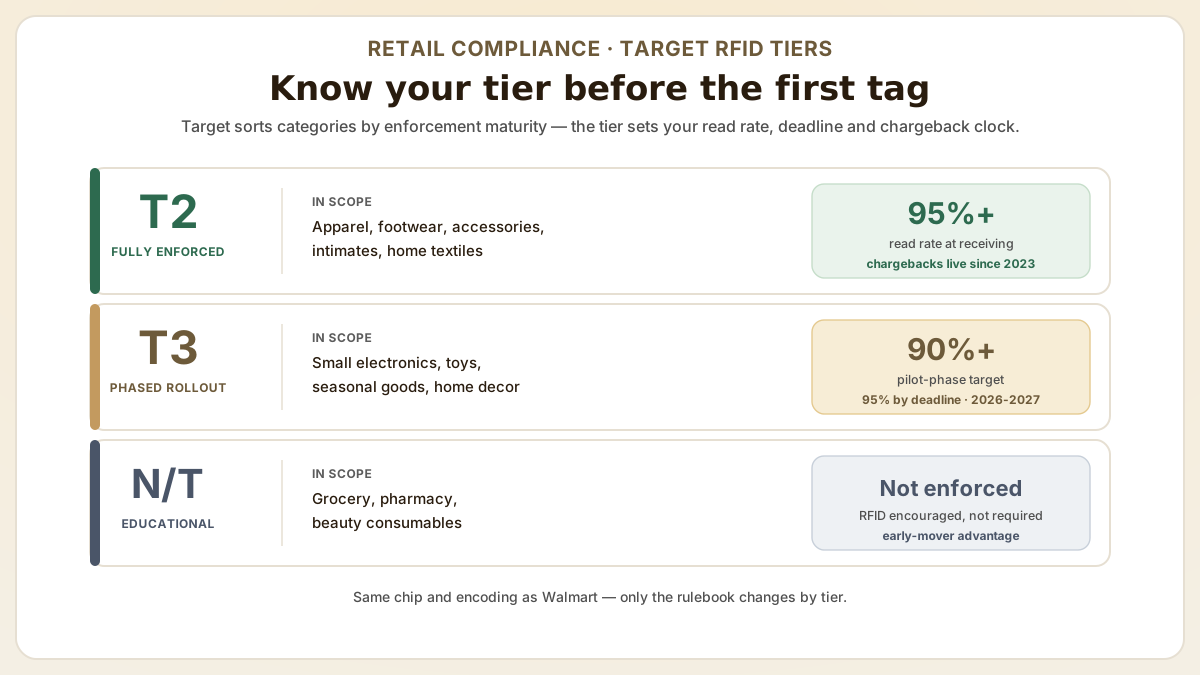
Quick answer
Target's Tier 2 mandate requires item-level UHF RFID on apparel, footwear and home textiles at a 95%+ read rate at DC receiving, with Tier 3 phasing in electronics, toys and seasonal through 2026-2027. Know your tier before you scope a single tag — it sets the deadline and the chargeback clock.
- Target T2 covers apparel, accessories and home essentials with mandatory item-level RFID at 95%+ read rate at DC receiving.
- Target T3 expands to electronics, toys and seasonal categories with phased deadlines through 2026-2027.
- Non-compliant suppliers face chargebacks of $1.50-3.50 per unit plus expedited-receipt surcharges that compound quickly on truckload shipments.
At a glance
Use these short answers to decide whether this page matches the project before moving into the detail.
Key takeaway
Target T2 covers apparel, accessories and home essentials with mandatory item-level RFID at 95%+ read rate at DC receiving.
What are Target's RFID Tier 2 and Tier 3 requirements?
The dangerous moment in Target compliance is the one where a supplier who already tags for [Walmart](/guides/walmart-rfid-tagging-mandate/) decides the job is basically...
Next step
Ready to move forward? Start your inquiry to get specific answers for this project.
Get Target-compliance RFID quoteWhat are Target's RFID Tier 2 and Tier 3 requirements?
The dangerous moment in Target compliance is the one where a supplier who already tags for Walmart decides the job is basically finished. The chip is the same and the encoding is the same — and then a tag placed exactly where Walmart's text rules said to put it gets flagged by Target's audit camera. Target runs the same physics on a different rulebook: its own tiers, its own photo-driven placement guide, its own approved-converter list, and the differences are precisely the ones that stay invisible until receiving. Target's RFID compliance program tiers categories by enforcement maturity. Suppliers shipping multiple categories may have one tier per SKU range, requiring careful program scoping.
- Tier 2 (T2) — fully enforced: apparel (men's, women's, kids), footwear, accessories, intimates, home textiles. Read rate ≥ 95% at receiving; chargebacks active since 2023.
- Tier 3 (T3) — phased rollout: small electronics, toys, seasonal goods, home decor. Read rate target ≥ 90% during pilot phase; 95% target by end of phase deadline.
- Non-tiered (educational): grocery, pharmacy, beauty consumables. Target encourages RFID but does not yet enforce; suppliers piloting these categories get early-mover advantage.
- Approved chip family: UHF EPC Gen2 with ARC certification at Auburn University. Common SKUs: Impinj Monza R6 and NXP UCODE 9 for general retail; on-metal variants required for canned goods and electronics with metal housings.
- Encoding: SGTIN-96 using the supplier's GS1 company prefix. Target's receiving software verifies the tag GTIN against the supplier's catalog before accepting the carton.
Which Target departments require RFID tagging?
Four departments carry the mandate today; the rest are either phased or educational. The grid below maps each to its tier so you can tell at a glance whether a SKU is in scope — because tagging a SKU Target never asked you to tag is just an expensive way to feel compliant.
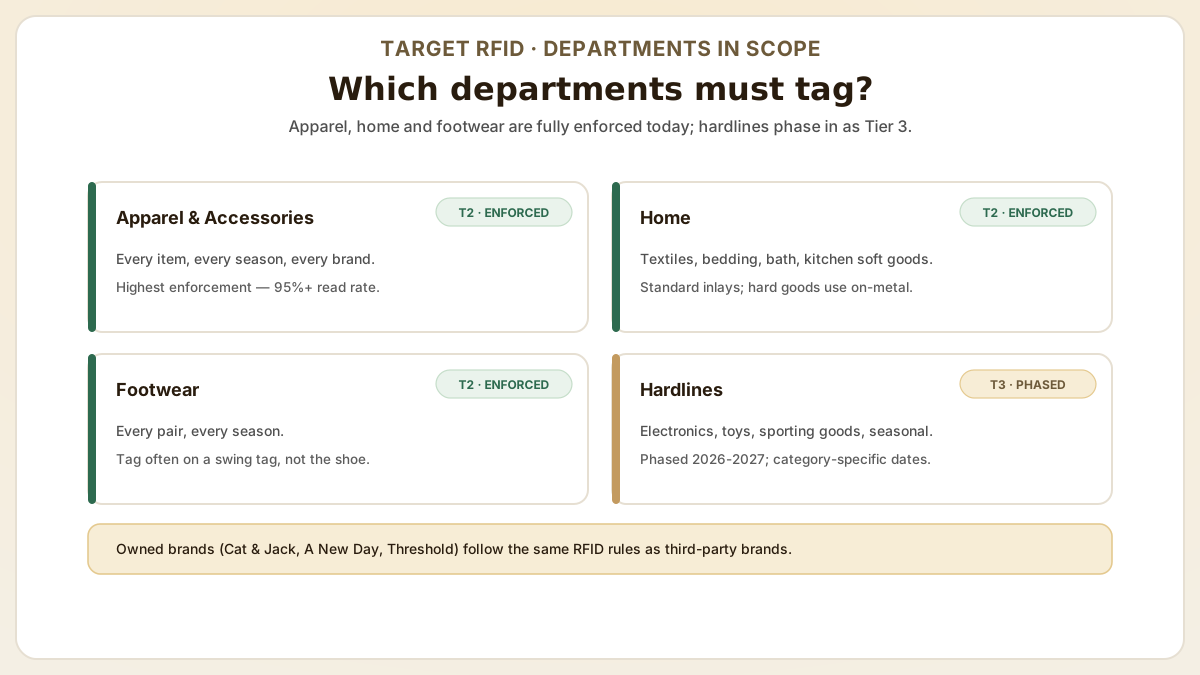
- A&A (Apparel & Accessories): every item, every season, every brand. Highest read-rate enforcement (95%+).
- Home: textiles, bedding, bath, kitchen soft goods. Standard inlays work; hard-goods home items use on-metal inlays.
- Footwear: every pair, every season. Tags often hang from a swing tag tied to the shoe rather than the shoe body itself.
- Hardlines (T3): electronics, toys, sporting goods, seasonal. Phased through 2026-2027 with category-specific go-live dates.
- Owned brands: Target's private labels (Cat & Jack, A New Day, Threshold, etc.) follow the same RFID requirements as third-party brands.
How do you achieve Target RFID compliance?
Compliance comes down to five steps in a fixed order — from a Target Vendor ID to the EDI 856 that reconciles every tag, mapped below. It rhymes with Walmart's process but diverges in EDI flow, label placement and audit reporting, so a cross-compliant program still needs per-retailer attention. Suppliers who get the pre-ship read-rate math right rarely meet a chargeback.
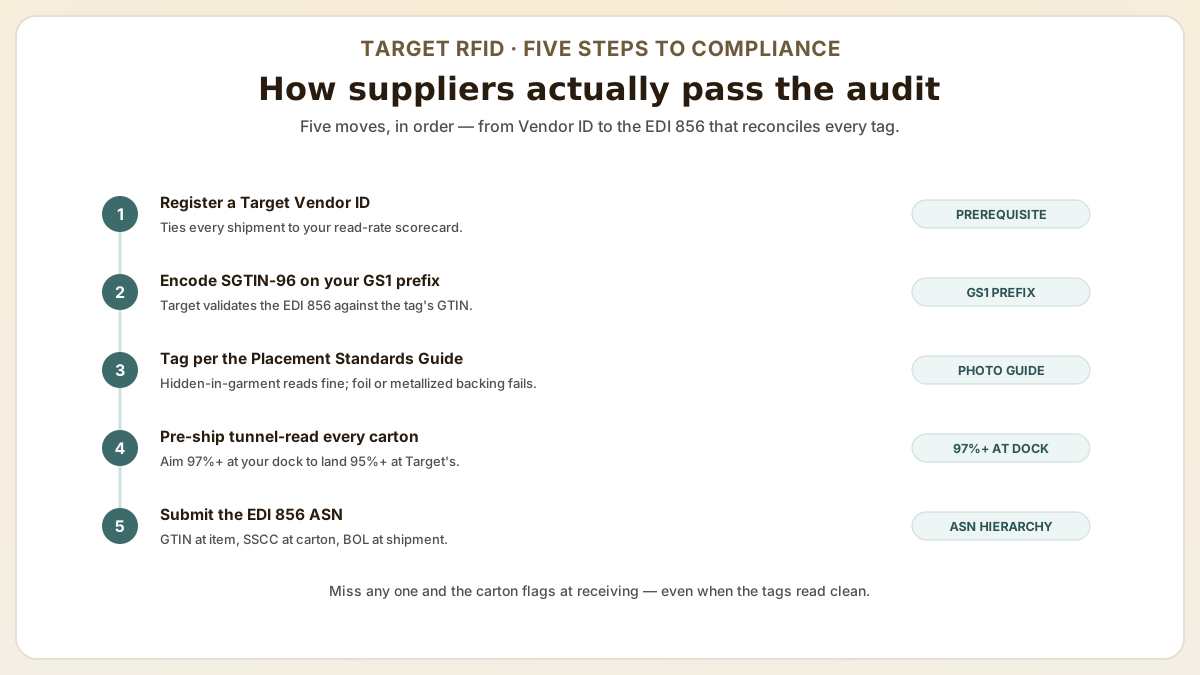
- Register for a Target Vendor ID: required for all suppliers. Used to associate your shipments with your read-rate scorecard.
- Get a GS1 company prefix and run encoding on the SGTIN-96 standard with your prefix. Target validates EDI 856 against tag-encoded GTIN.
- Apply tags per Target's Placement Standards Guide: hidden tags inside garments OK as long as they read through fabric; tags shielded by foil packaging or metallized backing fail.
- Pre-ship audit: tunnel-read every carton at your DC before truck departure, target ≥ 97% read rate at your dock to allow for handling losses to ≥ 95% at Target's dock.
- Submit EDI 856 ASN with RFID hierarchy: GTIN at item, SSCC at carton, BOL at shipment. Target's automated receiving correlates tag reads with ASN data.
How does Target compliance compare to Walmart's?
The tag, the chip and the encoding carry over from Walmart untouched; the placement guide, EDI portal and audit cadence do not. The table below lines up what you can reuse against what you must rebuild — reassuring until you remember the divergences are exactly the ones that stay invisible until receiving. Coming from the Walmart mandate, reuse the hardware and budget separately for the EDI and scorecard work.
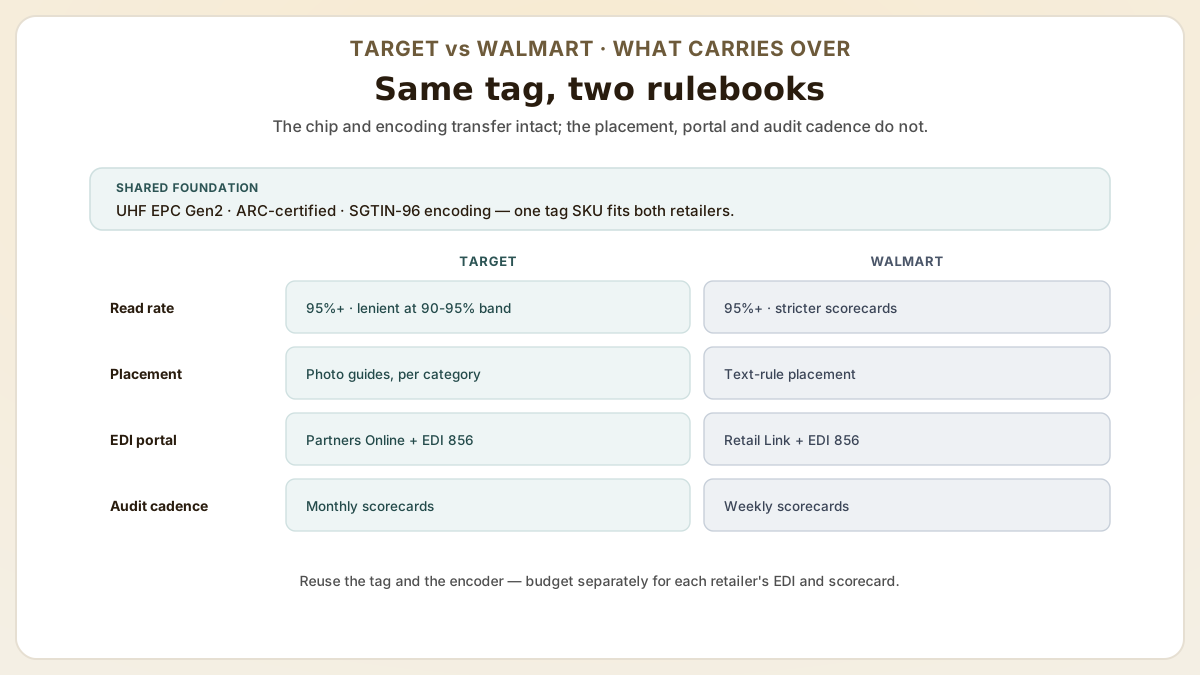
- Chip and inlay: identical UHF EPC Gen2 + ARC certification + SGTIN-96 encoding. Same tag SKU works for both retailers; pre-encoded tags interchangeable.
- Read-rate threshold: both target ≥ 95% at receiving. Target's chargeback math is slightly more lenient at the 90-95% band; Walmart enforces stricter scorecards.
- Placement: Target's placement guide is more visual-oriented (specific photo guides per category); Walmart's relies on text rules. Both accept hidden inner-garment placement.
- EDI: Walmart uses Retail Link + EDI 856; Target uses Partners Online + EDI 856. The 856 transaction structure is similar but field codes differ; cross-compliance needs both setups.
- Audit timing: Walmart publishes weekly read-rate scorecards; Target publishes monthly. Suppliers usually monitor Walmart compliance first since faster feedback loop catches issues earlier.
Target-specific physical requirements: EPC logo, approved suppliers, QC tooling
Beyond the read-rate scorecard, Target enforces three physical and procurement-side requirements that are easy to miss in the EDI-heavy compliance literature. FineLine Technologies' published Target mandate guide flags each as a recurring source of vendor remediation. The checklist below prices the physical layer end to end — from the EPC logo on the hangtag to the pre-ship tunnel — so treat these as non-negotiable, not nice-to-haves, and fold them into your full program budget.
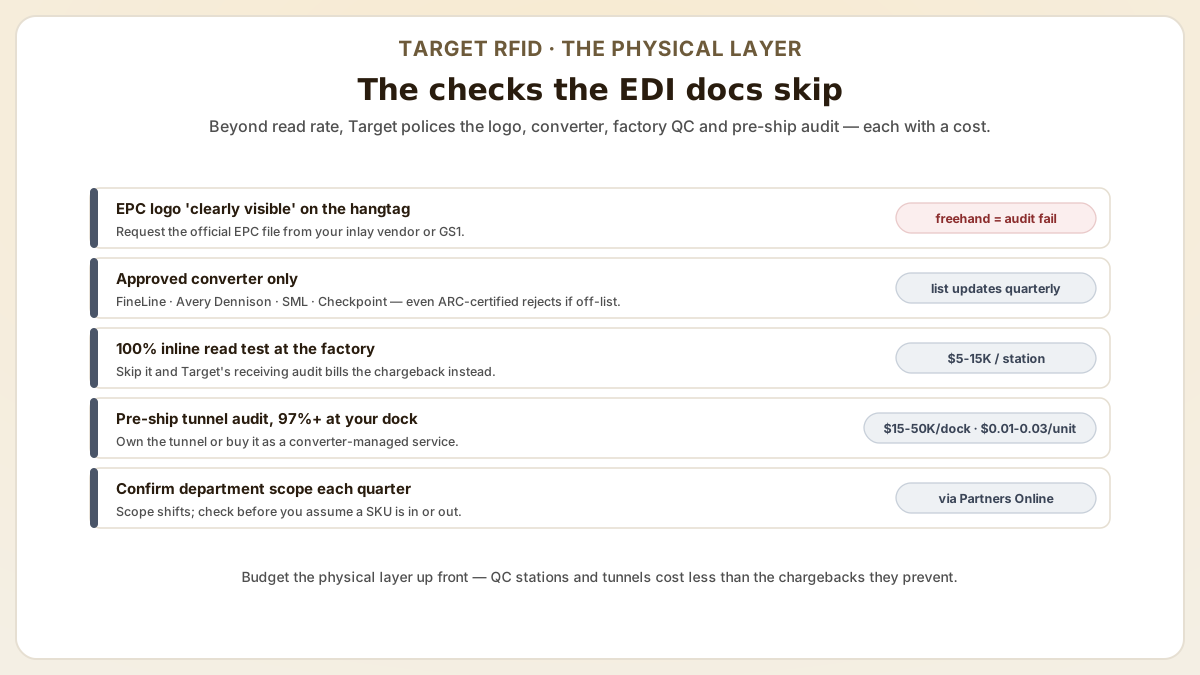
- EPC logo display: Target requires the EPC symbol to be 'clearly visible' on the retail-facing packaging or hangtag. Suppliers reformatting hangtag artwork for Target should request the official EPC logo file from their inlay vendor or GS1 — using a freehand approximation has been flagged in audits as non-compliant. The logo placement is similar to Walmart's 2025+ requirement, so a single hangtag template can satisfy both.
- Approved RFID supplier list: Target requires inlays purchased from an approved supplier (FineLine Technologies, Avery Dennison, SML, Checkpoint and other named converters). Inlays from a non-approved converter — even if the chip is ARC-certified — fail receipt. Verify your converter is on Target's current approved list before locking the supply chain; the list updates quarterly.
- Tag QC at the factory: Target's audit infrastructure assumes 100% inline read testing at supplier finishing line. Vendors who skip this and rely on Target's receiving audit to catch defects pay the chargeback. FineLine's QCtrak app (and competing tools from SML, Checkpoint) provides factory-floor QC; budget $5-15K per encoding station for QC tooling and consumables.
- Pre-ship audit at supplier dock: Target expects ≥97% read rate at supplier dock to leave handling buffer for the 1-3 percentage point loss between supplier dock and Target receiving. Tunnel readers ($15-50K per dock) are the standard infrastructure; managed-service alternatives from converters cost $0.01-0.03/unit shipped.
- Department-scope confirmation: Target's apparel scope (Apparel, Men's, Kids, Ready-To-Wear, Performance, Shoes, Intimates/Hosiery/Sleepwear, Jewelry/Accessories, Domestics) is published by FineLine but Target may update scope quarterly. Suppliers should confirm scope per quarter via Partners Online before assuming a SKU is in or out.
How does Target's Perfect Order Program affect RFID-mandate suppliers?
RFID read rate is only one of four metrics on Target's Perfect Order scorecard — fix it alone and the other three still bill you. Target's Supplier Performance Management framework wraps RFID compliance inside this broader scorecard, broken out below, so RFID-only readiness without Perfect Order alignment leaves real chargeback exposure on the table.
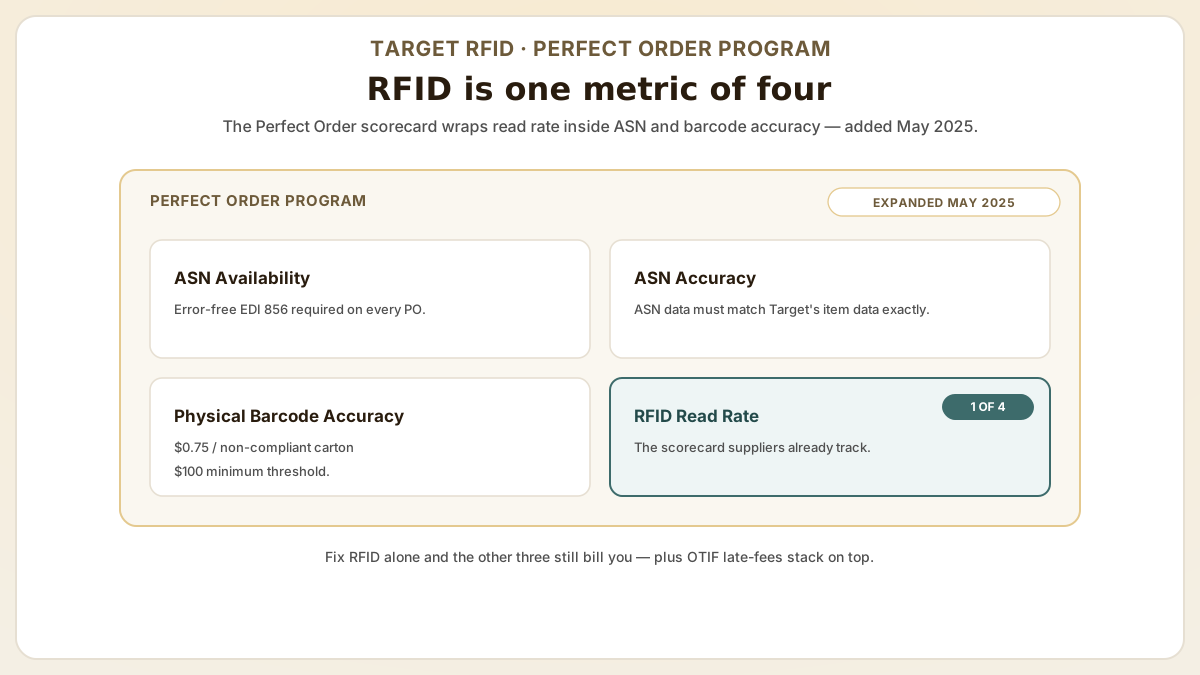
- Perfect Order metrics added in May 2025: ASN Availability (error-free EDI 856 required for every PO), ASN Accuracy (ASN data must exactly match Target item data) and Physical Barcode Accuracy ($0.75/non-compliant carton, $100 minimum threshold per published guidance) — these compound on top of RFID read-rate scorecard penalties.
- Tag-encoded GTIN must reconcile with EDI 856 line item: Target's automated receiving correlates the tag's encoded SGTIN with the ASN's GTIN. Mismatch flags the entire carton even if the read rate is healthy. Encoding workflow gates must enforce GTIN-to-SGTIN consistency before label print.
- Domestic Direct Import (DDI) flow vs Domestic Distribution Center: import-routed POs and DC-routed POs have different ASN cadence and per-shipment audit windows. Suppliers shipping both routes need separate tracking by routing type, not just by retailer.
- Vendor scorecard transparency through Partners Online (POL): Target's POL is the system of record for all Perfect Order and RFID scorecard data. Suppliers with POL access typically discover RFID issues 1-2 weeks faster than those relying on chargeback notifications.
- OTIF + RFID cross-amplification: a shipment that arrives late and reads below threshold compounds penalties — late-arrival fees stack on top of read-rate chargebacks. Cross-functional ops review (RFID team + transportation team) is the operational mitigation.
Where do most suppliers fail Target's RFID audit?
Target's audit failures cluster around a small set of preventable mistakes — five of them cover most remediation, each paired with its fix below. They overlap with Walmart's, because the chip and encoding standards are shared, but Target's slower monthly scorecard cadence means problems persist longer before they surface. Catching them at the finishing line is far cheaper than catching them at Target's dock.
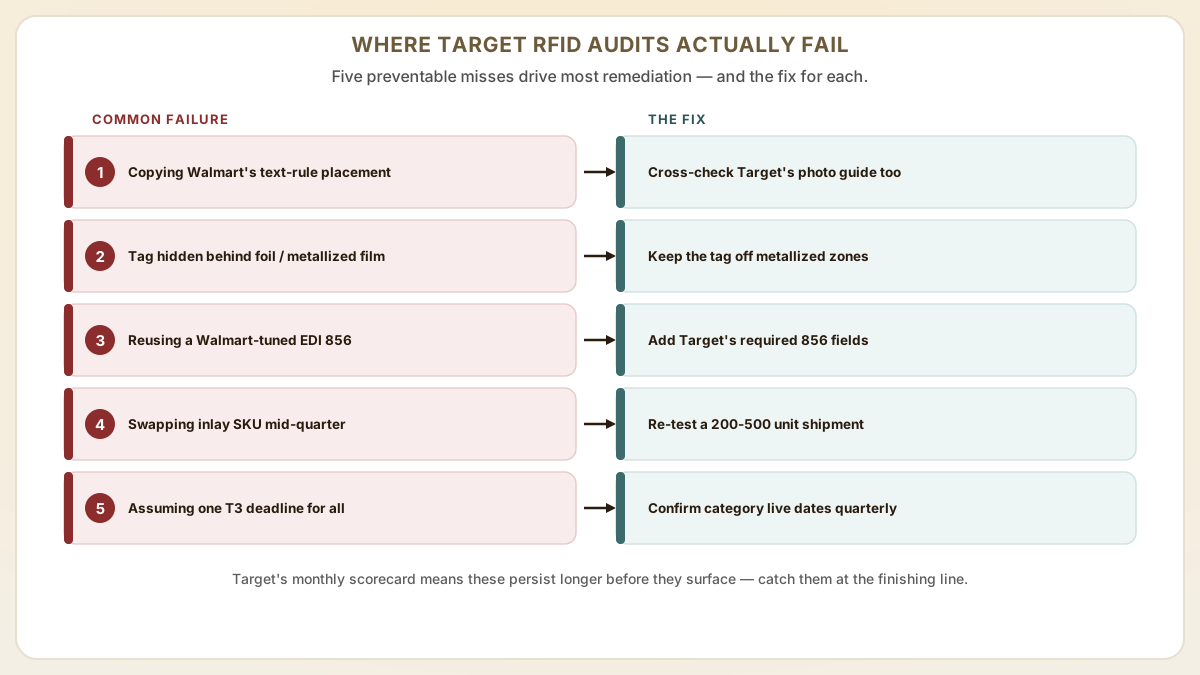
- Placement variance from photo standard: Target publishes photo-driven placement guides; suppliers who default to a Walmart text-rule placement often place tags in a position Target's audit camera flags. Always cross-reference both placement guides during finishing-line setup.
- Hidden tag inside foil-lined or metallized packaging: Target accepts hidden inner-garment placement, but tags shielded by foil packaging or metallized backing fail to read. This is the #1 cause of T3 electronics rollout failures because consumer-electronics packaging often has metallized graphics.
- EDI 856 field-code drift: Walmart and Target both use EDI 856, but field codes and required segments differ. Suppliers reusing a Walmart-tuned 856 often miss Target-specific required fields, producing rejects at receiving even when RFID reads cleanly.
- Unqualified inlay substitution: Target's approved inlay list updates each quarter. Suppliers who substitute inlay SKU mid-quarter without re-qualification trigger automatic flags at the next audit cycle. Always re-submit a 200-500 unit test shipment when changing inlay vendor.
- T3 category timing confusion: Target's T3 phase-in is staggered (small electronics ahead of toys, toys ahead of seasonal). Suppliers who assume one T3 deadline applies across categories show up with tagged inventory before the read-rate scorecard is live (wasted spend) or untagged after enforcement (chargebacks). Confirm category-specific live dates each quarter.
Useful next pages
Use these linked product, guide and comparison pages to keep the next click specific and practical.
Target-compliant RFID supplies
ARC-certified inlays, T2/T3 placement consulting and pre-ship tunnel readers.
Approved-supplier and QC references
Approved converter and tag-quality-control references for Target programs.
Target supplier reference
Authoritative Target vendor and supplier engagement resources.
FAQ
Can the same tag SKU pass both Walmart and Target audits?
Yes. Both retailers accept ARC-certified UHF EPC Gen2 inlays with SGTIN-96 encoding. The same physical tag works at both DCs as long as encoding is correct. Cross-compliant suppliers buy one tag SKU and reuse encoding workflow.
What is Target's chargeback for missing RFID tags?
$1.50-3.50 per unit for missing or unreadable RFID, plus a per-shipment re-receive surcharge of $50-200. Repeated failures escalate to vendor scorecard impact and potential program review.
Do I need separate RFID infrastructure for Target vs Walmart?
No. Encoding workstation, label printer and tunnel reader are shared. The retailer-specific work is in EDI 856 transactions (different VANs and field formats) and per-retailer scorecard monitoring.
Are Tier 3 categories enforced today?
Phased. Some T3 categories (small electronics) are in audit phase with chargeback warnings. Others (toys, seasonal) are in pilot phase. Target publishes a quarterly phase calendar; suppliers should reference the latest version.
How does the Perfect Order Program intersect with RFID compliance?
Target's Perfect Order Program (with metrics expanded in May 2025) measures ASN Availability, ASN Accuracy and Physical Barcode Accuracy on top of RFID read rate. Physical barcode accuracy carries a $0.75 per non-compliant carton fee with a $100 minimum threshold per public guidance. RFID-mandate suppliers need a single ASN workflow that satisfies all four metrics — fixing RFID alone leaves Perfect Order penalty exposure on the table.
What QC tooling do we need at the factory to satisfy Target's expectations?
Target assumes 100% inline read testing at supplier finishing line; suppliers who rely on Target's receiving audit to catch tag defects pay the per-unit chargeback. The standard QC stack: a desktop encoder with built-in read verification, plus a finishing-line read station that confirms each printed-and-encoded tag passes a baseline RSSI and EPC-format check before bagging. Specialized tools include FineLine's QCtrak app, SML's Cube QC platform, and Checkpoint's CheckSource — typical cost $5-15K per station including hardware, software license and operator training. For 1M-units/year programs, this QC investment pays back in the first quarter via avoided chargebacks. Skip it only if you have direct, fast-feedback visibility into Target's receiving audit (rare for new suppliers).
Can pre-encoded tags from my supplier be used for both Target and Walmart?
Yes — both retailers accept ARC-certified UHF EPC Gen2 with SGTIN-96 encoded against your GS1 company prefix. Pre-encoded tags ordered through your inlay vendor are interchangeable. The retailer-specific work is in EDI 856 transactions (different VAN feeds, slightly different field codes) and per-retailer placement audit. One tag SKU + one encoder workstation typically serves Walmart, Target and Macy's simultaneously.
What happens if my Target T3 SKU goes live before I have inventory tagged?
Target's read-rate scorecard activates on category live date. Untagged inventory in scope counts as 0% read rate, triggering the $1.50-3.50/unit chargeback plus per-shipment surcharges. Suppliers should confirm category-specific live dates each quarter via Partners Online and start tagged production runs at least 6-8 weeks ahead of enforcement to drain untagged finished-goods inventory before the date.
Sources & references
Primary standards, OEM datasheets and regulatory documents cited by this article. All URLs were verified on the access date shown below.
- Auburn University RFID Lab — ARC Approved Inlay Lists
ARC benchmark-tests inlays against per-use-case Specs; the approved-inlay qualification Target relies on for compliant tags.
Proud Tek is a Shenzhen-based RFID & NFC manufacturer supplying hotel chains, transit operators, event venues and retail brands worldwide. Every order includes free samples, RF testing and dedicated project support.
Get a Quick Quote
Tell us about your project and we'll respond within one business day. Fields marked (asterisk) are required.