
Retail Compliance
Macy's RFID Vendor Compliance
2026 Guide
Quick answer
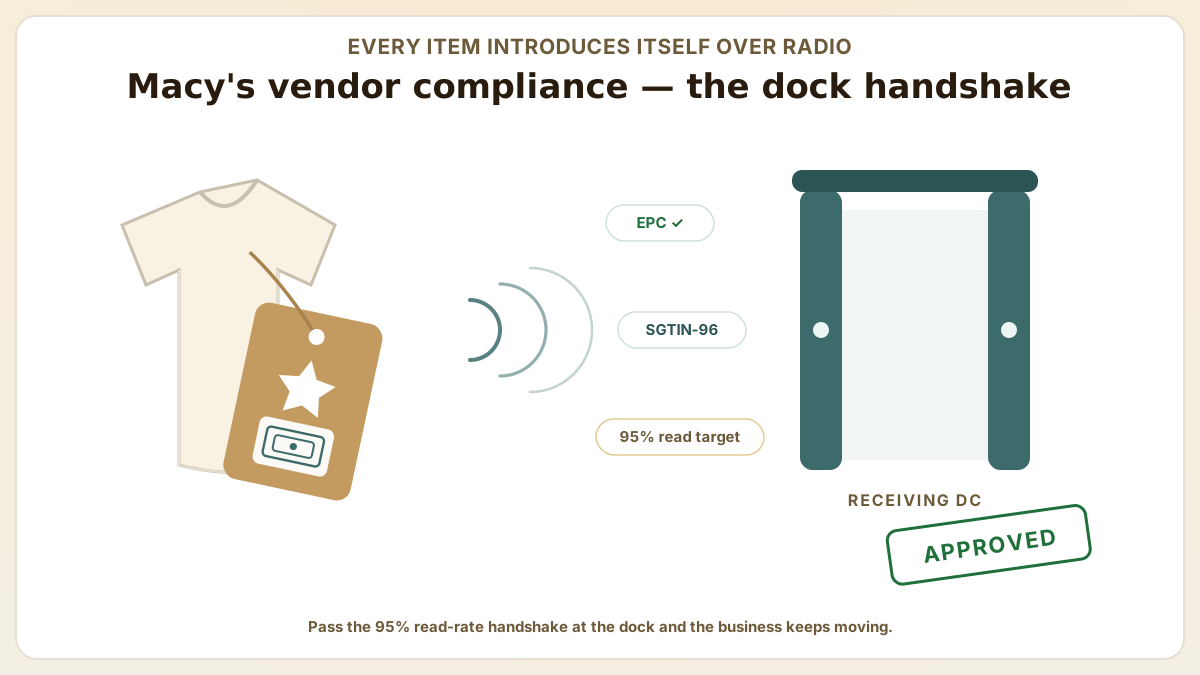
Macy's RFID compliance: ARC-certified UHF EPC Gen2 inlays, GS1 SGTIN-96 encoding, a 95% read-rate target — under 90%, chargebacks run $1.00-3.00 a unit. Macy's is the third major US retailer to make item-level RFID a condition of doing business; the rules rhyme with Walmart's and Target's but don't repeat. This guide covers chip choice, encoding, EDI and the scorecards that police them.
- Item-level tagging is enforced on apparel, footwear, accessories and home soft goods today, with phased expansion into hardlines through 2027.
- Macy's accepts the same UHF EPC Gen2 ARC-certified inlays as Walmart and Target — but the EDI plumbing, audit cadence and placement rules are Macy's own.
- Vendor scorecards roll up read rate, label placement and ASN accuracy. Flunk for multiple quarters and you land in vendor review — and program risk.
At a glance
Use these short answers to decide whether this page matches the project before moving into the detail.
Key takeaway
Item-level tagging is enforced on apparel, footwear, accessories and home soft goods today, with phased expansion into hardlines through 2027.
Is the Macy's RFID mandate your problem?
If you sell apparel, footwear, accessories or home soft goods to Macy's or Bloomingdale's, yes: item-level tagging is enforced on those categories today, and it is march...
Next step
Ready to move forward? Start your inquiry to get specific answers for this project.
Get Macy's-compliance RFID quoteIs the Macy's RFID mandate your problem?
If you sell apparel, footwear, accessories or home soft goods to Macy's or Bloomingdale's, yes: item-level tagging is enforced on those categories today, and it is marching into hardlines through 2027. No supplier has ever raised a hand and volunteered for an RFID mandate — it arrives as one line in a vendor packet, from an account far too big to argue with. Better this page than a surprise chargeback.
What does Macy's require from RFID vendors?
None of this was invented from scratch: Macy's RFID program is a technical cousin of Walmart's and Target's — same DNA, different table manners. Five requirements do the heavy lifting, and knowing where they differ from the other two mandates is what keeps the early-quarter chargebacks off your account.
- Approved tag chips: ARC-certified UHF EPC Gen2 inlays. Impinj Monza R6, NXP UCODE 8, UCODE 9 and equivalent. Macy's publishes a quarterly approved-inlay list.
- One encoding standard: GS1 SGTIN-96 using your GS1 company prefix. Macy's verifies the tag-encoded GTIN against your vendor catalog right at receiving.
- Placement, the Target way: hiding the tag inside the garment is fine as long as it reads through the fabric. The exact rules live in Macy's Vendor Standards Manual and differ slightly from Walmart's.
- Read rate: 95% at the receiving DC, with chargebacks below 90%. Macy's audits monthly where Walmart audits weekly — a slower feedback loop, which gives problems a longer head start before you see them.
- ASN with the full hierarchy: EDI 856 rolling up item SGTIN, carton SSCC and shipment BOL. Macy's runs on the GXS / OpenText Trading Grid VAN — not Walmart's Retail Link.
Which Macy's products need RFID tags?
Like Walmart and Target, Macy's rolls out coverage in waves — literally labeled Wave 1 through Wave 4. Knowing which wave your category rides tells you whether enforcement is already here or still paddling toward you.
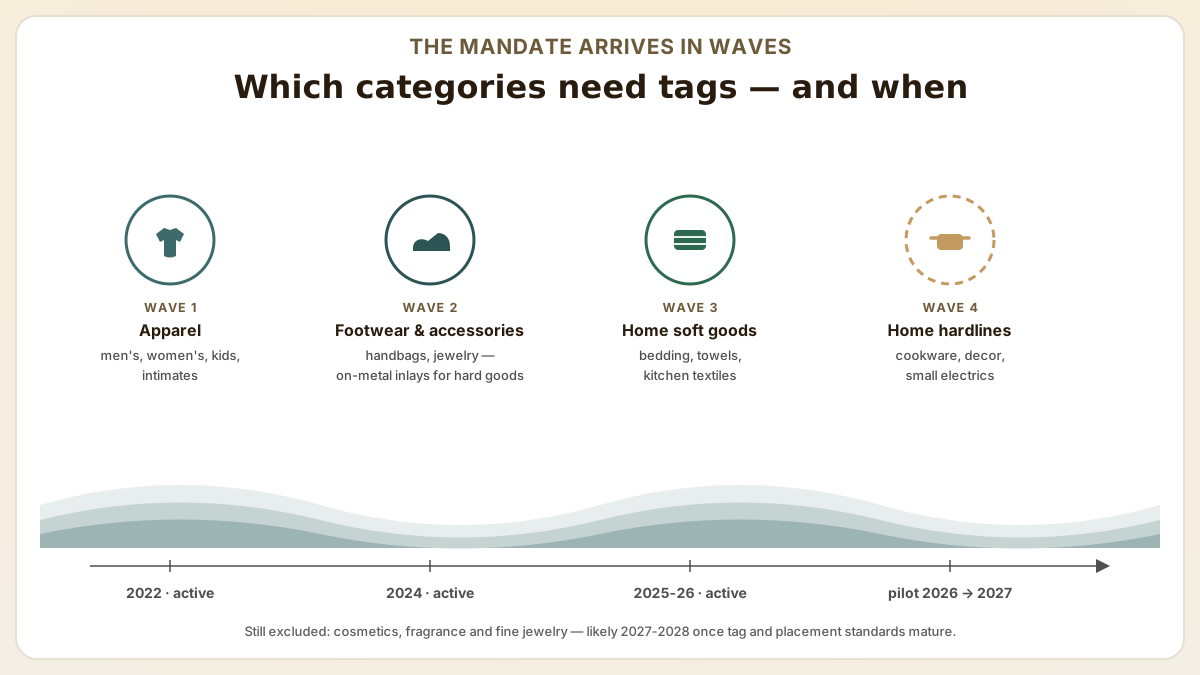
- Wave 1 (active): apparel — men's, women's, kids, intimates. The read-rate scorecard has been live since 2022, with chargebacks for non-compliance.
- Wave 2 (active 2024): footwear, handbags, accessories, jewelry. Hard-goods variants (jewelry boxes, eyewear cases) are accepted with on-metal-rated inlays.
- Wave 3 (active 2025-2026): home soft goods — bedding, towels, kitchen textiles. Same UHF inlay family as apparel, with placement adjusted per product type.
- Wave 4 (pilot 2026, enforcement 2027): home hardlines — cookware, decor, small electrics. Tag pilot SKUs in Q3-Q4 2026 to be ready when 2027 enforcement lands.
- Excluded for now: cosmetics, fragrance, fine jewelry. Likely added in 2027-2028 once cosmetics-specific tag and placement standards mature.
How do you become a Macy's-approved RFID supplier?
Five procedural steps stand between you and first-shipment acceptance. Skip any one of them and the shipment sits in limbo for 4-8 weeks — which is a very long time to explain to your boss.
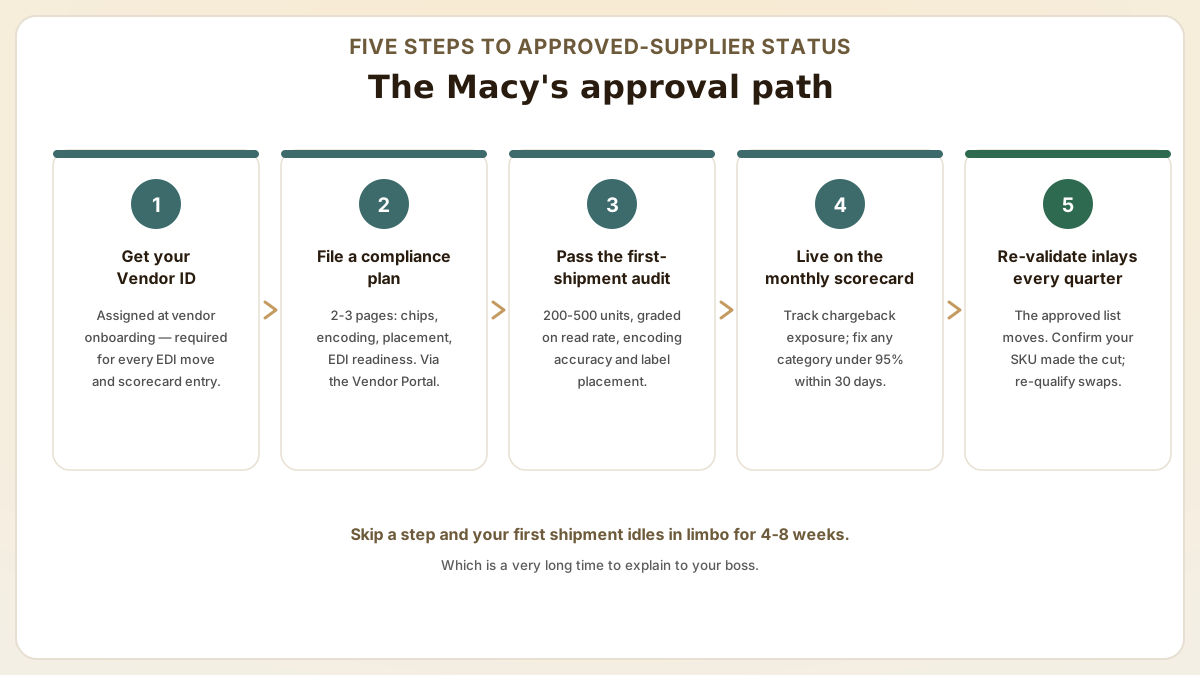
- Get your Macy's Vendor ID: assigned at vendor onboarding and required for every EDI transaction and scorecard entry. No ID, no game.
- Submit an RFID compliance plan: a tidy 2-3 page document covering chip selection, encoding workflow, placement plan and EDI readiness, filed through Macy's Vendor Portal.
- Pass the first-shipment audit: send a small initial shipment (typically 200-500 units) so Macy's RFID team can grade your read rate, encoding accuracy and label placement.
- Subscribe to the monthly scorecard: watch read rate and chargeback exposure via Macy's vendor reporting, and fix any category reading below 95% within 30 days.
- Maintain quarterly inlay validation: the approved-inlay list can change each quarter. Confirm your tag SKU still made the cut, and re-qualify before substituting.
How does Macy's compliance compare to other retailers?
Ship to more than one giant and there is good news and bad news. The hardware is mercifully identical — one tag SKU serves Walmart, Target and Macy's alike — while the paperwork is where each retailer insists on being a special case. Most infrastructure is shared; EDI and audit cadence are not.
The single smartest cross-compliance habit: watch your Walmart scorecard daily, because its weekly cadence surfaces problems first. And respect the "lenient" Macy's penalty stack anyway — $1.00-3.00 per unit compounds quickly on truckload-volume non-compliance.
| Requirement | Walmart | Target | Macy's |
|---|---|---|---|
| Tag & encoding | UHF EPC Gen2 + SGTIN-96 | Identical | Identical — one tag SKU works for all three |
| Encoding stations | Shared — the same workstation and tunnel reader serve every program | Shared | Shared |
| EDI VAN | Retail Link | Partners Online | GXS / OpenText — separate setup; expect 2-3 feeds |
| Audit cadence | Weekly | Monthly | Monthly |
| Chargebacks per unit | $2-5 | $1.50-3.50 | $1.00-3.00 — gentlest of the three |
How is Macy's using RFID beyond inventory accuracy?
What started as inventory accuracy and omnichannel plumbing has quietly become the backbone of Macy's theft defense, store-fulfillment economics and Bloomingdale's white-glove experience. Vendors should care, because these downstream uses set Macy's tolerance for read-rate degradation — and it is low.
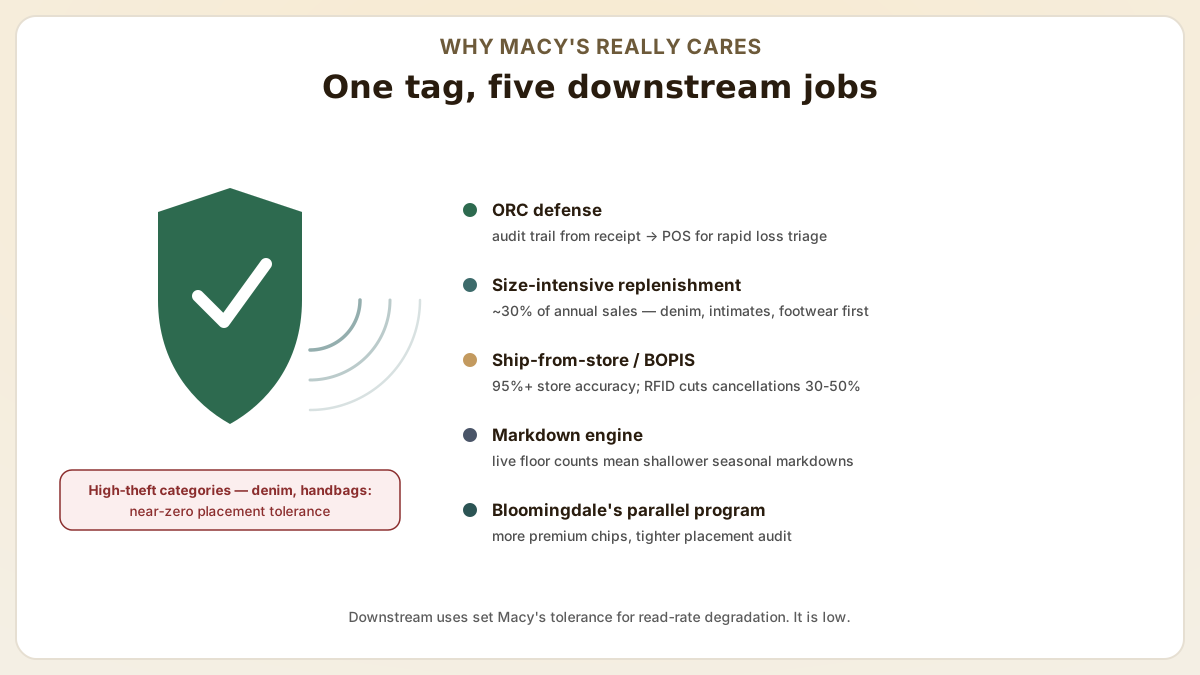
- Organized retail crime (ORC) intelligence: per public PYMNTS coverage from 2022 onward, Macy's expanded RFID specifically to trace item movement after receipt. Tags that read poorly blur the loss-prevention signal — which is why the audit team has near-zero tolerance for placement variance on high-theft categories like denim and handbags.
- Size-intensive replenishment: Macy's has publicly described tagging size-intensive replenishment items (~30% of total annual sales). Denim, intimates and footwear vendors sit in the highest-priority tier — chip choice and placement matter more here than for low-replenishment items.
- Store-fulfillment economics: ship-from-store and BOPIS programs need 95%+ store-level inventory accuracy to avoid customer cancellations. Industry benchmarks (Accenture, SML) show RFID-enabled stores cut store-fulfillment cancellations by 30-50% — Macy's scorecard penalties reflect the revenue at stake.
- Bloomingdale's parallel program: the same Vendor Standards Manual covers both banners, but Bloomingdale's typically receives the more premium chip family and the tighter placement audit. Verify which division your PO routes to before locking the inlay SKU.
- Markdown management: real-time RFID inventory feeds Macy's markdown decision engines. Accurate floor counts cut the markdown depth Macy's needs to clear seasonal SKUs — and the difference between 30% and 50% off is real money in vendor-allowance negotiations.
Macy's vs Nordstrom: cross-department-store mandate comparison
Ship to Macy's and the odds are you ship to Nordstrom too. The two mandates are about 80% identical twins, but three specific differences trip up first-time multi-banner suppliers — AtlasRFIDstore's published comparison lays them out.
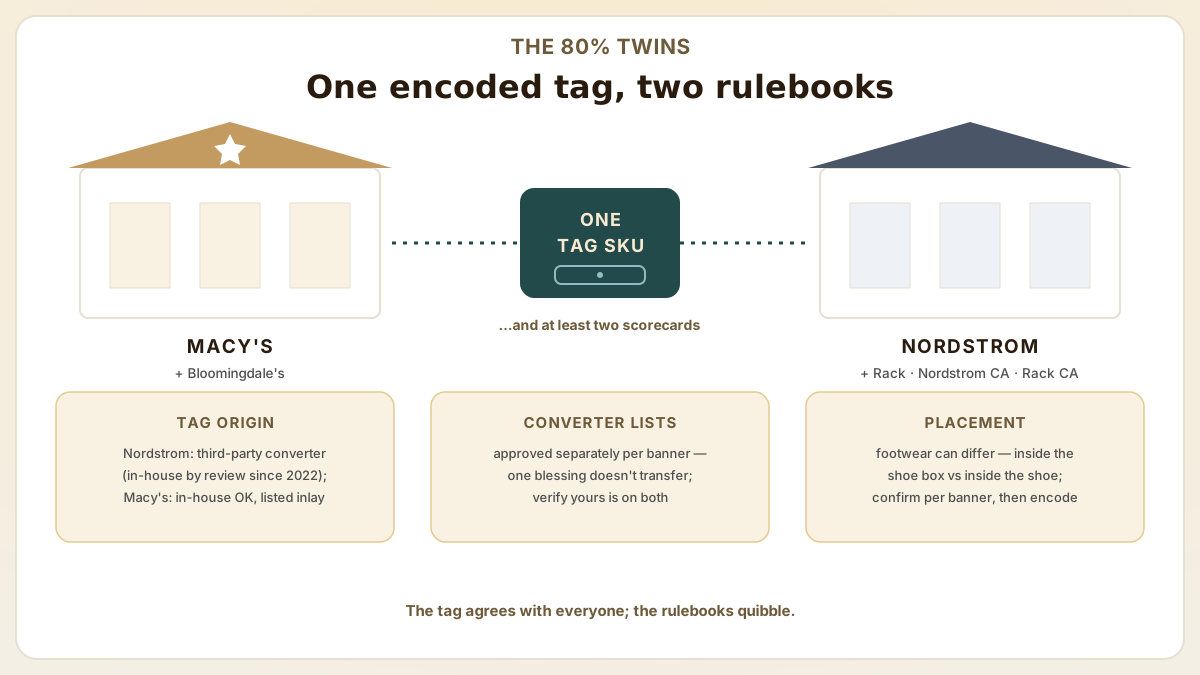
- Tag origin rule: Nordstrom historically prohibited in-house factory tag printing — every RFID tag had to come from a third-party Auburn-approved label converter. From 2022 Nordstrom began accepting in-house factory printing on a per-manufacturer review basis. Macy's accepts in-house printing without prior approval as long as the inlay is on the approved list. Shipping to both? Default to a third-party converter and you satisfy Nordstrom and Macy's in one move.
- Approved inlay overlap: Nordstrom and Macy's share most ARC-certified inlay families (Impinj M730/M770, NXP UCODE 8/9). Differences appear in approved-converter lists — a converter approved by one banner may not be on the other's list even if the inlay is identical. Verify per-banner converter approval before locking the supply chain.
- Banner expansion scope: Nordstrom's agreement covers Nordstrom, Nordstrom Rack, Nordstrom CA and Nordstrom Rack CA. Macy's covers the main banner plus Bloomingdale's (sometimes with Bloomingdale's-specific placement deltas). Suppliers shipping to all six brands manage one tag SKU but at least two scorecards.
- ORC-driven enforcement timing: both retailers scaled RFID enforcement after the 2021 wave of organized retail crime (grab-and-go thefts), and both publicly describe RFID as part of the loss-prevention stack. Vendors with poor read rates on high-theft categories (denim, handbags, athleisure) face faster escalation than on low-theft categories.
- Footwear scope: Macy's added footwear in Wave 2 (active 2024). Nordstrom's footwear program scaled in 2024-2025 with the same UHF EPC Gen2 + GS1 SGTIN-96 standards but a slightly different placement convention — inside the shoe box for some categories instead of inside the shoe. Confirm per-banner placement before encoding.
What are the most common Macy's RFID compliance mistakes?
Macy's monthly audit cadence sounds more relaxed than Walmart's weekly one — until you realize it just means you discover problems later, with a longer look-back window when the chargebacks finally arrive. Dodging these five failure patterns up front is dramatically cheaper than remediating after.
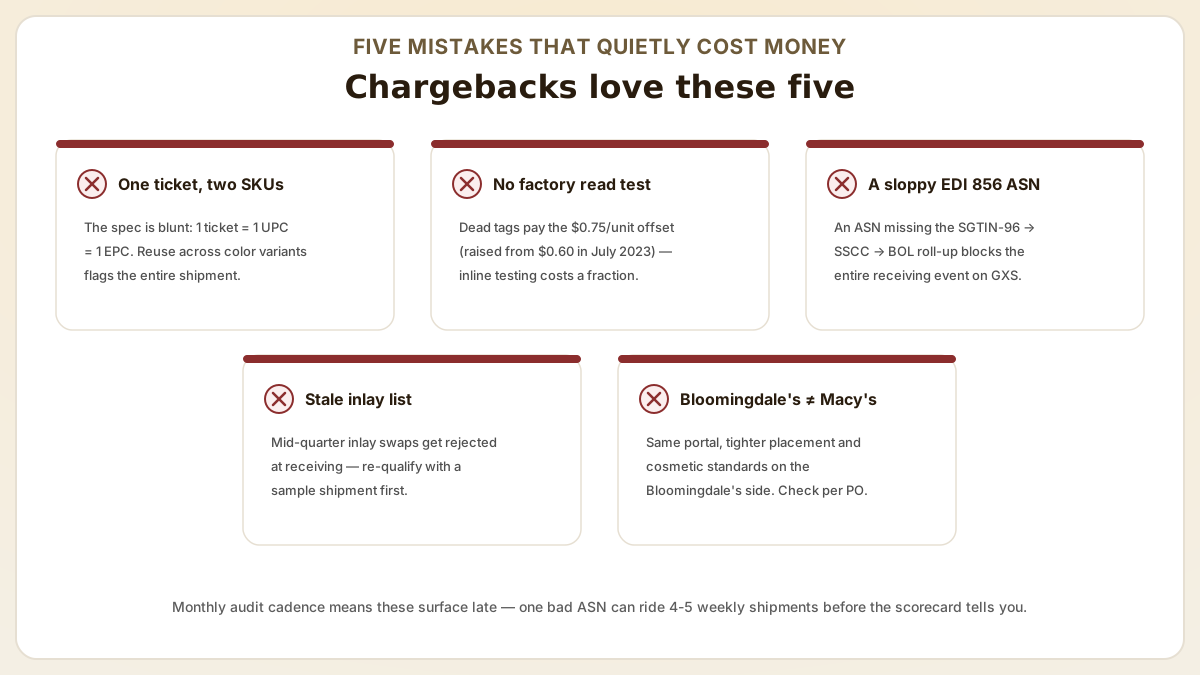
- One UPC / GTIN per ticket / EPC violation: Macy's published RFID Technical Specification is blunt — each ticket carries exactly one UPC and one EPC. Reuse a generic ticket across two color variants and the entire shipment gets flagged. Audit your ticket-to-SKU map at the finishing line.
- Tag-functionality testing skipped at the factory: Macy's expense offset (effective July 2023) raised the per-unit penalty for non-functioning RFID tags from $0.60 to $0.75. Skip the 100% finishing-line read test, ship dead tags, and pay the full rate — inline read testing costs a fraction of the recurring chargeback.
- EDI 856 ASN mismatch: on GXS / OpenText Trading Grid, an ASN that fails to roll up SGTIN-96 (item) → SSCC (carton) → BOL (shipment) blocks the entire receiving event. With monthly audits, a single bad ASN can cascade across 4-5 weekly shipments before the scorecard tells you.
- Quarterly inlay-list lag: Macy's updates the approved-inlay list quarterly (Walmart and Target revise theirs too). Substitute an inlay SKU mid-quarter without re-qualifying and receiving rejects it — even when the new inlay is technically equivalent. Always re-submit a sample shipment when changing inlay vendor.
- Bloomingdale's vs Macy's confusion: same vendor portal, slightly different placement and chip expectations. Confirm per-PO which placement diagram applies — Bloomingdale's premium positioning means tighter cosmetic and placement standards than the Macy's main banner.
Useful next pages
Use these linked product, guide and comparison pages to keep the next click specific and practical.
Macy's-compliant RFID supply
ARC-certified inlays, encoding services and Macy's Vendor Portal integration support.
Cross-retailer mandate references
External comparisons of department-store RFID programs from independent label converters.
Macy's vendor reference documents
Official Macy's vendor standards and EPC RFID specification documents.
FAQ
Can the same RFID tag serve Walmart, Target and Macy's?
Yes. All three accept ARC-certified UHF EPC Gen2 with SGTIN-96 encoding, so a single tag SKU plus one encoding workstation serves all three retailers. The differentiation lives at EDI integration and audit cadence — not the physical tag.
What's Macy's chargeback for missing or unread RFID tags?
$1.00-3.00 per unit for missing or unreadable RFID, plus a per-shipment re-receive fee of $25-150. That is lower than Walmart's penalties, but still very material at truckload volume — model both lines when estimating exposure.
How often does Macy's update its approved-inlay list?
Quarterly review, with mid-quarter updates as needed. New inlay SKUs are added after ARC certification plus Macy's internal evaluation. Removals are rare but do happen when an inlay shows poor field performance — which is why mid-quarter substitutions need re-qualification.
Do I need a separate Macy's vendor portal subscription?
Yes. Macy's Vendor Portal is the system of record for compliance plans, scorecards and chargeback reporting. The annual subscription runs $1,200-2,400 depending on vendor size and modules, and it is required for any RFID-program supplier.
What is the Macy's RFID expense offset for a non-functioning tag?
Per Macy's published Vendor Standards, the per-unit expense offset for non-functioning RFID tags rose from $0.60 to $0.75 effective July 2023. Do the math: a 1,000-unit shipment with 5% dead tags incurs $37.50 in tag-functionality penalties alone, before any read-rate scorecard impact. Factory-side 100% inline read testing is materially cheaper than recurring penalties.
Does Macy's RFID program also cover Bloomingdale's?
Yes — the same Vendor Standards Manual covers both Macy's and Bloomingdale's, but the divisions sometimes differ on placement and chip preferences (Bloomingdale's premium positioning typically demands cleaner placement and higher-spec inlays for high-value categories). Confirm per-PO which division it routes to before locking inlay SKU and placement diagram.
Can the same RFID program serve Nordstrom and Macy's simultaneously?
Largely yes, with three caveats from the AtlasRFIDstore comparison. (1) Tag-origin rule: Nordstrom historically required third-party converter tags only; default to a third-party Auburn-approved converter to satisfy both. (2) Approved-converter list: each retailer maintains its own approved-converter list separate from the inlay approval — verify your converter is on both. (3) Per-banner placement: Macy's main banner, Bloomingdale's, Nordstrom main banner, Nordstrom Rack and Nordstrom CA can have different placement preferences for footwear and handbags — confirm per-PO before locking encoding-station SOPs. The single highest-leverage move: pick a multi-retailer-approved converter (FineLine Technologies, Avery Dennison, SML are common picks) and a multi-retailer-approved inlay (Impinj M730/M770 family) so the same encoded tag clears all banners' incoming-receipt audits.
How does Macy's RFID compare to organized retail crime (ORC) prevention?
Macy's has publicly described expanding RFID specifically to support ORC defense — RFID-tracked items create an audit trail from receipt to point of sale that enables rapid loss-event triage. That drives Macy's tight tolerance on tag placement and read rate for high-theft categories: a denim or handbag ASN with poor read rate undermines the loss-prevention signal as well as the inventory accuracy signal, so vendors in those categories face faster escalation than in lower-theft soft goods.
Proud Tek is a Shenzhen-based RFID & NFC manufacturer supplying hotel chains, transit operators, event venues and retail brands worldwide. Every order includes free samples, RF testing and dedicated project support.
Get a Quick Quote
Tell us about your project and we'll respond within one business day. Fields marked (asterisk) are required.