
Retail Compliance
RFID Item-Level Tagging Cost Model for Apparel
Quick answer
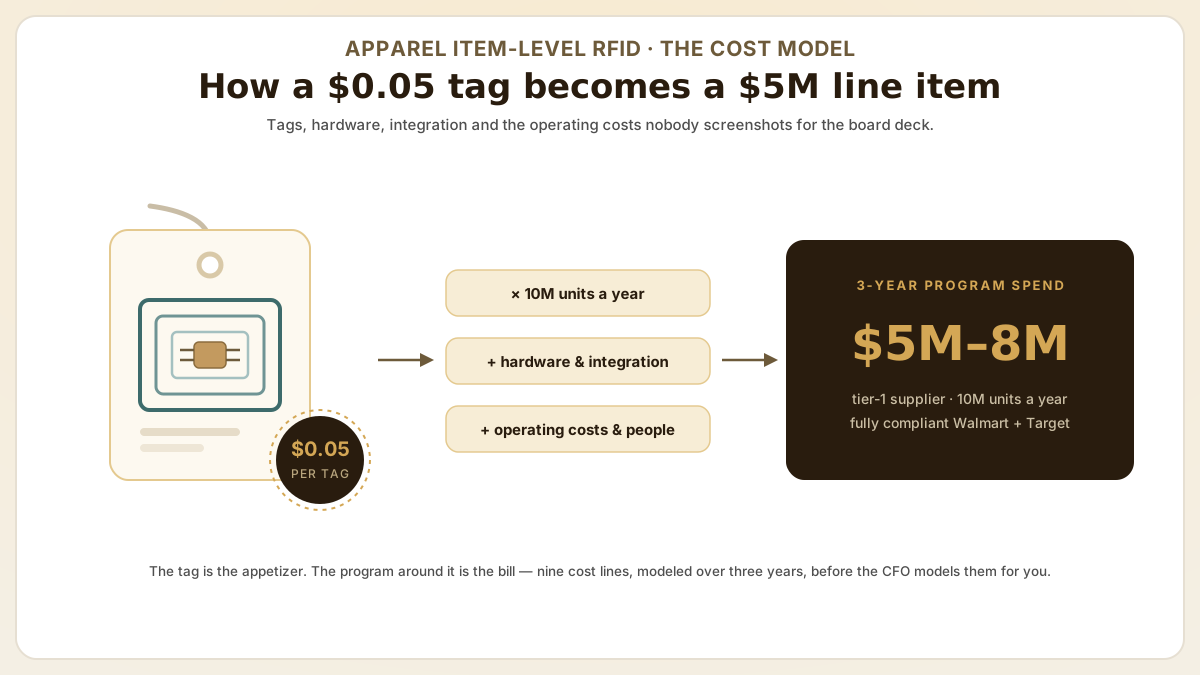
An apparel item-level RFID program costs 3-5× the tag-only quote in year 1 — a real 3-year model spans tags, hardware, integration and operating costs. Leave any line out and you understate true program cost 30-50%. That is not a rounding error; that is how a confident budget becomes a year-two apology tour.
- Year 1 runs 3-5× the tag-only price — hardware, integration and labor do the heavy lifting, even at 10M-unit volume.
- By year 3 the tag finally becomes the dominant cost line, as fixed infrastructure amortizes across higher unit volume and relaxes.
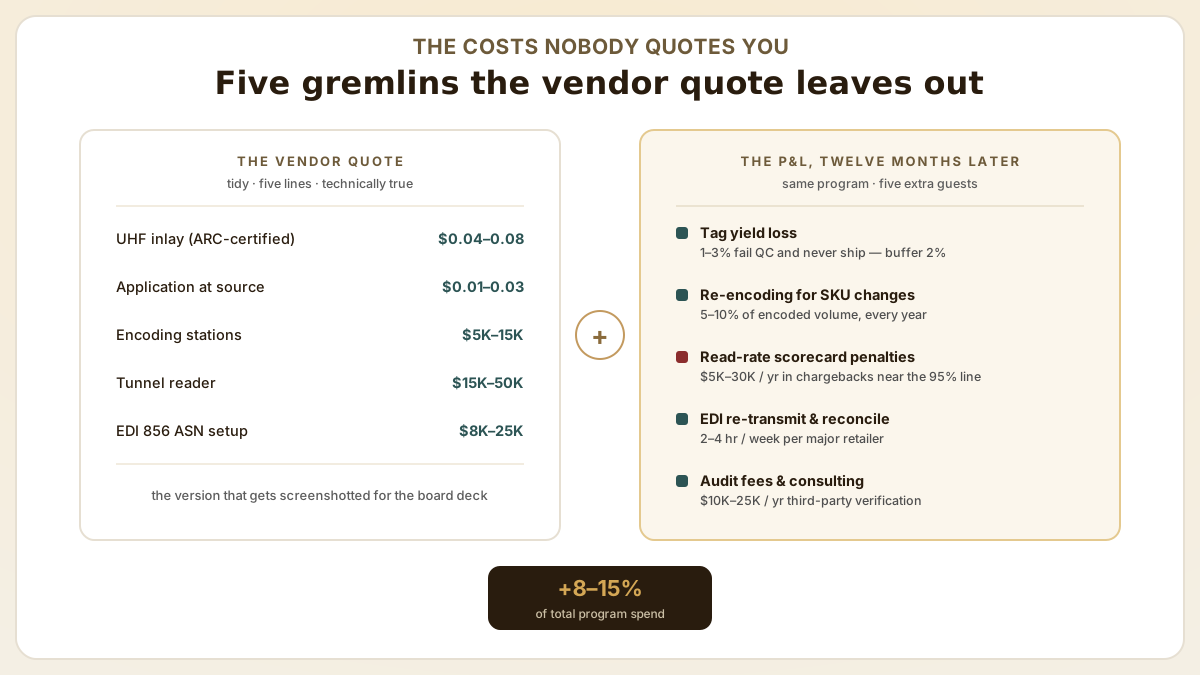
- Hidden cost lines add 8-15% on top — tag yield loss, EDI VAN fees, scorecard penalties. They never make the quote; they always make the P&L.
At a glance
Use these short answers to decide whether this page matches the project before moving into the detail.
Key takeaway
Year 1 runs 3-5× the tag-only price — hardware, integration and labor do the heavy lifting, even at 10M-unit volume.
What are the cost components of item-level apparel RFID?
Every apparel RFID budget starts life the same way: someone copies a single number off a tag quote, pastes it into a spreadsheet and declares the project basically free....
Next step
Ready to move forward? Start your inquiry to get specific answers for this project.
Get an apparel RFID program quoteWhat are the cost components of item-level apparel RFID?
Every apparel RFID budget starts life the same way: someone copies a single number off a tag quote, pastes it into a spreadsheet and declares the project basically free. It is not basically free — that number is almost always the smallest guest at the party. The garment gets its tag, yes. But the tag needs something to encode it, something to read it at the shipping dock, a data feed telling the retailer it shipped, and actual humans to keep the whole circus running. An apparel RFID program has nine major cost lines; building the cost model means owning each one and estimating its annual run-rate at expected volume — or one of them will own you.
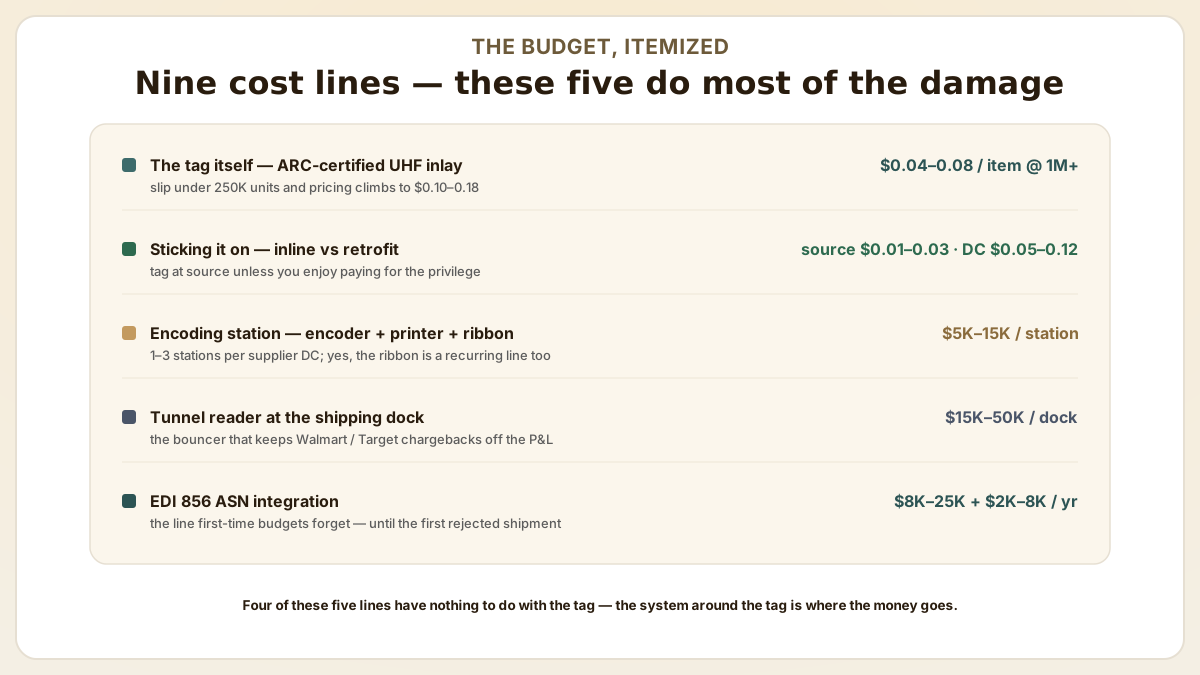
- RFID tag cost: $0.04-0.08 per item at 1M+ volume for ARC-certified UHF inlays. Volume tiers below 250K push pricing to $0.10-0.18 per tag — economy of scale is real, and it is unsentimental.
- Tag application cost: $0.01-0.03 per garment for inline tagging at the manufacturer; $0.05-0.12 for retrofit tagging at a distribution center. Tag at source unless you enjoy paying for the privilege.
- Encoding hardware: $5K-15K per encoding station (encoder + label printer + thermal-transfer ribbon). A typical apparel program needs 1-3 stations per supplier DC — and yes, the ribbon is a recurring line too.
- Tunnel reader at shipping dock: $15K-50K per dock for the reader + antennas + conveyor integration. Think of the pre-shipment audit as the bouncer that keeps Walmart/Target chargebacks out of your P&L.
- EDI 856 ASN integration: $8K-25K one-time + $2K-8K/year VAN fees. Required for Walmart, Target, Macy's RFID programs — and the line first-time budgets forget entirely, right up until the first rejected shipment.
How do tag costs scale by volume tier?
Tag pricing follows a steep volume curve — the more you buy, the less each one stings. Learn the inflection points and you walk into procurement holding the map instead of asking for directions. The whole curve runs from pilot program to we-negotiate-copper-prices-now.
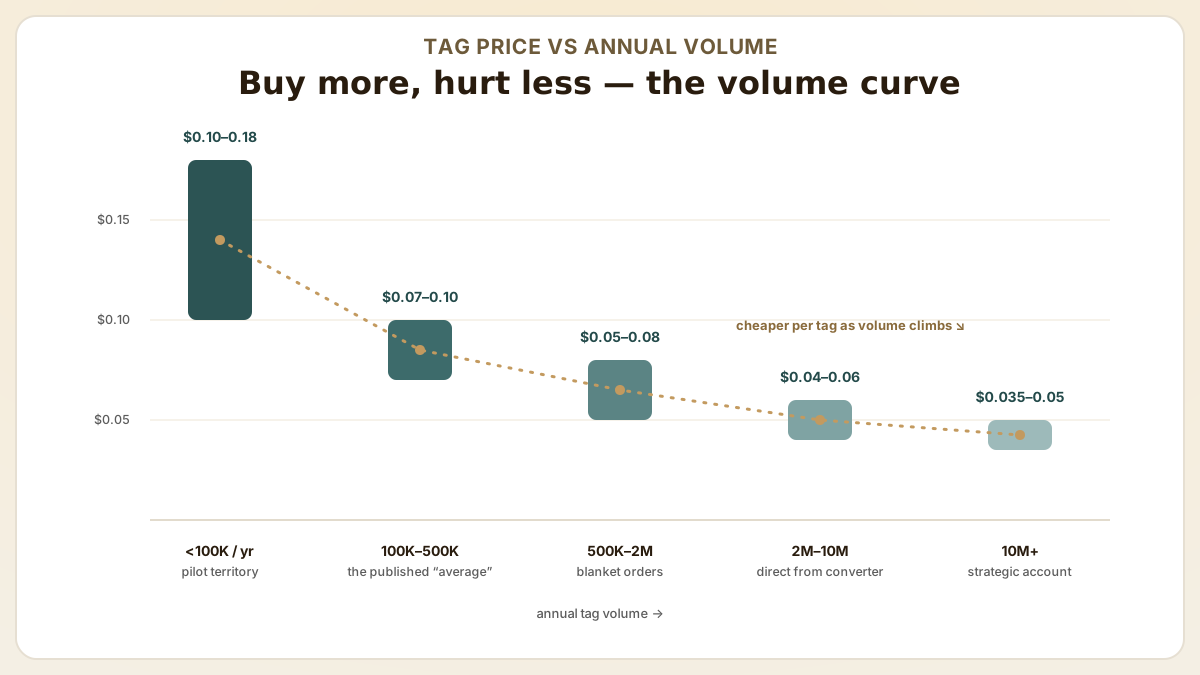
- Under 100K tags/year: $0.10-0.18 per tag. High setup-fee burden, plus minimum-quantity surcharges from inlay manufacturers. Perfectly fine for a pilot program; quietly painful for a program.
- 100K-500K tags/year: $0.07-0.10 per tag. The range every published 'average price' in trade media secretly assumes — if a headline number ever surprised you, this is the volume tier it was quoting.
- 500K-2M tags/year: $0.05-0.08 per tag. Volume discount kicks in; suppliers can negotiate annual blanket orders for predictable pricing and an end to per-quote whiplash.
- 2M-10M tags/year: $0.04-0.06 per tag. Direct-from-converter pricing; suppliers may bypass distributors and buy straight from factories.
- 10M+ tags/year: $0.035-0.05 per tag. Strategic-account pricing, where brands negotiate raw-material pass-throughs (silicon wafer, copper antenna). Yes, really.
How do you build a 3-year apparel RFID cost model?
A defensible cost model has three acts: year 1 ramp (expensive and dramatic), year 2 normalize (finding its feet), year 3 amortize (the per-unit floor everyone was promised). Model each act honestly, with proper assumptions, and the CFO signs. Fudge it and the CFO remembers.
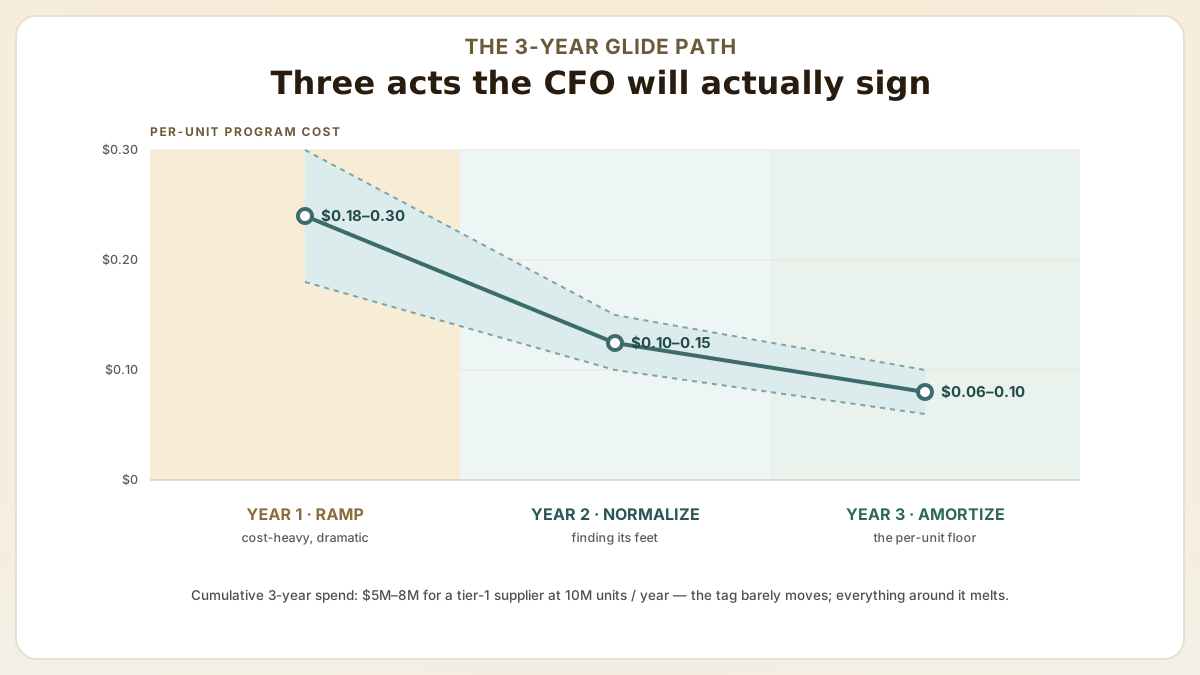
- Year 1 (ramp): tag spend at 80% of year-3 volume; hardware spend 100% loaded; integration labor at full external-consultant rates. Per-unit cost stays a wince-inducing $0.18-0.30 even at scale.
- Year 2 (normalize): tag volume reaches steady state; hardware fully deployed; integration in-sourced. Per-unit cost drops to $0.10-0.15 — the numbers stop scaring people.
- Year 3 (amortize): infrastructure cost spreads across full annual volume; tag negotiation maturity drives 10-15% tag-cost reduction. Per-unit cost reaches $0.06-0.10 — the floor everyone was promised.
- Cumulative 3-year cost: tier-1 supplier shipping 10M units/year typically spends $5M-8M cumulative over 36 months for a fully-compliant Walmart + Target program.
- Sensitivity: tag price drops 5-10% per year industry-wide. Lock in 12-month blanket pricing to capture savings; resist multi-year locks that prevent re-negotiation as the market drops.
Tag-format cost matrix: which format gives the best per-unit economics?
That innocent 'tag cost' line item hides three distinct format options with materially different unit economics, durability profiles and use-case fit. CPCON's published 2026 reference data lets us put them in a ring together — and knowing which format your program needs shifts effective per-unit cost by 30-50%, more than any chip decision on the table.
- Adoption context: 80%+ of the top 100 global apparel retailers now use RFID at item level (CPCON 2026 data). RFID is no longer differentiation; it is the table stakes for retail-mandate compliance — nobody is impressed you have it, they are annoyed if you don't.
- Sales-lift benchmark: published RFID retail deployments report 5-15% comparable-store sales lift after RFID rollout, driven by reduced out-of-stocks and accurate omnichannel availability. This is the revenue-side ROI line that pairs with the cost-side tag spend in any board deck.
- Format choice changes program economics more than chip choice: a brand specifying woven care labels at $0.10/unit pays 2-3x the soft-label price even at the same chip family. Verify the premium serves a downstream need (durability through wash cycles, anti-counterfeit, EU DPP) before defaulting to the more expensive option out of habit.
- Hard EAS+RFID tags are the lowest amortized cost per use but require POS-removal infrastructure (deactivation pad). Department stores running hard tags amortize at $0.01-0.02 per use across 10,000+ retail cycles — great for department stores, overkill for a paper-hangtag world.
| Tag format | 2026 unit cost | Reusable | Best fit |
|---|---|---|---|
| Disposable soft label / inlay (paper hangtag) | $0.03-0.08 (10M+ units) | No | Fast fashion, high-volume Walmart/Target apparel |
| Woven RFID care label (sewn-in) | $0.05-0.12 | No (permanent) | Premium brands, DTC, EU DPP-ready authentication |
| Hard EAS+RFID combination tag | $2-8 upfront ($0.01-0.02 amortized over 10K+ cycles) | Yes | Department stores, high-theft category anti-shrink |
| RFID hangtag (printed kraft) | $0.05-0.15 | No | Branded retail, minimal process change, easy POS removal |
How does the cost model differ for source-tagging vs DC retrofit?
Where you tag the garment quietly rewrites the entire cost stack. Source-tagging (at the cut-make-trim factory) is cheaper per unit but hands your factory a new hobby; DC retrofit is operationally simpler but multiplies per-unit cost 3-5x. Most mid-volume programs settle on source-tagging from quarter 2 onward — but year-1 retrofit can be the right call when factory readiness is the gating constraint.
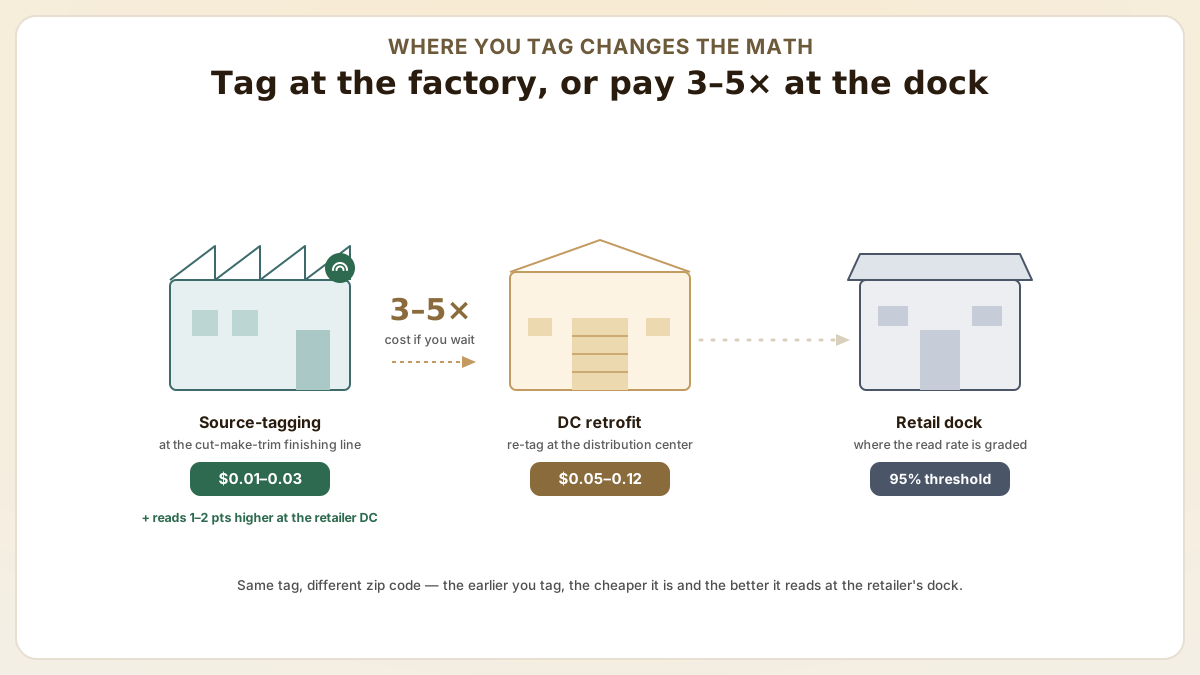
- Source-tagging unit economics: $0.01-0.03 incremental per garment for inline tagging at finishing line, plus $5K-15K per encoder station amortized across ~250K-1M units/quarter per station. RFID Journal's industry papers keep crowning source-tagging the lowest-cost steady-state position once factory ops are stable.
- DC retrofit unit economics: $0.05-0.12 per garment for retrofit tagging at a US distribution center, including labor, ticket-kit kit-build cost and yield loss from re-tagging damaged tickets. Per-unit cost is 3-5x source-tagging — but capex deploys against your DC, not 12 factories.
- Hybrid program: many tier-1 brands run hybrid — source-tag for the SKUs that ship majority through retail-mandate channels, retrofit-tag the long-tail SKUs at DC. Modeling this hybrid requires a SKU-level decision matrix (annual units × retail-mandate exposure × factory readiness score).
- Hidden source-tagging cost: factory training and pre-shipment audit. Budget $15K-50K per factory for setup, plus 1-2 finishing-line operator hours per shift for the first 90 days while operators internalize the workflow. This rarely shows up in vendor quotes but always shows up on the P&L.
- Read-rate trade-off: source-tagged programs typically read 1-2 percentage points higher at retailer DC than DC-retrofit programs because the tag has been on-product through more handling without QC failure. For Walmart-mandate suppliers operating near 95% threshold, that alone is the operational reason source-tagging is preferred even when the capex math is tight.
How does RFID compliance cost change when serving multiple retailers?
Multi-retailer suppliers (Walmart + Target + Macy's + Kohl's) get the best per-unit economics because hardware and tag SKUs amortize across more volume. The catch: complexity migrates into EDI / VAN feeds, scorecard monitoring and per-retailer placement audit. Get the shared-vs-duplicated split right and a second retailer is mostly paperwork; get it wrong and you have paid for the same tunnel reader twice.
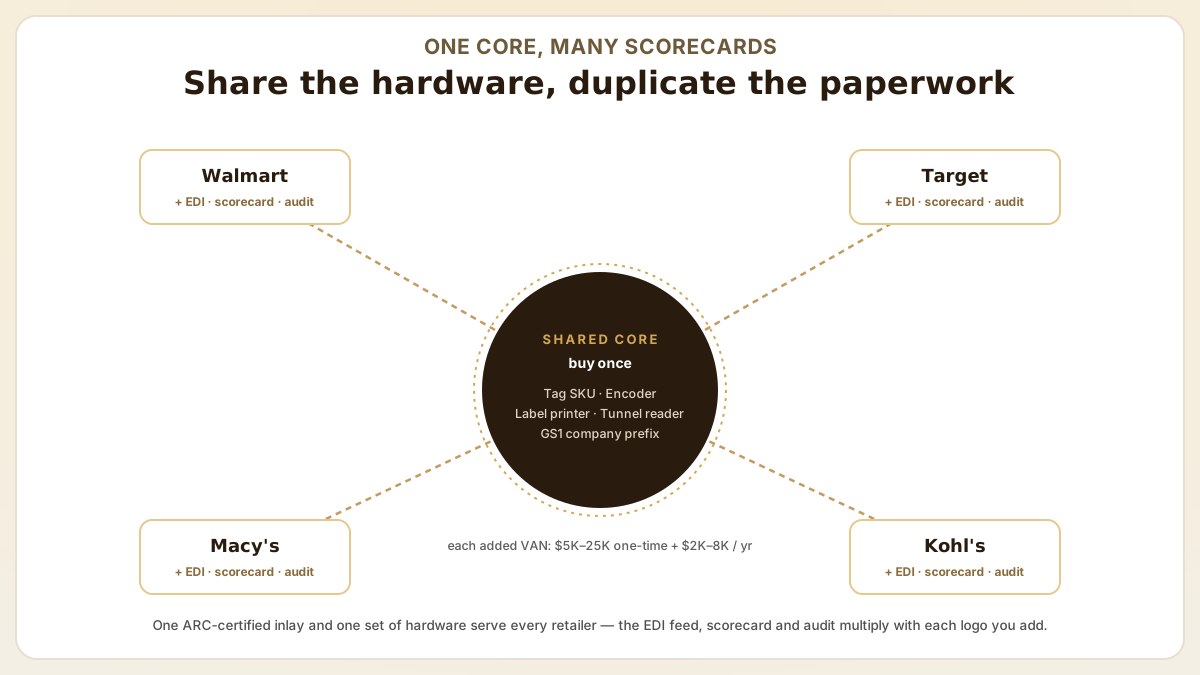
- Shared cost lines (do not multiply by retailer count): tag SKU (one ARC-certified UHF inlay serves Walmart, Target, Macy's), encoder hardware, label printer, tunnel reader, GS1 prefix annual fee. A dual-source qualified inlay covers chip-vendor risk too.
- Duplicated cost lines (multiply by retailer count): EDI VAN feed (Walmart Retail Link, Target Partners Online, Macy's GXS / OpenText, Kohl's separate), scorecard monitoring tooling/headcount, per-retailer placement audit and re-qualification on quarterly inlay updates.
- Per-retailer integration cost: $5K-25K one-time per VAN, $2K-8K/year ongoing VAN fee. A 4-retailer program adds $20K-100K one-time + $8K-32K/year on top of single-retailer baseline.
- Scorecard ops headcount: 0.25 FTE per retailer at steady state for monitoring, exception handling and data reconciliation. A 4-retailer program is roughly 1 dedicated FTE — one human whose entire job is RFID scorecards.
- Cross-compliance benefit: Auburn RFID Lab data and Accenture surveys show ~93% of NA retailers now use RFID. Suppliers with established Walmart programs typically onboard Target in 4-6 weeks at incremental cost <10% of original program — the incremental cost is almost entirely EDI and scorecard, not hardware or tag.
Useful next pages
Use these linked product, guide and comparison pages to keep the next click specific and practical.
Apparel RFID program supply
ARC inlays, encoding stations, tunnel readers and EDI integration support.
2026 cost-model references
Published 2026 pricing and ROI data sources cited above.
Industry cost benchmarks
Authoritative external sources for tag pricing, ROI and apparel deployment data.
FAQ
What's the typical first-year apparel RFID program cost?
Tier-1 supplier shipping 5-10M units annually: $1.5M-3M in year 1 across tags ($400K-700K), hardware ($300K-500K), integration ($300K-800K), and operating overhead ($500K-1M). Year 2 eases to $1M-1.5M; year 3 settles at $700K-1.2M. Year 1 is the expensive one and it gets cheaper from there — that's the amortization curve doing its job.
Should we tag at the factory or at our DC?
At the factory, almost always. Inline tagging during garment finishing costs $0.01-0.03 per unit; DC retrofit costs $0.05-0.12. The only good reasons to retrofit: the factory cannot accommodate encoding equipment, or the brand wants centralized control of encoding data. Otherwise you are paying a 3-5x convenience fee.
Are encoding hardware costs amortizable over multiple retailers?
Yes — and this is the good news that funds everything else. The same encoder, label printer and tunnel reader serve Walmart, Target and Macy's programs simultaneously. Hardware investment is per-supplier-DC, not per-retailer, so multi-retailer suppliers see the best hardware ROI.
How fast does tag pricing actually drop year-over-year?
Industry consensus: 5-10% annually for ARC-certified inlays, faster in early-year-of-mandate categories where new factory capacity comes online. The trap: brands locked into multi-year fixed pricing (>2 year terms) typically pay above-market by year 3. Lock in for a year, not a decade.
What is the impact of tagging on COGS for a typical apparel brand?
At tier-1 volumes (10M+ units/year) RFID tagging adds well under 1% to COGS — often quoted at 0.3-0.7% by industry analysts. At tier-2 volumes (100K-1M) it can run 1-2% of COGS in early years before amortization. Most CFOs find this band acceptable when chargeback avoidance and inventory accuracy gains are modeled in; the larger conversation is usually rebate offset (some retailers offset part of tagging cost via vendor allowance changes) rather than the raw COGS number.
How should the cost model treat tag yield loss and re-encoding?
Plan a 1-3% tag yield loss buffer at finishing line (failed reads pre-shipment) plus 5-10% re-encoding for SKU changes (color updates, sub-style additions). For a 10M-unit program at $0.05/tag this adds $30K-65K/year in tag-only cost plus encoder station time. Always price tags at 'effective per-shipped-unit cost' — quoted unit price × (1 + yield loss + re-encoding rate) — when comparing inlay vendor proposals. Otherwise you are comparing fantasy numbers.
What sales lift can we credibly model from item-level RFID at apparel retail?
Published industry benchmarks (CPCON 2026, multiple Auburn RFID Lab case studies, Lululemon and Decathlon investor disclosures) consistently cite 5-15% comparable-store sales lift after RFID deployment. The mechanism is two-part: out-of-stock reduction (lifts conversion when guest finds the size/color they want) and accurate omnichannel availability (lifts BOPIS and ship-from-store conversion). Conservative CFO modeling lands at the 5-7% end of the range with a 2-3 quarter ramp to full lift. Aggressive modeling at 12-15% requires the deployment to also include staff training on RFID-driven replenishment cadence — the technology alone gets you about 60% of the available lift. Pair tag-cost analysis with this revenue-side lift in any board presentation.
Should hardware be capex or opex / leased?
Encoder stations and label printers (~$5K-15K each) are typically capex with 3-5 year useful life. Tunnel readers ($15K-50K per dock) increasingly come as managed-service or lease options from system integrators (SML, Avery Dennison, Checkpoint), shifting cost to opex and bundling maintenance and ARC re-qualification. A common path: mid-volume programs start with capex hardware and refinance to managed-service at year 2 once steady-state read rates prove out the workflow.
Proud Tek is a Shenzhen-based RFID & NFC manufacturer supplying hotel chains, transit operators, event venues and retail brands worldwide. Every order includes free samples, RF testing and dedicated project support.
Get a Quick Quote
Tell us about your project and we'll respond within one business day. Fields marked (asterisk) are required.