
RFID Tag Pricing 2026
Cost Per RFID Tag in 2026
Pricing Guide
Quick answer
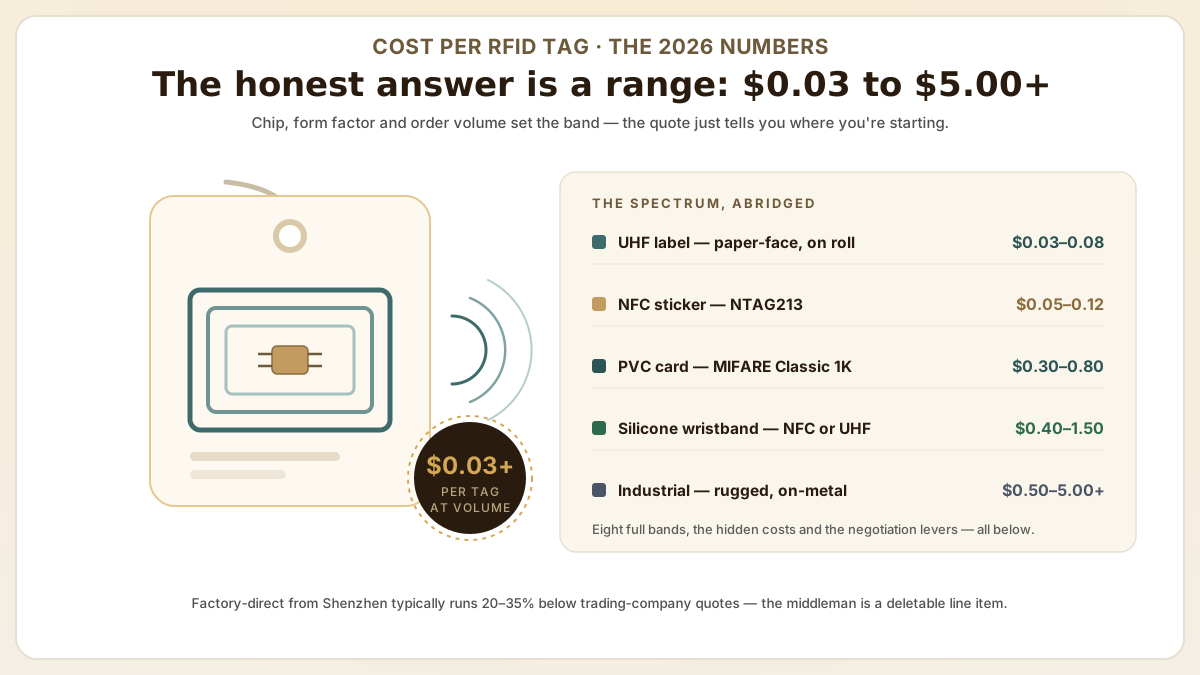
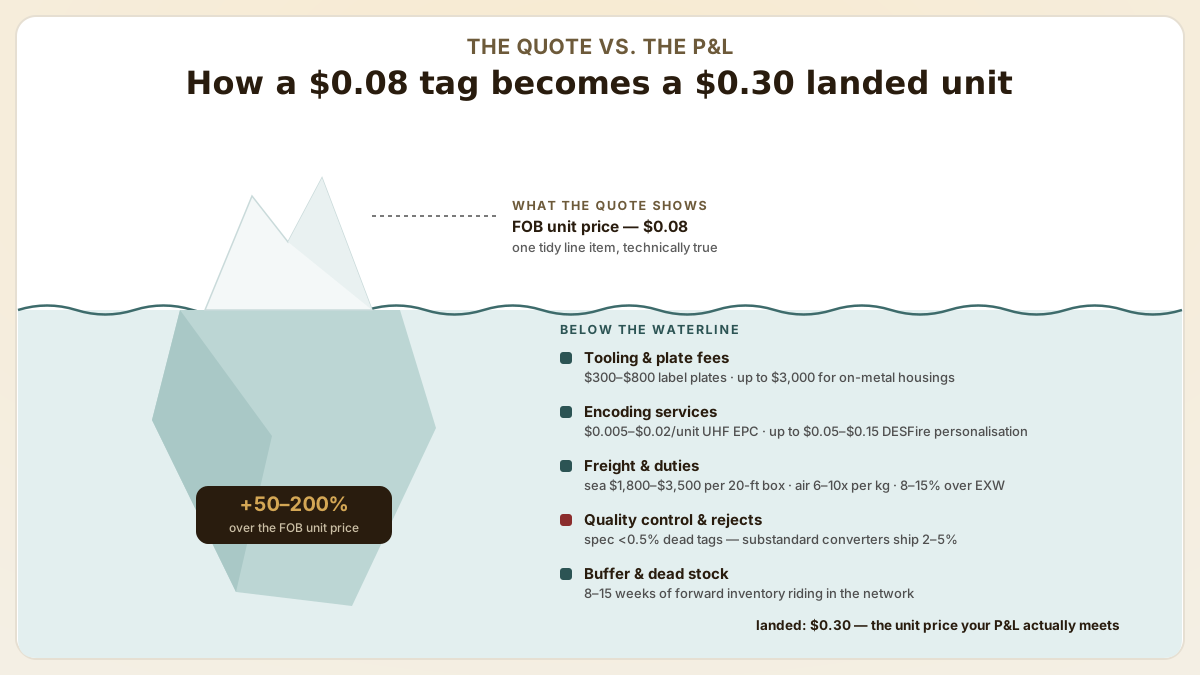
A standard UHF RFID label costs $0.03-0.08 per tag in 2026; NFC stickers start at $0.05 and PVC cards at $0.30 — rugged industrial tags run up to $5.00+. The spread is not indecision — chip, form factor and order volume set the band, and the first quote is only the opening number. Below: every 2026 price band, the hidden costs that turn a $0.08 tag into a $0.30 landed unit, and the negotiation levers that pull pricing 15-40% below list.
- UHF RFID labels from $0.03 — paper-face UHF inlay labels for retail and logistics are the floor of the whole market, and the floor keeps easing lower as global production volume climbs.
- NFC tags from $0.05-0.50 — the chip does the pricing (NTAG213 vs. NTAG 424 DNA); antenna size and substrate argue over the decimals.
- Factory-direct pricing: Proud Tek manufactures RFID tags in-house in Shenzhen — typically 20-35% below trading companies and distributors, because the middleman's margin is a line item you can simply delete.
At a glance
Use these short answers to decide whether this page matches the project before moving into the detail.
Key takeaway
UHF RFID labels from $0.03 — paper-face UHF inlay labels for retail and logistics are the floor of the whole market, and the floor keeps easing lower as global production volume climbs.
What 2026 RFID tag pricing are there by category?
Ask three suppliers what an RFID tag costs and you can get back three numbers that barely share a digit — and all three can be telling the truth. 'RFID tag' is a categor...
Next step
Ready to move forward? Start your inquiry to get specific answers for this project.
Request a custom RFID pricing quoteWhat 2026 RFID tag pricing are there by category?
Ask three suppliers what an RFID tag costs and you can get back three numbers that barely share a digit — and all three can be telling the truth. 'RFID tag' is a category, not a part number: it stretches from a paper label that costs less than the staple in the carton it ships on to an encrypted credential that costs more than the lunch you'll skip while arguing about it. Price follows the chip, the form factor and the order volume far more than it follows the words on your RFP — so the categories below are really a guide to reading any quote you're handed.
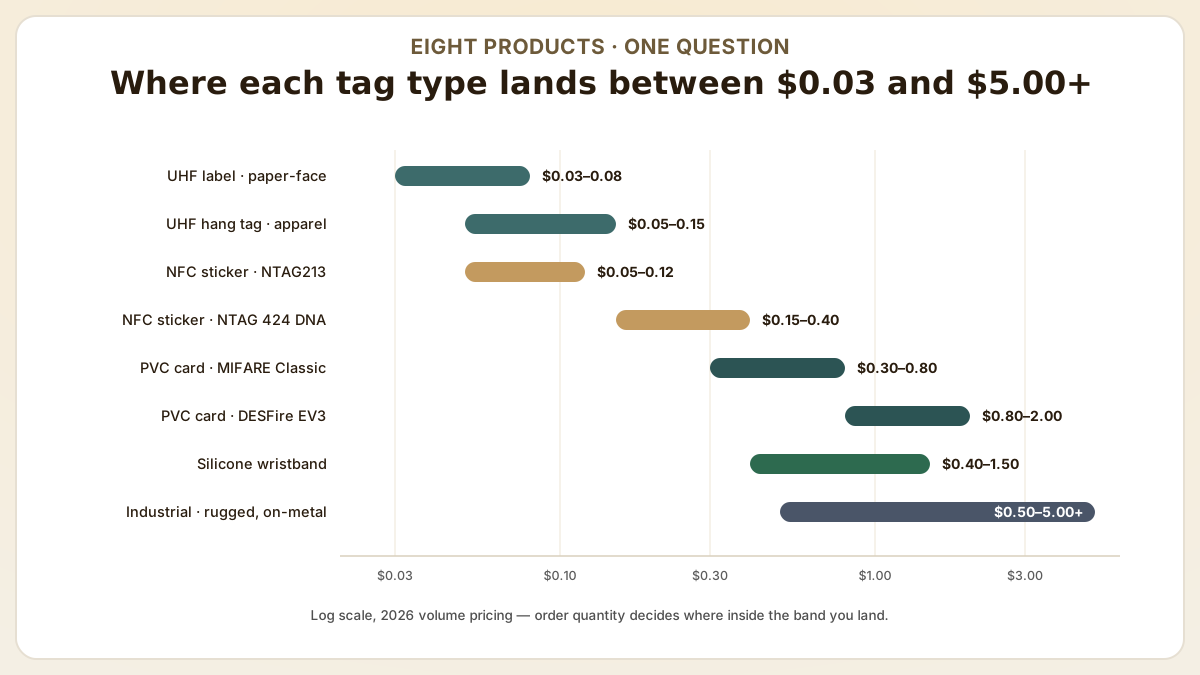
- Standard UHF RFID labels. $0.03-0.08 per tag for paper-face labels on roll with Impinj Monza or NXP UCODE chips. Price varies by inlay model, label size, and order quantity (minimum 10,000 pieces for lowest pricing).
- UHF RFID hang tags. $0.05-0.15 per tag for cardboard or synthetic hang tags with embedded UHF inlays, commonly used for retail apparel compliance. Price includes single-side printing.
- NFC sticker labels (NTAG213). $0.05-0.12 per tag for standard white-face NFC stickers on roll with NTAG213 chip (144 bytes memory). Volume pricing applies at 5,000+ pieces.
- NFC sticker labels (NTAG 424 DNA). $0.15-0.40 per tag for authenticated NFC labels with cryptographic features. Higher chip cost reflects advanced security capabilities for brand protection and digital product passports.
- PVC RFID cards (MIFARE Classic). $0.30-0.80 per card for CR80-size PVC cards with MIFARE Classic 1K chip and full-color printing. Price depends on printing complexity and encoding requirements.
- PVC RFID cards (DESFire EV3). $0.80-2.00 per card for premium encrypted cards used in high-security access control and transit applications. Higher chip cost reflects AES-128 encryption capability.
- Silicone RFID wristbands: $0.40-1.50 per band for reusable silicone wristbands with embedded NFC or UHF chips. Price varies by wristband size, closure type and chip selection.
- Industrial RFID tags: $0.50-5.00+ per tag for rugged encapsulated tags rated for extreme temperatures, chemical exposure or high-pressure environments. Specialty form factors and materials drive higher costs.
What factors affect RFID tag pricing?
Five dials set any tag quote, and they are not equal. Volume is the loudest — the same label can shed a third to half of its price on the way from pilot order to production year — then chip choice, then three dials arguing over the remaining cents. When a quote surprises you, one of these five is why.
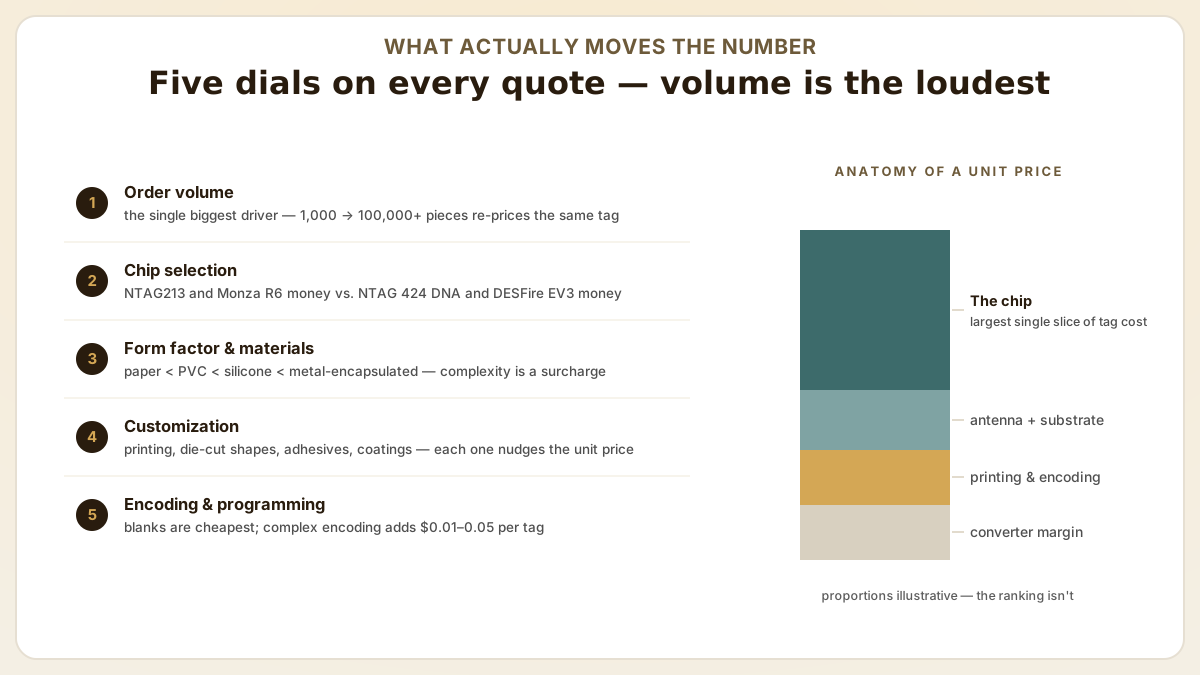
- Order volume: the single biggest price driver. Per-tag costs decrease significantly from 1,000 to 10,000 to 100,000+ pieces as setup costs are amortized and material purchasing benefits from scale. Economy of scale is real, and it is unsentimental.
- Chip selection: basic chips (NTAG213, Monza R6, EM4100) cost less than advanced chips (NTAG 424 DNA, DESFire EV3, UCODE 9). Chip cost is the largest component of tag cost.
- Form factor and materials. A paper label costs less than a PVC card, which costs less than a silicone wristband, which costs less than a metal-encapsulated industrial tag. Material and manufacturing complexity drive per-unit cost.
- Customization: full-color printing, custom die-cut shapes, special adhesives, serialized encoding, and protective coatings add incremental cost per tag. Standard white labels with no printing are the lowest-cost option.
- Encoding and programming: blank tags cost less than pre-encoded tags. Complex encoding (EPC serialization, NDEF programming, sector-level data writing) adds $0.01-0.05 per tag depending on data complexity.
How do you negotiate RFID tag pricing at scale?
The published price list is a starting position, not a verdict — suppliers expect an informed buyer to move it. These five levers consistently land per-tag pricing 15-40% below list, and none of them involve shouting; they involve writing a smarter purchase order.
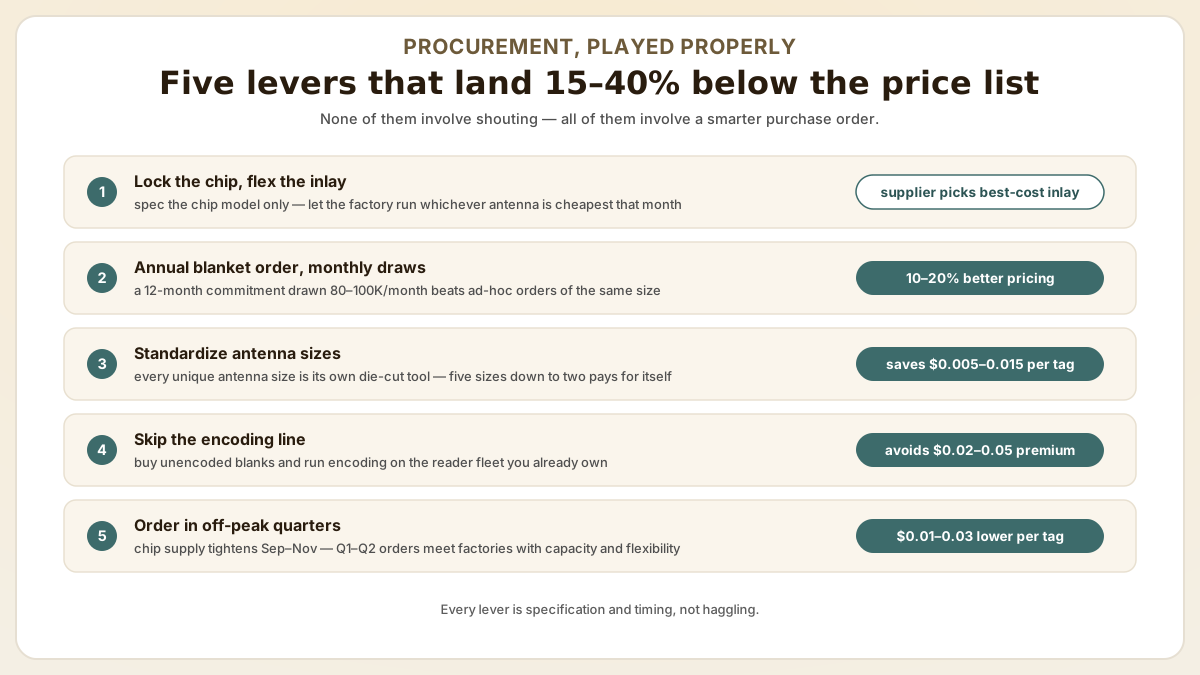
- Lock the chip but flex the inlay: specify only the chip model (e.g., NXP UCODE 9) and let the supplier choose the antenna inlay. This lets them use whichever inlay has the best material cost that month, savings passed to you.
- Annual blanket order with monthly draws: a 12-month commitment for 1M tags drawn 80-100K/month gets 10-20% better pricing than ad-hoc 80K orders, because the supplier locks raw materials at quarterly contract rates.
- Standardize antenna size across SKUs: every unique antenna size requires a separate die-cut tool. Consolidating from 5 antenna sizes to 2 saves $0.005-0.015 per tag in tooling amortization.
- Skip the encoding line: pre-encoded tags carry $0.02-0.05 premium for setup + per-tag write time. If you encode in-house, ask for unencoded blanks and run encoding through your existing reader fleet.
- Schedule for off-peak quarters: chip supply tightens before retail peak season (Sep-Nov). Place orders Q1-Q2 when inlay factories have capacity to negotiate; expect $0.01-0.03 lower pricing than holiday-quarter quotes.
Vendor-by-vendor benchmark — chip price posture in 2026
Chip pricing is set upstream — NXP, Impinj, Alien, EM Microelectronic — and every layer after the silicon (antenna design, substrate, encoding, converter margin) is markup with a job description. Knowing each vendor's price posture turns the negotiation from a hostage exchange into a benchmarking exercise: you arrive holding data instead of a single converter's quote.
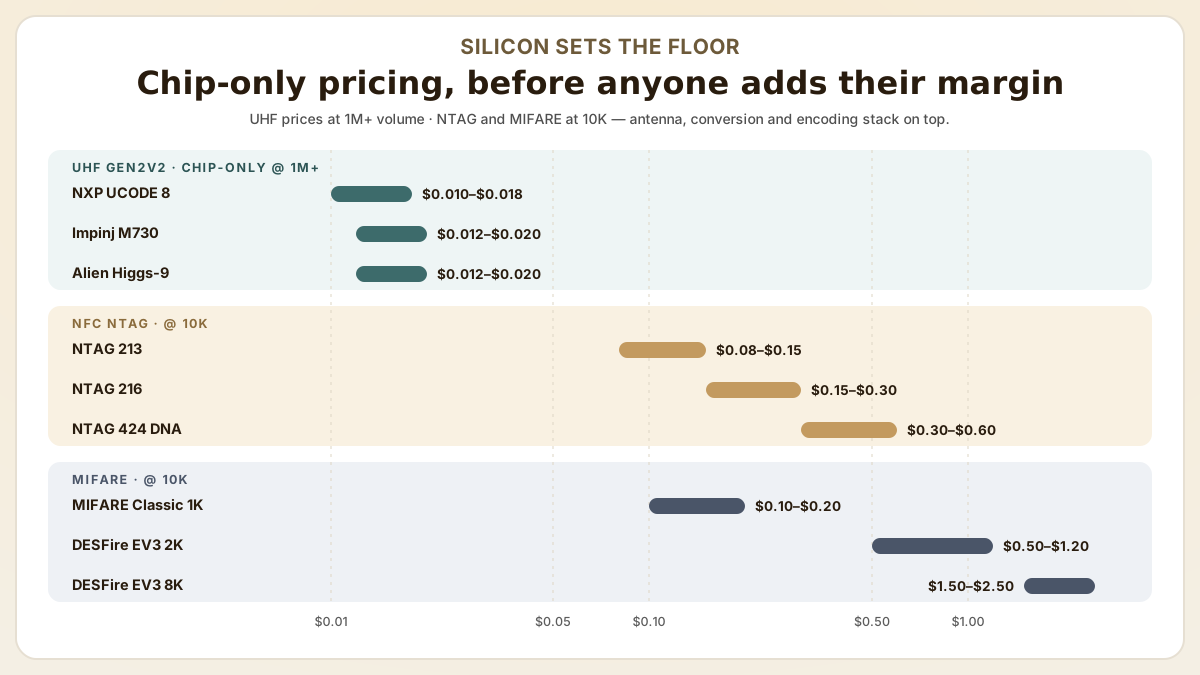
- Impinj M700 family (UHF Gen2v2) — The most-deployed UHF chip family in retail since 2022. M730 (entry-level) at $0.012-$0.020 chip-only in 1M+ volume; M750 adds Enduro extended memory + 32-bit user memory at +$0.005; M770 adds Protected Mode + extended range at +$0.005-$0.010; M775 is the only M700 variant with on-chip crypto (PRESENT-80 per ISO/IEC 29167-11, not AES-128) at +$0.015-$0.025. M730 / M750 / M770 do NOT carry on-chip AES. All ship with 96- or 128-bit EPC, 32-bit kill/access passwords, ARC-certified, FCC/ETSI/SRRC global tuned. Inlay (chip + antenna + substrate) lands at $0.04-$0.08.
- NXP UCODE 8 / 9 / DNA (UHF Gen2v2) — UCODE 8 is the volume workhorse at $0.010-$0.018 chip-only in 1M volume; UCODE 9 adds extended EPC variants (9xe 128-bit, 9xm up to 496-bit + 752-bit user) and self-adjust; UCODE DNA (SL3S5002N0FUD) adds AES-128 + EPC privacy mode for ticketing and access. Inlay $0.04-$0.09. NXP ecosystem strong in Europe and automotive supply chain. (UCODE DNA City and UCODE DNA Track variants are no longer manufactured per NXP product lifecycle.)
- Alien Technology Higgs-9 / Higgs-EC (UHF Gen2v2) — Higgs-9 is Alien's 2023 generation, $0.012-$0.020 chip-only, 96-bit EPC + 688-bit user memory, FCC-tuned strong, value play at large volume. Higgs-EC adds Dynamic Authentication anti-cloning (NOT full AES-128 challenge-response) and Sentinel ECC memory. Strong in US apparel converters (Avery Dennison, Smartrac, Checkpoint).
- NXP MIFARE family pricing — MIFARE Classic 1K $0.10-$0.20 in 10K volume (declining); MIFARE Plus EV2 2K $0.30-$0.60; MIFARE DESFire EV3 2K $0.50-$1.20; DESFire EV3 4K $0.80-$1.80; DESFire EV3 8K $1.50-$2.50; with personalisation add $0.10-$0.30. NTAG 213 $0.08-$0.15; NTAG 215 $0.10-$0.20; NTAG 216 $0.15-$0.30; NTAG 424 DNA $0.30-$0.60.
- On-metal and ruggedised tags — Confidex Survivor B (UHF) $0.80-$2.50; Confidex Ironside Slim $1.50-$4.00; Xerafy Mercury Metal Skin $1.00-$3.00; Xerafy Dot XS small-form $0.50-$1.50; HID EXO Tag $2.00-$5.00; Omni-ID Power 415 $1.50-$3.50; Avery Dennison AD-228m6 (liquid-tolerant) $0.20-$0.60. Ruggedisation increases unit cost 3-30x but extends life from 18 months to 10+ years and survives industrial wash, paint, autoclave.
Useful next pages
Use these linked product, guide and comparison pages to keep the next click specific and practical.
Request RFID tag pricing
Get factory-direct quotes for your specific tag requirements.
Authoritative RFID pricing references
Public market data and chip manufacturer datasheets used in 2026 RFID procurement decisions.
Related reading
More RFID pricing and sourcing guides from the blog.
FAQ
Why do RFID tag prices vary so much?
The wide price range ($0.03 to $5.00+) reflects differences in chip technology, form factor, materials and customization. A basic UHF paper label uses a low-cost chip and minimal materials; a rugged industrial tag uses an advanced chip, metal or plastic housing, specialized antenna design and environmental testing — all of it added to the per-unit cost. Volume is also a major factor, with prices dropping 30-50% from small to large order quantities.
What is the minimum order quantity for RFID tags from Proud Tek?
Minimum order quantities vary by product type. UHF RFID labels: 5,000 pieces. NFC stickers: 1,000 pieces. PVC RFID cards: 500 pieces. Silicone wristbands: 500 pieces. For custom-printed products with specific artwork, MOQs start at 500-1,000 pieces to cover printing setup costs. Contact us for exact MOQs for your specific product and customization requirements.
Are RFID tag prices expected to decrease further in 2026-2027?
Yes, the long-term trend is continued price reduction driven by increasing global production volume, chip manufacturing efficiency and growing retail mandate adoption. UHF RFID inlay labels have decreased from $0.10+ per tag in 2015 to under $0.05 in 2025 at volume pricing. Industry analysts project continued 5-10% annual price reductions for standard UHF labels through 2027.
What is the realistic 2026 floor price for a basic UHF inlay at 1M+ volume?
Public benchmark data from CPCON, RFID Label, and direct converter quotes converge on $0.04-$0.06 per inlay (chip + antenna + substrate, no printing or encoding) for a 96-bit EPC Gen2v2 inlay using Impinj M730 or NXP UCODE 8 silicon, in 1M+ piece volumes EXW Shenzhen. Adding paper face stock and adhesive moves it to $0.05-$0.08 as a converted label. Adding inkjet printing and EPC encoding lands $0.07-$0.10. Below 1M, expect 30-60% premium; below 100K, expect 100-150% premium. Floor pricing has been roughly stable since 2023 — the chip costs aren't dropping further but converter capacity expansion has stabilised inlay margins.
How do I avoid paying for unused chip capability in tag procurement?
Match the chip variant to the actual data and security requirement at PO time. If you only need a unique ID and current EPC, you don't need extended user memory (UCODE 9, M750 add $0.005-$0.010/unit you'll never use). If you don't need AES authentication on every read, you don't need DNA-class chips (saves $0.01-$0.03/unit). If you don't need 8K of user memory for full traceability records, don't spec DESFire EV3 8K when EV3 2K does the job (saves $1.00+/unit on credentials). The mistake works the other way too: buying a non-AES chip for an asset that needs anti-counterfeit overlay locks you into a costly retag cycle later. Write a one-page chip-selection memo per program that documents the data, security and lifetime requirements before issuing the PO.
Proud Tek is a Shenzhen-based RFID & NFC manufacturer supplying hotel chains, transit operators, event venues and retail brands worldwide. Every order includes free samples, RF testing and dedicated project support.
Get a Quick Quote
Tell us about your project and we'll respond within one business day. Fields marked (asterisk) are required.