
Brand Protection
Anti-Counterfeit NFC for Luxury Bags
Quick answer
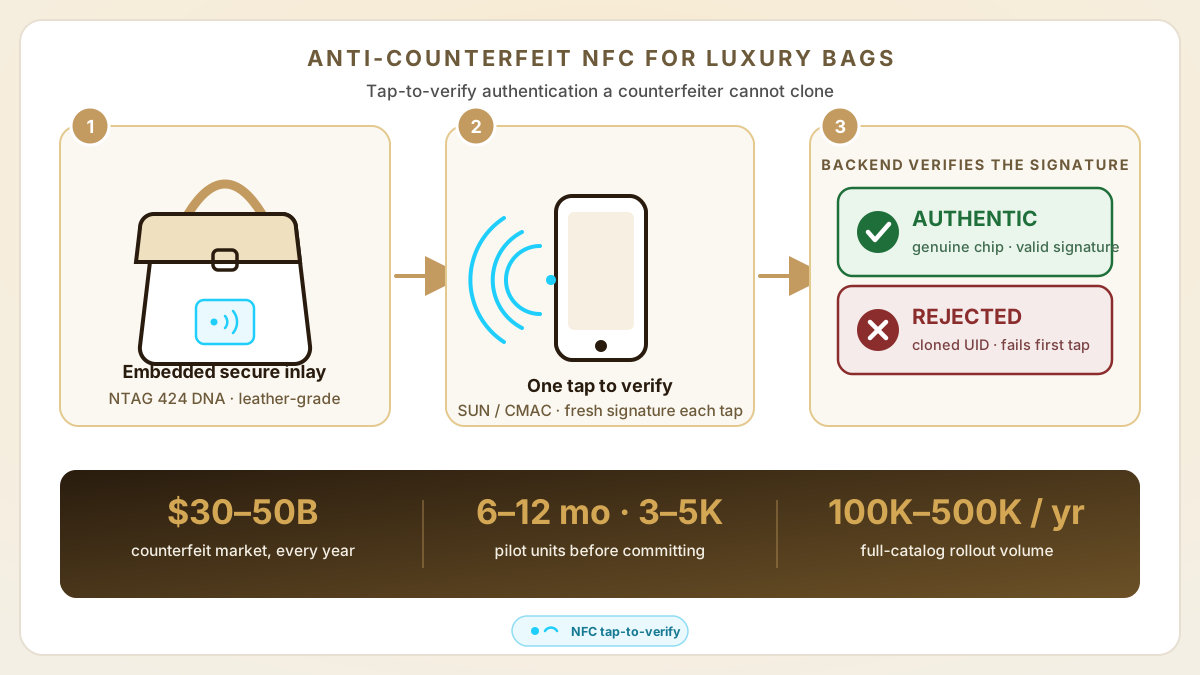
Luxury handbag counterfeiting is a multi-billion-dollar problem. It costs the industry $30-50B annually. NFC tap-to-verify with cryptographic chips lets brands and consumers confirm authenticity in seconds — but moving from pilot to scale takes more than a chip.
- Luxury handbag counterfeiting costs the industry $30-50B annually; NTAG 424 DNA SUN authentication is the proven counter to professional counterfeit operations.
- NFC anti-counterfeit pilots typically run 6-12 months on 3-5K units before brands commit to full catalog rollout averaging 100K-500K units annually.
- ROI comes from reduced parallel-market arbitrage, restored secondary-market trust, and direct consumer-data capture from authentic-tap interactions.
At a glance
Use these short answers to decide whether this page matches the project before moving into the detail.
Key takeaway
Luxury handbag counterfeiting costs the industry $30-50B annually; NTAG 424 DNA SUN authentication is the proven counter to professional counterfeit operations.
Why are luxury bags the perfect NFC anti-counterfeit use case?
Luxury handbags combine high unit value, persistent counterfeiting attacks, and consumer willingness to authenticate at point of purchase. These four factors make luxury...
Next step
Ready to move forward? Start your inquiry to get specific answers for this project.
Get luxury anti-counterfeit NFC quoteWhy are luxury bags the perfect NFC anti-counterfeit use case?
Luxury handbags combine high unit value, persistent counterfeiting attacks, and consumer willingness to authenticate at point of purchase. These four factors make luxury bags the highest-ROI NFC anti-counterfeit category.
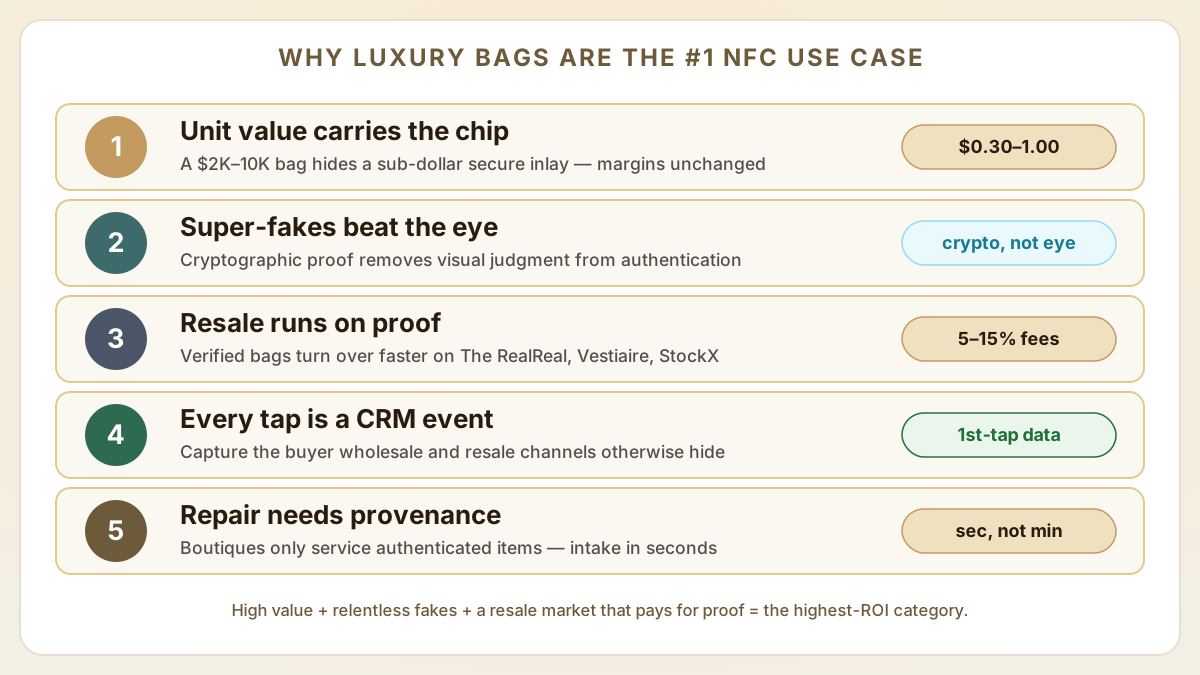
- Unit value justifies chip cost: a $2,000-10,000 handbag absorbs the $0.30-1.00 cost of an NTAG 424 DNA chip without changing margin economics.
- Counterfeit visual quality is high: super-fakes of Hermès, Chanel, Louis Vuitton are nearly indistinguishable to consumers. Cryptographic NFC removes the visual judgment entirely.
- Resale market depends on authentication: The RealReal, Vestiaire Collective and StockX charge 5-15% authentication fees per resale. NFC-verified bags command 5-15% price premium and faster turnover.
- Brand wants direct consumer data: every authentic-tap captures a CRM event (location, time, optional email). Brands gain post-purchase consumer touchpoints they otherwise lose to retail and resale channels.
- Repair and concierge services need provenance: brands like Hermès and Chanel only repair authenticated items. NFC speeds intake at boutiques from manual visual inspection to seconds.
Which NFC chips work best for luxury authentication?
Not every NFC chip resists determined counterfeiters. The luxury-grade chip choice has narrowed to 2-3 options that combine cryptographic authentication with smartphone tap-to-verify simplicity.
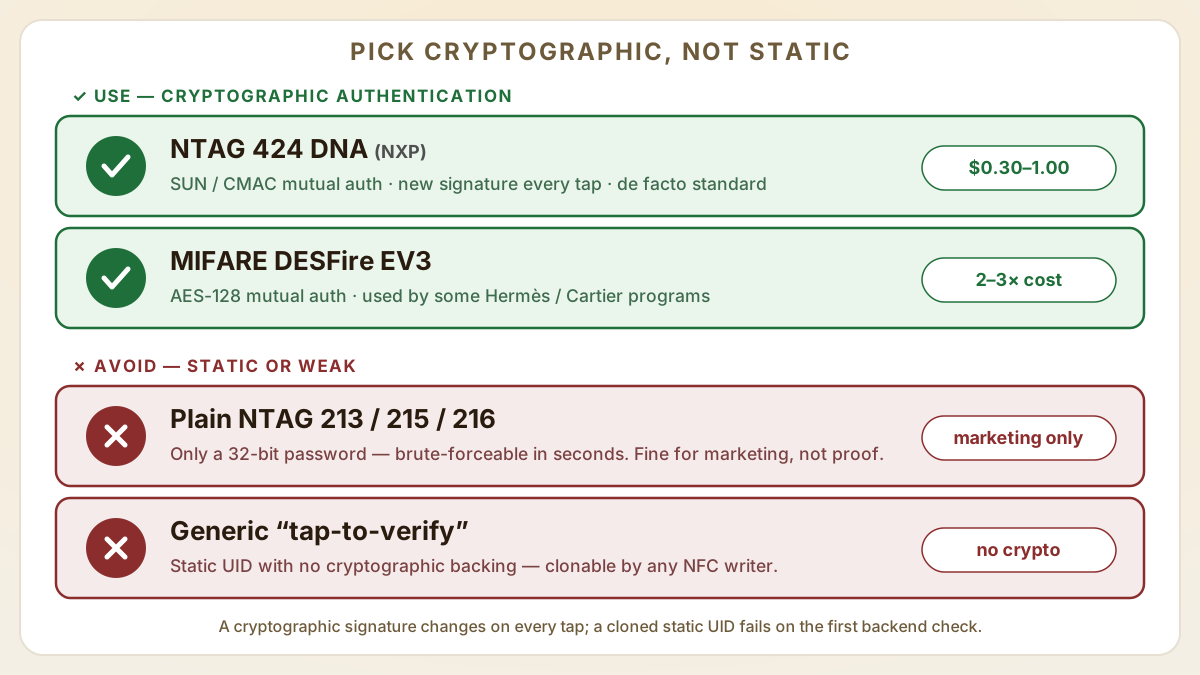
- NTAG 424 DNA (NXP) is the de facto standard: SUN/CMAC mutual authentication signs each tap with a rotating challenge, proving authenticity to a backend without exposing keys.
- MIFARE DESFire EV3 for highest-security: AES-128 mutual authentication and multi-application memory. Costs 2-3× NTAG 424 DNA but blocks even sophisticated cloning attacks; used by some Hermès and Cartier programs.
- Avoid plain NTAG213/215/216: these have only password protection (32-bit) which is brute-forceable in seconds. Acceptable for marketing but not anti-counterfeit.
- Avoid generic 'tap-to-verify' chips without cryptographic backing: many cheap NFC tags claim 'authentication' but only hold a static UID that can be cloned by any NFC writer.
- Form factor: leather-embedded inlays for luxury bags require flex-rated antennas (1mm thick max) and biocompatible adhesive; expect $0.50-1.20 per inlay including encoding.
How do you scale from pilot to full production?
Most luxury NFC programs succeed in pilot but stall on scale. The five-step playbook below comes from successful 2024-2026 rollouts at premium European houses.
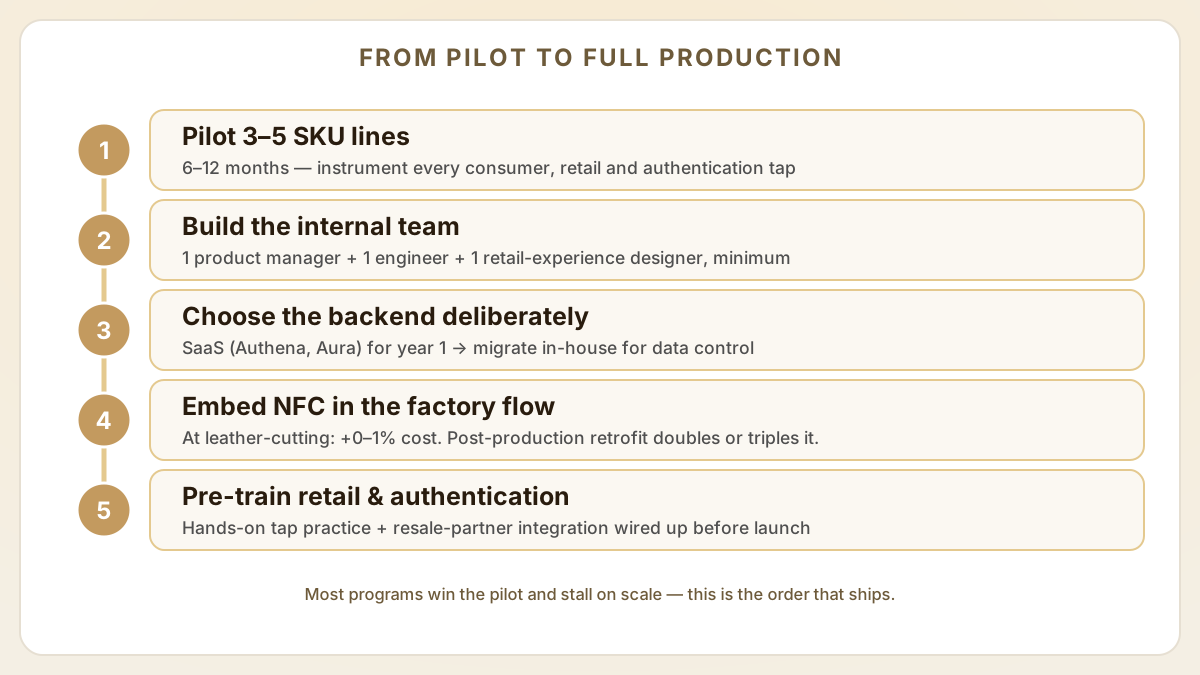
- Pilot with 3-5 SKU lines for 6-12 months: instrument every consumer tap, every retail-staff tap, every authentication-service tap. Use the data to refine UI before scaling.
- Build internal team before scaling: 1 product manager + 1 engineer + 1 retail-experience designer minimum. Brands that try to outsource end-to-end stall on consumer-experience details.
- Choose backend platform deliberately: SaaS authentication platforms (Authena, Aura Blockchain Consortium) are faster to start; in-house gives more control over consumer data. Most brands pick SaaS for year 1, then migrate.
- Embed NFC in factory workflow, not post-production: chip insertion at the leather-cutting stage adds 0-1% to manufacturing cost. Post-production retrofit doubles or triples that.
- Pre-train retail and authentication teams: every boutique staffer needs hands-on NFC tap practice before launch. Authentication services (RealReal, Vestiaire) require integration with their backend BEFORE the brand goes public.
What ROI do luxury brands see from NFC authentication?
ROI for NFC anti-counterfeit programs comes from four channels — direct counterfeiting reduction, resale premium, consumer data, and operational efficiency. The data below comes from anonymized 2024-2026 deployments at four European luxury groups.
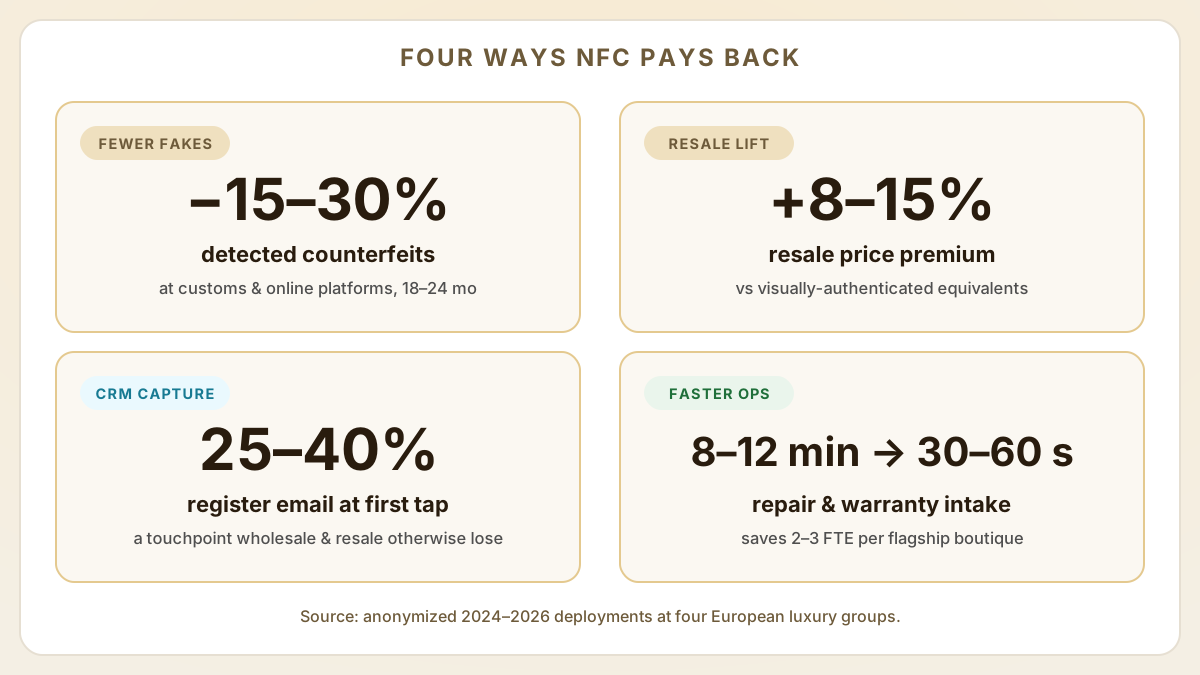
- Counterfeit market share reduction: brands report 15-30% drop in detected fakes at customs and online platforms within 18-24 months of full NFC rollout. Context: OECD/EUIPO put global counterfeit and pirated goods at roughly 3.3% of world trade (~$509B annually), with EU customs seizing more than 31 million counterfeit luxury items in 2023 — a 17% year-on-year increase per EU IP Office reporting.
- Resale premium: NFC-verified items resell 8-15% higher than visually-authenticated equivalents. For brands with active resale programs (Hermès, Rolex, Goyard), this is a direct revenue add. McKinsey luxury research cited by NFC vendors finds 86% of luxury shoppers say authenticity verification meaningfully increases purchase confidence — that translates into faster resale turnover.
- Direct-to-consumer data capture: 25-40% of authenticated buyers register email at first tap. Brands gain a CRM touchpoint with customers who otherwise stay anonymous through wholesale and resale channels.
- Repair and warranty efficiency: NFC-tap-and-confirm at boutique reduces repair intake from 8-12 minutes to 30-60 seconds. Saves 2-3 FTE per flagship boutique annually and reduces fraud risk on counterfeit-warranty submissions.
- Investor signal: public luxury groups report NFC adoption as ESG / brand-protection KPI in annual reports. Premium valuation multiples reflect mature anti-counterfeit programs that demonstrably reduce gray-market revenue leakage.
How does the Aura Blockchain Consortium change the build-vs-buy decision?
The Aura Blockchain Consortium — co-founded in 2021 by LVMH, Prada Group and Richemont, joined by OTB and then Mercedes-Benz in 2022 — is the most-cited shared infrastructure for luxury authentication. Its existence rewires the platform decision for any brand starting an NFC program in 2026.
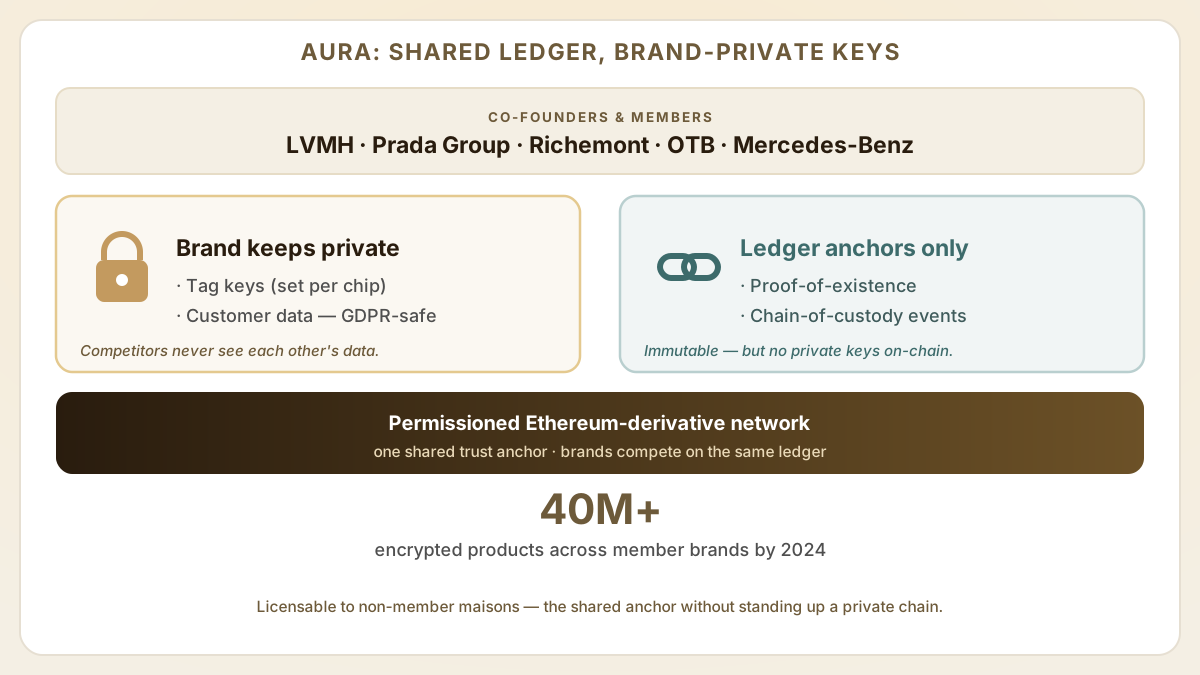
- Shared ledger, brand-private keys: Aura runs on a permissioned Ethereum-derivative network (originally architected with Microsoft Azure and ConsenSys). Each brand owns its tag keys and customer data; the blockchain only anchors immutable proof-of-existence and chain-of-custody events. That separation matters for GDPR posture and for brands that compete on the same ledger.
- Coverage milestone: Aura publicly reported crossing 40 million encrypted products across member brands by 2024 — a useful ceiling for sizing your own pilot data model. Louis Vuitton, Loro Piana, Cartier, Tod's (Di Bag with NFC), Jil Sander and Marni are documented production deployments across the consortium.
- NFC + RFID hybrid: Aura member implementations combine NTAG 424 DNA / DESFire NFC for consumer tap with UHF RFID inlays for in-store and supply-chain handling. Prada Group disclosed embedding RFID into millions of items starting H2 2020 ahead of Aura integration — a useful reference architecture for brands that need both inventory and authentication on one tag program.
- Licensing economics: Aura licenses its platform to non-member brands for a fee, which means smaller maisons can adopt the same trust anchor without standing up a private chain. Compare against pure-SaaS competitors like Authena, Arianee and EON before committing.
- Resale-platform integration: Aura is being positioned as the reference data layer for resale verification on platforms like Vestiaire Collective and Mytheresa — a brand that issues Aura certificates at first sale gains downstream resale fee leverage and dispute-resolution evidence that brands using only proprietary platforms do not.
How does NFC anti-counterfeit map onto the EU Digital Product Passport timeline?
ESPR Regulation 2024/1781 (Ecodesign for Sustainable Products Regulation) makes the Digital Product Passport mandatory for in-scope categories on a rolling delegated-act schedule. Luxury bags fall inside the textiles/apparel and leather-goods scope expected to land in the 2027-2030 window, so the chip you specify in 2026 should already satisfy DPP carrier requirements.
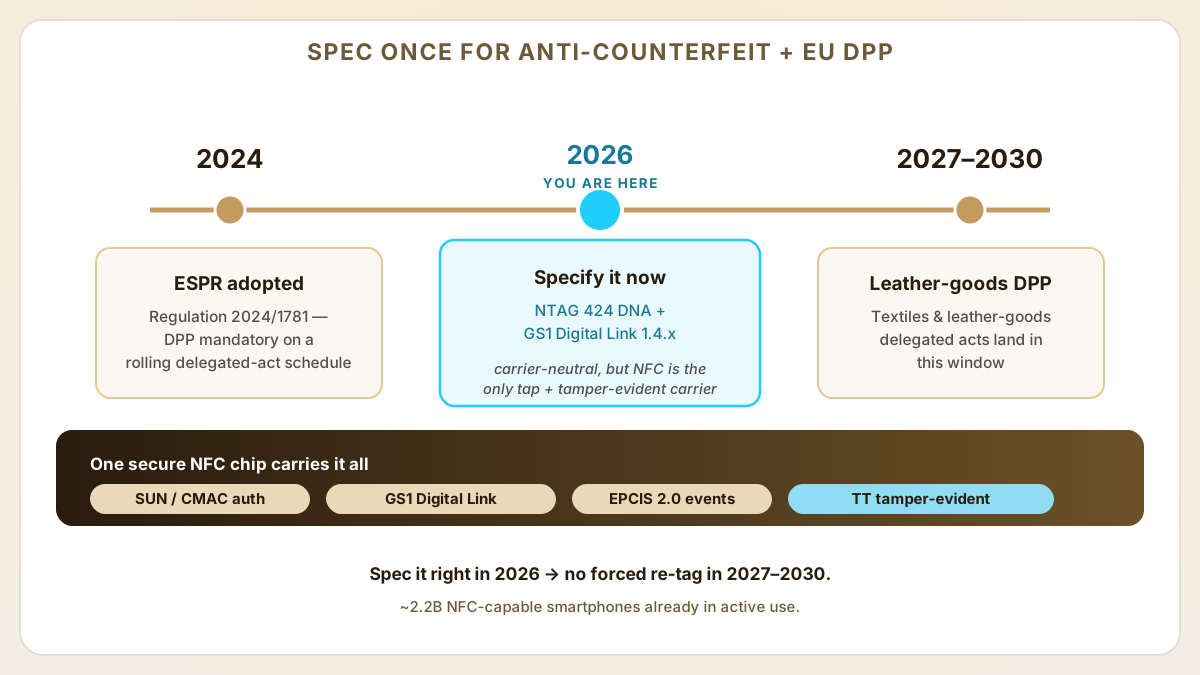
- Carrier neutrality, but NFC is the practical default: ESPR Article 9 lets brands pick from QR, NFC, RFID or any 'data carrier' meeting accessibility and persistence requirements. With ~2.2B NFC-capable smartphones in active use, NFC is the only carrier that gives both consumer tap and tamper-evident anti-counterfeit on one substrate.
- GS1 Digital Link as the URL grammar: the GS1 Digital Link specification (now in 1.4.x) is the de facto syntax for encoding GTIN + serial in a DPP-friendly URL. Specifying GS1 Digital Link on your NFC chip from day one means the same tag works for authentication, DPP and standard product info.
- EPCIS 2.0 for event data: EU DPP guidance increasingly references EPCIS 2.0 for serialised event data (manufacture, customs, retail handover, repair). NFC backends should plan to emit EPCIS 2.0 events from each authentic tap so the DPP record is populated without parallel infrastructure.
- Tamper-evident form factor (NTAG 424 DNA TT): the 'TT' tamper-evident variant detects if the substrate has been peeled or removed. For DPP plus anti-counterfeit, TT-grade chips reduce the risk of a genuine chip being moved onto a counterfeit shell — a documented attack against early NFC luxury pilots.
- Consortium alignment: the Aura Blockchain Consortium and other luxury groups are explicitly positioning their platforms as DPP-ready data layers. A 2026 chip selection that ignores DPP forces a re-tag in 2027-2029 — far more expensive than specifying NTAG 424 DNA / DESFire EV3 with GS1 Digital Link encoding now.
Useful next pages
Use these linked product, guide and comparison pages to keep the next click specific and practical.
Luxury anti-counterfeit NFC supply
NTAG 424 DNA chips, leather-grade inlays, and brand authentication backends.
FAQ
Can a counterfeiter copy an NTAG 424 DNA chip?
Not practically. NTAG 424 DNA's SUN/CMAC authentication produces a different cryptographic signature on every tap, signed with a chip-unique key set during manufacturing. A cloned UID would fail backend verification on the first tap.
How much does luxury NFC cost per bag?
Chip + inlay + encoding: $0.50-1.20 per item at 100K-unit volume. Backend platform: $0.05-0.20 per active item per year. Retail training and rollout: one-time $50K-300K depending on boutique count. Total program cost typically 0.05-0.15% of bag retail price.
Do consumers actually tap to verify?
30-50% of first-time buyers tap, climbing to 60-75% in markets where the brand promotes the feature. Resale-platform tap rate is far higher (90%+) since authentication services are required before listing.
Is NFC anti-counterfeit interoperable with the EU DPP regulation?
Yes — NTAG 424 DNA and similar secure NFC chips can serve both authentication and ESPR DPP data-carrier requirements simultaneously. Brands building DPP infrastructure should specify chips that satisfy both use cases to avoid double-tagging.
Should we join the Aura Blockchain Consortium or pick a SaaS like Authena, Arianee or EON?
Most maisons under 100K-unit annual NFC volume start on a SaaS (Authena, Arianee, EON) for a 6-12 month runway, then evaluate Aura licensing once their second pilot proves ROI. Aura's advantage is a shared trust anchor with LVMH, Richemont, Prada, OTB and Mercedes-Benz brands plus 40M+ encrypted products on-network as of 2024 — an asset for resale-platform integration. SaaS advantages are faster onboarding, no consortium governance and brand-controlled customer data. The decision usually hinges on whether resale partnerships (Vestiaire Collective, The RealReal, Mytheresa) are core to the brand's ROI model.
Will the same NFC chip handle both anti-counterfeit and the ESPR Digital Product Passport?
Yes if you specify the chip and encoding correctly. Use NTAG 424 DNA (or TT for tamper-evidence) or DESFire EV3, encode the URL with GS1 Digital Link 1.4.x grammar (GTIN + serial), and have the backend emit EPCIS 2.0 events on each tap. That combination satisfies the ESPR Article 9 'persistent and accessible data carrier' requirement and the cryptographic authenticity requirement on one chip — avoiding the cost and consumer-experience friction of double-tagging when leather-goods DPP delegated acts land in the 2027-2030 window.
Proud Tek is a Shenzhen-based RFID & NFC manufacturer supplying hotel chains, transit operators, event venues and retail brands worldwide. Every order includes free samples, RF testing and dedicated project support.
Get a Quick Quote
Tell us about your project and we'll respond within one business day. Fields marked (asterisk) are required.