
Brand Protection
Luxury Resale Authentication with NFC
Quick answer
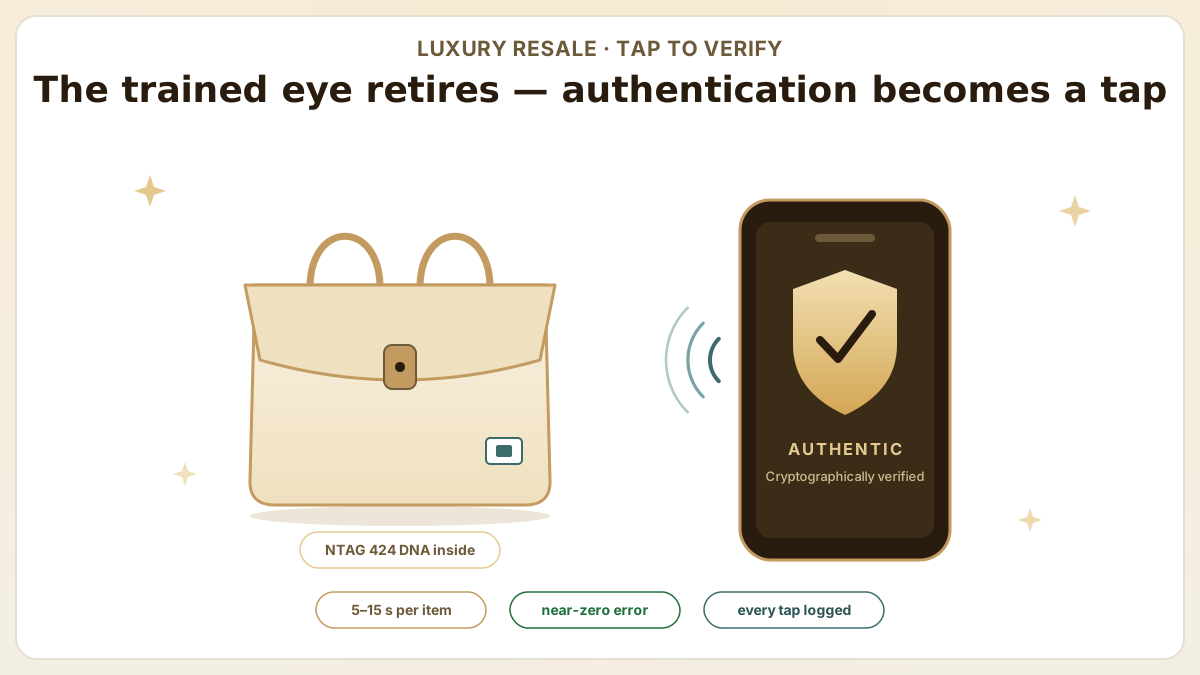
NFC authenticates a luxury resale item in 5-15 seconds versus 5-15 minutes of manual inspection — with near-zero error on super-fakes that fool experts. The RealReal, Vestiaire and StockX authenticate millions of items a year; NFC-verified listings sell 20-40% faster and command a 5-15% price premium, because the counterfeit that fools a trained eye does not fool a cryptographic key.
- Luxury resale clears $50B annually, and counterfeits slip in at 5-15% on visually-authenticated items — versus under 1% at retail. Fakes, it turns out, prefer the second-hand rack.
- Tap-and-verify takes 5-15 seconds, not the 5-15 minutes a human needs to interrogate a handbag — a 30-100x throughput jump at platform intake.
- Brands that embed NTAG 424 DNA at production get a permanent authentication trail — original sale, fourth resale, that one unfortunate repair, right through end-of-life — on a single cryptographic thread.
At a glance
Use these short answers to decide whether this page matches the project before moving into the detail.
Key takeaway
Luxury resale clears $50B annually, and counterfeits slip in at 5-15% on visually-authenticated items — versus under 1% at retail. Fakes, it turns out, prefer the second-hand rack.
How does NFC enable luxury resale authentication?
NFC moves luxury authentication from human judgment to cryptographic verification — a career-long craft becomes a five-second tap. For decades, spotting a counterfeit wa...
Next step
Ready to move forward? Start your inquiry to get specific answers for this project.
Get a luxury resale NFC quoteHow does NFC enable luxury resale authentication?
NFC moves luxury authentication from human judgment to cryptographic verification — a career-long craft becomes a five-second tap. For decades, spotting a counterfeit was expertise you couldn't download: a specialist could smell a fake in the leather and feel it in the weight of the hardware. Then the super-fakes got good — good enough to fool the very people who trained the specialists — and 'trust me, I can tell' quietly stopped being a defensible business model. Here is what the cryptographic alternative buys you in practice.
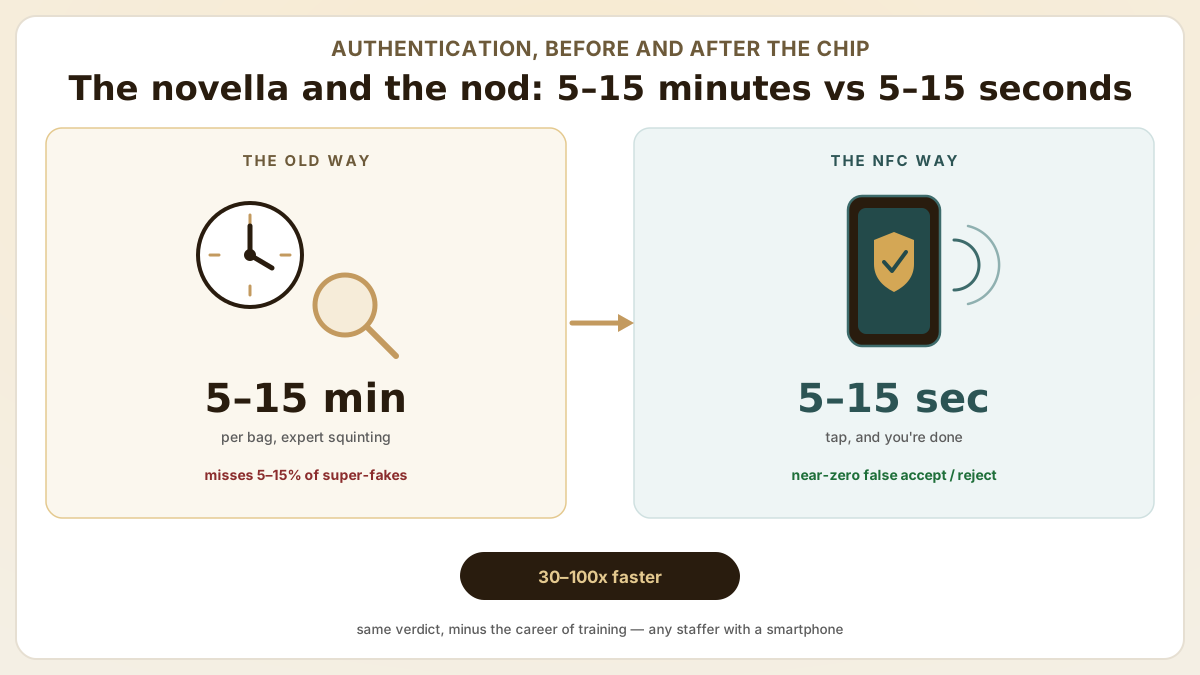
- Speed: tap-and-verify takes 5-15 seconds; hand-inspecting a luxury bag takes 5-15 minutes. That is a 30-100x throughput jump — roughly the difference between a nod and a novella.
- Accuracy: cryptographic NFC verification runs a near-zero false-positive and false-negative rate. Human eyes against super-fakes run a 5-15% error rate. The chip, notably, never has an off day.
- Skill scaling: no connoisseur required — any staffer with a smartphone authenticates correctly, so you are no longer bottlenecked on the one legend who knows Birkin hardware by touch.
- Audit trail: every verification is logged to the backend with location, timestamp and operator — a chain-of-custody résumé that buyers, regulators and compliance teams actually believe.
- Insurance and warranty: insurers and brand warranty desks increasingly require NFC verification before honoring claims. Verified items earn better rates and terms; unverified ones earn the raised eyebrow.
Which luxury brands lead NFC resale verification?
Luxury NFC adoption runs top-down: heritage houses chip their crown-jewel SKUs first, then mid-luxury and premium follow — luxury adopts new technology the way it does everything else, impeccably dressed and in strict order of precedence. Tracking who is doing what informs supplier and platform strategy. Here is the current pecking order.
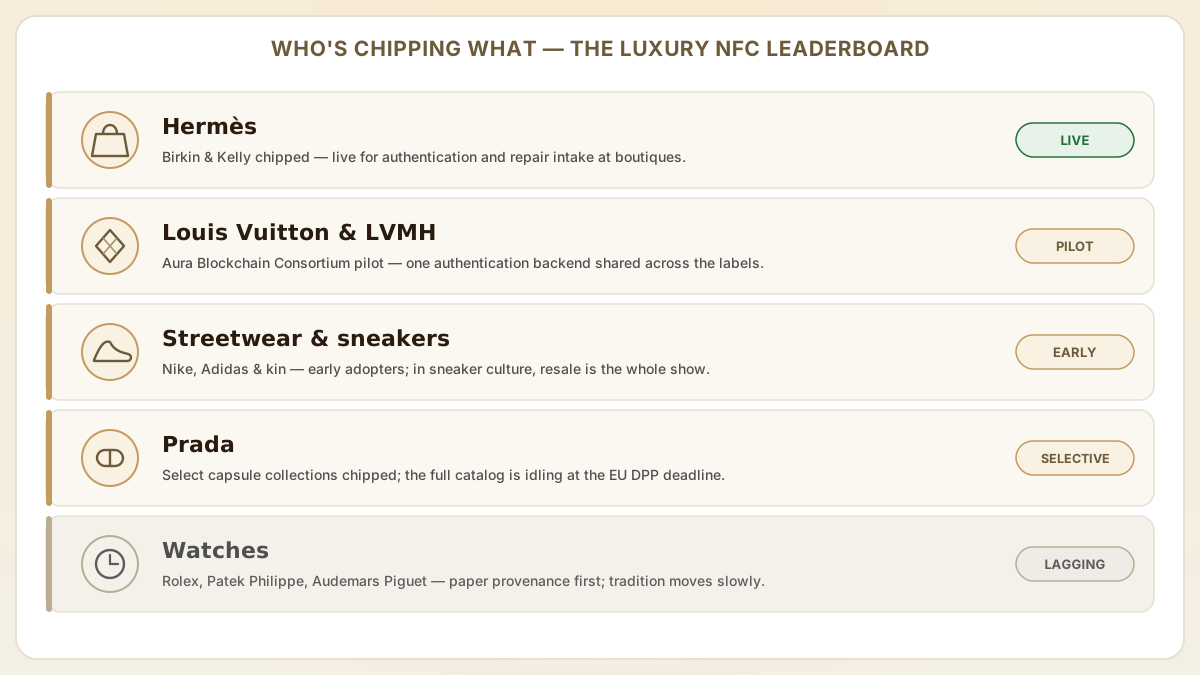
- Hermès: NFC chips in Birkin and Kelly bags (the crown jewels only), supporting authentication and repair intake at boutiques. Other categories are 'under evaluation' — Hermès-speak for 'we'll get to it, darling.'
- Louis Vuitton and LVMH brands: NFC piloted via the Aura Blockchain Consortium, with a single cross-brand authentication backend shared across LVMH's stable of labels.
- Prada: NFC in select capsule collections; the full-catalog rollout is idling at the EU DPP regulatory deadline, waiting for the green light.
- Watches: Rolex, Patek Philippe and Audemars Piguet still bow to paper and provenance documents; some independents use NFC. Watch collectors treasure tradition, and tradition, by design, moves slowly.
- Streetwear and sneakers: Nike, Adidas and their hype-priced kin adopted NFC early — in sneaker culture the resale market is the show, and authentication is part of the performance.
How do resale platforms use NFC?
The major platforms have quietly wired NFC verification into their intake workflows. The choreography differs from one platform to the next; the backend gospel is identical.
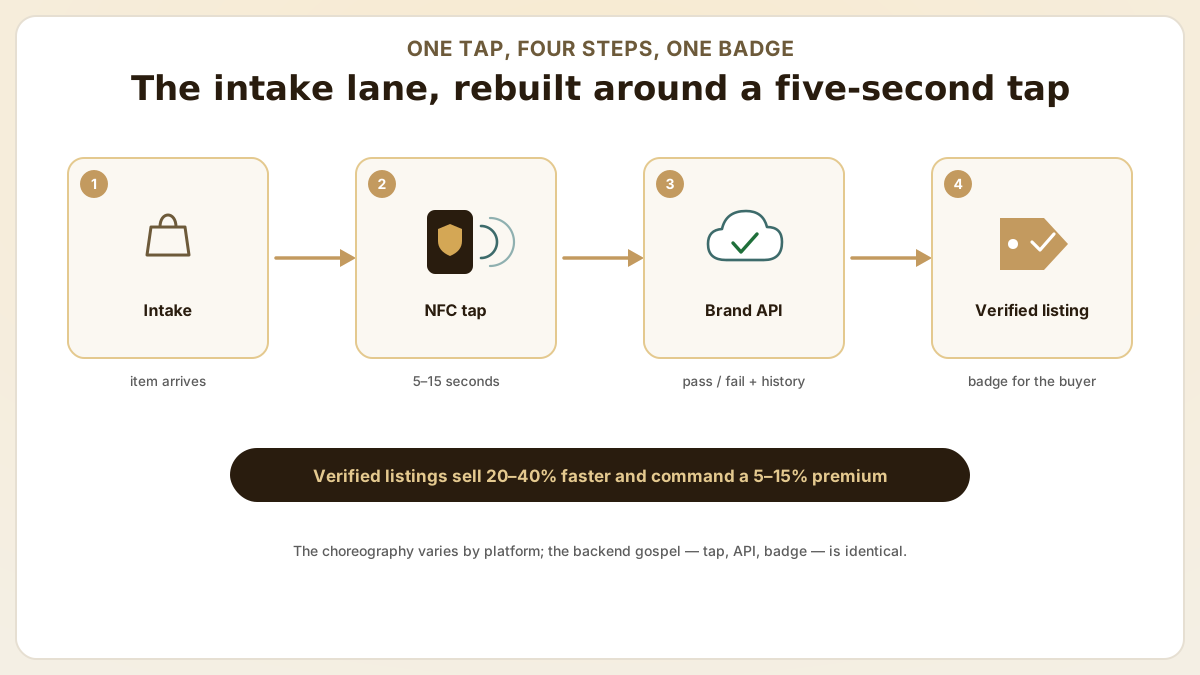
- The RealReal: trained authenticators tap NFC items as part of standard intake. NFC-verified listings wear a badge, command a 5-15% price premium and sell 20-40% faster. It turns out 'provably real' is an excellent sales pitch.
- Vestiaire Collective: the same idea in hybrid flavour — NFC verification is one input alongside traditional manual inspection on heritage brands.
- StockX: focused on streetwear and sneakers; NFC verification is growing on Nike's NFC-equipped releases, with expansion planned as more brands embed chips.
- Independent authenticators (Entrupy, Real Authentication): partnering with brand-issued NFC programs so cryptographic verification rides alongside their own imaging services.
- Direct-from-brand resale: Patagonia Worn Wear, Eileen Fisher Renew and friends use NFC to confirm customer-returned items are genuine before resale — fraud, politely uninvited.
What ROI does NFC bring to luxury resale brands?
Brands that embed NFC at original production gain a seat in resale economics they currently watch from the sidelines. Today, every time an item resells at a markup, the original maker earns exactly nothing — they watch their own handbag appreciate like a vintage wine someone else gets to drink. The ROI channels below are what change when the chip goes in at the factory.
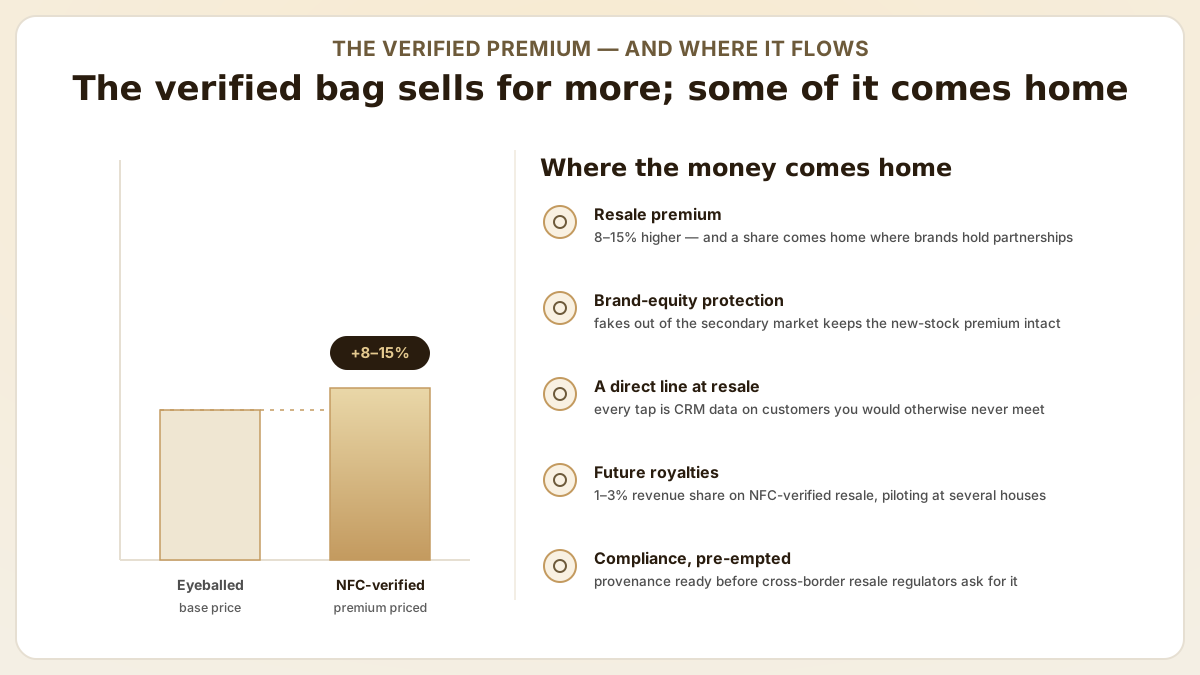
- Resale price premium: NFC-verified items resell 8-15% higher than visually-authenticated equivalents. Where brands hold active resale partnerships, a slice of that premium comes straight home.
- Brand-equity protection: every counterfeit in circulation nibbles at exclusivity. Pull the fakes out of the secondary market and the premium you charge on new stock stays intact.
- Direct customer relationship at resale: every NFC tap — original sale, resale, repair — is a brand-to-consumer handshake, and CRM data on customers you would otherwise lose to retail and resale channels.
- Future-revenue extraction: several luxury houses have piloted a 1-3% revenue share on NFC-verified resale transactions. Licensing fees on authenticity — a tidy tollbooth on a road you already built.
- Regulatory and tax compliance: governments increasingly require provenance for cross-border luxury resale. NFC-anchored provenance gets ahead of the paperwork instead of scrambling through a costly retroactive compliance project under deadline.
How big is the counterfeit problem in resale today, and what data do platforms publish?
The strongest case for chipping at the source is the base rates — the counterfeits platforms catch, and the share they almost certainly miss. Helpfully, several platforms have started publishing numbers, so brand teams can build the internal ROI case on real benchmarks rather than vendor estimates (which are vibes in a spreadsheet).
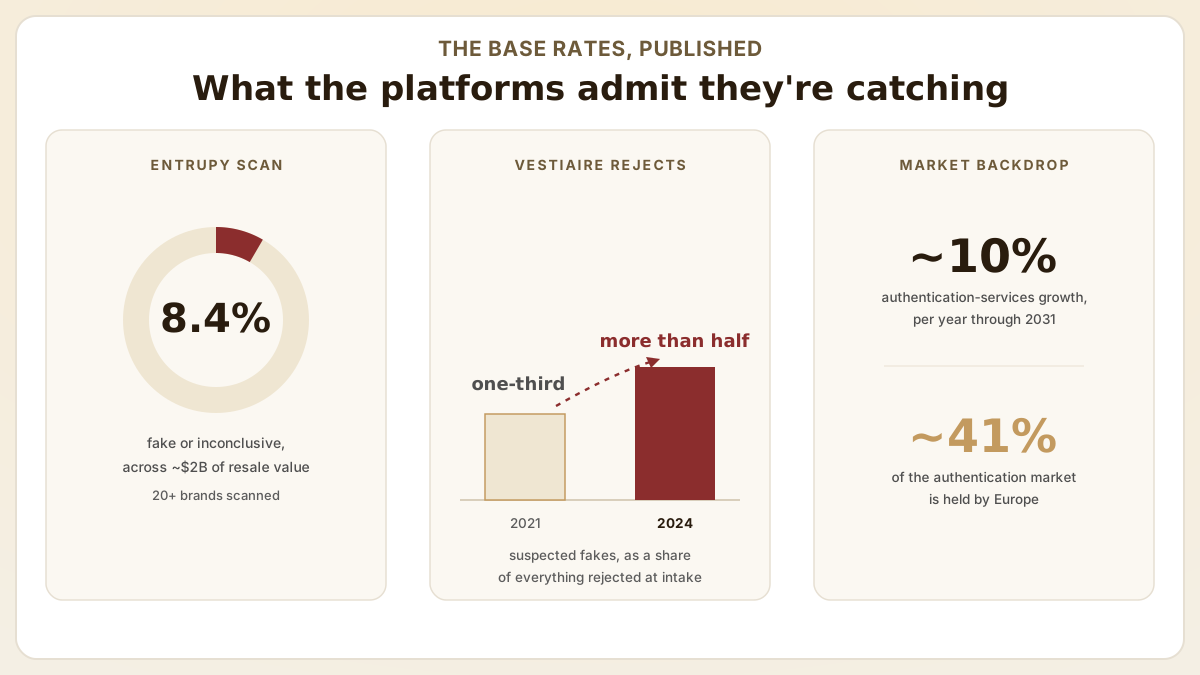
- Vestiaire Collective: by 2024, suspected counterfeits accounted for more than half of the items rejected at intake — up from one-third in 2021. That is not statistical noise; that is super-fakes getting an education. Vestiaire's hybrid model pairs trained physical authenticators with technology-assisted screening.
- Entrupy 'State of the Fake' data: across roughly $2B in scanned resale value, 8.4% of luxury goods came back counterfeit or inconclusive. Entrupy's microscopic AI imaging covers 20+ top brands and partners with multiple resale platforms — its accept/reject ratio is the industry's most-cited benchmark.
- The RealReal: hundreds of in-house authenticators across multiple authentication centers, publicly citing combined human + AI workflows — with NFC increasingly added as an explicit authenticity signal in listing copy wherever brands expose a verification API.
- Mulberry: announced full-catalog NFC tagging from 2025, starting with pre-owned bags sold through its in-house resale program — a tidy template for mid-luxury brands that would rather keep resale margin than gift it to third parties.
- Market backdrop: luxury authentication services are forecast to grow ~10% annually through 2031 (industry research), with Europe holding ~41% market share. Rising counterfeit penetration plus rising authentication spend is the structural reason NFC-at-source went from luxury-house experiment to procurement-team mandate.
Where does NFC complement (rather than replace) AI image authentication and human authenticators?
NFC, AI computer vision (Entrupy, Real Authentication, ALITHEIA AI) and human authenticators each solve a different slice of the resale-trust problem — NFC did not come to town to fire anyone. The strongest 2026 platforms run all three in layered defence, and brands designing NFC programs should plan how their chip plays with the other two.
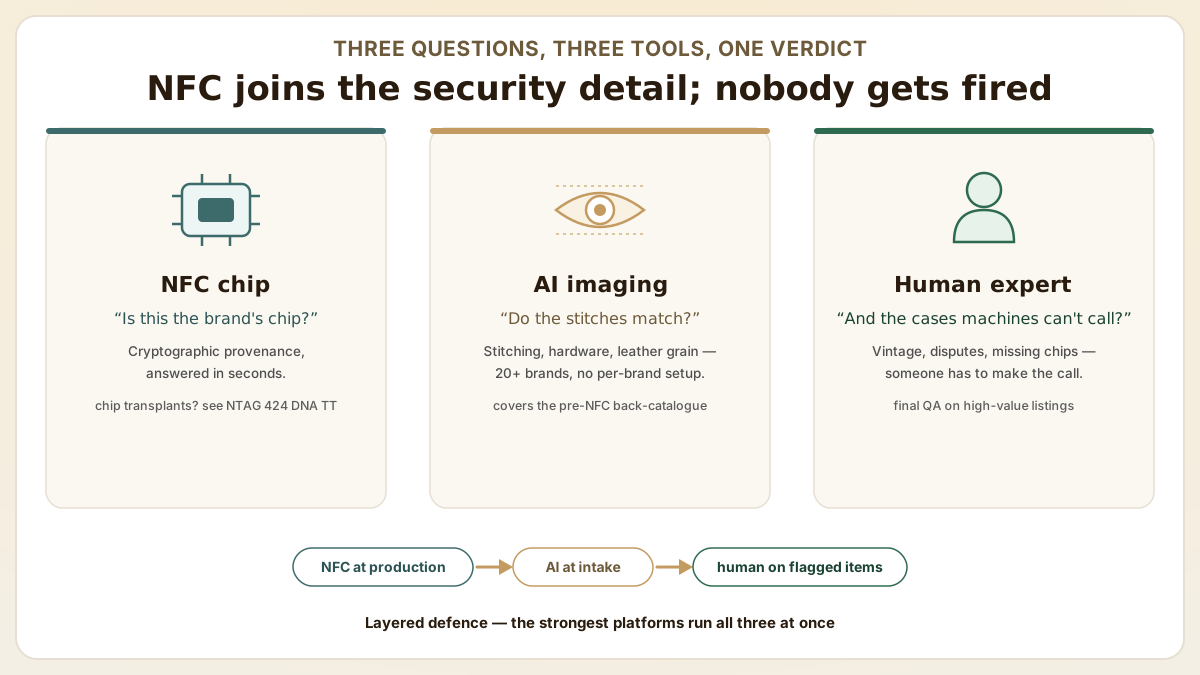
- NFC handles cryptographic provenance — it answers 'is this the chip the brand programmed?' in seconds. It does not answer 'has a real chip been transplanted onto a counterfeit shell?' That residual attack is exactly what tamper-evident NTAG 424 DNA TT and thoughtful physical chip placement are for.
- AI image authentication handles physical forensics — stitching patterns, hardware micro-defects, leather grain. Entrupy and similar tools claim to authenticate 20+ top brands without per-brand integration, and AI is the answer for legacy items shipped before NFC adoption — which is most of the resale catalogue.
- Human authenticators handle the hard cases: vintage, edge cases and dispute resolution. Even at scale, RealReal-style platforms keep expert humans in the loop, because a chip can be missing or damaged, a bag can be a legitimate variant the AI has never seen, and someone has to make the call.
- Layered architecture: brand-issued NFC at production → AI image scan at resale intake → human authenticator on flagged items + high-value categories. NFC clears the human bottleneck on new production; AI extends coverage to pre-NFC inventory; humans handle the genuinely weird.
- Operational implication for brand teams: publish a verification API and a partner program so platforms can drop your NFC into the AI + human workflow they already run. Brands that force resale platforms onto a bespoke brand-only verification UI consistently see slower adoption than brands that meet platforms where they already operate.
Useful next pages
Use these linked product, guide and comparison pages to keep the next click specific and practical.
Luxury resale NFC supply
NTAG 424 DNA tags, brand-grade authentication backends and resale-platform integration.
FAQ
Can resale platforms read brand-issued NFC chips?
Yes — if the brand publishes a verification API. Most luxury NFC programs expose a public-facing or partner-accessible verification endpoint, and resale platforms simply integrate the API call on tap. No API, no party: a chip without an open verification route adds little at platform intake.
What if a customer's NFC chip is damaged?
Brands offer in-store re-authentication and chip replacement at boutiques. The customer brings the item; brand staff verify provenance via document records or original purchase data, then issue a replacement chip with a fresh authentication trail. The bag's story continues, uninterrupted.
Does NFC verification eliminate the need for human authenticators?
No — it promotes them. Human authenticators move to pre-NFC vintage items, edge cases (chip damage, partial chip data) and final QA on high-value listings. NFC handles the bulk; people handle the nuance. That division of labour is why the strongest platforms run chips, AI and humans side by side.
How many luxury bags now ship with NFC?
Industry estimates put 5-15% of new luxury bag production on NFC in 2025-2026, climbing toward 30-50% by 2028 as EU DPP regulation pulls all premium fashion brands into compliance. Brands are cagey with exact figures, so treat published numbers as directional rather than audited.
How does NFC stack up against Entrupy's AI image authentication?
Entrupy's published 'State of the Fake' data shows ~8.4% of scanned items come back counterfeit or inconclusive across ~$2B of resale value — exactly the slice NFC-at-source eliminates for new production. They answer different questions: NFC verifies 'is this the original brand-issued chip?' cryptographically in seconds, no per-brand model training required; Entrupy's microscopic AI checks whether stitching, leather grain and hardware match authentic samples across 20+ luxury brands, keeping coverage on pre-NFC inventory and chip-tampered edge cases. For most platforms the right answer is NFC + AI image + a human authenticator on flagged items.
What does Vestiaire Collective's authenticator workflow look like for an NFC-equipped item?
By 2024, Vestiaire reported suspected counterfeits accounted for more than half of items rejected at intake — up from one-third in 2021 — the direct argument for NFC on new production. Its hybrid model has trained physical authenticators inspect every item, layering AI image screening and brand-issued NFC verification where available. On a chipped item, the staffer taps, the brand's verification endpoint returns a pass/fail with chain-of-custody history, and the item moves through faster. A failed or missing chip is not auto-rejected — it takes the scenic route through the standard human + AI inspection pathway.
Proud Tek is a Shenzhen-based RFID & NFC manufacturer supplying hotel chains, transit operators, event venues and retail brands worldwide. Every order includes free samples, RF testing and dedicated project support.
Get a Quick Quote
Tell us about your project and we'll respond within one business day. Fields marked (asterisk) are required.