
Brand Protection
NFC for Wine and Spirits
EU EPR Compliance
Quick answer
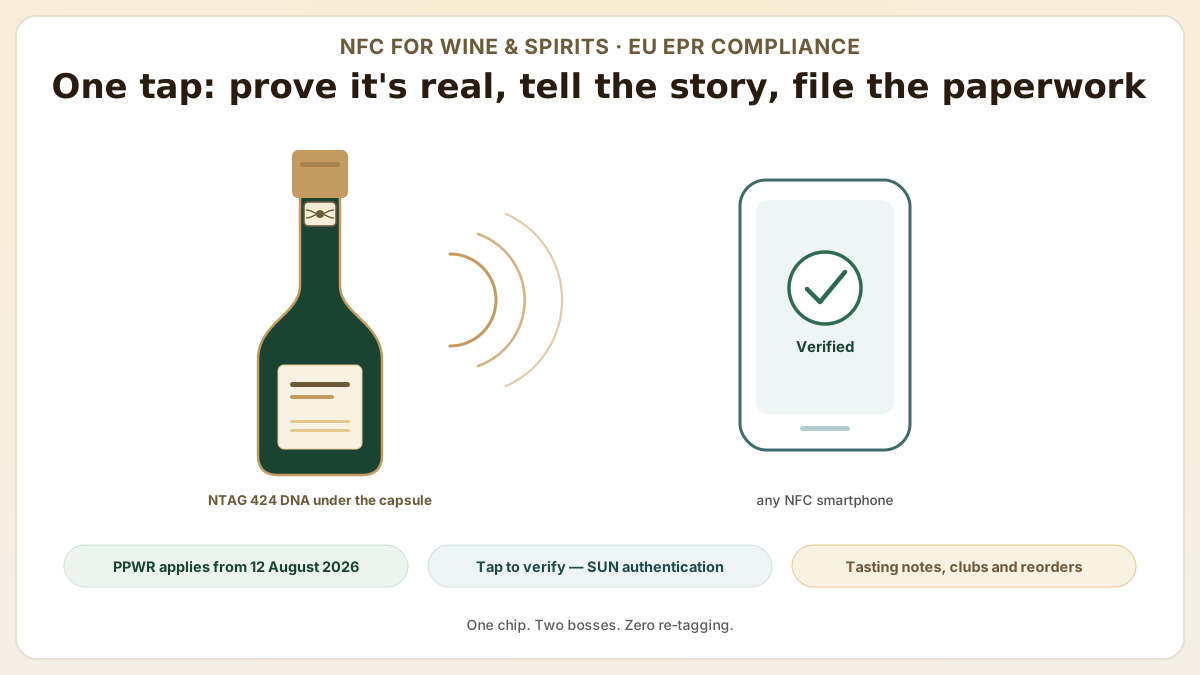
Wine and spirits brands adopt NFC for two jobs: EU EPR packaging compliance (the PPWR applies from 12 August 2026) and direct-to-consumer engagement. One chip serves both bosses: NTAG 424 DNA covers EPR reporting, CMO e-labels and anti-counterfeit at once, while under-capsule placement keeps the premium look — cork-top mounts stay reserved for ultra-premium spirits.
- EU EPR packaging directives require traceability of bottle and packaging components for recycling — and the new PPWR applies from 12 August 2026 with no national transposition. A per-bottle NFC data carrier satisfies the regulation and unlocks consumer engagement with the same chip.
- Wine-bottle NFC tags mount under the capsule or behind the label to preserve premium aesthetics; cork-top mounts are reserved for ultra-premium spirits, where a visible tag reads as a quality signal rather than a blemish.
- Authentication-grade NFC (NTAG 424 DNA, ~$0.40-0.80 per inlay) cuts gray-market diversion and authenticates limited-release vintages on the secondary market — the ~$0.10 NTAG213 is engagement-only, and its 32-bit password is not security.
At a glance
Use these short answers to decide whether this page matches the project before moving into the detail.
Key takeaway
EU EPR packaging directives require traceability of bottle and packaging components for recycling — and the new PPWR applies from 12 August 2026 with no national transposition. A per-bottle NFC data carrier satisfies the regulation and unlocks consumer engagement with the same chip.
Why are wine and spirits adopting NFC?
Walk into a premium wine producer's office and you'll usually find two colleagues quietly lobbying for the same tiny chip — each convinced they're in a different meeting...
Next step
Ready to move forward? Start your inquiry to get specific answers for this project.
Get a wine/spirits NFC quoteWhy are wine and spirits adopting NFC?
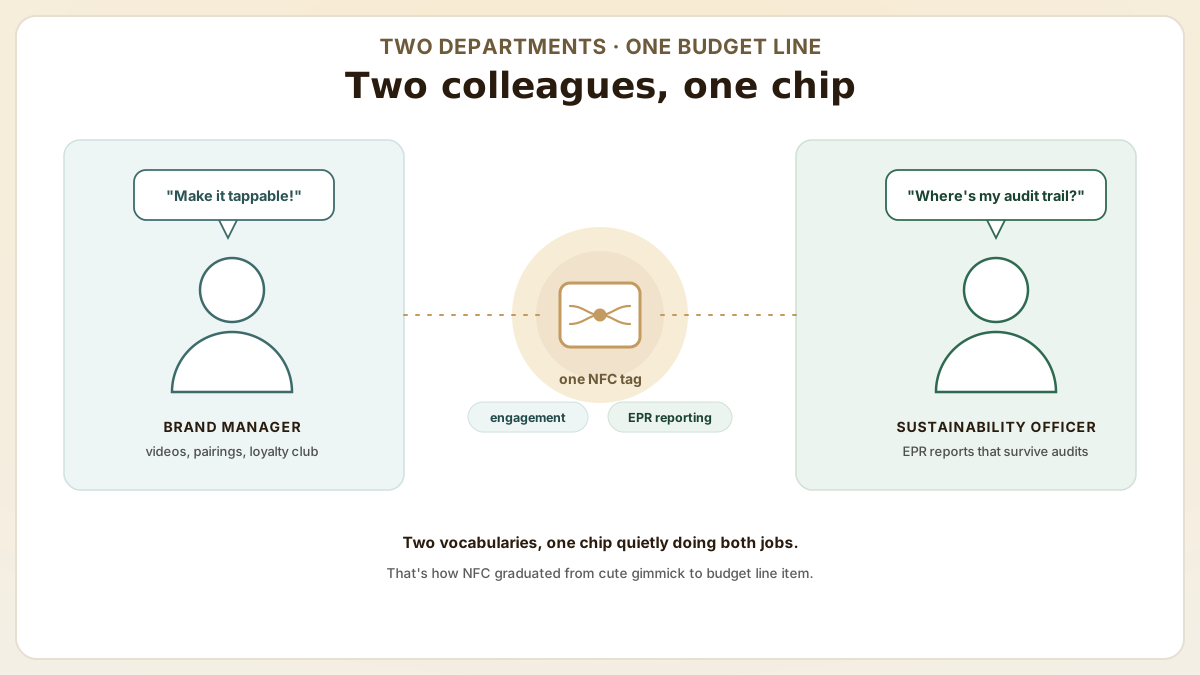
Walk into a premium wine producer's office and you'll usually find two colleagues quietly lobbying for the same tiny chip — each convinced they're in a different meeting. The brand manager dreams of a bottle that plays a tasting-notes video the instant you tap it, then slides you gently into the loyalty club. The sustainability officer, buried under EU packaging paperwork, just wants to prove the aluminum capsule is recyclable before the fees arrive. They'd describe the goal in completely different languages — yet it's one tag doing both jobs, which is precisely how wine and spirits NFC graduated from cute gimmick to line item. Three converging forces — EU regulation, anti-counterfeit on premium SKUs, and consumer engagement at the point of consumption — now justify per-bottle chip cost on bottles priced $30+.
- EU EPR for packaging: producers must report packaging composition and contribute to recycling fees. A per-bottle data carrier beats wrestling aggregate spreadsheets into shape every reporting cycle.
- Counterfeit premium spirits: rare whisky, vintage cognac and limited-release tequila face a $1B+ counterfeit market. Authentication NFC cuts secondary-market fraud — quietly, cryptographically, at the moment of purchase.
- Direct-to-consumer engagement: tapping a bottle launches tasting notes, food pairings and vineyard videos — premium brands finally build CRM with consumers who otherwise stay anonymous through retail.
- Provenance for collectors: vintage and limited-edition bottles get immutable provenance records. Resellers, auction houses and slightly anxious collectors verify authenticity via NFC tap — no magnifying glass, no vibes-based authentication.
- Loyalty and reorder: tapped consumers can be guided into reorder flows or club memberships, with conversion rates 5-15× higher than untapped consumers per equivalent marketing spend.
What does EU EPR mean for wine and spirits?
EU EPR (Extended Producer Responsibility) is a polite acronym for a blunt idea: congratulations, the packaging is now your problem forever. It shifts packaging-recycling cost from the taxpayer to the producer — and wine and spirits are a regulator's dream target: heavy glass, layered materials, a foil capsule here, a cork there, a paper label with a laminate finish. Every gram is a line to report and a fee to pay.
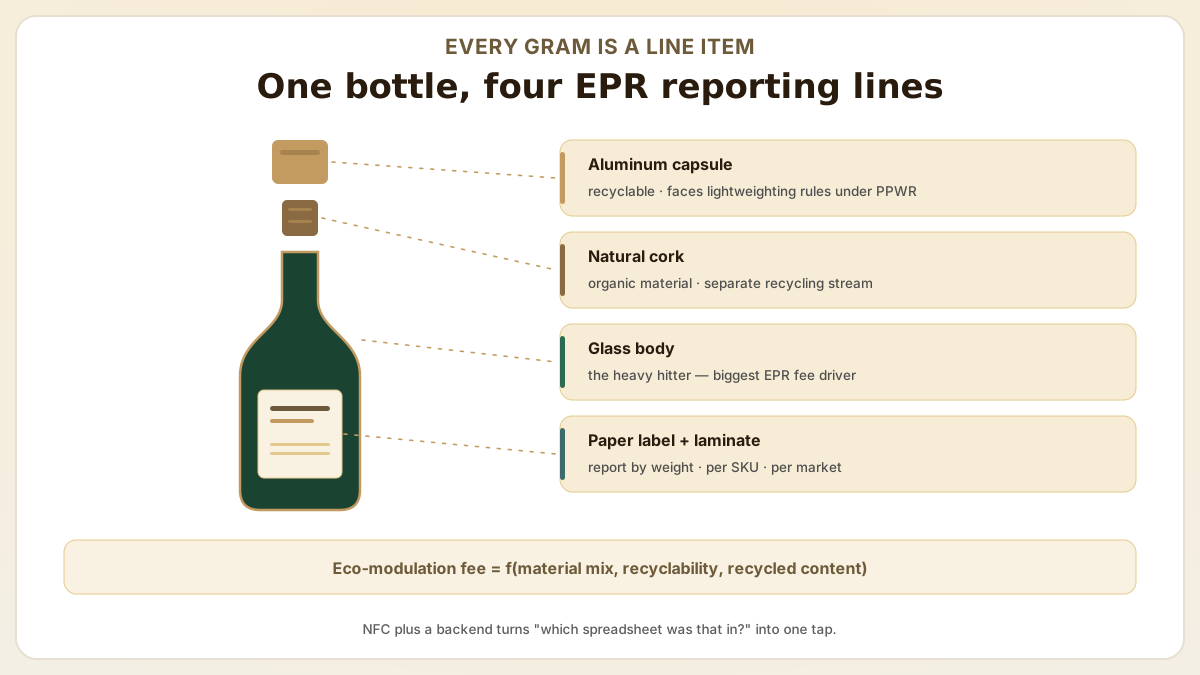
- Mandatory reporting: producers declare packaging weight by material (glass, aluminum, paper, cork, plastic) per SKU per market — annually or quarterly, depending on the member state's mood.
- Eco-modulation fees: countries charge higher fees for non-recyclable or non-recycled packaging, and recycled content can earn rebates — if you can prove it, which is exactly what an NFC-anchored data trail is for.
- Deposit-return systems: glass bottle deposits in EU member states require unit-level traceability of bottles entering and leaving the deposit system. NFC makes that practical instead of theoretical.
- Cross-border alignment: EPR fees vary by member state. Producers shipping into multiple EU countries need data infrastructure that supports per-country reporting; NFC + backend data is the cleanest route through the maze.
- Audit and verification: producers face audits on packaging composition reports. NFC-anchored data records survive scrutiny far better than a spreadsheet last edited by someone who left in 2023.
How do you implement NFC on wine bottles?
Bottles are a hostile environment for a radio chip: glass attenuates signal, aluminum capsules attenuate more, and the design team will physically stop you if the tag is visible. None of this is a dealbreaker — placement, chip choice and antenna design solve all three. The five steps below are how leading wine producers ran their 2024-2026 deployments.
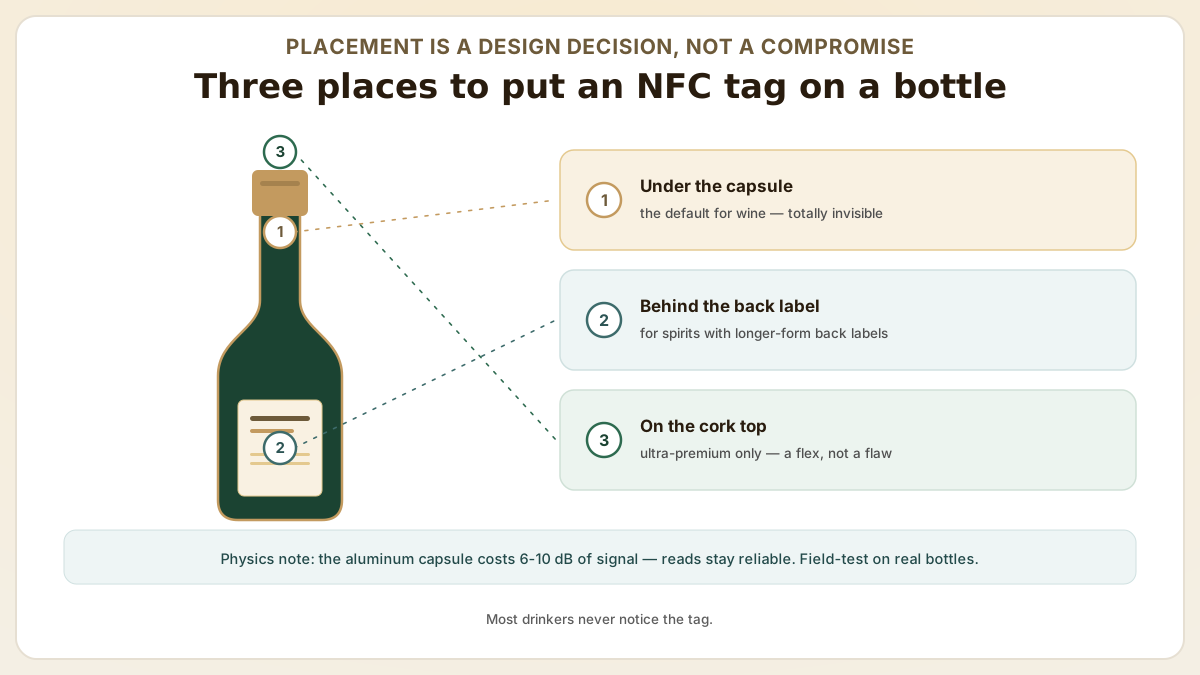
- Tag placement: under the aluminum capsule for wine (covers the tag, preserves the aesthetic); under the back label for spirits with longer-form back labels; cork-top placement only for ultra-premium, where the visible tag is a flex, not a flaw.
- Chip selection: NTAG213 for entry-level engagement (~$0.10 inlay); NTAG 424 DNA for premium anti-counterfeit (~$0.40-0.80 inlay). This is the one decision people regret rushing — the comparison below is worth two minutes.
- Glass and capsule compatibility: NFC reads through glass and aluminum capsule with proper antenna design. The aluminum capsule costs 6-10 dB of signal, which sounds scary and isn't — reads remain reliable. Field-test with actual bottle prototypes, not a flat sample on a desk.
- Encoding workflow: factory pre-encoding by the inlay supplier is most common (provides batch + bottle-serial data). In-house encoding only earns its keep on high-mix limited-edition production.
- Backend integration: one tap should feed two databases — brand CRM for consumer engagement and the EPR-reporting platform for regulators. Single tag, two business outcomes, zero duplicated effort.
| Decision factor | NTAG213 (~$0.10 inlay) | NTAG 424 DNA (~$0.40-0.80 inlay) |
|---|---|---|
| Role | Entry-level engagement | Premium anti-counterfeit + engagement |
| Security | 32-bit password — please don't call this security | SUN cryptographic signature — cannot be cloned |
| Against counterfeiters | Clonable, so useless against real ones | Beats even sophisticated operators |
| What it carries | A video, a pairing, a landing page | Compliance + authentication + engagement at once |
| Future-proofing | Re-tag the line when anti-counterfeit becomes a priority | GS1 Digital Link ready — carries you into the DPP era |
What does the new EU Packaging and Packaging Waste Regulation (PPWR) actually mandate for wine and spirits?
Regulators rarely retire a rule cleanly — they release a sequel with a bigger budget. The headline EU framework is no longer the older PPWD directive but the new Packaging and Packaging Waste Regulation: formally adopted 19 December 2024, entered into force 11 February 2025, and applying from 12 August 2026. The important twist is in the last word — PPWR is a regulation, not a directive, so it applies directly across all member states with no national transposition step. There is nowhere to hide and no local version to wait for, and it rewires the EPR fee, DRS and design rules wine and spirits producers must follow.
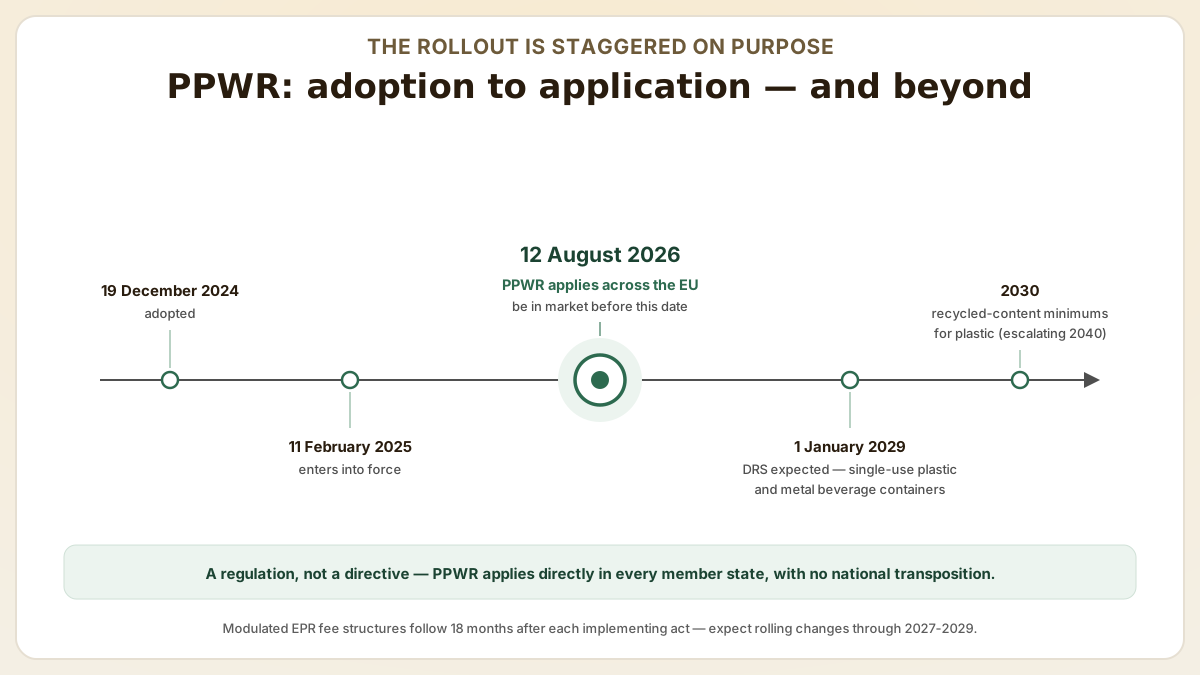
- Application date: PPWR applies from 12 August 2026 across all EU member states without national transposition (unlike the old PPWD directive). Plan tag and packaging redesigns to be in market before that date — it is closer than your next harvest.
- EPR fees get personal: producers bear full financial responsibility for collection, sorting, recycling and disposal of their packaging, with fees modulated by recyclability, recycled content, reusability and presence of substances of concern. No more flat per-tonne bills. Modulated structures apply 18 months from each delegated/implementing act — expect rolling fee changes through 2027-2029.
- Wine and spirits lost their DRS exemption: PPWR specifically removed the carve-out that existed under the old directive. Single-use 0.1-3 L plastic beverage bottles and metal beverage containers will likely fall under Deposit Return Systems by 1 January 2029 unless separate collection targets are met. Wine and spirits in glass remain exempt from reuse/refill targets but are now in scope for DRS-style obligations where member states activate them.
- Recycled content minimums: PPWR sets minimum recycled-content thresholds for plastic packaging from 2030 (escalating in 2040). Glass and aluminum — the dominant wine/spirits substrates — face material-specific recyclability and lightweighting rules rather than recycled-content quotas, and that lightweighting pressure will drive packaging redesigns that affect where your tag can live.
- One data carrier to align them all: PPWR-driven EPR reporting per SKU per market dovetails with NTAG 424 DNA + GS1 Digital Link encoding. The same chip carries the recyclability info, the EPR scheme link and the consumer engagement landing page — sparing you two parallel data carriers fighting over one bottle neck.
How does NFC overlap with EU CMO wine traceability and the broader DPP roadmap?
The EU has handed wine and spirits producers an entire alphabet of overlapping regimes, and the letters do not politely take turns. The new PPWR governs packaging, the older CMO (Common Market Organisation) wine traceability rules govern alcohol content and origin, and the future ESPR Digital Product Passport will eventually pull most consumer goods into per-unit data carriers. The trick is realising that a single NFC carrier can serve all three without retagging — no matter which acronym lands next.
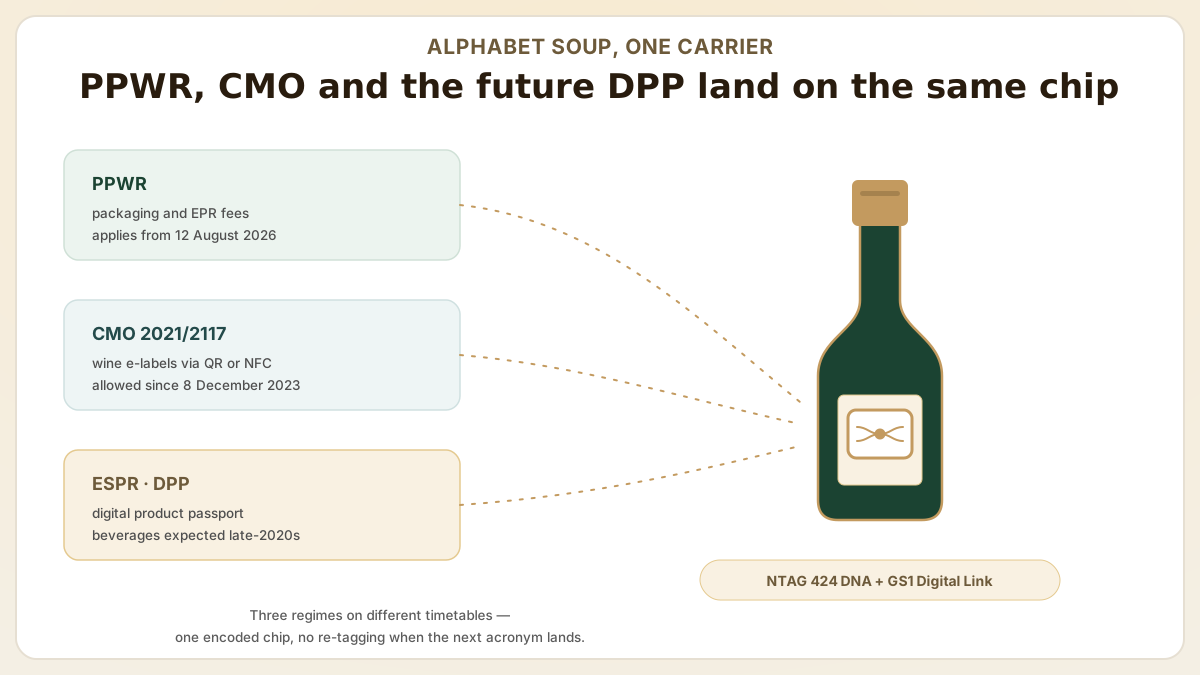
- EU CMO wine labelling rules (Regulation 2021/2117 amending 1308/2013): mandatory ingredients and nutritional information on wine labels from 8 December 2023 — and producers may comply via electronic labels accessed by QR or NFC, not paper-only. Translation: the chip is useful for CMO compliance today, not just future-DPP planning.
- Spirit Drinks Regulation (EU) 2019/787: governs definitions, descriptions and presentation of spirit drinks. The same NTAG 424 DNA tag handles compliance, anti-counterfeit and consumer engagement on cognac, whisky, tequila and mezcal alike.
- Future ESPR DPP for beverages: the ESPR Working Plan 2025-2030 put iron and steel, textiles, furniture and electronics in the first wave — beverages have not yet been placed but are expected to follow in the late-2020s as broader product coverage expands. Brands embedding NTAG 424 DNA with GS1 Digital Link encoding now will satisfy the DPP carrier requirement when it lands, without re-tagging.
- Anti-counterfeit, both directions: WHO and OECD reports cite premium spirits as one of the most-counterfeited categories. NFC SUN authentication reassures the drinker (tap to verify) and the customs officer, whose NFC handheld can verify chains of custody on a sealed pallet of bottles without cracking it open.
- The procurement story that gets budgets signed: 'one NFC chip = compliance + consumer engagement + circular-economy reporting'. That single sentence is what finally aligns the sustainability team and the brand-equity team on the same purchase order.
Useful next pages
Use these linked product, guide and comparison pages to keep the next click specific and practical.
Wine and spirits NFC supply
Capsule-friendly NFC inlays, NTAG 424 DNA secure tags and EPR data integration.
FAQ
Will NFC reduce my wine's premium aesthetic?
No — properly placed under the capsule or back label, NFC is invisible, and most consumers in 2024+ implementations never detect the tag. Cork-top mounting is visible, but on ultra-premium SKUs it is increasingly accepted as a quality signal rather than a blemish. Your design team can stand down.
How does NFC survive wine-bottle conditions?
10+ years is the design target: properly designed inlays with food-grade adhesive and a PET substrate survive a decade-plus of cellar storage at 12-20°C and humidity above 70%. The one thing to avoid is thin paper substrates, which absorb moisture and die young — ironic, in a wine cellar.
Can I retrofit NFC to existing bottle inventory?
Yes, by sticker-on-back-label retrofit. It is less elegant than under-capsule placement, but it works for one-off limited releases or pilot programs — and it does not require disturbing the bottling line.
Does NFC help with wine fraud?
For high-end wine fraud (counterfeit Burgundy, Bordeaux), NTAG 424 DNA SUN authentication is highly effective: the chip's cryptographic signature cannot be cloned even by sophisticated counterfeiters. Chateau-level adoption has been climbing through 2025-2026.
Does the new EU PPWR change anything compared to the old packaging directive for wine producers?
Yes, materially. The PPWR was adopted 19 December 2024, entered into force 11 February 2025 and applies from 12 August 2026 — and unlike the old PPWD directive, PPWR is a regulation, so it applies directly across all EU member states without national transposition. Three changes matter for wine and spirits: (1) modulated EPR fees explicitly tied to recyclability, recycled content, reusability and substances of concern (no more flat per-tonne fees); (2) wine and spirits are no longer exempt from Deposit Return System obligations — DRS coverage is expected by 1 January 2029 unless separate-collection targets are met; (3) PPWR sets up direct integration with the EU DPP framework, so per-unit data carriers (NFC, QR, RFID) move from optional to operationally near-required for cross-border producers.
Can the same NFC tag handle CMO wine labelling, PPWR EPR reporting, and future DPP requirements?
Yes if you specify NTAG 424 DNA (or DESFire EV3) with GS1 Digital Link 1.4.x encoding from the start. The CMO wine rules (Regulation 2021/2117 amending 1308/2013) explicitly allow mandatory ingredients and nutritional information to be presented via electronic label accessed through QR or NFC since 8 December 2023 — so the chip is already useful for compliance today. PPWR-driven recyclability and EPR data live behind the same URL via different routes. Future ESPR DPP for beverages (expected late-2020s) will accept the same chip if encoded with GS1 Digital Link. Avoid plain NTAG213 if anti-counterfeit is also a goal — its 32-bit password is insufficient and you'll re-tag.
Proud Tek is a Shenzhen-based RFID & NFC manufacturer supplying hotel chains, transit operators, event venues and retail brands worldwide. Every order includes free samples, RF testing and dedicated project support.
Get a Quick Quote
Tell us about your project and we'll respond within one business day. Fields marked (asterisk) are required.