
Brand Protection
Item-Level RFID for Cosmetics
The ROI Case

Quick answer
Counterfeit cosmetics are a $5-7B-a-year business, and packaging is the one thing they have already mastered. Item-level NFC moves proof of authenticity off the box and into the chip, delivering verifiable provenance, tamper evidence, and a stack of first-party CRM data on every tap.
- The counterfeit cosmetics market runs an estimated $5-7B a year, and because fakes answer to no ingredient regulator, mercury, arsenic and banned preservatives turn up in them, which is exactly what has regulators tightening the rules.
- One tag does four jobs at once: authentication, batch traceability, refill programs and a tap-to-open digital experience, a four-way payback you will not find in most retail categories.
- Compliant programs use NFC tags certified for direct skin/cosmetic contact (REACH, FDA 21 CFR 175.300) plus tamper-evident designs that announce 'opened' the moment a seal is broken.
At a glance
Use these short answers to decide whether this page matches the project before moving into the detail.
Key takeaway
The counterfeit cosmetics market runs an estimated $5-7B a year, and because fakes answer to no ingredient regulator, mercury, arsenic and banned preservatives turn up in them, which is exactly what has regulators tightening the rules.
Why do cosmetics need item-level RFID authentication?
A prestige-skincare shopper will research a serum for weeks, compare formulations, read every review down to the one-star rants, and then buy a flawless counterfeit from...
Next step
Ready to move forward? Start your inquiry to get specific answers for this project.
Get cosmetics NFC quoteWhy do cosmetics need item-level RFID authentication?
A prestige-skincare shopper will research a serum for weeks, compare formulations, read every review down to the one-star rants, and then buy a flawless counterfeit from a marketplace listing that looks identical to the real one: same box, same foil, same reassuring heft. Packaging is the easy part to fake, and the part counterfeiters have had decades to perfect, which is exactly why proof of authenticity can no longer live on the outside of the box. Cosmetics also differ from other authentication targets: the product touches skin, the regulatory liability is real, and shoppers actually interact with the package every day. These five drivers explain why item-level NFC ROI is unusually strong here.
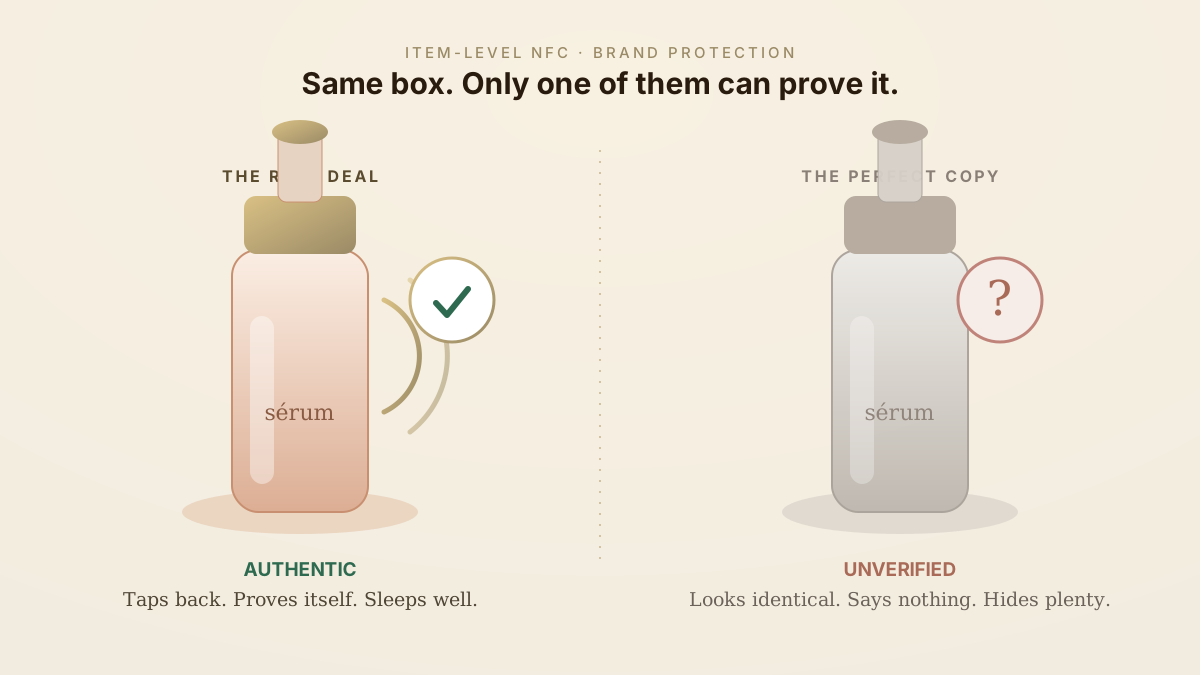
- Health-risk counterfeits: fakes contain mercury, lead, arsenic and microbes at levels that cause skin damage, allergic reactions and chronic harm. And a fake sold under your name becomes your liability, whether or not you made it.
- Regulatory tightening: EU CPR (Cosmetic Products Regulation) and FDA MoCRA both push toward unique-product traceability. Item-level RFID/NFC gets you ahead of the mandate instead of scrambling after it.
- Refill and circular economy: prestige brands run refill programs (La Mer, Charlotte Tilbury) where the empty comes back. NFC-tagged packaging tracks each individual return and confirms it is genuinely refill-eligible.
- Consumer ritual touchpoint: people apply cosmetics daily, so a tap can open tutorials, ingredient deep-dives, repurchase reminders and loyalty perks, the kind of engagement most categories never get.
- Resale and gray-market control: diversion (department-store stock surfacing on Amazon) is hard to spot by eye, because the units are perfectly genuine, they have simply gone freelance. NFC tags encoded with destination-channel data flag diverted units.
How does NFC anti-counterfeit work on cosmetics packaging?
Cosmetics packaging is small, often metallic, and marinated in oils and water, close to a perfect storm for making a radio antenna misbehave. Good NFC design works around all of it and still delivers a reliable tap-to-verify on the first try.
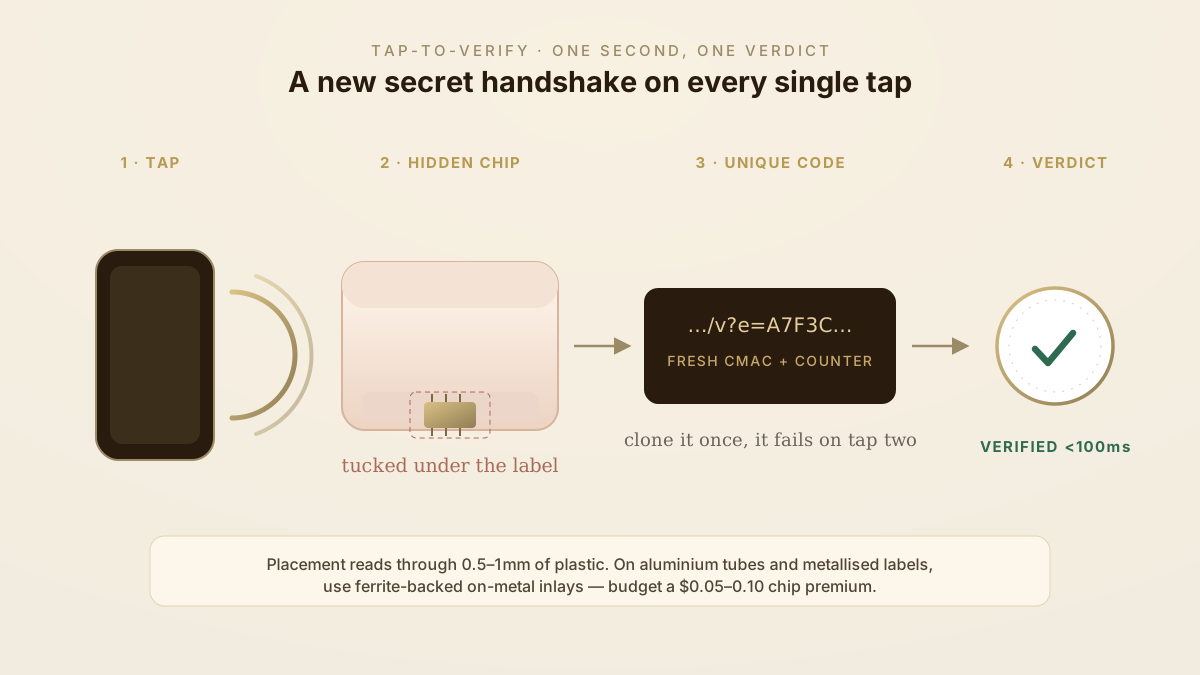
- Tag placement: under the bottom label or inside the cap is the usual move, hidden where it will not disturb the design but still reads through 0.5-1mm of plastic on the first tap.
- On-metal performance: aluminum tubes and metallized labels detune standard NFC. Use ferrite-backed inlays designed for metal substrates; expect a $0.05-0.10 chip cost premium.
- Tamper-evidence: tags that break or change state when packaging is opened. NTAG 424 DNA's tamper-detection mode flags 'opened' status on the first tap after tampering.
- Material safety: tag adhesive and encapsulation must comply with EU REACH and FDA 21 CFR 175.300. Standard inlays from major suppliers ship with these certifications by default for cosmetics SKUs.
- Anti-counterfeit signature: SUN/CMAC authentication on every tap. The backend verifies that this exact chip-UID-and-counter combination is valid; a cloned tag fails on the second tap when the counter does not line up.
What does cosmetics RFID authentication cost?
Good news for the CFO: cosmetics NFC programs run lean compared with apparel, because tag counts are lower (typically 0.5-5M units/year per major SKU) and packaging integration is cleaner. The breakdown below reflects 2026 market norms.
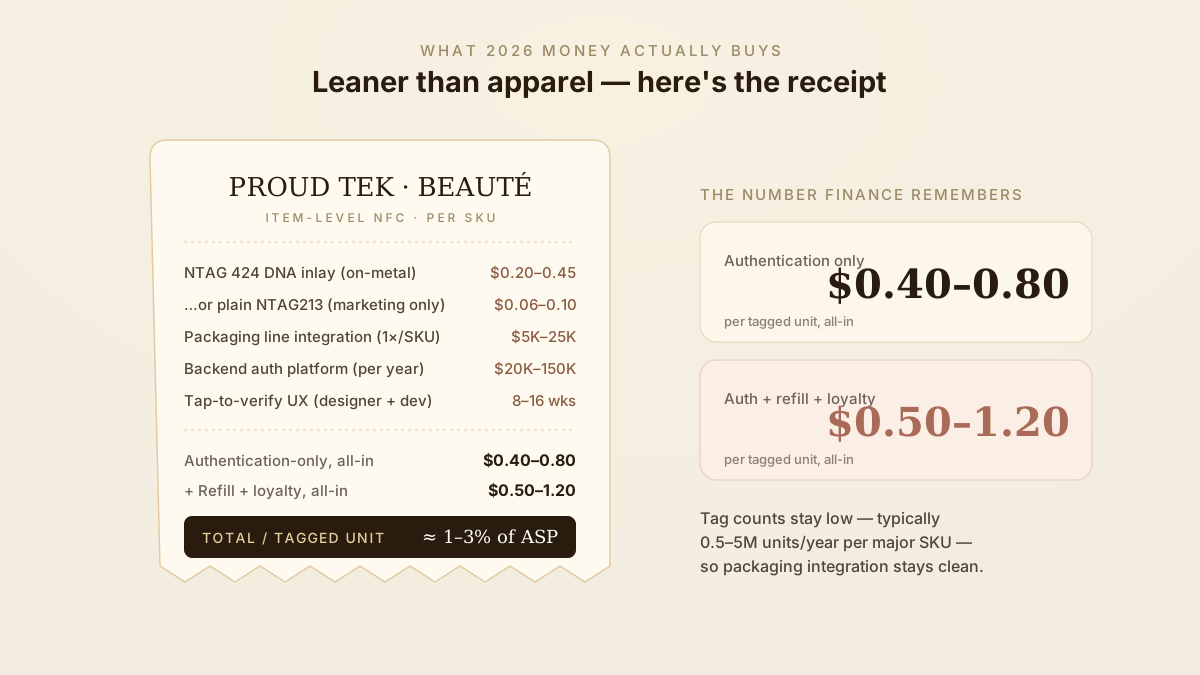
- Tag cost: $0.20-0.45 per unit for NTAG 424 DNA on-metal inlays at 500K volume. Plain NTAG213 inlays run $0.06-0.10, fine if anti-counterfeit is not the primary driver.
- Packaging integration: $5K-25K one-time per SKU line to fold tag application into cap-sealing or label-pressing equipment. Manual skip-line application for low-volume SKUs costs more per unit.
- Backend authentication platform: $20K-150K/year, SaaS or in-house. Cosmetics-specific platforms (Authena, EVRYTHNG-acquired-by-Avery) integrate with consumer-engagement workflows.
- Consumer experience design: 1 designer + 1 developer for 8-16 weeks of UX work. The tap-to-verify landing experience matters as much as the chip behind it.
- Total program cost benchmark: $0.40-0.80 per tagged unit all-in for authentication-only programs; $0.50-1.20 for programs that add refill + loyalty integration.
How do you measure ROI for cosmetics anti-counterfeit?
Cosmetics NFC ROI is multi-channel, which for once lets the CFO and CMO build the business case together. The five metrics below capture both the direct anti-counterfeit savings and the revenue that rides along beside them.
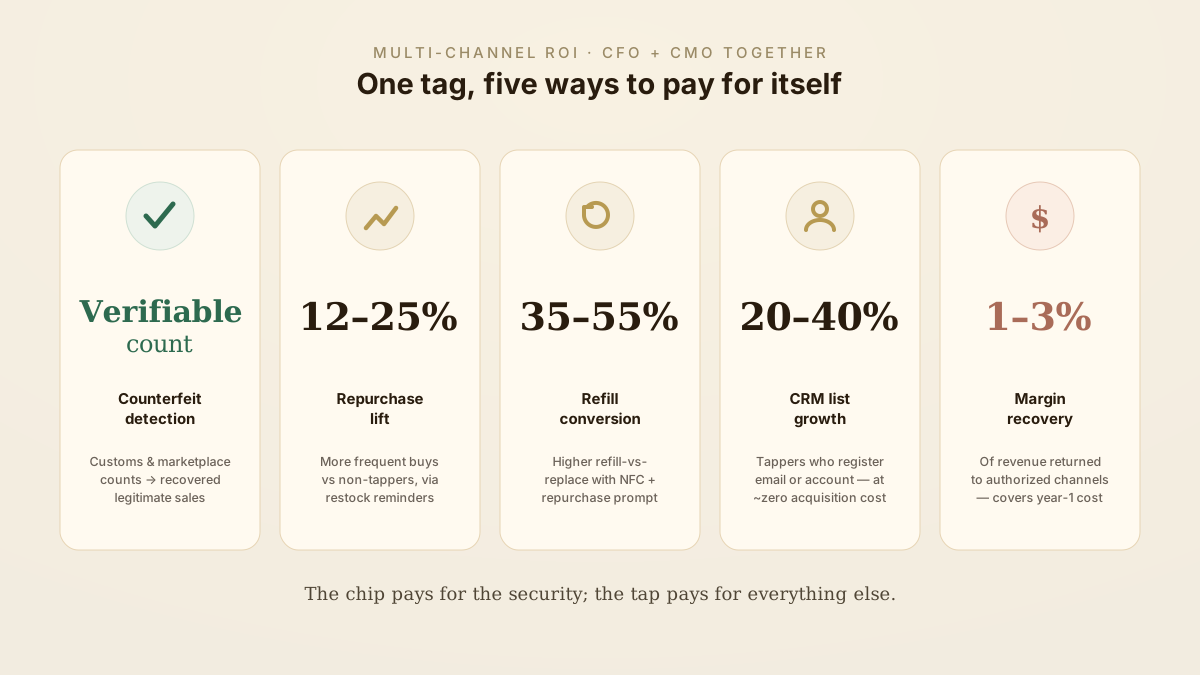
- Counterfeit-detection rate: tagged products examined at customs and on gray-market platforms produce a verifiable counterfeit count, monetizable as recovered legitimate sales.
- Repurchase lift: tap-to-verify users repurchase 12-25% more frequently than non-tappers, driven by tap-triggered restock reminders and loyalty rewards.
- Refill conversion: prestige refill programs see 35-55% higher refill-vs-replace conversion when packaging carries NFC + a repurchase prompt rather than printed text alone.
- CRM list growth: 20-40% of tappers register an email or app account, growing first-party data at near-zero acquisition cost.
- Margin recovery: gray-market diversion control alone typically returns 1-3% of revenue to authorized channels, more than covering the program cost in year 1 for prestige brands.
How LVMH, Estée Lauder and Kering deploy NFC authentication on cosmetics
The luxury and prestige cosmetics segment ships hundreds of millions of NFC-authenticated units a year. Reading what the leading houses actually do, chip selection, antenna placement, consumer experience and back-end serialisation, hands buyers a working blueprint instead of a vendor pitch.
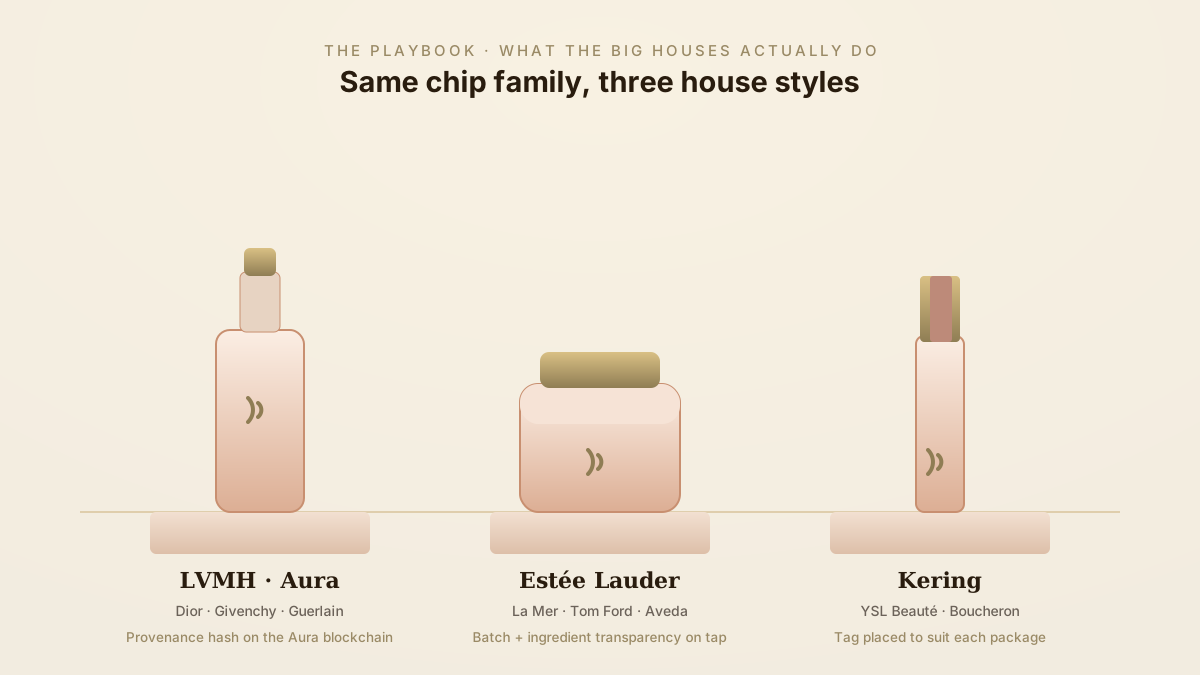
- LVMH's Aura blockchain consortium (founded 2019 with Microsoft and Consensys; now including Prada, Cartier, OTB and Mercedes-Benz) embeds a per-item NFC tag, NTAG 424 DNA or a proprietary equivalent, under the label or in the carton. A consumer tap reveals a provenance hash anchored on the Aura blockchain, plus servicing history, ownership transfers and recycling metadata. Cosmetics rollouts cover Dior, Givenchy and Guerlain limited editions.
- Estée Lauder Companies (La Mer, Tom Ford Beauty, Aveda) — NFC tag under the carton flap with NXP NTAG 424 DNA; tap opens product page with batch number, manufacturing date, ingredient transparency and authentication confirmation. Programs piloted in Asia (China and South Korea where counterfeit risk is highest) before global rollout.
- Kering (Yves Saint Laurent Beaute, Boucheron) runs hybrid NFC + blockchain on selected SKUs, moving the tag to suit the package geometry: under the bottle base for fragrance, behind the label for a compact, inside the cap for lipstick. Analysts put the anti-counterfeit value at an estimated 1-3% of brand revenue recovered from grey-market sales.
- Chip selection rationale — NXP NTAG 424 DNA dominates because it offers AES-128 + Secure Unique NFC (SUN) message at a $0.30-$0.60 unit cost — every tap generates a cryptographically unique URL that the brand's authentication backend verifies in <100 ms. Cheaper NTAG 21x ($0.10-$0.30) offers static URL encoding only — fine for marketing engagement but trivially clonable, so it doesn't qualify as anti-counterfeit.
- Tag placement engineering: aluminium sleeves, glossy gold foil printing and metallic packaging detune HF antennas, so brands use Schreiner ProtectAge, Avery Dennison BeautyCare, or Smartrac Bullseye antennas tuned for high-permittivity environments, plus a 0.3-0.5 mm PE spacer between tag and metallised substrate. Skip this engineering and 30-50% of tags fail in the field, the most common reason cosmetics anti-counterfeit pilots stall.
Building a cosmetics anti-counterfeit ROI model that survives finance review
CFO sign-off on item-level NFC needs a defensible ROI model, not 'reduces counterfeiting' as a hand-wave. The model below has six revenue-and-risk lines to populate with measurable data from your own brand history.
- Recovered grey-market sales: counterfeit market share for prestige cosmetics ranges 5-25% by SKU and region (highest in Asia Pacific, lowest in EU regulated markets per the OECD/EUIPO 2022 report). NFC enables consumer-facing authentication and brand reporting; brands typically recover 1-5% of unit volume in the first 24 months as authenticated channels gain market share. At $25-$80 average selling price per cosmetic SKU and 1M annual units, 2% recovery = $500K-$1.6M annual incremental revenue.
- Reduced legal and enforcement spend: brand protection legal teams spend $2-$10 per counterfeit unit on test purchases, lab analysis, takedown notices and customs seizures. Shifting identification from forensic lab work to a consumer tap typically trims 30-50% of the brand protection enforcement budget after year 2.
- Consumer engagement and CRM lift: a 2024 Salesforce study found 27-42% of consumers who tap an authentication NFC enroll in the brand's loyalty or refill program at point-of-tap. At 1M tagged units and a 30% tap rate, 200K-400K new CRM contacts at $5-$15 LTV uplift each = $1M-$6M incremental loyalty revenue.
- Retailer and channel integration: Sephora, Ulta, Harrods, Selfridges and JD Beauty increasingly require NFC or 2D matrix item-level authentication for prestige categories. Compliance protects multi-million-dollar retail listings at $0.30-$0.60 per unit tag cost; the opportunity cost of being delisted dwarfs the tag cost.
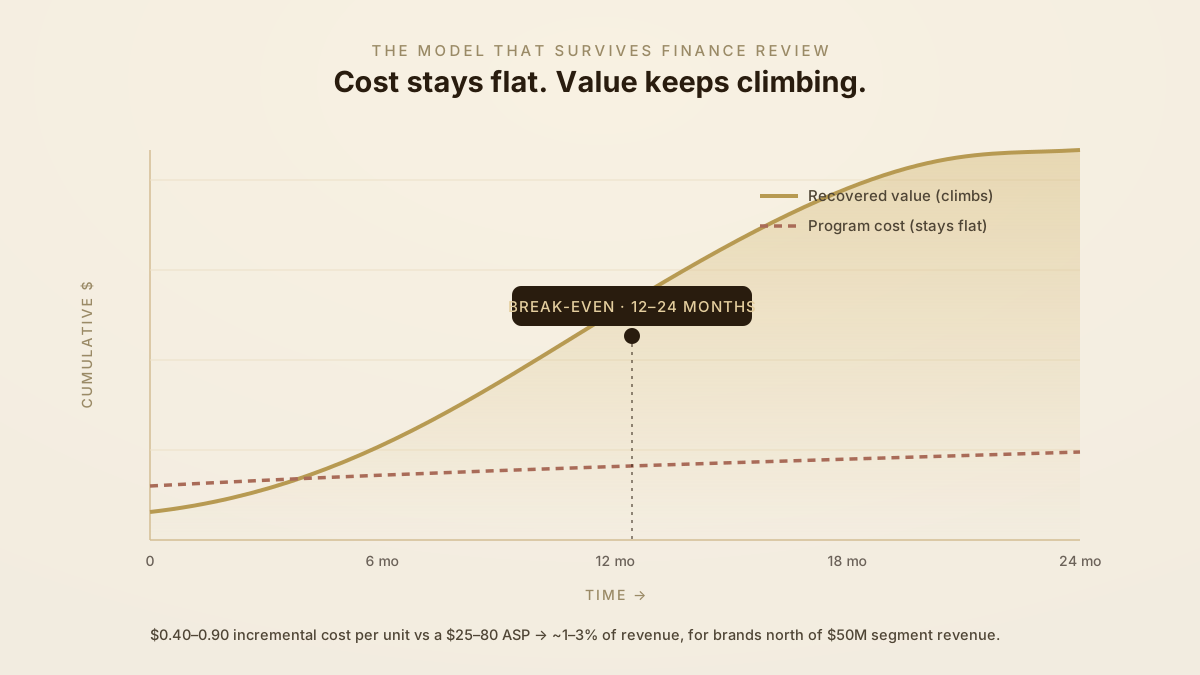
- Total program cost and break-even: tag $0.30-$0.60 + application labour $0.05-$0.15 + middleware/SaaS $0.02-$0.10 per unit + integration capex $50K-$300K one-time = $0.40-$0.90 incremental cost per unit. Against $25-$80 ASP, the total program lands at 1-3% of revenue and pays back in 12-24 months for brands with >$50M segment revenue.
Useful next pages
Use these linked product, guide and comparison pages to keep the next click specific and practical.
Cosmetics-grade NFC supply
REACH-compliant inlays, tamper-evident NFC labels and backend authentication.
NXP and brand-protection authentication references
Authoritative NTAG 424 DNA documentation and luxury brand authentication frameworks.
FAQ
Are NFC tags safe for direct cosmetic contact?
Standard inlays ship REACH-compliant and FDA 21 CFR 175.300 compliant for indirect contact (under labels, inside caps). For direct skin or product contact, specify medical-grade adhesive and biocompatible encapsulation; expect a 15-30% cost premium for the peace of mind.
How small can NFC tags get for cosmetics packaging?
The smallest commercially-viable NFC inlay is ~10mm x 10mm with a 1.5-2cm read range. Go smaller and read reliability drops off beyond direct contact. For mascara wands and lip gloss, a cap-mounted tag beats a tube-mounted one.
Will counterfeiters just relabel real packaging?
They can try, but it is caught quickly. Tamper-evident NFC chips flip to 'opened' state on the first re-tap after a seal break, and the backend watches for 'opened then re-sold' patterns and flags the accounts for review.
Can I integrate NFC with my existing PIM/PLM?
Yes. Most cosmetics PIMs (Salsify, Akeneo, Plytix) support custom attribute fields for NFC chip ID and DPP URL. Tag UIDs link from the PIM to the authentication backend via standard webhook or API.
Why NTAG 424 DNA over cheaper NTAG 213 for cosmetics authentication?
NTAG 213 (and 215/216) writes a static URL into the tag memory — every tap returns the same URL. A counterfeiter buys one genuine product, reads the URL, and reproduces identical clone tags pointing to the same URL. Authentication is fake. NTAG 424 DNA uses Secure Unique NFC (SUN) and Secure Dynamic Messaging (SDM): every tap generates a fresh cryptographic value (CMAC over a per-tap counter using a per-tag AES-128 key) appended to the URL. The brand's backend verifies the CMAC and the counter. Cloning is impossible without extracting the AES key from the chip — a feat that requires physical chip teardown and lab equipment costing $50K-$500K, infeasible at counterfeit margins. The $0.20-$0.40 per-unit price premium for DNA over NTAG 21x is the difference between marketing engagement and real anti-counterfeit.
What's the recommended antenna placement for liquid-filled cosmetic packaging like serum bottles or perfume?
HF NFC at 13.56 MHz couples through plastic and glass but is detuned by direct contact with conductive liquids and metal foils. For serum and perfume bottles, place the tag on the cap top (away from liquid), under the bottle base (with a 1-2 mm air gap or PE spacer), or on the outer carton. Avoid placing tags wrapped around bottle sides where the liquid sits between the tag and the smartphone reader — this kills 50-80% of read range. For metallic-finished caps and bottles, use specifically engineered on-metal NFC tags (NXP NTAG 424 DNA TagTamper with metal-tolerant antenna, or HID Trusted NFC Tag) at $0.50-$1.20/unit instead of $0.30-$0.50 for standard tags. Always do a 100-unit field test with the actual SKU and a mix of iPhone and Android devices before committing volume.
Proud Tek is a Shenzhen-based RFID & NFC manufacturer supplying hotel chains, transit operators, event venues and retail brands worldwide. Every order includes free samples, RF testing and dedicated project support.
Get a Quick Quote
Tell us about your project and we'll respond within one business day. Fields marked (asterisk) are required.