
Brand Protection
Brand Protection RFID
Spotting Counterfeits
Quick answer
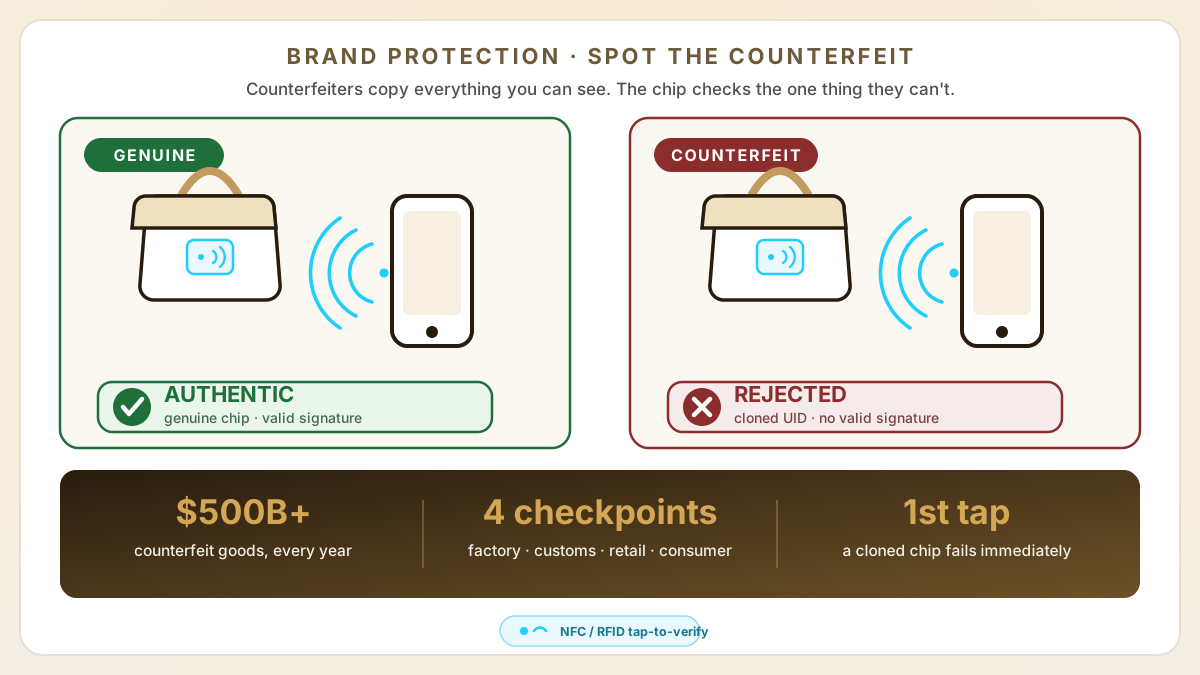
A counterfeiter can copy the stitching, the box, the hologram and the printed serial number. The one thing they can't copy is the secret sealed inside the chip. Fakes still slip into supply chains through customs, gray-market diverters and unauthorized resellers — so RFID/NFC anti-counterfeit programs catch them at scale by pairing cryptographic chip authentication with a backend audit trail that flags a clone on its very first tap.
- Counterfeit goods cost global brands $500B+ a year, and shoppers usually can't tell the difference by looking — cryptographic RFID/NFC authentication is the proven systemic detection mechanism at every supply-chain checkpoint.
- Customs, retailers, online marketplaces and authentication services all lean on the same shared authentication backend, which brands publish via NFC tap-to-verify.
- Brand-protection programs combine secure NFC chips (NTAG 424 DNA, DESFire EV3) with web-API verification accessible to enforcement partners worldwide.
At a glance
Use these short answers to decide whether this page matches the project before moving into the detail.
Key takeaway
Counterfeit goods cost global brands $500B+ a year, and shoppers usually can't tell the difference by looking — cryptographic RFID/NFC authentication is the proven systemic detection mechanism at every supply-chain checkpoint.
How does RFID detect counterfeits in supply chains?
By the time a fake reaches the shelf, the counterfeiter has usually copied everything a shopper can see — the stitching, the box, the hologram, the printed serial number...
Next step
Ready to move forward? Start your inquiry to get specific answers for this project.
Get brand-protection NFC quoteHow does RFID detect counterfeits in supply chains?
By the time a fake reaches the shelf, the counterfeiter has usually copied everything a shopper can see — the stitching, the box, the hologram, the printed serial number. The one thing they cannot copy is the part nobody can see: the per-item secret sealed inside the chip. That gap is the whole business of brand protection. RFID/NFC counterfeit detection works by giving every authentic item a cryptographically-signed identifier and exposing a verification API to authorized inspectors. Counterfeits fail verification because they cannot replicate the chip's per-item secret.
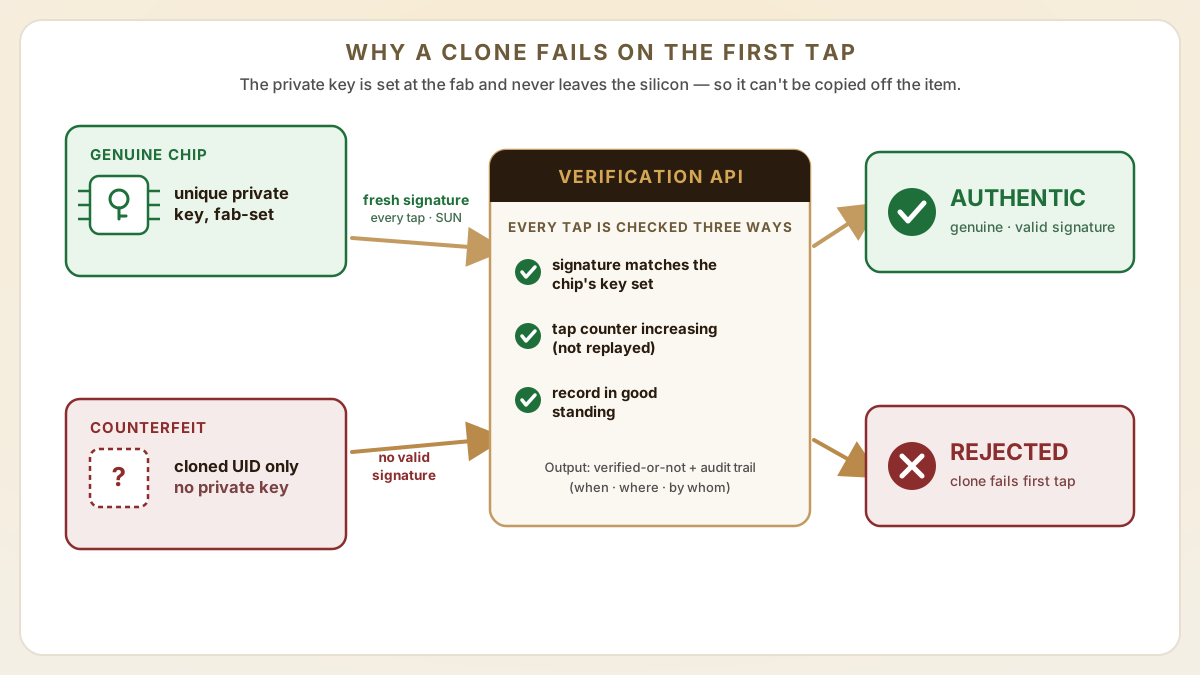
- Each authentic item carries a chip with a unique private key set during manufacturing. The chip computes a fresh cryptographic signature every tap (SUN authentication).
- Inspectors (customs, retailers, authentication services) tap the item and the smartphone sends the signature + tap counter to the brand's API.
- API verifies: signature matches the chip's key set, counter is monotonically increasing (not replayed), and the item's authenticity record is in good standing.
- Counterfeits fail because cloned UIDs cannot reproduce the cryptographic signature without the private key — which never leaves the chip and is fab-secret.
- Output: verified-or-not flag + audit trail (when, where, by whom). Brands aggregate verification logs to identify counterfeit hotspots and supply-chain leakage.
What anti-counterfeit RFID technologies exist?
Every vendor at the trade show will call their chip 'secure.' Some mean it in the cryptographic sense; others mean it has a 32-bit password a laptop can guess over a coffee break. Multiple chip families and authentication protocols compete for the brand-protection use case, and the right pick depends on unit value, supply-chain complexity and existing investment.
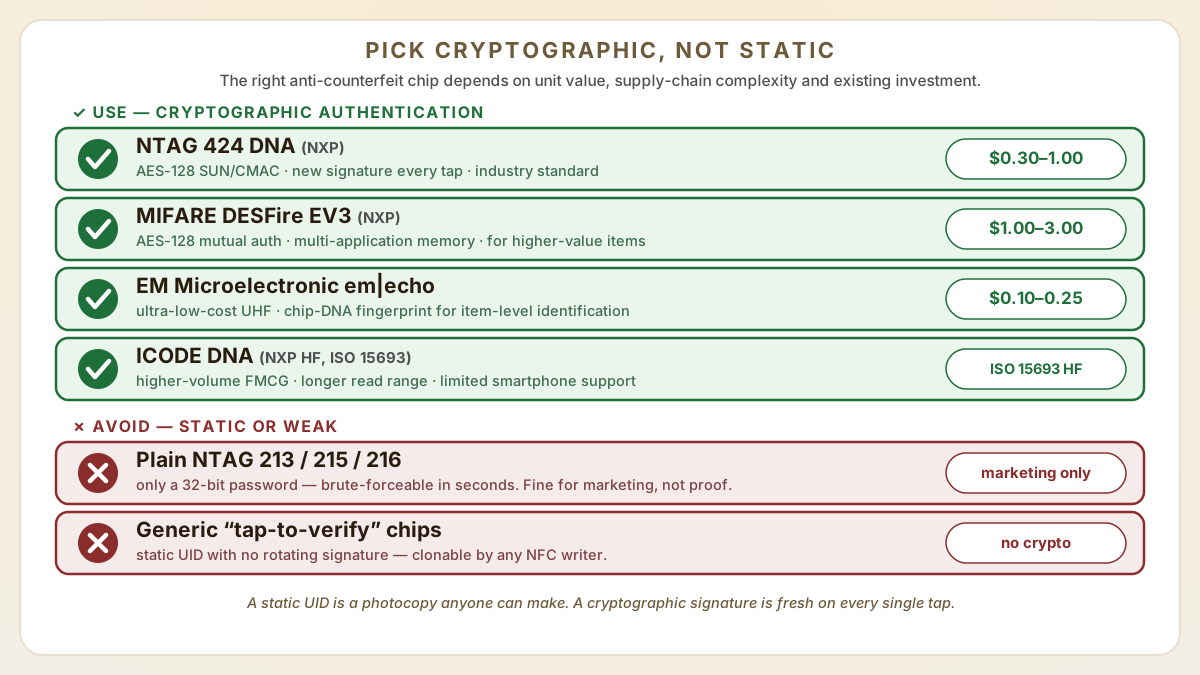
- NTAG 424 DNA (NXP): smartphone-tappable, AES-128 SUN/CMAC authentication, $0.30-1.00 per chip. Industry standard for consumer-product authentication.
- MIFARE DESFire EV3 (NXP): higher security (multi-application memory, AES-128 mutual auth), $1.00-3.00 per chip. Used for higher-value items where chip-cost is negligible.
- EM Microelectronic em|echo: ultra-low-cost UHF anti-counterfeit, $0.10-0.25 per tag. Chip-DNA fingerprint for cryptographic identification at item level.
- ICODE DNA (NXP HF, ISO 15693): for higher-volume FMCG anti-counterfeit. ISO 15693 read range slightly longer than NFC; smartphone support is more limited.
- Avoid: plain NTAG213/215/216 with only password protection, generic 'tap-to-verify' chips without rotating signatures, or static-UID chips that can be cloned with any NFC writer.
How do you build a counterfeit detection workflow?
You do not catch counterfeits by squinting harder at the packaging — the good fakes already passed that test at the factory that printed them. You catch them by checking the same hidden secret at the four points a fake has to survive: factory output, distribution, retail and consumer. Same chip at every gate; a different person doing the tapping.
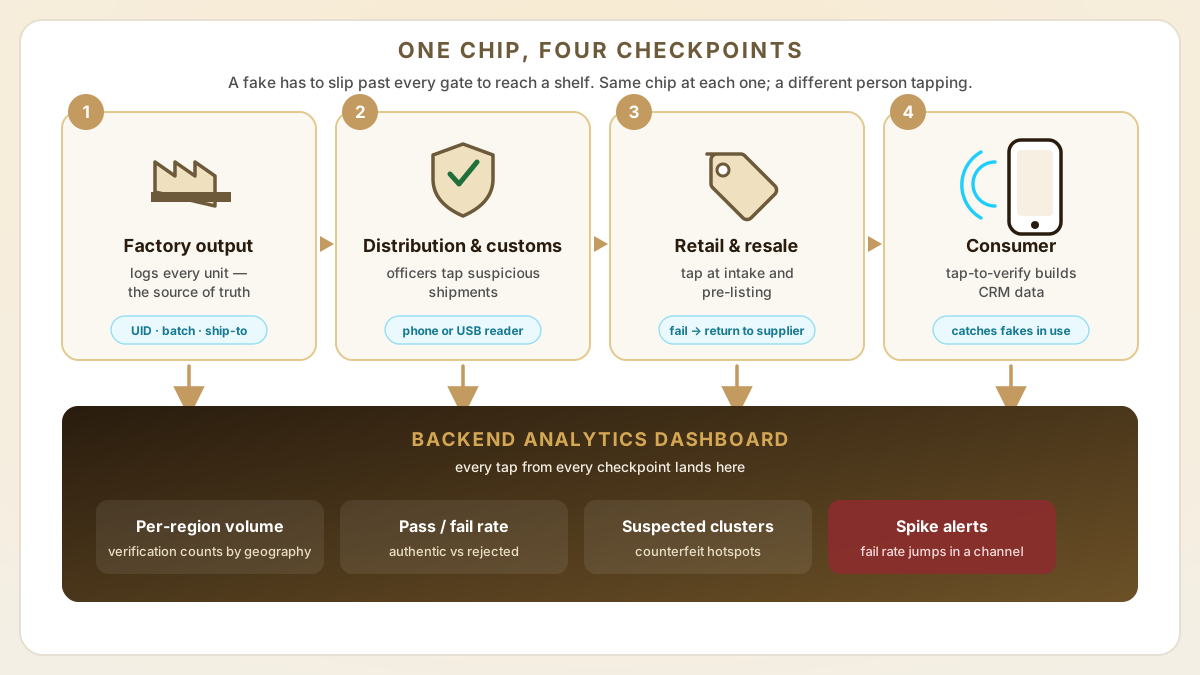
- Step 1Factory output: every shipped unit logged in the brand's authenticity backend with chip UID, batch, ship-to. This is the source of truth — items not in this list are by definition counterfeit.
- Step 2Distribution and customs: customs officers tap suspicious shipments with smartphone or USB NFC reader. API returns instant verification + alerts brand legal team if items are flagged.
- Step 3Retail and resale: physical store staff tap items at receiving and intake; resale platforms tap pre-listing. Failed verifications trigger return to supplier and investigation.
- Step 4Consumer: brands publish a tap-to-verify experience for end-consumers. Consumer taps build CRM data and surface counterfeits at point of attempted use.
- Step 5Backend analytics: dashboard showing per-region verification volume, pass/fail rate, suspected counterfeit clusters. Alerts when fail rate spikes in a specific channel or geography.
How big is the counterfeit problem and which categories drive RFID/NFC adoption?
Counterfeiting is not a rounding error in world trade — it is the single largest illicit-trade category on the planet. The OECD's 2022 Trade in Counterfeit Goods study put the trade at roughly $464 billion in 2019 (the most recent measured year), with broader market estimates extending toward $4 trillion when domestic counterfeit production and digital piracy are included. Where the RFID/NFC budget actually goes, though, varies dramatically — and it follows the seizure data.
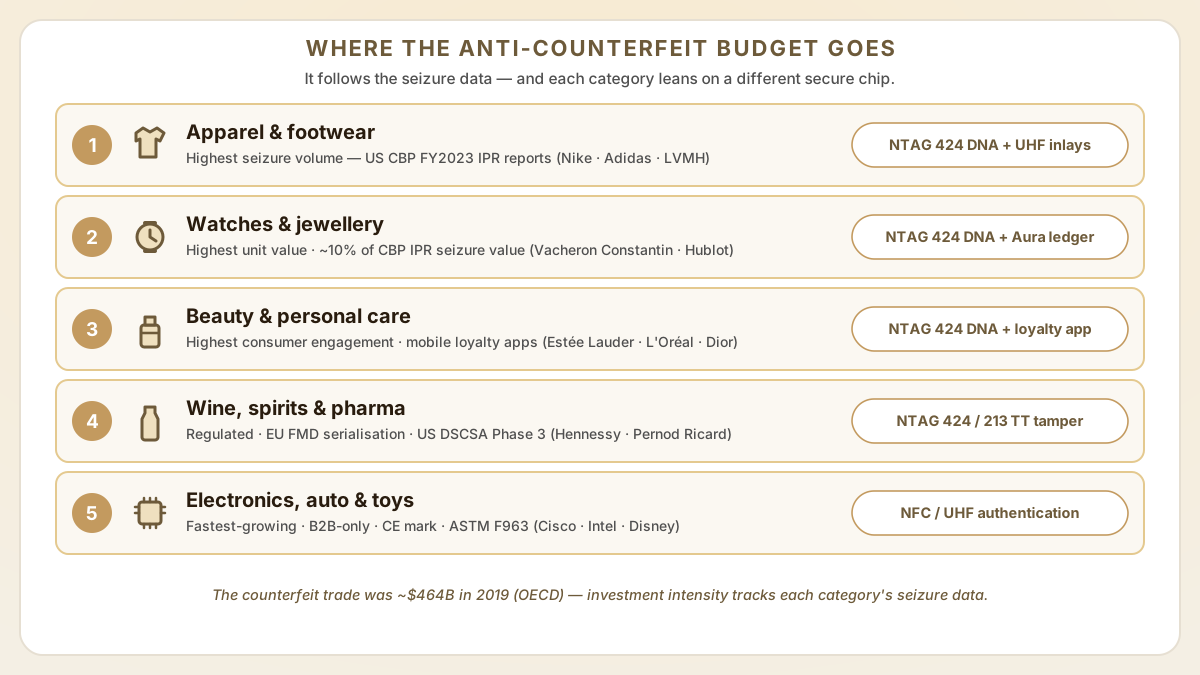
- Apparel and footwear lead seizure volume — US Customs & Border Protection FY2023 IPR seizure reports rank wearing apparel and footwear as the highest-volume seized counterfeit category. Brands like Nike, Adidas and LVMH have invested heaviest in NTAG 424 DNA SUN authentication and source-tagged UHF inlays at the manufacturing line.
- Watches and jewellery carry the highest unit-value counterfeit risk — Vacheron Constantin and Hublot embed NFC chips in case backs, and the LVMH-Prada-Cartier Aura Blockchain Consortium uses NTAG 424 DNA + Ethereum-based provenance with smartphone tap-to-verify. Counterfeit watches represent roughly 10% of CBP IPR seizure value despite low unit volume.
- Beauty and personal care drive the highest consumer-engagement use cases — Estée Lauder, L'Oréal and Dior pair NTAG 424 DNA with mobile loyalty apps. Counterfeits in this category often contain hazardous ingredients (mercury, formaldehyde, undeclared steroids), so failed-verification alerts feed directly into brand-protection and product-safety teams.
- Wine, spirits and pharmaceuticals are now regulated authentication categories — Hennessy, Moët-Hennessy and Pernod Ricard tag bottle closures with NXP NTAG 424 or 213 TT (Tag Tamper) chips that detect cap removal. EU FMD pharmaceutical serialisation since 2019 and the US DSCSA Phase 3 (effective Nov 2024) push prescription packaging toward unique GS1 SGTIN identifiers verified via 2D + RFID/NFC.
- Electronics, automotive parts and toys are the fastest-growing regulated categories — chip-counterfeit detection programs from Cisco, Intel and Honeywell, plus EU CE mark anti-counterfeit, are pulling NFC/UHF authentication into B2B-only supply chains where the consumer never sees the tag. Toy safety alerts via ICTI CARE and ASTM F963 align with NFC-tagged provenance for Disney, Hasbro and Mattel.
How do gray-market diversion and parallel-import detection work with RFID?
Outright counterfeits are only half the brand-protection problem, and arguably the easier half — a fake at least has the decency to be fake. The other half is gray-market diversion: authentic product sold outside its authorised channel or geography (cross-border arbitrage, distributor over-allocation resold to unauthorised retailers, employee theft re-entering the supply chain). RFID/NFC programmes catch diversion with the same chip as counterfeit detection, but with different backend logic.
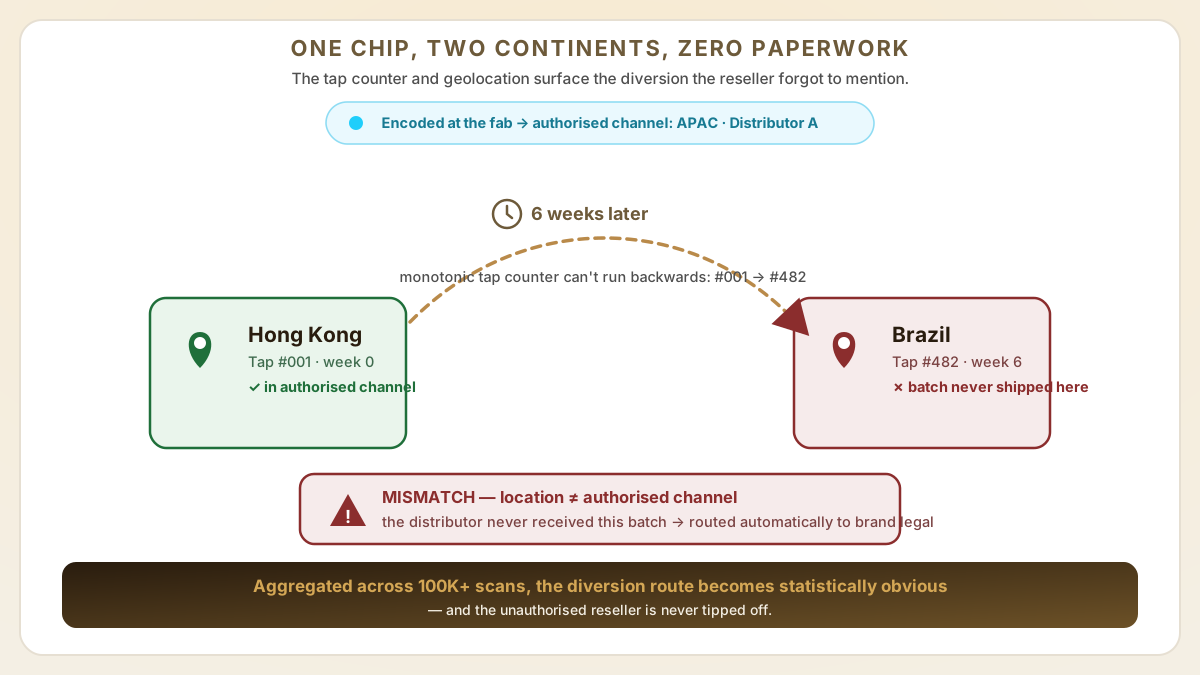
- Channel binding at encoding time — each chip is encoded with a 'authorised channel' attribute (region, distributor, account). When the consumer or retailer taps, the backend compares actual location/IP against authorised channel and flags mismatches without revealing this to the unauthorised reseller.
- Tap-counter geo-anomaly — NTAG 424 DNA's monotonic tap counter combined with smartphone IP geolocation surfaces cases where a chip first scans in Hong Kong then six weeks later in Brazil despite the Brazilian distributor never receiving that batch. Aggregated across 100K+ scans, diversion routes become statistically obvious.
- Authorised resale platform integration — StockX, GOAT, eBay Authenticity Guarantee, The RealReal and Vestiaire Collective offer NFC-based pre-listing verification for sneakers and handbags. A failed verification at intake either confirms a fake or surfaces a stolen authentic unit; either outcome routes to brand legal.
- Distributor performance scoring — backend analytics rank distributors by counterfeit-encounter rate, gray-market detection rate and chargeback frequency. Brand protection moves from per-incident response to data-driven supplier qualification — Decathlon, Inditex (Zara) and H&M run quarterly distributor scorecards on item-level RFID data.
- Customs partnership programmes — WCO IPM (Interface Public-Members), CBP e-Recordation and EU EUIPO Anti-Counterfeiting Network give customs officers a single login that surfaces brand-specific NFC verification endpoints. Brands publish their verification API to these portals at no cost and gain a global enforcement multiplier.
Useful next pages
Use these linked product, guide and comparison pages to keep the next click specific and practical.
Brand-protection NFC supply
NTAG 424 DNA tags, custom anti-counterfeit programs and authentication backends.
Authoritative anti-counterfeit references
Industry research, customs portals and brand-protection consortia for benchmarking your programme.
FAQ
Can counterfeiters reverse-engineer the chip's key?
Not without semiconductor-level attack equipment costing $1M+ — the kind of lab that does not coexist happily with a counterfeiting margin. NXP's secure chips (424 DNA, DESFire) use hardware key storage with anti-tamper protection rated EAL5+. Practical counterfeit operations cannot economically extract keys.
What if customs officers do not have NFC-capable phones?
Provide them USB NFC readers (~$30-80) plus a verification web URL. Most customs operations now have smartphones; for those that do not, the USB reader plugs into a laptop and accesses the same verification API.
Does anti-counterfeit RFID slow down packaging lines?
Less than you would fear. Inline tag application adds 0.5-2 seconds per unit at 60-300 units/minute lines. Modern applicators integrate into existing labelers without throughput loss. Pre-encoded tags (received already programmed) avoid the encoding-line bottleneck.
How many counterfeits do brands typically detect via NFC?
Varies by category. Luxury bag programs detect 0.5-3% counterfeit rate at retail intake. Cosmetics detect 1-5% at resale platforms. Pharmaceuticals detect <0.1% but each finding has high regulatory and patient-safety value.
Is the EU Digital Product Passport (ESPR) the same thing as a brand-protection RFID program?
They are complementary but distinct. The EU ESPR (Regulation 2024/1781) and the EU Battery Regulation (2023/1542) require a machine-readable data carrier per item — RFID/NFC, QR or watermark are all acceptable. Many brands deliberately use the same NTAG 424 DNA chip for both: the chip serves the consumer-facing DPP requirement (ingredients, repair instructions, recyclability) AND the brand's own anti-counterfeit verification. The DPP data is public; the cryptographic SUN signature stays inside the brand's authentication API. One chip, two regulatory and commercial use cases.
How much does a full anti-counterfeit RFID/NFC programme cost to run?
For a brand shipping 1-5 million units annually, expect roughly $0.30-$1.20 per chip in volume (NTAG 424 DNA wet inlay or hard-tag variant), $50K-$250K per year for the verification backend (authentication API + analytics dashboard, either in-house or via vendors like Authena, Smart Cosmos, Original4Sure, EVRYTHNG/Avery Dennison Atma.io, Adent or NXP MIFARE Plus EV2 backend), $20K-$100K per year for legal enforcement integration (customs, takedown, marketplace removal). Add $5K-$30K for the consumer mobile experience. ROI is typically measured in counterfeit-loss avoided, distributor accountability gained and direct consumer CRM value rather than tag-cost recovery.
Proud Tek is a Shenzhen-based RFID & NFC manufacturer supplying hotel chains, transit operators, event venues and retail brands worldwide. Every order includes free samples, RF testing and dedicated project support.
Get a Quick Quote
Tell us about your project and we'll respond within one business day. Fields marked (asterisk) are required.