
Retail Operations
Department Store RFID
Smart Shelf and EAS
Quick answer
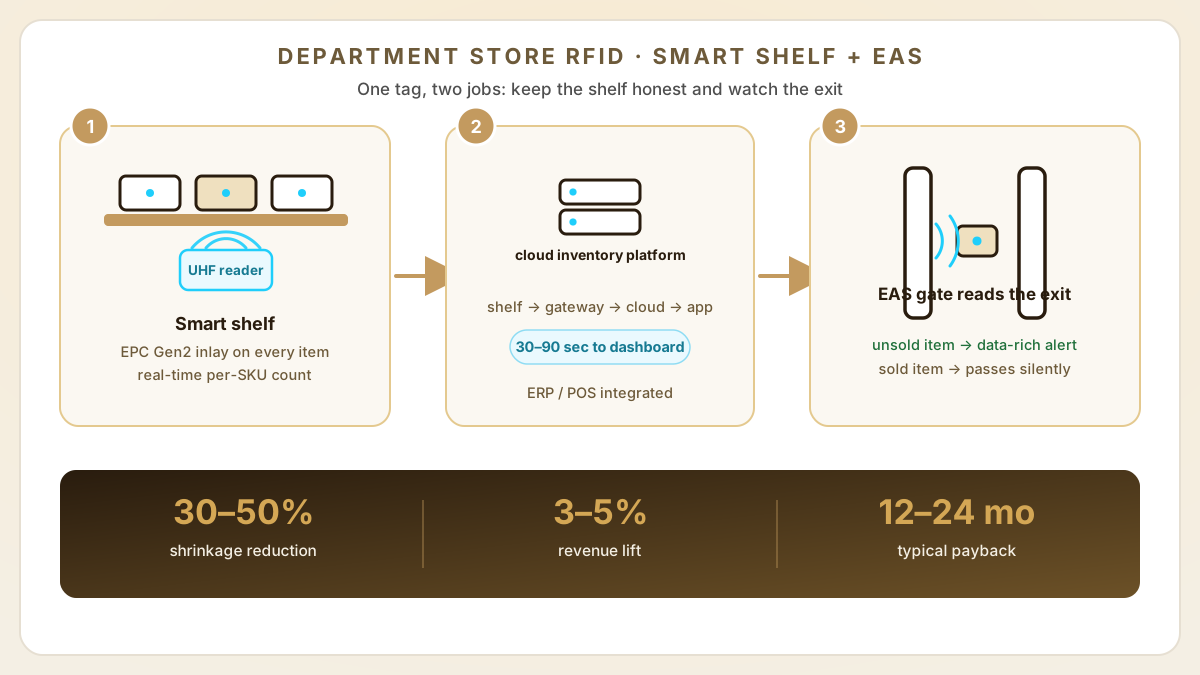
Department stores integrate RFID with smart shelves and EAS (Electronic Article Surveillance) gates. The goal is unified inventory visibility and theft prevention — stores running both report 30-50% shrinkage reduction and 3-5% revenue lift. Architecture choices affect both shrinkage data and customer experience.
- Smart shelves use UHF RFID readers under shelving to detect item-level stock in near-real-time, eliminating the need for daily manual scans.
- EAS-RFID integration moves theft detection from binary alarm to data-rich event capture — store managers see what was taken, when, and which checkout lane the perpetrator passed.
- Department stores running both report 30-50% shrinkage reduction and 3-5% revenue lift from preventing out-of-stocks on high-velocity SKUs.
At a glance
Use these short answers to decide whether this page matches the project before moving into the detail.
Key takeaway
Smart shelves use UHF RFID readers under shelving to detect item-level stock in near-real-time, eliminating the need for daily manual scans.
How do smart shelves work in department stores?
Every department store carries a number nobody fully trusts: the one in the inventory system. A customer asks whether the blue sweater comes in a medium, a staffer check...
Next step
Ready to move forward? Start your inquiry to get specific answers for this project.
Get smart-shelf RFID quoteHow do smart shelves work in department stores?
Every department store carries a number nobody fully trusts: the one in the inventory system. A customer asks whether the blue sweater comes in a medium, a staffer checks the screen, the screen says yes — and the stock turns out to be split between a fitting room, a stockroom cart, and a shopping bag already at the register. Closing the gap between what the system believes and what is actually on the floor is the entire job. Smart shelves embed UHF RFID readers and antennas beneath retail shelving, continuously inventorying items placed on or removed from the shelf. The output is a real-time per-SKU stock count visible to staff and the inventory system.
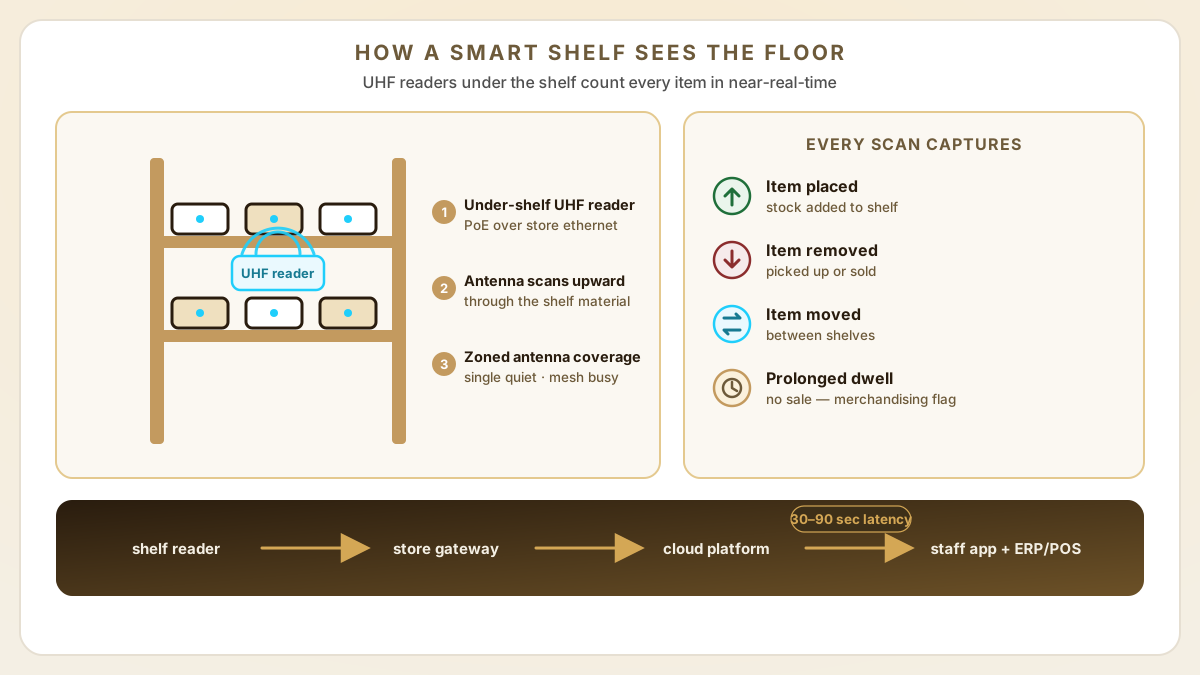
- Reader placement: low-power UHF readers mounted under shelf or behind shelf-back panel. Antennas scan upward through shelf material; small low-volume areas use single antenna, busy zones use multi-antenna mesh.
- Tag specification: standard UHF EPC Gen2 inlays attached to each item via swing tag, sewn-in label or embedded in product packaging.
- Event types captured: item placed, item removed, item moved between shelves, prolonged dwell on shelf without sale (potential merchandising issue).
- Data flow: shelf reader → store gateway → cloud inventory platform → store-staff mobile app + ERP/POS integration. Latency 30-90 seconds from shelf event to dashboard.
- Power and connectivity: PoE-powered readers run off store ethernet; battery-powered shelves exist for legacy stores without low-voltage cabling but require quarterly battery service.
How does RFID enhance EAS gate detection?
Traditional EAS gates trigger a binary alarm when a security tag passes — which makes them excellent at announcing that something is wrong and useless at saying what it was or who walked out with it. RFID-enhanced EAS captures the chip UID at the gate, identifying the specific item, time, and direction of pass.
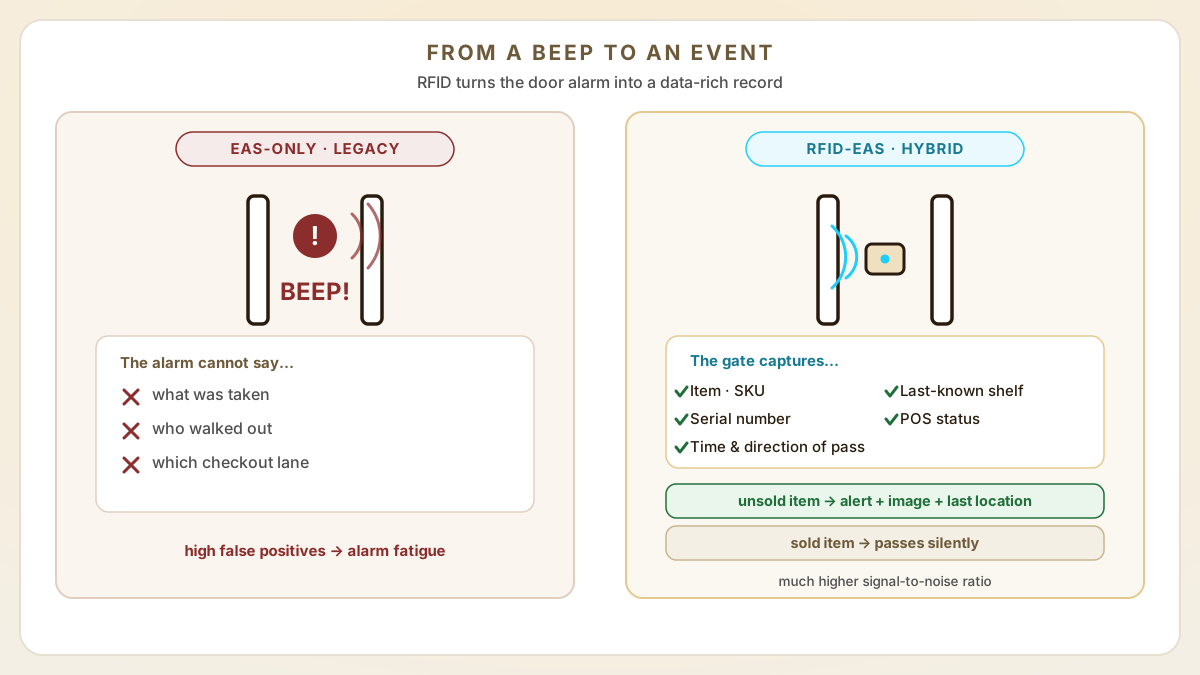
- EAS-only legacy: a generic acousto-magnetic or RF tag triggers a beeper at the door. Operators do not know what was taken; alarm fatigue from false positives is high.
- RFID-EAS hybrid: same gate location, but UHF reader captures the SKU and item serial. Backend correlates with last-known shelf location and POS transactions.
- Data outputs: real-time alert to store manager with item description, image and last-known location. Backend records the theft event for daily/weekly shrinkage reporting.
- Reduced false alarm: pass-through alarm only fires when an unsold item is detected (chip not flagged 'sold' in POS). Sold items pass silently — much higher signal-to-noise ratio.
- Investigation support: timestamped video footage from store cameras can be queried by EAS event time, accelerating investigation of organized retail crime.
What ROI do department stores see from smart-shelf + EAS?
Ask a CFO to fund an RFID rollout and you will, sooner or later, be asked to translate 'inventory visibility' into actual money. Fair question. The tidy answer is that unified smart-shelf + EAS reports measurable wins on three financial dimensions a finance team already watches — shrink, stock, and staff time — and the numbers are not shy. The benchmarks below come from public 2024-2026 retail-industry reporting.
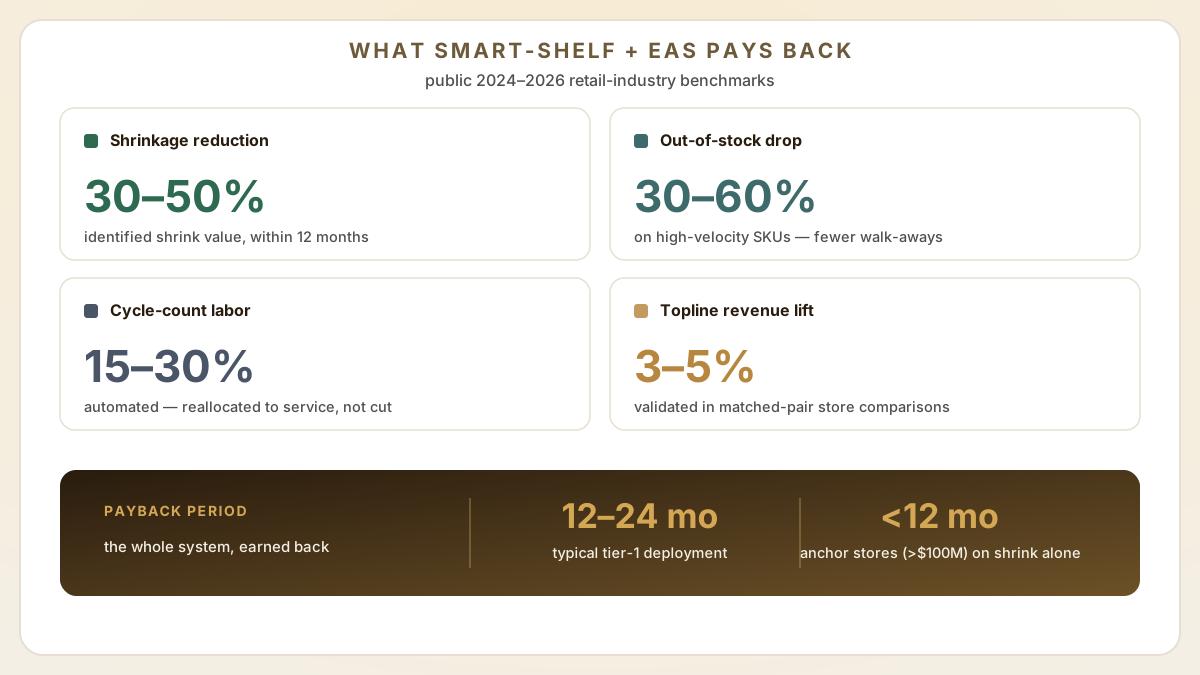
- Shrinkage reduction: 30-50% drop in identified shrinkage value within 12 months. Driven by pre-theft detection (item leaves shelf without POS event) and post-theft attribution (caught at gate).
- Out-of-stock reduction: 30-60% drop in OOS incidents on high-velocity SKUs. Smart shelf alerts staff when a peg or shelf zone falls below threshold, prompting replenishment before the customer abandonment.
- Labor reallocation: 15-30% reduction in cycle-counting labor (now automated) frees staff for customer service. Most stores reinvest the savings in service vs. cutting headcount.
- Revenue lift: 3-5% topline revenue lift from reduced OOS + increased customer-service availability, validated in matched-pair store comparisons.
- Payback period: 12-24 months typical for tier-1 department-store deployments. Anchor stores (>$100M annual revenue) often see <12 month payback driven by shrinkage savings alone.
Which EAS systems integrate cleanly with UHF RFID — vendor matrix and retrofit math
Nobody schedules a fun afternoon auditing the security pedestals bolted to their front doors, but that unglamorous hardware quietly decides whether the RFID upgrade is a tidy bolt-on or a demolition project. Most department stores run EAS gates from one of four incumbents. Each handles RFID retrofit differently and the choice influences total deployment cost, gate footprint and ongoing licensing. The decision usually starts with the brand of EAS already installed, since rip-and-replace destroys most of the ROI.
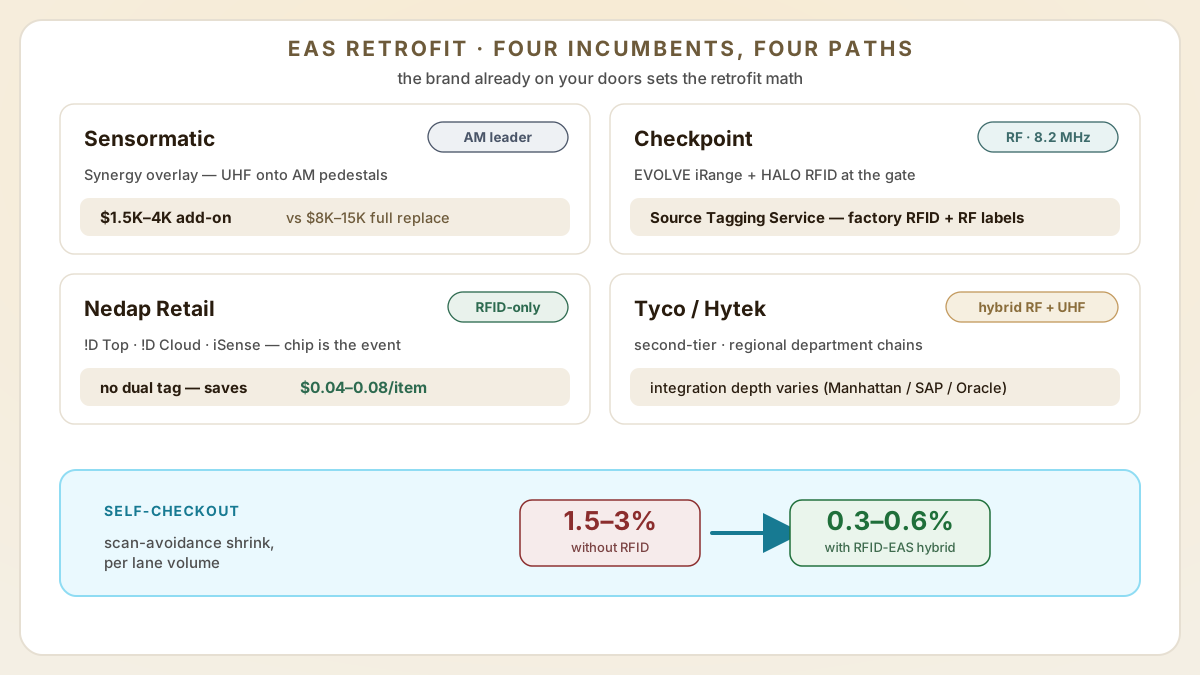
- Sensormatic Solutions (Johnson Controls) — historic AM (acousto-magnetic) leader, dominant at Macy's, Kohl's, JCPenney, Walmart and Target. Their Synergy RFID overlay adds UHF reader modules onto existing AM pedestals; combined Sensormatic Sensor Hub captures EAS alarm + RFID EPC + camera trigger in a single event. Add-on retrofit runs roughly $1.5K-4K per gate vs $8K-15K for full Synergy replacement.
- Checkpoint Systems (CCL Industries) — RF (radio frequency, 8.2 MHz) tradition with strong apparel-mandate footprint. Their EVOLVE iRange + HALO RFID combine RF EAS with UHF RFID at gate; Source Tagging Service applies RFID + RF labels at the factory and ships shelf-ready. Strong fit for Inditex, H&M and other source-tagging supply chains.
- Nedap Retail — challenger with the !D Top, !D Cloud and iSense product family that integrates RFID-only EAS (no separate AM/RF tag — the UHF chip itself is the security event source). Burberry, Decathlon and Zara have published Nedap reference deployments; pricing skews higher per gate but eliminates the dual-tag cost ($0.04-0.08 per item saved).
- Tyco Retail Solutions / Hytek — second-tier alternatives often used in regional department-store chains. Most run hybrid RF + UHF stacks; integration depth with Manhattan Associates, SAP IS-Retail or Oracle Retail XStore varies and is the binding factor for full SKU-level shrink reporting.
- Self-checkout integration — at NCR, Diebold-Nixdorf, Toshiba Global Commerce and Zebra SCO lanes, RFID-EAS integration matters most. Without RFID, scan-avoidance shrinkage runs 1.5-3% of self-checkout volume per Loss Prevention Research Council 2024 data. With RFID-EAS hybrid, the same lanes cut scan-avoidance shrink to 0.3-0.6% by detecting unscanned EPC at lane exit.
Real-world department store deployments — Macy's, Decathlon, Target, Bloomingdale's, Lululemon
When your own pilot's results look too flattering to put in front of the board, it helps that the giants have already published theirs. Tier-1 department-store and specialty-retail RFID deployments are well-documented in earnings calls, NRF Big Show keynotes and trade press. The numbers below come from public sources and let you sanity-check internal business cases.
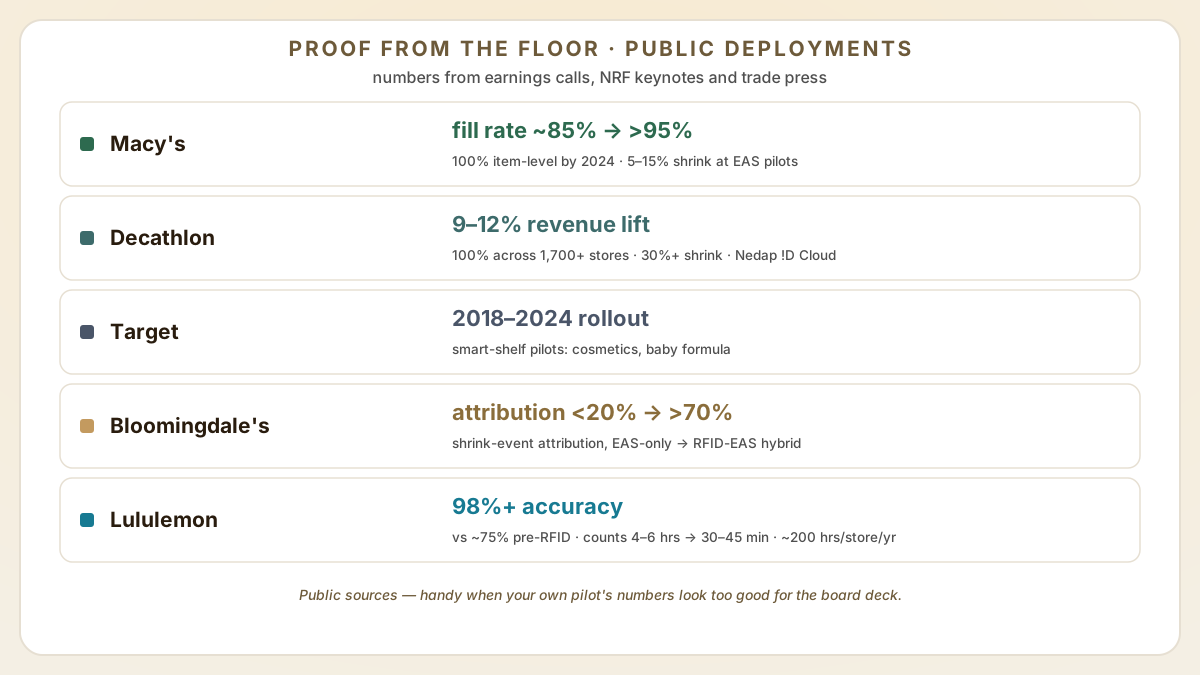
- Macy's — full 100% item-level UHF tagging across all stores by 2024 via the Macy's Vendor Compliance program. Public statements credit RFID with single-digit-percentage inventory-accuracy improvement (driving omnichannel BOPIS and ship-from-store fill rate from ~85% to >95%) and 5-15% shrink reduction at piloted EAS-integrated stores. Avery Dennison and SML supply most of the source-tagged inlays.
- Decathlon — first European retailer to mandate 100% item-level RFID across all 1,700+ stores worldwide. Public statements (Decathlon Sustainability Report, RAIN Alliance case studies) cite 9-12% revenue lift attributed to RFID-driven inventory accuracy, and 30%+ shrinkage reduction since rollout. Decathlon uses Nedap !D Cloud for EAS-RFID hybrid gates.
- Target — RFID rollout (2018-2024) tied to T2/T3 supplier-mandate scope expansion. Internal Target Connect documentation now requires UHF inlays on apparel, home goods, electronics accessories and shoes. Smart-shelf pilots running in select Target stores for high-shrink, high-velocity categories (cosmetics, baby formula).
- Bloomingdale's (Macy's Inc) — early Sensormatic Synergy RFID-EAS combo stores (Manhattan flagship, Century City) report shrink-event-attribution improving from <20% (EAS-only) to >70% (RFID-EAS hybrid). Investigations leverage Genetec/Avigilon video time-stamped to RFID gate events.
- Lululemon — store-level RFID shows 98%+ inventory accuracy (vs ~75% pre-RFID per ARC Advisory benchmarks for athleisure). Cycle counts cut from 4-6 hours weekly to 30-45 minutes, redirecting roughly 200 hours/store/year to selling-floor coverage. Suppliers source-tag at point of manufacture using SML or Avery inlays.
Useful next pages
Use these linked product, guide and comparison pages to keep the next click specific and practical.
Department-store RFID supply
Smart-shelf inlays, EAS-compatible labels, and reader gateways.
EAS and RFID-EAS vendor references
Authoritative product pages from the four EAS incumbents and RAIN Alliance retail case studies.
FAQ
Can I add RFID to existing EAS gates without replacing them?
Yes for many gate brands (Sensormatic, Checkpoint, Nedap). Add-on UHF reader modules clip onto existing gate frames and share the alarm output. Full replacement runs $5K-15K per gate; add-on retrofit $1.5K-4K.
Do smart shelves work with all garment types?
Best performance is on flat-folded apparel (T-shirts, sweaters). Hangs (suits, dresses) need specialty antenna arrangements due to vertical orientation. Hard-goods (shoes, handbags) use different shelf-reader topology with overhead antennas.
What's the typical reader cost per shelf?
$300-800 per shelf for low-end consumer-electronics-style smart shelf; $1,500-3,500 per shelf for retail-grade UHF reader with multiple antennas. Cost amortizes over 5-7 year hardware life.
Does smart shelf data feed Walmart/Target compliance reporting?
No — that's a separate data flow. Smart shelf is for in-store ops. Compliance reporting uses ASN-driven SGTIN data tied to truck shipments. Both can run on the same tags but feed different backend systems.
If we already have Sensormatic AM (acousto-magnetic) tags, do we have to switch to RFID-only EAS?
No. The dominant deployment pattern in 2026 is hybrid AM + UHF, not RFID-only. The reason: AM/RF EAS tags catch shoplifters who walk straight through the gate with the tag still attached, while RFID adds SKU-level event capture, faster floor inventory and shrink-event attribution. Sensormatic Synergy and Checkpoint EVOLVE both ship as overlays that bolt UHF readers onto existing AM/RF pedestals. You add roughly $0.04-$0.08 per item for the dual tag (or use Sensormatic AMS tags that combine both technologies in one inlay) and avoid scrapping pedestal infrastructure that has 5-10 years of useful life. RFID-only EAS (Nedap !D Top, Checkpoint HALO Visium) is a strong choice when you are renovating a store or opening a new one.
How accurate is the smart-shelf inventory count compared to a manual cycle count?
RAIN Alliance and ARC Advisory benchmarks for properly tuned smart-shelf deployments show 95-99% inventory accuracy versus 60-75% for manual cycle counts in apparel and footwear, and 85-92% in cosmetics or jewellery (smaller items, more shielding). Accuracy depends heavily on antenna density (typically 1 reader per 4-8 linear meters of shelf), tag-to-product orientation (flat-fold beats hung-vertical), and read-window confirmation logic (typically 3-of-5 reads in a 60-second window before a stock count is updated). Stores running source-tagged items with consistent tag placement see the highest numbers; stores tagging in-store after delivery see the lowest.
Proud Tek is a Shenzhen-based RFID & NFC manufacturer supplying hotel chains, transit operators, event venues and retail brands worldwide. Every order includes free samples, RF testing and dedicated project support.
Get a Quick Quote
Tell us about your project and we'll respond within one business day. Fields marked (asterisk) are required.