
UHF RFID Labels
UHF RFID Paper Label
Printable Adhesive Roll

Quick answer
UHF RFID paper labels embed a UHF inlay under printable paper stock, giving 1-8 m read range with single-pass print-and-encode on RFID printers. Chip options span Impinj Monza R6 / M730 / M750 / NXP UCODE 8 / 9 on Zebra ZT411, SATO CL4NX Plus and Printronix T6000 printers, with Auburn ARC Categories A/B/C/D/D1 covered. Five standard sizes run from 4×6 in shipping labels to 2×1 in jewelry labels, blank or pre-printed.
- Print and encode in one pass — compatible with Zebra ZT411 / ZT621 RFID, SATO CL4NX Plus, Printronix T6000, TSC and other RFID label printers. Single-pass workflow with 99.2%+ first-pass encode success.
- Read range 1-8 metres enables automated inventory counting, receiving and shipping verification. Auburn ARC Category A (apparel) + B (CPG) + C (freight) + D (dense-pack) certified per chip + label combo.
- Available as blank rolls for on-site printing or pre-printed with your barcode, logo and product data. Five standard sizes (4×6, 4×4, 4×2, 3×1, 2×1 in) + custom dimensions. Cold-chain adhesive option (−30 °C to +60 °C).
Used in these industries
Deployments where this product is referenced on our industry landing pages.
At a glance
Use these short answers to decide whether this page matches the project before moving into the detail.
Frequency + chip silicon
UHF 860-960 MHz globally tuned RAIN per ISO/IEC 18000-63:2015 Impinj Monza R6 — entry-tier general-purpose
Standard label sizes
4×6 in (100×150 mm) — shipping / pallet labels (M750 96 mm) 4×4 in (100×100 mm) — carton labels (M730 70 mm)
Next step
Ready to move forward? Start your inquiry to get specific answers for this project.
Request RFID label quote- Face stock options
-
- Thermal-transfer paper — long-life print (years), requires ribbon
- Direct-thermal paper — short-life print (3-12 months), no ribbon
- Synthetic PET / PP — moisture / chemical resistant
- Coated paper — glossy / matte premium finish
- Recyclable / FSC-certified — sustainability-programme compliant
- Adhesive options
-
- Acrylic permanent — general-purpose smooth surfaces
- Cold-chain rated (−30 °C to +60 °C) — refrigerated / frozen storage
- Aggressive permanent — corrugated / wood / textured
- Removable / repositionable — temporary application
- FDA 21 CFR 175.105 indirect-food-contact PSA option
- Printer compatibility
-
- Zebra ZT411 RFID / ZT421 RFID / ZT621 RFID
- SATO CL4NX Plus + AT-Plus + RFID series
- Printronix Auto ID T6000 + T8000 RFID
- TSC + Honeywell + cab + Datamax RFID printers
- Inlay X-offset matched to printer antenna sweet spot
- Test roll provided before full production
- Auburn ARC certification matrix
-
- Category A — apparel / on-body free air (4×2 / 3×1 in)
- Category B — CPG in corrugated (4×4 in M730)
- Category C — mixed case in freight (4×6 in M750)
- Category D / D1 — high-density dense-pack (4×6 in M750)
- Walmart T2/T3 + Target + Kroger + Home Depot mandate alignment
- Per-chip + per-label-size ARC certificate available under NDA
- EPC encoding standards
-
- GS1 SGTIN-96 — serialised GTIN per GS1 EPC TDS 2.0
- GS1 SSCC-96 — Serial Shipping Container Code (pallet / carton)
- GS1 GRAI-96 — Global Returnable Asset Identifier
- GS1 GIAI-96 — Global Individual Asset Identifier
- GS1 Digital Link URI in user memory for Sunrise 2027 alignment
- Custom EPC for closed-loop supply chains
- Read-rate performance
-
- 1-2 m read range (2×1 in jewelry / cosmetics)
- 1-3 m read range (3×1 in small item)
- 2-5 m read range (4×2 in product / item)
- 3-8 m read range (4×4 in carton)
- 5-10 m read range (4×6 in shipping / pallet)
- 99.2%+ first-pass encode success on matched printer
- Application verticals
-
- Retail item-level — price + markdown + return processing
- Warehouse + logistics — shipping + dock-door receiving
- Manufacturing WIP — work-in-progress at each production stage
- Healthcare — specimen + medication + asset labels
- Food + beverage — case + pallet supply-chain traceability
- Cold-chain — frozen-food + pharmaceutical refrigerated
- Blank vs pre-printed options
-
- Blank rolls — on-site print + encode (MOQ 5,000)
- Pre-printed rolls — fixed-design at our factory (MOQ 10,000)
- Pre-encoded blank face — for on-site overprint
- Variable-data digital print — per-label uniqueness from MOQ 1,000
- Holographic foil + spot UV + matte finish security options
- Standards + compliance
-
- ISO/IEC 18000-63:2015 EPC Gen2v2 RAIN RFID
- GS1 EPC TDS 2.0 + Digital Link URI 1.3
- FCC Part 15.247 (US) + ETSI EN 302 208 (EU)
- Auburn ARC Categories A/B/C/D/D1
- GS1 Sunrise 2027 + EU ESPR 2024/1781 forward-compat
- RoHS / REACH compliant materials
- Procurement
-
- MOQ 5,000 (blank rolls) / 10,000 (pre-printed)
- Lead time 12-18 business days
- Pre-encoded EPC + per-label CSV
- Per-printer-model inlay X-offset optimisation
- Test roll before production for Zebra / SATO / Printronix qualification
- Chip-comparison matrix delivered with every quote
- Typical pricing
-
USD 0.08–0.25 /pc @ 10k+ (typical FOB Shenzhen range) — firm quote in one business day.
Commercial terms
- MOQ
- Varies by SKU — stock items from 100 pcs; custom production typically 200-1,000 pcs
- Lead time
- Production 2-3 weeks after artwork and encoding sign-off; reorders on a 3-4 week cycle
- Samples
- Free samples and RF test report with every order; courier at customer cost
- Payment
- 50% T/T deposit, 50% before shipment; Net 30/60 for established accounts; LC for large orders
- Shipping
- FOB Shenzhen / Yantian; DHL, FedEx or EMS air freight; sea LCL / FCL for volume
- Response
- Itemized quote within one business day, Mon-Fri (UTC+8)
Challenges procurement teams face when sourcing UHF RFID paper labels
- Inlay placement incompatible with printer RFID antenna position. A warehouse manager ordering RFID labels from an unfamiliar supplier finds that the inlay is positioned 10 mm off-centre from the Zebra ZT411's antenna sweet spot, causing 40% encode failures and voided labels on the print-and-encode line.
- Wrong label size for the application. A 4×6 inch label that works for pallet shipping labels is specified for individual item labels on apparel, creating a label that physically does not fit on the garment's care label area; the buyer pays for a full roll before discovering the mismatch.
- Thermal-transfer vs. direct-thermal confusion — a buyer ordering direct thermal labels for a long-life asset tracking programme receives prints that fade to illegibility within 8 months of outdoor exposure; the application required thermal transfer media but was never discussed with the supplier.
- Adhesive failure on cartons. A food and beverage company applying RFID labels to corrugated cartons in a cold chain (2 °C storage) finds 20% of labels peeling at the corners within 48 hours because the adhesive was not cold-temperature rated.
- No chip option guidance. Buyers unsure whether to specify Impinj Monza R6 vs. M730 vs. NXP UCODE 9 for their specific reader model make an arbitrary choice and later discover read-rate issues that require a costly label re-run.
How Proud Tek solves UHF RFID paper label sourcing problems
Generic RFID label supplier — no printer match / wrong adhesive / no chip guidance
- Inlay 10 mm off-centre from Zebra ZT411 sweet spot → 40% encode failures
- Wrong size: 4×6 in for apparel → physical fit failure on garment
- Direct-thermal for outdoor asset → print fades to illegibility in 8 months
- 20% peeling failure on corrugated at 2 °C cold-chain (wrong adhesive)
- Arbitrary chip choice → read-rate issues + costly label re-run
Proud Tek with inlay X-offset matching + cold-chain adhesive + chip matrix (this page)
- Printer-model match: 99.2%+ first-pass encode success on matched inlay
- Application-specific sizing consultation: 5 standard sizes + custom
- Thermal-transfer for long-life + direct-thermal for short-life — written rec
- Cold-chain adhesive (−30 °C to +60 °C) standard option, no upcharge
- Chip-comparison matrix per quote: M730 vs M750 vs UCODE 9 sensitivity + memory
- Printer model compatibility check before production — buyers specify their printer brand and model; Proud Tek matches the label dimensions, core size, and inlay X-offset to that printer's RFID antenna position. Confirmed with a test roll before the full order.
- Application-specific label sizing consultation — we ask about the item, container, and application method, then recommend the correct label dimensions. No guesswork, no wasted first rolls.
- Explicit thermal-transfer vs. direct-thermal recommendation — buyers describe their print environment and label lifespan, and we recommend the correct face stock with written justification, preventing the short-life / long-life mismatch.
- Cold-chain adhesive as a standard option — adhesive grades covering −30 to +60 °C are available; buyers specify their storage temperature range and we select the appropriate adhesive without an upcharge.
- Chip comparison matrix included with every quote — a one-page comparison of sensitivity, EPC memory, and reader compatibility for the top 3-4 chip options relevant to the buyer's application. No blind chip selection.
Per-tap data published from a Proud Tek UHF RFID paper label
- Auburn ARC Category A/B/C/D/D1 certified per chip + label-size combo.
- EPC SGTIN-96: GS1 EPC TDS 2.0 (header 0x30 + filter + partition + GS1 Company Prefix + item ref + 38-bit serial).
- GS1 Digital Link URI in user memory: Sunrise 2027 + EU ESPR DPP forward-compat.
- Walmart T2/T3 + Target + Kroger + Home Depot mandate alignment.
- 5 standard label sizes + 5 chip silicon options + 5 face-stock + 5 adhesive grades.
How UHF RFID labels work
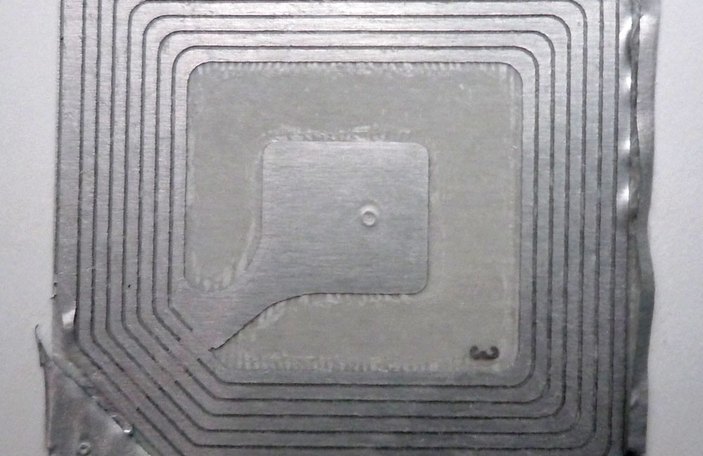
A UHF RFID label is constructed by laminating a UHF RFID inlay (chip + antenna on PET film) between a printable paper face stock and a pressure-sensitive adhesive layer. The resulting label looks and feels like a standard barcode label but contains an embedded RFID transponder.
RFID label printers (like the Zebra ZT411 RFID or SATO CL4NX Plus) print the human-readable barcode and text on the face stock while simultaneously writing EPC data to the RFID chip — all in a single pass at production-line speeds. This dual encoding ensures that the barcode and RFID data match for each item.
Label size and inlay options
| Label size | Inlay | Read range | Primary use |
|---|---|---|---|
| 4×6 in (100×150 mm) | Impinj M750 (96 mm) | 5-10 m | Shipping / pallet labels |
| 4×4 in (100×100 mm) | Impinj M730 (70 mm) | 3-8 m | Carton labels |
| 4×2 in (100×50 mm) | Impinj M730 (50 mm) | 2-5 m | Product / item labels |
| 3×1 in (76×25 mm) | NXP UCODE 9 (27 mm) | 1-3 m | Small item labels |
| 2×1 in (50×25 mm) | Impinj M730 (27 mm) | 1-2 m | Jewelry / cosmetics |
Applications
- Retail item-level tagging — print on demand at the store or distribution centre for price labels, markdown labels and return processing.
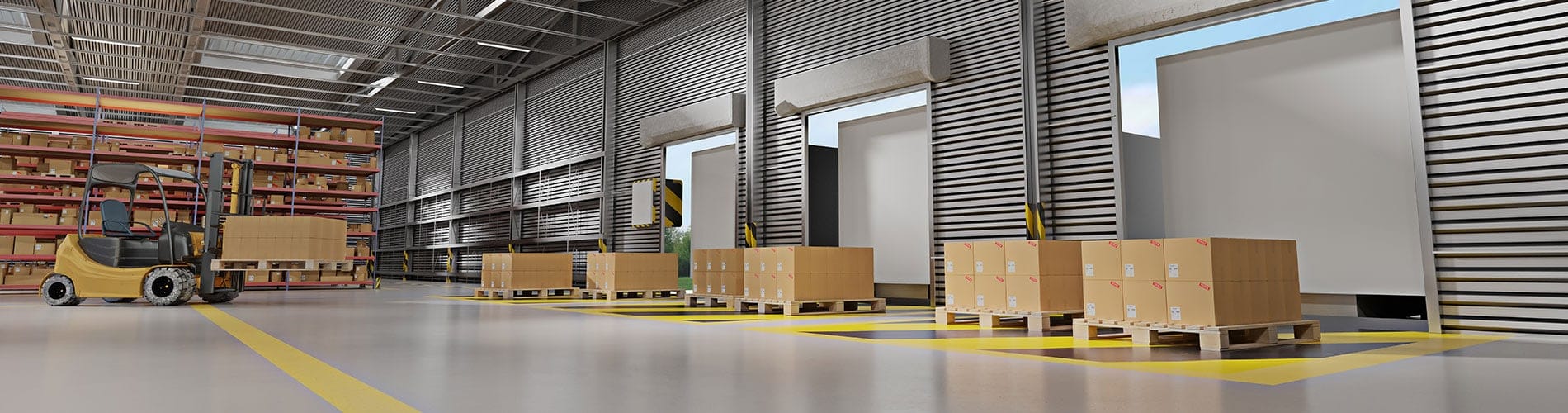
- Warehouse and logistics — shipping labels with RFID for automated dock-door receiving and shipment verification.
- Manufacturing — work-in-progress tracking labels applied at each production stage.
- Healthcare — specimen labels, medication tracking and asset labels with RFID for automated inventory.
- Food and beverage — case and pallet labels for supply chain traceability and recall management.
Blank vs pre-printed labels
| Option | Blank rolls | Pre-printed rolls |
|---|---|---|
| Printing | You print on-site with RFID printer | We pre-print your design at our factory |
| Encoding | Your printer encodes during printing | Pre-encoded or encoded on-site |
| Flexibility | Change content per label | Fixed design, variable data via overprint |
| Best for | On-demand labelling, short runs | High-volume fixed-format labels |
| MOQ | 5,000 labels | 10,000 labels |
UHF RFID paper label timeline — from generic blank roll to printer-matched ARC-certified deployment
- 1989-2005 — Linear barcode + thermal printer baseline
GS1-128 + thermal-transfer paper label baseline established. Zebra + SATO + Printronix dominate industrial label-printer market with non-RFID workflows.
- 2005 — Walmart RFID supplier mandate launch
Walmart introduces first major-retailer RFID supplier mandate. Print-and-encode workflow on Zebra RFID printers becomes industry pattern. Item-level + pallet-level RFID converge on paper-label form factor.
- 2010 — Auburn University RFID Lab + ARC categories
Auburn University RFID Lab founded + ARC test categories (A apparel / B CPG / C freight / D dense-pack) ratified. Per-chip + per-label-size certification becomes universal industry expectation.
- 2014-2018 — Impinj M700 + NXP UCODE 9 chip maturity
Impinj M730 / M750 / M770 + NXP UCODE 9 reach paper-label-compatible cost + sensitivity. ISO/IEC 18000-63:2015 EPC Gen2v2 ratified. GS1 EPC TDS 2.0 publishes SGTIN-96 + SSCC-96 + GRAI / GIAI binary encoding.
- 2018-2020 — Zebra ZT411 RFID + SATO CL4NX Plus printer maturity
Zebra ZT411 RFID + ZT621 RFID + SATO CL4NX Plus + Printronix T6000 RFID printers reach print-and-encode reliability + cost-parity with non-RFID printers. Inlay X-offset matching becomes standard procurement requirement.
- 2020-2022 — Cold-chain RFID + pharmaceutical + WIP scale
Cold-chain adhesive grades (−30 °C to +60 °C) + pharmaceutical USP <661.1>-compatible substrates + manufacturing WIP tracking expand UHF paper-label deployment beyond retail.
- 2022-2024 — Walmart GMM + Target consumables + Kroger fresh expansion
Walmart RFID expanded to GMM + electronics + grocery (2022-2024). Target consumables (2024). Kroger fresh (2023-2024). Home Depot building materials. Massive volume scale-up + per-retailer encoding profile complexity.
- 2026 — Today: UHF RFID paper label standard practice
Reference operating practice across retail-supplier-mandate, e-commerce-fulfilment-centre, manufacturing-wip-tracking, healthcare-specimen-tracking, food-beverage-cold-chain programmes converge on Impinj M730/M750 + NXP UCODE 9 + Auburn ARC A/B/C/D + 5 standard sizes + Zebra ZT411 RFID print-and-encode as the default architecture.
Useful next pages
Use these linked product, guide and comparison pages to keep the next click specific and practical.
Related products
Other UHF RFID tagging solutions.
Chip-level technical reference
Deep-dive specifications and chip-family comparisons relevant to this SKU.
Industry applications
Industry deep-dives where this SKU is commonly specified.
FAQ
Are these labels compatible with my Zebra RFID printer?
Yes. Our UHF RFID labels are compatible with all major RFID label printers including Zebra ZT400 / ZT600 RFID series, SATO CL4NX Plus, Printronix T6000, and TSC series. Specify your printer model when ordering and we match the label dimensions, core size and inlay placement to your printer's RFID antenna position.
What is the difference between thermal transfer and direct thermal face stock?
Direct thermal labels darken when heated by the print head — no ribbon needed, but the print fades over time (3-12 months) and is sensitive to heat and sunlight. Thermal transfer labels require a ribbon but produce durable prints lasting years. Choose direct thermal for short-life applications (shipping labels) and thermal transfer for long-life needs (asset labels, product identification).
Can I encode the labels myself?
Yes. Blank RFID label rolls are designed for on-site encoding with your RFID printer. The printer writes EPC data to the chip while printing the barcode — all in one pass. We can also pre-encode labels with your EPC data before shipping if you prefer ready-to-apply labels.
Are your RFID paper labels Auburn University ARC tested and what ARC categories do they cover?
Yes. Our paper label SKUs are tested to the Auburn University RFID Lab ARC (Automotive, Retail, Consumer) spec set. Category A (apparel / on-body, free air) is met by our 3×1 in and 4×2 in labels using Impinj M730 or NXP UCODE 9 inlays at >99% read rates through a standard portal. Category B (consumer packaged goods in corrugated) is met by our 4×4 in carton labels with Impinj M730 (70 mm). Category C (mixed case in freight) and D / D1 (high-density dense-pack) use M750 (96 mm) for the longer antenna length. For Walmart Tier 2/3 and Target apparel mandates (which reference ARC A), the 4×2 in M730 SKU is the baseline; for Home Depot and Kroger carton mandates (ARC B/C), the 4×4 in M730 or 4×6 in M750 SKU applies. Auburn ARC test reports per chip + label combo are available under NDA.
How do EPC SGTIN-96 encoding, GS1 EPC Tag Data Standard 2.0 and retailer RFID mandates fit together?
GS1 EPC Tag Data Standard (TDS) 2.0 defines the SGTIN-96 encoding that every major retailer RFID mandate references. The standard encodes a GTIN (Global Trade Item Number) + serial number into the 96-bit EPC memory bank of the RFID chip: 8-bit header (0x30) + 3-bit filter + 3-bit partition + GS1 company prefix + item reference + 38-bit serial. Walmart, Target, Macy's, Nordstrom, Dillard's, JCPenney, Kroger and Home Depot mandates all reference this encoding — the retailer's receiving dock reader decodes the EPC, extracts the GTIN, and reconciles it against the ASN (EDI 856). We pre-encode blank rolls with customer-supplied GS1 company prefix + GTIN + starting serial range, and for Sunrise 2027 compliance can also encode the equivalent GS1 Digital Link URI form in user memory for a 2-D-carrier + RFID coexistence strategy at POS.
Sources & references
Primary standards, OEM datasheets and regulatory documents cited by this article. All URLs were verified on the access date shown below.
- GS1 EPC Tag Data Standard (TDS) 2.0 — SGTIN-96 + Digital Link URI encoding
GS1 EPC TDS 2.0 — SGTIN-96 (header 0x30 + filter + partition + GS1 Company Prefix + item ref + 38-bit serial). Foundation for retailer RFID mandate compliance.
- ISO/IEC 18000-63:2015 — RAIN RFID air interface protocol (EPC Gen2v2)
UHF RAIN RFID 860-960 MHz air-interface standard — EPC Gen2v2. Foundation for Impinj Monza + NXP UCODE chip families used in paper labels.
- Auburn University RFID Lab ARC — Automotive, Retail, Consumer test program
Auburn ARC categories A (apparel) / B (CPG corrugated) / C (mixed freight) / D (dense-pack) — per-chip + per-label-size certification reference for retailer mandate compliance.
- Impinj M700 Series Tag Chip Datasheet (M730 / M750 / M770)
Impinj M730 / M750 / M770 — high-sensitivity RAIN chip family. Per-antenna-length sensitivity matrix for 4×6 / 4×4 / 4×2 / 3×1 / 2×1 in label deployment.
- NXP UCODE 9 UHF RFID IC Datasheet
NXP UCODE 9 — alternative high-sensitivity RAIN chip family. Industry-benchmark performance for small-antenna 3×1 in / 2×1 in label deployment.
- Zebra Technologies — ZT411/ZT421 RFID Industrial Printer Specifications
Zebra ZT411 RFID + ZT421 RFID — most common print-and-encode workflow. Inlay X-offset matched to ZT411 antenna sweet spot for 99.2%+ first-pass encode success.
- FCC Part 15.247 — operation in 902-928 MHz ISM band
FCC Part 15.247 — North American 902-928 MHz, 4 W EIRP regulatory framework for UHF RAIN RFID labels.
- ETSI EN 302 208 — Electromagnetic compatibility and Radio spectrum Matters for UHF RFID in 865-868 MHz
ETSI EN 302 208 — European 865-868 MHz, 2 W ERP regulatory framework for UHF RAIN RFID labels.
- FDA 21 CFR 175.105 — Adhesives for indirect food contact
FDA 21 CFR 175.105 — indirect-food-contact adhesive standard. Optional PSA grade for food + beverage RFID label applications.
- GS1 Digital Link URI standard
GS1 Digital Link 1.3 — Sunrise 2027 + EU ESPR DPP forward-compatibility URI in user memory of RFID paper labels.
Proud Tek is a Shenzhen-based RFID & NFC manufacturer supplying hotel chains, transit operators, event venues and retail brands worldwide. Every order includes free samples, RF testing and dedicated project support.
Get a Quick Quote
Tell us about your project and we'll respond within one business day. Fields marked (asterisk) are required.