
Logistics RFID
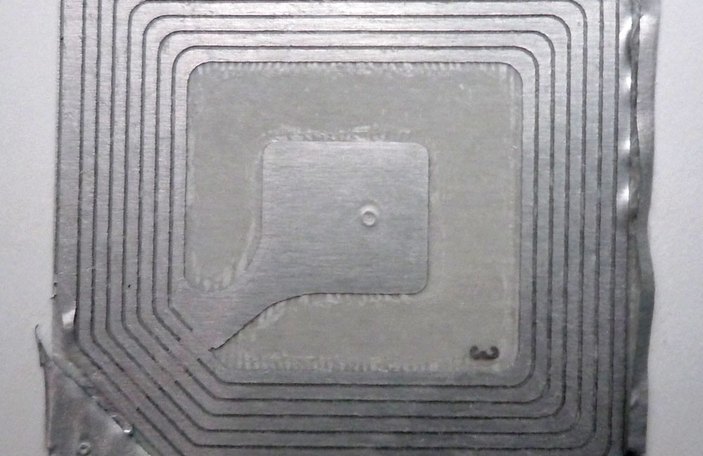
UHF RFID Pallet Label
Dock-Door Portal Reads

Quick answer
UHF RFID pallet labels embed an Impinj M730 / NXP UCODE 8 chip on a large-format 100×150 mm reinforced PET label — automating pallet-level identification at receiving docks, warehouse storage, staging areas and shipping doors. Read range 5-10 m through stretch wrap at any forklift orientation eliminates manual barcode bottlenecks at high-throughput DCs (1,000+ pallets/day). GS1 SSCC-96 EPC + EPCIS 2.0 JSON-LD visibility events + EDI 856 ASN automatic match. Globally tuned 860-960 MHz (FCC Part 15.247 + ETSI EN 302 208) + Dense Reader Mode + circular-polarised portal compatible. Auburn ARC Category 6 + Walmart T2/T3 + Target / Kroger / Home Depot supplier mandate validated.
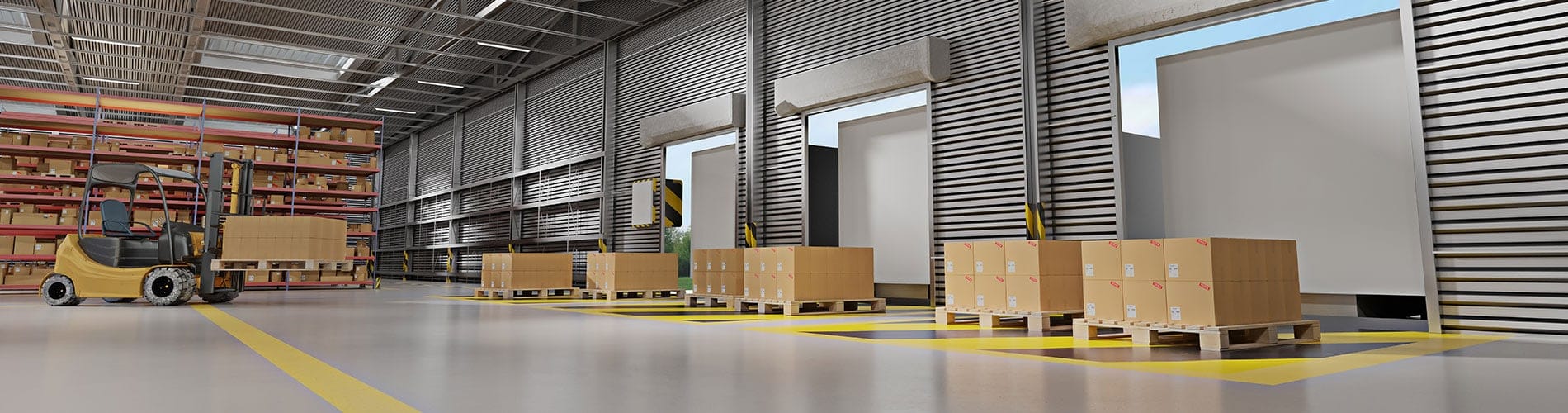
- No line-of-sight required — UHF readers identify pallets at 5-10 m range through shrink wrap, at any angle, without stopping the forklift. Trailer of 26 pallets read in <30 sec.
- Dock-door automation — fixed portal readers at receiving and shipping doors automatically log every pallet entering and leaving the facility in real time. EDI 856 ASN auto-match before trailer release.
- Large-format durable substrate — 100×150 mm reinforced PET label withstands forklift handling, stretch wrap and warehouse conditions −20 °C to +60 °C. Aggressive permanent adhesive bonds to corrugated + wood + plastic pallet.
Used in these industries
Deployments where this product is referenced on our industry landing pages.

At a glance
Use these short answers to decide whether this page matches the project before moving into the detail.
Frequency + chip silicon
UHF 860-960 MHz globally tuned RAIN per ISO/IEC 18000-63:2015 Impinj M730 (Monza R6) — entry-tier high-volume default
GS1 SSCC encoding
18-digit globally unique logistic-unit identifier Extension Digit + GS1 Company Prefix + Serial Reference + Check Digit
Next step
Ready to move forward? Start your inquiry to get specific answers for this project.
Request quote and samples- EPCIS 2.0 visibility data model
-
- What — SSCC pallet identifier
- When — timestamp at every handoff event
- Where — GLN (dock door, staging lane, trailer, zone)
- Why — bizStep: receiving + shipping + cross-docking + pick + put-away
- ISO/IEC 19987:2015 EPCIS 2.0 JSON-LD event format
- Published to shared visibility hub for trading partner subscription
- EDI 856 ASN integration
-
- ANSI X12 EDI 856 (US) + UN/EDIFACT DESADV (international)
- SSCC list embedded in PackagingCodeIdentification (MEA) + SLN/REF
- Portal read auto-matched to ASN SSCC list at receiving
- Mismatch + missing pallet + quantity variance flagged before release
- USD 100-200/hour trailer detention avoided after 2-hour free window
- Form factor + dimensions
-
- 100×150 mm large-format pallet label (industry standard)
- Reinforced PET / polypropylene face stock
- Bonded overlaminate — antenna + barcode protection
- Aggressive permanent acrylic PSA — bonds to corrugated + wood + plastic
- −20 °C to +60 °C operating temperature (full DC lifecycle)
- Roll format on 4-inch core for Zebra ZT411 RFID + ZT621 RFID
- Dense Reader Mode + RF physics
-
- Dense Reader Mode (DRM) per ISO/IEC 18000-63:2015
- Miller-subcarrier 4 + 8 modulation supported
- 4-12 dock-door portals operating simultaneously without interference
- Validated with Impinj Speedway + Zebra FX9600 + Alien ALR-9900
- Circular-polarised portal antenna optimised (industry default)
- Tag-tilt tolerance ±90° vs ±30° linear-polarised
- Regional regulatory compliance
-
- FCC Part 15.247 — North America 902-928 MHz, 4 W EIRP
- ETSI EN 302 208 — Europe 865-868 MHz, 2 W ERP
- Globally tuned 860-960 MHz broadband antenna
- Same SKU performs in both regions without field re-tuning
- ANATEL Brazil + ARIB Japan + ACMA Australia regional support
- Retailer supplier-mandate compliance
-
- Walmart T2 + T3 — apparel + GMM + CPG + grocery 2022-2024
- Target — apparel + accessories + food + consumables 2024
- Kroger — fresh-department RFID rollout 2023-2024
- Home Depot — building materials RFID
- Dick's Sporting Goods + Nordstrom + Macy's — apparel pallet level
- ≥95% read-rate threshold typical mandate requirement
- Auburn ARC certification
-
- ARC Category 6 — corrugated case / pallet label, general merchandise
- Auburn University RFID Lab GS1 US test protocol
- Walmart T2 (apparel) + T3 (general merch) test criteria
- Per-pallet-SKU configuration certification on request
- Pre-validated read-rate + EPC encoding accuracy
- Triple identifier on label face
-
- Human-readable text — printed SSCC + PO + SKU + destination
- GS1-128 barcode — manual scan-gun fallback
- RFID EPC — automated portal-reader capture
- Same SSCC across all three encodings = single digital identity
- Optional GS1 DataMatrix companion for Sunrise 2027
- WMS + ERP integration
-
- SAP EWM via IDoc or oData
- Manhattan Active WM via REST API
- Blue Yonder via Luminate integration framework
- Oracle WMS Cloud via REST
- Körber K.Motion WMS via web services
- Impinj ItemSense + Zebra RFID Analytics edge-middleware
- Procurement
-
- MOQ 5,000 labels (100×150 mm standard)
- Lead time 12-18 business days
- Pre-encoded SSCC-96 + per-pallet CSV with SSCC-to-PO mapping
- Per-printer-model inlay-position optimisation (Zebra ZT411 / ZT621)
- Per-retailer ARC + approved-tag-list match at quote
- Pilot RF survey + portal-antenna phasing service available
Commercial terms
- MOQ
- Varies by SKU — stock items from 100 pcs; custom production typically 200-1,000 pcs
- Lead time
- Production 2-3 weeks after artwork and encoding sign-off; reorders on a 3-4 week cycle
- Samples
- Free samples and RF test report with every order; courier at customer cost
- Payment
- 50% T/T deposit, 50% before shipment; Net 30/60 for established accounts; LC for large orders
- Shipping
- FOB Shenzhen / Yantian; DHL, FedEx or EMS air freight; sea LCL / FCL for volume
- Response
- Itemized quote within one business day, Mon-Fri (UTC+8)
Pallet-tracking bottlenecks in high-volume distribution centres
- Barcode scanning at dock doors requires each pallet to be stopped, rotated to expose the label and scanned individually — creating receiving backlogs of 30-60 minutes during peak inbound windows at DCs processing 1,000+ pallets per day.
- Pallet misplacement in warehouses with 10,000+ pallet positions costs USD 50-150 per incident in search time. At a 2-3% misplacement rate, a large DC loses USD 100,000+ annually to pallet searches alone.
- Manual ASN (advance ship notice) verification at receiving requires associates to scan every pallet against the purchase order. Discrepancies are caught after unloading is complete, causing trailer detention charges averaging USD 100-200 per hour.
- Cross-dock operations where pallets must be identified, sorted and redirected within 2-4 hours cannot tolerate manual barcode scanning bottlenecks. A single scanner failure or label damage causes cascade delays across outbound routes.
- Inventory visibility between warehouse zones (receiving, bulk storage, pick, staging, shipping) relies on manual checkpoint scans that are often skipped or delayed — creating 'dark zones' where pallet location is unknown for hours.
How Proud Tek UHF RFID pallet labels eliminate logistics bottlenecks
Manual barcode scan + paper ASN reconciliation + zone checkpoint scans
- 30-60 min dock-door bottleneck per peak inbound window — pallet-by-pallet scan
- ASN mismatch caught after unload + USD 100-200/hr trailer detention
- 2-3% pallet misplacement + USD 50-150/incident search cost
- Cross-dock 2-4 hour SLA at risk on single scanner failure / label damage
- Zone visibility gaps + 'dark zones' with unknown pallet location for hours
Triple-identifier UHF RFID + EPCIS 2.0 + automated EDI 856 ASN match (this page)
- <30 sec full-trailer 26-pallet read at 5-10 m portal — no orientation
- Auto-ASN match at portal read = mismatch flagged BEFORE trailer release
- EPCIS 2.0 zone checkpoint events = real-time pallet location dashboard
- Cross-dock auto-routing on portal-read SSCC + bizStep transition
- Walmart T2/T3 + Target + Kroger + Home Depot supplier-mandate compliant
- Impinj M730 or NXP UCODE 8 chip on a large-format (100×150 mm) antenna delivers 5-10 m read range. Dock-door portal readers identify every pallet on a trailer in under 30 seconds without stopping or reorienting pallets.
- Reinforced synthetic face stock (PET or polypropylene) withstands forklift tine contact, stretch-wrap tension, warehouse dust and temperature ranges from −20 °C to +60 °C — the label survives the full distribution lifecycle.
- Aggressive permanent adhesive bonds to corrugated carton, shrink wrap, wood and plastic pallet surfaces. No label lifting or peeling even on recycled corrugated with high-moisture content.
- EPC encoding includes SSCC (Serial Shipping Container Code), PO number, SKU, quantity and destination — enabling automated ASN matching at receiving, zone-to-zone tracking and shipping verification without manual scanning.
- Pre-encoded and printed labels with GS1-128 barcode + human-readable text + RFID — providing triple redundancy (visual, barcode, RFID) for interoperability with trading partners using different capture technologies.
Per-tap data published from a Proud Tek UHF RFID pallet label
- EPC SSCC-96: AI 00 + Extension Digit + GS1 Company Prefix + Serial Reference + Check Digit.
- EPCIS 2.0 ObjectEvent: What/When/Where/Why JSON-LD per portal read.
- EDI 856 ASN auto-match at portal read: mismatch flagged before trailer release.
- GS1 Digital Link URI: https://id.gs1.org/00/{SSCC} — single identity across barcode + RFID + EDI + web.
- AI 02 (GTIN) + AI 37 (count) + AI 400-series in user memory for offline operation.
GS1 SSCC encoding, EPCIS visibility events and ASN EDI 856 alignment — why the data structure matters as much as the tag
- The GS1 Serial Shipping Container Code (SSCC) is an 18-digit globally unique logistic-unit identifier (extension digit + GS1 company prefix + serial reference + check digit) encoded as SSCC-96 in the EPC memory bank per the GS1 EPC Tag Data Standard (TDS 2.0). The SSCC is the anchor identifier that links every subsequent handoff event to the same pallet.
- EPCIS (Electronic Product Code Information Services, GS1 ratified as ISO/IEC 19987) captures four-dimensional business events — what (SSCC), when (timestamp), where (GLN of the dock door, staging lane, trailer), why (receiving, shipping, cross-docking, pick, put-away) — and publishes them as EPCIS 2.0 JSON-LD events to a shared visibility hub that trading partners can subscribe to.
- The ASN (Advance Ship Notice) transmitted as EDI 856 (ANSI X12) or DESADV (UN/EDIFACT) carries the SSCC for every pallet in the shipment. At receiving, the portal read is matched to the ASN SSCC list automatically; any mismatch (missing pallet, unexpected pallet, quantity variance) is flagged before the trailer is released, avoiding detention charges that typically run USD 100-200/hour after the 2-hour free window.
- The GS1 Digital Link URI format (https://id.gs1.org/00/{SSCC}) lets the same SSCC resolve via web browser, EPCIS event, EDI ASN and RFID air-interface read — providing one identifier that works across barcode, RFID, web and EDI — a critical capability for omnichannel retail and 3PL interoperability.
- GS1 AI (application identifier) 00 (SSCC), AI 02 (GTIN of contained items), AI 37 (count of items), AI 400-series (shipment references) are optionally encoded in user memory to carry structured shipment context at the tag level, enabling partial operation even when the central EPCIS hub is unreachable (disaster-recovery, site-to-site transport in remote regions).
Dense-reader portal physics, the Walmart / Target / Kroger RFID mandates and how the label is engineered to survive the RF environment
- North American FCC Part 15.247 (902-928 MHz, 4 W EIRP) and European ETSI EN 302 208 (865-868 MHz, 2 W ERP) frequency bands differ; our pallet labels are engineered as globally tuned (860-960 MHz broadband antennas) so the same SKU performs in both regions without field re-tuning.
- Dense Reader Mode (DRM) per ISO/IEC 18000-63:2015 separates reader transmit and receive channels to prevent reader-to-reader interference when 4-12 dock-door portals operate simultaneously in the same warehouse. Our labels support DRM, miller-subcarrier 4 and 8 modulation, and are validated with Impinj Speedway, Zebra FX9600 and Alien ALR-9900 portal readers.
- Antenna polarisation matters: circular-polarised portal antennas read pallet tags at any rotation angle (±90° tag tilt), while linear-polarised antennas require tag orientation within ±30° of antenna axis. Our standard pallet label is optimised for circular-polarised dock-door portals (the industry default) and reads consistently regardless of how the pallet is staged on the trailer.
- The Walmart, Target, Home Depot, Kroger, Dick's Sporting Goods and Nordstrom supplier RFID mandates — most expanded beyond apparel into general merchandise and CPG through 2024-2025 — require SSCC-encoded pallet labels at the supplier level with minimum read-rate thresholds (typically ≥95%). Our factory-encoded and printed labels are pre-validated against the Auburn University RFID Lab GS1 US test protocol and the ARC (Auburn RFID Certification) Category 6 pallet-label specification.
- Forklift antenna collision and multi-path cancellation from metal racking, metallic liquid cases and foil-lined packaging can create read nulls. Mitigation combines label placement (typically the top-third of the pallet, on two orthogonal faces, not flush to the top for forklift safety) with warehouse RF surveys and portal-antenna phasing adjustments — a service we provide during pilot deployments.
UHF RFID pallet label timeline — from manual barcode bottleneck to EPCIS 2.0 visibility-hub
- 1989 — GS1-128 barcode + SSCC standardised
GS1-128 barcode symbology + SSCC (Serial Shipping Container Code) standardised — 18-digit globally unique logistic-unit identifier becomes universal pallet-label foundation that endures 35+ years.
- 2005 — Walmart RFID supplier mandate launch
Walmart introduces RFID supplier mandate — first major retailer carton + pallet-level RFID programme. Establishes industry pattern of supplier-applied SSCC-96 RFID pallet labels.
- 2010-2014 — Auburn ARC + GS1 EPC TDS + ISO/IEC 18000-63
Auburn University RFID Lab ARC certification protocol matures across categories. GS1 EPC TDS 1.x publishes SSCC-96 binary encoding spec. ISO/IEC 18000-63:2015 EPC Gen2v2 ratified.
- 2015 — EPCIS 2.0 ratified ISO/IEC 19987:2015
ISO/IEC 19987:2015 EPCIS — four-dimensional visibility-event data standard ratified internationally. JSON-LD format becomes shared standard for trading-partner pallet-level visibility hubs.
- 2018-2020 — Impinj Speedway + Zebra FX9600 + Alien ALR-9900 portal readers
Dense Reader Mode + Miller-subcarrier 4/8 modulation enables 4-12 simultaneous dock-door portals without reader-to-reader interference. Forklift-speed pallet reads become production-grade.
- 2022-2024 — Walmart GMM + Target consumables + Kroger fresh expansion
Walmart RFID expanded beyond apparel into home goods + electronics + toys + grocery (2022-2024). Target food + consumables (2024). Kroger fresh-department rollout (2023-2024). Home Depot building materials.
- 2024 — GS1 Sunrise 2027 + EU ESPR DPP forward-compat
GS1 Sunrise 2027 2-D-at-POS migration target + EU ESPR 2024/1781 DPP framework. Triple-identifier label (GS1-128 + RFID + GS1 DataMatrix Digital Link) becomes default pallet-label architecture.
- 2026 — Today: UHF RFID pallet label standard logistics practice
From buyer conversations across retail-supplier-mandate, e-commerce-fulfilment-centre, parcel-carrier-cross-dock, 3pl-warehouse-management, food-service-distribution programmes converge on Impinj M730/M750 + NXP UCODE 8 + Auburn ARC Category 6 + GS1 SSCC-96 + EPCIS 2.0 + EDI 856 ASN auto-match as the default architecture.
Useful next pages
Use these linked product, guide and comparison pages to keep the next click specific and practical.
Related RFID label products
Other RFID labelling solutions for warehouse and logistics.
Chip-level technical reference
Deep-dive specifications and chip-family comparisons relevant to this SKU.
FAQ
Can the label be read through stretch wrap and shrink wrap?
Yes. UHF RFID signals pass through plastic stretch wrap and shrink wrap with minimal attenuation. Our pallet labels are specifically designed and tested for reading through wrapped pallets at 5-10 m range using standard dock-door portal readers. Multiple layers of stretch wrap do not significantly affect read performance.
What information is encoded on the pallet label?
The EPC memory bank stores the SSCC (Serial Shipping Container Code) per GS1 standards. User memory can optionally store PO number, SKU, quantity, weight, origin / destination and handling instructions. The printed face includes a GS1-128 barcode and human-readable text for visual and barcode-scanner backup.
Does the label work on wood pallets?
Yes. Wood pallets absorb some RF energy, which can reduce read range by 10-20% compared to plastic pallets. Our pallet labels use a tuned antenna that compensates for wood pallet absorption, maintaining reliable reads at 4-8 m on standard wood pallets. For maximum range on wood, we recommend the label be placed on the corrugated case rather than directly on the wood surface.
Are these labels compliant with the Walmart, Target, Kroger and Home Depot RFID supplier mandates, and what is the ARC certification?
Yes — our pallet labels are engineered to meet the Auburn University RFID Lab ARC (Auburn RFID Certification) specification, which is the test protocol most North American retailers reference in their RFID supplier mandates. Specifically: ARC Category 6 (corrugated case / pallet label, general merchandise) and the Walmart 'T2' and 'T3' test criteria for read-rate and EPC encoding accuracy. Walmart began expanding RFID beyond apparel into home goods, electronics, toys and grocery through 2022-2024; Target added RFID mandates for food and consumables starting 2024; Kroger rolled out RFID for fresh departments in 2023-2024; Home Depot uses RFID for building materials. Compliance is SKU-by-SKU — we can provide ARC certificates and encoding test results for your specific pallet SKU configuration on request, and our factory provides pre-encoded labels matching each retailer's SSCC and GTIN encoding requirements.
How does EPCIS 2.0 visibility data integrate with our WMS (SAP EWM, Manhattan Active WM, Blue Yonder, Oracle WMS, Körber) and what does the implementation actually look like?
EPCIS 2.0 (ratified by GS1 and published as ISO/IEC 19987:2015) is a REST / JSON-LD visibility standard — it's a data standard, not a WMS feature. Integration is typically a middleware layer between your RFID edge (portal readers running Impinj Speedway or Zebra FX9600 via LLRP) and your WMS. Common patterns: (1) Impinj ItemSense or Zebra RFID Analytics receive raw reads, filter to unique SSCC, and publish EPCIS events to a visibility hub (Axway B2B Integration, OpenText B2B Managed Services, GS1 US OneConnect, or custom-built on Kafka / RabbitMQ); (2) the hub translates to the WMS-native API — SAP EWM (via IDoc or oData), Manhattan Active WM (via REST APIs), Blue Yonder (via Luminate integration framework), Oracle WMS Cloud (via REST), Körber K.Motion WMS (via web services); (3) exception events (missing pallet, unexpected pallet, quantity variance) trigger alerts in the WMS receiving dashboard before the trailer is released. Deployment typically takes 3-6 months for a mid-size DC with pilot on 2-4 dock doors before scaling to the full facility. We do not supply middleware; we supply the labels, encoding services and pilot-deployment RF consulting.
Sources & references
Primary standards, OEM datasheets and regulatory documents cited by this article. All URLs were verified on the access date shown below.
- GS1 General Specifications — SSCC (Serial Shipping Container Code) definition and AI 00 structure
GS1 SSCC standard — 18-digit globally unique logistic-unit identifier. Foundation for pallet-level RFID + barcode + EDI ASN identification.
- GS1 EPC Tag Data Standard (TDS) — SSCC-96 encoding in RFID memory
GS1 EPC TDS 2.0 — SSCC-96 binary encoding spec for UHF RAIN tags. AI 00 + Extension Digit + GS1 Company Prefix + Serial Reference + Check Digit.
- ISO/IEC 19987:2015 — EPCIS (Electronic Product Code Information Services)
EPCIS 2.0 — four-dimensional visibility-event data standard (what / when / where / why). JSON-LD format for trading-partner pallet-level visibility hub.
- ISO/IEC 18000-63:2015 — RAIN RFID air-interface Type C, Dense Reader Mode
UHF RAIN RFID 860-960 MHz air-interface standard — Dense Reader Mode + Miller-subcarrier 4/8 modulation for 4-12 simultaneous dock-door portals.
- FCC Part 15 Subpart C §15.247 — Operation within the 902-928 MHz band
FCC Part 15.247 — North American 902-928 MHz, 4 W EIRP regulatory framework. Globally tuned 860-960 MHz pallet labels qualify in this band.
- ETSI EN 302 208 — RFID devices operating in the band 865 MHz to 868 MHz
ETSI EN 302 208 — European 865-868 MHz, 2 W ERP regulatory framework. Globally tuned 860-960 MHz pallet labels qualify in this band.
- Auburn University RFID Lab — ARC (Auburn RFID Certification) test protocol
Auburn ARC Category 6 (corrugated case / pallet label, general merchandise) test protocol. Walmart T2 + T3 + Target + Kroger + Home Depot retailer mandate compliance reference.
- ANSI ASC X12 EDI 856 — Ship Notice/Manifest (ASN) transaction set
ANSI X12 EDI 856 ASN — SSCC list embedded in PackagingCodeIdentification (MEA) + SLN/REF segments. Auto-match at portal read flags mismatch before trailer release.
- Impinj M700 series + Speedway portal reader product brief
Impinj M730 / M750 / M770 chip family + Speedway dock-door portal reader. Validated combination for high-throughput DC pallet-label deployment.
- GS1 Digital Link URI standard
GS1 Digital Link 1.3 — https://id.gs1.org/00/{SSCC} URI binding. Single SSCC resolves via web browser + EPCIS event + EDI ASN + RFID air-interface read.
Proud Tek is a Shenzhen-based RFID & NFC manufacturer supplying hotel chains, transit operators, event venues and retail brands worldwide. Every order includes free samples, RF testing and dedicated project support.
Get a Quick Quote
Tell us about your project and we'll respond within one business day. Fields marked (asterisk) are required.