
Warehouse RFID
RFID Pallet Tags
Dock-Door ID & Warehouse Tracking

Quick answer
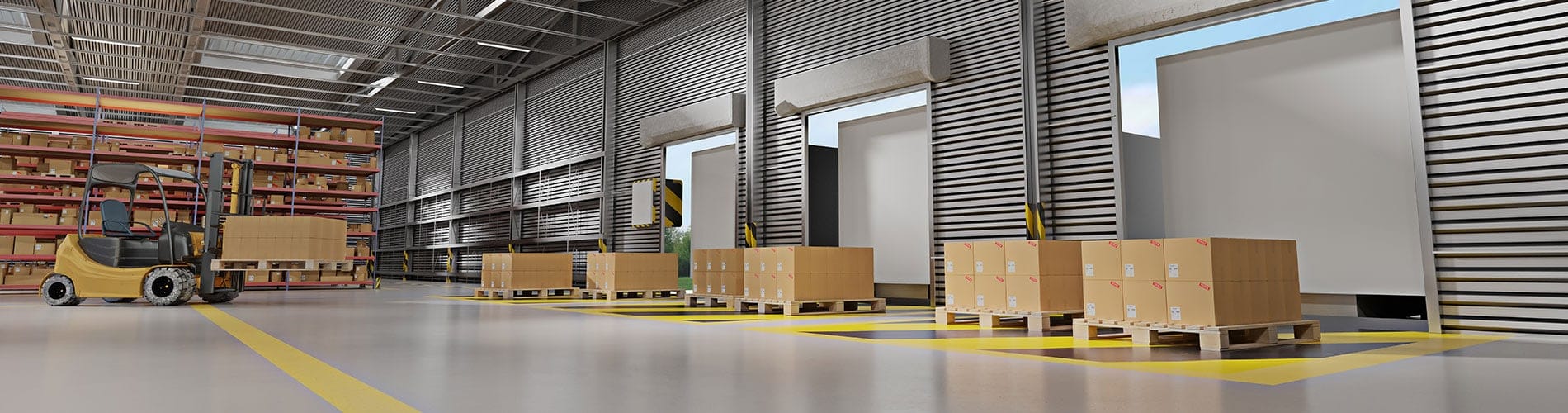
UHF RFID pallet tags enable automated identification of palletized goods at dock doors, warehouse portals and storage locations. Mount a rugged tag on each pallet and fixed readers automatically log every pallet movement (receiving, put-away, picking, shipping and cross-docking) without manual scanning.
- Long read range (5-12 m). Fixed portal readers identify pallets as they pass through dock doors at forklift speed.
- Rugged construction: ABS or polycarbonate housing survives forklift impacts, outdoor storage and repeated pallet cycling.
- Mount once, read thousands of times. Reusable tags designed for pallet pool lifecycles of 3-5 years.
Used in these industries
Deployments where this product is referenced on our industry landing pages.
At a glance
Use these short answers to decide whether this page matches the project before moving into the detail.
Frequency
860-960 MHz (global UHF)
Protocol
EPC Gen2v2 (ISO/IEC 18000-63)
Next step
Ready to move forward? Start your inquiry to get specific answers for this project.
Request pallet tag quote- Chip
-
Impinj Monza R6 or NXP UCODE 8 (96-bit EPC + user memory)
- Read range
-
5-12 m (fixed reader), 2-6 m (handheld)
- Housing
-
ABS or polycarbonate, IP67, impact-resistant
- Dimensions
-
100×30×8 mm (standard) or 150×40×10 mm (extended range)
- Mounting
-
Screw, rivet, nail or industrial adhesive on pallet stringer or block
- Operating temp
-
-30 to +70 °C
- EPC scheme
-
GS1 GRAI-96 (returnable pallets) or SGTIN-96 (serialized loads)
- Compliance
-
RAIN Alliance ARC Category M candidate; FCC Part 15 / ETSI EN 302 208
- MOQ / Lead time
-
500 pieces / 12-18 business days
Commercial terms
- MOQ
- Varies by SKU — stock items from 100 pcs; custom production typically 500-1,000 pcs
- Lead time
- Production 2-3 weeks after artwork and encoding sign-off; reorders on a 3-4 week cycle
- Samples
- Free samples and RF test report with every order; courier at customer cost
- Payment
- 50% T/T deposit, 50% before shipment; Net 30/60 for established accounts; LC for large orders
- Shipping
- FOB Shenzhen / Yantian; DHL, FedEx or EMS air freight; sea LCL / FCL for volume
- Response
- Itemized quote within one business day, Mon-Fri (UTC+8)
Problems warehouse operators face with manual pallet tracking at dock doors
Manual scans bottleneck the dock.
- DC managers at facilities processing 300–1,000 pallets per day face dock-door receiving bottlenecks where forklift operators must stop, exit the cab, manually scan each pallet barcode, and re-enter the cab. This process adds 60–120 seconds per pallet and creates receiving queues that delay truck turnaround.
- Shipping verification teams hand-scanning each pallet as it is loaded onto outbound trucks achieve 85–92% scan compliance due to time pressure and human error. The 8–15% missed scans result in short shipment disputes with customers that cost $50–$200 each to investigate and resolve.
- Pallet pool operators (CHEP, PECO, and private fleets) lose 8–15% of pallet inventory annually to tracking gaps. Pallets that leave a facility without being scanned out become unrecoverable losses at $12–$25 per pallet replacement cost.
- Warehouse management system integrators need pallet tags that survive 3–5 years of forklift impacts, outdoor storage, and temperature cycling. Standard adhesive RFID labels fall off wooden pallets within 60–90 days of outdoor exposure.
- Cross-dock facilities processing 200+ pallet moves per hour cannot rely on manual scan compliance to maintain accurate in-transit inventory. At peak throughput, scanners miss 20–30% of pallet movements, creating discrepancies that require hours of manual reconciliation.
How Proud Tek RFID pallet tags solve dock-door tracking automation
Portal reads replace manual scans.
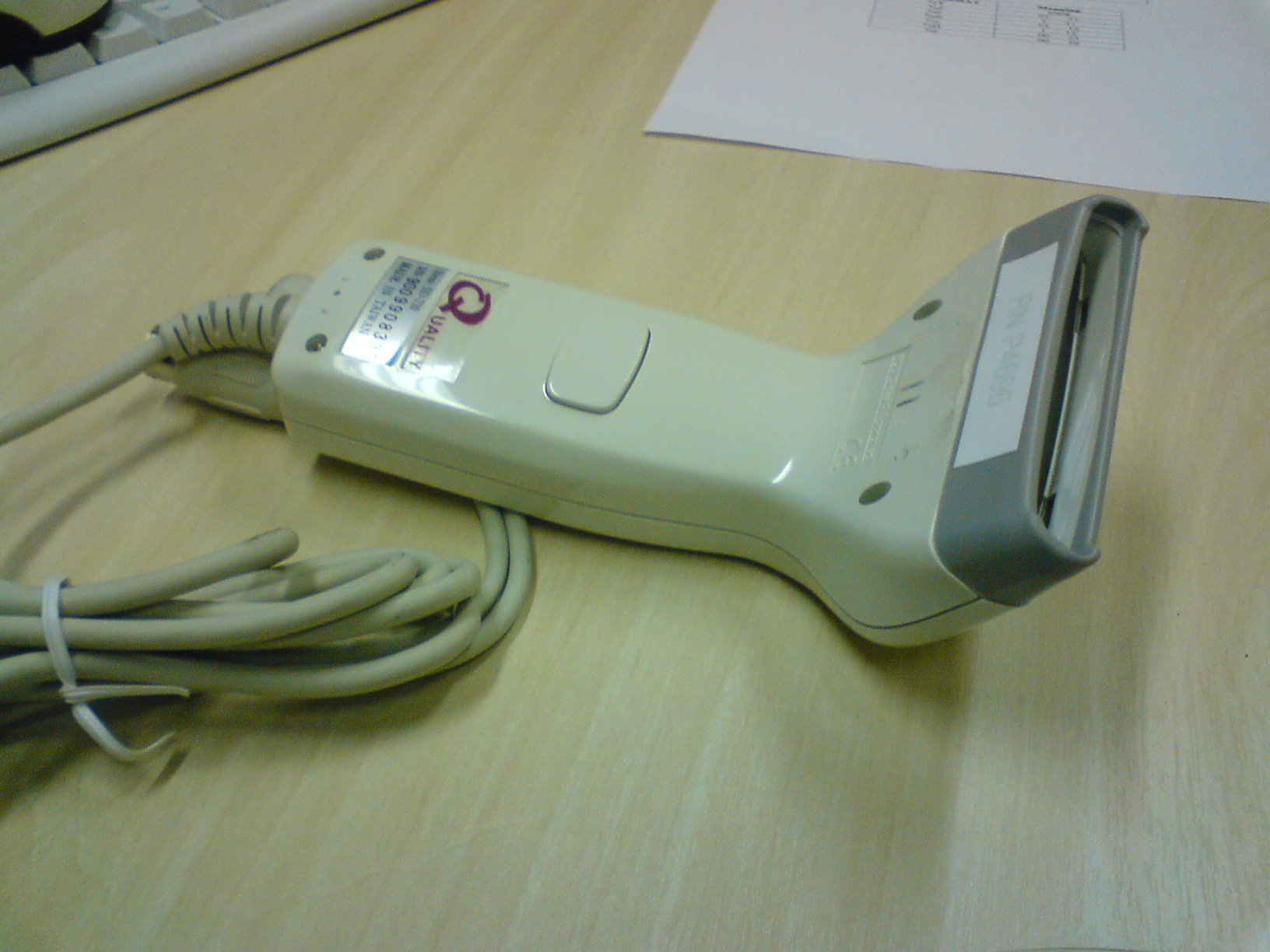
- 5–12 m read range with fixed portal readers: tags are read as pallets pass through dock doors on forklifts at operating speed — no forklift stop, no cab exit, no manual scan — processing 30–60 pallets per hour per door at 99%+ read rates on correctly tuned systems.
- ABS and polycarbonate housings rated IP67 with -30 to +70 °C operating range, designed for pallet pool lifecycles of 3–5 years — screw, rivet, nail, or industrial adhesive mounting survives forklift impacts and outdoor storage that destroy adhesive label alternatives within weeks.
- Impinj Monza R6 and NXP UCODE 8 chips with 96-bit EPC + user memory: encode pallet ID, pallet type, and pool network identifier per GS1 TDS 2.0 GRAI-96. Compatible with any EPC Gen2v2 portal reader (Impinj R700/R780, Zebra FX9600, Alien ALR) regardless of manufacturer.
- Anti-metal pallet tag variant available for metal and plastic pallets (steel CHEP, plastic pooled pallets) with ferrite backing tuned for metal/plastic substrates, maintaining 5–10 m read range on surfaces where standard tags fail completely.
- Pre-encoded with your EPC scheme and pallet numbering convention, with EPC manifest (CSV or EPCIS 2.0 XML) for WMS import. Reduces commissioning time from days of manual encoding to same-day deployment.
Deployment patterns warehouse teams follow
Four phases from pilot to rollout.
RFID pallet programs typically move through four deployment phases regardless of DC size. Each phase carries a characteristic failure mode and a matching KPI. Teams that skip the pilot read-rate tuning phase and jump straight to full-fleet tagging are the ones that later blame the technology for read-rate gaps that were always about antenna geometry and dock-door RF environment.
- Phase 1: Single-door pilot
Install one dock-door portal (2 antennas per door), tag 200-500 pilot pallets, measure read-rate at forklift speed vs. static. Target ≥99% read accuracy before scaling. Duration: 2-4 weeks.
- Phase 2: Tune and instrument
Instrument inbound vs outbound direction classification, add WMS integration events (receiving, put-away, shipping) per EPCIS 2.0 ObjectEvent. Validate 48-hour shift loads against WMS baseline. Duration: 3-6 weeks.
- Phase 3: Multi-door rollout
Extend portal readers across all inbound + outbound dock doors. Tag all incoming new pallets at receiving; retrofit existing fleet in rotation. Duration: 2-4 months depending on dock-door count.
- Phase 4: Yard + pool integration
Add yard-management handhelds and pallet-pool checkout events. Integrate with CHEP/PECO EPCIS feeds for pool-network reconciliation. Duration: ongoing steady-state.
Manual barcode vs automated RFID portal — side by side
Same dock, different math.
Manual barcode scanning
- Forklift stops at every pallet for handheld scan (60-120 s per pallet)
- Scan compliance 85-92% under time pressure
- Line-of-sight required — scanner must see barcode
- Shrink-wrapped or damaged labels cause retries
- Peak-hour throughput limited by scanner queue (40-60 pallets/hr)
RFID portal automation
- Forklift drives through portal at 4-6 km/h (≈3 s per pallet)
- Read rate 99%+ after tuning, no scan-compliance variance
- No line-of-sight — tag readable through stretch wrap, cases and liquids
- IP67 housing shrugs off rain, mud, forklift impacts
- Peak throughput scales to 200-300 pallets/hr per door
Tag mounting positions
Pick the position, not the cheapest spot.
| Position | Pallet type | Pros | Cons |
|---|---|---|---|
| Center stringer (face) | Wooden (stringer) | Best read range, least damage exposure | May interfere with stretch wrap |
| Block face | Wooden (block) | Protected by blocks, good visibility | Slightly reduced range |
| Bottom deck board | All types | Protected from impacts | Reduced range, read from below only |
| Pallet collar/frame | Collapsible | Easy mounting, visible | Tag may be removed with collar |
Why the GS1 GRAI-96 scheme matters for pallet pools
GRAI for the crate, SGTIN for the goods.
Applications
Five workflows, one EPC.
- Receiving: automatically log inbound pallets as they arrive at dock doors, matching against ASN data.
- Put-away: track which pallets are stored in which warehouse locations (rack, floor, zone).
- Picking and replenishment: verify correct pallets are picked for orders.
- Shipping: confirm the right pallets are loaded onto the right trucks at the right dock doors.
- Cross-docking: track pallets as they move directly from inbound to outbound docks.
- Pallet pool management: track pallet circulation between facilities, customers and pallet pooling networks (CHEP, PECO).
- Yard management: locate pallets in the yard and track trailer loading status.
Useful next pages
Use these linked product, guide and comparison pages to keep the next click specific and practical.
Related products
Other warehouse and logistics RFID solutions.
Chip-level technical reference
Deep-dive specifications and chip-family comparisons relevant to this SKU.
Industry applications
Industry deep-dives where pallet tags are commonly specified.
FAQ
How long do pallet tags last?
Our ABS pallet tags are designed for 3-5 years of pallet pool cycling. The IP67 housing protects against rain, snow, UV exposure and forklift impacts. The RFID chip has 10+ years data retention and unlimited read cycles. Tags are typically retired due to physical housing damage rather than RFID failure. For higher durability, polycarbonate housings offer enhanced impact resistance.
Can I track pallets across multiple warehouses?
Yes. The pallet tag carries a unique EPC identifier that is read at every touchpoint — source warehouse, transit, destination warehouse. Your WMS or supply chain platform links the EPC to the pallet's contents and location history. All RFID data is standard EPC Gen2, so tags are readable by any compliant reader regardless of the reader manufacturer.
Do the tags work on metal or plastic pallets?
Standard tags are designed for wooden pallets. For metal or plastic pallets, use our anti-metal pallet tags with ferrite backing — these are specifically tuned to perform on metal and plastic surfaces. Specify your pallet material when ordering and we will recommend the appropriate tag.
Should I encode GRAI-96 or SGTIN-96 on my pallet tags?
Use GS1 GRAI-96 for returnable pallet pools where the physical pallet retains identity across loans and returns (CHEP, PECO, private pool fleets). Use SGTIN-96 when the tag identifies the serialized goods on the pallet rather than the pallet itself (common in pharma and high-value consumer goods). For mixed workflows, encode GRAI on the pallet tag and SGTIN on case-level labels — EPCIS 2.0 ObjectEvents associate the two at the receiving dock.
What is the price and MOQ for pallet tags?
Standard ABS pallet tags are priced $1.20-$2.40 per tag at 1,000-piece quantities and $0.80-$1.60 per tag at 10,000-piece quantities, depending on chip (Monza R6 vs UCODE 8), housing material and pre-encoding service. MOQ is 500 pieces; lead time is 12-18 business days. Request a quote with your pallet-fleet size and encoding scheme for a firm price.
Does your tag meet RAIN Alliance ARC Category M for RTIs?
Our standard ABS and anti-metal pallet tag families are candidates for RAIN Alliance ARC Category M (returnable transport items) test-plan submissions. ARC Category M validates minimum read-distance performance on returnable transport substrates (wood, plastic, steel). We maintain internal ARC-equivalent test data and can co-sponsor third-party ARC certification for volume programs. Ask for the ARC Category M test report and the test-substrate SOP when requesting samples.
Sources & references
Primary standards, OEM datasheets and regulatory documents cited by this article. All URLs were verified on the access date shown below.
- GS1 Tag Data Standard 2.0
§7.2 GRAI-96 encoding for returnable transport items; §7.3 SGTIN-96 for serialized trade items.
- ISO/IEC 18000-63:2021 Information technology — Radio frequency identification for item management — UHF air interface
Governs the UHF Gen2v2 air-interface protocol used by all EPC Gen2 pallet tags.
- EPC Radio-Frequency Identity Protocols Generation-2 UHF RFID Standard (EPC Gen2v2)
Defines the UHF inventory command set and access memory banks referenced by WMS integrations.
- RAIN Alliance ARC — Category M (Returnable Transport Items) test plan
Category M validates UHF tag read-performance on wood, plastic and steel RTI substrates.
- NXP UCODE 8 product datasheet (SL3S4011/12)
Chip sensitivity and self-adjust features used for dock-door multi-tag performance.
- Impinj Monza R6 tag chip datasheet
AutoTune and Integra features referenced for pallet-tag read-rate stability.
- FCC Part 15, Subpart C — Intentional Radiators (902-928 MHz)
US 4 W ERP limit governing dock-door portal reader emissions.
- ETSI EN 302 208 V3.3.1 Radio Frequency Identification Equipment operating in 865-868 MHz
EU 2 W ERP limit for UHF RFID readers; channel plan for European dock-door deployments.
- EPCIS 2.0 Standard (ISO/IEC 19987:2015)
ObjectEvent schema used to record pallet bizStep (receiving, shipping, loading) and bizLocation.
Proud Tek is a Shenzhen-based RFID & NFC manufacturer supplying hotel chains, transit operators, event venues and retail brands worldwide. Every order includes free samples, RF testing and dedicated project support.
Get a Quick Quote
Tell us about your project and we'll respond within one business day. Fields marked (asterisk) are required.