
Asset RFID
RFID Asset Label
IT & Fixed-Asset Tracking

Quick answer
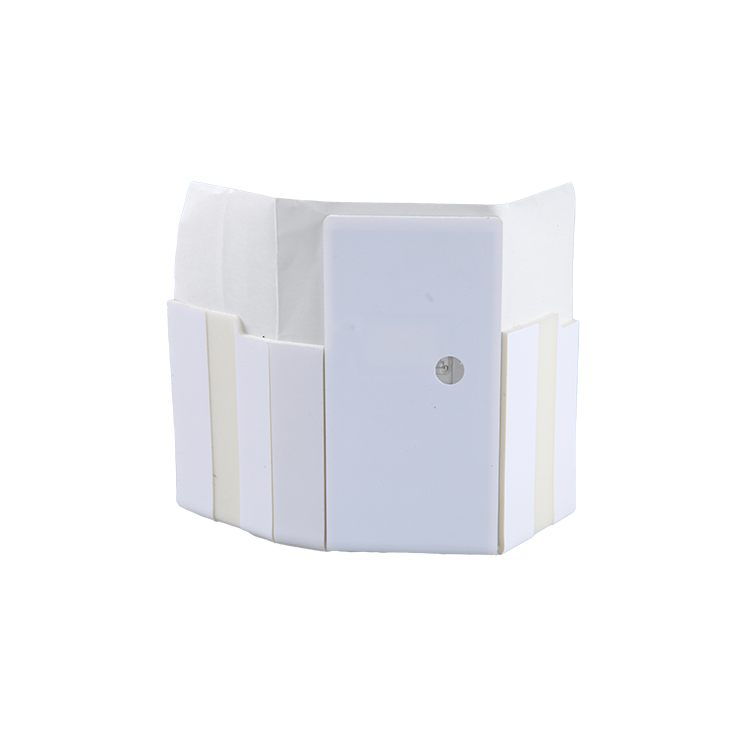
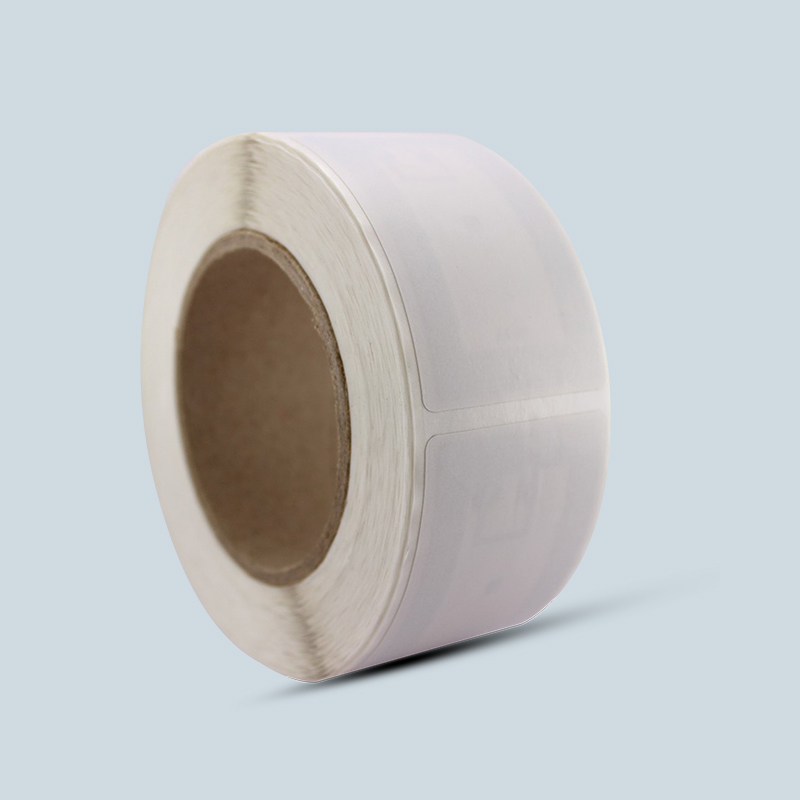
In specification terms, RFID asset labels carry an Impinj M730 / NXP UCODE 8 chip on a durable polyester or aluminium on-metal substrate — automating fixed-asset inventory, IT equipment tracking and capital-equipment lifecycle management. Locate any tagged asset in seconds via handheld UHF reader (1-5 m audio-proximity guidance), complete facility-wide inventories in 1-2 days vs 2-4 weeks barcode (90% time reduction), eliminate 15-30% ghost-asset rate, satisfy SOX Section 404 + PCAOB AS 2201 + PCI DSS 4.0 Req 12.5.1 + NIST SP 800-53 CM-8 + IFRS 16 + GASB 34 audit-register requirements. ServiceNow ITAM + IBM Maximo + Ivanti Neurons + Jamf / Intune integration via REST API. Tamper-evident destructible-vinyl option prevents label-swapping fraud.
- Find any asset in seconds — handheld UHF reader locates tagged equipment using audio proximity guidance within 1-5 m range. On-metal antenna design works directly on server racks + IT equipment + medical devices.
- Facility-wide inventory in hours — scan 1,000-2,000 assets/hour vs 50-100/hour manual barcode + spreadsheet. 10,000-asset site: 2-4 weeks → 1-2 days (90% labour reduction).
- Audit-ready records — automated timestamped location + custody data satisfies SOX Section 404 + PCAOB AS 2201 + PCI DSS 4.0 Req 12.5.1 + NIST SP 800-53 CM-8(3)+(4) + IFRS 16 + GASB 34. Ghost-asset rate 15-30% → <2%.
Used in these industries
Deployments where this product is referenced on our industry landing pages.


At a glance
Use these short answers to decide whether this page matches the project before moving into the detail.
Frequency + chip silicon
UHF 860-960 MHz RAIN per ISO/IEC 18000-63:2015 Impinj M730 (Monza R6) — entry-tier on-metal asset
On-metal antenna engineering
Ferrite-spacer integrated antenna for direct metal-surface placement 1-5 m read range maintained on steel + aluminium + stainless steel
Next step
Ready to move forward? Start your inquiry to get specific answers for this project.
Request quote and samples- Substrate + adhesive
-
- Polyester face stock — standard durable office / IT environment
- Aluminium face stock — chemical / industrial / outdoor
- Tamper-evident destructible vinyl — fractures on removal
- 3M VHB high-bond adhesive for metal + plastic surfaces
- Operating temperature −40 °C to +80 °C — IT + medical + industrial
- Form factors + sizes
-
- 1×3 in (25×75 mm) — compact IT equipment laptop / monitor
- 1×4 in (25×100 mm) — server / network gear
- 2×4 in (50×100 mm) — large equipment + medical devices
- Custom shapes (logo silhouette / asset-category color-coded)
- Pre-printed barcode (Code 128 + QR) + asset-tag number + logo
- EPC encoding standards
-
- GS1 GIAI-96 — Global Individual Asset Identifier
- GS1 GRAI-96 — Global Returnable Asset Identifier
- GS1 SGTIN-96 — for IT equipment with GTIN
- Custom EPC for closed-loop asset register
- Organisation ID + asset category + serial + custom fields
- Regulatory compliance framework
-
- SOX Section 404 + PCAOB AS 2201 — fixed-asset internal controls
- PCI DSS 4.0 Requirement 12.5.1 — system component inventory
- NIST SP 800-53 CM-8(3) + CM-8(4) — automated detection + location
- IFRS 16 — Leases + right-of-use asset tracking
- GASB 34 — state + local government capital assets
- FedRAMP + FISMA + DoDI 8510.01 RMF compliance
- ITAM platform integration
-
- ServiceNow ITAM — Discovery REST API + Asset Import Template
- IBM Maximo — Work Center Management API + ASSET table
- Ivanti Neurons for ITAM — REST API last-seen timestamp
- Jamf Pro + Microsoft Intune — Extension Attributes / Custom Compliance
- Asset Panda + AssetCloud + RedBeam + Jovix — direct integrations
- RFID reader compatibility
-
- Zebra RFD8500 + RFD90 handheld sled readers
- Impinj R700 fixed reader for zone monitoring
- Zebra MC3300xR mobile-computer reader
- Impinj Speedway R420 / R220 fixed readers
- Audio-proximity-guidance handheld for asset-find workflows
- Inventory-cycle performance
-
- Manual barcode: 50-100 assets/hour, 2-4 weeks for 10,000-asset site
- RFID handheld: 1,000-2,000 assets/hour, 1-2 days for 10,000-asset site
- 90% labour-hour reduction → quarterly + continuous inventory
- Ghost-asset rate: 15-30% → <2% within first cycle
- IT location accuracy: 40-60% → 98%+ for CMDB + ITIL
- Application verticals
-
- Enterprise IT — laptop + monitor + server + network gear + AV
- Healthcare — medical device + biomedical equipment + AED
- Higher education + libraries — laptop + AV + lab equipment
- Government + federal — FedRAMP / FISMA / DoD asset register
- Manufacturing — fixed equipment + tooling + jigs + fixtures
- Data center — server + switch + UPS + power-distribution unit
- Tamper-evidence options
-
- Destructible vinyl — fragments on removal attempt
- Frangible adhesive — destroys label cleanly
- RFID antenna severs on lift — chip becomes unreadable
- Visual VOID-pattern reveal optional
- Per-organisation custom security overlay
- Procurement
-
- MOQ 1,000 (standard polyester on-metal labels)
- Lead time 12-15 business days
- Pre-encoded EPC + organisation-prefix + asset-tag-number CSV
- Per-ITAM-platform integration test report on request
- Color-coded asset-category options (IT / medical / facilities)
- RoHS / REACH compliant materials
Commercial terms
- MOQ
- Varies by SKU — stock items from 100 pcs; custom production typically 200-1,000 pcs
- Lead time
- Production 2-3 weeks after artwork and encoding sign-off; reorders on a 3-4 week cycle
- Samples
- Free samples and RF test report with every order; courier at customer cost
- Payment
- 50% T/T deposit, 50% before shipment; Net 30/60 for established accounts; LC for large orders
- Shipping
- FOB Shenzhen / Yantian; DHL, FedEx or EMS air freight; sea LCL / FCL for volume
- Response
- Itemized quote within one business day, Mon-Fri (UTC+8)
Asset-tracking pain points for IT, facilities and finance teams
- Manual fixed-asset inventories using barcode scanners and spreadsheets take 2-4 weeks for a 10,000-asset organisation. By the time the count is complete, moves and disposals have already made the data stale.
- Ghost assets (items on the books but physically missing) average 15-30% of the asset register in organisations without automated tracking — inflating insurance premiums, property tax assessments and depreciation schedules.
- IT equipment (laptops, monitors, servers, network gear) moves frequently between floors, buildings and employees. Manual check-out logs capture fewer than 40% of moves, creating an inaccurate CMDB that undermines ITIL asset management.
- SOX Section 404 requires public companies to maintain accurate fixed-asset registers with evidence of physical verification. Barcode-based annual counts produce audit exceptions when 5-15% of assets cannot be located during the verification window.
- Equipment theft and shrinkage in healthcare, education and government facilities costs organisations USD 1,000-50,000 per incident. Without real-time tracking, losses are discovered only during annual inventory, months after the event.
How Proud Tek RFID asset labels transform fixed-asset management
Manual barcode + spreadsheet annual inventory + paper move-log
- 2-4 weeks per 10,000-asset annual inventory + stale data on completion
- 15-30% ghost-asset rate inflates insurance + property-tax + depreciation
- <40% IT-move log capture → inaccurate CMDB undermines ITIL
- 5-15% SOX audit asset-not-located exception rate at verification window
- Theft + shrinkage discovered only at annual inventory months after event
On-metal RFID asset label + handheld + ITAM integration (this page)
- 1-2 days per 10,000-asset RFID inventory cycle (90% labour reduction)
- Ghost-asset rate <2% within first RFID cycle
- 98%+ IT location accuracy via ServiceNow / Maximo / Ivanti integration
- Zero SOX 404 audit exceptions on asset verification
- Real-time RFID zone monitor flags theft + unauthorised move within hours
- UHF RFID chip (Impinj M730, NXP UCODE 8 or 9) on a durable polyester or aluminium substrate delivers 1-5 m read range. A single technician with a handheld reader inventories 1,000-2,000 assets per hour versus 50-100 with barcode scanning.
- On-metal antenna design maintains full read range when applied directly to metal IT racks, server chassis, HVAC equipment, medical devices and industrial machinery. No standoff spacer required.
- Tamper-evident destructible vinyl option fractures the label and antenna if removal is attempted — preventing label swapping between assets and providing visual evidence of unauthorised removal.
- Pre-printed with barcode (Code 128 or QR), human-readable asset tag number, company logo and colour-coded asset category. The RFID label replaces the existing barcode asset tag with zero workflow change.
- EPC encoding includes organisation ID, asset category, serial number and optional custom fields. Compatible with all major RFID-enabled asset management systems (ServiceNow, IBM Maximo, Ivanti, AssetCloud).
Per-tap data published from a Proud Tek RFID asset label
- EPC GIAI-96: Global Individual Asset Identifier per GS1 EPC TDS 2.0.
- Timestamped read events: location + custody for SOX AS 1105 evidence.
- Continuous attestation: PCI DSS 4.0 Req 12.5.1 vs annual walk-through.
- Automated detection: NIST SP 800-53 CM-8(3) unauthorised-component detection.
- Control-mapped attribute: SOX-capitalised + PCI-CDE + FedRAMP-impact-level filter.
Results organisations achieve with RFID asset tracking
- Annual fixed-asset inventory time drops from 2-4 weeks to 1-2 days — a 90% reduction in labour hours that allows more frequent counts (quarterly or continuous) and always-current asset data.
- Ghost asset rates fall from 15-30% to under 2% within the first RFID inventory cycle — eliminating over-payment of insurance premiums, property taxes and maintenance contracts on assets that no longer exist.
- IT asset location accuracy improves from 40-60% to 98%+ — enabling reliable CMDB data for ITIL processes, software license reconciliation and end-of-life planning.
- SOX, GASB and IFRS audit findings related to fixed-asset verification are eliminated. Automated RFID scan records provide timestamped proof of physical asset existence and location.
Compliance — SOX, PCI DSS, NIST 800-53 + ITAM platform integration
- Each regulatory regime cares about a slightly different aspect of asset records, and RFID captures evidence that serves all three. SOX Section 404 under PCAOB AS 2201 requires public companies to maintain internal controls over financial reporting, including physical verification of capitalised assets to support the balance-sheet carrying value — RFID-captured timestamped location + custody reads satisfy the 'sufficient appropriate evidence' standard the external auditor requires under AS 1105.
- PCI DSS 4.0 Requirement 12.5.1 mandates an inventory of system components in the cardholder data environment; RFID asset labels on point-of-sale terminals, payment HSMs, cryptographic key-management hardware and network infrastructure provide continuous attestation rather than the annual walk-through PCI historically accepted.
- NIST SP 800-53 CM-8 Information System Component Inventory (mandatory for FedRAMP, FISMA and DoD Risk Management Framework under DoDI 8510.01) requires automated mechanisms to detect unauthorised components (CM-8(3)) and track component location (CM-8(4)); RFID asset tracking with event logging to the CMDB provides CM-8(3)(a) and CM-8(4) compliance evidence that manual inventories cannot match.
- Deployment pattern — provision each asset label with a control-mapped attribute (SOX-capitalised, PCI-CDE, FedRAMP-impact-level) so that filtered reports can be generated per regime during audit.
- Integration is typically a middleware bridge between the RFID edge infrastructure (handheld readers like Zebra RFD8500 / RFD90, Impinj R700 fixed readers, or Zebra MC3300xR) and the ITAM / CMDB. Common patterns: (1) ServiceNow ITAM — tags imported via Discovery REST API or Asset Import Template; (2) IBM Maximo — RFID reads feed Work Center Management API + update ASSET table 'Asset Location' field; (3) Ivanti Neurons for ITAM — uses Ivanti REST API; (4) Jamf Pro / Microsoft Intune — RFID location pushed to Extension Attributes (Jamf) or Custom Compliance Settings (Intune) via MDM graph API.
RFID asset label timeline — from manual barcode walk-through to continuous-attestation ITAM
- 2002 — Sarbanes-Oxley Act + Section 404
SOX Section 404 enacted — public companies must maintain accurate fixed-asset register with evidence of physical verification. Establishes 20+ year regulatory framework that drives asset-management compliance demand.
- 2010 — Auburn ARC + UHF RAIN maturity
Auburn University RFID Lab + ARC certification protocol; ISO/IEC 18000-63 ratified internationally; on-metal antenna engineering reaches asset-label-compatible cost. Enterprise asset-tracking RFID becomes commercially viable.
- 2013 — PCAOB AS 2201 + PCI DSS 3.0 component inventory
PCAOB Auditing Standard 2201 ratified — defines internal-controls auditing standard for asset verification. PCI DSS 3.0 introduces component-inventory requirement that PCI 4.0 12.5.1 strengthens.
- 2017 — NIST SP 800-53 Rev 4 + FedRAMP scale
NIST SP 800-53 Rev 4 + CM-8 Information System Component Inventory mandatory for FedRAMP / FISMA / DoD RMF. Federal asset-tracking RFID deployment scales.
- 2018-2020 — ServiceNow ITAM + IBM Maximo + Ivanti REST API integration
Major ITAM platforms (ServiceNow + IBM Maximo + Ivanti) publish REST APIs for RFID-edge integration. Middleware-bridge integration pattern matures (3 weeks to 6 weeks deployment timeline).
- 2020-2022 — IFRS 16 right-of-use + GASB 34 expansion
IFRS 16 (Leases) effective + GASB 34 capital-asset tracking expansion in state + local government. Multi-regime asset-label deployment (SOX + PCI + NIST + IFRS + GASB) becomes standard.
- 2022 — PCI DSS 4.0 + NIST SP 800-53 Rev 5
PCI DSS 4.0 published with refined Req 12.5.1 (inventory of system components); NIST SP 800-53 Rev 5 updated CM-8(3) automated detection + CM-8(4) location requirements. Continuous-attestation RFID becomes regulator-preferred.
- 2026 — Today: RFID asset label standard ITAM practice
How experienced teams run enterprise-it-asset, healthcare-medical-device, federal-fedramp-fisma, higher-education-laptop-fleet, manufacturing-fixed-equipment programmes converge on Impinj M730/M750 + on-metal antenna + ServiceNow / Maximo / Ivanti REST API + per-control-attribute filter as the default architecture.
Useful next pages
Use these linked product, guide and comparison pages to keep the next click specific and practical.
Related RFID label products
Other RFID labelling solutions for tracking and inventory.
Chip-level technical reference
Deep-dive specifications and chip-family comparisons relevant to this SKU.
Industry applications
Industry deep-dives where this SKU is commonly specified.
FAQ
Does the label work on metal surfaces like server racks and IT equipment?
Yes. Our asset labels include an on-metal antenna design that maintains full read range (1-5 m) when applied directly to metal surfaces. No foam spacer or standoff is required. The labels are tested on steel, aluminium and stainless-steel surfaces and deliver consistent performance on server racks, network switches, medical devices and industrial machinery.
How fast can we complete a facility-wide asset inventory with RFID?
A single technician with a handheld UHF reader can scan 1,000-2,000 assets per hour while walking through the facility. A 10,000-asset site that takes 2-4 weeks with barcode scanning can be inventoried in 1-2 days with RFID. The reader automatically records asset ID, location (via GPS or zone mapping) and timestamp — no manual spreadsheet entry required.
Is the asset label compatible with our existing asset management software?
Our RFID asset labels encode the asset tag number in standard EPC format, which is compatible with all major RFID-enabled asset management platforms including ServiceNow, IBM Maximo, Ivanti, AssetCloud, Asset Panda and custom ERP systems. We also provide integration guidance and encoding specifications for your IT team.
How do RFID asset labels map to the SOX Section 404 internal-controls regime, PCI DSS 4.0 asset inventory requirements and NIST SP 800-53 CM-8 Information System Component Inventory?
Each regulatory regime cares about a slightly different aspect of asset records, and RFID captures evidence that serves all three. SOX Section 404 under PCAOB AS 2201 requires public companies to maintain internal controls over financial reporting, including physical verification of capitalised assets to support the balance-sheet carrying value — RFID-captured timestamped location + custody reads satisfy the 'sufficient appropriate evidence' standard the external auditor requires under AS 1105. PCI DSS 4.0 Requirement 12.5.1 mandates an inventory of system components in the cardholder data environment; RFID asset labels on point-of-sale terminals, payment HSMs, cryptographic key-management hardware and network infrastructure provide continuous attestation rather than the annual walk-through PCI historically accepted. NIST SP 800-53 CM-8 Information System Component Inventory (mandatory for FedRAMP, FISMA and DoD Risk Management Framework under DoDI 8510.01) requires automated mechanisms to detect unauthorised components (CM-8(3)) and track component location (CM-8(4)); RFID asset tracking with event logging to the CMDB provides CM-8(3)(a) and CM-8(4) compliance evidence that manual inventories cannot match. Deployment pattern: provision each asset label with a control-mapped attribute (SOX-capitalised, PCI-CDE, FedRAMP-impact-level) so that filtered reports can be generated per regime during audit.
How does RFID asset tracking integrate with ServiceNow ITAM, IBM Maximo, Ivanti Neurons for ITAM and Jamf / Intune for endpoint management?
Integration is typically a middleware bridge between the RFID edge infrastructure (handheld readers like Zebra RFD8500 / RFD90, Impinj R700 fixed readers, or Zebra MC3300xR) and the ITAM / CMDB. Common patterns: (1) ServiceNow ITAM — tags are imported via the ServiceNow Discovery REST API or the Asset Import Template; RFID reads from ServiceNow's mobile app (or a third-party integrator like Jovix, RedBeam, AssetTrack) populate the cmdb_ci record location field and write an asset-movement history; (2) IBM Maximo — RFID reads feed the Work Center Management API and update the 'Asset Location' field on the ASSET table, with automatic work-order triggers when assets leave a defined zone; (3) Ivanti Neurons for ITAM — uses the Ivanti REST API to update asset location and last-seen timestamp; (4) Jamf Pro / Microsoft Intune for laptops — RFID location data is pushed to Extension Attributes (Jamf) or Custom Compliance Settings (Intune) via the MDM graph API, letting the MDM policy treat location as a compliance signal. The integration itself is 2-6 weeks of middleware work by the IT team; we supply the labels, encoding services and read-rate validation. No single asset-management platform has native RFID — all deployments use a read-event bridge.
Sources & references
Primary standards, OEM datasheets and regulatory documents cited by this article. All URLs were verified on the access date shown below.
- Sarbanes-Oxley Act of 2002, Section 404 — Management Assessment of Internal Controls
SOX Section 404 — public companies must maintain accurate fixed-asset register with evidence of physical verification. RFID-captured timestamped location + custody reads satisfy AS 1105 sufficient-appropriate-evidence standard.
- PCAOB Auditing Standard 2201 — An Audit of Internal Control Over Financial Reporting
PCAOB AS 2201 — internal-controls auditing standard defining external auditor's expectations for asset-verification evidence. RFID continuous-attestation supersedes annual walk-through manual baseline.
- PCI DSS v4.0 Requirement 12.5.1 — Inventory of system components
PCI DSS 4.0 Req 12.5.1 — inventory of system components in cardholder data environment. RFID continuous attestation on POS / HSM / KMS / network infrastructure replaces annual walk-through.
- NIST SP 800-53 Revision 5 — CM-8 Information System Component Inventory
NIST SP 800-53 Rev 5 CM-8(3) automated unauthorised-component detection + CM-8(4) component location tracking. Mandatory for FedRAMP / FISMA / DoD RMF under DoDI 8510.01.
- IFRS 16 — Leases (asset-register and right-of-use asset tracking)
IFRS 16 — Leases standard. Right-of-use asset tracking + lease-vs-own classification supported by RFID asset-label control-mapped attribute filter.
- GASB 34 — Basic Financial Statements for State and Local Governments (capital assets)
GASB 34 — state + local government capital-asset accounting + reporting framework. RFID asset-label deployment standard for municipal + state government IT + facilities.
- ISO/IEC 18000-63:2015 — RAIN RFID air interface (EPC Gen2v2)
UHF RAIN RFID 860-960 MHz air-interface standard — basis for Impinj Monza + NXP UCODE chip families used in on-metal asset labels.
- Impinj M700 series RAIN RFID tag chips
Impinj M730 / M750 / M770 / M780 / M830 — high-sensitivity RAIN chip family. M780 + M830 add Authenticate / Untraceable for high-security asset deployment.
- ServiceNow ITAM Discovery + Asset Import Template REST API
ServiceNow ITAM REST API + cmdb_ci record location field + asset-movement history. Most-deployed enterprise ITAM platform for RFID asset-label integration.
- GS1 EPC Tag Data Standard (TDS 2.0) — GIAI-96 + GRAI-96 encoding
GS1 EPC TDS 2.0 — GIAI-96 (Global Individual Asset Identifier) + GRAI-96 (Global Returnable Asset Identifier) encoding for asset-label EPC memory bank.
Proud Tek is a Shenzhen-based RFID & NFC manufacturer supplying hotel chains, transit operators, event venues and retail brands worldwide. Every order includes free samples, RF testing and dedicated project support.
Get a Quick Quote
Tell us about your project and we'll respond within one business day. Fields marked (asterisk) are required.